
Smart Contracts for Commercial Real Estate: Optimizing Business Property Transactions


Welcome to Blockchain Trends, your go-to source for understanding the evolving world of blockchain technology. Beyond the hype, we delve into its real-world applications. Ever wondered how blockchain real estate smart contracts are revolutionizing commercial property transactions? Discover how these innovative agreements are optimizing processes, reducing costs, and ensuring transparency. Read on to unlock the future of real estate and explore the transformative power of blockchain!
Smart Contracts for Commercial Real Estate: Optimizing Business Property Transactions
- Introduction: Revolutionizing Commercial Real Estate with Blockchain Smart Contracts
- Understanding the Mechanics of Blockchain Real Estate Smart Contracts
- Benefits of Using Smart Contracts in Commercial Real Estate
- Use Cases for Smart Contracts in Commercial Real Estate
- Challenges and Considerations for Implementing Blockchain Real Estate Smart Contracts
- Implementing Smart Contracts for Commercial Real Estate: A Step-by-Step Guide
- The Future of Blockchain in Commercial Real Estate Transactions
- Case Studies: Successful Implementations of Blockchain Real Estate Smart Contracts
- Conclusion: The Transformative Power of Smart Contracts in Commercial Real Estate
-
Frequently Asked Questions
- What are blockchain real estate smart contracts, and how do they differ from traditional contracts?
- How can blockchain real estate smart contracts streamline the process of commercial property transactions?
- What are the key benefits of using blockchain real estate smart contracts for commercial real estate deals?
- What are some of the regulatory challenges facing the widespread adoption of blockchain real estate smart contracts?
- How will blockchain real estate smart contracts impact the future of commercial real estate investment and management?
- Final Reflection: Embracing the Future of Real Estate
- Unlock the Future: Start Building Your Smart Real Estate Strategy Today!
Introduction: Revolutionizing Commercial Real Estate with Blockchain Smart Contracts
The Growing Adoption of Blockchain Technology in Real Estate
The commercial real estate sector, historically characterized by complex processes and lengthy timelines, is witnessing increasing exploration of blockchain technology. While initial blockchain interest centered around cryptocurrencies, its potential for enhancing transparency, security, and efficiency in traditional industries is now gaining traction. Global real estate transaction volumes are immense, reportedly reaching trillions of US dollars annually, underscoring the scale of processes ripe for optimization. Industry reports suggest that investment in blockchain for real estate is growing, moving from proof-of-concept phases to pilot programs focused on specific pain points like fractional ownership, title management, and transaction execution.
This growing adoption is driven by the inherent characteristics of blockchain, such as its decentralized ledger, cryptographic security, and immutable record-keeping. These features directly address long-standing challenges in commercial property transactions, including information asymmetry, reliance on intermediaries, and the potential for fraud.
As stakeholders across the real estate ecosystem – from developers and investors to brokers and legal professionals – become more familiar with distributed ledger technology, the pathway for implementing solutions like blockchain real estate smart contracts becomes clearer. The focus is shifting towards practical applications that can deliver tangible benefits, such as reducing legal fees, accelerating closing times, and enabling new investment models.
Defining Blockchain Real Estate Smart Contracts: A New Era for Property Transactions
Blockchain real estate smart contracts are self-executing digital agreements where the terms of the contract are written directly into lines of code. This code resides on a blockchain network, making the agreement transparent, immutable, and automatically enforceable based on pre-defined conditions. In the context of commercial property, these smart contracts can represent various aspects of a transaction or agreement, such as purchase offers, lease terms, escrow instructions, or even property ownership itself (often through tokenization).
Unlike traditional contracts that rely on legal interpretations and manual execution by parties and intermediaries, blockchain real estate smart contracts automate these steps. For instance, a smart contract could be programmed to automatically release funds from an escrow account to the seller once verifiable data confirms that the property title has been transferred to the buyer on a digital registry.
This automation minimizes the need for trusted third parties, reduces the potential for human error, and ensures that all parties are bound by the same, verifiable code. The implementation of blockchain real estate smart contracts represents a fundamental shift towards a more efficient, secure, and trustless system for managing commercial property deals.
Understanding the Mechanics of Blockchain Real Estate Smart Contracts
How Smart Contracts Automate Commercial Real Estate Transactions
Smart contracts automate commercial real estate transactions by digitizing and executing contractual clauses based on pre-programmed triggers and conditions. Consider a standard purchase agreement: it involves stages like offer acceptance, due diligence, financing approval, title search, escrow funding, and final closing.
A blockchain real estate smart contract can be coded to monitor external data feeds (like confirmation of fund transfers via APIs, or updates to a digital title registry) and automatically proceed to the next step or release/hold assets accordingly. For example, upon the successful deposit of the earnest money into a designated digital wallet (verified by the blockchain), the smart contract could automatically trigger notifications to both parties and initiate the due diligence period countdown within the contract's logic.
This automation extends beyond simple fund transfers. Smart contracts can manage complex dependencies. If a contingency clause in a commercial property sale requires a specific environmental report to be completed and approved before closing, the smart contract could be linked to a verified data source that confirms the report's status.
Only upon receiving a 'completed' and 'approved' signal would the contract allow the transaction to move forward, potentially triggering the next step like the buyer's loan disbursement request. This eliminates manual checks and potential delays associated with traditional paper-based workflows and human coordination, significantly streamlining the transaction lifecycle for commercial properties.
Key Components of a Real Estate Smart Contract: Escrow, Title, Payments, and Dispute Resolution
A robust blockchain real estate smart contract typically integrates several key functional components to manage the complexity of property transactions. An escrow function is fundamental, holding digital assets (like cryptocurrency or stablecoins representing fiat) securely until all contractual conditions are met. This replaces traditional escrow agents with transparent, automated code. For instance, a smart contract could hold the purchase price for a commercial building, programmed to release it to the seller's address only when the associated digital property token or title record is transferred to the buyer's address on the blockchain.
Title representation is another critical element, often involving tokenization where ownership rights are represented by digital tokens on the blockchain. The smart contract interacts with these tokens, ensuring that ownership transfer occurs atomically with payment.
Payment mechanisms are automated, allowing for programmable release of funds based on triggers like milestone completion or successful title transfer. While fully automated dispute resolution is challenging, smart contracts can incorporate mechanisms for arbitration or oracle-based decision making in case of disagreements, or simply freeze assets until an external resolution is reached, providing a clear, auditable state of the contract at the time of dispute.
The Role of Immutable Records in Enhancing Transparency
The immutable nature of blockchain records is a cornerstone benefit for blockchain real estate smart contracts, significantly enhancing transparency throughout the transaction process. Once a transaction or a state change within the smart contract is recorded on the blockchain, it is cryptographically linked to previous blocks, making it virtually impossible to alter or delete without re-computing the entire chain – a computationally infeasible task for public or large private blockchains.
This means every step of the commercial property transaction managed by the smart contract, from the initial offer parameters to the final transfer of assets, is recorded permanently and is auditable by authorized parties.
This creates a single, shared, and verifiable source of truth for all participants in the deal. Buyers, sellers, brokers, lenders, and legal teams can all view the same transparent ledger, tracking the progress of the smart contract execution, verifying conditions have been met, and confirming asset transfers. This unprecedented level of transparency reduces information asymmetry, builds trust among parties who may not have a prior relationship, and drastically lowers the potential for fraudulent activities or discrepancies regarding the transaction history or the status of the smart contract.
Benefits of Using Smart Contracts in Commercial Real Estate
Increased Efficiency and Speed in Property Transactions
One of the most compelling advantages of utilizing blockchain real estate smart contracts in commercial property deals is the significant increase in efficiency and speed. Traditional commercial real estate transactions are notoriously slow, often taking several months to complete due to manual processes, dependency on multiple intermediaries, and bureaucratic hurdles. A study by Deloitte in 2020 highlighted that property transactions can involve up to 100 different steps and interactions between numerous parties. Smart contracts automate many of these steps, such as document verification, fund transfers, and condition checks, which can drastically reduce the time required.
For example, tasks like transferring escrow funds, which might take days through traditional banking and escrow services requiring manual verification and processing, can potentially be executed in minutes or hours via a smart contract interacting with digital assets on a blockchain. Streamlining the flow of information and automating the execution of clauses upon verifiable triggers removes bottlenecks, leading to faster closings.
While reducing a multi-month process to just days might be an ambitious long-term goal, initial pilot projects and estimations suggest potential transaction time reductions of 30-50% or more for specific parts of the process when blockchain real estate smart contracts are employed.
Reduced Costs Associated with Traditional Real Estate Processes
Blockchain real estate smart contracts offer the potential to significantly reduce the substantial costs associated with traditional commercial property transactions. These costs typically include fees for intermediaries such as lawyers, escrow agents, title companies, and sometimes even banks for processing transactions. These fees can amount to a significant percentage of the property's value, potentially ranging from 1% to 5% or more depending on the jurisdiction and complexity of the deal.
By automating functions traditionally performed by these intermediaries, smart contracts can lower or eliminate certain fees. For instance, an automated escrow function within a smart contract can reduce or replace the fees charged by a traditional escrow service. Similarly, streamlining due diligence and verification processes through transparent, immutable blockchain records can potentially lower legal and administrative costs. While legal counsel will still be necessary for structuring the initial smart contract and navigating regulatory aspects, the ongoing transaction execution costs can be substantially lower, leading to considerable savings for both buyers and sellers in high-value commercial property deals.
Enhanced Security and Fraud Prevention in Commercial Deals
Security and fraud prevention are paramount concerns in high-value commercial real estate transactions, and blockchain real estate smart contracts offer significant improvements in these areas. The underlying blockchain technology provides a highly secure and tamper-proof environment. Transactions and contract states recorded on the blockchain are protected by advanced cryptography, making them extremely difficult to alter maliciously. This inherent security reduces risks like document forgery, double-selling of properties, or manipulation of transaction details.
Furthermore, smart contracts execute code exactly as written, eliminating the risk of human error or intentional misinterpretation of contractual terms during the execution phase. Assets (like funds or property tokens) are held securely by the contract and only released when predefined, verifiable conditions are met, preventing unauthorized access or release. The transparency provided by the immutable ledger also deters fraudulent activity, as all actions are recorded and auditable. This enhanced security framework builds greater confidence among parties involved in complex commercial property transactions.
Improved Transparency and Trust Between Parties
The transparent nature of blockchain technology, particularly when utilized with blockchain real estate smart contracts, fosters improved transparency and trust among all parties involved in a commercial property transaction. Unlike traditional processes where information may be siloed or only accessible to certain intermediaries, a blockchain ledger provides a shared, distributed record of the transaction's progress and status.
All authorized participants can view the same, immutable data regarding the smart contract's conditions, the fulfillment of those conditions, and the movement of assets. This eliminates information asymmetry and reduces the potential for miscommunication or disputes arising from differing versions of events or data. The trust is shifted from relying solely on individual intermediaries to trusting the transparent and verifiable code of the smart contract and the underlying blockchain network. This level of shared visibility and verifiable execution builds a stronger foundation of trust, particularly valuable in complex, multi-party commercial deals.
Use Cases for Smart Contracts in Commercial Real Estate
Streamlining Commercial Lease Agreements with Smart Contracts
Commercial lease agreements are often complex, long-term contracts involving periodic rent payments, maintenance obligations, and various clauses related to property use, insurance, and renewals. Blockchain real estate smart contracts can significantly streamline the management of these agreements. Instead of relying on manual invoicing and payment tracking, a smart contract can be programmed to automatically trigger rent payments from the tenant's digital wallet to the landlord's wallet on specific dates, provided sufficient funds are available and other conditions (like proof of insurance upload) are met.
Beyond simple rent collection, smart contracts can manage more intricate lease clauses. For example, a smart contract could automatically adjust rent based on predefined triggers like changes in a specific economic index (e.g., CPI) or the achievement of certain tenant revenue milestones (if applicable). It could also automate the release of maintenance funds upon verification of work completion or manage security deposits, releasing them automatically upon lease termination and a verified property inspection status. This automation reduces administrative overhead for property managers and provides transparency and predictability for both landlords and tenants.
Automating Property Management and Rent Collection
Automating property management tasks, especially rent collection for commercial properties with multiple tenants, is a prime use case for blockchain real estate smart contracts. For a large office building or retail complex, managing dozens or hundreds of individual leases, tracking payment dates, handling late fees, and reconciling accounts is a labor-intensive process. Smart contracts can handle the core financial flow automatically.
A smart contract for each lease could be set up to debit the tenant's account (or trigger a payment request) on the due date. It could automatically apply late fees based on programmed rules if payment is not received within a grace period. Furthermore, proof of payment is immutably recorded on the blockchain, providing a clear audit trail for both tenant and landlord. This automation reduces errors, ensures timely payments, and frees up property managers to focus on other critical tasks like maintenance, tenant relations, and property improvements, ultimately optimizing the operational efficiency of commercial real estate assets.
Facilitating Fractional Ownership of Commercial Properties
Fractional ownership allows multiple investors to collectively own a piece of a large asset, such as a commercial building, by dividing its value into smaller, manageable units or tokens. Blockchain real estate smart contracts are fundamental to enabling and managing this process, often referred to as real estate tokenization. A smart contract can represent the underlying commercial property asset and issue digital tokens (e.g., ERC-20 tokens on Ethereum or similar standards on other blockchains) that represent fractional ownership shares.
The smart contract manages the distribution of these tokens, handles the transfer of ownership when tokens are bought or sold, and can even automate the distribution of rental income or sale proceeds proportionally to token holders. For instance, rental income collected in a designated digital wallet could be automatically split and distributed to all token holders based on their percentage of ownership, as recorded by the smart contract.
This lowers the barrier to entry for investing in high-value commercial real estate, increases liquidity compared to traditional property investments, and provides a transparent, automated system for managing ownership and distributions via blockchain real estate smart contracts.
Simplifying Due Diligence Processes Using Blockchain
Due diligence in commercial real estate is a lengthy and complex process involving verifying property information, legal status, financial records, environmental reports, zoning regulations, and more. While blockchain real estate smart contracts cannot replace the need for expert analysis, they can significantly simplify and accelerate the access and verification of certain types of data required for due diligence.
Imagine a scenario where key property documents (like deeds, survey reports, environmental assessments, or historical permits) are hashed and the hashes stored on a blockchain, linked to the property's digital identity. The smart contract could require verification against these hashes to confirm the authenticity and integrity of the documents being reviewed.
Future systems could potentially integrate oracles to pull verifiable data feeds directly into the smart contract regarding zoning changes, tax status, or even utility connection confirmations. While a comprehensive digital registry and data standards are still evolving, the potential for smart contracts to automate checks against verifiable, tamper-evident data sources promises to make the due diligence phase more efficient and trustworthy.
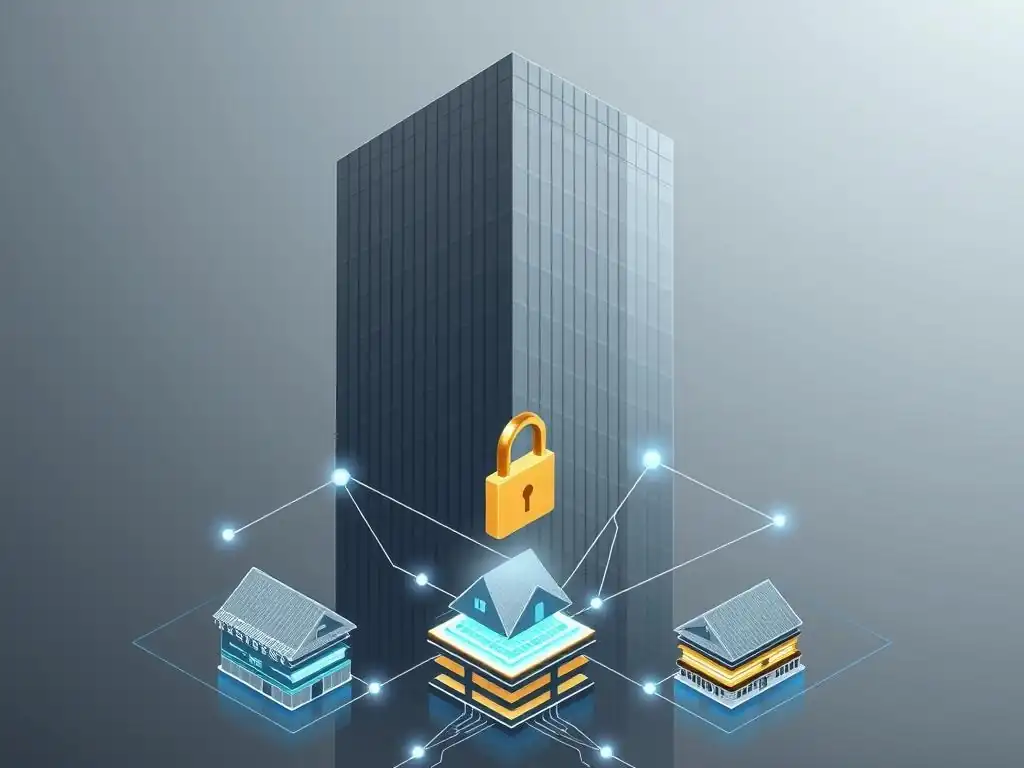
Challenges and Considerations for Implementing Blockchain Real Estate Smart Contracts
Regulatory Landscape and Legal Compliance
One of the most significant hurdles for widespread adoption of blockchain real estate smart contracts is navigating the existing complex regulatory landscape and ensuring legal compliance. Property law is deeply rooted in centuries-old legal frameworks, often requiring physical documents, wet signatures, and centralized government registries (like land registries). Integrating decentralized, digital smart contracts into this system presents challenges. The legal status of a smart contract as a binding agreement varies by jurisdiction, and many legal systems are still determining how to treat digital assets and decentralized transactions.
Ensuring that a smart contract is legally enforceable requires careful consideration of contract law, digital signature laws, and specific real estate regulations in the relevant jurisdiction. For instance, does a smart contract satisfy the legal requirements for a deed transfer? Who is liable if there is a bug in the smart contract code leading to financial loss?
Regulatory bodies are still developing guidelines for blockchain technology in finance and real estate. Implementing blockchain real estate smart contracts requires close collaboration with legal experts to draft contracts that are both functionally effective on the blockchain and legally sound within the applicable jurisdiction.
Data Privacy and Security Concerns
While blockchain offers inherent security through cryptography and immutability, implementing blockchain real estate smart contracts raises specific data privacy and security concerns, particularly regarding sensitive commercial property information. Public blockchains, while transparent, expose transaction data to all participants, which may not be suitable for confidential commercial deals involving private financial information or identity details. Using private or permissioned blockchains can address some privacy concerns by restricting access, but this requires careful management of permissions and still raises questions about data ownership and control.
Storing sensitive data directly on the blockchain is generally not recommended due to privacy implications and storage costs. Instead, smart contracts typically store hashes or references to data stored off-chain in more private databases. However, this introduces the risk associated with the off-chain storage security and the integrity of the link between the on-chain hash and the off-chain data.
Ensuring the security of the smart contract code itself is also critical; vulnerabilities can be exploited, leading to significant losses, as seen in various smart contract hacks in other domains. Robust auditing and testing of smart contract code are essential before deployment for commercial property use cases.
Scalability and Interoperability Issues
Scalability and interoperability are technical challenges that need to be addressed for blockchain real estate smart contracts to handle the volume and complexity of the commercial real estate market. Many popular blockchain networks, especially public ones, can face limitations in terms of transaction throughput (transactions per second) and transaction costs (gas fees), particularly during periods of high network activity. Processing numerous, potentially complex commercial property transactions simultaneously could strain these networks, leading to delays and increased costs.
Furthermore, the real estate ecosystem is fragmented, involving various platforms, databases, and legacy systems (e.g., existing land registries, financial systems, property management software). For blockchain real estate smart contracts to achieve widespread adoption, they need to be able to interoperate seamlessly with these existing systems and potentially with smart contracts deployed on different blockchain networks. Developing standards and protocols for cross-chain communication and integration with traditional IT infrastructure is crucial for creating a cohesive and functional digital real estate ecosystem.
The Need for Industry Standardization
The successful widespread implementation of blockchain real estate smart contracts hinges significantly on the development and adoption of industry-wide standards. Currently, various platforms and protocols exist, each with its own approach to tokenizing assets, structuring smart contracts, and representing property data on the blockchain. This lack of standardization creates silos, hinders interoperability, and increases complexity for stakeholders who might need to interact with multiple systems.
Standardization is needed across several areas: token standards for representing different types of real estate assets or rights (e.g., equity, debt, rental income streams), data standards for describing property attributes and transaction details in a machine-readable format, and smart contract templates or frameworks for common real estate use cases (like purchase agreements, leases, or fractional ownership). Collaborative efforts involving industry associations, technology providers, legal experts, and regulatory bodies are essential to establish these standards, fostering a more unified and accessible environment for blockchain real estate smart contracts.
Implementing Smart Contracts for Commercial Real Estate: A Step-by-Step Guide
Defining the Scope and Objectives of the Smart Contract
The first critical step in implementing blockchain real estate smart contracts is clearly defining the scope and specific objectives the contract is intended to achieve within the commercial property process. This involves identifying which parts of the traditional workflow are to be automated (e.g., escrow, payment distribution, document verification triggers) and the precise conditions under which the smart contract should execute certain actions. For example, is the goal to fully automate a simple lease agreement, or is it to manage the complex cap table and dividend distribution for a tokenized commercial building?
This phase requires detailed collaboration between legal teams, real estate professionals, and technical experts to translate legal clauses and business logic into precise, unambiguous terms that can be coded. Key questions include: What are the verifiable triggers? What data sources will the contract rely on (oracles)? How will exceptions or disputes be handled? A clear, well-defined scope ensures that the resulting blockchain real estate smart contract is fit for purpose, legally sound, and technically feasible, avoiding potential misunderstandings or functional gaps later in the process.
Selecting the Appropriate Blockchain Platform
Choosing the right blockchain platform is a crucial decision when developing blockchain real estate smart contracts. The selection depends heavily on the defined scope and objectives, considering factors like required transaction speed, cost (gas fees), security model (public vs. private/permissioned), smart contract capabilities (e.g., language support like Solidity, Rust), regulatory compliance needs, and the existing ecosystem or partners.
- Evaluate platform types:
- Public blockchains (e.g., Ethereum, Solana): Offer high decentralization and transparency but can have variable transaction costs and lower privacy.
- Permissioned/Private blockchains (e.g., Hyperledger Fabric, Corda): Offer greater control over participants, higher transaction speed, lower costs, and enhanced privacy, often preferred for enterprise use cases like commercial real estate.
- Consortium blockchains: Operated by a group of organizations, balancing decentralization with control.
- Consider smart contract language support and developer community.
- Assess the platform's maturity, security track record, and scalability solutions.
The choice impacts the contract's performance, security, and integration possibilities. For example, a permissioned network might be better suited for managing confidential lease agreements between known parties, while a public network might be considered for tokenizing a property for a broad base of investors seeking transparency.
Developing and Testing the Smart Contract Code
Developing the blockchain real estate smart contract code is a highly technical process that requires specialized programming skills in languages compatible with the chosen blockchain platform (e.g., Solidity for Ethereum, Chaincode for Hyperledger Fabric). The code must precisely reflect the legal and business logic defined in the scope phase. Errors or vulnerabilities in the code can have significant financial and legal consequences, as smart contracts are immutable once deployed, making fixing bugs difficult or impossible without complex upgrade mechanisms or redeployment.
Rigorous testing is paramount. This involves multiple stages:
- Unit testing: Testing individual functions within the smart contract.
- Integration testing: Ensuring the smart contract interacts correctly with other components (e.g., oracles, external systems, other smart contracts).
- Security auditing: Professional review of the code by blockchain security experts to identify vulnerabilities.
- Formal verification: Using mathematical methods to prove the code behaves as expected under all conditions.
Code Block Example (Illustrative, simplified Solidity snippet for an escrow function):
// SPDX-License-Identifier: MIT
pragma solidity ^0.8.0;

contract SimpleEscrow {
    address payable public buyer;
    address payable public seller;
    uint256 public amount;
    bool public fundsDeposited;
    bool public propertyTransferred;

    enum State { AwaitingDeposit, AwaitingTransferConfirmation, Completed, Refunded }
    State public currentState;

    event FundsDeposited(uint256 amount);
    event PropertyTransferred(address indexed buyer, address indexed seller);
    event EscrowCompleted();
    event EscrowRefunded();

    constructor(address payable _buyer, address payable _seller, uint256 _amount) {
        buyer = _buyer;
        seller = _seller;
        amount = _amount;
        currentState = State.AwaitingDeposit;
    }

    function depositFunds() external payable {
        require(msg.sender == buyer, "Only buyer can deposit");
        require(msg.value == amount, "Incorrect deposit amount");
        require(currentState == State.AwaitingDeposit, "Funds already deposited");
        fundsDeposited = true;
        currentState = State.AwaitingTransferConfirmation;
        emit FundsDeposited(msg.value);
    }

    function confirmPropertyTransfer() external {
        require(msg.sender == seller, "Only seller can confirm transfer");
        require(currentState == State.AwaitingTransferConfirmation, "Funds not deposited yet");
        propertyTransferred = true;
        currentState = State.Completed;
        (bool success, ) = seller.call{value: amount}("");
        require(success, "Transfer failed");
        emit PropertyTransferred(buyer, seller);
        emit EscrowCompleted();
    }

    // Simplified refund function for illustration
    function requestRefund() external {
         require(msg.sender == buyer, "Only buyer can request refund");
         require(currentState == State.AwaitingTransferConfirmation, "Cannot refund at this stage");
         // Add conditions for when refund is allowed (e.g., after timeout, or if transfer confirmation fails)
         // For simplicity, let's assume buyer can request if seller hasn't confirmed after a certain period
         // require(block.timestamp > transferConfirmationDeadline, "Too early to request refund");

         currentState = State.Refunded;
         (bool success, ) = buyer.call{value: amount}("");
         require(success, "Refund failed");
         emit EscrowRefunded();
    }

    // Add more functions for complex logic, state transitions, error handling, etc.
}
This development and testing phase is iterative and requires close collaboration between developers, legal experts, and real estate stakeholders to ensure the code accurately reflects the intended agreement and functions securely.
Deploying and Executing the Smart Contract
Once the blockchain real estate smart contract code has been rigorously developed, tested, and audited, the next step is deployment onto the selected blockchain platform. Deployment involves publishing the compiled smart contract code to the network, making it available for interaction. This typically requires a transaction fee (gas) on public blockchains. Once deployed, the smart contract exists autonomously at a specific address on the blockchain and cannot be altered.
Execution of the smart contract's functions occurs when parties interact with it by sending transactions to its address, triggering specific methods defined in the code (e.g., depositFunds, confirmPropertyTransfer). These interactions also require transaction fees. The smart contract then automatically executes the programmed logic based on the input and its current state, recording the outcome immutably on the blockchain. Monitoring the execution and state changes of the deployed smart contract is crucial to ensure it is progressing as expected according to the commercial property agreement's terms. This phase marks the transition from development to live operation within the real estate transaction workflow.
The Future of Blockchain in Commercial Real Estate Transactions
Emerging Trends and Innovations in Smart Contracts
The field of blockchain real estate smart contracts is continuously evolving, with several emerging trends and innovations poised to enhance their capabilities and broaden their application in commercial property. One significant trend is the development of more sophisticated oracles, which are essential for feeding reliable, real-world data (like property valuations, legal registry updates, or sensor data from buildings) into smart contracts to trigger actions. Innovations in decentralized oracle networks aim to improve the security and trustworthiness of this external data.
Another trend involves the creation of more complex, multi-party smart contracts and interconnected contracts that can manage intricate deal structures, such as syndicated loans for property development or multi-phase construction payments contingent on verified progress. Furthermore, advancements in layer-2 scaling solutions and more efficient blockchain protocols are addressing the scalability limitations of earlier networks, promising faster and cheaper transactions necessary for high-volume commercial real estate applications. Research into confidential computing and zero-knowledge proofs is also exploring ways to enable private data to be used within smart contract logic without revealing the underlying sensitive information on the public ledger.
The Potential for Decentralized Autonomous Organizations (DAOs) in Real Estate
Decentralized Autonomous Organizations (DAOs) represent a promising, albeit nascent, future application of blockchain technology and smart contracts in real estate, including commercial properties. A DAO is an organization whose rules are encoded as a transparent computer program, controlled by the organization members, and not influenced by a central government or single entity. In real estate, a DAO could potentially own, manage, and govern commercial properties collectively.
Imagine a DAO where members (token holders) vote on property acquisition decisions, approve maintenance budgets, or decide on rental rate adjustments, with these decisions automatically executed by underlying smart contracts. This could enable truly decentralized ownership and management structures for commercial assets, potentially offering greater transparency and direct participation for investors. While significant legal, regulatory, and governance challenges remain for real estate DAOs, they represent a long-term vision for how blockchain real estate smart contracts could facilitate entirely new models of collective property ownership and management.
Predictions for the Widespread Adoption of Blockchain Real Estate Smart Contracts
Predictions for the widespread adoption of blockchain real estate smart contracts vary, but there is a growing consensus that their implementation in commercial property will accelerate over the next five to ten years. Initial adoption is likely to continue focusing on specific, high-friction areas where the benefits are most immediate and measurable, such as fractional ownership platforms (tokenization), streamlining property management tasks, and potentially enhancing parts of the transaction closing process like escrow or payment distribution.
Full integration into the entire commercial real estate lifecycle, including legal title transfer on a blockchain, will depend heavily on regulatory clarity, the development of robust technical standards, and the willingness of traditional institutions (like banks, title companies, and government registries) to integrate with blockchain systems. As pilot projects demonstrate tangible cost savings and efficiency gains – potentially reducing transaction times by weeks and costs by percentages – and as legal frameworks evolve, the momentum for implementing blockchain real estate smart contracts is expected to build, transforming how commercial properties are bought, sold, and managed globally.
Case Studies: Successful Implementations of Blockchain Real Estate Smart Contracts
Case Study 1: Streamlining Title Insurance with Smart Contracts
While a fully blockchain-based land registry is a long-term goal in most jurisdictions, several initiatives have explored using blockchain and smart contracts to streamline aspects of the title insurance and search process in commercial real estate. One type of pilot project involves creating a digital, immutable record of ownership transfers and encumbrances related to a property on a distributed ledger. While not replacing the legal land registry, this parallel record can significantly speed up title searches.
A blockchain real estate smart contract in such a system could be programmed to automatically check this digital history for discrepancies or red flags whenever a transaction is initiated. For example, upon receiving a transaction request for a specific property token, the smart contract could query the blockchain record to verify the current owner's identity and check for any recorded liens or claims against the property.
This automated, near-instantaneous check against a tamper-evident ledger could reduce the time and cost associated with manual title searches and potentially automate parts of the underwriting process for title insurance, offering a more efficient path towards insuring commercial property titles.
Case Study 2: Tokenization of Commercial Real Estate Assets
Real estate tokenization, facilitated by blockchain real estate smart contracts, has moved beyond theoretical discussion into actual implementations for commercial properties. Projects have emerged globally offering fractional ownership in assets ranging from office buildings and hotels to retail centers. For instance, platforms have tokenized portions of luxury apartments or commercial complexes in cities like New York, London, or Dubai, allowing investors to buy tokens representing shares of equity in the property.
In these cases, a blockchain real estate smart contract serves as the core mechanism. It manages the total supply of tokens representing the property, handles the transfer of tokens between buyers and sellers on a secondary market, and is programmed to distribute rental income or sale proceeds proportionally to token holders based on the number of tokens they hold.
For example, if a tokenized office building generates $100,000 in net rental income in a quarter, the smart contract automatically calculates each token holder's share based on their percentage of the total tokens issued (e.g., holding 0.1% of tokens yields $100). This demonstrates how blockchain real estate smart contracts enable new investment models, increase liquidity, and automate financial flows for commercial real estate assets.
Conclusion: The Transformative Power of Smart Contracts in Commercial Real Estate
Blockchain real estate smart contracts hold immense transformative power for the commercial property sector. By automating complex processes, enhancing security, improving transparency, and reducing reliance on intermediaries, they offer a compelling alternative to traditional, often cumbersome, transaction methods. From streamlining lease agreements and automating property management to enabling fractional ownership and potentially simplifying due diligence, the use cases for blockchain real estate smart contracts are diverse and impactful.
While challenges related to regulation, standardization, and technical integration remain, the ongoing development and pilot implementations demonstrate a clear path towards wider adoption. As the industry gains confidence in the technology and legal frameworks evolve, blockchain real estate smart contracts are poised to become an integral part of how commercial properties are transacted, owned, and managed, driving greater efficiency, security, and accessibility in this vital global market. The journey towards a fully digitized and automated commercial real estate ecosystem is underway, with blockchain real estate smart contracts at its forefront.
Frequently Asked Questions
What are blockchain real estate smart contracts, and how do they differ from traditional contracts?
Smart contracts are self-executing agreements written into code and stored on a blockchain. Unlike traditional contracts, they automate the enforcement of terms, reducing the need for intermediaries and increasing efficiency.
How can blockchain real estate smart contracts streamline the process of commercial property transactions?
They can automate tasks like title transfers, escrow management, and payment distribution, significantly reducing paperwork and processing time. This leads to faster and more transparent transactions.
What are the key benefits of using blockchain real estate smart contracts for commercial real estate deals?
Benefits include increased security through immutability, reduced costs by eliminating intermediaries, and greater transparency for all parties involved. This can lead to increased trust and efficiency.
What are some of the regulatory challenges facing the widespread adoption of blockchain real estate smart contracts?
Current regulations are often unclear or outdated regarding the legality and enforceability of smart contracts. Addressing these challenges is crucial for mainstream adoption within the real estate industry.
How will blockchain real estate smart contracts impact the future of commercial real estate investment and management?
They promise to democratize access to real estate investment, enable fractional ownership, and simplify property management processes. This could lead to a more liquid and efficient real estate market.
Final Reflection: Embracing the Future of Real Estate
The exploration of blockchain real estate smart contracts reveals not just a technological advancement, but a fundamental shift in how we perceive and execute commercial property transactions. The potential for increased transparency, efficiency, and security offered by these contracts is no longer a futuristic fantasy, but a tangible reality reshaping the industry landscape today. The promise of streamlined processes and reduced costs makes this technology increasingly relevant in a world demanding greater accountability and optimized operations.
This shift towards digital, decentralized systems has profoundly influenced the cultural perception of real estate investment, moving it closer to a more accessible and trustworthy domain. Witnessing this evolution firsthand underscores the importance of embracing innovation and challenging traditional paradigms. The future is already here – it's just not evenly distributed.
- William Gibson. This quote resonates deeply, reminding us that the benefits of blockchain real estate smart contracts are poised to become more widely available, transforming the industry for the better.
As we stand at the cusp of this technological revolution, I invite you to consider how you can leverage the power of blockchain real estate smart contracts to optimize your own business property transactions. Embrace the opportunity to explore this innovative technology, educate yourself on its potential, and contribute to a future where real estate transactions are more transparent, efficient, and secure for all. The future of real estate is being written now – be a part of its evolution.
Unlock the Future: Start Building Your Smart Real Estate Strategy Today!
Thank you for exploring how smart contracts are transforming the commercial real estate industry. Now that you have this knowledge, it's time to turn insights into action.
Here are some steps you can take right now:
- Begin outlining a pilot project to implement smart contracts in a small-scale commercial lease or transaction. This practical experience will help you understand the real-world benefits and potential challenges.
- Share this article with colleagues and your professional network to spark conversations about innovation and encourage adoption.
- Investigate the legal and regulatory environment for smart contracts in your region. Staying informed is essential for responsible and compliant implementation.
How do you plan to leverage smart contracts to enhance your commercial real estate transactions? Share your ideas in the comments below!
Leave a Reply