
Smart Contracts and Property Insurance: Streamlining Claims and Coverage

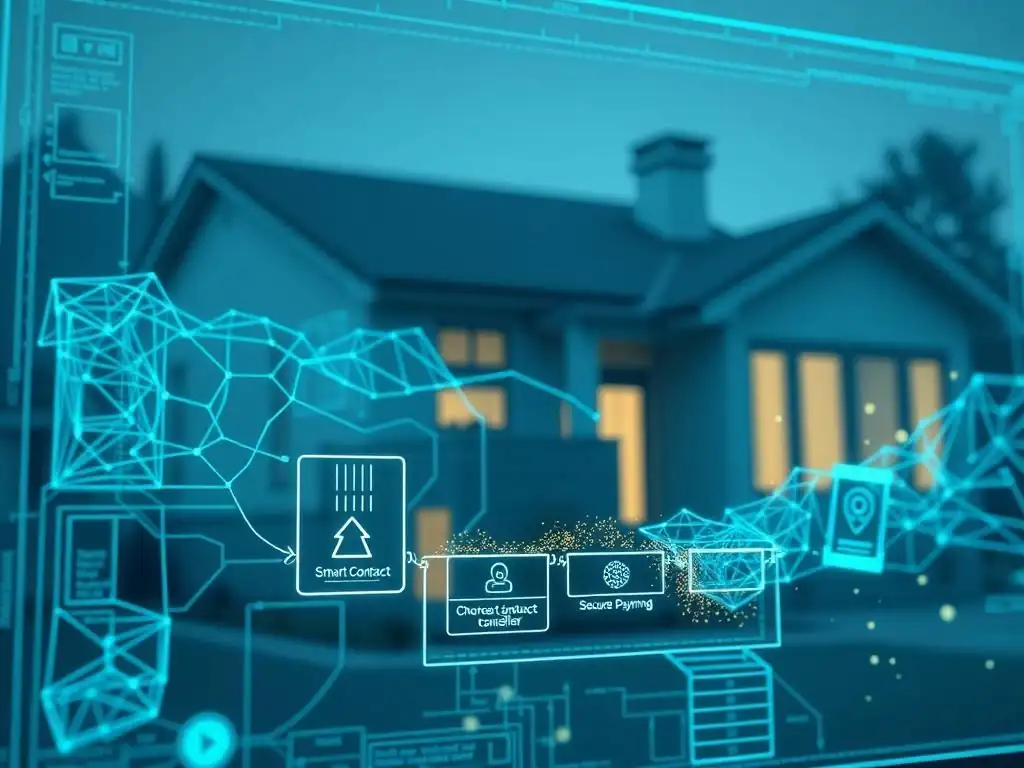
Welcome to Blockchain Trends, your trusted source for understanding the revolutionary impact of blockchain technology. Are you ready to discover how blockchain is reshaping industries beyond just cryptocurrencies?
In this article, we delve into the fascinating world of blockchain property insurance claims. Imagine a future where claims are processed instantly, fraud is minimized, and coverage is transparently managed. Intrigued? Explore how smart contracts are poised to revolutionize property insurance and unlock unprecedented efficiency and trust. Read on to uncover the potential and challenges of this groundbreaking application of blockchain in real estate!
Smart Contracts and Parametric Crop Insurance: Enhancing Efficiency and Trust
- Introduction: Transforming Crop Insurance with Blockchain Technology
- Understanding Smart Contracts for Parametric Crop Insurance
- Streamlining Crop Insurance Payouts with Blockchain
- Use Cases: Blockchain Parametric Crop Insurance in Action
- Benefits of Blockchain-Based Crop Insurance for Farmers
- Challenges and Considerations for Blockchain Adoption in Crop Insurance
- The Future of Smart Contracts and Crop Insurance
- Conclusion: Embracing Blockchain for a More Resilient and Transparent Crop Insurance Ecosystem
-
Frequently Asked Questions
- How can smart contracts improve the property insurance claims process?
- What are the potential benefits of using blockchain for property insurance claims?
- What challenges exist in implementing blockchain-based property insurance claims systems?
- How can blockchain help prevent fraudulent property insurance claims?
- What is the future outlook for blockchain and smart contracts in property insurance?
- Final Reflection: Embracing Transparency in Property Protection
- Unlock Smarter Insurance: Start Streamlining Today!
Introduction: Transforming Crop Insurance with Blockchain Technology
Traditional crop insurance, while vital, faces significant hurdles: lengthy claim assessments, subjective damage evaluations, high administrative costs, and delays in payouts that can cripple a farmer's ability to recover. These inefficiencies are common across various traditional insurance sectors, including property insurance. However, just as blockchain technology is beginning to streamline processes like blockchain property insurance claims, it offers a powerful solution for the agricultural sector through parametric insurance and smart contracts. This article explores how these technologies are revolutionizing crop insurance, providing faster, more transparent, and reliable coverage for farmers.
By leveraging the immutable and automated nature of blockchain and smart contracts, paired with objective data sources, the agricultural insurance landscape can shift from reactive, manual claims processing to proactive, automated payout systems. This transformation has the potential to significantly improve financial stability for farmers, enabling quicker recovery after losses and fostering greater trust in insurance providers. The principles of automation and data verification discussed here for crop insurance are also highly relevant for optimizing processes like blockchain property insurance claims.
The Challenges of Traditional Crop Insurance Assessments
Traditional crop insurance relies heavily on manual processes to assess damage and validate claims. When a farmer experiences a loss due to weather or other covered perils, they file a claim, which triggers a process involving insurance adjusters visiting fields to estimate the extent of the damage. This method is inherently time-consuming and resource-intensive, often leading to significant delays in payout. For example, a 2018 study by the USDA's Risk Management Agency (RMA) indicated that processing complex claims could take well over 60 days, leaving farmers without critical funds during crucial periods like replanting seasons.
Furthermore, traditional assessments can be subjective. Estimating yield loss or the impact of specific weather events across vast or diverse fields requires judgment, which can sometimes lead to disputes between farmers and insurers. High administrative costs associated with employing and deploying adjusters, managing paperwork, and handling potential disputes also contribute to the overall expense of traditional crop insurance, potentially making it less accessible or affordable for some farmers, especially smallholders.
How Parametric Insurance and Smart Contracts Provide Automated Solutions
Parametric insurance fundamentally changes the claim process by basing payouts on predefined trigger events rather than actual assessed damage. These triggers are objective, measurable parameters, such as the amount of rainfall falling below a certain threshold, temperature exceeding a specific level, or wind speed reaching a defined velocity. When the objective data confirms that the trigger event has occurred in the insured location, a payout is automatically initiated.
This is where smart contracts become transformative. A smart contract is a self-executing agreement written in code on a blockchain. For parametric crop insurance, the policy terms – including the trigger condition, the payout amount, and the insured location – are embedded directly into the smart contract code. When external data, verified by an oracle (a data feed mechanism), confirms that the trigger condition has been met, the smart contract automatically releases the predetermined payout from an escrow or reserve pool directly to the farmer's digital wallet. This automation eliminates the need for manual claims processing and damage assessment, drastically speeding up payouts from weeks or months to potentially mere hours or days after the trigger event is confirmed.
Understanding Smart Contracts for Parametric Crop Insurance
Smart contracts are revolutionizing how agreements are executed, bringing unprecedented levels of automation and transparency, particularly within the insurance sector. These digital contracts, running on a blockchain, execute automatically when specific, predefined conditions are met.
Unlike traditional contracts that rely on intermediaries to enforce terms, smart contracts enforce themselves through code, ensuring that actions are taken deterministically based on verifiable data inputs. In the context of parametric crop insurance, the smart contract contains the entire policy logic: defining the insured party, the insurer, the specific geographic area covered, the exact environmental trigger (e.g., "cumulative rainfall below 7 inches between dates X and Y"), the payout amount, and the designated data source (oracle) that will verify the trigger event.
When the specified oracle feeds data to the blockchain that confirms the trigger condition has been fulfilled for the insured location and time period, the smart contract's code is executed. If the condition is true, the contract automatically initiates the transfer of the payout funds from the insurer's designated account to the farmer's account on the blockchain. This automated execution removes human intervention from the payout decision, ensuring impartiality and significantly accelerating the claim settlement process compared to traditional methods.
What are Smart Contracts and Their Role in Automation?
Smart contracts are essentially programs stored on a blockchain that run when predetermined conditions are met. They are immutable once deployed, meaning their terms cannot be altered, and their execution is transparently recorded on the blockchain ledger. This makes them highly reliable for automating contractual obligations. Their primary role in parametric crop insurance is to automate the claim payout process based on objective, external data.
The smart contract acts as the automated insurance policy. It constantly monitors the data provided by the designated oracle (e.g., weather data feed) against the policy's predefined trigger conditions. As soon as the oracle data confirms that the trigger event has occurred, the smart contract executes the payout instruction, transferring funds directly to the farmer. This automation bypasses the lengthy, manual claim verification and assessment steps required in traditional insurance, ensuring swift financial relief for farmers when they need it most.
Key Benefits of Smart Contracts in Crop Insurance
The integration of smart contracts brings several key benefits to the crop insurance sector. Firstly, it drastically increases the speed of claim settlements. Instead of waiting weeks or months for adjusters and manual processing, farmers can receive payouts within hours or days of a trigger event being confirmed by the oracle. This rapid access to funds is crucial for managing immediate needs after a loss, such as covering living expenses or preparing for the next planting season.
Secondly, smart contracts enhance transparency and trust. The terms of the insurance policy are written in code and are often auditable on the blockchain, allowing all parties to understand exactly how and why a payout will (or will not) be triggered. The execution of the contract and the data that triggered it are immutably recorded on the public ledger, providing a transparent history of the transaction. This eliminates ambiguity and reduces the potential for disputes, fostering greater confidence in the insurance product among farmers.
Streamlining Crop Insurance Payouts with Blockchain
Blockchain technology, combined with smart contracts and parametric insurance, offers a powerful mechanism for streamlining the entire crop insurance payout process. By moving the agreement logic onto an immutable, distributed ledger, the system can ensure that once the conditions for a payout are met, the funds are released automatically and reliably. This removes the bottlenecks and potential for human error or bias that exist in traditional, manual claims processing systems. The transparency of the blockchain also allows farmers and insurers alike to track the status of policies and payouts in real-time, creating a single, shared source of truth.
The implementation of smart contracts on a blockchain for crop insurance represents a fundamental shift from an indemnity-based model (paying based on assessed loss) to a parametric model (paying based on a predefined trigger). This structural change, enabled by automation, is key to achieving the significant efficiency gains observed in pilot programs and theoretical models. It redefines the relationship between the insurer and the insured, making it more transactional and less reliant on subjective interpretation.
Automating Payouts Based on Predefined Weather Parameters
The core of parametric crop insurance with smart contracts is the automated payout triggered by specific weather or environmental parameters. These parameters are precisely defined in the smart contract, such as "daily average temperature exceeding 95°F (35°C) for 10 consecutive days" or "cumulative rainfall below 5 inches during the critical growth phase." The smart contract is programmed to monitor data feeds from reliable external sources (oracles) that report on these parameters for the specific geographic location of the insured farm.
When the oracle data confirms that the predefined threshold for the trigger has been crossed, the smart contract automatically executes the payout instruction. There is no claim form to file, no adjuster to wait for, and no subjective assessment of damage. The process is purely data-driven and automated.
For instance, if the smart contract specifies a $600 per acre payout for drought triggered by low rainfall, and the oracle reports that the rainfall condition has been met, the $600 per acre is automatically transferred to the farmer's digital wallet. This rapid, deterministic payout mechanism is a game-changer for farmers facing immediate financial hardship due to weather events.
Reducing Fraud and Increasing Transparency in Claim Settlements
Fraud is a significant concern in traditional insurance, including property insurance and crop insurance, often involving inflated claims or misrepresentation of damages. In traditional systems, detecting and preventing fraud requires extensive investigation and verification processes. Blockchain-based parametric crop insurance significantly mitigates fraud risk because payouts are based on objective, verifiable, external data rather than subjective assessments of damage.
The data used to trigger payouts (e.g., weather data from official sources) is fed to the blockchain via secure oracles. The smart contract's logic and the execution of the payout are immutably recorded on the blockchain, providing a transparent and auditable history. All parties can see the data that triggered the payout and verify that the smart contract executed according to its code.
This inherent transparency and reliance on objective, difficult-to-manipulate data sources drastically reduces the opportunity for fraudulent claims and builds trust in the integrity of the settlement process. A study by the University of Cambridge Centre for Alternative Finance estimated that blockchain could potentially reduce insurance fraud costs by 5-10% across various insurance lines, a benefit applicable to optimizing blockchain property insurance claims as well as crop claims.
The Role of Oracles in Verifying Environmental Data
Blockchains, by design, are isolated systems that cannot directly access real-world information like current weather conditions, market prices, or satellite imagery. Oracles serve as essential bridges, securely feeding this external data onto the blockchain so that smart contracts can use it to trigger actions. In parametric crop insurance, oracles are responsible for providing the accurate and timely environmental data that smart contracts rely on to determine if a payout condition has been met.
These oracles source data from reputable providers such as national weather services (e.g., NOAA, meteorological departments), satellite data providers (e.g., NASA, commercial satellite companies), or certified weather stations. The reliability and integrity of the oracle are paramount, as the entire system depends on the accuracy of the data it provides. Decentralized oracle networks, which use multiple independent nodes to source and aggregate data, can enhance security and reliability by reducing the risk of a single point of failure or data manipulation, ensuring that the data triggering a payout is robust and trustworthy.
Use Cases: Blockchain Parametric Crop Insurance in Action
The application of blockchain-based parametric insurance is moving beyond theoretical discussions into real-world implementations, demonstrating its potential to provide rapid and reliable financial relief to farmers affected by specific environmental perils. These use cases highlight how predefined triggers, verified by oracles and executed by smart contracts, can automate payouts for distinct types of crop losses. The ability to define precise geographic areas and time periods for coverage makes these policies highly tailored to specific agricultural risks.
These examples underscore the versatility of parametric insurance powered by smart contracts. By defining clear, objective triggers linked to specific environmental conditions, insurers can offer targeted coverage for risks that are difficult or costly to assess manually. The automated payout mechanism ensures that farmers receive funds quickly, allowing them to mitigate losses, replant, or cover essential expenses without the delays associated with traditional claim processing.
Example 1: Automated Drought Insurance Payouts Based on Rainfall Data
A common and devastating risk for farmers is drought. A blockchain-based parametric drought insurance policy can be designed as a smart contract covering a specific farm location. The trigger is set to a precise amount of cumulative rainfall below a certain threshold within a defined period, say, less than 6 inches between June 1st and August 31st, verified by an oracle collecting data from a network of weather stations or satellite imagery covering the farm's coordinates.
If the oracle reports on September 1st that the cumulative rainfall in the insured area during the specified period was indeed below 6 inches, the smart contract automatically executes. A predefined payout amount, perhaps $800 per acre, is immediately transferred from the insurer's wallet to the farmer's digital wallet on the blockchain. This automated process ensures that the farmer receives funds rapidly after confirming a drought, providing crucial support for managing the impact of the water shortage without any manual claim filing or assessment.
Example 2: Smart Contracts for Frost Damage Insurance Triggered by Temperature Readings
Early or late frosts can cause significant damage to sensitive crops like fruits or vegetables. A parametric frost insurance policy can utilize a smart contract with a trigger based on temperature. For example, the policy might trigger a payout if the temperature drops below 32°F (0°C) for more than four consecutive hours between April 1st and May 15th, as verified by an oracle linked to a certified temperature sensor or weather station near the insured field.
Should the oracle report temperature data meeting this condition during the specified timeframe, the smart contract automatically initiates the payout, perhaps $1,500 per acre, to the farmer. This allows the farmer to quickly access funds needed for potential mitigation efforts (if feasible) or to cover the losses incurred from the frost damage, bypassing the need for manual inspection of damaged blossoms or young plants, which can be time-consuming and complex.
Example 3: Streamlining Hurricane Crop Loss Insurance Using Wind Speed Data
Farmers in hurricane-prone regions face the risk of severe crop damage from high winds and associated flooding. A parametric hurricane crop insurance policy can be structured as a smart contract with a trigger based on sustained wind speed. The trigger could be defined as sustained wind speeds exceeding 74 mph (Category 1 hurricane) for a duration of two hours or more within a defined proximity (e.g., 10 miles) of the insured location, verified by an oracle accessing data from official meteorological sources like NOAA.
If the oracle data confirms that hurricane-force winds meeting the policy's criteria occurred within the insured area and time frame, the smart contract automatically disburses the predetermined payout, potentially $2,000 per acre, to the farmer. This provides rapid financial relief following a major weather disaster, allowing farmers to begin the process of clearing debris, assessing remaining assets, and planning for recovery much faster than they could through traditional, post-disaster manual claim processes, which can be overwhelmed after widespread events.
Benefits of Blockchain-Based Crop Insurance for Farmers
The adoption of blockchain technology in parametric crop insurance brings tangible and significant benefits directly to farmers, addressing many of the pain points associated with traditional insurance models. These advantages contribute to greater financial security, increased confidence in the insurance process, and potentially lower costs, making insurance a more effective tool for managing agricultural risks.
The move towards automated, data-driven payouts empowers farmers by providing timely access to funds when they are most needed. The transparency of the blockchain builds trust in the system, ensuring fairness and clarity. Furthermore, the inherent efficiencies can lead to reduced administrative burdens, potentially translating into more affordable insurance options, which is particularly important for small and medium-sized farms operating on tight margins.
Faster Claim Settlements and Immediate Access to Funds
One of the most critical benefits for farmers is the speed at which claims are settled and funds are disbursed. In traditional crop insurance, the time from filing a claim to receiving a payout can extend for weeks or even months, especially during widespread loss events when adjusters are in high demand. This delay can severely impact a farmer's ability to cover immediate costs, such as replanting, repairing infrastructure, or even basic living expenses.
With blockchain-based parametric insurance, the payout is triggered automatically by the smart contract as soon as the oracle confirms the predefined environmental condition has been met. This can reduce payout times from months to just days or even hours in some cases. For example, pilot programs using blockchain for crop insurance in developing regions have demonstrated the ability to disburse funds within 4-7 days of a trigger event, a dramatic improvement over traditional methods. This rapid access to capital provides farmers with the necessary liquidity to respond effectively to losses and maintain operational continuity.
Increased Transparency and Trust in the Insurance Process
Traditional insurance processes can sometimes be perceived as opaque, with farmers unclear about how claims are assessed or why payouts are delayed or denied. Blockchain technology provides an unprecedented level of transparency. The smart contract code, which contains the policy terms and payout logic, can often be publicly audited, allowing farmers to understand exactly how the system works.
Furthermore, the data from the oracles that triggers payouts and the transaction history of those payouts are immutably recorded on the blockchain. This provides a clear, verifiable record accessible to all parties, showing precisely when and why a payout was triggered based on objective data. This transparency eliminates guesswork, reduces the potential for disputes or perceived unfairness, and builds significant trust between farmers and the insurance provider, fostering a more reliable and equitable insurance ecosystem.
The automation inherent in smart contracts significantly reduces the administrative burden for insurance providers. Manual tasks such as processing claim forms, scheduling and conducting field assessments, verifying damages, and managing paperwork are largely eliminated. The automated payout mechanism streamlines operations, leading to substantial reductions in operational costs for insurers.
While implementing blockchain infrastructure has initial costs, the long-term efficiencies gained from automation can lead to lower overheads. These cost savings can potentially be passed on to farmers in the form of lower insurance premiums, making crop insurance more affordable and accessible.
Reduced administrative costs can also free up resources that insurers can invest in developing more tailored products or improving data infrastructure, ultimately benefiting the agricultural community. Accenture estimated in 2017 that blockchain could reduce insurance operating costs by up to 10-20% by streamlining processes like claims and administration, a figure applicable to the potential cost savings in managing blockchain property insurance claims as well as crop insurance.
Challenges and Considerations for Blockchain Adoption in Crop Insurance
Despite the significant promise of blockchain and smart contracts for parametric crop insurance, several challenges must be addressed for widespread adoption. These challenges span technical, regulatory, and social dimensions, requiring careful consideration and collaborative efforts from technology providers, insurers, regulators, and farming communities. Overcoming these hurdles is crucial for realizing the full potential of this transformative technology in the agricultural sector.
Addressing these challenges requires not only technological innovation but also proactive regulatory engagement and dedicated efforts in education and capacity building within farming communities. As with other blockchain applications in finance and real estate, navigating the complexities of blockchain property insurance claims also involves grappling with similar issues around data validity and legal clarity.
Data Reliability and Accuracy of Oracle Sources
The efficacy and trustworthiness of any parametric insurance system, particularly one relying on smart contracts, are directly dependent on the accuracy and reliability of the data that triggers payouts. For crop insurance, this means the environmental data provided by oracles must be highly precise, consistent, and resistant to manipulation. Issues such as faulty weather sensors, gaps in data coverage, or inaccuracies in satellite readings can lead to incorrect payout decisions – either failing to trigger a valid claim or triggering a fraudulent one.
Ensuring the integrity of the oracle network is paramount. This involves using data from multiple, verifiable sources, implementing robust data validation mechanisms, and potentially utilizing decentralized oracle networks that aggregate data from numerous independent nodes to mitigate the risk of a single point of failure or malicious data injection. Establishing clear standards and certifications for data providers and oracle networks is essential to build confidence in the accuracy of the data driving smart contract executions.
Regulatory Uncertainties and Legal Frameworks for Smart Contracts
The legal and regulatory landscape surrounding blockchain and smart contracts is still developing in many parts of the world. The enforceability of smart contracts in traditional legal systems, particularly when disputes arise from code errors, oracle failures, or unforeseen circumstances not explicitly covered by the contract's logic, remains an area of uncertainty. Insurance is a heavily regulated industry, and new blockchain-based products must comply with existing regulations regarding consumer protection, solvency, and contract law.
Regulatory bodies need to develop clear guidelines and frameworks for blockchain-based insurance products, including parametric crop insurance. This includes defining the legal status of smart contracts, establishing mechanisms for dispute resolution, and ensuring that consumer protection standards are met. Clarity on these legal aspects is crucial for both insurers and farmers to confidently adopt these technologies. The lack of clear legal precedents for smart contracts also impacts the development and handling of blockchain property insurance claims.
Farmer Education and Adoption of New Technologies
Implementing blockchain-based parametric insurance requires farmers to understand a new type of insurance product and potentially interact with new technologies, such as digital wallets or blockchain platforms, to receive payouts. Many farmers, particularly in rural or underserved areas, may have limited access to technology or lack familiarity with digital systems. Building trust and facilitating adoption requires significant investment in education and outreach.
Initiatives are needed to explain the principles of parametric insurance, how smart contracts automate payouts, and how farmers can access and manage their digital funds. Providing user-friendly interfaces, offering local support, and demonstrating the tangible benefits of faster payouts are key to encouraging adoption. Without widespread understanding and acceptance among the farming community, even the most technologically advanced system will struggle to achieve scale and impact. Programs like the World Food Programme's Building Blocks, which uses blockchain for aid distribution, highlight the importance of simple interfaces and on-the-ground support for technology adoption in vulnerable populations.
The Future of Smart Contracts and Crop Insurance
The integration of smart contracts and blockchain technology into crop insurance is still in its early stages, but the potential for future development is vast. As the technology matures and adoption grows, we can expect to see increasingly sophisticated parametric products that cover a wider range of risks, leverage more granular data sources, and potentially operate within entirely new organizational structures. The future promises a more resilient, efficient, and farmer-centric crop insurance ecosystem.
These advancements will depend on continued innovation in blockchain technology, the development of more robust and diverse oracle networks, and the increasing integration of digital technologies within the agricultural sector itself. The principles driving these future developments – data integration, automation, and decentralized governance – also hold significant implications for enhancing the efficiency and transparency of processes like blockchain property insurance claims.
Expanding Coverage to Include New Environmental Factors
Currently, most parametric crop insurance focuses on well-understood weather risks like drought, excess rain, frost, and wind, primarily because reliable historical data for these factors is readily available. However, the potential exists to expand coverage to a much broader spectrum of environmental risks that impact crop yields. This could include triggers based on data related to pest infestations (perhaps monitored via satellite imagery or sensor networks), specific plant disease outbreaks (linked to weather patterns or soil conditions), or even soil moisture levels monitored in real-time.
As data collection technologies advance and oracle networks become more sophisticated in sourcing and verifying diverse types of environmental data, smart contracts can be designed to offer policies triggered by these new factors. This expansion would provide farmers with more comprehensive protection against a wider array of threats to their crops, better reflecting the complex interplay of factors that influence agricultural productivity and risk.
Integration with Precision Agriculture Technologies for Enhanced Risk Assessment
Precision agriculture technologies, including IoT sensors deployed in fields, drone-based monitoring, hyper-local weather stations, and advanced climate modeling, generate vast amounts of granular, real-time data specific to individual farms or even specific fields within a farm. Integrating this high-resolution data with blockchain-based smart contracts via sophisticated oracles can revolutionize risk assessment and policy design.
Instead of relying solely on regional weather data, parametric policies could be based on the actual conditions experienced on a farmer's land, as measured by their own sensors or verified local sources. This allows for more accurate and personalized risk modeling, potentially leading to fairer premium calculations and more precisely defined trigger conditions that are directly relevant to the specific microclimate and conditions of the insured property. This integration promises a future where crop insurance is not just automated but also highly tailored and data-informed.
The Potential for Decentralized Autonomous Organizations (DAOs) in Crop Insurance
Looking further into the future, the organizational structure of crop insurance could evolve towards Decentralized Autonomous Organizations (DAOs). A DAO is an organization whose rules and governance are encoded in smart contracts on a blockchain, operating autonomously without central management. In a crop insurance DAO, farmers, agricultural experts, and capital providers could collectively manage a pool of funds.
Smart contracts within the DAO could automate the underwriting of policies, collection of premiums, and disbursement of payouts based on predefined rules and oracle data, similar to current parametric systems. However, decisions about the DAO's operations, such as adjusting policy terms, changing risk models, or allocating funds, could be made through on-chain voting by DAO participants. This could create a more farmer-centric, transparent, and potentially more equitable insurance model, where the insured community has a direct say in how their insurance system operates, moving towards a truly decentralized form of risk management.
Conclusion: Embracing Blockchain for a More Resilient and Transparent Crop Insurance Ecosystem
The integration of smart contracts and blockchain technology into parametric crop insurance represents a profound shift with the potential to create a more resilient, efficient, and transparent ecosystem for managing agricultural risks. By automating payouts based on objective environmental data verified by oracles, this approach addresses many of the inefficiencies and trust issues inherent in traditional indemnity-based insurance models. While challenges remain, particularly regarding data reliability, regulation, and farmer adoption, the benefits unlocked by this technology are compelling and offer a promising path forward for protecting farmers' livelihoods.
Embracing this technological evolution means moving towards a system where financial relief after a crop loss is rapid, predictable, and based on clear, verifiable facts. This not only improves the financial stability of individual farmers but also contributes to the overall resilience of the agricultural sector in the face of increasingly volatile climate conditions. The principles of data-driven automation and transparency explored here in the context of crop insurance hold significant potential for enhancing other insurance applications, including the optimization of blockchain property insurance claims processing.
The Transformative Power of Smart Contracts for Farmers
For farmers, the transformative power of smart contracts lies primarily in the promise of faster, more reliable payouts. The traditional experience of waiting weeks or months for a claim to be processed after a devastating weather event can be crippling. Smart contracts, by automating this process based on objective data, ensure that funds are disbursed quickly, often within days or even hours of a trigger event being confirmed. This rapid access to capital is crucial for immediate recovery efforts, replanting, or simply covering essential expenses, providing a vital safety net that functions effectively when needed most.
Beyond speed, the transparency of smart contracts and blockchain technology builds trust. Farmers can have confidence that their policy will be executed precisely as written in the code, based on verifiable data. This clarity and reliability are invaluable, fostering a stronger relationship between farmers and their insurance providers and making insurance a more dependable tool for risk management.
Moving Towards Data-Driven and Automated Risk Management
The shift to blockchain-based parametric crop insurance signifies a fundamental move towards a data-driven and automated approach to managing agricultural risk. Leveraging precise environmental data from reliable oracles and executing policy terms through immutable smart contracts reduces reliance on subjective assessments and manual processes. This data-centric approach allows for more accurate risk modeling and potentially more tailored insurance products.
As technology advances, the ability to integrate granular data from precision agriculture will further refine this model, enabling highly localized and responsive insurance solutions. The future of crop insurance, powered by smart contracts and blockchain, points towards a more efficient, transparent, and automated system that better serves the needs of farmers, ensuring they can access the financial support required to navigate the inherent uncertainties of agriculture in a changing climate. This data-driven automation paradigm is a key benefit applicable across various insurance types, including the future handling of blockchain property insurance claims.
Frequently Asked Questions
How can smart contracts improve the property insurance claims process?
Smart contracts can automate claim processing, reducing delays and costs. They ensure faster payouts and greater transparency by automatically executing when pre-defined conditions are met, such as verifiable property damage data from trusted sources.
What are the potential benefits of using blockchain for property insurance claims?
Blockchain offers increased security and immutability for claim data, preventing fraud and disputes. It allows for enhanced transparency in the claims process, benefiting both insurers and policyholders by creating a shared, verifiable record.
What challenges exist in implementing blockchain-based property insurance claims systems?
Challenges include the integration with existing legacy systems, the need for clear regulatory frameworks, and ensuring the accuracy of data fed into the smart contracts. Overcoming these hurdles is crucial for widespread adoption.
How can blockchain help prevent fraudulent property insurance claims?
Blockchain's immutable ledger makes it harder to falsify claims data. The transparent and verifiable nature of the technology allows insurers to easily track claim history and identify suspicious activity.
What is the future outlook for blockchain and smart contracts in property insurance?
The future involves wider adoption of decentralized insurance (DeFi), greater automation, and more sophisticated smart contract applications. This will lead to more efficient, transparent, and customer-centric property insurance solutions.
Final Reflection: Embracing Transparency in Property Protection
The promise of streamlined and transparent property insurance claims through smart contracts is no longer a distant dream, but a tangible reality reshaping the industry. As we've explored, blockchain technology offers a pathway to faster payouts, reduced fraud, and increased trust between insurers and policyholders, fundamentally altering how we safeguard our most valuable assets. The potential for increased efficiency and reduced disputes makes this a compelling evolution in a sector often plagued by complexity and opacity.
The integration of smart contracts into property insurance represents more than just technological advancement; it signifies a shift towards a more equitable and accessible system. This transformation resonates deeply, as it speaks to the fundamental human need for security and peace of mind. The ability to automate claims processing and ensure fair compensation, regardless of background or circumstance, is a powerful step forward. The future of insurance is not about selling policies, it's about building trust and delivering value.
- Unknown Insurance Innovator
As we stand on the cusp of this technological revolution, it's crucial to consider how we can best leverage these advancements to create a more resilient and secure future for all. Reflect on the potential of blockchain property insurance claims to empower individuals and communities, fostering greater financial stability and peace of mind. Consider how you can advocate for the adoption of these technologies and contribute to a future where property protection is transparent, efficient, and accessible to everyone.
Unlock Smarter Insurance: Start Streamlining Today!
Thank you for exploring how smart contracts are transforming property insurance. We hope you’ve gained valuable insights into how claims and coverage can become faster and more transparent. Now, it’s time to put that knowledge into action.
Here are some steps you can take right now:
- Explore Further: Research existing blockchain-based insurance platforms to see how they are applying smart contracts in real-world situations. Learn how they address challenges and the solutions they provide.
- Share Your Ideas: Join the conversation on industry trends! Post a comment with your thoughts on how smart contracts could improve specific insurance processes.
- Educate Others: Talk to your network about the potential of smart contracts in property insurance. How might they benefit from this technology?
Which process in property insurance do you believe would benefit the most from smart contract implementation, and why? Let us know in the comments!
Leave a Reply