
Smart Contracts for Property Leasing: Ensuring Compliance and Reducing Legal Costs

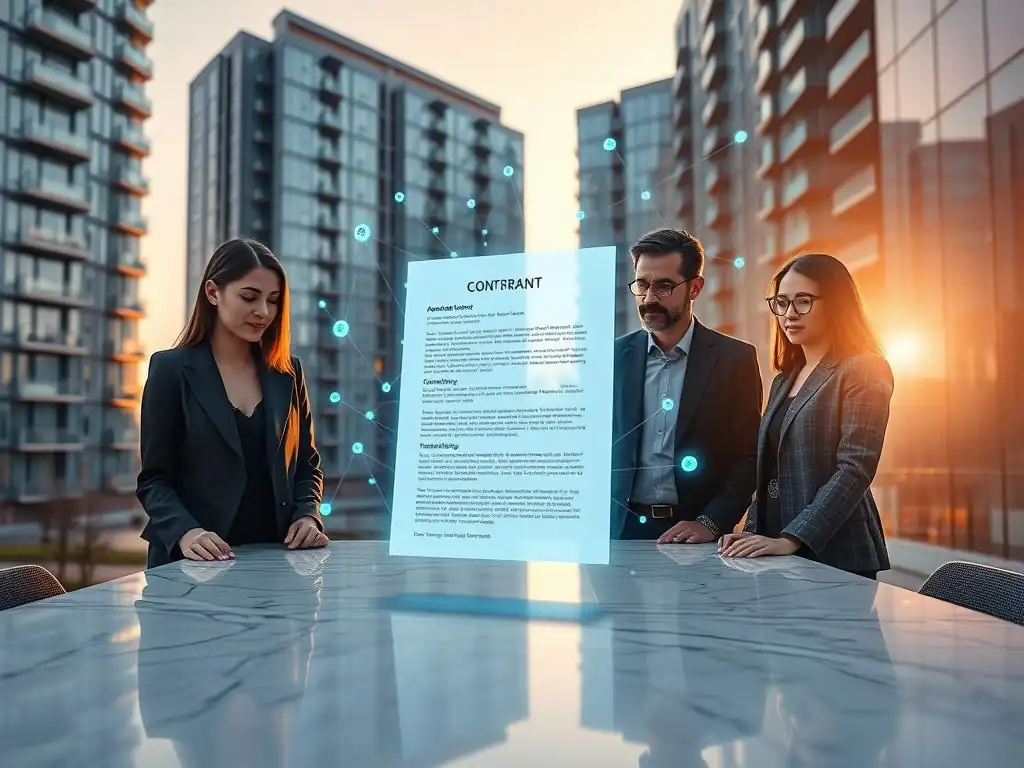
Welcome to Blockchain Trends, your guide to understanding the revolutionary impact of blockchain technology!
Are you ready to unlock a new era of transparency and efficiency in property management? Dive into our exploration of smart contracts for property leasing and discover how they're ensuring compliance and drastically reducing legal costs. Learn about the potential of blockchain property leasing contracts to revolutionize real estate transactions and create a more secure, streamlined future. Intrigued? Let's explore the possibilities...
- Smart Contracts for Property Leasing: Ensuring Compliance and Reducing Legal Costs
- Understanding Smart Contracts in Property Management
- Streamlining the Leasing Process with Smart Contracts
- Ensuring Compliance with Smart Contract Leasing
- Reducing Legal Costs with Blockchain Leasing Solutions
- Use Cases and Examples of Smart Contract Property Leasing
- Implementing Smart Contracts for Your Property Leasing Business
- The Future of Blockchain in Property Leasing
- Conclusion: Embracing Smart Contracts for Efficient and Compliant Property Leasing
-
Frequently Asked Questions
- How do smart contracts improve property leasing compared to traditional methods?
- What are the key benefits of using blockchain for creating property leasing contracts?
- How can smart contracts ensure compliance with property leasing regulations?
- What are the potential legal challenges associated with using smart contracts for property leasing?
- How can blockchain and smart contracts reduce legal costs in property leasing?
- Final Reflection: Embracing Transparency in Property Leasing
- Unlock Seamless Leasing: Your Next Step to Effortless Property Management!
Smart Contracts for Property Leasing: Ensuring Compliance and Reducing Legal Costs
The Current Challenges in Traditional Property Leasing
Traditional property leasing processes are often fraught with inefficiencies, requiring extensive paperwork, manual verification, and reliance on multiple intermediaries such as lawyers, brokers, and escrow agents. This leads to delays, increased costs, and a higher potential for errors or disputes. For example, background checks and lease agreement drafting can take several days or even weeks, slowing down the occupancy process. Furthermore, tracking rent payments and managing security deposits manually introduces administrative burdens and opportunities for miscommunication.
The lack of transparency in traditional systems means parties may not have real-time access to the status of payments or agreement terms without direct communication or legal requests. This opacity can complicate compliance checks and make dispute resolution a lengthy and expensive process. Legal fees for drafting and reviewing lease agreements, handling evictions, or resolving payment disputes can amount to significant sums, potentially representing 5-10% or more of annual rental income for property managers dealing with frequent issues. These inherent complexities highlight the need for a more streamlined, secure, and cost-effective approach to managing property leases.
Blockchain's Potential in Transforming Real Estate Leasing
Blockchain technology offers a disruptive solution to many of the inefficiencies plaguing the real estate sector, including property leasing. Its core attributes of immutability, transparency, and decentralization provide a foundation for building more efficient and trustworthy systems. By creating a shared, tamper-proof ledger, blockchain can securely record all transactions and interactions related to a lease agreement, from initial signing to rent payments and termination. This eliminates the need for centralized databases that are vulnerable to single points of failure and manipulation.
The application of blockchain extends beyond simple record-keeping; it enables the creation of automated, self-executing agreements known as smart contracts. These smart contracts can significantly reduce reliance on intermediaries, thereby lowering transaction costs and speeding up processes. The potential for blockchain property leasing contracts SEO lies in its ability to create a verifiable, auditable trail of all leasing activities, enhancing trust between landlords and tenants and paving the way for innovations like fractional ownership of rental income streams or tokenized security deposits.
Introducing Smart Contracts for Enhanced Leasing Agreements
Smart contracts are essentially self-executing contracts with the terms of the agreement directly written into lines of code. They run on a blockchain network, meaning they are immutable once deployed and automatically execute predefined actions when specific conditions are met. In the context of property leasing, a smart contract can automate various stages of the lease lifecycle, such as releasing a security deposit upon lease termination and property inspection, or automatically initiating late fees if rent is not paid by a specific date.
Leveraging smart contracts for property leasing agreements offers a path towards greater efficiency, reduced administrative overhead, and enhanced security. These blockchain property leasing contracts SEO can encode complex lease terms, payment schedules, and conditions for events like renewals or defaults. This automation minimizes manual intervention, reducing the likelihood of human error and ensuring that all parties adhere strictly to the agreed-upon terms. This foundational shift promises a more reliable and less contentious leasing experience for both landlords and tenants.
Understanding Smart Contracts in Property Management
What are Smart Contracts and How Do They Work?
Smart contracts are programs stored on a blockchain that run when predetermined conditions are met. Think of them as digital agreements that automatically enforce the terms written into their code. Developed using programming languages like Solidity for the Ethereum blockchain or Rust for Solana, these contracts reside on the distributed ledger, making their code and execution transparent and verifiable by network participants. Unlike traditional contracts that rely on legal systems for enforcement, smart contracts execute automatically and immutably once deployed.
The process typically involves parties agreeing on terms, which are then translated into code. This code is deployed onto a blockchain. Once active, the smart contract listens for specific inputs or events (e.g., a payment received, a date reached).
When the conditions are met, the contract executes the programmed action without requiring manual intervention. For example, a smart contract for a property lease might be coded to transfer monthly rent from a tenant's digital wallet to a landlord's wallet on a specific date, provided the tenant's wallet balance is sufficient. This automated execution is a cornerstone of blockchain property leasing contracts SEO.
Key Features and Benefits of Blockchain-Based Leasing Agreements
Blockchain-based leasing agreements, powered by smart contracts, offer a suite of advantages over traditional methods. A primary benefit is enhanced security; since the contract code and execution history are stored on a decentralized, immutable ledger, they are highly resistant to fraud and tampering. Once a lease agreement is coded into a smart contract and deployed, its terms cannot be unilaterally altered by either party without the agreement of all involved, as governed by the contract's design.
Another significant feature is transparency. The code of the smart contract can be audited, and its execution history is visible on the blockchain (though party identities may be pseudonymous depending on the platform). This provides a clear, indisputable record of all actions, such as rent payments, maintenance requests acknowledged, or notifications sent.
Furthermore, automation reduces administrative tasks and potential for human error, leading to greater efficiency. For instance, automated rent collection can reduce payment processing time from several days to minutes, and automated late fee calculation ensures consistent application of lease terms. These features collectively make blockchain property leasing contracts SEO a compelling alternative for modern property management.
Security and Transparency: Advantages of Smart Contract Leasing
The security offered by smart contracts on a blockchain is derived from the underlying cryptographic principles and the distributed nature of the ledger. Each transaction and state change within the smart contract is recorded in a block, linked to the previous block through cryptographic hashes, making the entire chain tamper-evident.
Any attempt to alter a past record would require re-computing the hashes for all subsequent blocks, a computationally infeasible task on a large, distributed network. This inherent security protects the integrity of the lease agreement and all associated transactions, providing a level of trust not easily achievable with traditional paper or centralized digital contracts.
Transparency is another critical advantage. While the specific identities of parties might be masked by public keys, the logic of the smart contract itself (if deployed on a public blockchain) and the history of its execution are typically publicly viewable. This allows all stakeholders to verify that the contract is functioning as intended and that terms are being met.
For a property lease, this means both landlord and tenant can independently verify payment dates, amounts, and the status of automated processes. This transparency builds confidence and significantly reduces the potential for disputes arising from misunderstandings or lack of access to information, bolstering the appeal of blockchain property leasing contracts SEO.
Streamlining the Leasing Process with Smart Contracts
Automating Lease Agreement Creation and Execution
Smart contracts have the potential to significantly automate the initial stages of the property leasing process, from agreement creation to execution. While the legal complexities often require a traditional legal document in parallel, key aspects of the execution can be coded into a smart contract. For instance, standardized lease templates can be digitized, with specific variables (like rent amount, term duration, security deposit) populated and locked into the smart contract code upon agreement by parties. Digital signatures, potentially linked to blockchain identities, can be used to finalize the agreement on-chain.
Once signed and deployed, the smart contract becomes the operational backbone of the lease. It can be programmed to automatically lock the security deposit in a secure escrow mechanism (potentially using stablecoins) until specific exit conditions are met. The execution of clauses related to move-in dates, initial payments, and even utility transfers can be triggered by external data feeds (oracles) or direct input from authorized parties, streamlining the transition for both landlord and tenant. This automation reduces manual administrative work by an estimated 30-40% in some pilot programs, freeing up property managers' time.
Secure and Transparent Rent Payments via Blockchain
One of the most direct and beneficial applications of smart contracts in property leasing is the automation and securing of rent payments. Instead of relying on manual bank transfers, checks, or third-party payment processors, rent can be programmed to be transferred automatically from the tenant's digital wallet to the landlord's wallet on the due date. The smart contract can verify that the payment has occurred and record the transaction immutably on the blockchain, providing a transparent and easily verifiable payment history for both parties.
Using stablecoins pegged to fiat currency (like USDC or USDT) can mitigate the volatility concerns often associated with cryptocurrencies, making this a practical solution for rent payments. The transaction fees on many blockchain networks are significantly lower than traditional credit card processing fees, potentially saving landlords 1-3% per transaction. Furthermore, the transparency of the blockchain ledger means that payment status is instantly verifiable by both parties, reducing disputes over whether or not rent was received. This secure and transparent payment mechanism is a core component of effective blockchain property leasing contracts SEO.
Automated Renewal and Termination Processes
Smart contracts can also automate the complex processes of lease renewal and termination, reducing the administrative burden and potential for legal disputes. For renewals, a smart contract can be programmed to send automated notifications to both parties a set period before the lease expires. It can even include logic for automatic renewal under pre-agreed terms unless one party opts out within a specified window. This ensures that renewal deadlines are not missed and provides clarity on the lease status.
Upon termination, the smart contract can automate the process of returning the security deposit. Conditions for the return (e.g., confirmation of property inspection completion, deduction for pre-defined damages) can be coded into the contract, with execution triggered by input from authorized parties (like the landlord confirming the inspection). This reduces manual escrow management and potential disagreements over deposit returns. While legal requirements for notice periods and eviction processes still apply, the smart contract can handle the automated execution of financial settlements and record-keeping, streamlining the conclusion of the lease agreement.
Ensuring Compliance with Smart Contract Leasing
Meeting Legal Requirements with Smart Contract Technology
Integrating smart contracts into property leasing necessitates careful consideration of existing legal frameworks. While smart contracts can automate the execution of agreements, they do not inherently replace the need for a legally binding contract recognized by jurisdictional law. In many cases, a "hybrid" approach is necessary, where a traditional, legally enforceable lease agreement exists alongside a smart contract that automates specific clauses (like payments or deposit release). The traditional contract provides the legal standing, while the smart contract provides automated execution and transparency.
The terms coded into the smart contract must accurately reflect the terms of the traditional legal document and comply with all relevant statutes. This requires close collaboration between legal professionals and blockchain developers. Ensuring that the smart contract's logic aligns perfectly with legal definitions of events like "default," "notice," or "property damage" is critical. Furthermore, ensuring that the parties' identities linked to the blockchain addresses are legally verifiable is essential for enforcement purposes. This careful integration ensures that blockchain property leasing contracts SEO are not just technologically advanced but also legally sound.
Addressing Regulatory Challenges in Blockchain Property Leasing
The regulatory landscape for blockchain and smart contracts is still evolving, presenting challenges for widespread adoption in regulated sectors like real estate. Different jurisdictions have varying laws regarding digital signatures, the legal status of smart contracts, and data privacy regulations (like GDPR). Property managers and developers implementing smart contract leasing solutions must navigate this complex environment to ensure compliance. For instance, regulations around tenant data privacy require careful design of the smart contract and underlying platform to ensure sensitive information is handled appropriately, perhaps using off-chain storage linked securely on-chain.
Furthermore, specific real estate regulations, such as those governing security deposits, eviction procedures, and fair housing, must be strictly adhered to. A smart contract cannot override these legal requirements. Instead, it must be designed to facilitate compliance. For example, a smart contract handling security deposits must comply with state laws regarding how deposits are held, interest accrual (if applicable), and the timeframe for return. Addressing these regulatory challenges requires proactive legal consultation and designing blockchain property leasing contracts SEO solutions that are flexible enough to adapt to changing legal requirements.
Ensuring Compliance with Local Landlord-Tenant Laws
Local landlord-tenant laws vary significantly by city, state, or country, covering aspects like notice periods for entry, eviction procedures, habitability standards, and rent control. Any smart contract designed for property leasing must be built with these specific local regulations in mind. A smart contract cannot execute an eviction without following the legally mandated process, regardless of its coded logic regarding payment defaults. Instead, the smart contract can be used to automate steps within the legal process, such as generating automated notifications or tracking compliance milestones.
For example, if a local law requires a 3-day notice before initiating eviction proceedings for non-payment, the smart contract can be programmed to wait 3 days after a missed payment before triggering a subsequent action (like calculating late fees or notifying the landlord). The smart contract's design must be flexible enough to accommodate variations in these laws across different properties or jurisdictions managed by a single entity.
This requires careful parameterization of the smart contract during deployment for each specific property or lease, ensuring that blockchain property leasing contracts SEO solutions operate within the bounds of all applicable local statutes.
Reducing Legal Costs with Blockchain Leasing Solutions
Minimizing Disputes and Litigation through Smart Contract Automation
One of the most significant ways smart contracts can reduce legal costs in property leasing is by minimizing the occurrence of disputes and subsequent litigation. Many disputes arise from misunderstandings regarding lease terms, payment histories, or the fulfillment of obligations. Smart contracts, with their transparent, immutable record of agreement terms and execution history, provide a single source of truth accessible to all parties. The automated execution of clauses leaves less room for ambiguity or disagreement over whether an action (like a payment) occurred or if a deadline was met.
For example, a common dispute involves the timing and amount of rent payments. With rent payments automated via a smart contract on the blockchain, the transaction is instantly recorded and verifiable by both landlord and tenant. There can be no argument about when the payment was sent or received. Similarly, automated notifications and clear execution of clauses related to maintenance requests or lease termination conditions reduce potential points of contention. By embedding clarity and automation into the process, blockchain property leasing contracts SEO significantly lower the probability of disagreements escalating to legal action.
Lowering Transaction Costs Associated with Traditional Leasing
Traditional property leasing involves various transaction costs, including fees for brokers, lawyers for lease review, escrow services for security deposits, and payment processing fees. Smart contracts and blockchain technology have the potential to reduce or eliminate some of these intermediaries and their associated costs. While legal review of the initial smart contract code and parallel legal document is still necessary, the need for ongoing legal consultation for routine matters or minor disputes is reduced due to the clarity and automation provided by the smart contract.
Payment processing fees, which can range from 1% to 3% for credit card transactions, can be significantly lowered or eliminated by using direct crypto or stablecoin transfers automated by a smart contract, where network fees are often fractions of a dollar. Escrow services for security deposits, which charge fees based on the deposit amount or a flat rate, can potentially be replaced by a smart contract that holds funds securely in a multi-signature or time-locked wallet until release conditions are met. These reductions in intermediary fees contribute to the cost-saving benefits of blockchain property leasing contracts SEO.
Cost Savings Achieved with Smart Contract Leasing: A Case Study
While specific, widely published case studies with precise figures for leasing smart contracts are still emerging, insights can be drawn from pilot programs and broader blockchain adoption in real estate. One property management firm piloting blockchain for rent collection reported a potential reduction in payment processing fees by approximately 80% compared to traditional methods. Furthermore, the time spent on manual rent reconciliation was reduced by over 50%, freeing up staff hours that translate into cost savings.
Another study focusing on the potential of smart contracts in real estate transactions (which share similarities with leasing in terms of paperwork and intermediaries) estimated potential savings of 1-2% of the transaction value by reducing title company fees, legal fees, and escrow costs. Applying this principle to leasing, where legal and administrative costs are recurring, suggests that automating processes via blockchain property leasing contracts SEO could lead to annualized savings.
For a property manager handling 100 units with an average rent of $1,500/month, a conservative 1% reduction in administrative and dispute-related costs could amount to $18,000 annually, demonstrating the significant financial benefits achievable.
Use Cases and Examples of Smart Contract Property Leasing
Smart Contracts for Residential Property Leasing
Smart contracts are particularly well-suited for residential property leasing, where standardized processes and frequent transactions (like monthly rent payments) make automation highly beneficial. A residential lease smart contract can encode the monthly rent amount, due date, late fee policy, and lease duration. It can automate rent collection from the tenant's digital wallet and disburse it to the landlord's wallet on the specified date. It can also manage the security deposit, releasing it back to the tenant upon lease termination and verification of property condition, or automatically deducting funds for pre-defined damages based on agreed-upon conditions and inputs.
Beyond payments, residential smart contracts can automate maintenance requests by, for example, releasing a portion of the rent or a separate fund to a verified contractor upon completion of work, triggered by confirmation from both tenant and landlord within the system. Automated notifications for lease renewal options or required inspections can also be built in. While full adoption is still in early stages, pilot projects are demonstrating the potential to reduce administrative overhead by streamlining these recurring tasks, making the management of residential portfolios more efficient through blockchain property leasing contracts SEO.
Commercial Real Estate Leasing Applications
Commercial real estate leasing, often involving complex, long-term agreements with variable rent structures (e.g., base rent plus a percentage of sales), presents a more complex but potentially higher-impact use case for smart contracts. Smart contracts can automate the calculation and collection of variable rent components based on verifiable data feeds (oracles) providing sales figures or other relevant metrics. This eliminates manual calculation errors and provides transparency on how rent is determined.
Furthermore, commercial leases often include detailed clauses regarding operating expenses (OpEx) reconciliation, common area maintenance (CAM) fees, and tenant improvement allowances. Smart contracts can be designed to automate the tracking and allocation of these costs based on predefined formulas and verified inputs, ensuring accurate and timely billing and reconciliation. While requiring sophisticated design due to the complexity of commercial leases, the potential for increased efficiency and reduced disputes over complex financial calculations makes blockchain property leasing contracts SEO a promising tool in this sector.
Using Smart Contracts for Vacation Rental Management
Vacation rental management, characterized by short-term stays, high turnover, and dynamic pricing, can also benefit significantly from smart contracts. Smart contracts can automate the booking and payment process, releasing funds to the property owner upon guest check-in and automatically managing security deposits or damage waivers. The contract can also integrate with property access systems (like smart locks) to automatically generate temporary access codes valid for the booked period, triggered by payment confirmation via the blockchain.
Automated guest communication, triggered by booking dates (e.g., check-in instructions sent the day before arrival), can be managed by the smart contract. For property managers handling a large volume of short-term rentals, automating these repetitive tasks reduces administrative burden and improves the guest experience. The transparency of blockchain transactions also provides a clear record for owners, managers, and guests. Implementing blockchain property leasing contracts SEO for vacation rentals offers a path to greater efficiency and trust in this fast-paced market segment.
Implementing Smart Contracts for Your Property Leasing Business
Choosing the Right Blockchain Platform for Leasing Agreements
Implementing smart contracts for property leasing begins with selecting an appropriate blockchain platform. Key considerations include the platform's scalability, transaction costs (gas fees), security, and the availability of developer tools and support. Public blockchains like Ethereum or Solana offer high transparency and decentralization but can face scalability challenges and variable transaction costs, especially during periods of high network congestion. Ethereum's upcoming upgrades aim to address scalability, while Solana offers high throughput and low costs.
Alternatively, private or consortium blockchains (like Hyperledger Fabric or Corda) might be suitable for enterprises prioritizing privacy and control over network participation. These platforms allow restricted access and lower, more predictable transaction costs, but sacrifice some degree of decentralization. The choice of platform will depend on the specific needs of the property leasing business, including the volume of transactions, the need for privacy, and the desired level of decentralization. Researching platforms and consulting with blockchain experts is crucial before developing blockchain property leasing contracts SEO.
Integrating Smart Contracts into Existing Property Management Systems
Successfully implementing smart contracts often requires integrating the blockchain solution with existing property management software (PMS) used for tasks like accounting, tenant screening, and maintenance tracking. This integration is critical to ensure a seamless workflow and avoid operating disparate systems. Application Programming Interfaces (APIs) are typically used to enable communication between the blockchain layer and the traditional PMS.
For example, data from the PMS (like tenant details or lease terms) might be pushed to the blockchain to initiate a smart contract, while transaction data from the smart contract (like rent payment confirmations) might be pulled back into the PMS for accounting and reporting purposes. This integration requires careful planning and development to ensure data consistency and flow. While challenging, successful integration ensures that the benefits of blockchain property leasing contracts SEO enhance, rather than disrupt, existing operational processes.
Data Privacy and Security Considerations in Smart Contract Implementation
Data privacy and security are paramount when implementing smart contracts for property leasing, especially given the sensitive nature of tenant information. While blockchain provides security through cryptography and immutability, personal data should generally not be stored directly on a public blockchain due to privacy concerns and regulations like GDPR. Solutions involve storing sensitive data off-chain in secure, encrypted databases, with only a cryptographic hash or a unique identifier stored on the blockchain to maintain data integrity and link it to the smart contract.
Access control mechanisms must be rigorously implemented to ensure only authorized parties (e.g., landlord, tenant) can access relevant data. The design of the smart contract itself must be audited for vulnerabilities by security experts before deployment, as bugs in the code can lead to significant financial losses or security breaches. Implementing robust security protocols and adhering to data privacy regulations are non-negotiable aspects of deploying effective blockchain property leasing contracts SEO.
The Future of Blockchain in Property Leasing
Emerging Trends and Innovations in Smart Contract Leasing
The field of blockchain property leasing contracts SEO is still nascent but is seeing rapid innovation. One emerging trend is the use of Decentralized Autonomous Organizations (DAOs) for property management, where property owners or even tenants could collectively govern certain aspects of property operations via smart contracts and token-based voting. Another innovation is the integration of oracles to bring real-world data, such as property inspection reports or local market rental rates, onto the blockchain to trigger smart contract clauses.
Tokenization of rental income streams or even entire properties is also on the horizon, potentially allowing investors to buy and sell fractional ownership represented by digital tokens on a blockchain. Smart contracts would manage the distribution of rental income to token holders automatically. Furthermore, advancements in interoperability between different blockchains could allow for more flexible and widely applicable smart leasing solutions. These trends point towards a future where blockchain technology plays an increasingly central role in how properties are leased and managed.
Scalability and Adoption Challenges for Blockchain Property Leasing
Despite the promising potential, widespread adoption of blockchain property leasing contracts SEO faces significant challenges, primarily related to scalability and overcoming inertia in a traditionally slow-to-change industry. Many existing blockchain networks still struggle to handle the transaction volume required for mass-market applications like daily property management tasks across millions of properties. While layer-2 scaling solutions and newer blockchains are addressing this, it remains a hurdle for immediate, large-scale implementation.
Overcoming the inherent conservatism of the real estate industry and the legal complexities of integrating blockchain with existing property laws also present significant barriers. Educating landlords, tenants, and legal professionals about the technology and its benefits is crucial. The initial cost and complexity of developing and integrating smart contract solutions can also be prohibitive for smaller property owners or managers. Addressing these challenges requires continued technological development, regulatory clarity, and successful pilot projects that demonstrate tangible benefits.
Predictions for the Growth of Smart Contract Leasing
Despite the challenges, predictions for the growth of smart contract adoption in real estate, including leasing, are generally optimistic over the medium to long term. As blockchain technology matures, becomes more scalable, and transaction costs decrease, its practical application in property management will become more feasible and attractive. Regulatory bodies are also gradually providing more clarity on digital assets and smart contracts, which will instill greater confidence in potential users.
Industry reports suggest that the global real estate blockchain market is projected to grow significantly, with some forecasts predicting it could reach several billion dollars in value within the next few years. While leasing is a segment of this larger market, it stands to benefit substantially from the infrastructure and legal precedents established by broader blockchain adoption in real estate transactions and tokenization.
It is likely that smart contracts will initially see adoption for specific, high-value use cases or within innovative property management firms before becoming a standard tool across the industry. The potential for cost reduction and efficiency gains makes the continued evolution and adoption of blockchain property leasing contracts SEO highly probable.
Conclusion: Embracing Smart Contracts for Efficient and Compliant Property Leasing
The Transformative Power of Blockchain Property Leasing Contracts
Blockchain technology, specifically through the implementation of smart contracts, holds significant transformative power for the property leasing sector. By providing a decentralized, immutable, and transparent ledger for recording lease agreements and transactions, it addresses many of the inefficiencies, costs, and trust issues inherent in traditional manual and paper-based processes. From automating rent payments and security deposit management to streamlining renewals and providing clear audit trails, smart contracts offer a path towards a more efficient and less contentious leasing experience for all parties involved.
The potential of blockchain property leasing contracts SEO lies in their ability to encode complex legal agreements into self-executing code, reducing reliance on intermediaries and minimizing opportunities for human error or deliberate manipulation. While integration with existing legal frameworks and property management systems requires careful planning and execution, the benefits in terms of efficiency, security, and transparency are substantial, setting the stage for a modernization of property leasing operations.
Reducing Legal Costs and Enhancing Transparency with Smart Contracts
A key driver for adopting smart contracts in property leasing is the potential for significant reductions in legal and administrative costs. By automating routine processes, minimizing opportunities for disputes through transparency, and providing an indisputable record of compliance with lease terms, smart contracts can substantially lower the need for costly legal interventions. The clarity and visibility offered by blockchain property leasing contracts SEO means that both landlords and tenants have access to the same, verifiable information regarding their agreement and its execution status.
This enhanced transparency builds trust and helps prevent misunderstandings from escalating into legal battles. Furthermore, the automation of processes like rent collection and deposit management reduces administrative overhead and associated costs. As the technology matures and regulatory clarity increases, the financial benefits of leveraging smart contracts for property leasing will become even more pronounced, making them an increasingly attractive solution for property owners and managers seeking to optimize their operations.
Explore Smart Contract Solutions for Your Property Management Needs
For property managers and owners looking to stay ahead in a rapidly evolving real estate landscape, exploring the potential of blockchain property leasing contracts SEO is a crucial step. While implementing these solutions requires careful consideration of legal compliance, technological integration, and data security, the long-term benefits in terms of efficiency, cost savings, and enhanced transparency are compelling.
Engaging with blockchain experts and legal professionals familiar with digital assets and smart contracts can help navigate the complexities of adoption. Starting with pilot programs for specific use cases, such as automating rent collection or security deposit management for a subset of properties, can provide valuable experience and demonstrate the technology's potential before a wider rollout. Embracing smart contract solutions is not just about adopting new technology; it's about building a more secure, efficient, and transparent future for property leasing.
Frequently Asked Questions
How do smart contracts improve property leasing compared to traditional methods?
Smart contracts automate lease terms, ensuring automatic rent collection and reduced reliance on intermediaries. This leads to greater efficiency and potentially lower costs.
What are the key benefits of using blockchain for creating property leasing contracts?
Blockchain offers enhanced security through immutability, guaranteeing that the lease agreement cannot be tampered with. It also promotes transparency and auditability, which can reduce disputes.
How can smart contracts ensure compliance with property leasing regulations?
Smart contracts can be programmed with regulatory requirements, ensuring that all lease terms adhere to local laws. This helps to minimize legal risks and potential penalties.
What are the potential legal challenges associated with using smart contracts for property leasing?
The legal framework surrounding smart contracts is still evolving, leading to uncertainties regarding enforceability. Clarity on jurisdictional issues and data privacy is needed.
How can blockchain and smart contracts reduce legal costs in property leasing?
By automating processes and reducing disputes, smart contracts can minimize the need for lawyers. Automated compliance features also help to avoid costly legal battles.
Final Reflection: Embracing Transparency in Property Leasing
The exploration of smart contracts in property leasing reveals a powerful confluence of technology and tradition, demonstrating how blockchain can revolutionize legal compliance and significantly reduce costs. The potential for automated, transparent, and immutable agreements is not just a theoretical possibility; it's a tangible solution poised to reshape the real estate landscape.
The impact of blockchain on property leasing extends far beyond mere efficiency. It touches upon fundamental principles of trust and accessibility, fostering a more equitable and transparent environment for both landlords and tenants. Witnessing this evolution firsthand underscores the importance of embracing innovation to address long-standing challenges in the property sector. The future is already here – it's just not evenly distributed.
- William Gibson. This quote resonates deeply, reminding us that the benefits of blockchain technology must be accessible to all, ensuring a more inclusive and fair property market.
As we stand at the cusp of this technological shift, let us reflect on the power of smart contracts to redefine property leasing. Consider how you can contribute to this evolution, whether by advocating for greater adoption, educating yourself on the technology, or simply embracing the potential for a more transparent and efficient future. The opportunity to shape a more equitable and accessible property market is within our reach; let's seize it with open minds and a commitment to innovation.
Unlock Seamless Leasing: Your Next Step to Effortless Property Management!
Thank you for exploring how smart contracts are transforming property leasing. You now have valuable insights into reducing legal costs and ensuring compliance through blockchain technology. It's time to take action.
Are you ready to revolutionize your property management?
- Request a demo of a smart contract leasing platform. See firsthand how automation can streamline your processes and reduce disputes.
- Explore open-source smart contract templates for property leasing on GitHub and contribute to the community.
- Share this article with your network of property managers and legal professionals to foster a discussion on the future of leasing.
What legal challenges do you think smart contracts could most effectively solve in your property leasing operations? Share your thoughts in the comments below!
Leave a Reply