
Smart Contracts for Property Transfer: Instantaneous and Secure Ownership Changes


Welcome to Blockchain Trends, your guide to understanding the revolutionary impact of blockchain technology.
Ever imagined transferring property ownership instantaneously and securely, without the red tape and delays? Dive into our latest article exploring blockchain property transfer smart contracts and discover how this innovation is poised to disrupt the real estate industry. Learn how these self-executing agreements are streamlining transactions and paving the way for a future of decentralized ownership. Intrigued? Keep reading to unlock the possibilities!
- Introduction to Blockchain Property Transfer Smart Contracts
- How Blockchain Property Transfer Smart Contracts Work
- Benefits of Using Smart Contracts for Property Transfer
- Key Components of Blockchain Property Transfer Smart Contracts
- Challenges and Considerations in Implementing Smart Contracts for Real Estate
- Case Examples of Blockchain-Enabled Property Transfers
- The Future of Blockchain Property Transfer Smart Contracts in Real Estate
- Conclusion: Transforming Property Transfers with Blockchain Smart Contracts
-
Frequently Asked Questions
- What are smart contracts and how do they apply to property transfer?
- How do blockchain property transfer smart contracts ensure security compared to traditional methods?
- What are the potential benefits of using blockchain property transfer smart contracts for real estate transactions?
- What are the current regulatory challenges surrounding the use of blockchain property transfer smart contracts?
- What is the future outlook for blockchain property transfer smart contracts and their adoption in the real estate industry?
- Final Reflection: Embracing the Future of Property Ownership
- Unlock the Future: Start Building Your Secure Property Portfolio!
Introduction to Blockchain Property Transfer Smart Contracts
The traditional process of transferring property ownership is notoriously complex, time-consuming, and often fraught with manual processes and intermediaries. From intricate legal documentation and title searches to escrow services and government record updates, the journey from offer to closing can take weeks or even months. This lengthy timeline introduces inefficiencies, increases costs, and creates potential points of failure or dispute. The reliance on centralized authorities and paper-based systems makes the process vulnerable to errors, fraud, and a lack of transparency for parties involved.
Enter blockchain technology and smart contracts, promising a paradigm shift in how real estate transactions are conducted. By leveraging the immutable, transparent, and decentralized nature of blockchain, coupled with the automated execution capabilities of smart contracts, it becomes possible to streamline the entire property transfer process.
This technology offers the potential to drastically reduce the time and cost associated with buying and selling property, while simultaneously enhancing security and providing a verifiable, tamper-proof record of ownership. The concept of blockchain property transfer smart contracts is moving from theoretical possibility to practical application, heralding a new era for the real estate market.
Understanding Smart Contracts in Real Estate Transactions
Smart contracts are self-executing contracts with the terms of the agreement directly written into lines of code. This code and the agreements contained therein exist across a distributed, decentralized blockchain network. In the context of real estate, a smart contract can be programmed to hold, verify, and transfer ownership of a property based on pre-defined conditions being met. For instance, a contract could be set up to automatically release funds from an escrow account to the seller once the digital title of the property is transferred to the buyer's blockchain address and recorded on the ledger.
These digital agreements eliminate the need for traditional intermediaries like escrow agents or even some legal services for basic transfers, as the logic and execution are handled by the code itself. The conditions within the smart contract are verifiable by all parties on the blockchain, ensuring transparency.
Once executed, the transaction is recorded on the blockchain, creating an immutable and auditable trail of ownership change. The application of smart contracts for property transfer holds the promise of automating significant portions of the transaction workflow, from offer acceptance to final recordation, potentially reducing transaction time from an average of 45-60 days to mere minutes or hours.
The Role of Blockchain Technology in Property Ownership Changes
Blockchain technology serves as the foundational infrastructure for blockchain property transfer smart contracts. It provides a secure, distributed ledger that records all transactions across a network of computers, making it virtually impossible to alter records retroactively without the consensus of the network. In the context of real estate, this ledger can store digital representations of property titles and ownership records. When a property transfer occurs via a smart contract, the change in ownership is recorded as a new transaction on the blockchain, timestamped and linked to the previous blocks, forming an unbroken chain of title.
This decentralized and immutable record offers significant advantages over traditional, often paper-based or siloed digital land registries. It provides a single source of truth for property ownership that is accessible (with appropriate permissions) to all relevant parties, reducing the risk of conflicting records or fraudulent claims. The transparency inherent in blockchain technology allows for easier verification of ownership history and transaction details.
Furthermore, the distributed nature of the ledger means there is no single point of failure, enhancing the resilience and security of property records against loss or tampering. The integration of blockchain technology into property transfer systems lays the groundwork for more secure, efficient, and transparent real estate markets.
How Blockchain Property Transfer Smart Contracts Work
At its core, a blockchain property transfer smart contract operates by automating the execution of a real estate transaction based on pre-programmed conditions. Imagine a scenario where a buyer agrees to purchase a property for a specific amount. This agreement, along with conditions like successful fund transfer and identity verification, is coded into a smart contract deployed on a blockchain platform. The buyer's funds (potentially tokenized or in cryptocurrency) are held in a secure escrow-like function within the smart contract. The seller's digital representation of the property title is also associated with the contract.
When all the pre-defined conditions are met – for example, the buyer's funds are confirmed as received by the contract and verified against the agreed amount – the smart contract automatically executes. This execution triggers the transfer of the digital property title from the seller's wallet or identifier to the buyer's identifier on the blockchain ledger. Simultaneously, the funds held within the contract are released to the seller's designated account.
This entire process, from verification to transfer, happens instantaneously once the conditions are met, without the need for manual intervention from third parties. The transaction is then permanently recorded on the blockchain, creating an immutable record of the ownership change.
Mechanisms Behind Instantaneous Property Transfers
The instantaneous nature of property transfers facilitated by smart contracts stems from their automated and digital architecture. Unlike traditional methods that involve physical paperwork, manual checks, and coordination among multiple parties (banks, lawyers, registry offices), a smart contract executes code immediately upon condition fulfillment. The conditions, such as the deposit of a specific amount of cryptocurrency or the verification of digital identities, are checked programmatically by the blockchain network itself.
Once these digital checks pass, the smart contract's code is triggered, directly updating the ownership record on the distributed ledger. There are no queues, no office hours, and no human delays in processing the final steps.
For example, a pilot project in Sweden explored using blockchain for land registry, aiming to reduce the time for property registration from months to potentially hours or minutes. While full implementation faces regulatory hurdles, the technical capability for rapid execution is inherent in the smart contract mechanism, allowing for near-instantaneous changes in recorded ownership once all prerequisites are digitally confirmed and coded into the contract logic.
Ensuring Security and Transparency in Ownership Changes
Security and transparency are fundamental advantages offered by blockchain property transfer smart contracts. Security is enhanced through cryptographic principles inherent in blockchain technology. Each transaction, including the transfer of property ownership recorded by a smart contract, is cryptographically signed and linked to the previous transaction block, making the ledger tamper-evident. Any attempt to alter a historical record would require altering all subsequent blocks across a majority of the network's participants, an computationally infeasible task.
Transparency is achieved because the blockchain ledger is distributed and, depending on the specific implementation (public or permissioned), potentially viewable by relevant parties. The smart contract's code itself can be auditable, allowing participants to verify the terms and logic governing the transaction. While sensitive personal data might be handled off-chain or through privacy-preserving techniques, the record of ownership change and the transaction details are recorded on the immutable ledger.
This provides a clear, verifiable, and transparent history of property ownership, significantly reducing the potential for fraudulent claims or disputes over title history. For instance, a land registry on a blockchain could allow authorized parties (buyers, sellers, government agencies, lenders) to view the complete, verified history of a property's ownership transfers instantly, fostering trust and reducing due diligence complexities.
The Use of Decentralized Ledgers for Real Estate Transactions
Decentralized ledgers, the core technology behind blockchain, provide a robust and secure platform for recording real estate transactions. Unlike traditional centralized databases maintained by a single authority (like a government land registry), a decentralized ledger distributes copies of the database across numerous computers or nodes in a network. This distribution ensures that there is no single point of control or failure; if one node goes offline or is compromised, the ledger remains intact and operational across the remaining nodes.
In the context of real estate, this means property ownership records are not held solely by a government agency but are replicated and validated across the blockchain network. When a blockchain property transfer smart contract executes, the resulting ownership change is broadcast to the network and validated by multiple participants before being added as a new block to the distributed ledger.
This consensus mechanism significantly increases the integrity and reliability of the records. It protects against data loss, unauthorized alterations, and provides a resilient system for maintaining accurate and accessible property ownership information, fundamentally changing how land records are managed and trusted.
Benefits of Using Smart Contracts for Property Transfer
The adoption of blockchain property transfer smart contracts promises a multitude of benefits that address the long-standing inefficiencies and risks in traditional real estate transactions. These advantages span improvements in speed, security, cost-effectiveness, and data integrity, positioning smart contracts and blockchain as transformative technologies for the sector. By automating processes and creating a single, verifiable source of truth, they streamline the complex web of activities involved in buying and selling property.
Consider the current process: it involves physical meetings, document signing, bank transfers, title searches, and coordination across lawyers, real estate agents, inspectors, appraisers, and government offices. Each step adds time, cost, and potential for human error. Smart contracts on a blockchain can collapse many of these steps or make them significantly more efficient. The potential for reducing transaction times from months to days or even hours represents a massive leap forward, unlocking liquidity in the market and reducing stress for buyers and sellers alike.
Speed and Efficiency Compared to Traditional Methods
One of the most compelling benefits of using blockchain property transfer smart contracts is the dramatic increase in speed and efficiency. Traditional real estate transactions often involve waiting periods for fund transfers (which can take several business days), manual review of lengthy legal documents, scheduling conflicts among parties, and processing delays at government land registries. The cumulative effect can extend the closing process to 45 days or more, and in complex cases, even longer.
Smart contracts automate key parts of this process. Once the conditions embedded in the contract are met – such as the digital signature of both parties and the confirmation of funds on the blockchain – the transfer of the digital property title and the release of funds can happen almost instantaneously.
This eliminates numerous manual steps and waiting periods. For instance, a trial conducted by the Georgia Institute of Technology and others demonstrated the technical feasibility of executing a real estate transfer on a blockchain in a matter of minutes, showcasing the potential for significant time savings compared to the traditional multi-week timeline.
Enhanced Security Features Preventing Fraud and Disputes
Security is paramount in property transactions, and smart contracts on a blockchain significantly enhance it. The immutability of the blockchain ledger means that once a transaction, including a property transfer facilitated by a smart contract, is recorded, it cannot be altered or deleted. This permanence provides a robust defense against fraud, such as forging ownership documents or attempting to reverse a completed sale.
Furthermore, the transparency of the blockchain allows relevant parties to verify the history of ownership and the terms of the smart contract, reducing the likelihood of disputes arising from misunderstandings or hidden information. Cryptographic security protects the integrity of the data and the identity verification processes (when integrated), making it much harder for unauthorized parties to interfere with the transaction.
For example, implementing digital identity linked to the blockchain can ensure that only the true owner can initiate or authorize a property transfer via a smart contract, providing a higher level of security than relying solely on physical signatures and paper IDs.
Cost Reduction and Elimination of Intermediaries
Traditional property transfers involve a significant number of intermediaries, each charging fees for their services – lawyers, real estate agents (commissions often 5-6% of sale price), escrow agents, title insurance companies, and government recording fees. These costs can add up to a substantial percentage of the property's value. Blockchain property transfer smart contracts have the potential to significantly reduce or even eliminate some of these intermediary costs.
By automating the escrow function and the transfer of ownership based on verifiable conditions, the need for a separate escrow agent is reduced. While legal counsel is still likely necessary for complex legal aspects, the smart contract handles the execution, potentially reducing billable hours related to transaction coordination. Similarly, the secure and transparent nature of the blockchain ledger can potentially streamline or even replace the need for traditional title insurance in the future, as the blockchain provides an immutable and verifiable chain of title history.
Although commissions for agents might remain, the overall reduction in fees from other services could lead to considerable cost savings for both buyers and sellers. A study by the World Economic Forum estimated that blockchain technology could reduce transaction costs in real estate by up to 1-2% of the property value.
Immutable and Transparent Property Records
One of the foundational benefits of using blockchain for property transfer is the creation of immutable and transparent property records. Every property transfer executed via a smart contract is recorded as a transaction on the decentralized ledger. This record is cryptographically secured and linked to all previous transactions related to that property on the blockchain. Once a block is added to the chain, it cannot be altered without consensus from the network, making the record of ownership virtually tamper-proof.
This immutability provides an unprecedented level of data integrity for land registries. It eliminates the risk of records being lost, damaged, or fraudulently altered. Furthermore, depending on the design of the blockchain, these records can be transparent and accessible to authorized parties.
This allows buyers, sellers, lenders, and government bodies to easily verify the current owner and the complete history of ownership transfers for a property directly on the blockchain. This transparency builds trust, simplifies due diligence, and reduces the potential for legal disputes arising from unclear or contested ownership history, a significant issue in many traditional land registry systems.
Key Components of Blockchain Property Transfer Smart Contracts
Implementing blockchain property transfer smart contracts requires more than just the smart contract code itself. It involves integrating several critical components to ensure the process is legally compliant, secure, and reflective of real-world ownership. These components include robust methods for verifying the identity of participants, mechanisms for automated execution based on specific conditions, and crucially, integration with existing legal frameworks and government land registries.
Without these interconnected elements, a smart contract for property transfer remains a technical curiosity rather than a functional tool for real estate. For instance, a smart contract can't simply transfer ownership in the eyes of the law if it's not recognized by the official government land registry. Therefore, bridging the gap between the digital world of blockchain and the physical, legally governed world of property ownership is essential for successful implementation.
Digital Identity Verification and Authentication
A critical component for any secure blockchain property transfer smart contract is robust digital identity verification and authentication. In traditional real estate, verifying the identity of buyers and sellers is a manual process involving physical IDs, notaries, and legal checks. In a blockchain-based system, this needs to be translated into a digital format. This involves linking a verified real-world identity to a blockchain address or digital identifier.
Solutions range from Self-Sovereign Identity (SSI) models, where individuals control their digital identities verified by trusted third parties, to integration with government-issued digital IDs. Before a smart contract can execute a property transfer, it must be able to cryptographically verify that the parties involved are indeed the legitimate buyer and seller. This prevents unauthorized transfers and ensures legal compliance. Some pilot projects have explored using decentralized identifiers (DIDs) and verifiable credentials (VCs) stored on a blockchain to represent verified identities, which can then be authenticated by the smart contract before allowing participation in a property transfer transaction.
Automated Execution of Transfer Conditions
The power of blockchain property transfer smart contracts lies in their ability to automatically execute the transfer based on pre-defined conditions being met. These conditions are coded into the smart contract logic and can range from simple checks like the receipt of the full purchase price in a specified cryptocurrency or tokenized fiat, to more complex triggers. Complex conditions might include the successful completion of a digital inspection report or the verification of lien releases via interconnected oracles (data feeds).
Once the smart contract's code verifies that all programmed conditions have been satisfied, the execution is triggered automatically and immutably recorded on the blockchain. This eliminates the need for manual sign-offs or approvals at the point of transfer, drastically speeding up the process.
For example, a smart contract could be programmed to execute the transfer of a tokenized property deed from Address A to Address B the moment it detects that 100,000 USDC (a stablecoin) has been received from Address B into the contract's escrow function. This automatic, code-driven execution is a fundamental shift from the manual coordination required in traditional closings.
Integration with Government Land Registries and Legal Frameworks
One of the most significant challenges and crucial components for the widespread adoption of blockchain property transfer smart contracts is seamless integration with existing government land registries and legal frameworks. Currently, official property ownership is legally recorded and recognized by governmental bodies. For a blockchain-based transfer to be legally binding, it must be recognized and updated by these traditional systems.
Integration can take several forms:
- Mirroring: The blockchain ledger could mirror the official registry, with the official registry remaining the legal source of truth but updated efficiently via blockchain transactions.
- Replacement: In the long term, governments could potentially move their official land registries onto a blockchain, making the blockchain the primary legal record.
- Hybrid Models: Using blockchain for recording beneficial ownership or streamlining parts of the process while the final legal transfer is still recorded traditionally, perhaps triggered by the smart contract.
Pilot programs in countries like Georgia (Europe) and Sweden have explored ways to connect blockchain systems with national land registries. The legal framework needs to evolve to recognize digital property representations and smart contracts as valid instruments for property transfer. This requires collaboration between technologists, legal experts, and government regulators to establish clear guidelines and legal recognition for blockchain property transfer smart contracts. Without this integration, blockchain transfers remain unofficial, lacking the legal validity required for real-world property ownership.
Challenges and Considerations in Implementing Smart Contracts for Real Estate
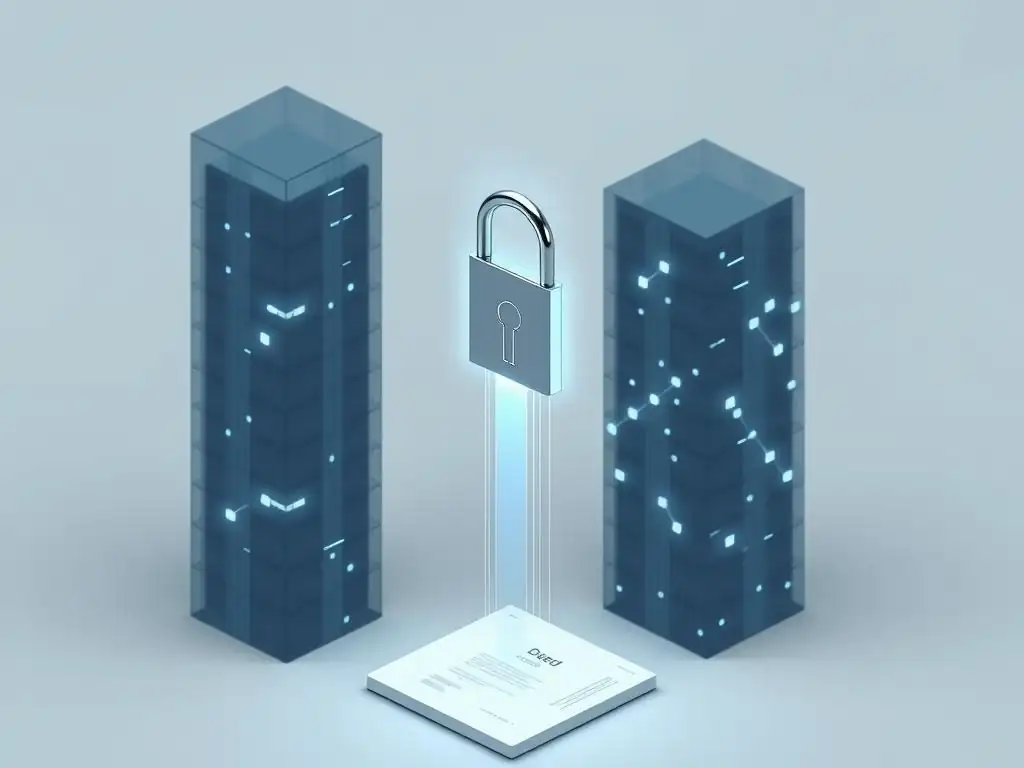
While the potential benefits are significant, the path to widespread adoption of blockchain property transfer smart contracts is not without its hurdles. Implementing this technology in the highly regulated and traditional real estate sector involves navigating complex challenges related to legal recognition, technical infrastructure, and data privacy. These issues require careful consideration and collaborative solutions from various stakeholders, including governments, legal professionals, technology providers, and market participants.
Overcoming these challenges is crucial for moving blockchain property transfer smart contracts from pilot projects and niche applications to mainstream use. The inherent complexities of real estate law, coupled with the technical novelty of blockchain for many traditional institutions, necessitate a phased and thoughtful approach to implementation. Addressing these points is key to building trust and ensuring that blockchain-based systems are not only technologically sound but also legally compliant and user-friendly.
Legal and Regulatory Compliance in Property Transfer
Perhaps the most significant challenge for blockchain property transfer smart contracts is achieving full legal and regulatory compliance. Property law is deeply embedded in centuries of tradition, national statutes, and local regulations. For a smart contract executed on a blockchain to legally effect a change in property ownership, it must be recognized as a valid legal instrument by the relevant jurisdiction. Currently, few legal systems explicitly recognize smart contracts as capable of transferring title in the same way a traditional deed does.
Governments need to establish clear legal frameworks that define the legal status of tokenized property assets, the enforceability of smart contracts in real estate contexts, and how disputes are resolved. Furthermore, compliance with anti-money laundering (AML) and know-your-customer (KYC) regulations is essential, requiring robust identity verification processes that integrate with the blockchain system. For example, while some jurisdictions like Arizona and Tennessee have passed laws recognizing the legal validity of blockchain signatures and smart contracts, specific legislation for property transfer is still largely absent or in early stages of development globally, posing a major hurdle for widespread adoption.
Technical Barriers and Infrastructure Requirements
Implementing blockchain property transfer smart contracts on a large scale also faces technical barriers and infrastructure requirements. While blockchain technology has matured, deploying and maintaining the necessary infrastructure for a national or even regional land registry is a complex undertaking. This includes ensuring the scalability of the blockchain network to handle potentially millions of property records and transactions, maintaining high levels of security against cyber threats, and ensuring interoperability with existing systems (like banking networks or other government databases).
Users also require access to the necessary technology, such as secure digital wallets for holding tokenized property assets and participating in smart contract execution. Education and technical support are needed for real estate professionals and the general public to understand and use these new systems. Furthermore, the initial cost of developing and deploying a robust, government-grade blockchain infrastructure for land registry purposes can be substantial. According to some estimates, the cost for a national-level implementation could run into millions or even tens of millions of dollars, representing a significant investment barrier.
Addressing Privacy and Data Protection Concerns
Using blockchain for property transfer also raises important privacy and data protection concerns. While the transparency of the blockchain ledger is beneficial for verifying ownership, the permanent and potentially public nature of some blockchains conflicts with privacy expectations and regulations like GDPR. Recording sensitive information, such as transaction values, party identities, or even property addresses, directly on a public, immutable ledger can be problematic.
Solutions involve using permissioned blockchains where access is restricted to authorized parties, employing zero-knowledge proofs to verify information without revealing the underlying data, or storing sensitive data off-chain with only hashes recorded on the blockchain. However, these approaches add complexity. Balancing the need for transparency and auditability with the requirements for privacy and data protection is a critical design challenge for any blockchain property transfer smart contract system. Ensuring compliance with evolving data privacy laws while leveraging the benefits of blockchain requires careful architectural design and legal consultation.
Case Examples of Blockchain-Enabled Property Transfers
Despite the challenges, the concept of using blockchain property transfer smart contracts is moving beyond theoretical discussions into real-world implementations and pilot projects. Various initiatives by governments, technology companies, and real estate firms are exploring how blockchain can be used to streamline land registration and property transactions. These examples, though sometimes limited in scope, provide valuable insights into the practical application and potential of the technology.
These early case studies highlight both the promise and the difficulties of integrating blockchain into a sector as complex and regulated as real estate. They demonstrate that while full-scale, nationwide blockchain land registries are still some years away, specific use cases, such as recording fractional ownership or facilitating specific types of transfers, are already being explored and implemented.
Real-World Implementations of Property Transfer Smart Contracts
Several countries and organizations have launched pilot projects and limited implementations of blockchain for property-related processes. For example, in 2018, the state of Vermont in the USA passed a law allowing for the creation of blockchain-based limited liability companies (LLCs) and the recording of certain property records on a blockchain, though widespread adoption hasn't followed. Sweden's Lantmäteriet (the cadastral authority) has conducted multiple trials using a consortium blockchain (ChromaWay's platform) to explore automating parts of the property transfer process, including digital contracts and interactions with banks and authorities, demonstrating potential for significant time savings.
In the private sector, companies are exploring tokenization of real estate assets, where ownership or fractional ownership is represented by digital tokens on a blockchain. While this isn't a full property transfer in the traditional sense (often involving transferring shares in an SPV that owns the property), it uses smart contracts for managing and transferring these tokens, which represent a claim on the underlying asset.
Projects like Harbor (though now shut down) aimed to facilitate compliant tokenized securities representing real estate, and platforms like Securitize continue to explore this space, using smart contracts to enforce transfer restrictions and manage ownership of these digital assets. These examples, while varied, show tangible steps towards leveraging blockchain and smart contracts in real estate.
Lessons Learned from Pilot Projects and Enterprise Solutions
Pilot projects and early enterprise solutions using blockchain property transfer smart contracts have yielded crucial lessons. One key takeaway is that technological feasibility is only one part of the equation; legal and regulatory acceptance is paramount. Projects have shown that while smart contracts can technically automate transfers, their legal standing needs explicit recognition from governments. The Swedish pilot, for instance, highlighted the need for legislative changes and the integration of multiple stakeholders (banks, lawyers, government agencies) into a shared digital workflow.
Another lesson is the complexity of integrating blockchain systems with legacy IT infrastructure used by land registries and financial institutions. This requires significant development effort and standardization. Furthermore, user adoption and education are critical.
Participants need to trust the system and understand how to use digital identities and manage private keys. Early projects have also underscored the importance of designing systems that can handle complex real estate scenarios, such as mortgages, liens, and multiple owners, which require sophisticated smart contract logic and supporting legal frameworks. These learnings are guiding the development of more robust and practical solutions for future blockchain property transfer smart contracts.
The Future of Blockchain Property Transfer Smart Contracts in Real Estate
The trajectory for blockchain property transfer smart contracts points towards a future where real estate transactions are significantly more efficient, transparent, and accessible. As regulatory clarity emerges and technological infrastructure matures, we can expect to see increased adoption, starting perhaps with specific types of properties or transactions before moving towards wider implementation. The potential impact on global real estate markets, investment strategies, and even the fundamental concept of property ownership is profound.
This future isn't just about automating existing processes; it's about enabling new possibilities, such as fractional ownership becoming easily tradable or cross-border property investments being simplified. The innovations in smart contract design and blockchain technology will continue to push the boundaries of what's possible, addressing current limitations and unlocking new levels of efficiency and liquidity in the real estate sector.
Emerging Trends in Decentralized Property Ownership
A significant emerging trend related to blockchain property transfer smart contracts is the concept of decentralized property ownership, often facilitated through tokenization. Tokenization allows real-world assets, like a piece of property, to be represented by digital tokens on a blockchain. These tokens can represent full ownership or, more commonly, fractional ownership, allowing multiple individuals to collectively own a single property. Smart contracts govern the rules around these tokens – how they can be transferred, how rental income is distributed, or how voting rights on property management are handled.
This trend democratizes access to real estate investment, allowing individuals to invest in high-value properties with smaller amounts of capital. It also increases liquidity, as tokens can theoretically be traded 24/7 on secondary markets, bypassing the lengthy process of selling an entire property. Platforms are emerging that specialize in issuing and managing these real estate tokens, using smart contracts to automate dividend payouts or facilitate token transfers compliantly. While regulatory challenges remain regarding these security tokens, the trend towards fractional and decentralized ownership via blockchain is set to reshape real estate investment.
Potential Impact on Global Real Estate Markets and Investment
The widespread adoption of blockchain property transfer smart contracts and related technologies like tokenization could have a transformative impact on global real estate markets. Increased efficiency and reduced transaction costs could lower the barriers to entry for both domestic and international investors. A more transparent and immutable record of ownership could increase confidence, particularly in markets with less robust traditional land registry systems.
Tokenization, in particular, has the potential to unlock trillions of dollars in illiquid real estate assets by making them tradable on global digital marketplaces. This could lead to greater market efficiency, more accurate price discovery, and increased capital flow into the real estate sector. While estimates vary, some reports suggest that tokenizing global real estate could unlock significant value, potentially increasing market liquidity by billions annually. This shift could fundamentally alter how real estate is viewed and traded as an asset class on a global scale.
Innovations in Smart Contract Functionality for Real Estate
Innovations in smart contract functionality are continuously expanding the possibilities for their use in real estate beyond simple transfers. Future blockchain property transfer smart contracts could incorporate more complex logic to handle various aspects of property ownership and management. This includes automating rental payments and distribution to fractional owners, managing property maintenance contracts, executing complex financing agreements like mortgage tokens, or even automating insurance payouts based on external data feeds (oracles) related to property condition or events.
Advanced smart contracts could also integrate with Internet of Things (IoT) devices within properties, enabling automated access control based on rental agreements or triggering maintenance protocols when sensors detect issues. The development of more flexible and secure oracle networks will be crucial for bringing real-world data, such as property valuations or inspection results, onto the blockchain to interact with smart contracts. These ongoing innovations promise to make smart contracts central not just to the transfer of property, but to its entire lifecycle management.
Conclusion: Transforming Property Transfers with Blockchain Smart Contracts
The journey towards widespread adoption of blockchain property transfer smart contracts represents a significant evolution in the real estate sector. The technology offers a compelling vision of a future where buying and selling property is faster, cheaper, more secure, and transparent than ever before. By leveraging the power of decentralized ledgers and automated smart contracts, many of the inefficiencies and risks inherent in traditional, paper-based processes can be mitigated or eliminated.
While considerable challenges remain, particularly in the areas of legal recognition, regulatory compliance, and integration with existing systems, the progress made in pilot projects and emerging use cases demonstrates the tangible potential. As technology matures and collaborative efforts between governments, industry, and technologists continue, the framework for legally recognized and widely adopted blockchain property transfer smart contracts will solidify.
Summary of Advantages and Remaining Challenges
The key advantages of using blockchain property transfer smart contracts include dramatically increased speed and efficiency (potentially reducing transaction times from weeks to hours), enhanced security through immutability and cryptography (reducing fraud risk), significant cost reductions by minimizing intermediaries, and the creation of immutable, transparent property records. These benefits collectively promise a more streamlined and trustworthy real estate ecosystem.
However, significant hurdles must still be overcome. The lack of clear legal and regulatory frameworks in most jurisdictions remains a primary challenge, requiring legislative action to recognize blockchain-based transfers as legally valid. Technical barriers, such as scalability, interoperability with legacy systems, and the need for robust digital identity solutions, also need to be addressed. Furthermore, privacy concerns related to storing potentially sensitive data on a public ledger require careful design and implementation of privacy-preserving techniques.
The Path Forward for Secure and Instantaneous Ownership Changes
The path forward for achieving secure and instantaneous property ownership changes through blockchain property transfer smart contracts involves continued collaboration and innovation. This includes:
- Developing clear legal and regulatory guidelines: Governments must work with legal experts and technologists to create laws that recognize and govern blockchain-based property transactions.
- Building robust and interoperable infrastructure: Scalable blockchain networks and standards for digital property representation and identity are essential.
- Piloting and scaling successful models: Learning from pilot projects and gradually expanding successful implementations, perhaps starting with specific types of properties or transactions.
- Educating stakeholders: Providing clear information and training for real estate professionals, legal practitioners, and the public on how blockchain and smart contracts work in this context.
- Focusing on security and privacy: Ensuring systems are built with the highest standards of security and incorporate necessary privacy safeguards.
While a complete transition to blockchain-based property transfer will likely take time and phased implementation, the foundation is being laid. The ongoing development of blockchain property transfer smart contracts is setting the stage for a future where property transactions are not just more efficient, but fundamentally more accessible, secure, and transparent for everyone involved.
Frequently Asked Questions
What are smart contracts and how do they apply to property transfer?
Smart contracts are self-executing agreements written in code and stored on a blockchain. They automate the process of property transfer by executing the terms of the agreement when pre-defined conditions are met, leading to instantaneous ownership changes.
How do blockchain property transfer smart contracts ensure security compared to traditional methods?
These smart contracts leverage the immutability and transparency of the blockchain. Every transaction is recorded on a distributed ledger, making it extremely difficult to tamper with or forge documents, enhancing the security and trustworthiness of the transfer process.
What are the potential benefits of using blockchain property transfer smart contracts for real estate transactions?
The benefits include reduced paperwork, faster transaction times, and lower costs. They also offer increased transparency and security, minimizing the risk of fraud and disputes associated with traditional real estate transactions.
What are the current regulatory challenges surrounding the use of blockchain property transfer smart contracts?
The lack of clear legal frameworks and regulatory guidelines surrounding blockchain technology and smart contracts poses a significant challenge. Jurisdictions are grappling with how to classify and regulate these technologies, creating uncertainty for implementation.
What is the future outlook for blockchain property transfer smart contracts and their adoption in the real estate industry?
The future looks promising, with increasing adoption driven by the potential for efficiency and cost savings. However, widespread adoption hinges on addressing regulatory hurdles, ensuring interoperability between different blockchain systems, and building user trust in the technology.
Final Reflection: Embracing the Future of Property Ownership
The promise of instantaneous and secure property transfer through blockchain technology is no longer a distant dream, but a rapidly approaching reality. The advancements in smart contracts, as explored in this article, are poised to revolutionize the way we perceive and interact with property ownership, offering a level of transparency and efficiency previously unimaginable. This shift has the potential to democratize access to property and streamline complex processes, benefiting individuals and institutions alike.
The impact of blockchain property transfer smart contracts extends far beyond mere technological innovation. It represents a fundamental shift in trust, moving away from centralized intermediaries and towards decentralized, verifiable systems. This transition is not without its challenges, but the potential benefits are too significant to ignore. As the late Buckminster Fuller wisely stated: You never change things by fighting the existing reality. To change something, build a new model that makes the existing model obsolete.
Blockchain property transfer smart contracts are building that new model.
Now, consider the implications of this technology in your own life. How might instantaneous and secure property transfer impact your community? How can you contribute to the responsible development and adoption of these transformative tools? The future of property ownership is being written today, and your understanding and engagement will help shape a more equitable and efficient world for all. Embrace the possibilities and become a part of this exciting evolution.
Okay, here's a Call to Action (CTA) based on your article title "Smart Contracts for Property Transfer: Instantaneous and Secure Ownership Changes" and the website "Blockchain Trends" (blockchaintrends.org):
Unlock the Future: Start Building Your Secure Property Portfolio!
Thank you for exploring how smart contracts are revolutionizing property transfer! Now that you understand the potential for instantaneous and secure ownership changes, it's time to take the next step toward a more efficient and trustworthy real estate landscape.
- Dive Deeper: Enroll in our introductory course on smart contracts and real estate at Blockchain Trends to gain hands-on experience in building and deploying your own property transfer smart contract.
- Explore Blockchain Real Estate Platforms: Research platforms that are already leveraging smart contracts for property transactions. See how they are solving existing problems and paving the way for the future.
- Share this article with a colleague or friend who is interested in blockchain technology and real estate and help them see the potential of this technology.
What innovative use case for smart contract property transfer excites you the most, and how do you envision implementing it in your local market?
Leave a Reply