
Smart Contracts & Real Estate: Automating Property Transactions on the Blockchain

Welcome to Blockchain Trends, your guide to understanding the revolutionary impact of blockchain beyond the hype!
Delve into the world where decentralized technology reshapes industries. Are you ready to see how blockchain is transforming real estate? In this article, we unlock the potential of Blockchain real estate smart contracts and explore how they're poised to revolutionize property transactions. Curious to learn how you can automate and secure your next real estate deal? Let's begin!
Smart Contracts & Real Estate: Automating Property Transactions on the Blockchain
- Introduction: Revolutionizing Real Estate with Blockchain and Smart Contracts
- What are Blockchain Real Estate Smart Contracts?
- How Smart Contracts are Transforming Real Estate Transactions
- Benefits of Using Blockchain Smart Contracts in Real Estate
- Use Cases: Real-World Applications of Smart Contracts in Real Estate
- Challenges and Considerations for Implementing Blockchain Real Estate Smart Contracts
- The Future of Blockchain Real Estate Smart Contracts
- Building a Decentralized Real Estate Marketplace with Smart Contracts
- Conclusion: The Dawn of Automated Property Transactions
-
Frequently Asked Questions
- How can blockchain smart contracts revolutionize real estate transactions?
- What are the key benefits of using smart contracts for real estate deals?
- What are some potential challenges or risks associated with implementing blockchain real estate smart contracts?
- How do blockchain real estate smart contracts impact traditional real estate stakeholders like brokers and title companies?
- What is the current status of blockchain adoption in the real estate industry, and what is the future outlook?
- Final Reflection: Embracing the Future of Property with Blockchain
- Unleash the Future: Secure Your Property Journey Now!
Introduction: Revolutionizing Real Estate with Blockchain and Smart Contracts
Understanding the Potential of Blockchain Technology in Property Transactions
Blockchain technology offers a distributed, immutable ledger that can fundamentally change how property transactions are recorded and verified. Unlike traditional systems that rely on fragmented databases and intermediaries, a blockchain can provide a single, transparent source of truth for property ownership records. This inherent transparency and security reduce the likelihood of fraud and disputes over title ownership, which are common issues in many real estate markets globally. For example, in jurisdictions with less robust land registries, blockchain pilot projects have demonstrated the potential to establish clear, verifiable ownership histories, drastically cutting down on litigation times and costs.
Furthermore, the distributed nature of blockchain enhances resilience against data loss or manipulation. Instead of a single point of failure, property records are spread across a network of computers. This makes it significantly harder for malicious actors to alter records undetected. Early estimates from some blockchain proponents in land registry pilots suggested potential cost savings of 30-50% on administrative processes by eliminating manual checks and reconciliation between disparate systems. This foundational layer of trust and efficiency is what makes blockchain a compelling technology for the real estate sector, paving the way for automated processes via smart contracts.
The Role of Smart Contracts in Decentralized Real Estate Marketplaces
Smart contracts are self-executing contracts with the terms of the agreement directly written into lines of code. This code resides on a blockchain, ensuring that once conditions are met, the contract automatically executes the specified actions without the need for intermediaries. In the context of decentralized real estate marketplaces, blockchain real estate smart contracts are the engine that automates everything from listing agreements to final title transfers. They replace manual, paper-based processes that are prone to delays and human error.
These smart contracts enable peer-to-peer interactions for buying, selling, or renting property. For instance, a buyer can deposit funds into a smart contract, and the contract will automatically release the funds to the seller and potentially trigger a title transfer upon verification of specific conditions, such as the recording of the new ownership on a blockchain-based registry.
This capability is crucial for creating efficient, trustless environments where participants can transact directly. While still nascent, platforms exploring this model estimate potential transaction speed increases of up to 70% compared to traditional methods, which often involve weeks or months of paperwork and third-party coordination.
What are Blockchain Real Estate Smart Contracts?
Defining Smart Contracts: Self-Executing Agreements on the Blockchain
At its core, a smart contract is a piece of code deployed on a blockchain network that executes predefined actions when certain conditions are met. Think of it as an "if-then" statement embedded in the blockchain ledger. The terms of the agreement between parties are coded directly into the contract.
Once deployed, the contract code is immutable and transparent on the blockchain, meaning everyone can see the rules, but no one can alter them unilaterally. This transparency builds trust, as the execution is guaranteed by the code and the distributed network, not by a potentially fallible or biased human intermediary.
For example, a simple smart contract for a rental agreement might be coded to automatically release monthly rent payments from a tenant's digital wallet to a landlord's wallet on a specific date, if the tenant's wallet holds sufficient funds. If the funds are insufficient, the contract might trigger a notification or a late fee penalty as specified in the code. The execution is automated and deterministic, removing the need for manual processing or escrow agents for simple payment flows. This fundamental definition applies directly to blockchain real estate smart contracts, enabling automated processes for complex property deals.
Key Features and Benefits of Smart Contracts in Real Estate
Blockchain real estate smart contracts possess several key features that offer significant benefits over traditional contracts. Firstly, they are automated, removing the need for manual execution by intermediaries like lawyers or escrow agents, which speeds up processes and reduces costs. Secondly, they are immutable once deployed on the blockchain, ensuring that the terms cannot be changed by one party without the consensus mechanisms of the network, providing a high degree of security and trust. Thirdly, they are transparent (if the code is publicly accessible), allowing all parties to verify the terms and logic of the agreement.
These features translate into tangible benefits for the real estate sector. The automation and reduced reliance on intermediaries can lower transaction costs significantly; some estimates suggest potential savings of 1-3% of the property value by eliminating various fees. The immutability and transparency enhance security and reduce the risk of fraud or disputes, as the terms and execution history are verifiable on the public ledger.
Furthermore, smart contracts can enable new models like fractional ownership by automating the distribution of rent or sale proceeds among multiple owners based on their proportional stake, which is difficult and costly with traditional methods. The efficiency gains derived from automating processes like payments, title transfers, and compliance checks are substantial.
How Smart Contracts are Transforming Real Estate Transactions
Automating Title Transfers with Blockchain Smart Contracts
One of the most significant applications of blockchain real estate smart contracts is the automation of title transfers. In traditional systems, transferring property title involves extensive paperwork, manual verification by legal professionals, and registration with government land registries, a process that can take weeks or even months and incur substantial fees.
By representing property ownership as a digital token on a blockchain, a smart contract can be programmed to automatically transfer this token from the seller's digital wallet to the buyer's wallet upon the fulfillment of specific conditions, such as the full payment of the purchase price being confirmed on the blockchain.
This automated transfer, linked to the immutable blockchain ledger, can drastically reduce the time and complexity involved. While regulatory frameworks are still evolving to legally recognize blockchain-based titles, pilot projects in jurisdictions like Sweden and Georgia have explored the technical feasibility of using blockchain for land registration, demonstrating the potential for near-instantaneous updates to the ownership record upon smart contract execution. This level of automation promises to streamline the final, often most protracted, stage of a property transaction.
Streamlining Escrow Processes Using Decentralized Smart Contracts
Escrow is a critical part of real estate transactions, where a neutral third party holds funds or assets until all conditions of the agreement are met. This process traditionally involves escrow companies, which charge fees (often 0.5% to 2% of the transaction value) and can introduce delays. Blockchain real estate smart contracts can replicate the function of escrow agents in a decentralized and automated manner.
The buyer can deposit the purchase funds into a smart contract, which holds the funds securely on the blockchain. The contract is programmed to release the funds to the seller only when specified conditions are met, such as the successful transfer of the property token or title documentation being uploaded and verified (if verification is part of the coded logic).
This decentralized escrow significantly reduces costs by eliminating the intermediary fee and speeds up the release of funds once conditions are verified on-chain. For example, instead of waiting days for bank transfers and manual verification, the release can be near-instantaneous upon the triggering condition. While complex transactions might still require some off-chain verification steps, the core function of holding and releasing funds based on predefined rules is perfectly suited for smart contract automation, enhancing both efficiency and security by removing human handling of funds.
Smart Contracts for Property Management and Rental Agreements
Beyond buying and selling, blockchain real estate smart contracts can also revolutionize property management and rental agreements. For landlords and property managers, smart contracts can automate recurring tasks like rent collection, security deposit management, and even lease enforcement. A rental smart contract can be set up to automatically debit the tenant's account on the due date and transfer funds to the landlord's account, provided sufficient funds are available. Late fees or penalties can also be automatically triggered by the contract if payments are missed, according to the coded terms.
Furthermore, smart contracts can manage security deposits. The deposit can be held in a smart contract that is programmed to release it back to the tenant at the end of the lease term, unless specific conditions for deductions (e.g., documented damages exceeding normal wear and tear) are met and verified according to the contract's logic. This removes potential disputes over deposit returns and automates the process. Estimates suggest that automating rent collection and deposit management via smart contracts could save property managers significant administrative time, potentially reducing operational costs by 10-15% annually for large portfolios.
Benefits of Using Blockchain Smart Contracts in Real Estate
Increased Transparency and Security in Property Deals
One of the primary advantages of using blockchain real estate smart contracts is the significant increase in transparency and security throughout property transactions. Every step executed by a smart contract is recorded on the immutable blockchain ledger, visible to all participants (and often the public, depending on the blockchain). This creates a transparent audit trail of the transaction process, from initial agreement conditions to final execution. Unlike traditional deals where information might be siloed among intermediaries, blockchain ensures that the state of the contract and the fulfillment of conditions are verifiable by all involved parties.
This transparency inherently enhances security. The immutable nature of the blockchain means that once a transaction or contract execution is recorded, it cannot be altered or deleted. This drastically reduces the risk of fraud, such as double-selling a property or tampering with transaction records. Furthermore, by automating processes and reducing human touchpoints, the potential for human error or malicious manipulation at critical stages is minimized. The security provided by cryptographic principles underpinning the blockchain network adds another layer of protection against unauthorized access and data breaches.
Reduced Costs and Faster Transaction Times in Real Estate
The traditional real estate transaction process is notoriously slow and expensive, involving numerous intermediaries such as lawyers, escrow agents, banks, and title companies, each adding fees and time delays. Blockchain real estate smart contracts have the potential to significantly reduce both costs and transaction times by automating many of these functions and enabling peer-to-peer interactions. By replacing human-driven processes with automated code execution, fees associated with intermediaries can be substantially lowered or eliminated entirely.
Estimates vary, but some analyses suggest that the total cost of a real estate transaction could be reduced by 20-50% by leveraging blockchain and smart contracts, primarily through cutting out intermediary fees and reducing administrative overhead. Similarly, transaction times can be compressed from weeks or months to potentially days or even hours for certain steps like payment processing and title verification (once regulatory frameworks allow). The efficiency gains from automated verification and execution contribute directly to faster closings, benefiting both buyers and sellers by reducing uncertainty and allowing quicker access to funds or property.
Enhanced Efficiency and Automation in Property Management
The benefits of blockchain real estate smart contracts extend beyond buying and selling to the ongoing management of properties. As discussed, automating rent collection, deposit management, and maintenance requests through smart contracts can lead to substantial efficiency gains for landlords and property management companies. Instead of manually tracking payments, sending reminders, and reconciling accounts, these tasks can be handled automatically by the smart contract based on predefined schedules and conditions.
This automation frees up property managers to focus on value-added activities rather than administrative burdens. For large property portfolios, even marginal efficiency improvements per unit can result in significant overall cost savings. Moreover, smart contracts can provide a transparent and automated record of all transactions and interactions related to the property, simplifying accounting and reporting. The ability to programmatically manage aspects of the landlord-tenant relationship reduces manual workload and minimizes potential disputes arising from miscommunication or record-keeping errors.
Use Cases: Real-World Applications of Smart Contracts in Real Estate
Case Study 1: Property Tokenization in Aspen, Colorado
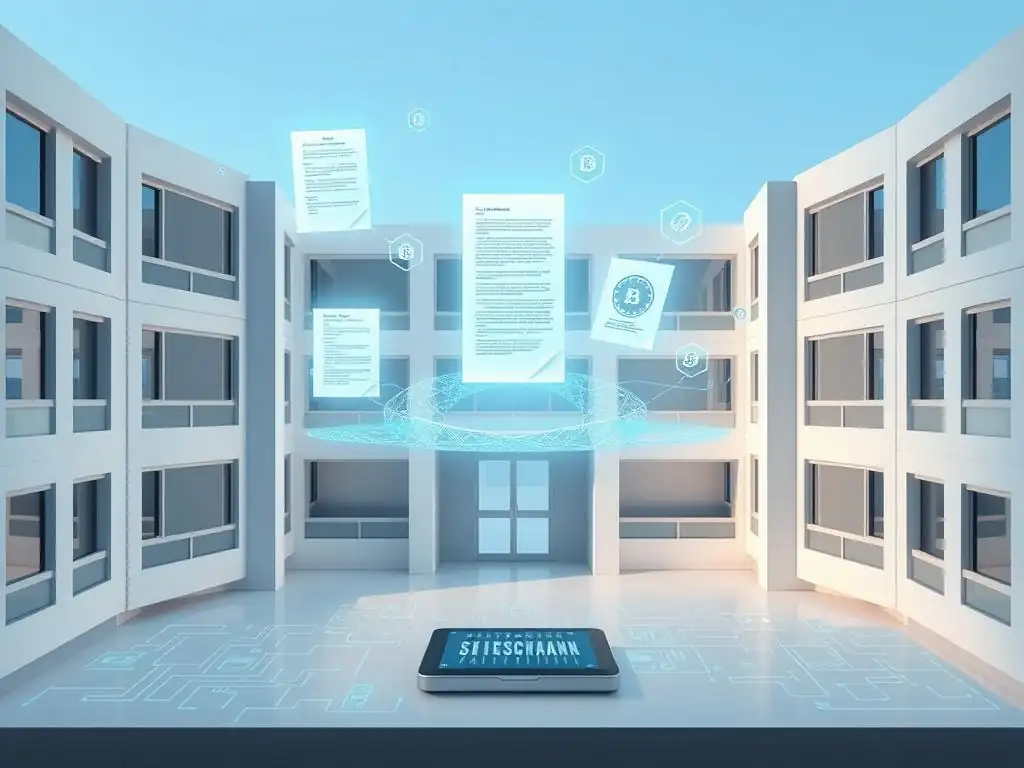
One notable real-world application involving blockchain real estate smart contracts is the tokenization of property. In 2018, a fractional ownership stake in the St. Regis Aspen Resort in Colorado was tokenized on the Ethereum blockchain. This involved representing ownership shares as digital tokens, which could then be bought and sold on a regulated security token trading platform. The smart contracts underpinning this tokenization managed the fractional ownership structure, including potentially automating the distribution of rental income or sale proceeds to token holders based on their stake.
This case demonstrated the feasibility of using blockchain to break down ownership of high-value real estate assets into smaller, more accessible units. While the primary focus was on tokenization for investment purposes, the smart contracts were essential for managing the rights and obligations associated with these digital shares. The use of blockchain real estate smart contracts in this context reduced the complexity and cost traditionally associated with syndicating real estate investments, opening up possibilities for greater liquidity and broader investor participation in the real estate market.
Case Study 2: Smart Contract-Based Rental Platform in Dubai
Dubai has been a hub for blockchain innovation, and several initiatives have explored its application in real estate. While specific large-scale, fully smart contract-based rental platforms are still emerging, pilot projects and companies in the region have demonstrated the use of smart contracts for automating rental agreements and payments. For instance, some platforms have explored integrating rental contracts with blockchain to ensure immutable records and automate rent collection using digital wallets.
These platforms aim to streamline the rental process, which in Dubai, like many places, involves multiple steps including contract registration with government entities (like Ejari). By using blockchain real estate smart contracts, aspects like payment schedules, late fee clauses, and even maintenance request triggers can be coded and automated. While full integration with government systems is an ongoing effort, these pilots highlight the potential for smart contracts to improve efficiency and transparency in the rental market, reducing administrative overhead for landlords and providing clear, automated terms for tenants.
Smart Contracts for Fractional Ownership of Real Estate Assets
Fractional ownership, allowing multiple investors to own a portion of a single property, is a concept significantly enabled by blockchain real estate smart contracts. Traditionally, facilitating fractional ownership was complex, requiring elaborate legal structures and ongoing administrative effort to manage shared expenses, income distribution, and decision-making among co-owners. Smart contracts simplify this by representing ownership as tokens on a blockchain, where each token represents a specific share of the property.
The smart contracts are programmed to handle the mechanics of fractional ownership automatically. This includes distributing rental income proportionally to token holders, managing voting rights for property decisions (if applicable), and simplifying the process of selling one's share by selling the tokens on a secondary market.
Platforms leveraging blockchain real estate smart contracts for fractional ownership aim to make real estate investment more accessible and liquid, lowering the barrier to entry for investors who cannot afford an entire property but wish to invest in real estate assets. This model is being explored globally, with potential to unlock significant capital in the real estate sector.
Challenges and Considerations for Implementing Blockchain Real Estate Smart Contracts
Regulatory Hurdles and Legal Frameworks for Smart Contracts
One of the most significant challenges facing the widespread adoption of blockchain real estate smart contracts is the lack of clear and consistent regulatory frameworks. Real estate law is deeply rooted in traditional, often centuries-old, legal systems that rely on paper deeds, manual registration, and established legal precedents. Recognizing a smart contract as a legally binding agreement for property transfer, and a blockchain record as proof of ownership, requires significant legal reform. Many jurisdictions have yet to adapt their laws to accommodate blockchain technology and smart contracts in property law.
For instance, determining how to handle disputes when a smart contract executes as coded but one party claims the code did not accurately reflect their intent is a complex legal question. Issues around jurisdiction, enforcement, and consumer protection in a decentralized, cross-border environment also need to be addressed. Until legal clarity is established and traditional land registries integrate with or are replaced by blockchain systems, the full potential of blockchain real estate smart contracts will remain limited by the existing legal infrastructure.
Security Risks and Vulnerabilities in Smart Contract Code
While blockchain provides inherent security through its decentralized and immutable nature, smart contracts themselves are pieces of software code, and code can contain bugs or vulnerabilities. A single error in a smart contract's code can have severe consequences, potentially leading to the loss of funds or irreversible, incorrect execution of a property transaction. Unlike traditional contracts that can often be amended or interpreted by courts if errors are found, a deployed smart contract is immutable, meaning bugs can be difficult or impossible to fix once live.
High-profile incidents in the blockchain space, such as the DAO hack on Ethereum where a vulnerability in a smart contract led to the loss of millions of dollars, highlight these risks. For blockchain real estate smart contracts, where assets are of high value, rigorous auditing and security testing of the code are paramount. Ensuring the code accurately reflects the complex legal terms of a real estate transaction and is free from exploitable vulnerabilities requires specialized expertise and careful development practices, adding cost and complexity to initial implementations.
Scalability and Interoperability Issues in Blockchain Real Estate
Current blockchain technology, particularly public blockchains, can face challenges with scalability. Processing the high volume of transactions that occur daily in global real estate markets could potentially overwhelm some networks, leading to slow transaction times and high fees, which would negate some of the key benefits of using blockchain real estate smart contracts. While newer blockchain protocols and Layer 2 solutions are addressing scalability, it remains a consideration for large-scale real estate applications.
Furthermore, interoperability is crucial. Real estate transactions involve numerous parties and systems: banks, title companies, government registries, inspection services, etc. For blockchain real estate smart contracts to function seamlessly, they need to be able to interact with these existing, often legacy, systems. Building bridges between blockchain networks and traditional financial and legal infrastructures is a complex task. Until robust standards and technologies for interoperability are developed and adopted, integrating blockchain real estate smart contracts into the broader real estate ecosystem will present technical hurdles.
The Future of Blockchain Real Estate Smart Contracts
Predictions for the Growth of Smart Contract Adoption in Real Estate
Despite the challenges, the trajectory for blockchain real estate smart contracts is one of increasing adoption, albeit initially in specific niches. Experts predict that the use of smart contracts will grow incrementally, first automating specific parts of the transaction process, such as escrow or payments in rental agreements, before moving towards full end-to-end transaction automation. Tokenization of real estate assets, driven by the efficiency smart contracts provide for managing fractional ownership and distribution of income, is also expected to see significant growth.
Industry reports suggest that the market size for blockchain in real estate is projected to grow substantially over the next decade, with smart contracts being a core component of this growth. Early adoption is likely to be concentrated in forward-thinking jurisdictions or within private, controlled environments for institutional investors before becoming mainstream for residential transactions. The increasing understanding of blockchain technology and the development of more user-friendly platforms will also contribute to this predicted growth trajectory for blockchain real estate smart contracts.
The Impact of Smart Contracts on the Role of Real Estate Professionals
The rise of blockchain real estate smart contracts will undoubtedly impact the roles of traditional real estate professionals, but it is unlikely to eliminate them entirely in the near to medium term. Instead, their roles are expected to evolve. Real estate agents, for instance, will still be essential for market knowledge, property showings, negotiation (the human element of striking a deal), and providing personalized advice. Lawyers will shift from managing paperwork and manual verification to drafting and auditing the complex code of smart contracts, advising clients on blockchain-based transactions, and navigating the evolving legal landscape.
Escrow agents' roles might be most directly impacted by the automation capabilities of smart contracts, potentially shifting towards providing verification services for off-chain conditions or complex transaction oversight not fully handled by code. Overall, professionals will need to become technologically savvy, understanding how blockchain and smart contracts function. The future likely involves a hybrid model where technology automates routine tasks, allowing professionals to focus on high-value, human-centric aspects of the real estate process.
Exploring the Integration of AI and Smart Contracts in Real Estate
The future of blockchain real estate smart contracts could involve integration with Artificial Intelligence (AI). AI could enhance smart contracts by providing sophisticated data analysis and predictive capabilities. For example, AI could analyze market data to automatically adjust rental prices based on demand fluctuations, trigger maintenance smart contracts based on predictive analysis of property wear and tear, or even assist in evaluating property values for tokenization.
AI could also play a role in verifying complex off-chain conditions for smart contract execution, such as confirming property inspections or legal due diligence outcomes by processing and interpreting documentation. Combining the automated, trustless execution of smart contracts with the data analysis and decision-making capabilities of AI could lead to highly sophisticated and efficient decentralized real estate applications. While this integration is still in early exploratory stages, it represents a potential future direction for enhancing the functionality and intelligence of blockchain real estate smart contracts.
Building a Decentralized Real Estate Marketplace with Smart Contracts
Key Components of a Blockchain-Based Real Estate Platform
Building a decentralized real estate marketplace using blockchain technology involves several key components working in concert. At the foundation is the blockchain network itself, which serves as the immutable ledger for recording transactions and ownership. This could be a public blockchain like Ethereum or a private/consortium chain depending on the platform's design and requirements regarding privacy and control.
Above the blockchain layer sits the smart contracts. These are the core logic engines that automate the various processes: property listing, offer submission, escrow, payment processing, fractional ownership management, and potentially title transfer. These blockchain real estate smart contracts define the rules and execute the agreed-upon actions automatically. Other crucial components include:
- A user interface (UI) or platform for users to interact with the marketplace, browse listings, make offers, and manage their properties/tokens.
- Digital Wallets for users to securely store their cryptocurrency and property tokens.
- Oracles (for some applications) which are third-party services that provide external data to the smart contracts (e.g., verification of off-chain events like property inspections or legal confirmations).
- Identity and verification mechanisms (e.g., KYC/AML processes) to ensure compliance with regulations, even in a decentralized environment.
- A token standard (e.g., ERC-20 or ERC-721/1155 on Ethereum) if tokenizing properties or fractional shares.
Smart Contract Development for Real Estate Applications: Best Practices
Developing robust and secure blockchain real estate smart contracts requires adherence to specific best practices due to their immutability and the high value of the assets involved.
- Thorough Requirement Gathering: Clearly define all terms, conditions, and execution logic before coding. Real estate contracts are complex; ensuring the code accurately reflects the legal agreement is paramount.
- Modular Design: Break down complex logic into smaller, manageable smart contracts or functions, improving readability, testability, and security.
- Code Auditing: Engage independent security auditors to review the smart contract code for vulnerabilities and bugs before deployment. This is a critical step given the irreversibility of errors.
- Extensive Testing: Conduct comprehensive testing covering all possible scenarios, edge cases, and potential failure points. This includes unit testing, integration testing, and formal verification methods where possible.
- Upgradeability Considerations: While smart contracts are typically immutable, designing for upgradeability via proxy patterns or similar methods can allow for bug fixes or feature enhancements, provided this capability aligns with the desired level of decentralization and security.
- Gas Optimization: Write efficient code to minimize transaction costs (gas fees) on the blockchain, which can be significant, especially on networks like Ethereum during peak times.
- Clear Documentation: Document the smart contract code and its functionality clearly for future reference and audits.
Following these practices helps mitigate risks and build reliable blockchain real estate smart contracts.
Ensuring Security and Compliance in Decentralized Real Estate Marketplaces
Ensuring security and compliance in decentralized real estate marketplaces built with blockchain real estate smart contracts involves a multi-faceted approach. Security starts with the smart contracts themselves, as discussed in development best practices. Beyond code security, platform-level security measures are essential, including secure user authentication, protection against denial-of-service attacks, and secure storage of any off-chain data.
Compliance with existing regulations, such as KYC (Know Your Customer) and AML (Anti-Money Laundering) laws, is crucial, even in a decentralized setup. Platforms must implement identity verification procedures for users, potentially using decentralized identity solutions or integrating with traditional identity providers. Furthermore, navigating the legal landscape regarding property ownership and transaction recording requires close collaboration with legal experts and potentially regulatory bodies to ensure the platform's operations are legally sound and recognized. This might involve hybrid models where blockchain records are used in conjunction with traditional legal documentation and registration processes until regulations evolve.
Conclusion: The Dawn of Automated Property Transactions
Embracing the Power of Blockchain and Smart Contracts in Real Estate
The integration of blockchain technology and smart contracts is poised to usher in a new era for the real estate industry, moving towards more automated, transparent, and efficient property transactions. Blockchain provides the secure, immutable ledger necessary to record ownership and transaction history reliably, while blockchain real estate smart contracts provide the automated execution layer that can streamline complex processes like buying, selling, and managing property. From automating title transfers and escrow to enabling fractional ownership and efficient property management, the potential applications are vast and transformative.
While significant challenges remain, particularly concerning regulatory adaptation and technical scalability, the momentum towards exploring and implementing these technologies is undeniable. Early use cases demonstrate the feasibility and benefits, pointing towards a future where the friction, cost, and time associated with real estate transactions are drastically reduced. Embracing blockchain real estate smart contracts is not just about adopting a new technology; it's about fundamentally rethinking how property deals are conducted, moving towards a more digital, automated, and decentralized model.
Key Takeaways: The Future of Real Estate is Decentralized and Automated
The journey towards a fully decentralized and automated real estate market powered by blockchain real estate smart contracts is ongoing, but the direction is clear. Key takeaways include:
- Blockchain provides the foundational trust layer with its immutable and transparent ledger.
- Smart contracts automate complex transaction steps, reducing reliance on intermediaries.
- Benefits include increased security, transparency, reduced costs, and faster transaction times.
- Fractional ownership and efficient property management are key areas already seeing smart contract application.
- Regulatory clarity and robust smart contract security are critical hurdles that require focused effort.
- The roles of real estate professionals will evolve, focusing on value-added services rather than manual processes.
- The future likely involves a hybrid approach initially, gradually transitioning towards more decentralized models as technology and regulations mature.
The vision of automated property transactions on the blockchain, driven by smart contracts, is rapidly moving from concept to reality, promising a more accessible, efficient, and secure real estate ecosystem for everyone involved.
Frequently Asked Questions
How can blockchain smart contracts revolutionize real estate transactions?
Blockchain smart contracts can automate and streamline real estate transactions by removing intermediaries and providing a transparent, secure, and immutable record of ownership. This reduces fraud and costs.
What are the key benefits of using smart contracts for real estate deals?
Key benefits include increased transparency, reduced transaction times, lower transaction costs due to the elimination of intermediaries, and enhanced security against fraud and manipulation.
What are some potential challenges or risks associated with implementing blockchain real estate smart contracts?
Challenges include regulatory uncertainty, the need for interoperability with existing systems, and the potential for smart contract vulnerabilities if the code is not properly audited and secured.
How do blockchain real estate smart contracts impact traditional real estate stakeholders like brokers and title companies?
They may need to adapt their roles to focus on value-added services such as contract creation, legal compliance, and dispute resolution, rather than solely on facilitating transactions. Traditional roles may evolve.
What is the current status of blockchain adoption in the real estate industry, and what is the future outlook?
Adoption is still in its early stages, but there is growing interest and investment. The future outlook suggests wider adoption as the technology matures and regulatory frameworks become clearer, leading to more efficient and transparent real estate markets.
Final Reflection: Embracing the Future of Property with Blockchain
The journey through the intricacies of blockchain real estate smart contracts reveals a potent force poised to reshape the very foundation of property transactions. No longer a futuristic fantasy, the automation and transparency offered by these contracts are actively disrupting traditional processes, promising efficiency and security in an industry ripe for innovation. This shift isn't just about technology; it's about empowering individuals and streamlining a system often plagued by complexity and opacity.
The impact of blockchain on real estate extends far beyond mere automation; it fosters a new era of trust and accessibility. The potential to democratize property ownership, reduce fraud, and expedite transactions is truly transformative, and witnessing this evolution firsthand is both exciting and humbling. The best way to predict the future is to create it.
- Peter Drucker. This quote resonates deeply as we consider the proactive role we can all play in shaping this future, ensuring that the benefits of blockchain technology are realized equitably and responsibly.
Now, as you step away from this exploration of blockchain real estate smart contracts, consider the implications for your own life and community. How can you embrace this technology to foster greater transparency and efficiency in your own property dealings? How can you advocate for its responsible implementation to ensure a more equitable and accessible real estate landscape for all? The future of property is being written now, and your voice, your understanding, and your action are vital to shaping its narrative.
Unleash the Future: Secure Your Property Journey Now!
Thanks for diving into the world of smart contracts and real estate automation! We hope this article illuminated the potential for a more efficient and transparent property market. Now, let's put that knowledge into action and shape the future of real estate.
Here are a few steps you can take right away:
- Dive Deeper: Explore existing blockchain real estate platforms: and identify potential investment or collaboration opportunities.
- Contribute to the conversation:Share this article with your network and spark discussions about the impact of blockchain on the real estate sector.
- Become an advocate: Reach out to local real estate professionals and educate them on the benefits of smart contracts - be a champion for change!
What exciting, unexpected blockchain applications do you envision transforming the real estate landscape? Share your thoughts below!
Leave a Reply