
Smart Contracts and Real Estate Investment Trusts (REITs): A Synergistic Future?


Welcome to Blockchain Trends, your guide to understanding the revolutionary impact of blockchain beyond the hype.
Delve into a world where decentralized solutions are reshaping industries. Are you ready to discover how blockchain technology is transforming real estate? Our in-depth analysis of blockchain real estate smart contracts explores the exciting possibilities and synergistic potential with Real Estate Investment Trusts (REITs). Unlock the future of property investment and see how smart contracts are paving the way for greater efficiency, transparency, and accessibility. Curious to know more? The future of real estate is being built on the blockchain – let's explore it together.
- Introduction to Blockchain Real Estate Smart Contracts and REITs
- The Role of Smart Contracts in Modern Real Estate Transactions
- Synergies Between Smart Contracts and Real Estate Investment Trusts
- Technical Aspects of Integrating Blockchain Smart Contracts with REITs
- Challenges and Limitations of Blockchain Smart Contracts in Real Estate Investments
- Future Outlook: The Transformative Potential of Blockchain Smart Contracts in REITs
- Conclusion: Evaluating the Synergistic Future of Blockchain Real Estate Smart Contracts and REITs
-
Frequently Asked Questions
- What are smart contracts in the context of real estate?
- How can blockchain improve Real Estate Investment Trusts (REITs)?
- What role does decentralization play in real estate transactions?
- Are there any regulatory challenges associated with using blockchain in real estate?
- What is the future of blockchain in real estate investment?
- Final Reflection: Embracing the Blockchain Revolution in Real Estate
- Revolutionize Your REIT Investing Today!
Introduction to Blockchain Real Estate Smart Contracts and REITs
Real Estate Investment Trusts (REITs) have long served as a popular vehicle for investors seeking exposure to real estate without the complexities of direct property ownership. They pool capital to acquire, operate, or finance income-producing real estate, offering diversification and liquidity relative to physical assets. Simultaneously, blockchain technology, initially known for cryptocurrencies, is demonstrating transformative potential across various industries, including real estate.
The concept of blockchain real estate smart contracts is emerging as a powerful tool that could redefine how real estate assets, including those within REIT structures, are managed, traded, and owned. This article explores the potential synergy between blockchain real estate smart contracts and REITs, examining how the automation and transparency offered by smart contracts could enhance the traditional REIT model.
Understanding Blockchain Technology in Real Estate Investment
Blockchain technology provides a decentralized, immutable ledger that records transactions across a network of computers. In the context of real estate investment, this distributed ledger can track property ownership, transaction history, and associated documents with unprecedented transparency and security. Unlike traditional centralized databases prone to single points of failure or manipulation, a blockchain ensures that once data is recorded, it is extremely difficult to alter, creating a reliable and auditable trail for every asset and transaction.
This immutability is particularly valuable in real estate, where disputes over ownership or transaction details can be costly and time-consuming. For example, a blockchain could record the entire chain of title for a property, providing a verifiable history that eliminates manual title searches and reduces the risk of title fraud.
Furthermore, the distributed nature means that this critical information is not held by a single entity, increasing resilience. Pilot projects have shown potential for significant time savings, with some estimates suggesting a reduction in transaction times from weeks to days or even hours in specific use cases focused on recording ownership changes on-chain.
Overview of Real Estate Investment Trusts (REITs) and Their Market Role
Real Estate Investment Trusts (REITs) are companies that own, operate, or finance income-producing real estate across a range of property sectors. Modeled after mutual funds, they allow anyone to invest in large-scale portfolios of real estate in the same way they invest in other industries – through the purchase of individual company stock. REITs offer a liquid way to invest in real estate, as shares are traded on major exchanges, unlike physical properties which can take months or years to sell.
REITs play a crucial role in the global financial market, providing investors with diversification, potential income through dividends (REITs are legally required to distribute a significant portion of their taxable income, typically 90%, to shareholders annually), and potential capital appreciation. The total market capitalization of publicly traded REITs globally is substantial, exceeding $2 trillion, demonstrating their significance as an investment class. They provide access to diverse property types, from shopping malls and office buildings to apartments and data centers, enabling investors to gain exposure to sectors they might not otherwise access directly.
The Role of Smart Contracts in Modern Real Estate Transactions
Smart contracts are self-executing contracts with the terms of the agreement directly written into code. They run on a blockchain, automatically executing predefined actions when specific conditions are met. In modern real estate transactions, smart contracts offer a paradigm shift from paper-based, intermediary-heavy processes to automated, transparent, and potentially trustless exchanges. They can automate various steps, from escrow payments released upon title transfer verification to the distribution of rental income among co-owners.
The application of blockchain real estate smart contracts promises to reduce reliance on intermediaries like lawyers, escrow agents, and brokers for certain transactional aspects, potentially lowering costs and speeding up processes. For instance, a smart contract could hold earnest money in escrow and automatically release it to the seller's digital wallet once the property title is successfully transferred on the blockchain and recorded immutably. This automation minimizes human error and potential delays inherent in traditional manual processes.
What Are Blockchain Real Estate Smart Contracts?
Blockchain real estate smart contracts are digital agreements encoded onto a blockchain that automatically execute actions related to real estate assets based on predefined conditions. These conditions are verifiable and transparent on the distributed ledger. For example, a simple smart contract could be programmed to transfer ownership tokens representing a property share from a buyer's wallet to a seller's wallet upon confirmation of funds being received in the seller's account or another specified condition being met.
The key distinction is that the terms are not just written on paper; they are executable code. This code lives on a blockchain network, making it immutable once deployed and accessible to all participants (depending on whether it's a public or private chain).
This means that the execution is guaranteed by the network's consensus mechanism, removing the need for a trusted third party to enforce the agreement. For a blockchain real estate smart contract to function effectively, it often relies on "oracles" – external data feeds that provide real-world information (like property registration confirmation or payment status) to trigger the contract's execution.
Key Features of Smart Contracts for Real Estate Applications
Smart contracts possess several key features that make them particularly relevant for real estate applications. Automation is perhaps the most significant, enabling processes like payment transfers, document releases, or ownership updates to occur automatically when conditions are met, reducing manual effort and potential delays. Immutability ensures that once a smart contract is deployed and data is recorded on the blockchain, it cannot be retrospectively altered, providing a high level of security and trust in the recorded information.
Transparency (on public blockchains) allows all parties to view the terms of the contract and track its execution, fostering trust and reducing information asymmetry. Security is enhanced by the cryptographic nature of blockchain, making transactions resistant to fraud and tampering.
For instance, a smart contract could manage a property lease, automatically collecting rent payments on a specific date and distributing them, or even triggering late fees if payment conditions aren't met, all recorded transparently on the ledger. Pilots in property management using smart contracts have demonstrated the potential to automate rent collection and distribution, reducing administrative overhead by an estimated 15-20% in test environments.
Benefits of Automating REIT Operations with Smart Contracts
Integrating blockchain real estate smart contracts into REIT operations could yield significant benefits by automating various administrative and transactional processes. Consider the distribution of dividends to thousands of shareholders.
Traditionally, this involves significant administrative overhead, including record-keeping, calculation, and disbursement through various payment systems. A smart contract could automate this entire process: upon meeting the criteria for dividend distribution (e.g., quarterly profits reaching a certain threshold), the smart contract could automatically calculate the dividend per share based on token holdings and distribute the corresponding funds (in fiat or digital currency) to token holders' wallets, recorded instantly and transparently on the blockchain.
Beyond dividend distribution, smart contracts could automate shareholder voting processes, managing proxy votes and tallying results securely on the blockchain. They could also streamline the management of property-level data within the REIT portfolio, linking specific income streams or expenses directly to tokenized property assets. This level of automation can potentially reduce operational costs by streamlining back-office functions and minimizing manual data entry and verification, freeing up resources for strategic management and investment activities.
Synergies Between Smart Contracts and Real Estate Investment Trusts
The synergy between blockchain real estate smart contracts and REITs lies in the ability of smart contracts to enhance the core functions and investor experience of a REIT. By leveraging smart contracts, REITs can become more efficient, transparent, and potentially offer new features like fractional ownership and improved liquidity. The traditional REIT structure, while providing accessibility to real estate investment, still operates within legacy financial and legal systems that can be slow and opaque. Smart contracts offer a path toward a more digitized and automated future for these investment vehicles.
This integration isn't about replacing the REIT structure entirely but augmenting it with the capabilities of blockchain technology. Imagine a REIT where the underlying properties or shares are represented by tokens on a blockchain. Blockchain real estate smart contracts would govern the rules around these tokens – who can hold them, how they are transferred, how income is distributed, and how votes are counted. This creates a programmatic layer on top of the traditional legal and operational framework of the REIT, potentially unlocking greater efficiency and investor benefits.
How Smart Contracts Enhance Transparency and Trust in REITs
Transparency is a significant advantage offered by blockchain real estate smart contracts when applied to REITs. On a public blockchain, the terms of the smart contract are open for anyone to inspect, and the execution of the contract's code is visible on the distributed ledger. This means investors can theoretically see how dividends are calculated and distributed, how management fees are processed, or how property transactions are recorded, all validated by the network rather than relying solely on financial reports from the REIT manager.
While not all REIT data would necessarily be public (especially sensitive financial details or tenant information), the core rules governing the relationship between the REIT and its token holders (shareholders) could be encoded and executed via blockchain real estate smart contracts. This immutable record of transactions and rule execution builds trust by providing an auditable trail that is resistant to manipulation.
For example, investors could verify that dividend payments were distributed according to the promised schedule and calculation method, increasing confidence in the REIT's operations. Some private blockchain implementations for real estate asset management have reported increased data integrity and reduced reconciliation efforts by up to 30% in internal trials.
Improving Liquidity and Fractional Ownership in REITs via Blockchain
One of the most compelling synergies is the potential for blockchain real estate smart contracts to facilitate fractional ownership and improve the liquidity of REIT shares. Tokenization allows the division of a single asset (or a portfolio of assets within a REIT) into a large number of digital tokens, each representing a fractional stake. These tokens, governed by smart contracts, can be bought and sold more easily than traditional shares or direct property interests, particularly for smaller denominations.
Consider a REIT that tokenizes its portfolio. Instead of buying shares representing a portion of the entire trust, investors could potentially buy tokens representing direct fractional ownership in specific properties within the trust, or simply more granular shares of the overall entity.
These tokens, managed by blockchain real estate smart contracts, could then be traded on secondary markets 24/7, potentially increasing liquidity compared to traditional stock exchange hours. While still in early stages, several real estate tokenization platforms have successfully executed pilot transactions, demonstrating the technical feasibility of representing fractional ownership of properties via tokens, though regulatory hurdles remain significant for widespread adoption in large-scale REITs.
Streamlining Compliance and Regulatory Reporting through Smart Contracts
Compliance and regulatory reporting are complex and resource-intensive aspects of managing a REIT. Blockchain real estate smart contracts have the potential to streamline these processes significantly. Smart contracts can be programmed to automatically enforce compliance rules, such as verifying investor accreditation status before allowing the purchase of certain tokens or ensuring that ownership caps for foreign investors are not exceeded during token transfers.
Furthermore, the immutable and transparent nature of blockchain records generated by smart contract execution provides a robust audit trail. This can simplify regulatory reporting by providing regulators with direct, verifiable access to transaction data and contract execution history, reducing the need for manual data compilation and verification. While integrating with existing regulatory systems is a challenge, the potential for automating compliance checks and generating standardized, auditable reports directly from blockchain data could reduce the administrative burden and costs associated with meeting stringent REIT regulations.
Technical Aspects of Integrating Blockchain Smart Contracts with REITs
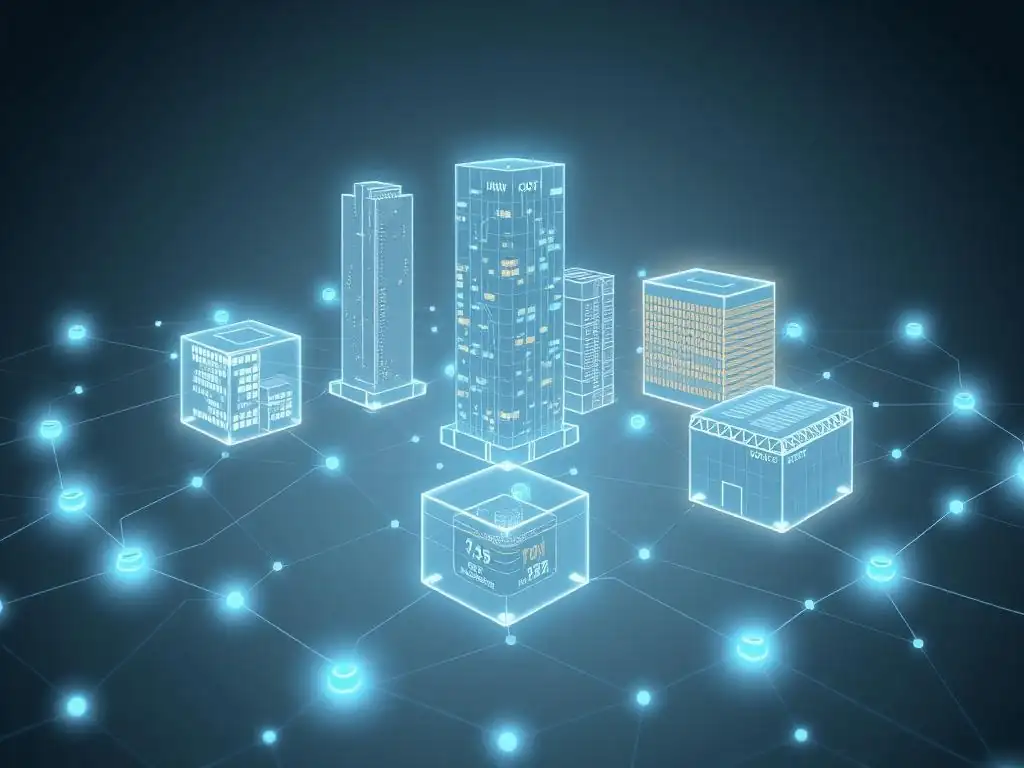
Integrating blockchain real estate smart contracts into the operations of a large-scale Real Estate Investment Trust is a complex undertaking involving significant technical considerations. It requires choosing the right blockchain platform, designing robust smart contract functionalities, and implementing stringent security measures. The technical architecture must be capable of handling potentially high transaction volumes, managing large amounts of data (or references to data), and ensuring interoperability with existing financial and property management systems.
The choice of blockchain platform is paramount, as it dictates the capabilities, costs, and performance characteristics of the smart contract system. Similarly, the design of the smart contracts themselves must be meticulous to avoid vulnerabilities that could lead to financial losses or operational disruptions. Addressing security risks, from code exploits to key management, is critical before any widespread adoption of blockchain-based REIT structures.
Blockchain Platforms Suitable for Real Estate Smart Contract Deployment
Several blockchain platforms are suitable for deploying blockchain real estate smart contracts, each with different characteristics. Public blockchains like Ethereum or Binance Smart Chain (BNB Chain) offer decentralization and broad accessibility, making them potentially suitable for tokenizing REIT shares for retail investors. Ethereum, with its mature smart contract language (Solidity) and large developer community, has been the platform of choice for many early tokenization projects, though high gas fees and scalability limitations have been a concern. BNB Chain offers lower fees and faster transaction times, making it another option for certain applications.
Alternatively, enterprise-focused platforms like Hyperledger Fabric or Corda offer permissioned environments, which might be more appealing to traditional REITs concerned with data privacy, control, and regulatory compliance. These platforms allow participants to be permissioned, meaning not everyone can access all data or participate in network validation. This controlled environment can be better suited for managing sensitive real estate data and complying with regulations requiring identity verification (KYC/AML). The choice depends heavily on the specific goals of the blockchain real estate smart contracts integration – whether it's focused on public tokenization or internal operational efficiency.
Essential Smart Contract Functionalities for REIT Management
Effective blockchain real estate smart contracts for REIT management require a suite of specific functionalities encoded into the smart contract code. Essential functions include asset tokenization (creating and managing tokens representing shares or fractional property interests), transfer mechanisms (allowing secure and compliant token transfers between wallets), and dividend distribution logic (calculating and distributing income based on token holdings).
Other critical functionalities involve voting mechanisms (allowing token holders to vote on matters requiring shareholder approval), asset data linkage (connecting tokens to verifiable data about the underlying properties), and potentially compliance checks (automatically verifying investor status or ownership limits during transactions). For example, a smart contract managing tokenized shares might include a function that triggers a dividend payment proportional to the number of tokens held by an address on a specific record date, automatically transferring funds from a designated pool. Such functionalities automate core REIT operations, creating a programmatic, efficient system for managing investor relations and asset performance.
Security Considerations and Risk Mitigation in Blockchain-Based REITs
Implementing blockchain real estate smart contracts necessitates rigorous attention to security. Smart contracts are immutable once deployed, meaning any bugs or vulnerabilities in the code can be exploited, leading to permanent and irreversible losses of assets or control. The infamous 2016 DAO hack on Ethereum, which resulted in the loss of millions of dollars due to a smart contract vulnerability, serves as a stark reminder of these risks.
Mitigation strategies are crucial. This includes comprehensive code audits by multiple independent security firms before deployment, formal verification methods to mathematically prove the correctness of the code's logic, and implementing upgradeability mechanisms where appropriate (though this can introduce centralization risks if not managed carefully). Furthermore, security extends beyond the contract code to key management (securing the private keys that control wallets holding tokens or managing contracts) and oracle security (ensuring the reliability and integrity of external data feeds triggering contract execution). Multi-signature wallets requiring multiple keys to authorize transactions can add an extra layer of security for critical operations.
Challenges and Limitations of Blockchain Smart Contracts in Real Estate Investments
Despite the promising synergies, the widespread adoption of blockchain real estate smart contracts in the REIT sector faces significant challenges and limitations. These hurdles span legal, regulatory, technical, and market acceptance domains. The real estate industry is traditionally slow to adopt new technologies, heavily reliant on established legal frameworks and practices that have evolved over centuries. Integrating a disruptive technology like blockchain and smart contracts requires navigating these entrenched systems and overcoming inherent inertia.
Furthermore, while the technology offers potential benefits, it is not without its own limitations. Scalability, interoperability, and the cost of transactions on certain blockchain networks remain technical challenges that need robust solutions for enterprise-level deployment. Perhaps most importantly, market acceptance requires building trust among investors, regulators, and industry professionals in a technology that many still view with skepticism or associate primarily with speculative cryptocurrencies rather than stable asset investments like real estate.
Legal and Regulatory Barriers Affecting Smart Contract Adoption in REITs
One of the most significant challenges for blockchain real estate smart contracts is the lack of clear legal and regulatory frameworks in many jurisdictions. The legal status of a smart contract as a legally binding agreement is still debated globally. While some jurisdictions are beginning to recognize smart contracts, their enforceability in the context of complex real estate transactions and securities regulations governing REITs remains ambiguous.
Tokenizing REIT shares via blockchain real estate smart contracts also raises complex securities law questions. Are these tokens securities? If so, how do they comply with existing offering, trading, and reporting requirements?
Many existing regulations are designed for traditional paper-based or electronic systems and do not easily accommodate the unique characteristics of blockchain tokens and automated smart contract execution. For example, complying with KYC/AML regulations when tokens can be transferred peer-to-peer via a smart contract requires innovative solutions, such as embedding compliance checks directly into the token transfer function of the smart contract or relying on permissioned networks. Navigating this evolving legal landscape requires close collaboration with regulators and legal experts.
Technical Constraints and Scalability Issues in Real Estate Blockchain Solutions
Technical limitations also pose barriers to the widespread use of blockchain real estate smart contracts in large-scale REIT operations. Public blockchains, while decentralized, can suffer from scalability issues, leading to slow transaction speeds and high costs (gas fees) during periods of network congestion. Processing potentially millions of REIT share transfers or dividend payments via a busy public blockchain could be prohibitively expensive and slow.
Storing large amounts of real estate documentation directly on-chain is generally impractical due to storage limitations and costs; solutions typically involve storing hashes or references to documents stored off-chain, which introduces a dependency on external storage systems. Interoperability between different blockchain platforms and integration with existing legacy systems (like property management software, accounting systems, and bank interfaces) are also complex technical hurdles that require robust integration layers and standards.
While enterprise blockchains offer more control and potentially better performance for specific use cases, they sacrifice decentralization and may face their own scalability challenges when dealing with the sheer volume and complexity of a large REIT's operations.
Market Acceptance and Trust Factors Influencing Blockchain REITs
Beyond legal and technical challenges, market acceptance and trust are crucial for the successful integration of blockchain real estate smart contracts into the REIT sector. Real estate investment is a traditional industry, and investors, particularly institutional ones who represent a significant portion of the REIT market, are often risk-averse and prefer established, well-understood structures. Educating this market about the benefits and risks of blockchain-based REITs and smart contracts is a significant undertaking.
Building trust in a new, decentralized system requires demonstrating its reliability, security, and compliance over time. Overcoming the public perception of blockchain as solely related to volatile cryptocurrencies is also necessary. Investors need confidence that the blockchain real estate smart contracts governing their investments are secure, that the underlying assets are real and well-managed, and that regulatory compliance is being strictly adhered to. This requires successful pilot projects, clear communication, and potentially regulatory sandboxes to build confidence and demonstrate the viability of these new models.
Future Outlook: The Transformative Potential of Blockchain Smart Contracts in REITs
Looking ahead, the future outlook for the synergy between blockchain real estate smart contracts and REITs is one of transformative potential, albeit one that will likely unfold gradually. As the technology matures, legal frameworks adapt, and market understanding grows, blockchain integration could fundamentally alter how REITs operate and how investors interact with real estate assets. The convergence of blockchain with other emerging technologies, such as Decentralized Finance (DeFi), could unlock entirely new possibilities for real estate investment and financing.
Predictions suggest that while a complete overhaul of the REIT structure might be distant, phased adoption of blockchain real estate smart contracts for specific functions – like cap table management, shareholder voting, or automated distributions – is more probable in the near to medium term. The long-term vision includes potentially more liquid, fractionalized, and globally accessible real estate investment opportunities facilitated by these technologies.
Emerging Trends in Decentralized Finance (DeFi) Impacting Real Estate Investments
Emerging trends in Decentralized Finance (DeFi) are increasingly impacting real estate investments, and this trend is likely to intersect with REITs. DeFi aims to recreate traditional financial systems (lending, borrowing, trading) using blockchain technology without central intermediaries. This opens possibilities for real estate assets (or tokens representing them) to be used within DeFi protocols.
For instance, tokens representing fractional ownership in a property or a REIT portfolio, governed by blockchain real estate smart contracts, could potentially be used as collateral for decentralized loans, traded on decentralized exchanges (DEXs), or integrated into yield-farming protocols. This could unlock new sources of liquidity and financing for real estate assets, potentially offering investors new ways to leverage their holdings or earn returns beyond traditional rental income or capital appreciation.
While still nascent and carrying significant risks associated with volatility and smart contract exploits, the potential for DeFi to create new capital markets for tokenized real estate is a significant trend to watch.
Predictions for the Evolution of Blockchain-Enabled REIT Structures
Predictions for the evolution of blockchain-enabled REIT structures suggest a move towards greater efficiency, transparency, and potentially more granular investment options. In the short term, we may see REITs experimenting with blockchain real estate smart contracts for specific back-office functions or for managing smaller, distinct portfolios as pilot projects. This could involve using a private blockchain to manage internal share registers or automate compliance reporting for a subset of assets.
Longer term, the development of public blockchain infrastructure and regulatory clarity could lead to the creation of "Tokenized REITs" where shares are issued as security tokens on a blockchain, fully managed by smart contracts. This could enable 24/7 trading on regulated digital asset exchanges, significantly improving liquidity.
It could also allow for more flexible investment amounts, potentially lowering the barrier to entry for smaller investors. Some experts predict that within the next 5-10 years, a significant portion of new real estate investment vehicles may explore tokenization and smart contract integration, potentially capturing a percentage point increase in market efficiency compared to current models.
The Role of Enterprise Blockchain Solutions in Scaling Real Estate Smart Contracts
While public blockchains are suitable for certain aspects like token issuance and broad distribution, enterprise blockchain solutions are likely to play a crucial role in scaling blockchain real estate smart contracts for large, institutional REITs. Platforms like Hyperledger Fabric or R3 Corda offer the control, privacy, and performance often required by large corporations dealing with sensitive data and complex regulatory environments.
Enterprise blockchains allow for permissioned access, meaning only authorized participants (e.g., the REIT manager, auditors, regulators) can view specific data or execute certain smart contract functions. This is essential for maintaining confidentiality around property specifics, tenant data, or internal financial metrics. These platforms can also be designed to handle higher transaction volumes and integrate more seamlessly with existing IT infrastructure. The scaling of blockchain real estate smart contracts within established REITs will likely rely heavily on these robust, permissioned enterprise solutions capable of meeting the stringent requirements of institutional finance and real estate management.
Conclusion: Evaluating the Synergistic Future of Blockchain Real Estate Smart Contracts and REITs
The potential synergy between blockchain real estate smart contracts and Real Estate Investment Trusts is substantial. By leveraging the automation, transparency, and security features of smart contracts operating on a blockchain, REITs could potentially streamline operations, reduce costs, enhance trust, and unlock new avenues for liquidity and fractional ownership through tokenization. The vision of a future where REIT shares are tokenized assets governed by immutable code, enabling instant, transparent transactions and automated distributions, offers a compelling evolution of real estate investment.
However, realizing this future requires overcoming significant hurdles, including navigating complex legal and regulatory landscapes, addressing technical scalability and interoperability challenges, and building widespread market acceptance and trust. While the path forward involves careful navigation and phased adoption, the transformative potential of blockchain real estate smart contracts to create more efficient, accessible, and transparent real estate investment vehicles, including enhanced REIT structures, suggests that this synergy is not merely theoretical but represents a significant area for future innovation and growth in the global real estate market.
Frequently Asked Questions
What are smart contracts in the context of real estate?
Smart contracts are self-executing agreements with the terms directly written into code. In real estate, they facilitate automated transactions and ensure transparency between parties involved.
How can blockchain improve Real Estate Investment Trusts (REITs)?
Blockchain can enhance REITs by providing improved transparency, reducing transaction costs, and enabling fractional ownership through tokenization, making investments more accessible.
What role does decentralization play in real estate transactions?
Decentralization minimizes reliance on intermediaries, thus reducing costs and increasing efficiency in real estate transactions, leading to faster and more secure dealings.
Are there any regulatory challenges associated with using blockchain in real estate?
Yes, the integration of blockchain technology in real estate faces regulatory challenges, such as compliance with existing laws and the need for new regulations to govern smart contracts and transactions.
What is the future of blockchain in real estate investment?
The future of blockchain in real estate investment looks promising, with potential developments in smart contracts, increased adoption by institutions, and a shift towards more decentralized systems that empower investors.
Final Reflection: Embracing the Blockchain Revolution in Real Estate
The exploration of Smart Contracts and REITs reveals not just a theoretical synergy, but a tangible pathway towards democratizing and streamlining real estate investment. The potential for increased transparency, reduced costs, and fractional ownership, as discussed throughout this article, is no longer a distant dream but a rapidly approaching reality, poised to reshape the landscape of property investment for both institutions and individuals.
The integration of blockchain technology into REITs has the power to fundamentally alter how we perceive and interact with real estate. This shift resonates deeply, promising a future where access to lucrative investment opportunities is no longer limited by traditional barriers. The future of finance is decentralized, and real estate is no exception.
This quote encapsulates the transformative potential, urging us to consider the profound implications of a blockchain-powered real estate ecosystem.
As we stand on the cusp of this technological revolution, I invite you to consider how these advancements might impact your own financial future. Explore the possibilities, educate yourself on the intricacies of blockchain real estate smart contracts, and embrace the opportunity to participate in a more accessible, transparent, and efficient world of real estate investment. The future is being built, block by block, and your understanding is the key to unlocking its potential.
Revolutionize Your REIT Investing Today!
Thank you for exploring the exciting intersection of smart contracts and REITs! We hope you've gained valuable insights into how these technologies can reshape the future of real estate investment. Now, let's turn knowledge into action:
- Investigate a specific REIT that is already experimenting with blockchain technology and analyze its potential.
- Explore online forums dedicated to blockchain and real estate to learn more from fellow enthusiasts and pioneers.
- Share this article with your network and spark a conversation about the possibilities and challenges of tokenized real estate.
What innovative application of smart contracts in REITs most excites you about the future of real estate investment? Share your thoughts in the comments below!
Leave a Reply