
Smart Contracts: A Solution to Real Estate Fraud and Scams?

Welcome to Blockchain Trends, your compass in the rapidly evolving world of decentralized innovation. Beyond the headlines of cryptocurrency, blockchain is reshaping industries from finance to supply chains. But what about real estate? Dive in to discover how smart contracts are emerging as a powerful blockchain real estate fraud solution, potentially revolutionizing property transactions and offering unprecedented security. Intrigued? Explore the possibilities and uncover the future of secure real estate within these pages.
-
Smart Contracts: A Blockchain Solution for Real Estate Fraud
- Introduction: The Prevalence of Real Estate Fraud
- Vulnerabilities in Traditional Real Estate Transactions
- Blockchain Technology: Transforming Real Estate
- Smart Contracts: Automating Trust and Security
- Smart Contracts as a Solution
- Benefits of Smart Contracts
- Real-World Applications
- Overcoming Challenges to Adoption
- The Future of Blockchain Solutions
- Conclusion: A Secure Future for Real Estate
-
Frequently Asked Questions
- What is the main problem that smart contracts aim to solve in real estate?
- How can blockchain technology help prevent title fraud in real estate?
- Are smart contracts a complete guarantee against all forms of real estate fraud?
- What role does DeFi (Decentralized Finance) play in mitigating real estate fraud using blockchain?
- What are some of the regulatory challenges associated with using blockchain for real estate transactions?
- Final Reflection: Securing the Future of Real Estate
- Uncover the Future: Secure Your Real Estate Transactions!
Smart Contracts: A Blockchain Solution for Real Estate Fraud
Introduction: The Prevalence of Real Estate Fraud
Real estate transactions, involving high-value assets and complex processes, have long been susceptible to various forms of fraud and scams. From forged documents and identity theft to title fraud and illicit property transfers, the traditional real estate ecosystem presents numerous vulnerabilities that malicious actors exploit. The financial and emotional toll on victims can be devastating, often resulting in significant monetary losses and protracted legal battles. The need for a robust Blockchain real estate fraud solution is becoming increasingly apparent as digital transactions become more common.
Globally, the scale of real estate fraud is substantial. While precise worldwide figures are challenging to compile due to varying reporting standards, estimates suggest billions of dollars are lost annually to real estate scams. For instance, in the United States, the FBI's 2022 Internet Crime Report indicated Business Email Compromise (BEC) schemes targeting real estate transactions accounted for losses exceeding \$350 million. This highlights the critical need for enhanced security measures and innovative technologies to protect buyers, sellers, and intermediaries alike from fraudulent activities.
Vulnerabilities in Traditional Real Estate Transactions
Common Types of Real Estate Fraud
Traditional real estate transactions rely heavily on manual processes, paper documents, and multiple intermediaries, creating numerous points of vulnerability susceptible to fraud. One prevalent type is title fraud, where criminals impersonate the true owner of a property to sell it or take out a mortgage without the owner's knowledge. Another common scheme is mortgage fraud, involving misrepresentation or omission of information on a loan application to obtain a mortgage or a larger loan amount than would have been approved otherwise. Escrow fraud, where criminals intercept funds intended for closing, is also a significant threat.
Beyond these, document forgery remains a persistent problem. Forging signatures on deeds, titles, or other crucial legal documents can lead to illegal transfers of ownership or encumbrances on property. Identity theft, used to impersonate buyers or sellers, facilitates many of these fraudulent activities. These vulnerabilities underscore the inherent risks in systems lacking immutable records and transparent processes, making a Blockchain real estate fraud solution highly desirable.
Inefficiencies Facilitating Scams
The multi-party nature and sequential steps of traditional real estate transactions inherently introduce inefficiencies that can be exploited for fraudulent purposes. The reliance on physical presence, notarization processes, and the manual transfer of documents across various parties (agents, lawyers, banks, title companies) creates delays and opportunities for manipulation. Lack of real-time information sharing means that a fraudulent act might not be detected until well after the transaction has progressed, making recovery difficult.
Moreover, the centralized nature of traditional record-keeping systems makes them potential targets for data breaches or tampering. While land registries exist, the process of updating and verifying information can be slow and prone to errors. This lack of a single, secure, and universally accessible source of truth for property ownership and transaction history provides fertile ground for fraudsters to operate undetected for periods, emphasizing the need for a more resilient Blockchain real estate fraud solution.
Blockchain Technology: Transforming Real Estate
Enhancing Transparency and Security with Blockchain
Blockchain technology, the distributed ledger technology underpinning cryptocurrencies like Bitcoin, offers transformative potential for the real estate sector by fundamentally enhancing transparency and security. A blockchain is a decentralized database that records transactions across many computers, making it extremely difficult to alter any past record without the consensus of the network. In real estate, this means creating a transparent and tamper-proof ledger of property ownership, transaction history, and related documents.
By recording every step of a property transaction on a blockchain, from listing to final transfer, a permanent and verifiable history is created. This shared, immutable record is accessible to all authorized parties, drastically reducing information asymmetry and increasing trust. The cryptographic nature of blockchain ensures that data, once recorded, cannot be retrospectively changed without leaving a clear, visible trace, making it a powerful Blockchain real estate fraud solution.
Immutable Records: Preventing Data Tampering
One of the most significant advantages of blockchain technology is the immutability of its records. Each block of transactions is linked to the previous one using cryptographic hashes, forming a chain. Any attempt to alter data in an earlier block would break the chain, alerting the network to the attempted manipulation. This characteristic is crucial for preventing fraud in real estate, where tampering with property titles, deeds, or transaction records is a primary method used by criminals.
Applying this to land registries, for example, means that once a property transfer or an encumbrance is recorded on a blockchain, it becomes virtually impossible for an unauthorized party to alter or delete that record. This provides a far higher level of security and integrity compared to traditional paper-based or centralized digital databases that are more vulnerable to hacking or physical tampering. This immutability is a core component of a robust Blockchain real estate fraud solution.
Smart Contracts: Automating Trust and Security
Smart Contracts: Definition and Explanation
Smart contracts are self-executing contracts with the terms of the agreement directly written into lines of code. These contracts run on a blockchain, meaning they are stored on a decentralized, distributed ledger. The code contains the rules and conditions agreed upon by the parties involved. When the predefined conditions are met and verified by the blockchain network, the smart contract automatically executes the corresponding actions, such as transferring funds or updating ownership records, without the need for intermediaries.
Think of a smart contract as a sophisticated 'if-then' statement deployed on a blockchain. For example, IF the buyer's payment is verified on the blockchain, THEN the smart contract automatically releases the digital representation of the property title to the buyer and the funds to the seller. This automation, based on verifiable data on the blockchain, removes the need for trust between parties and significantly reduces the potential for human error or malicious intervention, making it a key element of a Blockchain real estate fraud solution.
Automating Real Estate Transactions with Smart Contracts
The application of smart contracts to real estate transactions can automate and secure many complex steps that are currently manual and prone to error or fraud. From handling escrow payments to automating the transfer of property ownership, smart contracts can streamline the entire process.
For instance, a smart contract can hold the buyer's funds in escrow and the digital property title simultaneously. It is programmed to release the funds to the seller and the title to the buyer only when specific, verifiable conditions are met, such as confirmation of clear title or completion of inspections, as recorded on the blockchain.
This automation significantly reduces reliance on escrow agents or lawyers solely for the purpose of ensuring conditional exchanges, although legal expertise remains crucial for drafting the initial terms. By executing automatically based on pre-agreed, coded logic, smart contracts minimize the opportunities for parties to renege on agreements or introduce fraudulent steps into the process. This inherent automation and reliance on verifiable blockchain data make smart contracts a powerful tool within a comprehensive Blockchain real estate fraud solution.
Smart Contracts as a Solution
Streamlining Property Title Transfers
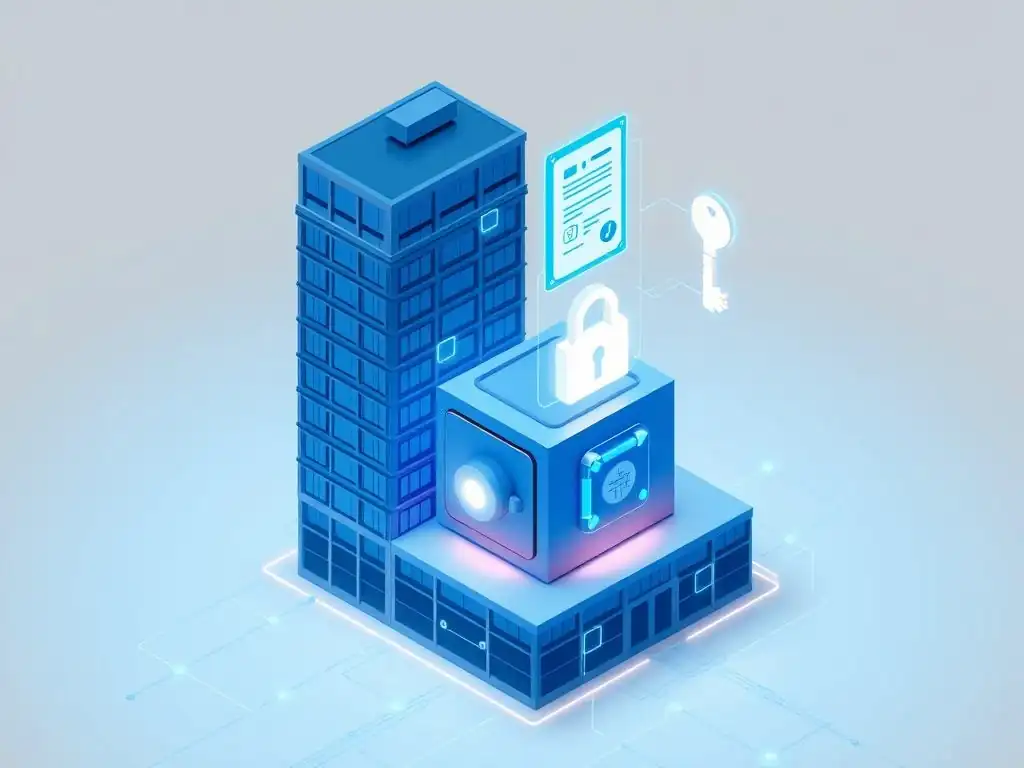
One of the most critical areas where smart contracts can act as a Blockchain real estate fraud solution is in streamlining and securing property title transfers. Traditionally, transferring a property title involves significant paperwork, manual verification, and recording with local authorities, a process that can be slow, opaque, and susceptible to forgery or errors. By representing property ownership as a digital asset (like a token) on a blockchain, a smart contract can automate the transfer of this asset from seller to buyer upon fulfillment of coded conditions.
For example, a smart contract could be programmed to transfer the digital title token from Address A (seller) to Address B (buyer) only after the contract verifies receipt of the full purchase price in cryptocurrency or stablecoins at Address C (seller's wallet), and potentially confirms other on-chain data points like successful registration with a blockchain-based land registry. This automated, verifiable process drastically reduces the window and opportunity for title fraud, such as someone falsely claiming ownership or transferring the property multiple times.
Automating Escrow and Payment Processing
Smart contracts are exceptionally well-suited for automating the escrow process and payment processing in real estate transactions. In a traditional setup, a third-party escrow agent holds funds and documents until all conditions of the sale are met. This introduces counterparty risk and fees. A smart contract can fulfill the escrow function autonomously and securely on the blockchain.
The buyer deposits funds (e.g., stablecoins) into the smart contract address. The contract locks these funds and holds the digital property title token.
The contract is coded to automatically release the funds to the seller and the title token to the buyer only when predetermined conditions are met – for instance, the seller confirms vacating the property via a verified input, or a linked oracle confirms the successful recording of the sale on a governmental blockchain land registry. This eliminates the need for a human escrow agent to handle the funds, reducing potential for misappropriation or delays, and significantly enhancing trust and security, a key aspect of a Blockchain real estate fraud solution.
Reducing Forgery and Identity Theft Risks
The combination of blockchain's immutable ledger and smart contracts' automated execution significantly reduces the risks of forgery and identity theft in real estate transactions. Since records on a blockchain are cryptographically secured and distributed, forging documents like deeds or mortgages becomes practically impossible without being immediately detected by the network. Every transaction, including the initial registration of property ownership, is time-stamped and permanently recorded.
Furthermore, while identity verification is still required to link real-world identities to blockchain addresses, once that link is established and verified (perhaps through decentralized identity solutions), subsequent transactions involving that identity and associated property can be executed via smart contracts. The automated nature of smart contracts, requiring specific cryptographic keys to initiate actions, makes it far harder for someone to impersonate a legitimate party and execute fraudulent transactions compared to relying on forged signatures on paper documents. This layered security approach contributes strongly to a robust Blockchain real estate fraud solution.
Benefits of Smart Contracts
Increased Transparency and Traceability
One of the primary benefits of using smart contracts on a blockchain for real estate is the significant increase in transparency and traceability. Every transaction executed by a smart contract, including the transfer of funds and property ownership, is recorded on the public or permissioned blockchain ledger. This record is accessible to all authorized parties and cannot be altered.
This means that the entire history of a property, from its initial construction or registration on the blockchain to every subsequent sale, transfer, or lien, is transparently available. This level of traceability makes it extremely difficult for fraudulent activities, such as backdated transactions or undisclosed encumbrances, to go unnoticed. Increased transparency inherently deters fraudsters and provides legitimate parties with confidence in the integrity of the transaction process, making it a potent Blockchain real estate fraud solution.
Enhanced Security and Reduced Fraud Risk
As detailed earlier, smart contracts, powered by the underlying blockchain technology, offer enhanced security that directly reduces the risk of fraud. The immutability of blockchain records prevents tampering with titles and transaction histories. The automation provided by smart contracts removes human intervention from critical steps like fund release and title transfer, eliminating opportunities for human error, collusion, or malicious delay.
Cryptographic security ensures that only parties with the correct private keys can interact with the smart contract and associated digital assets. This drastically lowers the risk of unauthorized access or impersonation compared to traditional systems relying on physical documents and less secure digital databases. The inherent design of blockchain and smart contracts makes them a formidable Blockchain real estate fraud solution.
Faster, More Efficient Transactions
Traditional real estate transactions are notoriously slow, often taking weeks or even months to complete due to manual processes, coordination between multiple parties, and bureaucratic hurdles. Smart contracts can significantly accelerate this timeline. By automating steps like escrow, payment processing, and title transfer based on verifiable on-chain data, the process can be completed in days or even hours, depending on the complexity and external dependencies (like governmental blockchain adoption).
For instance, once the buyer's funds are confirmed in the smart contract and other pre-conditions are met, the transfer of the digital title can happen almost instantaneously on the blockchain. This efficiency is not just a convenience; it reduces the window of opportunity for fraud to occur during protracted closing periods.
Lower Transaction Costs
The automation and disintermediation offered by smart contracts can lead to significant reductions in transaction costs. By automating functions traditionally performed by intermediaries such as escrow agents, title companies (for verification, though legal counsel is still needed), and potentially even aspects of banking processes (if using stablecoins), the associated fees can be substantially lowered.
While initial setup costs for blockchain infrastructure and smart contract development exist, the long-term operational savings for frequent users or large-scale platforms can be considerable. Reducing the number of human touchpoints required to execute a secure transaction directly translates into cost savings for both buyers and sellers, making a Blockchain real estate fraud solution economically attractive.
Real-World Applications
Case Study 1: Propy's Title Transfer Platform
Propy is a real estate technology company that has pioneered the use of blockchain and smart contracts for property transactions. They gained notable attention for facilitating several real-world property transfers using blockchain technology, including the sale of an apartment in Kyiv, Ukraine, in 2017, which was one of the first blockchain-based real estate transactions globally. Propy's platform utilizes smart contracts to automate parts of the closing process, including the transfer of property titles represented as NFTs (Non-Fungible Tokens) or similar digital assets on a blockchain.
By placing the transaction data and digital title on a blockchain, Propy aims to create a transparent and secure record that is resistant to tampering. Their system leverages smart contracts to ensure that funds and titles are exchanged simultaneously and automatically once all predefined conditions are met, significantly reducing the risk of fraud and increasing efficiency compared to traditional methods. This demonstrates a practical application of a Blockchain real estate fraud solution in action.
Case Study 2: RealT's Fractional Ownership Model
RealT is another company leveraging blockchain and smart contracts, focusing on fractional real estate ownership. They allow investors worldwide to buy tokenized shares of U.S. properties. Each share is represented by a security token (an ERC-20 token on the Ethereum blockchain) that represents a fractional ownership stake in a specific property. Smart contracts are fundamental to RealT's model, handling the distribution of rental income to token holders and managing aspects of the ownership structure.
While not directly focused on preventing transactional fraud during a whole property sale, RealT's model uses smart contracts to ensure the transparent and automated distribution of income based on verifiable property performance data. The ownership records are immutable on the blockchain, providing clear proof of fractional ownership and making it difficult to dispute or forge ownership stakes. This use case illustrates how smart contracts can secure ongoing financial relationships tied to real estate, contributing to a broader Blockchain real estate fraud solution ecosystem.
Overcoming Challenges to Adoption
Regulatory and Legal Considerations
Despite the clear benefits, widespread adoption of smart contracts and blockchain in real estate faces significant challenges, particularly regarding regulatory and legal frameworks. Property law is deeply rooted in centuries of tradition and varies significantly across jurisdictions. Recognizing a digital token or a blockchain record as legally binding proof of ownership equivalent to a traditional deed requires legislative changes and judicial acceptance.
Many legal systems currently do not have clear guidelines on the legal status of smart contracts or how disputes involving them would be resolved. Furthermore, integration with existing land registries and governmental recording systems is a major hurdle. Overcoming these challenges requires close collaboration between blockchain innovators, legal professionals, and regulatory bodies to establish clear legal precedents and updated regulations that acknowledge and incorporate blockchain technology as a valid Blockchain real estate fraud solution.
Scalability and Interoperability Issues
Blockchain technology, while powerful, can face scalability issues, particularly public blockchains, which can become slow and expensive when processing a high volume of transactions. Real estate transactions, while not as frequent as stock trades, still require efficient processing. Ensuring that blockchain networks can handle the volume and data requirements of a national or international real estate market is crucial.
Interoperability between different blockchain platforms and between blockchain systems and legacy systems (like traditional banking or identity verification services) is another significant challenge. A seamless Blockchain real estate fraud solution would ideally interact with various external data sources and systems, requiring robust standards and protocols for communication and data exchange.
Educating Stakeholders
A major barrier to the adoption of smart contracts and blockchain in real estate is the lack of understanding and familiarity among key stakeholders, including real estate agents, lawyers, lenders, buyers, and sellers. The concepts of blockchain, digital wallets, stablecoins, and smart contracts are new and complex for many people accustomed to traditional processes.
Educating these stakeholders about the benefits, security features, and practical application of this technology is essential for building trust and encouraging adoption. Demonstrating how a Blockchain real estate fraud solution works in practice and highlighting successful pilot programs and case studies will be crucial in overcoming skepticism and driving acceptance across the industry.
The Future of Blockchain Solutions
Convergence of Blockchain, AI, and IoT
The future of Blockchain real estate fraud solutions likely involves the convergence of blockchain technology with other emerging technologies like Artificial Intelligence (AI) and the Internet of Things (IoT). AI can be used to analyze blockchain data for patterns indicative of fraudulent activity or to automate complex decision-making within smart contracts based on vast datasets.
IoT devices, such as smart locks or sensors, could potentially provide verifiable real-world data inputs for smart contracts – for example, confirming a property is vacant before a final payment is released. This integration could create highly automated, secure, and intelligent real estate ecosystems, further enhancing fraud prevention and operational efficiency.
Evolution of Smart Contract Standards
As smart contracts become more prevalent, the development of standardized templates and libraries specifically for real estate applications will be crucial. Standardized smart contracts for common transactions like purchase agreements, leases, or mortgage agreements would increase reliability, reduce development costs, and make the technology more accessible.
Furthermore, advancements in smart contract security auditing and formal verification methods will be essential to minimize the risk of bugs or vulnerabilities in the code that could be exploited by fraudsters. Clear standards and robust security practices will build confidence in smart contracts as a reliable Blockchain real estate fraud solution.
Potential for Mass Adoption
While significant challenges remain, the potential for mass adoption of blockchain and smart contracts in real estate is high, driven by the clear benefits in security, efficiency, and cost reduction. As regulatory clarity improves, technology matures, and education efforts take effect, we are likely to see a gradual shift towards blockchain-based real estate platforms.
Initial adoption may occur in specific niches, such as fractional ownership or streamlined title transfers in certain jurisdictions, before expanding to encompass the entire transaction lifecycle. The inherent advantages of blockchain as a Blockchain real estate fraud solution provide a strong incentive for the industry to overcome the hurdles and embrace this transformative technology.
Conclusion: A Secure Future for Real Estate
Real estate transactions, burdened by manual processes, opacity, and multiple intermediaries, have long been vulnerable to fraud and scams. The financial and emotional costs of these fraudulent activities are significant, highlighting an urgent need for more secure and transparent systems. Blockchain technology, with its immutable ledger and decentralized nature, offers a foundational layer of trust and security previously unattainable.
Smart contracts build upon this foundation by automating complex transactional logic, ensuring that agreements are executed precisely as coded, without reliance on human intervention or trust between parties. By streamlining title transfers, automating escrow, and reducing opportunities for forgery and identity theft, smart contracts function as a powerful Blockchain real estate fraud solution.
While challenges related to regulation, scalability, and education persist, the successful real-world applications and the clear benefits in terms of transparency, security, efficiency, and cost reduction point towards a future where blockchain and smart contracts play a central role in creating a more secure and trustworthy real estate ecosystem. The journey towards a fully decentralized and automated real estate market is ongoing, but the potential for mitigating fraud is immense.
Frequently Asked Questions
What is the main problem that smart contracts aim to solve in real estate?
Smart contracts primarily aim to mitigate real estate fraud and scams by creating a more transparent and secure transaction process. They automate and enforce agreements, reducing the risk of manipulation.
How can blockchain technology help prevent title fraud in real estate?
Blockchain provides an immutable and decentralized ledger for recording property titles. This makes it incredibly difficult to alter or forge title information, thus helping to prevent title fraud.
Are smart contracts a complete guarantee against all forms of real estate fraud?
No, while smart contracts significantly reduce the risk, they are not a complete guarantee. The code itself needs to be secure, and the data fed into the smart contract must be accurate to avoid errors.
What role does DeFi (Decentralized Finance) play in mitigating real estate fraud using blockchain?
DeFi can create more transparent and accessible financing options for real estate transactions. This can reduce reliance on traditional, potentially opaque, financial institutions, thus reducing the opportunity for fraudulent lending practices.
What are some of the regulatory challenges associated with using blockchain for real estate transactions?
Regulatory challenges include the lack of clear legal frameworks for smart contracts and blockchain-based property ownership. This uncertainty can hinder the widespread adoption of blockchain as a real estate fraud solution.
Final Reflection: Securing the Future of Real Estate
The promise of blockchain real estate fraud solutions is no longer a distant dream but a tangible possibility, poised to revolutionize an industry historically plagued by deceit and manipulation. As we've explored, smart contracts offer a transparent, immutable, and automated framework that can significantly mitigate the risks associated with traditional real estate transactions, offering a beacon of hope for a more secure and equitable future for buyers and sellers alike.
The impact of this technology extends far beyond mere efficiency; it touches upon the very foundation of trust within the real estate market. Witnessing the potential of smart contracts to empower individuals and protect their investments is deeply inspiring. The best way to predict the future is to create it.
- Peter Drucker. This quote resonates profoundly as we consider the proactive role blockchain technology can play in shaping a more trustworthy and accessible real estate landscape for everyone.
Now, as you reflect on the potential of blockchain and smart contracts, consider how you can contribute to this transformative shift. Educate yourself further, advocate for the adoption of these technologies, and demand greater transparency and security in your own real estate dealings. The future of real estate is being written today, and your voice can help ensure it's a future built on trust, integrity, and the unwavering power of innovation.
Uncover the Future: Secure Your Real Estate Transactions!
Thank you for exploring how smart contracts can transform the real estate industry and help prevent fraud. You've gained valuable insights into how blockchain technology can enhance transparency and security in property transactions. Now, take action and become part of the movement toward a safer, more efficient real estate market.
Here's how you can contribute:
- Research current real estate projects that are integrating smart contracts. Learn about their mechanisms and security features to make informed decisions in the future.
- Share this article with friends and colleagues interested in blockchain and real estate to inspire important conversations about fraud prevention.
- Consider taking online courses or workshops on smart contract development and real estate law to deepen your understanding of these interconnected fields.
What innovative uses of smart contracts in real estate do you see becoming mainstream in the next five years? Share your thoughts below!
Leave a Reply