
The Technology Behind Decentralized Real Estate: Understanding the Blockchain Infrastructure


Welcome to Blockchain Trends, where we delve into the transformative potential of blockchain technology. As we embark on this exploration, you'll discover how blockchain is reshaping industries far beyond cryptocurrencies, particularly in the realm of real estate. In our featured article, "The Technology Behind Decentralized Real Estate: Understanding the Blockchain Infrastructure," we unravel the concept of Blockchain Real Estate Investment Trusts and their implications for the future of property investment.
This is just the beginning of an exciting journey—prepare to be intrigued as we unveil how decentralized systems are revolutionizing the way we think about ownership and investment. Dive in to uncover the future!
The Technology Behind Decentralized Real Estate: Understanding the Blockchain Infrastructure
- Introduction: Revolutionizing Real Estate with Blockchain Technology
- What is a Blockchain Real Estate Investment Trust (REIT)?
- The Foundation: Blockchain Infrastructure for Real Estate
- Building a Decentralized Real Estate Platform: Technical Considerations
- The Role of Smart Contracts in Real Estate Decentralization
- Security and Transparency in Blockchain Real Estate Investment
- Use Cases: Examples of Blockchain Real Estate Implementation
- Challenges and Opportunities in Decentralized Real Estate
- Conclusion: The Future of Real Estate is Decentralized
-
Frequently Asked Questions
- What is a Blockchain Real Estate Investment Trust (REIT), and how does blockchain technology facilitate it?
- How does tokenization work in the context of a Blockchain REIT, and what are its advantages?
- What are some of the potential challenges and risks associated with investing in Blockchain REITs?
- How does the blockchain infrastructure enhance the security and transparency of real estate transactions within a Blockchain REIT?
- What are the key regulatory considerations for Blockchain REITs, and how are they evolving?
- Final Reflection: Embracing the Future of Real Estate Ownership
- Reimagine Your Real Estate Future: Start Exploring Blockchain Today!
Introduction: Revolutionizing Real Estate with Blockchain Technology
The Rise of Decentralized Real Estate Marketplaces
The real estate sector, traditionally characterized by illiquidity, high transaction costs, and complex intermediaries, is experiencing a significant transformation driven by blockchain technology. Decentralized real estate marketplaces are emerging platforms that leverage distributed ledger technology to facilitate property transactions, ownership, and investment in a more efficient and transparent manner. These platforms aim to disintermediate traditional processes, allowing buyers and sellers to interact more directly and reducing the reliance on brokers, lawyers, and escrow agents, potentially lowering costs and speeding up transactions.
This new paradigm enables innovative investment models, such as fractional ownership of properties, which significantly lowers the barrier to entry for investors. By tokenizing real estate assets, these marketplaces allow individuals to buy, sell, and trade portions of properties as digital tokens on a blockchain. This opens up real estate investment to a much broader audience globally, making it comparable to investing in stocks or other liquid assets. The underlying blockchain infrastructure provides a secure, immutable record of ownership and transaction history, enhancing trust and reducing the potential for fraud in what has historically been a opaque market.
Understanding the Core Concepts: Blockchain and Real Estate
At its heart, blockchain is a distributed, immutable ledger that records transactions across many computers. This decentralized nature means there is no single point of failure or control, making it highly resistant to tampering. When applied to real estate, blockchain can record property deeds, ownership transfers, and transaction details in a way that is transparent, verifiable, and permanent. This inherent transparency and security address some of the long-standing issues in real estate, such as title fraud and disputes over ownership history.
The integration of blockchain technology with real estate hinges on two key concepts: tokenization and smart contracts. Tokenization involves representing real-world assets, like a piece of property, as digital tokens on a blockchain. Each token can represent a share or fraction of the asset's value or ownership. Smart contracts are self-executing contracts with the terms of the agreement directly written into code. These contracts automatically execute predefined actions when specific conditions are met, such as transferring ownership tokens upon receipt of payment, automating processes that traditionally require extensive manual intervention and legal oversight.
What is a Blockchain Real Estate Investment Trust (REIT)?
Defining Blockchain REITs: A New Era of Property Investment
A traditional Real Estate Investment Trust (REIT) is a company that owns, operates, or finances income-generating real estate. REITs provide investors with an income stream, diversification, and long-term capital appreciation potential, similar to other asset classes, but they are typically illiquid and require intermediaries. A blockchain real estate investment trust, or tokenized REIT, is a concept that applies the principles of a traditional REIT but leverages blockchain technology to tokenize the shares or underlying assets, enabling fractional ownership and increased liquidity.
In a blockchain real estate investment trust model, ownership stakes in a portfolio of properties (or even a single large property) are represented by digital tokens on a blockchain. Investors can buy and sell these tokens on secondary markets, offering a level of liquidity far exceeding that of traditional REITs or direct property ownership.
This structure allows for smaller investment amounts, democratizing access to institutional-grade real estate investments. While the structure might vary (some tokenize shares in a legal entity, others directly tokenize SPVs holding properties), the core idea is using blockchain for transparent, fractional, and potentially more liquid real estate investment.
Key Benefits of Blockchain-Based REITs
One of the primary advantages of a blockchain real estate investment trust is significantly enhanced liquidity. Unlike traditional real estate which can take months or even years to sell, tokens representing ownership can potentially be traded on digital asset exchanges within minutes, offering investors greater flexibility to enter and exit positions. This increased liquidity makes real estate a more attractive asset class for a wider range of investors, including those who previously found the illiquidity prohibitive.
Another major benefit is the reduction of investment barriers. Fractional ownership through tokenization means investors can buy small portions of high-value properties or portfolios for relatively modest amounts, perhaps as low as $100 or less, a stark contrast to the large capital outlays typically required for direct property investment or even minimums for some traditional REITs. Furthermore, the transparency provided by the blockchain ledger allows investors to verify ownership records and transaction histories, building greater trust in the investment process. The disintermediation potential can also lead to lower fees and transaction costs compared to traditional investment avenues.
The Foundation: Blockchain Infrastructure for Real Estate
Exploring Different Blockchain Platforms for Real Estate Tokenization
The choice of blockchain platform is a critical technical decision for building decentralized real estate applications, including blockchain real estate investment trust structures. Several platforms are suitable, each with trade-offs in terms of scalability, security, transaction costs, and development complexity. Ethereum has been a popular choice due to its robust smart contract capabilities and large developer community, but its high gas fees and lower transaction throughput (especially before significant upgrades) can be prohibitive for frequent, small-value transactions common in some real estate applications.
Alternative platforms like Polygon (a layer-2 scaling solution for Ethereum), Binance Smart Chain (now BNB Chain), Solana, and specialized real estate blockchains offer faster transaction speeds and lower costs. Polygon, for instance, provides compatibility with Ethereum's virtual machine (EVM) while offering significantly reduced fees, making it attractive for tokenizing assets and executing smart contracts related to property management or rental payments. Specialized platforms might offer features tailored specifically to real estate needs, such as enhanced identity verification protocols or integrations with property registries, though they may have smaller ecosystems and less battle-tested infrastructure compared to larger chains.
Smart Contracts: Automating Real Estate Transactions
Smart contracts are the backbone of automated processes in decentralized real estate, including the operations within a blockchain real estate investment trust. These self-executing code snippets deployed on the blockchain can automate key stages of a real estate transaction or investment lifecycle without the need for traditional intermediaries. For example, a smart contract can be programmed to automatically transfer property tokens from a seller's wallet to a buyer's wallet once the agreed-upon payment, also potentially in cryptocurrency or tokenized fiat, is confirmed on the blockchain.
Beyond simple buy-sell agreements, smart contracts can manage complex processes such as escrow services, distribution of rental income or dividends from tokenized properties, and even automating aspects of property management like scheduling maintenance based on predefined conditions. In a blockchain real estate investment trust context, smart contracts can ensure that rental income collected from the underlying properties is automatically and transparently distributed to token holders based on their proportional ownership.
This automation reduces administrative overhead, minimizes potential for human error, and ensures that terms are executed exactly as coded, provided the code is secure and accurately reflects the legal agreement.
Tokenization of Real Estate Assets: Fractional Ownership and Increased Liquidity
Tokenization is the process of converting the rights to an asset, such as a property, into digital tokens on a blockchain. Each token represents a specific share of ownership, economic rights (like rental income), or a combination thereof. This process breaks down a large, indivisible asset like a building worth millions into thousands or even millions of smaller, tradeable units. This fractionalization is a fundamental enabler of decentralized real estate investment and the blockchain real estate investment trust model, allowing investors to own a piece of a property rather than the entire asset.
The ability to own fractions of properties dramatically increases accessibility for smaller investors and provides property owners with a new way to unlock liquidity from their assets without selling the entire property. Tokenized assets can then be traded on secondary markets, providing liquidity that is virtually non-existent in the traditional real estate market. This liquidity transforms real estate from a notoriously illiquid asset class into one that can potentially be traded with speed and ease, similar to publicly traded stocks or bonds, thus enhancing the appeal of a blockchain real estate investment trust.
Building a Decentralized Real Estate Platform: Technical Considerations
Data Storage and Security on the Blockchain
Implementing a decentralized real estate platform requires careful consideration of data storage and security. While transaction records and ownership data are ideally stored on the blockchain for immutability and transparency, storing large amounts of sensitive or private data directly on a public blockchain can be impractical due to cost, storage limitations, and privacy concerns (as public blockchains are transparent). Therefore, platforms often adopt hybrid approaches, storing hashes or proofs of documents (like deeds, contracts, or identity verification data) on the blockchain while the actual documents are stored off-chain in secure, encrypted databases.
Security is paramount. Smart contracts, which automate critical processes like fund distribution and ownership transfer, must be rigorously audited for vulnerabilities. Exploits in smart contracts can lead to significant financial losses, as demonstrated by numerous incidents in the broader DeFi space.
Private keys managing digital wallets holding property tokens or investment funds must be secured using best practices, such as multi-signature wallets and hardware security modules. The distributed nature of blockchain inherently adds a layer of security against single points of attack for the ledger itself, but the integration points, smart contract code, and off-chain data storage require robust security measures.
Integrating Traditional Real Estate Data with Blockchain
A significant technical challenge in building a decentralized real estate ecosystem is seamlessly integrating data from traditional, often siloed and non-digital, real estate systems with the blockchain. This includes data from land registries, property valuation databases, legal documents (deeds, titles, survey maps), and identity verification services. Oracles, which are third-party services that provide external data to smart contracts, play a crucial role here. They can feed verified information about property status, market values, or legal confirmations onto the blockchain to trigger smart contract execution.
Establishing reliable and trustworthy data feeds is critical. An oracle providing incorrect property status or valuation data could lead to erroneous smart contract execution or misrepresentation of asset value within a blockchain real estate investment trust. Solutions involve using decentralized oracle networks (like Chainlink) that source data from multiple reliable sources to reduce the risk of single-point failure or manipulation. Furthermore, developing standardized data formats and APIs to bridge traditional databases with blockchain platforms is essential for scalability and interoperability across different decentralized real estate applications.
Identity Verification and KYC/AML Compliance in Decentralized Real Estate
While blockchain technology enables peer-to-peer transactions, real estate transactions, especially those involving regulated financial activities like investment in a blockchain real estate investment trust, are subject to strict Know Your Customer (KYC) and Anti-Money Laundering (AML) regulations in most jurisdictions. Decentralized platforms must incorporate robust identity verification processes to comply with these legal requirements, even as they strive for decentralization. This typically involves integrating with third-party identity verification services.
Technical solutions include creating verified digital identities on the blockchain, often using zero-knowledge proofs to allow verification of credentials without revealing sensitive personal information. However, the initial verification process usually requires collecting and verifying identity documents off-chain, similar to traditional financial institutions. Managing this sensitive data securely while linking it to a blockchain identity is a complex task. Compliance also requires monitoring transactions for suspicious patterns, which can be facilitated by the transparency of the blockchain ledger, but requires sophisticated analytics tools to identify potential illicit activity among potentially large volumes of token transfers.
The Role of Smart Contracts in Real Estate Decentralization
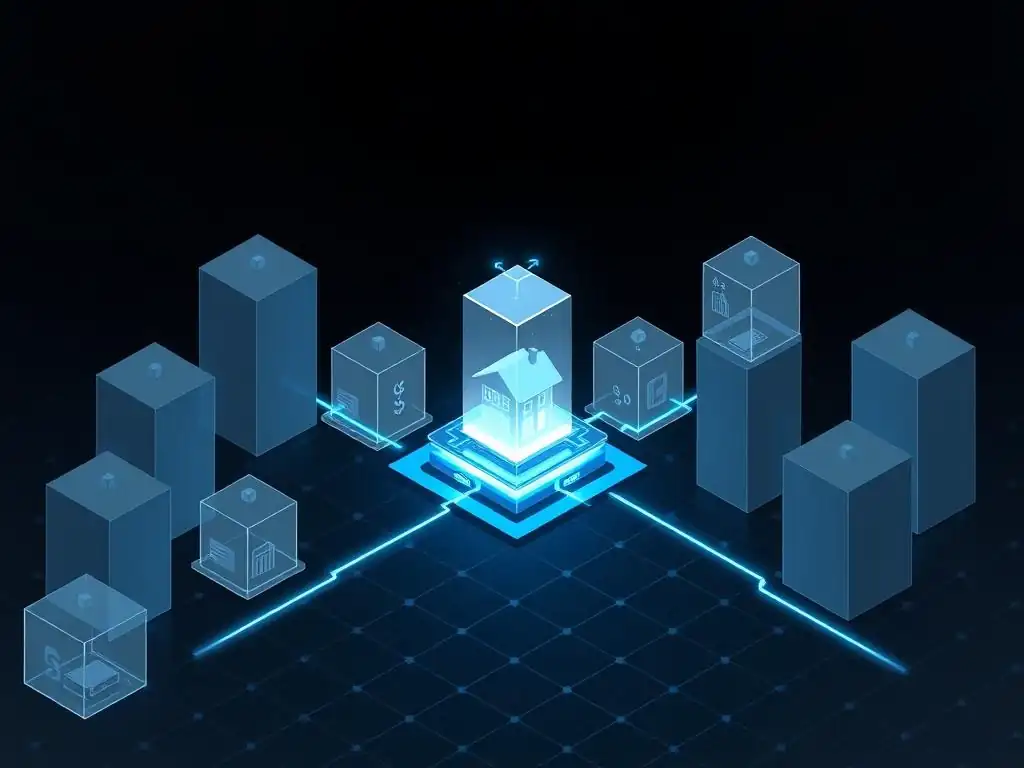
Automating Rental Agreements and Payments
Smart contracts can significantly automate the management of rental properties, whether they are part of a larger blockchain real estate investment trust portfolio or individually owned and tokenized. A rental agreement can be coded into a smart contract, specifying terms such as rental amount, payment due dates, lease duration, and conditions for late fees or lease termination. Tenants can pay rent directly to the smart contract using cryptocurrency or stablecoins.
Upon receiving the correct amount by the due date, the smart contract can automatically record the payment on the blockchain and potentially trigger actions like releasing a digital key or confirming the lease status. For tokenized properties or blockchain REITs, the smart contract collecting rent can be programmed to automatically distribute the proportional rental income to all token holders at predefined intervals, eliminating the need for manual calculation and distribution by a property manager or fund administrator. This automation increases efficiency, reduces costs, and provides transparency regarding income distribution.
Streamlining Property Management with Smart Contracts
Beyond rent collection, smart contracts can streamline various aspects of property management. Maintenance requests could potentially be initiated and tracked via a decentralized application linked to smart contracts. For example, a tenant could submit a request via the platform; upon approval (potentially by token holders in a fractional ownership model or a designated manager), a smart contract could trigger payment to a pre-approved maintenance provider upon confirmation of work completion.
Property access can also be managed using smart contracts and digital keys linked to the blockchain. Granting temporary access to service providers or new tenants can be automated and revoked based on smart contract conditions. While full automation of all property management tasks is still nascent, smart contracts provide a framework for automating rule-based processes, improving efficiency, and creating an immutable audit trail of management activities, which is particularly valuable for investors in a blockchain real estate investment trust who may not be directly involved in day-to-day operations.
Dispute Resolution and Smart Contract Enforcement
While smart contracts aim to automate agreements and reduce disputes by enforcing terms programmatically, disagreements can still arise, particularly concerning conditions not explicitly covered by the code or discrepancies between real-world events and their digital representation. Resolving disputes in a decentralized real estate context, especially within complex structures like a blockchain real estate investment trust, requires integrating dispute resolution mechanisms.
These mechanisms can range from traditional legal avenues, where the smart contract serves as irrefutable evidence of executed actions, to decentralized arbitration systems. Decentralized arbitration platforms use decentralized networks of jurors who review evidence (potentially including on-chain data and off-chain information provided via oracles) and vote on the outcome of a dispute. The smart contract can then be designed to abide by the outcome determined by the arbitration system. This hybrid approach acknowledges the limitations of code in capturing all real-world nuances while leveraging blockchain for transparency and automated enforcement of the resolution.
Security and Transparency in Blockchain Real Estate Investment
Addressing Security Risks in Decentralized Real Estate Platforms
While blockchain offers inherent security features like immutability and decentralization, decentralized real estate platforms, including those facilitating blockchain real estate investment trust operations, face specific security risks. Smart contract vulnerabilities are a major concern; bugs or exploits in the code governing token transfers, fund distribution, or ownership rights can lead to significant losses. Rigorous code audits by independent security firms are essential before deploying smart contracts handling valuable assets.
Another risk lies in the security of private keys that control access to digital wallets holding tokenized property assets or investment funds. If private keys are compromised, assets can be stolen. Implementing strong security practices, such as multi-factor authentication, hardware wallets, and multi-signature wallets requiring multiple parties to authorize a transaction, is crucial. Phishing attacks and social engineering targeting users to gain access to their wallets also pose a threat. Educating users about secure practices is vital for the overall security of the ecosystem.
Ensuring Transparency and Auditability of Transactions
One of the most compelling benefits of using blockchain for real estate, particularly for investment vehicles like a blockchain real estate investment trust, is the unparalleled transparency and auditability it can provide. Every transaction involving the tokenized assets – from the initial token distribution, subsequent trades on secondary markets, to the distribution of rental income or dividends – is recorded on the public or permissioned blockchain ledger.
This means that investors can independently verify the transaction history of their tokens and the overall activity related to the underlying properties or portfolio. Unlike traditional real estate investment where detailed transaction records might be opaque or difficult to access, the blockchain provides a single source of truth that is accessible to all participants. This level of transparency reduces information asymmetry, helps prevent fraudulent activities like double-selling of assets, and builds trust among investors and stakeholders in the decentralized real estate ecosystem. Auditing financial flows and ownership changes becomes significantly easier and more reliable.
Building Trust in Blockchain Real Estate
Building trust is fundamental for the widespread adoption of decentralized real estate and blockchain real estate investment trust models. This trust is built on several pillars enabled by the technology and platform design. The transparency of the blockchain ledger allows investors to verify the legitimacy of assets, transactions, and ownership records, reducing reliance on trusting intermediaries implicitly. Immutability ensures that once a transaction is recorded, it cannot be altered or deleted, providing a high degree of data integrity.
Furthermore, the use of audited smart contracts provides assurance that the rules governing investments, such as dividend distribution or voting rights (if applicable), will be executed automatically and predictably according to the code. Reputable platforms prioritize regulatory compliance, integrating KYC/AML procedures and potentially working with legal frameworks to ensure the tokenization process and subsequent trading activities are legally sound. Clear communication, robust security measures, and a track record of successful, transparent operations are all critical factors in fostering investor confidence in blockchain-based real estate opportunities.
Use Cases: Examples of Blockchain Real Estate Implementation
Tokenized Real Estate Investment Platforms in Action
Numerous platforms have emerged globally, demonstrating the practical application of blockchain technology in real estate investment, often paving the way for blockchain real estate investment trust-like structures. Platforms like RealtyMogul (though not purely blockchain-based, it shares the fractional concept), Harbor (focused on security tokens), and various newer entrants are exploring models where investors can buy tokens representing equity or debt in real estate projects or portfolios. These platforms handle the legal structuring, asset management, and the technical process of tokenization on a chosen blockchain.
These platforms facilitate everything from crowdfunding for new developments to enabling fractional ownership of existing income-generating properties. Investors sign up, undergo KYC/AML checks, and can then invest in tokenized properties or portfolios using cryptocurrency or fiat. The tokens are issued to their digital wallets, and subsequent income distributions or profits from sale are often managed through smart contracts. This illustrates how the technology is moving from theoretical potential to tangible investment opportunities, creating de facto blockchain real estate investment trusts for diverse property types.
Case Studies of Successful Blockchain REITs
While "Blockchain REIT" is still an evolving term and legal structures vary, several projects illustrate the concept of a tokenized real estate investment fund. One notable example is the tokenization of a luxury resort in Aspen, Colorado, where shares in the limited partnership owning the resort were tokenized as "Aspen Coins" on the Ethereum blockchain.
This allowed investors to buy fractional ownership stakes in a high-value asset. While not a diversified portfolio like a traditional REIT, it demonstrated the viability of using blockchain for fractional, tokenized ownership of significant real estate assets, functioning in a similar spirit to a single-asset blockchain real estate investment trust.
Another example involves platforms that pool investor funds to acquire multiple properties, then issue tokens representing shares in this pooled portfolio. This model closely mirrors a traditional REIT but utilizes blockchain for managing ownership records, distributing income, and potentially facilitating secondary trading of the tokens. Projects in various countries, including the US, Europe, and Asia, are piloting these models, navigating local real estate laws and securities regulations to bring tokenized real estate investment funds to market, effectively creating the first iterations of blockchain real estate investment trusts.
Case Study: The Aspen Coin - Single Asset Tokenization
The St. Regis Aspen Resort tokenization via the Aspen Coin is a frequently cited early example of real estate asset tokenization. In 2018, 18.9% of the ownership equity in the entity that owns the resort was tokenized on the Ethereum blockchain. This represented approximately $18 million worth of equity. The tokens were offered to accredited investors, demonstrating that even high-value, complex real estate assets could be divided into smaller, digital units.
The project aimed to provide liquidity for an otherwise illiquid asset and allow for fractional investment. While the secondary market for Aspen Coins faced challenges due to regulatory uncertainties and the nascent nature of security token exchanges at the time, the project successfully proved the technical feasibility of tokenizing real estate equity and managing it on a blockchain. It served as a proof-of-concept for how blockchain technology could underpin future real estate investment vehicles, including more broadly diversified blockchain real estate investment trusts.
Challenges and Opportunities in Decentralized Real Estate
Regulatory Hurdles for Blockchain Real Estate Investment
One of the most significant challenges facing decentralized real estate and the development of blockchain real estate investment trusts is navigating the complex and often outdated regulatory landscape. Real estate and securities regulations vary significantly across jurisdictions and were designed long before the advent of blockchain and digital tokens. Determining how existing laws regarding property ownership, transfers, securities offerings, and investment funds apply to tokenized assets is a major hurdle.
Issuing tokens that represent ownership or investment in real estate often triggers securities regulations, requiring compliance with registration requirements, disclosure rules, and investor accreditation standards. Regulators globally are still developing frameworks for digital assets, creating uncertainty for platforms and investors. Legal recognition of blockchain-based property records and smart contracts also needs to evolve. Overcoming these regulatory challenges requires close collaboration with legal experts and potentially advocating for clear, supportive regulations that protect investors while allowing innovation in the blockchain real estate investment trust space.
Scalability and Adoption Challenges
While blockchain technology offers significant potential, current limitations in scalability and the challenge of widespread adoption pose obstacles. Some popular blockchains can handle a limited number of transactions per second, which could become a bottleneck if decentralized real estate platforms scale to handle a high volume of smaller, more frequent transactions (e.g., fractional token trades, rental payments). While layer-2 solutions and more scalable blockchains are emerging, ensuring the underlying infrastructure can support mass adoption is crucial.
User adoption also presents a challenge. The general public's understanding of blockchain technology, digital wallets, and managing private keys is still relatively low compared to traditional banking and investment platforms. Decentralized real estate platforms need to be user-friendly and provide robust support to onboard non-technical users. Furthermore, integrating with traditional financial systems for fiat on/off-ramps and ensuring interoperability with existing real estate databases and legal frameworks are necessary for widespread adoption beyond early enthusiasts. Building a critical mass of users and tokenized assets is essential for creating liquid secondary markets for blockchain real estate investment trust tokens.
The Future of Blockchain in Real Estate: Predictions and Trends
Despite the challenges, the future of blockchain in real estate appears promising, with several trends pointing towards increased adoption and innovation. We can expect to see more high-value properties and portfolios being tokenized, expanding the pool of investable digital real estate assets. The development of more efficient and cost-effective blockchain platforms and layer-2 solutions will improve scalability and reduce transaction costs, making fractional ownership more practical for smaller properties and investors.
Regulatory clarity is gradually improving in some regions, which will provide a more stable environment for the growth of blockchain real estate investment trusts and tokenized platforms. Increased institutional interest and participation are also anticipated as legal and technical frameworks mature. Furthermore, the integration of other emerging technologies like Artificial Intelligence (AI) for property valuation and Virtual/Augmented Reality (VR/AR) for property viewing could combine with blockchain to create truly immersive and efficient decentralized real estate ecosystems. The trend towards greater financial inclusion suggests that blockchain-based real estate investing will become increasingly accessible globally.
Conclusion: The Future of Real Estate is Decentralized
Blockchain REITs: A Paradigm Shift in Real Estate Investing
The concept of a blockchain real estate investment trust represents a fundamental shift in how individuals can invest in property. By leveraging blockchain technology, tokenized REITs offer potential for dramatically increased liquidity, lower investment minimums, enhanced transparency, and reduced reliance on traditional intermediaries compared to conventional real estate investment avenues. This paradigm shift democratizes access to real estate, allowing a broader range of investors to participate in an asset class historically dominated by institutions and wealthy individuals.
The technical infrastructure underpinning these models – including the choice of blockchain platform, the secure implementation of smart contracts, and the robust process of tokenization – is continuously evolving. While challenges related to regulation, scalability, and user adoption remain, the foundational technology is proven and maturing. As these challenges are addressed, the vision of a more accessible, liquid, and transparent real estate investment market powered by blockchain moves closer to reality, with the blockchain real estate investment trust model at the forefront of this transformation.
Empowering Investors Through Decentralized Real Estate
Decentralized real estate, facilitated by blockchain technology, empowers investors by providing greater control, transparency, and flexibility. Fractional ownership via tokenization allows investors to diversify their portfolios across different properties and locations with smaller capital outlays. The ability to trade tokens on secondary markets offers liquidity not previously available, giving investors more control over their investment timelines. The inherent transparency of the blockchain provides investors with direct access to transaction records and asset information, fostering trust and reducing information asymmetry.
Ultimately, the technology behind decentralized real estate is building a more open and efficient market. By understanding the core concepts of blockchain, smart contracts, and tokenization, investors can appreciate how these technologies are reshaping real estate investment opportunities. As the ecosystem matures and regulatory clarity increases, blockchain real estate investment trusts and similar tokenized structures are poised to become a significant component of the global investment landscape, making real estate investment more accessible, liquid, and transparent for everyone.
Frequently Asked Questions
What is a Blockchain Real Estate Investment Trust (REIT), and how does blockchain technology facilitate it?
A Blockchain REIT uses blockchain technology to manage and tokenize real estate assets, making ownership more accessible and liquid. This allows for fractional ownership and reduced barriers to entry for investors. It streamlines asset management and distribution of dividends.
How does tokenization work in the context of a Blockchain REIT, and what are its advantages?
Tokenization involves representing ownership of real estate assets as digital tokens on a blockchain. Advantages include increased liquidity, fractional ownership, and reduced transaction costs. It also enhances transparency and security in real estate transactions.
What are some of the potential challenges and risks associated with investing in Blockchain REITs?
Challenges include regulatory uncertainty, technology risks (e.g., smart contract vulnerabilities), and the volatility of the cryptocurrency market. Also, the adoption rate of Blockchain REITs is still uncertain.
How does the blockchain infrastructure enhance the security and transparency of real estate transactions within a Blockchain REIT?
Blockchain's decentralized and immutable ledger provides enhanced security against fraud and manipulation. Every transaction is recorded and verifiable, promoting greater transparency and trust among investors. This creates auditability and simplifies the process.
What are the key regulatory considerations for Blockchain REITs, and how are they evolving?
Regulatory considerations include securities laws, KYC/AML compliance, and data privacy regulations. Regulators are still developing clear frameworks, leading to some legal uncertainty. Compliance is paramount for the success of Blockchain REITs.
Final Reflection: Embracing the Future of Real Estate Ownership
The exploration of blockchain technology within real estate, particularly in the context of Blockchain Real Estate Investment Trusts (REITs), reveals a paradigm shift that is no longer a distant possibility but a rapidly approaching reality. The potential for increased transparency, efficiency, and accessibility within the real estate market, as outlined throughout this article, underscores the transformative power of decentralized technologies in reshaping traditional investment models.
The impact of blockchain on real estate extends far beyond mere technological innovation; it promises a democratization of ownership, empowering individuals and communities in unprecedented ways. This potential for inclusivity is what truly resonates, offering a future where real estate investment is no longer confined to the elite. The future of real estate is not just about bricks and mortar; it's about trust, transparency, and accessibility, all of which blockchain can provide.
This quote encapsulates the core promise of this technology, highlighting its potential to build a more equitable and efficient real estate ecosystem.
As we stand on the cusp of this technological revolution, I invite you to consider the implications of decentralized real estate for your own financial future and the future of your community. Embrace the opportunity to learn more about Blockchain REITs, explore the potential benefits they offer, and actively participate in shaping a more transparent, accessible, and equitable real estate landscape for all. The future of real estate is being built today, and your understanding and engagement are crucial to its success.
Reimagine Your Real Estate Future: Start Exploring Blockchain Today!
Thank you for exploring the world of decentralized real estate. We hope this article has shed light on how blockchain technology can transform property ownership and investment. Now is the time to take action.
You can start by researching current decentralized real estate platforms to understand how they operate and what opportunities they offer. Sharing this knowledge with your network can also help others see the potential of blockchain in real estate. Additionally, attending industry conferences or webinars focused on blockchain applications in real estate can keep you informed about the latest trends and innovations.
Are you ready to see how blockchain could enhance your investment portfolio? Which decentralized real estate platform will you look into first?
Leave a Reply