
Case Studies: Successful Projects Built on Ethereum, Polkadot, and Cosmos


Welcome to Blockchain Trends, your compass in the rapidly evolving world of decentralized technology. Beyond the hype, lies a powerful engine for innovation. Ready to see blockchain's real-world impact? Dive into our analysis of successful projects, beginning with a deep look at Ethereum DeFi case studies and how they compare to those built on Polkadot and Cosmos. Discover the secrets behind these decentralized applications, and unlock the potential of blockchain for your own ventures. What makes these platforms unique and how do they shape the future of finance? Let's explore!
- Introduction: Exploring Blockchain Success Stories Beyond Cryptocurrency
- Ethereum DeFi Case Studies: Showcasing Successful Decentralized Finance Projects
- Polkadot Use Cases: Innovative Projects Leveraging Interoperability
- Cosmos Application Examples: Independent Blockchains and Inter-Blockchain Communication (IBC)
- Comparative Analysis: Ethereum vs. Polkadot vs. Cosmos – Which Platform is Best for Your Project?
- Conclusion: The Future of Blockchain Project Development
-
Frequently Asked Questions
- What are some examples of successful DeFi projects built on Ethereum?
- How do projects on Polkadot and Cosmos compare to those on Ethereum in terms of DeFi functionality?
- What makes Ethereum a popular choice for building DeFi applications?
- What is the role of regulatory frameworks in shaping the future of Ethereum DeFi case studies?
- Besides DeFi, what other applications are being developed on Ethereum, Polkadot, and Cosmos?
- Final Reflection: The Enduring Promise of Decentralized Innovation
- Ignite Your Blockchain Journey: Discover, Build, Thrive!
Introduction: Exploring Blockchain Success Stories Beyond Cryptocurrency
The Rise of Blockchain Platforms: Ethereum, Polkadot, and Cosmos
The blockchain landscape has evolved significantly beyond its initial association with cryptocurrencies. Today, we see a thriving ecosystem of platforms designed to support a vast array of decentralized applications (dApps) and innovative solutions across diverse industries. Among these platforms, Ethereum, Polkadot, and Cosmos stand out as pioneers, each offering unique architectures and functionalities tailored to different needs and project goals.
Ethereum, the progenitor of smart contract platforms, established the foundation for decentralized finance (DeFi) and a rich ecosystem of dApps. Polkadot emerged with a focus on interoperability, aiming to connect diverse blockchains and create a truly interconnected web3. Cosmos, on the other hand, champions sovereignty and scalability through its Inter-Blockchain Communication (IBC) protocol, enabling independent blockchains to seamlessly interact.
These platforms represent different approaches to blockchain technology, but they share a common vision: to empower developers to build decentralized, transparent, and efficient applications. Their success is reflected in the numerous projects that have been built upon them, ranging from DeFi protocols and decentralized exchanges to supply chain solutions and digital identity systems.
By examining successful case studies across Ethereum, Polkadot, and Cosmos, we can gain valuable insights into the strengths of each platform and understand how they are being leveraged to drive real-world innovation and impact. This exploration will not only highlight the diverse applications of blockchain technology but also provide a practical guide for developers and businesses considering which platform best suits their project requirements.
Focus: Diving into Real-World Applications and DeFi Projects
While the potential applications of blockchain are vast, this article will focus specifically on real-world applications and, in particular, the burgeoning field of Decentralized Finance (DeFi). DeFi represents a paradigm shift in financial services, aiming to recreate traditional financial instruments in a decentralized and transparent manner using blockchain technology. Ethereum has undeniably been the leading platform for DeFi innovation, hosting a multitude of successful projects that have redefined lending, borrowing, trading, and asset management. Its mature ecosystem and vibrant developer community have fostered rapid experimentation and growth in this space.
However, Polkadot and Cosmos are also making significant strides in DeFi and beyond. Polkadot's interoperable architecture is enabling the creation of cross-chain DeFi solutions, while Cosmos's focus on sovereign blockchains is empowering projects to build customized financial ecosystems. By examining specific case studies, we will delve into the practical implementations of DeFi protocols on these platforms, analyzing their unique features, technical implementations, and real-world impact.
Furthermore, we will extend our scope to explore other successful projects beyond DeFi, showcasing the versatility of Ethereum, Polkadot, and Cosmos in addressing diverse challenges and opportunities across various sectors. This focused approach will provide a deeper understanding of how these platforms are driving tangible value and shaping the future of decentralized technology.
Ethereum DeFi Case Studies: Showcasing Successful Decentralized Finance Projects
Case Study 1: Uniswap - Revolutionizing Decentralized Exchange
Project Overview: Automated market maker (AMM) facilitating peer-to-peer token swaps.
Uniswap is a decentralized exchange (DEX) protocol built on Ethereum that pioneered the Automated Market Maker (AMM) model. Unlike traditional exchanges that rely on order books and centralized intermediaries, Uniswap enables peer-to-peer token swaps directly from user wallets through smart contracts. Launched in November 2018, Uniswap quickly gained traction due to its simplicity, permissionless nature, and ability to provide liquidity for a vast array of Ethereum-based tokens (ERC-20).
Its core innovation lies in replacing traditional order books with liquidity pools, which are essentially pools of tokens locked in smart contracts. These pools are funded by liquidity providers who earn fees for contributing their assets.
The protocol's core functionality is governed by smart contracts that automatically execute trades based on a mathematical formula, known as the constant product formula (x*y=k). This formula ensures that the price of tokens within a pool adjusts automatically based on supply and demand, eliminating the need for order books and matching engines. Uniswap's architecture is entirely decentralized and non-custodial, meaning users retain full control of their funds at all times. This design not only enhances security and transparency but also democratizes access to trading, allowing anyone to participate in the DeFi ecosystem without intermediaries.
Key Features and Innovations: Liquidity pools, constant product formula, permissionless listing.
Uniswap's key innovation is the introduction of liquidity pools. These pools are composed of two tokens paired together, for example, ETH/USDC. Liquidity providers (LPs) deposit equal values of both tokens into the pool, effectively creating a market for that token pair. In return for providing liquidity, LPs receive a percentage of the trading fees generated by the pool.
This incentivized model ensures continuous liquidity, even for less liquid or newly created tokens. The constant product formula (x*y=k) is another fundamental innovation. This mathematical equation automatically determines the price of tokens based on the ratio of tokens within the pool. As trades occur, the ratio changes, and the price adjusts accordingly, maintaining a balanced market without the need for external price feeds in its most basic form.
Furthermore, Uniswap is entirely permissionless. Anyone can list any ERC-20 token on Uniswap by creating a new liquidity pool. This open and permissionless nature has been crucial for fostering innovation and enabling the long tail of crypto assets to be traded in a decentralized manner. This contrasts sharply with centralized exchanges that often have lengthy and costly listing processes. The combination of liquidity pools, the constant product formula, and permissionless listing has made Uniswap a highly accessible and efficient platform for decentralized token exchange, fundamentally changing how users interact with DeFi.
Impact and Results: High trading volume, significant liquidity, and widespread adoption.
Uniswap's impact on the DeFi landscape has been profound. It has consistently ranked among the top DEXs in terms of trading volume, often surpassing even some centralized exchanges in specific token pairs. For example, in peak periods of 2021 and 2022, Uniswap V3 regularly processed daily trading volumes exceeding $1 billion USD. This high trading volume demonstrates the platform's efficiency and popularity among traders.
Moreover, Uniswap has attracted significant liquidity. The total value locked (TVL) in Uniswap pools has often reached billions of dollars, making it one of the largest DeFi protocols by TVL. This substantial liquidity ensures that traders can execute large trades with minimal slippage, further enhancing the platform's utility.
The widespread adoption of Uniswap is evident in its integration across the DeFi ecosystem. Many other DeFi protocols and applications rely on Uniswap for token swaps, price discovery, and liquidity provision. Its open-source nature has allowed for numerous forks and integrations, extending its reach and influence. Uniswap has not only become a cornerstone of DeFi infrastructure but has also served as a blueprint for other AMM-based DEXs on various blockchains. Its success demonstrates the viability and power of decentralized, permissionless, and community-driven financial platforms.
Case Study 2: Aave - Enabling Decentralized Lending and Borrowing
Addressing a Market Need: Providing access to decentralized lending and borrowing services.
Aave is a decentralized, non-custodial liquidity protocol built on Ethereum that addresses the fundamental market need for lending and borrowing in a decentralized manner. Traditional financial systems rely on centralized intermediaries like banks to facilitate lending and borrowing, often involving complex processes, credit checks, and geographical limitations. Aave, launched in November 2017 (initially as ETHLend), disrupts this model by leveraging smart contracts to create a transparent and permissionless platform where users can lend and borrow crypto assets directly from each other. This decentralized approach eliminates intermediaries, reduces costs, and expands access to financial services globally.
Aave's protocol enables users to earn interest by depositing their crypto assets into liquidity pools and borrow assets by providing collateral. The interest rates are algorithmically determined based on supply and demand, ensuring market efficiency and dynamic adjustments. The protocol supports a wide range of crypto assets, allowing for diversified lending and borrowing opportunities. By providing a robust and secure platform for decentralized lending and borrowing, Aave has become a critical component of the DeFi ecosystem, empowering users to access financial services in a transparent, efficient, and permissionless way.
Technical Implementation on Ethereum: Smart contracts managing loan collateral and interest rates.
Aave's technical implementation relies heavily on Ethereum smart contracts to automate and manage all aspects of the lending and borrowing process. Smart contracts are used to create and manage liquidity pools for various crypto assets. These pools hold deposited funds from lenders and serve as the source of funds for borrowers. When a user deposits assets into a pool, they receive interest-bearing tokens (aTokens) representing their deposit and accrued interest. These aTokens can be freely transferred and used within the DeFi ecosystem, providing composability and flexibility.
Smart contracts also manage the borrowing process, including collateralization and liquidation mechanisms. Borrowers must provide collateral, typically in the form of other crypto assets, to secure their loans. The amount of collateral required is determined by a collateralization ratio, which varies depending on the asset's volatility. Interest rates for borrowing are dynamically adjusted by smart contracts based on the utilization rate of the liquidity pool.
If demand for borrowing increases, interest rates rise, incentivizing more lending and balancing the market. Smart contracts also automatically manage liquidations. If a borrower's collateral value falls below the required threshold due to price fluctuations, the smart contract automatically liquidates a portion of the collateral to repay the loan and protect lenders' funds. Oracles, such as Chainlink, play a crucial role in providing real-time price feeds to the smart contracts, ensuring accurate collateral valuation and liquidation triggers.
Challenges and Solutions: Managing liquidation risks and oracle manipulation.
Aave, like other DeFi lending protocols, faces inherent challenges, primarily related to liquidation risks and oracle manipulation. Liquidation risk arises from the volatility of crypto assets. If the value of a borrower's collateral decreases significantly, their position may become undercollateralized, triggering liquidation. Managing this risk effectively is crucial to ensure the solvency of the protocol and protect lenders' funds. Aave implements several mechanisms to mitigate liquidation risks, including setting conservative collateralization ratios, providing margin call notifications to borrowers, and employing efficient liquidation processes.
Oracle manipulation is another significant challenge. DeFi protocols rely on oracles to provide accurate and timely price data from external markets. If oracles are compromised or manipulated, it can lead to incorrect collateral valuations and potentially catastrophic consequences, such as wrongful liquidations or protocol insolvency.
Aave addresses this challenge by using decentralized oracle networks, such as Chainlink, which aggregate price data from multiple sources to enhance reliability and resistance to manipulation. Furthermore, Aave continuously monitors oracle performance and explores advanced oracle solutions to further strengthen its security and resilience against oracle-related risks. Despite these challenges, Aave has demonstrated robust risk management and security practices, establishing itself as a leading and reliable decentralized lending protocol in the DeFi space.
Comparing Ethereum DeFi Successes: Common Themes and Lessons Learned
Examining the success of Ethereum DeFi projects like Uniswap and Aave reveals several common themes and valuable lessons. Firstly, decentralization and permissionlessness are core tenets that have driven their adoption. By eliminating intermediaries and offering open access, these platforms have democratized financial services and fostered innovation. Anyone with an internet connection and a crypto wallet can participate in trading or lending/borrowing, regardless of their location or background.
Secondly, community-driven governance plays a crucial role. While the initial development teams launched these projects, many have transitioned towards decentralized governance models, empowering token holders to participate in protocol upgrades and decision-making. This fosters transparency, resilience, and long-term sustainability.
Another key theme is composability and interoperability within the Ethereum ecosystem. DeFi protocols are designed to be modular and interconnected, allowing them to be easily integrated and built upon each other. For instance, aTokens from Aave can be used as collateral in other DeFi protocols, creating synergistic effects and expanding the functionality of the entire ecosystem. Finally, robust security and risk management are paramount.
Success in DeFi hinges on building secure smart contracts and implementing effective mechanisms to mitigate risks such as smart contract vulnerabilities, oracle manipulation, and liquidation risks. Projects like Uniswap and Aave have invested heavily in security audits, bug bounties, and risk management frameworks to ensure the safety of user funds and the long-term viability of their protocols. These common themes highlight the key factors contributing to the success of Ethereum DeFi and provide valuable insights for future blockchain projects.
Polkadot Use Cases: Innovative Projects Leveraging Interoperability
Case Study 3: Acala - Building a Decentralized Finance Hub
Polkadot's Architecture and its Benefits for the Project
Acala is a decentralized finance hub built on Polkadot, specifically designed to be the DeFi parachain for the Polkadot ecosystem. Polkadot's architecture is fundamentally built around interoperability and scalability, offering significant advantages for projects like Acala that aim to provide a comprehensive suite of DeFi services across multiple blockchains. Polkadot's core innovation is its heterogeneous multi-chain architecture, composed of a central Relay Chain and multiple parallel chains called parachains.
The Relay Chain provides shared security, consensus, and interoperability for all connected parachains. Parachains are independent blockchains that can be customized and optimized for specific use cases, allowing for greater flexibility and efficiency.
Acala benefits directly from Polkadot's shared security model. Instead of needing to establish its own network of validators and consensus mechanism, Acala leverages the security of the Polkadot Relay Chain, making it inherently more secure and robust from day one. Furthermore, Polkadot's parachain slots provide Acala with guaranteed throughput and scalability.
By operating as a parachain, Acala can process transactions efficiently and scale to meet the growing demands of DeFi applications without being constrained by the limitations of a single, monolithic blockchain. This scalable and secure foundation is crucial for Acala to function as a reliable and high-performance DeFi hub within the Polkadot ecosystem.
Cross-Chain Communication: Connecting Acala to other parachains for DeFi services.
Acala's core value proposition is its ability to facilitate cross-chain DeFi services, leveraging Polkadot's inherent interoperability capabilities. Polkadot's Cross-Consensus Messaging (XCM) format allows parachains to communicate and exchange messages securely and trustlessly. This cross-chain communication is fundamental for Acala to connect with other parachains within the Polkadot ecosystem and beyond, enabling a truly interconnected DeFi landscape. For example, Acala can interact with parachains specializing in asset issuance, identity management, oracles, and other DeFi functionalities.
Through XCM, Acala can enable cross-chain asset transfers, allowing users to seamlessly move assets between different parachains and utilize them within Acala's DeFi protocols. This opens up opportunities for cross-chain lending, borrowing, trading, and yield farming, creating a more efficient and interconnected DeFi ecosystem. Acala's vision is to become the central DeFi hub within Polkadot, connecting various parachains and providing users with access to a wide range of cross-chain financial services in a seamless and interoperable manner.
Future Development and Scalability Plans
Acala's future development roadmap is focused on expanding its cross-chain DeFi capabilities and enhancing its scalability and functionality within the Polkadot ecosystem. One key area of development is further integration with more parachains, expanding the range of assets and services available on Acala. This includes integrating with parachains focused on real-world assets, privacy-preserving technologies, and other specialized areas, broadening the scope of DeFi applications on Polkadot. Acala is also actively working on enhancing its scalability through optimizations at both the parachain level and through leveraging Polkadot's ongoing network upgrades.
Furthermore, Acala is committed to fostering a vibrant developer ecosystem on Polkadot. It provides developers with tools, resources, and support to build DeFi applications on top of Acala and within the Polkadot ecosystem. This includes grants programs, hackathons, and community initiatives aimed at attracting and empowering developers to contribute to the growth of Polkadot DeFi. Acala's long-term vision is to establish Polkadot as a leading platform for cross-chain DeFi innovation and to be the central hub facilitating this interconnected and scalable future.
Case Study 4: Moonbeam - Focused on Ethereum Compatibility
Leveraging Polkadot's Parachain Technology
Moonbeam is a developer-friendly parachain on Polkadot designed to provide full Ethereum compatibility. It leverages Polkadot's parachain technology to offer a scalable and interoperable environment for Ethereum-based applications. Polkadot's parachain architecture allows Moonbeam to benefit from shared security and interoperability while maintaining its own unique functionalities and optimizations. By building as a parachain on Polkadot, Moonbeam avoids the need to establish its own security infrastructure and gains access to Polkadot's growing ecosystem and cross-chain communication capabilities.
Moonbeam's core value proposition is to make it easy for Ethereum developers to deploy their existing dApps or build new ones on Polkadot without requiring significant code changes. This is achieved through full Ethereum Virtual Machine (EVM) compatibility, meaning that smart contracts written for Ethereum can be deployed on Moonbeam with minimal modifications. This significantly reduces the barriers to entry for Ethereum developers looking to expand their reach to the Polkadot ecosystem and tap into its scalability and interoperability benefits.
Solving Deployment Challenges of Existing Ethereum Projects on Polkadot
Moonbeam directly addresses the deployment challenges faced by Ethereum projects seeking to expand to other blockchain ecosystems. Deploying Ethereum dApps on non-EVM compatible chains typically requires significant code rewrites and adaptations, often demanding substantial development effort and expertise. Moonbeam eliminates this hurdle by providing a fully compatible Ethereum environment on Polkadot. Ethereum developers can essentially copy and paste their existing Solidity smart contracts and deploy them on Moonbeam with minimal changes.
This ease of deployment significantly reduces development costs and time-to-market for Ethereum projects looking to leverage Polkadot's advantages. Furthermore, Moonbeam provides familiar Ethereum development tools and infrastructure, such as Web3.js, Ethers.js, and Truffle, further simplifying the deployment process for Ethereum developers. By bridging the gap between Ethereum and Polkadot, Moonbeam facilitates the seamless migration and expansion of Ethereum-based projects into the Polkadot ecosystem, fostering greater interoperability and innovation across blockchain networks.
Community and Ecosystem Growth within Polkadot
Moonbeam has played a crucial role in fostering community and ecosystem growth within Polkadot, particularly by attracting Ethereum developers and projects to the Polkadot ecosystem. Its Ethereum compatibility has made Polkadot more accessible and appealing to the vast Ethereum developer community, which represents a significant pool of talent and innovation in the blockchain space. Moonbeam has actively engaged with the Ethereum community through developer outreach, educational resources, and community events, encouraging Ethereum developers to explore the opportunities within Polkadot.
The influx of Ethereum projects and developers to Moonbeam has contributed to the overall growth and vibrancy of the Polkadot ecosystem. It has expanded the range of applications and services available on Polkadot, attracting more users and further strengthening the network effect. Moonbeam serves as a crucial bridge between the Ethereum and Polkadot ecosystems, fostering cross-chain collaboration and innovation and contributing to the broader adoption and growth of decentralized technologies.
Cosmos Application Examples: Independent Blockchains and Inter-Blockchain Communication (IBC)
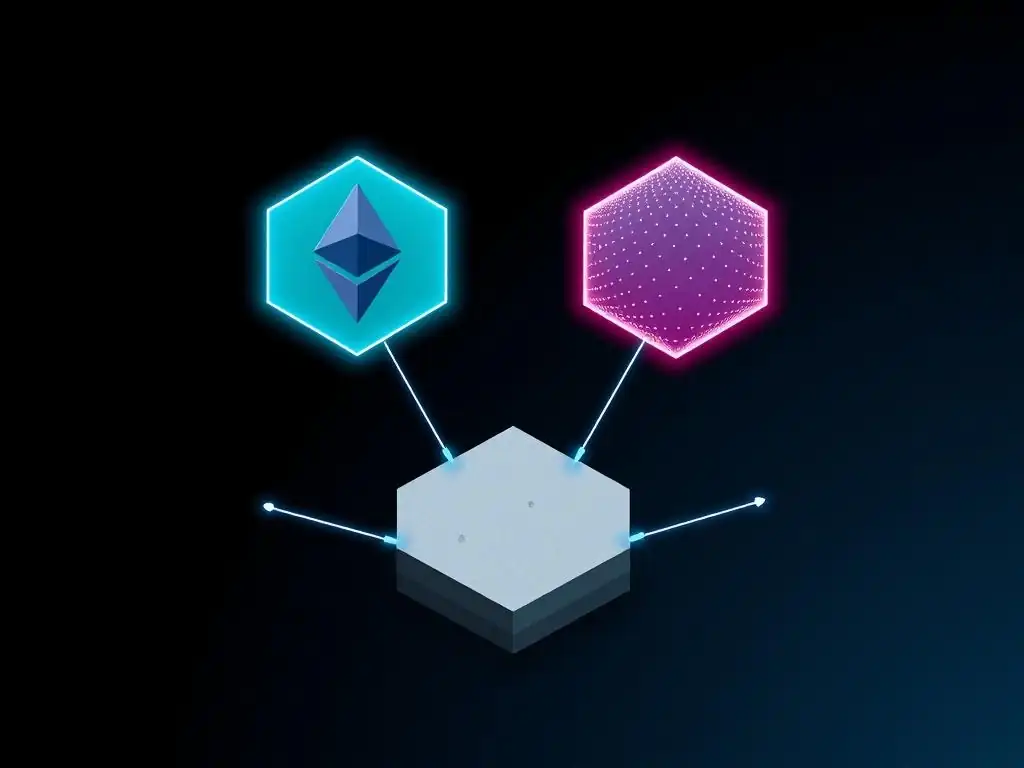
Case Study 5: Akash Network - Building a Decentralized Cloud
The Cosmos SDK and its Role in Project Development
Akash Network is a decentralized cloud computing marketplace built using the Cosmos SDK. The Cosmos SDK is a modular framework that simplifies the process of building sovereign, application-specific blockchains. It provides developers with pre-built modules for core blockchain functionalities such as consensus, networking, and governance, allowing them to focus on building the unique features of their application. Akash Network leverages the Cosmos SDK to create its blockchain, which is specifically designed to facilitate a decentralized marketplace for cloud compute resources.
The Cosmos SDK's modularity and customizability have been instrumental in Akash Network's development. The SDK allowed the Akash team to quickly build a blockchain tailored to the specific needs of a decentralized cloud marketplace, incorporating features such as resource auctions, secure enclaves, and decentralized storage integrations. By using the Cosmos SDK, Akash Network benefited from a robust and well-tested framework, significantly reducing development time and complexity compared to building a blockchain from scratch. The SDK also provides seamless integration with the Inter-Blockchain Communication (IBC) protocol, which is crucial for Akash Network's interoperability and future expansion.
Utilizing the Inter-Blockchain Communication (IBC) Protocol
Akash Network utilizes the Inter-Blockchain Communication (IBC) protocol to enable interoperability with other Cosmos SDK-based blockchains and beyond. IBC is a standardized protocol that allows independent blockchains to securely and trustlessly exchange data and assets. This interoperability is essential for Akash Network to expand its ecosystem and integrate with other decentralized services and applications. Through IBC, Akash Network can potentially connect with blockchains focused on data storage, identity management, DeFi, and other functionalities, creating a more interconnected and versatile decentralized cloud ecosystem.
For example, Akash Network could leverage IBC to integrate with decentralized storage solutions built on Cosmos, allowing users to seamlessly store data on decentralized networks alongside their compute workloads. IBC also enables cross-chain asset transfers, allowing users to pay for cloud compute resources using tokens from different Cosmos-connected blockchains. This interoperability enhances the utility and accessibility of Akash Network, positioning it as a key component of the broader interchain ecosystem.
Governance and Tokenomics of the Cosmos-Based Blockchain
Akash Network's blockchain, built with the Cosmos SDK, benefits from the inherent governance and tokenomics features of Cosmos-based chains. Cosmos SDK blockchains typically employ a Delegated Proof-of-Stake (DPoS) consensus mechanism, where token holders can delegate their tokens to validators who secure the network and participate in governance. AKASH (AKT), the native token of Akash Network, plays a crucial role in the network's governance and economics. AKT is used for staking, securing the network, and participating in governance proposals. Token holders can vote on network upgrades, parameter changes, and other important decisions.
The tokenomics of AKT are designed to incentivize long-term network participation and growth. Validators are rewarded with AKT tokens for their services, while delegators earn a share of these rewards. AKT is also used as the primary currency for transactions and payments within the Akash Network marketplace. This economic model aligns the incentives of validators, delegators, and users, fostering a sustainable and decentralized ecosystem for cloud computing. The governance framework, enabled by the Cosmos SDK, ensures that the Akash Network is community-driven and adaptable to the evolving needs of the decentralized cloud market.
Case Study 6: Osmosis - Building a Decentralized Interchain Exchange
Advantages of Cosmos for Building Independent Blockchains
Osmosis is a decentralized interchain exchange built as an independent blockchain using the Cosmos SDK. Cosmos provides significant advantages for building application-specific blockchains like Osmosis, particularly in terms of sovereignty, performance, and interoperability. Sovereignty is a key advantage, as Osmosis controls its own blockchain, allowing it to customize its governance, tokenomics, and features without being subject to the constraints of a shared platform. This independence is crucial for Osmosis to optimize its DEX functionalities and cater specifically to the needs of interchain trading.
Cosmos also offers high performance and scalability. Each Cosmos SDK blockchain operates independently, avoiding network congestion and scalability limitations often encountered on shared platforms. Osmosis benefits from this performance, enabling fast transaction processing and efficient trading for interchain assets. Furthermore, Cosmos's focus on interoperability, through the IBC protocol, is fundamental to Osmosis's core functionality as an interchain exchange. Cosmos provides the necessary infrastructure and tools for Osmosis to seamlessly connect with and trade assets from other blockchains within the Cosmos ecosystem and beyond.
Security and Scalability Considerations within the Cosmos Ecosystem
While Cosmos offers significant advantages, security and scalability are still crucial considerations for projects like Osmosis. Each Cosmos SDK blockchain is responsible for its own security. Osmosis, as an independent chain, must establish its own validator set and ensure robust security practices to protect user funds and maintain network integrity. Osmosis utilizes a Delegated Proof-of-Stake (DPoS) consensus mechanism and incentivizes validators to secure the network through token rewards. Continuous monitoring, security audits, and community governance are essential for maintaining the security of the Osmosis blockchain.
Scalability within the Cosmos ecosystem is addressed through the horizontal scaling capabilities of IBC. As more blockchains connect through IBC, the overall network capacity increases, allowing for greater transaction throughput and reduced congestion. Osmosis, by being part of this interconnected ecosystem, benefits from the scalability of the Cosmos network as a whole. However, Osmosis must also optimize its own blockchain performance to handle increasing trading volumes and ensure a smooth user experience. Ongoing development and optimization efforts are crucial for Osmosis to maintain its scalability and performance as the interchain trading landscape evolves.
Future Potential of IBC and Interconnected Blockchains
Osmosis is at the forefront of the interchain movement, demonstrating the future potential of IBC and interconnected blockchains. IBC is still in its early stages, but its potential to unlock a truly interoperable and interconnected blockchain ecosystem is immense. Osmosis serves as a prime example of how IBC can enable new and innovative applications, such as decentralized interchain exchanges that were previously impossible. As IBC adoption grows and more blockchains connect to the Cosmos ecosystem, the potential for Osmosis and other interchain applications expands significantly.
The future of blockchain is increasingly seen as multi-chain, with different blockchains specializing in specific functionalities and interconnected through protocols like IBC. Osmosis is positioned to be a central hub in this interchain future, facilitating the seamless flow of assets and data between different blockchains. The continued development of IBC, coupled with the growth of the Cosmos ecosystem, promises to unlock even greater potential for Osmosis and other interchain applications, shaping the future of decentralized finance and beyond.
Comparative Analysis: Ethereum vs. Polkadot vs. Cosmos – Which Platform is Best for Your Project?
Key Differences in Architecture and Governance
Ethereum, Polkadot, and Cosmos represent distinct architectural and governance approaches to blockchain technology, each with its own strengths and trade-offs. Ethereum, in its current form (pre-Ethereum 2.0), is a monolithic blockchain, meaning all functionalities and applications are built on a single chain. Its governance is largely community-driven but can be slower and more fragmented due to its size and complexity. Polkadot, on the other hand, employs a heterogeneous multi-chain architecture with a central Relay Chain coordinating multiple parachains.
Its governance is more structured and on-chain, with a Council and Technical Committee playing key roles. Cosmos takes a different approach, focusing on sovereign blockchains interconnected through IBC. Each Cosmos chain has its own governance model, allowing for greater autonomy and customization.
Architecturally, Ethereum's monolithic design offers simplicity and a large, established ecosystem but can suffer from scalability limitations and network congestion. Polkadot's multi-chain architecture addresses scalability and interoperability directly but introduces complexity in managing parachain auctions and cross-chain governance. Cosmos's independent blockchain approach provides maximum sovereignty and scalability but requires each chain to establish its own security and community.
In terms of governance, Ethereum's community-driven approach can be highly inclusive but less efficient for rapid decision-making. Polkadot's on-chain governance is more structured and efficient but can be perceived as less decentralized. Cosmos's sovereign governance model offers maximum flexibility but can lead to fragmentation and less coordination across the ecosystem.
Evaluating Scalability and Interoperability Solutions
Scalability and interoperability are critical considerations when choosing a blockchain platform. Ethereum's scalability challenges are well-documented, with high gas fees and slow transaction speeds during peak usage. Ethereum 2.0 aims to address these issues through sharding and Proof-of-Stake, but the transition is ongoing. Polkadot is designed for scalability through its parachain architecture, allowing for parallel processing of transactions across multiple parachains.
Its interoperability is inherent in its design through XCM, enabling seamless communication between parachains. Cosmos prioritizes scalability through its independent blockchain model, where each chain can scale independently. Interoperability is achieved through IBC, enabling communication and asset transfers between Cosmos-connected chains.
In terms of scalability solutions, Ethereum is undergoing a complex and lengthy upgrade to Ethereum 2.0, which promises significant scalability improvements but is still under development. Polkadot offers inherent scalability through its parachain architecture, which is already operational and demonstrated in practice. Cosmos's independent blockchain model provides horizontal scalability, allowing the ecosystem to scale by adding more interconnected chains.
Regarding interoperability, Ethereum's interoperability is primarily focused on its own ecosystem and relies on bridges for cross-chain communication, which can introduce security risks. Polkadot's XCM provides native and secure interoperability between parachains. Cosmos's IBC offers a standardized protocol for secure and trustless interchain communication between independent blockchains.
Comparing Developer Ecosystems and Community Support
Developer ecosystems and community support are crucial for the long-term success of any blockchain platform. Ethereum boasts the largest and most mature developer ecosystem in the blockchain space, with a vast pool of Solidity developers, extensive tooling, and a vibrant community. Polkadot's developer ecosystem is growing rapidly, particularly with the advent of Moonbeam, which attracts Ethereum developers.
Polkadot offers Substrate, a powerful framework for building custom blockchains, and is fostering a strong and supportive developer community. Cosmos also has a growing developer ecosystem centered around the Cosmos SDK, attracting developers interested in building sovereign and interoperable blockchains. Cosmos benefits from a strong community focused on interchain technologies and decentralized governance.
In terms of developer ecosystems, Ethereum's is the largest and most established, offering the widest range of tools, resources, and developer talent. Polkadot's ecosystem is rapidly expanding, particularly appealing to Ethereum developers seeking scalability and interoperability. Cosmos's ecosystem is more niche but focused on a specific vision of sovereign and interconnected blockchains, attracting developers interested in building application-specific chains and interchain applications. Community support is strong for all three platforms, but the nature of support varies.
Ethereum's community is vast and diverse, offering extensive online resources and developer communities. Polkadot's community is known for its technical expertise and strong focus on interoperability and parachain development. Cosmos's community is highly focused on interchain governance and the broader vision of an interconnected blockchain ecosystem.
Conclusion: The Future of Blockchain Project Development
Emerging Trends in Decentralized Applications
The landscape of decentralized applications is constantly evolving, with several emerging trends shaping the future of blockchain project development. One prominent trend is the increasing focus on interoperability and cross-chain applications. As demonstrated by Polkadot and Cosmos, the future is likely to be multi-chain, with different blockchains specializing in specific functionalities and interconnected through protocols like XCM and IBC. This trend is driving the development of cross-chain DeFi, cross-chain data sharing, and other interchain applications that leverage the strengths of multiple blockchains.
Another key trend is the growing emphasis on user experience and accessibility. Early blockchain applications often suffered from poor user interfaces and complex onboarding processes. New projects are prioritizing user-friendliness, aiming to make decentralized applications as intuitive and accessible as traditional web applications.
Decentralized Autonomous Organizations (DAOs) are also gaining momentum, representing a new paradigm for organizational governance and community participation. DAOs leverage blockchain technology to create transparent and decentralized organizations governed by code and token holders. This trend is transforming how projects are managed, funded, and governed, fostering greater community ownership and transparency.
Furthermore, Layer-2 scaling solutions are becoming increasingly important for addressing scalability limitations and reducing transaction costs on platforms like Ethereum. Layer-2 solutions, such as rollups and sidechains, enable faster and cheaper transactions while inheriting the security of the underlying Layer-1 blockchain. These emerging trends highlight the dynamic and rapidly evolving nature of decentralized applications and the ongoing innovation within the blockchain space.
The Importance of Choosing the Right Blockchain Platform
Choosing the right blockchain platform is a critical decision for any project aiming to build decentralized applications. As we have seen through the case studies of Ethereum, Polkadot, and Cosmos, each platform offers unique strengths and is best suited for different types of projects and use cases. Ethereum remains the leading platform for DeFi and dApps, particularly for projects that prioritize a large and mature ecosystem and are comfortable with its current scalability limitations or are leveraging Layer-2 solutions.
Polkadot is an excellent choice for projects that require interoperability and scalability from day one, particularly for cross-chain DeFi applications or projects that benefit from a heterogeneous multi-chain architecture. Cosmos is ideal for projects that prioritize sovereignty, customizability, and interoperability through IBC, especially for application-specific blockchains and interchain applications.
The decision of which platform to choose should be based on a thorough assessment of the project's specific requirements, including scalability needs, interoperability demands, security considerations, developer ecosystem preferences, and long-term vision. There is no one-size-fits-all solution, and the optimal platform will depend on the unique characteristics and goals of each project. By carefully evaluating the strengths and weaknesses of different blockchain platforms and aligning them with project needs, developers and businesses can make informed decisions and maximize their chances of success in the rapidly evolving world of decentralized technology.
Frequently Asked Questions
What are some examples of successful DeFi projects built on Ethereum?
Ethereum boasts a vibrant ecosystem. Examples include Uniswap, a decentralized exchange; Aave, a lending and borrowing platform; and MakerDAO, a stablecoin issuer.
How do projects on Polkadot and Cosmos compare to those on Ethereum in terms of DeFi functionality?
While Ethereum has the largest DeFi ecosystem, Polkadot and Cosmos offer interoperability and scalability. They enable cross-chain functionality and specialized application chains, potentially leading to innovative DeFi solutions.
What makes Ethereum a popular choice for building DeFi applications?
Ethereum's popularity stems from its smart contract capabilities, a large developer community, and a well-established infrastructure. These factors contribute to ease of development and widespread adoption.
What is the role of regulatory frameworks in shaping the future of Ethereum DeFi case studies?
Regulatory clarity is crucial. Clear regulations can foster innovation and adoption while mitigating risks associated with decentralized finance, potentially impacting the success of future Ethereum DeFi projects.
Besides DeFi, what other applications are being developed on Ethereum, Polkadot, and Cosmos?
Beyond DeFi, these platforms support a wide range of applications, including supply chain management, digital identity solutions, and decentralized autonomous organizations (DAOs). They offer diverse use cases beyond just finance.
Final Reflection: The Enduring Promise of Decentralized Innovation
The case studies presented throughout this article highlight the tangible impact of blockchain technology, proving that decentralized finance is no longer a futuristic concept, but a present-day reality. From Ethereum's pioneering DeFi protocols to the interoperability solutions offered by Polkadot and Cosmos, these projects demonstrate the power of collaborative innovation and the potential to reshape traditional financial systems. The successes detailed here are not isolated incidents; they represent a growing movement towards a more transparent, accessible, and equitable financial future.
The ripple effects of these projects extend far beyond the technical realm, influencing the very fabric of our cultural and social landscape. Witnessing the growth of these decentralized ecosystems has been profoundly inspiring, demonstrating the potential for technology to empower individuals and communities in unprecedented ways. The future of finance is decentralized, and the future is now.
This sentiment, echoed by many within the crypto community, underscores the transformative power of these technologies and the urgent need for continued exploration and adoption.
As we conclude this exploration of successful projects built on Ethereum, Polkadot, and Cosmos, I invite you to consider your own role in shaping this decentralized future. What problems can you solve? What innovations can you contribute? The opportunities are vast, and the potential for positive change is immense. Embrace the spirit of innovation, explore the possibilities, and become a part of building a more equitable and empowering financial ecosystem for all.
Ignite Your Blockchain Journey: Discover, Build, Thrive!
Thank you for exploring these inspiring case studies of successful blockchain projects built on leading platforms. We hope you've gained valuable insights into the possibilities these technologies unlock. Now, it's time to turn your knowledge into action.
Here are a few ways to get started:
- Dive Deeper: Explore the whitepapers and developer documentation of the project that resonated with you most. Understanding the technical details is essential to grasp the full potential.
- Contribute to the Community: Participate in online forums or attend virtual meetups focused on these platforms. Share your insights and learn from others.
- Consider building your own small-scale dApp (decentralized application) on a test network. Start simple and expand as you gain experience.
Are you ready to take the first step toward creating your own blockchain success story? Which platform’s ecosystem excites you the most? Share your thoughts in the comments below!
Leave a Reply