
Comparing Hyperledger Fabric and Sawtooth: Key Differences for Enterprise Architects


Welcome to Blockchain Trends, your compass in the rapidly evolving world of decentralized technology. Beyond the hype, lies a universe of transformative applications. Intrigued by the enterprise potential of blockchain? Then dive into our exploration of the key differences between two leading platforms, Hyperledger Fabric vs Sawtooth, and discover which is the right fit for your architectural needs. Keep reading to unlock the insights you need to navigate the complex landscape of blockchain solutions.
Comparing Hyperledger Fabric and Sawtooth: Key Differences for Enterprise Architects
- Introduction: Choosing the Right Hyperledger Framework for Your Enterprise
- Hyperledger Fabric vs. Sawtooth: A Detailed Comparison
- Key Differences for Enterprise Architects: Performance, Scalability, and Security
- Smart Contracts and Chaincode: Development and Deployment
- Use Cases and Industry Applications: Supply Chain and Digital Identity
- Deployment and Operational Considerations: Complexity and Infrastructure Requirements
- Governance and Community Support: The Role of the Hyperledger Foundation
- Hyperledger Fabric vs Sawtooth: A Side-by-Side Feature Comparison Table
- Making the Right Choice: Factors to Consider for Your Enterprise Blockchain Strategy
- Conclusion: Hyperledger Fabric or Sawtooth? Aligning Blockchain with Business Goals
-
Frequently Asked Questions
- What are the primary architectural differences between Hyperledger Fabric and Hyperledger Sawtooth?
- Which Hyperledger framework, Fabric or Sawtooth, is better suited for applications requiring granular control over data access?
- How does the consensus mechanism differ between Hyperledger Fabric and Hyperledger Sawtooth, and what are the implications?
- What are some common use cases where Hyperledger Sawtooth might be a more suitable choice than Hyperledger Fabric?
- What are the key considerations for enterprise architects when choosing between Hyperledger Fabric and Hyperledger Sawtooth for a blockchain project?
- Final Reflection: Navigating the Blockchain Landscape
- Unleash Your Blockchain Vision!
Introduction: Choosing the Right Hyperledger Framework for Your Enterprise
Understanding the Enterprise Blockchain Landscape
The enterprise blockchain landscape is rapidly evolving, with organizations increasingly seeking distributed ledger technology (DLT) solutions to enhance efficiency, security, and transparency. Enterprises are exploring blockchain beyond cryptocurrencies, focusing on its potential to streamline supply chains, manage digital identities, secure data sharing, and automate complex business processes. This exploration has led to the rise of permissioned blockchains, designed specifically for enterprise needs, offering features like access control, data privacy, and regulatory compliance.
Unlike public, permissionless blockchains, enterprise blockchains operate within a closed ecosystem, ensuring that only authorized participants can access and transact on the network. This controlled environment is crucial for businesses dealing with sensitive data and requiring adherence to strict industry regulations, making frameworks like Hyperledger Fabric and Hyperledger Sawtooth essential tools in the enterprise blockchain toolkit.
The Importance of Selecting the Appropriate Hyperledger Solution
Within the Hyperledger ecosystem, choosing the right framework is critical for the success of any enterprise blockchain initiative. Hyperledger, hosted by the Linux Foundation, offers a suite of open-source blockchain frameworks and tools, each designed with specific functionalities and architectural nuances. Selecting between Hyperledger Fabric and Hyperledger Sawtooth, two of the most prominent frameworks, requires a deep understanding of their distinct characteristics.
Factors such as consensus mechanisms, data models, smart contract execution, performance requirements, and security considerations play a crucial role in determining the optimal fit for a particular enterprise use case. A mismatch between the chosen framework and business needs can lead to inefficiencies, scalability issues, and even project failure. Therefore, a thorough comparison of Hyperledger Fabric vs Sawtooth is not just beneficial but essential for enterprise architects tasked with building robust and effective blockchain solutions.
Hyperledger Fabric vs. Sawtooth: A Detailed Comparison
Architectural Overview: Fabric's Modular Approach vs. Sawtooth's Pluggable Consensus
Hyperledger Fabric and Hyperledger Sawtooth, while both being Hyperledger projects, exhibit fundamental architectural differences that influence their suitability for various enterprise applications. Fabric is characterized by its highly modular and configurable architecture. This modularity allows enterprises to customize and optimize the blockchain network to meet specific requirements. For instance, Fabric's architecture separates transaction endorsement, ordering, and validation into distinct components, offering greater flexibility and scalability.
In contrast, Hyperledger Sawtooth is designed with a more pluggable consensus mechanism. Sawtooth abstracts the consensus algorithm away from the core transaction processing logic, making it easier to swap out or experiment with different consensus algorithms without significant changes to the network's underlying structure. This pluggable nature provides adaptability but may offer less granular control compared to Fabric's modular approach, particularly in complex enterprise scenarios demanding fine-tuned configurations.
Consensus Mechanisms: Raft and Kafka in Fabric vs. Proof of Elapsed Time (PoET) in Sawtooth
Consensus mechanisms, the algorithms that ensure agreement among network participants on the validity of transactions, are a key differentiator between Hyperledger Fabric and Sawtooth. Hyperledger Fabric commonly utilizes Raft and Kafka for ordering services. Raft, a crash fault-tolerant consensus algorithm, is often preferred for production deployments due to its simplicity and performance in smaller networks.
Kafka, a distributed streaming platform, is used for building highly scalable ordering services capable of handling a large volume of transactions. On the other hand, Hyperledger Sawtooth's most notable consensus mechanism is Proof of Elapsed Time (PoET). PoET leverages trusted execution environments (TEEs), such as Intel SGX, to randomly select block leaders.
This approach aims to provide a fair and efficient consensus process, particularly in permissioned environments where participants are known and trusted to some degree. While Fabric offers flexibility with its consensus choices, Sawtooth's PoET is designed for scalability and efficiency within its specific architectural framework. The choice between these mechanisms depends heavily on the trust assumptions, performance needs, and scalability targets of the enterprise blockchain application.
Data Models and Transaction Processing: How Fabric and Sawtooth Handle Data
The way Hyperledger Fabric and Sawtooth handle data and process transactions also presents notable differences. Hyperledger Fabric employs a rich data model that supports private data collections and channel-based architecture. Channels in Fabric allow for data partitioning and privacy, enabling confidential transactions between specific network participants. Fabric's transaction processing involves endorsement by peers, ordering, and validation, ensuring data integrity and consistency across the network. Hyperledger Sawtooth, conversely, utilizes a simpler, more generalized data model. Transactions in Sawtooth are processed by transaction processors, which are essentially smart contract handlers. Sawtooth's approach focuses on modularity at the smart contract level, allowing for different transaction processors to handle various types of business logic. While Fabric's channel-based privacy and sophisticated transaction flow provide granular control and data isolation, Sawtooth's streamlined data model and transaction processing offer a more straightforward development and deployment experience, especially for applications that do not require complex data partitioning schemes.
Key Differences for Enterprise Architects: Performance, Scalability, and Security
Performance Benchmarks: Evaluating Transaction Throughput and Latency
When considering Hyperledger Fabric vs Sawtooth, performance benchmarks are critical for enterprise architects. Hyperledger Fabric, with its optimized architecture and endorsement policies, has demonstrated high transaction throughput in various benchmarks. Studies have shown Fabric achieving thousands of transactions per second (TPS) in controlled environments, though real-world performance can vary based on network configuration, transaction complexity, and hardware resources. For example, a 2018 IBM study reported Fabric achieving over 3,000 TPS in a supply chain scenario.
Hyperledger Sawtooth, while also performant, typically exhibits slightly lower throughput compared to Fabric in similar benchmark settings. Sawtooth's performance is influenced by its consensus mechanism and transaction processor design. However, Sawtooth's PoET consensus is designed for efficiency and can scale well in large networks.
Latency, the time it takes for a transaction to be processed and confirmed, is also an important metric. Fabric's latency can be optimized through channel configurations and endorsement policies, while Sawtooth's latency is affected by block times and PoET's leader election process. Both frameworks are capable of delivering enterprise-grade performance, but specific benchmarks and performance tuning are crucial for meeting demanding application requirements.
Scalability Considerations: Horizontal Scaling Capabilities of Fabric and Sawtooth
Scalability is a paramount concern for enterprise blockchain deployments, and both Hyperledger Fabric and Sawtooth offer horizontal scaling capabilities. Hyperledger Fabric's architecture is inherently designed for scalability. Adding more peers and orderers to a Fabric network can increase its capacity to handle a growing transaction load.
Fabric's channel architecture also contributes to scalability by partitioning the network and reducing contention. Furthermore, Fabric supports sharding, which can further enhance scalability by dividing the ledger into smaller, manageable pieces. Hyperledger Sawtooth also supports horizontal scaling by allowing the addition of more validator nodes to the network.
Sawtooth's modular design and pluggable consensus mechanism facilitate scaling efforts. However, Sawtooth's global state architecture, where all validators maintain a copy of the entire state, can present scalability challenges in extremely large networks compared to Fabric's channelized approach. Choosing between Fabric and Sawtooth based on scalability requires a careful assessment of the anticipated network size, transaction volume growth, and the long-term scalability roadmap for the enterprise application.
Security Features: Permissioning, Identity Management, and Data Encryption
Security is a non-negotiable requirement for enterprise blockchain solutions. Both Hyperledger Fabric and Sawtooth provide robust security features, but their approaches differ in certain aspects. Both are permissioned blockchains, meaning access and participation are controlled.
Hyperledger Fabric Security Model
Hyperledger Fabric's security model is built around Membership Service Providers (MSPs) for identity management and permissioning. MSPs define the rules and policies for network participation, authentication, and authorization. Fabric supports role-based access control (RBAC), enabling fine-grained control over who can perform specific actions on the network.
Data privacy is a core feature of Fabric, achieved through channels and private data collections. Channels provide data isolation between groups of participants, while private data collections allow for confidential data to be shared only among authorized parties without storing it on the channel ledger. Fabric also supports data encryption at rest and in transit, further enhancing data security.
Hyperledger Sawtooth Security Model
Hyperledger Sawtooth emphasizes security through its consensus mechanisms and transaction processor framework. PoET, in particular, leverages trusted execution environments (TEEs) to ensure fair and secure leader election, mitigating risks associated with traditional consensus algorithms. Sawtooth's permissioning model is based on identities and policies, allowing for access control and authorization.
Transaction processors in Sawtooth can implement custom security logic and data validation rules. While Sawtooth does not natively offer channel-like privacy features as granular as Fabric, it provides mechanisms for data encryption and access control at the transaction processor level. Both frameworks prioritize security, but Fabric's channel-based privacy and MSP-driven identity management offer a more comprehensive and finely tuned security architecture for complex enterprise scenarios.
Smart Contracts and Chaincode: Development and Deployment
Hyperledger Fabric Chaincode: Languages and Development Tools
Smart contracts, or chaincode in Hyperledger Fabric terminology, are crucial for automating business logic on the blockchain. Hyperledger Fabric chaincode can be written in Go, Java, and Node.js, providing developers with flexibility in choosing familiar programming languages. Fabric's Software Development Kit (SDK) supports multiple languages and provides tools and libraries for developing, deploying, and interacting with chaincode. Fabric's chaincode lifecycle management includes features for installing, instantiating, and upgrading chaincode on channels, with governance policies controlling these processes. The rich tooling and multi-language support in Fabric make it developer-friendly, particularly for enterprises with existing development teams proficient in these languages.
Hyperledger Sawtooth Transaction Processors: Writing Smart Contracts
Hyperledger Sawtooth utilizes transaction processors for defining and executing smart contract logic. Transaction processors in Sawtooth can be written in a variety of languages, including Python, Go, and JavaScript, offering developers considerable flexibility. Sawtooth's SDKs simplify the development of transaction processors, providing abstractions for interacting with the blockchain state and handling transactions. Sawtooth's approach emphasizes modularity, allowing for different transaction processors to coexist on the same network, each handling specific types of transactions. This modularity can be advantageous for applications with diverse smart contract requirements.
Smart Contract Governance and Upgradability
Smart contract governance and upgradability are essential aspects of enterprise blockchain deployments. Both Hyperledger Fabric and Sawtooth provide mechanisms for managing and evolving smart contracts over time. Hyperledger Fabric offers chaincode lifecycle management, allowing for controlled upgrades of chaincode versions on channels. Governance policies, defined through endorsement policies and channel configurations, dictate the process for upgrading chaincode, ensuring that updates are authorized and agreed upon by relevant network participants.
Hyperledger Sawtooth provides transaction processor versioning and namespace management, enabling upgrades and coexistence of different versions of transaction processors. Sawtooth's approach to governance is often more decentralized, relying on policy-based transaction validation and consensus among validators. Both frameworks address smart contract governance, but Fabric's channel-centric governance and Sawtooth's policy-driven approach offer different models for managing smart contract evolution in enterprise environments.
Use Cases and Industry Applications: Supply Chain and Digital Identity
Hyperledger Fabric Use Cases: Supply Chain Tracking and Financial Applications
Hyperledger Fabric's robust features and modular architecture make it well-suited for a wide range of enterprise use cases. Supply chain tracking is a prominent application area for Fabric. For example, Walmart uses Hyperledger Fabric to track food products across its supply chain, enhancing transparency and food safety. Fabric's private data collections and channels enable secure and confidential information sharing among supply chain participants.
Financial applications are another key area for Fabric. TradeLens, a shipping platform built on Hyperledger Fabric by IBM and Maersk, facilitates global trade by providing a secure and transparent platform for tracking shipments and managing trade documents. Fabric's performance, security, and privacy features make it a strong choice for demanding financial and supply chain applications.
Hyperledger Sawtooth Use Cases: Digital Identity and Supply Chain Provenance
Hyperledger Sawtooth's strengths lie in applications requiring scalability and simplified deployment, particularly in areas like digital identity and supply chain provenance. Digital identity management is a key use case for Sawtooth. Its efficient consensus mechanism and modular transaction processors make it suitable for managing decentralized identity systems.
Sawtooth's focus on scalability and performance also makes it a good fit for supply chain provenance applications. For instance, Sawtooth can be used to track the origin and journey of products through a supply chain, providing transparency and accountability. While Fabric is also used in supply chain, Sawtooth's simpler infrastructure requirements and efficient consensus can be advantageous for certain provenance and identity-focused applications.
Case Studies: Real-World Implementations of Fabric and Sawtooth
Real-world case studies illustrate the practical applications of Hyperledger Fabric and Sawtooth. TradeLens, mentioned earlier, exemplifies a large-scale Hyperledger Fabric deployment in the shipping industry, involving numerous organizations and processing millions of shipping events. Another Fabric example is the IBM Food Trust, which utilizes blockchain to improve food safety and traceability across the food supply chain, with participants like Nestle and Carrefour. Hyperledger Sawtooth has seen adoption in various sectors as well.
The U.S. Department of Agriculture (USDA) has explored using Sawtooth for supply chain tracking and traceability in agriculture. Furthermore, Sawtooth has been used in solutions for managing digital identities and credentials. These case studies demonstrate the diverse applicability of both Hyperledger Fabric and Sawtooth across industries, highlighting their strengths in addressing real-world enterprise challenges.
Deployment and Operational Considerations: Complexity and Infrastructure Requirements
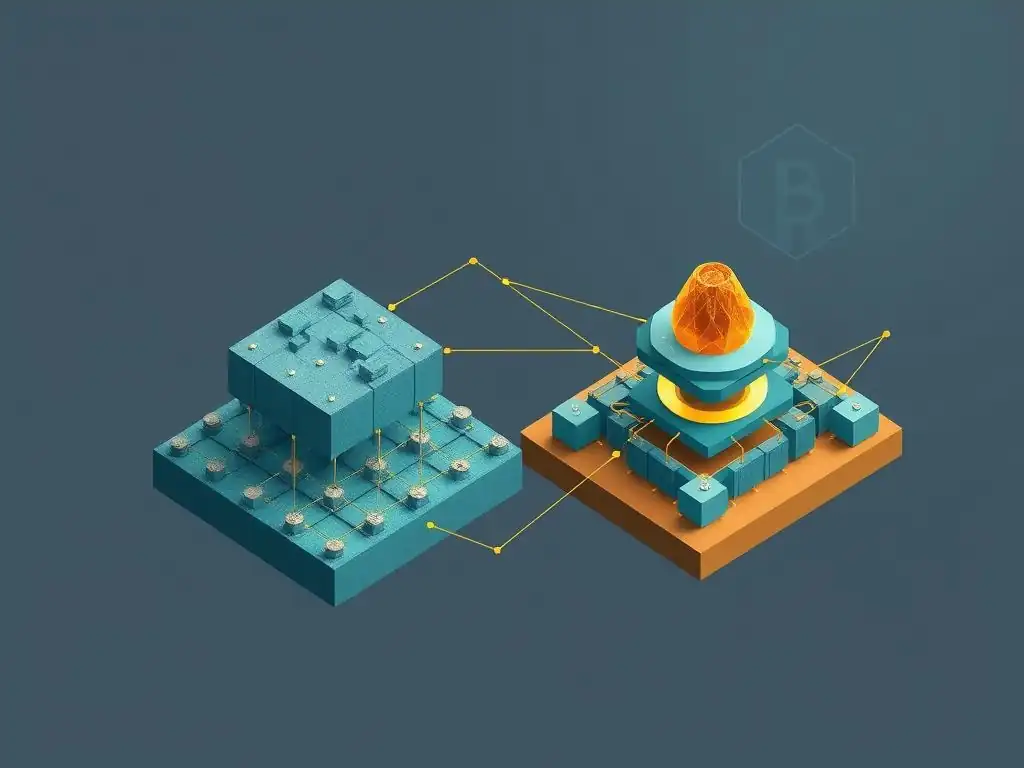
Hyperledger Fabric Deployment: Setting Up and Managing a Network
Deploying and managing a Hyperledger Fabric network can be more complex compared to Sawtooth, particularly for organizations new to blockchain technology. Fabric's modular architecture, while offering flexibility, requires careful configuration of various components like peers, orderers, and certificate authorities (CAs). Setting up a production-ready Fabric network involves defining channel configurations, deploying smart contracts, and managing network policies. Fabric's operational complexity necessitates skilled blockchain administrators and developers. However, the detailed control and customization offered by Fabric often justify the increased deployment effort for enterprises with specific and demanding requirements.
Hyperledger Sawtooth Deployment: Simplified Infrastructure Options
Hyperledger Sawtooth is often perceived as having a simpler deployment process compared to Fabric. Sawtooth's more streamlined architecture and pluggable consensus mechanism can simplify network setup. Sawtooth offers options for simplified infrastructure deployment, including using Docker and Kubernetes, making it easier to get started and manage a network. Sawtooth's design aims to reduce operational overhead, particularly for applications where extensive customization and fine-grained control are less critical. For organizations seeking a quicker and less complex blockchain deployment, Sawtooth can present a more accessible option.
Monitoring and Maintenance: Ensuring Network Health and Performance
Monitoring and maintenance are crucial for the long-term health and performance of any blockchain network. Both Hyperledger Fabric and Sawtooth provide tools and mechanisms for monitoring network activity and performance metrics. Hyperledger Fabric offers monitoring tools that track peer status, transaction throughput, and chaincode performance. Fabric's logging and eventing capabilities enable administrators to monitor network health and diagnose issues.
Hyperledger Sawtooth also provides monitoring tools for tracking validator performance, transaction processing, and network consensus. Sawtooth's metrics and logging features help ensure network stability and identify potential problems. Regular maintenance, including software updates, security patches, and performance tuning, is essential for both Fabric and Sawtooth networks to ensure continued operation and optimal performance.
Governance and Community Support: The Role of the Hyperledger Foundation
Hyperledger Fabric Governance Model
Hyperledger Fabric's governance model is community-driven and operates under the umbrella of the Hyperledger Foundation. Fabric's development is guided by a maintainer team and contributions from a diverse community of developers and organizations. The governance process involves open discussions, code reviews, and community meetings. Fabric's governance emphasizes transparency and collaboration, ensuring that the framework evolves in a way that meets the needs of its broad user base. The Hyperledger Foundation provides a neutral and open platform for governing the Fabric project.
Hyperledger Sawtooth Governance Model
Hyperledger Sawtooth also follows a community-driven governance model within the Hyperledger Foundation. Similar to Fabric, Sawtooth's development is guided by maintainers and contributions from the open-source community. Sawtooth's governance prioritizes open collaboration and community input in shaping the framework's roadmap and evolution. The Hyperledger Foundation provides the organizational structure and support for Sawtooth's governance, ensuring its continued development and adoption.
Community Resources and Support Availability
Both Hyperledger Fabric and Sawtooth benefit from strong community support and extensive resources. The Hyperledger Foundation provides comprehensive documentation, tutorials, and community forums for both frameworks. Online communities, such as Hyperledger RocketChat and mailing lists, offer platforms for users to ask questions, share knowledge, and collaborate. Numerous training programs, certifications, and consulting services are available for both Fabric and Sawtooth, reflecting the mature ecosystem and broad industry support for these Hyperledger frameworks. The active and supportive communities surrounding Fabric and Sawtooth are valuable assets for enterprises adopting these technologies.
Hyperledger Fabric vs Sawtooth: A Side-by-Side Feature Comparison Table
| Feature | Hyperledger Fabric | Hyperledger Sawtooth |
|---|---|---|
| Architecture | Modular, Configurable, Channel-based | Pluggable Consensus, Modular Transaction Processors |
| Consensus | Raft, Kafka (Pluggable options available) | Proof of Elapsed Time (PoET), Pluggable |
| Data Model | Rich, Private Data Collections, Channels | Generalized, Simpler |
| Smart Contracts | Chaincode (Go, Java, Node.js) | Transaction Processors (Python, Go, JavaScript) |
| Performance | High Throughput, Configurable Performance | Scalable, Efficient Consensus |
| Scalability | Horizontal, Channel-based, Sharding | Horizontal, Global State (Potential limits at scale) |
| Security | MSPs, Channels, Private Data, RBAC | PoET, Policies, Transaction Processor Security |
| Deployment Complexity | More Complex, Requires Expertise | Simpler, Easier to Get Started |
| Use Cases | Supply Chain, Finance, Complex Enterprise Apps | Digital Identity, Supply Chain Provenance, Scalability |
| Community Support | Strong, Extensive Resources | Strong, Extensive Resources |
Making the Right Choice: Factors to Consider for Your Enterprise Blockchain Strategy
Evaluating Business Requirements and Technical Capabilities
Choosing between Hyperledger Fabric vs Sawtooth requires a thorough evaluation of business requirements and technical capabilities. Enterprises should carefully consider the specific use case, desired level of data privacy, performance needs, scalability targets, and security requirements. Technical capabilities, including the in-house development team's expertise in relevant programming languages and blockchain technologies, also play a crucial role.
If the application demands granular data privacy, complex business logic, and high throughput, Hyperledger Fabric might be a more suitable choice. If the focus is on scalability, ease of deployment, and applications like digital identity or supply chain provenance, Hyperledger Sawtooth could be a better fit. A detailed gap analysis between business needs and the technical features of each framework is essential for informed decision-making.
Assessing Long-Term Maintainability and Scalability
Long-term maintainability and scalability are critical considerations for enterprise blockchain strategies. Enterprises should assess the long-term roadmap and community support for both Hyperledger Fabric and Sawtooth. Fabric's modular architecture and extensive feature set offer greater flexibility for future enhancements and scalability, but also require more operational expertise.
Sawtooth's simpler architecture and focus on pluggability can simplify maintenance and upgrades, but its scalability limitations in extremely large networks should be considered. Evaluating the anticipated growth of the blockchain network, the availability of skilled resources for maintenance, and the long-term evolution of each framework is crucial for ensuring the sustainability of the chosen solution.
Cost Analysis: Comparing Development and Operational Expenses
A comprehensive cost analysis is a necessary step in selecting between Hyperledger Fabric and Sawtooth. Development costs can vary based on the complexity of the application, the chosen framework's learning curve, and the availability of developers with expertise in each framework. Operational expenses include infrastructure costs, network maintenance, security management, and ongoing support. While Sawtooth might offer lower initial deployment costs due to its simpler infrastructure, Fabric's scalability and feature-richness might provide better long-term cost-effectiveness for complex and demanding applications. A detailed cost-benefit analysis, considering both upfront and ongoing expenses, is essential for making a financially sound decision.
Conclusion: Hyperledger Fabric or Sawtooth? Aligning Blockchain with Business Goals
Recap of Key Differences: Fabric vs. Sawtooth for Enterprise Use
Hyperledger Fabric and Hyperledger Sawtooth are both powerful enterprise blockchain frameworks, each with distinct strengths and weaknesses. Fabric excels in scenarios demanding high levels of customization, granular data privacy through channels, and complex business logic, making it ideal for use cases like supply chain finance and intricate enterprise applications. Sawtooth, on the other hand, shines in applications prioritizing scalability, ease of deployment, and efficient consensus, particularly for digital identity and supply chain provenance. The choice between Hyperledger Fabric vs Sawtooth ultimately depends on the specific business goals, technical requirements, and long-term strategic objectives of the enterprise.
The Future of Hyperledger: Emerging Trends and Innovations
The Hyperledger ecosystem is continuously evolving, with ongoing innovations and emerging trends shaping the future of enterprise blockchain. Both Hyperledger Fabric and Sawtooth are actively developed, with new features and enhancements being introduced regularly. Cross-framework interoperability, advancements in privacy-preserving technologies, and greater emphasis on ease of use and developer experience are key trends within the Hyperledger community.
Enterprises should stay informed about these developments and consider how they might impact their blockchain strategies and the ongoing evolution of Hyperledger Fabric and Sawtooth. As blockchain technology matures, the Hyperledger ecosystem will continue to play a vital role in driving enterprise adoption and shaping the future of decentralized systems.
Frequently Asked Questions
What are the primary architectural differences between Hyperledger Fabric and Hyperledger Sawtooth?
Hyperledger Fabric uses a pluggable architecture and allows for permissioned access, while Sawtooth employs a modular design with a focus on simplified development and deployment. Sawtooth also uses Proof of Elapsed Time (PoET) consensus.
Which Hyperledger framework, Fabric or Sawtooth, is better suited for applications requiring granular control over data access?
Hyperledger Fabric is generally preferred for applications requiring fine-grained access control and data privacy, due to its channel architecture and support for private data collections. Permissioned networks are more easily managed with Fabric.
How does the consensus mechanism differ between Hyperledger Fabric and Hyperledger Sawtooth, and what are the implications?
Fabric typically uses Practical Byzantine Fault Tolerance (PBFT) or RAFT, providing strong consensus but potentially lower throughput. Sawtooth utilizes Proof of Elapsed Time (PoET), which is energy-efficient but relies on Intel's SGX technology for security.
What are some common use cases where Hyperledger Sawtooth might be a more suitable choice than Hyperledger Fabric?
Sawtooth is often favored for applications requiring high scalability and simplified governance, such as supply chain management or identity management systems, especially when the PoET consensus is acceptable.
What are the key considerations for enterprise architects when choosing between Hyperledger Fabric and Hyperledger Sawtooth for a blockchain project?
Architects must consider factors like required level of privacy, desired throughput, consensus mechanism requirements, and the complexity of development and deployment when deciding between Fabric and Sawtooth.
Okay, here's a final reflection you can use for your "Comparing Hyperledger Fabric and Sawtooth: Key Differences for Enterprise Architects" article, formatted as requested:
The exploration of Hyperledger Fabric and Sawtooth reveals more than just technical differences; it highlights the strategic choices enterprises face when embracing blockchain technology. Understanding these nuances is crucial, not just for architects, but for any organization seeking to leverage the transformative power of distributed ledgers in a way that aligns with their specific needs and long-term vision.
The ongoing debate between permissioned blockchain solutions underscores the importance of careful consideration of governance, consensus mechanisms, and scalability. The choice between Fabric and Sawtooth is not simply a matter of technical preference, but a reflection of an organization's priorities and risk tolerance. The best way to predict the future is to create it.
- Peter Drucker. This quote resonates deeply, reminding us that the blockchain solutions we choose today will shape the future of our industries.
As you navigate the complex world of enterprise blockchain, remember that the most effective solution is the one that best serves your unique requirements. Take the time to thoroughly evaluate your options, consider the long-term implications, and embrace the opportunity to shape the future of your organization with the power of distributed ledger technology.
Unleash Your Blockchain Vision!
Thank you for exploring the key differences between Hyperledger Fabric and Sawtooth. We hope you've gained valuable insights to inform your enterprise blockchain strategy. Now, it's time to put that knowledge into action!
Here’s how you can take the next step:
- Define a pilot project that leverages the strengths of either Hyperledger Fabric or Sawtooth, tailored to your specific business needs and the insights you've gathered.
- Dive into the official documentation for both frameworks to understand their architectures and functionalities in detail.
- Share this article with your colleagues and initiate discussions within your team about potential applications of these blockchain platforms within your organization.
What specific use case are you considering for Hyperledger Fabric or Sawtooth, and what challenges do you anticipate encountering?
Leave a Reply