
Comparing Transaction Speeds: Solana, Visa, and Traditional Payment Networks

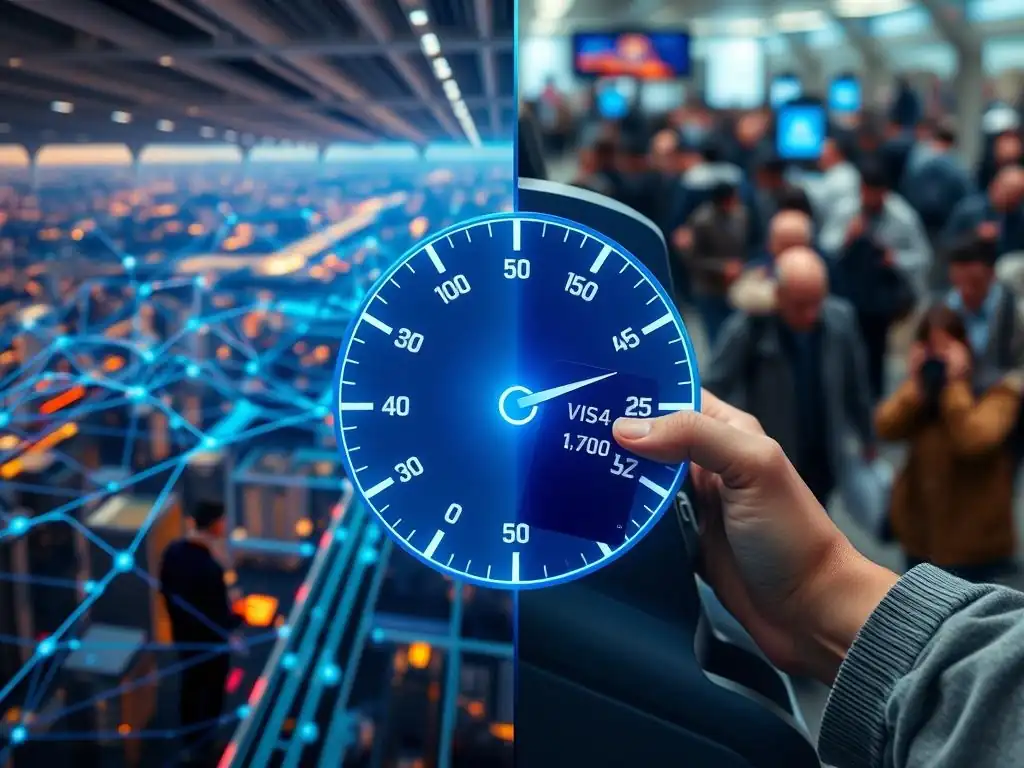
Welcome to Blockchain Trends, your compass in the rapidly evolving world of decentralized technologies. Beyond the buzzwords, we delve into the real-world applications and transformative potential of blockchain. Curious about the true speed of innovation? Our in-depth analysis begins with a crucial question: how does Solana vs Visa speeds compare, and what does it mean for the future of payments? Uncover the surprising answers and explore the implications for blockchain adoption in our latest article.
- Solana vs Visa: A Deep Dive into Transaction Speed Comparisons
- Solana Transaction Speeds: Unpacking the Performance
- Visa Transaction Speeds: Examining the Global Payment Giant
- Solana vs Visa Speeds: A Head-to-Head Comparison
- Other Blockchain Networks: Benchmarking Against Solana and Visa
- The Future of Transaction Processing: Blockchain's Role
- Conclusion: Choosing the Right Payment Network for Your Needs
-
Frequently Asked Questions
- How does Solana's transaction speed compare to Visa's?
- What are the factors influencing transaction speeds on blockchain networks like Solana?
- Is Solana's speed always faster than Visa in real-world scenarios?
- What are the advantages of faster transaction speeds in payment networks?
- How do regulations affect the adoption of blockchain-based payment systems like Solana?
- Final Reflection: The Need for Speed in a Digital World
- Unleash the Future: Will You Ride the Speed Wave?
Solana vs Visa: A Deep Dive into Transaction Speed Comparisons
Defining Transactions Per Second (TPS) and Latency
In the realm of payment processing and data transfer, understanding transaction speed is paramount. Two key metrics define this speed: Transactions Per Second (TPS) and Latency. TPS, or Transactions Per Second, quantifies the number of transactions a network can process and confirm in a single second. It serves as a crucial indicator of a network's throughput and scalability, particularly when dealing with high volumes of data or financial exchanges. A higher TPS generally implies a more efficient and faster network, capable of handling greater demand without bottlenecks.
Latency, on the other hand, refers to the delay between initiating a transaction and its confirmation or completion. Expressed in milliseconds or seconds, latency measures the responsiveness of a network. Low latency is critical for applications requiring real-time interactions, such as point-of-sale systems or high-frequency trading platforms. High latency can lead to delays, impacting user experience and potentially hindering the efficiency of time-sensitive operations. While TPS focuses on volume, latency focuses on the speed of individual transaction completion. Both are vital but represent different aspects of network performance.
Key Factors Affecting Transaction Speed: A Comparative Overview
Transaction speed is not a monolithic characteristic; it is influenced by a complex interplay of factors that differ significantly between blockchain networks like Solana and traditional payment networks like Visa. For blockchain networks, factors such as consensus mechanisms, network congestion, block size, and block time are crucial determinants of transaction speed. Consensus mechanisms, like Proof of Stake (PoS) or Proof of History (PoH), dictate how transactions are validated and added to the blockchain, directly impacting processing time. Network congestion, especially during peak usage, can slow down transaction confirmation as nodes become overloaded.
Traditional payment networks, like Visa, operate on centralized architectures with dedicated infrastructure. Their transaction speeds are primarily affected by factors such as server capacity, network bandwidth, and the efficiency of their proprietary processing systems. Visa's infrastructure is optimized for speed and reliability, benefiting from decades of development and massive investments in technology. However, centralized systems can be susceptible to single points of failure and may face scalability challenges as transaction volumes grow exponentially. In contrast, blockchain networks aim for decentralization and security, which can sometimes introduce trade-offs in transaction speed compared to highly optimized centralized systems.
Solana Transaction Speeds: Unpacking the Performance
Solana's Theoretical TPS vs. Real-World Performance
Solana has emerged as a prominent blockchain platform, specifically designed for high throughput and speed. Theoretically, Solana boasts a remarkable transaction processing capacity, often cited as being capable of handling upwards of 50,000 to 65,000 TPS. This figure positions Solana as a leader in blockchain transaction speed, significantly surpassing many other established blockchain networks and even rivaling traditional payment processors in claimed capacity. This theoretical TPS is based on the network's architecture and optimized design under ideal conditions.
However, it is crucial to distinguish between theoretical TPS and real-world performance. While Solana's architecture enables high potential speeds, actual observed TPS in real-world conditions can vary. Factors such as network congestion, transaction complexity, and the current load on the network can influence the practical TPS achieved. Independent benchmarks and network monitoring tools often show Solana's average real-world TPS fluctuating, typically ranging from a few hundred to several thousand TPS, depending on network activity. While still impressive compared to many blockchains, this highlights the difference between theoretical limits and practical throughput under varying network conditions.
How Solana Achieves High Transaction Throughput: Proof of History and Gulf Stream
Solana's exceptional transaction speed is primarily attributed to its innovative architecture, particularly its unique consensus mechanism called Proof of History (PoH) and its transaction forwarding protocol, Gulf Stream. Proof of History is a crucial innovation that pre-computes the order and passage of time between transactions. Unlike traditional blockchains that require nodes to communicate and agree on transaction order after they occur, PoH creates a historical record that cryptographically verifies transaction order and time before consensus is reached. This significantly reduces the time needed for consensus and allows for parallel transaction processing.
Gulf Stream further enhances transaction speed by proactively forwarding transactions to validators even before the previous block is finalized. This predictive transaction forwarding minimizes mempool congestion and allows validators to begin processing transactions in advance, reducing confirmation times. By combining PoH for efficient transaction ordering and Gulf Stream for optimized transaction propagation, Solana minimizes bottlenecks associated with traditional blockchain consensus and transaction handling, enabling it to achieve significantly higher throughput and lower latency than many of its peers.
Solana's Scalability Solutions: Turbine and Sealevel
Beyond Proof of History and Gulf Stream, Solana incorporates additional scalability solutions, notably Turbine and Sealevel, to further optimize its transaction processing capabilities. Turbine is Solana's block propagation protocol, engineered to efficiently disseminate blocks across the network. Instead of sending the entire block to every node, Turbine breaks down blocks into smaller packets and uses a randomized, layered propagation method. This reduces bandwidth requirements and speeds up block propagation, even as network size and transaction volume increase. Turbine is designed to handle the demands of a high-throughput blockchain by ensuring rapid and efficient information sharing across the distributed network.
Sealevel is Solana's parallel transaction processing engine. Most blockchains process transactions sequentially, meaning one transaction must be fully processed before the next can begin. Sealevel enables parallel processing by allowing transactions that do not affect the same state to be processed concurrently. This significantly increases throughput by utilizing multi-core processors and maximizing network resource utilization. By processing transactions in parallel whenever possible, Sealevel overcomes a significant bottleneck in blockchain scalability, allowing Solana to handle a much larger volume of transactions simultaneously and maintain high transaction speeds even under heavy load.
Visa Transaction Speeds: Examining the Global Payment Giant
Visa's Peak Transaction Capacity and Average TPS
Visa stands as a global leader in payment processing, handling trillions of dollars in transactions annually. Visa's network is designed for massive scale and speed, boasting a theoretical peak transaction capacity of around 65,000 TPS. This figure is often cited by Visa and reflects the network's engineered maximum throughput under optimal conditions. This high peak capacity is essential for handling peak shopping seasons and global transaction surges without causing delays or disruptions in payment processing.
While Visa's peak capacity is impressive, its average real-world TPS is typically lower. Industry estimates and reports suggest Visa's average TPS in practice ranges from approximately 1,700 to 4,000 TPS. This average takes into account the fluctuations in transaction volume throughout the day and across different geographical regions. The difference between peak capacity and average TPS reflects the network's ability to handle surges in demand while maintaining consistent and reliable transaction processing under normal operating conditions. Visa's infrastructure is built to accommodate significant variations in transaction volume and ensure smooth operation globally.
The Infrastructure Powering Visa's Transaction Processing
Visa's remarkable transaction speeds are underpinned by a highly sophisticated and robust infrastructure built over decades of development and investment. This infrastructure is centralized and proprietary, consisting of a global network of data centers, high-speed communication lines, and specialized processing systems. Visa operates a complex network of servers and databases designed for fault tolerance and redundancy, ensuring continuous operation even in the event of hardware failures or network disruptions. The architecture is optimized for low latency and high throughput, enabling rapid authorization and settlement of transactions worldwide.
Furthermore, Visa's infrastructure includes advanced security measures and fraud detection systems integrated at every layer of the transaction processing pipeline. This comprehensive infrastructure allows Visa to handle massive transaction volumes with high speed, reliability, and security. The centralized nature of Visa's network allows for direct control and optimization of every component, contributing significantly to its efficiency and performance in processing millions of transactions every second globally.
Understanding Visa's Transaction Fees and Processing Times
While Visa excels in transaction speed, it's essential to consider the associated fees and processing times from a user perspective. Merchants using Visa's payment network typically incur transaction fees, known as interchange fees and assessment fees, which are a percentage of the transaction value plus a fixed fee. These fees are paid to cover the costs of operating and maintaining the payment network, as well as providing services like fraud protection and risk management. The exact fee structure varies based on factors such as transaction type, merchant category, and geographical location.
Visa's processing times are typically very fast, with authorizations often occurring in milliseconds. From a consumer's perspective, a Visa transaction at a point-of-sale is virtually instantaneous. However, the settlement process, where funds are actually transferred between banks, can take longer, typically ranging from one to three business days. While the authorization is immediate, the full settlement cycle involves multiple steps within the banking system. Despite the settlement time, the user experience with Visa is characterized by rapid transaction confirmation and widespread acceptance, making it a convenient and efficient payment method for everyday use.
Solana vs Visa Speeds: A Head-to-Head Comparison
Transaction Speed Benchmarks: Solana vs Visa
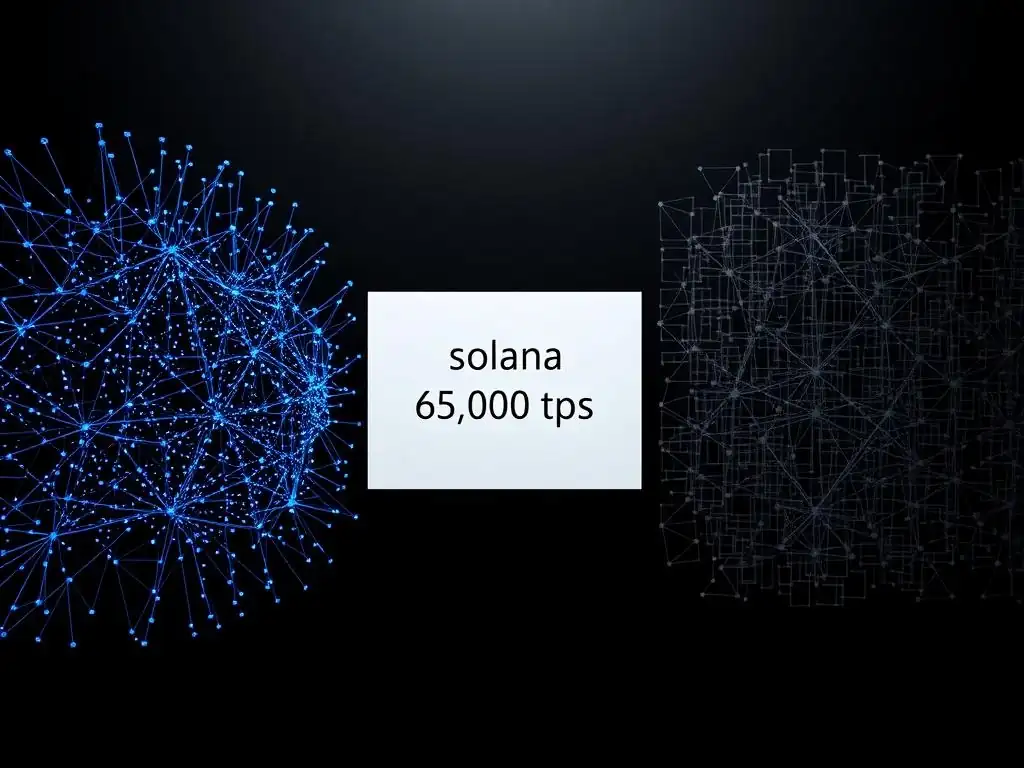
Directly comparing Solana and Visa transaction speeds requires considering both theoretical and real-world benchmarks. Theoretically, Visa and Solana claim similar peak TPS capabilities, around 65,000 TPS. However, their architectures and operational realities differ significantly. Visa, as a centralized network, achieves this peak capacity within its controlled infrastructure. Solana, as a decentralized blockchain, aims for similar throughput in a distributed environment, which introduces complexities and potential variations in real-world performance.
In practice, independent benchmarks and network monitoring suggest that Visa consistently maintains a higher and more stable average TPS in real-world payment processing scenarios. While Solana has demonstrated impressive speeds in blockchain transactions, achieving sustained TPS comparable to Visa's average in complex, real-world payment scenarios is still an ongoing area of development and network maturation. Visa's mature and optimized infrastructure, built specifically for payments, currently provides a more consistently high transaction speed for global payment processing at scale compared to Solana's blockchain-based approach, which is still evolving in real-world application.
Cost per Transaction: A Detailed Analysis
Cost per transaction is a crucial factor in comparing Solana and Visa, especially for businesses and developers. Visa's transaction fees, as previously discussed, are structured as interchange and assessment fees, typically a percentage of the transaction value plus a fixed fee. These fees are relatively predictable and well-established within the traditional payment ecosystem. For merchants, these fees are a cost of doing business and accepting Visa payments.
Solana, on the other hand, offers significantly lower transaction fees. Due to its efficient architecture and low operational costs compared to centralized systems, Solana transaction fees are typically fractions of a cent, often quoted as averaging around $0.00025 per transaction. This drastically lower cost structure makes Solana and other high-throughput blockchains attractive for applications requiring microtransactions or high-volume transactions where traditional payment fees would be prohibitive. The cost difference is a key differentiator, making Solana economically advantageous for certain use cases, particularly in decentralized applications and emerging payment systems.
Security and Decentralization Trade-offs: Comparing Approaches
Comparing Solana and Visa also necessitates examining the trade-offs between security, decentralization, and transaction speed. Visa operates a highly secure, centralized network. Security is paramount, with robust fraud detection systems and stringent security protocols. However, centralization means Visa is a single point of control, and while highly reliable, it is inherently less decentralized than a blockchain.
Solana, as a blockchain, prioritizes decentralization and security through cryptographic mechanisms and a distributed network of validators. While Solana employs innovative mechanisms like Proof of History to enhance speed, achieving the same level of security as a mature, centralized system like Visa in a decentralized environment is a complex challenge. Blockchain security relies on cryptographic robustness and network resilience, which are continuously evolving.
The trade-off often involves balancing the desire for decentralization and potentially higher security (through distribution) with the proven, refined security measures of a centralized and heavily guarded system like Visa. The choice between these approaches depends on the specific security requirements and risk tolerance of the application.
Other Blockchain Networks: Benchmarking Against Solana and Visa
Comparing Ethereum, Avalanche, and Other Blockchain Solutions
When benchmarking transaction speeds, it's crucial to consider other prominent blockchain networks alongside Solana and Visa. Ethereum, the second-largest cryptocurrency by market capitalization, is a widely used blockchain platform but has historically faced challenges with transaction speed and scalability. Ethereum's original architecture, using Proof of Work (PoW) consensus, resulted in significantly lower TPS compared to Solana and Visa, typically ranging from 15 to 30 TPS. Ethereum's ongoing transition to Proof of Stake (PoS) and Layer-2 scaling solutions aim to improve its transaction throughput, but currently, it lags behind Solana in terms of raw speed.
Avalanche is another high-performance blockchain designed to address scalability issues. Avalanche utilizes a novel consensus mechanism and subnet architecture, enabling it to achieve significantly higher TPS than Ethereum, often cited in the range of 4,500 TPS. While faster than Ethereum, Avalanche's real-world TPS is still generally lower than Solana's and significantly below Visa's average. Other blockchains like Polygon and Binance Smart Chain (now BNB Chain) offer faster transaction speeds than Ethereum mainnet by operating as Layer-2 solutions or separate chains, but they often involve trade-offs in decentralization or security compared to Layer-1 blockchains like Solana and Avalanche.
Limitations of Other Blockchain Networks in Payment Processing
Many blockchain networks, aside from Solana, face limitations when considered for widespread payment processing in direct competition with established systems like Visa. Ethereum's lower TPS and higher transaction fees on its mainnet make it less practical for high-volume, low-value retail payments. While Layer-2 solutions improve scalability, they add complexity and may not be as readily integrated into existing payment infrastructure. Networks like Bitcoin, designed primarily as a store of value, have even lower TPS, making them unsuitable for everyday payment processing needs.
Avalanche and other faster blockchains are showing promise in improving blockchain scalability for payments. However, widespread adoption for payment processing requires more than just speed. Factors like network stability, security track record, regulatory compliance, and ease of integration with existing payment systems are crucial. Many blockchains are still relatively new and need to demonstrate long-term reliability and robustness to gain the trust and infrastructure necessary to compete directly with established payment giants like Visa in the global payments landscape.
Transaction Speed and Cost Comparison: Alternative Blockchains vs. Solana and Visa
In a comparative overview, Visa remains the leader in consistent, high-average transaction speed for global payment processing. Its average TPS of 1,700-4,000 and peak capacity of 65,000 TPS, combined with established infrastructure, makes it a benchmark for speed and reliability in payments. Solana stands out among blockchains for its high theoretical TPS (50,000-65,000) and lower real-world averages (hundreds to thousands TPS), offering significantly lower transaction costs compared to Visa. Avalanche and other high-throughput blockchains offer speeds between Ethereum and Solana, with varying cost structures.
Ethereum, while foundational in the blockchain space, is slower and more expensive on its mainnet for transactions, making it less competitive for direct payment processing at scale. The choice between these networks depends heavily on the specific application requirements. For high-volume, low-cost microtransactions, Solana and similar blockchains are compelling due to their low fees and improving speeds. For established payment infrastructure requiring consistent high speed, reliability, and widespread acceptance, Visa remains the dominant solution. Alternative blockchains are continually evolving, aiming to bridge the gap in speed and scalability to become more competitive in the payment processing arena.
The Future of Transaction Processing: Blockchain's Role
The Potential of Solana and Other High-Throughput Blockchains
Solana and other high-throughput blockchains hold significant potential to reshape the future of transaction processing, particularly in areas where speed, low cost, and decentralization are prioritized. Solana's advancements in transaction speed and scalability open up possibilities for applications previously impractical on slower blockchains, such as decentralized exchanges (DEXs) with order book functionality, high-frequency trading platforms, and micro-payment systems for content streaming or IoT devices. The ability to process thousands of transactions per second at minimal cost can unlock new business models and use cases within the decentralized ecosystem.
Other high-throughput blockchains like Avalanche and emerging Layer-2 solutions also contribute to this potential. As these technologies mature and achieve greater adoption, they could enable blockchain to move beyond niche applications and compete more directly with traditional payment processors in certain sectors. The ongoing development in blockchain scalability is crucial for realizing the vision of decentralized finance (DeFi) and bringing blockchain technology into mainstream use cases that demand high transaction throughput and low latency.
Challenges and Opportunities for Blockchain Adoption in Payments
While high-throughput blockchains offer exciting potential, significant challenges and opportunities remain for widespread blockchain adoption in the payments industry. Scalability is being addressed, but other challenges include regulatory uncertainty, user experience complexities, and the need for seamless integration with existing financial infrastructure. Regulatory frameworks for cryptocurrencies and blockchain-based payments are still evolving globally, creating uncertainty for businesses considering adoption. User experience in interacting with blockchain technology can be complex for average consumers, requiring simplified interfaces and easier onboarding processes.
Opportunities lie in leveraging blockchain's advantages in cost efficiency, transparency, and potentially faster settlement times compared to traditional systems in certain contexts. Cross-border payments, for example, could benefit significantly from blockchain's ability to reduce intermediary fees and processing times. Decentralized payment systems can also empower underserved populations with access to financial services. Overcoming the existing challenges and capitalizing on these opportunities will be crucial for realizing blockchain's full potential in revolutionizing transaction processing and the broader financial landscape.
Future Developments and Predictions in Transaction Speed Technologies
The future of transaction speed technologies is likely to see continued advancements in both blockchain and traditional payment systems. In the blockchain space, ongoing research and development are focused on further enhancing scalability through techniques like sharding, state channels, and improved consensus mechanisms. Layer-2 solutions are expected to play an increasingly important role in boosting transaction throughput for existing blockchains like Ethereum. Interoperability solutions, enabling seamless communication and transaction flow between different blockchains, could also contribute to overall transaction efficiency across the ecosystem.
Traditional payment networks like Visa will also continue to innovate, optimizing their infrastructure and exploring new technologies to maintain their competitive edge in speed and reliability. Developments in areas like real-time payments, faster settlement systems, and enhanced fraud detection are likely to be ongoing. The convergence of blockchain and traditional finance is also a potential trend, with explorations into hybrid solutions that leverage the strengths of both approaches. Ultimately, the future of transaction speed technologies will be shaped by the ongoing drive for faster, cheaper, more secure, and more accessible payment solutions globally.
Conclusion: Choosing the Right Payment Network for Your Needs
Summarizing the Key Differences in Transaction Speeds
Comparing Solana and Visa transaction speeds reveals distinct strengths and trade-offs. Visa excels in consistent, high-average transaction speed for global payment processing, supported by its mature, centralized infrastructure. Its average TPS ranges from 1,700 to 4,000, with a peak capacity of 65,000 TPS, making it highly reliable for large-scale payment volumes. Solana, as a high-throughput blockchain, offers impressive theoretical TPS of 50,000-65,000 and lower real-world averages, but stands out with significantly lower transaction costs. Other blockchains like Ethereum have lower TPS, while Avalanche offers a middle ground in speed and cost.
The key difference lies in the underlying architecture and priorities. Visa prioritizes speed and reliability through centralization and optimized infrastructure, while Solana prioritizes decentralization and low cost through innovative blockchain technology. Visa incurs higher transaction fees, while Solana's fees are negligible. Security approaches also differ, with Visa relying on centralized security measures and Solana on decentralized cryptographic security. The choice between these networks depends heavily on the specific needs and priorities of the application or business.
Considerations for Businesses and Developers Choosing a Payment Solution
For businesses and developers selecting a payment solution, several key considerations emerge from the Solana vs Visa speed comparison. For applications requiring extremely high, consistent transaction speeds and established global payment infrastructure, particularly in traditional retail and large-scale payments, Visa remains the dominant and reliable choice. The higher transaction fees are a cost of accessing this established network and its associated benefits.
For applications prioritizing low transaction costs, decentralization, and exploring new blockchain-based payment models, Solana and other high-throughput blockchains offer compelling alternatives. Use cases like microtransactions, decentralized applications, and emerging payment systems can benefit from Solana's low fees and improving scalability. Developers should consider the trade-offs between speed, cost, security, and decentralization when choosing between traditional payment networks and blockchain-based solutions. The maturity and stability of each technology, as well as regulatory considerations, should also factor into the decision-making process.
Solana, Visa, and Beyond: The Evolving Landscape of Transaction Processing
The landscape of transaction processing is continuously evolving, with both traditional systems like Visa and emerging blockchain technologies like Solana playing significant roles. Visa represents a mature, highly optimized solution for global payments, characterized by speed, reliability, and widespread acceptance. Solana and other high-throughput blockchains are pushing the boundaries of decentralized transaction processing, offering the potential for lower costs, greater accessibility, and new payment paradigms.
The future is likely to see a coexistence and potential convergence of these approaches. Traditional payment networks will continue to innovate and adapt to changing demands, while blockchain technology matures and expands its use cases. The optimal solution for transaction processing will increasingly depend on the specific application, its requirements for speed, cost, security, decentralization, and regulatory compliance. The ongoing competition and innovation in both traditional and blockchain-based payment systems will ultimately drive progress towards faster, more efficient, and more accessible financial transactions for users worldwide.
Frequently Asked Questions
How does Solana's transaction speed compare to Visa's?
Solana boasts significantly higher theoretical transaction throughput than Visa. While Visa handles approximately 1,700 transactions per second (TPS), Solana claims a theoretical maximum of over 50,000 TPS.
What are the factors influencing transaction speeds on blockchain networks like Solana?
Several factors impact Solana's speed, including network congestion, hardware limitations, and the efficiency of its consensus mechanism (Proof of History). These factors can cause actual TPS to fluctuate below the theoretical maximum.
Is Solana's speed always faster than Visa in real-world scenarios?
Not necessarily. While Solana has potential for faster transactions, its actual speed can vary based on network conditions. Visa's infrastructure is optimized for consistent and reliable performance, even during peak periods.
What are the advantages of faster transaction speeds in payment networks?
Faster speeds lead to improved user experience, allowing for near-instantaneous payments and reducing wait times. This can also facilitate higher transaction volumes and support more complex financial applications.
How do regulations affect the adoption of blockchain-based payment systems like Solana?
Regulatory uncertainty can hinder widespread adoption. Clear and consistent regulations are needed to provide legal clarity and build trust in blockchain technology, enabling it to compete with traditional payment networks like Visa.
Final Reflection: The Need for Speed in a Digital World
The exploration of transaction speeds, specifically in the context of Solana vs. Visa speeds, reveals more than just a technological comparison; it underscores the fundamental need for efficiency and scalability in our increasingly digital economy. The ability to process transactions quickly and reliably is no longer a luxury, but a necessity for seamless commerce and global connectivity. As we've seen, different systems offer varying levels of performance, each with its own trade-offs and implications for the future of finance.
The pursuit of faster transaction speeds is not simply about shaving off milliseconds; it's about unlocking new possibilities and empowering individuals and businesses alike. This quest for efficiency resonates deeply, reminding us that innovation is driven by the desire to improve everyday experiences and create a more accessible and equitable financial landscape. The future of finance is not just about technology; it's about empowering people to control their own financial destiny.
This quote encapsulates the underlying purpose of these technological advancements: to democratize access and streamline processes for all.
As you reflect on the insights shared in this article, consider the role you play in shaping the future of digital transactions. How can you advocate for and support technologies that prioritize speed, security, and accessibility? The choice is yours to embrace the potential of these advancements and contribute to a world where financial interactions are seamless, efficient, and truly empowering.
Okay, I will create a Call to Action (CTA) for the end of a web article titled "Comparing Transaction Speeds: Solana, Visa, and Traditional Payment Networks" on Blockchain Trends (blockchaintrends.org), following all the provided instructions.
Unleash the Future: Will You Ride the Speed Wave?
Thank you for exploring the fascinating world of transaction speeds across Solana, Visa, and traditional payment networks! We hope this article shed light on the revolutionary potential of blockchain technology. Now, it's time to take your understanding to the next level and become an active participant in the future of finance.
Here are some actionable steps you can take today:
- Dive deeper and experiment with a small transaction on the Solana network to experience its lightning-fast speed firsthand. Compare the experience to your last Visa transaction.
- Share this article with friends and colleagues who are interested in blockchain technology or the future of payments – spark a conversation!
- Explore other articles on Blockchain Trends ([blockchaintrends.org](This is an example - no link should actually appear)) covering different aspects of blockchain technology and its potential applications.
What innovative payment solution do you think will dominate the future, and why? Let us know in the comments below!
Leave a Reply