
The Debate Around Solana's Centralization: Decentralization vs. Performance


Welcome to Blockchain Trends, your gateway to understanding the revolutionary impact of blockchain technology beyond the hype! In a rapidly evolving landscape, we delve into the practical applications, from DeFi to enterprise solutions.
But is every blockchain truly decentralized? Jump in as we explore the Solana centralization debate, examining the crucial balance between decentralization and high-performance capabilities. Discover the arguments and decide for yourself – is speed worth the compromise?
The Debate Around Solana's Centralization: Decentralization vs. Performance
- Introduction: Understanding the Solana Centralization Debate
- Examining Solana's Architecture and Its Impact on Centralization
- Arguments for Solana's Centralization
- Arguments Against Solana's Centralization
- Comparing Solana's Decentralization with Other Blockchains
- The Impact of Solana's Centralization on the Blockchain Ecosystem
- Potential Solutions and Future Developments
- Conclusion: Navigating the Solana Centralization Debate and its Impact on Blockchain Trends
-
Frequently Asked Questions
- What are the main concerns regarding Solana's centralization?
- How does Solana achieve its high transaction speeds despite centralization concerns?
- What are the arguments in favor of Solana's architecture despite the centralization debate?
- What steps has the Solana Foundation taken to address centralization concerns?
- How does the Solana centralization debate impact its long-term viability and adoption?
- Final Reflection: Navigating the Solana Centralization Debate
- Unravel Solana's Future: Join the Decentralization Dialogue!
Introduction: Understanding the Solana Centralization Debate
Solana's Rise: A High-Performance Blockchain
Solana emerged as a prominent blockchain platform, rapidly gaining attention for its remarkable transaction processing speeds and low fees. Unlike earlier blockchains that struggled with scalability, Solana promised to handle thousands of transactions per second (TPS), positioning itself as a solution for applications requiring high throughput. This performance was achieved through a combination of innovative technologies, most notably Proof of History (PoH), which allows for faster transaction ordering and processing.
Solana's initial promise resonated strongly with developers and users alike, leading to a surge in projects building on the network, particularly in decentralized finance (DeFi) and non-fungible tokens (NFTs). Its ability to offer a user experience closer to traditional centralized systems, in terms of speed and cost, contributed significantly to its rapid adoption and growth within the blockchain space.
However, Solana's pursuit of high performance has also ignited a significant debate regarding its degree of decentralization. While blockchains are fundamentally designed to be decentralized, distributed, and censorship-resistant, achieving peak performance often necessitates trade-offs. Solana's architectural choices, while enabling impressive speed, have raised questions about whether it has compromised on decentralization in the process.
This debate is crucial because decentralization is considered a core tenet of blockchain technology, providing security, transparency, and resistance to control by any single entity. Understanding the nuances of this debate is essential for evaluating Solana's long-term viability and its place within the broader blockchain ecosystem.
The Centralization Concerns Surrounding Solana
Concerns about Solana's centralization stem from several aspects of its design and operation. Critics point to the high hardware requirements for validators, which can limit participation to well-resourced entities, potentially concentrating power in fewer hands. Furthermore, Solana's consensus mechanism, Proof of History, while innovative, requires specialized hardware and expertise, further raising the barrier to entry for potential validators.
The initial distribution of SOL tokens, Solana's native cryptocurrency, is also often cited as a point of concern. A significant portion of tokens were allocated to insiders and early investors, raising questions about the fairness and distribution of control over the network.
These factors collectively contribute to the narrative that Solana, in its quest for performance, may have sacrificed a degree of decentralization compared to blockchains like Bitcoin or Ethereum. The implications of potential centralization are significant, ranging from increased vulnerability to censorship and single points of failure to questions about governance and the long-term security of the network. Understanding these concerns is not to dismiss Solana's technological achievements but to critically evaluate the trade-offs inherent in its design and to assess its true level of decentralization in practice.
Decentralization vs. Performance: A Key Trade-off in Blockchain Design
The tension between decentralization and performance is a fundamental challenge in blockchain design. Truly decentralized blockchains, like Bitcoin, prioritize security and censorship resistance by distributing power across a vast network of nodes. However, this often comes at the cost of slower transaction speeds and higher fees. Conversely, blockchains aiming for high performance often adopt architectures that involve fewer validators or more centralized control mechanisms, potentially sacrificing some degree of decentralization. This trade-off is not necessarily a binary choice, but rather a spectrum along which different blockchains position themselves.
Solana represents a blockchain that has leaned heavily towards the performance end of this spectrum. Its developers prioritized speed and scalability, making design choices that, while innovative and effective in achieving high throughput, have led to questions about decentralization. Understanding this trade-off is crucial for users and developers choosing between different blockchain platforms.
The ideal balance between decentralization and performance depends on the specific use case and the priorities of the stakeholders involved. For applications requiring absolute censorship resistance and security, a more decentralized approach might be preferred, even at the cost of speed. For applications prioritizing speed and low fees, a blockchain like Solana, with potentially lower decentralization, might be considered a more suitable option.
Examining Solana's Architecture and Its Impact on Centralization
Proof of History (PoH) and Turbine: Solana's Core Innovations
Solana's high performance is largely attributed to its innovative technologies, primarily Proof of History (PoH) and Turbine. Proof of History is a cryptographic clock that provides a historical record of events. It allows nodes to independently verify the order and timing of transactions without constantly communicating with each other, significantly speeding up transaction processing. Instead of nodes needing to agree on the timestamp of each transaction in real-time, PoH pre-establishes a verifiable order of events, streamlining the consensus process. This innovation differentiates Solana from blockchains relying solely on Proof of Stake (PoS) or Proof of Work (PoW) for consensus.
Turbine, Solana's block propagation protocol, further enhances performance by optimizing the way transaction data is disseminated across the network. It breaks down transaction data into smaller packets and streams them to nodes in layers, allowing for faster and more efficient propagation, especially in a network with a large number of validators. These two core innovations, PoH and Turbine, are central to Solana's ability to achieve high transaction throughput and low latency. However, their implementation and the specific hardware requirements associated with them are also key factors in the ongoing centralization debate.
Validator Requirements and Hardware Specifications: Entry Barriers?
Running a validator node on Solana requires significant hardware resources, including powerful CPUs, substantial RAM, and fast storage. The Solana Foundation recommends high-end server-grade hardware to ensure optimal performance and participation in the network. These demanding hardware specifications create a relatively high barrier to entry for individuals or smaller entities wishing to become validators. In comparison to blockchains with less stringent hardware requirements, Solana's validator set is more likely to be composed of professional staking providers, data centers, and well-funded organizations.
The high cost of entry can contribute to centralization by limiting the diversity and geographical distribution of validators. If only a select few can afford to operate validators, the network's consensus power can become concentrated in fewer hands. This is a point of concern for those who believe that true decentralization requires broad participation from a diverse range of validators, ensuring resilience and preventing any single group from exerting undue influence over the network. While Solana's high hardware requirements are necessary to support its performance goals, they are undeniably a factor in the centralization discussion.
Solana's Token Distribution: Analyzing the Concentration of SOL
The initial distribution of SOL tokens is another aspect frequently raised in the context of Solana's centralization. A significant portion of the total SOL supply was allocated to insiders, including the Solana team, early investors, and the Solana Foundation. While token distributions often incentivize early contributors and fund development, a highly concentrated distribution can lead to concerns about governance and control. If a small group of entities holds a large percentage of the tokens, they can potentially exert disproportionate influence over network decisions and governance processes.
Data on SOL token distribution, while evolving, has indicated a relatively high concentration compared to some other established blockchains. This concentration is not unique to Solana, as many newer blockchains have similar distribution patterns. However, it is a factor that contributes to the perception of potential centralization. Over time, as tokens are further distributed through staking rewards and market activity, the concentration may decrease. Nevertheless, the initial distribution remains a point of discussion and scrutiny in the ongoing debate about Solana's decentralization.
Arguments for Solana's Centralization
Enhanced Transaction Throughput and Speed: The Performance Advantage
The primary argument in favor of Solana's architectural choices, even if they lead to some degree of centralization, is its exceptional performance. Solana boasts significantly higher transaction throughput and faster confirmation times compared to many other blockchains, especially older platforms like Bitcoin and Ethereum Mainnet. While theoretical TPS figures vary and real-world performance can fluctuate, Solana consistently demonstrates its ability to handle thousands of transactions per second. This performance advantage is crucial for applications requiring high scalability, such as high-frequency trading in DeFi, high-volume NFT marketplaces, and potentially enterprise-level applications.
Independent benchmarks and stress tests have shown Solana's network capable of sustaining significantly higher loads than many competitors. For example, during periods of peak network activity, Solana has maintained relatively low transaction fees and fast confirmation times, while other blockchains experienced congestion and soaring gas prices. This performance advantage translates directly into a better user experience for applications built on Solana, making it attractive for both developers and end-users seeking speed and efficiency. The enhanced transaction throughput and speed are arguably Solana's strongest selling points and a key justification for its design choices.
Lower Transaction Fees: Accessibility for Users
Solana's high throughput also translates into significantly lower transaction fees, often referred to as "gas fees." Due to its ability to process a large volume of transactions, the cost per transaction on Solana remains consistently low, typically fractions of a cent. This is in stark contrast to blockchains like Ethereum Mainnet, where gas fees can spike dramatically during periods of high demand, making some transactions prohibitively expensive for average users. Solana's low fees make blockchain technology more accessible to a wider range of users and applications, particularly those involving frequent or micro-transactions.
The affordability of transactions on Solana has been a major driver of its adoption, especially in areas like NFTs and DeFi. Users can engage in activities like trading, minting, and transferring assets without being burdened by high fees, opening up opportunities for greater participation and innovation. For example, NFT marketplaces on Solana have thrived due in part to the low cost of minting and trading NFTs, attracting a large community of creators and collectors. The lower transaction fees not only improve user experience but also foster a more inclusive and accessible blockchain ecosystem.
Scalability for Enterprise Applications: Attracting Institutional Adoption
Solana's scalability and performance are key factors in attracting enterprise adoption. Many traditional businesses and institutions require blockchain solutions that can handle high transaction volumes and provide fast, reliable performance. Solana's architecture positions it as a potential platform for enterprise applications that demand scalability beyond what many older blockchains can offer. Use cases such as supply chain management, financial services, and high-volume data processing are areas where Solana's performance优势 could be particularly valuable.
While enterprise adoption of blockchain is still in its early stages, Solana has made strides in attracting interest from businesses seeking scalable blockchain solutions. Its ability to handle high transaction loads and maintain low fees makes it a competitive option for companies exploring blockchain integration.
The potential for enterprise adoption is a significant long-term argument in favor of Solana's design, as it could lead to wider real-world use cases and further development of the Solana ecosystem. The focus on scalability is seen by proponents as a necessary step for blockchain technology to move beyond niche applications and become a mainstream technology utilized by large organizations.
Arguments Against Solana's Centralization
Censorship Resistance and Network Control: The Importance of Decentralization
The primary argument against Solana's perceived centralization centers on the core principles of blockchain technology, particularly censorship resistance and network control. Decentralization is intended to distribute power and prevent any single entity from controlling or censoring the network. Concerns about Solana's centralization raise questions about whether it fully achieves this fundamental goal. If a significant portion of validators are controlled by a small number of entities, or if the network infrastructure is concentrated in specific regions, the network could become more vulnerable to censorship or manipulation.
Censorship resistance is crucial for applications that rely on the immutability and permissionless nature of blockchain, such as decentralized finance and free speech platforms. If a blockchain is easily censored, its value proposition as a censorship-resistant infrastructure is diminished. Critics argue that Solana's architecture, while optimized for performance, may have weakened its censorship resistance compared to more decentralized blockchains. The debate revolves around the degree to which Solana's centralization compromises its fundamental properties as a truly decentralized and censorship-resistant platform.
Single Points of Failure: Potential Risks and Vulnerabilities
Centralization can also introduce single points of failure into a blockchain network. If a significant portion of validators or network infrastructure is concentrated in a particular region or under the control of a few entities, the network becomes more vulnerable to disruptions. Events such as large-scale infrastructure outages, targeted attacks, or regulatory actions could potentially impact a centralized network more severely than a highly decentralized one with geographically dispersed validators. Solana has experienced network outages in the past, raising concerns about its resilience and potential vulnerabilities.
While Solana's core development team has worked to address these issues and improve network stability, the inherent trade-off between performance and decentralization means that Solana may be more susceptible to certain types of failures compared to more decentralized alternatives. The risk of single points of failure is a significant concern for users and developers who rely on the network's continuous and uninterrupted operation. A truly decentralized network, with a broad distribution of validators and infrastructure, is inherently more resilient to such risks.
Governance and Decision-Making: Who Controls the Solana Network?
The level of decentralization also impacts governance and decision-making within a blockchain network. In a highly decentralized network, governance is typically distributed among a broad community of stakeholders, including token holders, validators, and developers. This distributed governance model aims to ensure that network upgrades and changes are made through consensus and reflect the interests of the community as a whole. Concerns about Solana's centralization extend to its governance structure, with questions raised about the influence of the Solana Foundation and early investors in network decisions.
If governance is concentrated in the hands of a few entities, there is a risk that decisions may be made that benefit a select group rather than the broader community. Furthermore, centralized governance can be less transparent and accountable than decentralized governance models. The debate around Solana's governance focuses on ensuring that the network remains open, permissionless, and governed by its community, rather than becoming controlled by a small group of insiders. Achieving a balance between efficient decision-making and decentralized governance is a challenge for all blockchain platforms, and Solana is no exception.
Comparing Solana's Decentralization with Other Blockchains
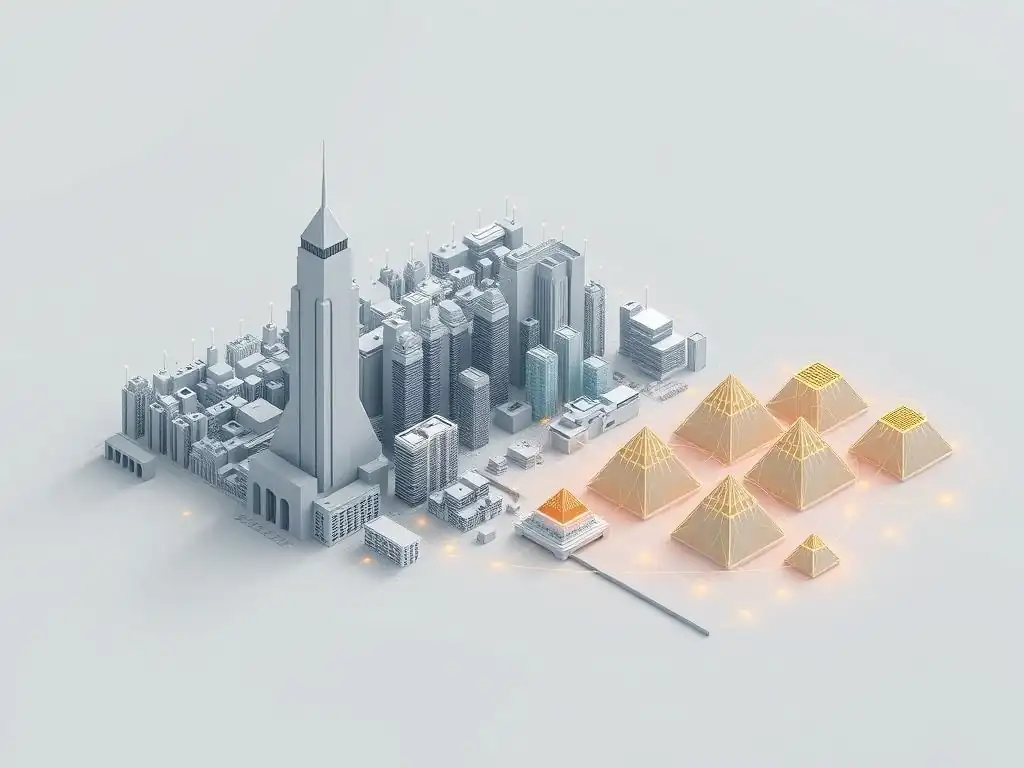
Solana vs. Ethereum: A Comparative Analysis
Comparing Solana's decentralization with Ethereum offers a valuable perspective. Ethereum, particularly post-Merge with its transition to Proof of Stake, is generally considered more decentralized than Solana in several key aspects. Ethereum has a significantly larger number of validators, numbering in the hundreds of thousands, compared to Solana's validator set, which is in the thousands. This larger validator set contributes to greater geographical distribution and a broader base of participation in Ethereum's consensus mechanism. Ethereum also has a more mature and diverse ecosystem of clients and infrastructure providers, further enhancing its decentralization.
However, Ethereum Mainnet has historically struggled with scalability and high gas fees, issues that Solana was designed to address. While Ethereum Layer-2 scaling solutions are rapidly evolving and improving scalability, Ethereum Mainnet itself remains relatively slower and more expensive for many types of transactions compared to Solana. Therefore, the comparison highlights the trade-off: Ethereum prioritizes decentralization and security, while Solana prioritizes performance and low fees.
The choice between the two often depends on the specific needs and priorities of the application or user. For applications demanding maximum decentralization and security, Ethereum might be preferred, while for applications prioritizing speed and low cost, Solana could be a more suitable option.
Solana vs. Avalanche: Another High-Performance Contender
Avalanche is another high-performance blockchain that is often compared to Solana. Avalanche aims to achieve high throughput and low latency while maintaining a strong emphasis on decentralization. Avalanche's architecture, with its subnet mechanism, allows for the creation of custom blockchains tailored to specific application needs, potentially offering both scalability and flexibility. Avalanche's validator set is also larger than Solana's, although smaller than Ethereum's, and it has lower hardware requirements for validators compared to Solana, potentially lowering the barrier to entry.
Avalanche employs a different consensus mechanism, utilizing a family of protocols that prioritize speed and finality. While both Solana and Avalanche are designed for high performance, Avalanche's approach may be perceived as striking a different balance between performance and decentralization compared to Solana. Some argue that Avalanche achieves comparable performance to Solana with a stronger emphasis on decentralization, while others maintain that Solana's performance remains superior. The comparison between Solana and Avalanche highlights the diversity of approaches being taken to address the decentralization-performance trade-off within the high-performance blockchain space.
Measuring Decentralization: Metrics and Methodologies [e.g., Nakamoto Coefficient]
Quantifying decentralization is a complex task, but various metrics and methodologies have been proposed to measure and compare the decentralization of different blockchains. One commonly used metric is the Nakamoto Coefficient, which represents the minimum number of entities that would need to collude to compromise the security or censorship resistance of a blockchain. A higher Nakamoto Coefficient generally indicates greater decentralization. Other metrics include the Gini coefficient of token distribution, the number and geographical distribution of validators, and the diversity of client software.
Applying these metrics to Solana and comparing them to other blockchains can provide a more data-driven assessment of their relative decentralization. However, it is important to acknowledge that no single metric perfectly captures the multifaceted nature of decentralization. Furthermore, decentralization is not static and can evolve over time as networks mature and governance structures develop. Ongoing monitoring and analysis using a range of metrics are essential to track the decentralization of blockchains like Solana and to assess the impact of architectural and governance decisions on their level of decentralization.
The Impact of Solana's Centralization on the Blockchain Ecosystem
DeFi on Solana: Trade-offs between Speed and Security
Solana's high performance has made it a popular platform for decentralized finance (DeFi) applications. The speed and low fees on Solana enable faster and more cost-effective DeFi transactions compared to slower and more expensive blockchains. This has attracted a significant amount of DeFi activity to the Solana ecosystem, with various decentralized exchanges (DEXs), lending platforms, and other DeFi protocols being built and deployed on Solana. However, the trade-off between speed and security, related to centralization concerns, is particularly relevant in the context of DeFi.
DeFi applications often handle significant amounts of user funds, making security paramount. While Solana's performance advantages are attractive for DeFi, any potential vulnerabilities stemming from centralization could pose risks to DeFi users and protocols. The network outages Solana has experienced have raised questions about the reliability and security of DeFi applications built on the platform. Therefore, DeFi developers and users on Solana must carefully consider the trade-offs between speed, cost, and security, and implement appropriate risk management strategies to mitigate potential vulnerabilities associated with centralization concerns.
NFT Marketplaces and Solana: A Fast and Affordable Platform
Non-fungible tokens (NFTs) have also found a thriving ecosystem on Solana, largely due to its speed and low fees. The cost of minting, trading, and transferring NFTs on Solana is significantly lower than on blockchains like Ethereum Mainnet, making it more accessible for creators and collectors. This affordability has contributed to the growth of numerous NFT marketplaces and projects on Solana, attracting a large community of NFT enthusiasts. The fast transaction times on Solana also enhance the user experience for NFT trading and interactions.
However, similar to DeFi, the centralization debate also impacts the NFT space on Solana. While the low fees and speed are attractive, the potential risks associated with centralization, such as censorship or network instability, are relevant considerations for NFT platforms and users. The long-term success and sustainability of the NFT ecosystem on Solana will depend, in part, on addressing centralization concerns and ensuring the network's security and resilience. Despite the potential centralization trade-offs, Solana has become a significant player in the NFT market, offering a compelling alternative to more expensive platforms.
Regulatory Scrutiny: How Centralization Affects Compliance
The level of decentralization of a blockchain can have implications for regulatory scrutiny and compliance. Regulators are increasingly paying attention to the cryptocurrency and blockchain space, and the degree of decentralization of a project can be a factor in how it is regulated. More centralized projects may face greater regulatory scrutiny and potentially be subject to stricter compliance requirements compared to highly decentralized, permissionless networks. Solana, due to its architecture and the centralization debate, may face closer regulatory attention compared to more decentralized blockchains.
The regulatory landscape for cryptocurrencies and blockchain is still evolving, and the specific implications of centralization for regulatory compliance are not yet fully defined. However, projects perceived as more centralized may need to be more proactive in addressing regulatory concerns and demonstrating compliance with applicable laws and regulations. The Solana Foundation and the Solana ecosystem may need to engage with regulators and demonstrate their commitment to compliance in order to mitigate potential regulatory risks associated with centralization concerns.
Potential Solutions and Future Developments
Addressing Centralization Concerns: Roadmap and Initiatives
The Solana Foundation and the Solana development community are aware of the centralization concerns and have been actively working on initiatives to address them. Efforts are underway to reduce hardware requirements for validators, making it easier for more individuals and smaller entities to participate in network consensus. Optimizations to the Solana client software and network architecture are aimed at lowering the barrier to entry for validators and increasing network resilience. Furthermore, initiatives to improve token distribution and promote broader community participation in governance are being explored.
The Solana roadmap includes ongoing development and upgrades focused on enhancing decentralization while maintaining performance. These efforts demonstrate a commitment to addressing the centralization debate and strengthening Solana's position as a truly decentralized and high-performance blockchain platform. The success of these initiatives will be crucial in shaping the future perception and adoption of Solana within the blockchain ecosystem. Transparency and open communication regarding these efforts are also essential for building trust and confidence within the community.
Layer-2 Solutions and Sidechains: Exploring Decentralized Scaling
Layer-2 solutions and sidechains are potential avenues for enhancing decentralization while maintaining or even improving performance on blockchains like Solana. Layer-2 solutions operate on top of the main blockchain (Layer-1) and can handle a significant portion of transaction processing off-chain, reducing congestion and improving scalability. Sidechains are separate blockchains that are interoperable with the main chain and can offer different trade-offs between decentralization and performance. Exploring and developing Layer-2 solutions and sidechains for Solana could offer a path towards greater decentralization without sacrificing its performance advantages.
While Solana is designed to be a highly scalable Layer-1 blockchain, Layer-2 solutions and sidechains could further enhance its scalability and potentially address some centralization concerns. These solutions could allow for more specialized and decentralized application-specific chains to be built within the Solana ecosystem, offering greater flexibility and customization. The development and adoption of Layer-2 and sidechain technologies are ongoing areas of exploration for Solana and the broader blockchain space.
Community Governance and Participation: Empowering Users
Strengthening community governance and participation is crucial for enhancing the decentralization of any blockchain network, including Solana. Efforts to empower token holders and the broader community in network decision-making are essential for ensuring that Solana remains a truly decentralized and community-driven platform. This can involve implementing decentralized governance mechanisms, such as on-chain voting and community proposals, to give users a greater voice in shaping the future of the network. Increased transparency and open communication from the Solana Foundation and core development team are also vital for fostering community trust and participation.
Decentralized governance is an ongoing process, and evolving governance models are being explored across the blockchain space. Solana can learn from the experiences of other blockchains and adopt best practices for fostering community governance and participation. Empowering users and ensuring that the network is governed by its community, rather than a small group of insiders, is a key step in addressing centralization concerns and building a more robust and decentralized Solana ecosystem.
Balancing Decentralization and Performance: The Future of Blockchain Technology
The Solana centralization debate highlights a fundamental challenge in blockchain technology: balancing decentralization and performance. While decentralization is a core principle of blockchain, achieving high performance often necessitates trade-offs that can impact decentralization. Solana has prioritized performance, achieving impressive speed and low fees, but this has come with questions about its level of decentralization. The future of blockchain technology will likely involve continued exploration of different approaches to navigate this trade-off, with various blockchains adopting different positions along the decentralization-performance spectrum.
There is no one-size-fits-all solution, and the ideal balance between decentralization and performance depends on the specific use case and priorities. Some applications may prioritize absolute censorship resistance and security, while others may prioritize speed and low cost. Blockchains like Solana are pushing the boundaries of performance and demonstrating the potential for high-throughput blockchain applications. However, ongoing efforts to enhance decentralization and address centralization concerns are crucial for the long-term viability and widespread adoption of these platforms.
Solana's Role in the Evolving Blockchain Landscape
Solana has emerged as a significant player in the evolving blockchain landscape, demonstrating the potential for high-performance blockchain technology. Its speed and low fees have attracted a vibrant ecosystem of developers and users, particularly in DeFi and NFTs. While the centralization debate remains a relevant discussion, Solana's technological innovations and performance advantages are undeniable. Solana's role in the blockchain landscape is likely to continue to evolve as it addresses centralization concerns, further develops its technology, and adapts to the changing needs of the blockchain ecosystem.
The Solana centralization debate is not necessarily a binary issue of "centralized" or "decentralized," but rather a spectrum and a matter of degree. Ongoing efforts to enhance decentralization, coupled with Solana's performance advantages, position it as a compelling option within the diverse range of blockchain platforms available. The future of blockchain technology will likely involve a multi-chain world, with different blockchains catering to different needs and priorities. Solana's contribution to this evolving landscape is significant, pushing the boundaries of performance and driving innovation in the blockchain space.
Frequently Asked Questions
What are the main concerns regarding Solana's centralization?
Concerns primarily revolve around the validator concentration and the potential influence a small group of validators could exert on the network. Critics argue this compromises decentralization principles.
How does Solana achieve its high transaction speeds despite centralization concerns?
Solana employs a unique Proof-of-History (PoH) consensus mechanism and other architectural choices. This allows for faster block times and higher throughput compared to more decentralized blockchains, but at a potential cost to decentralization.
What are the arguments in favor of Solana's architecture despite the centralization debate?
Proponents argue that the trade-off between decentralization and performance is necessary for Solana to be a viable platform for high-volume applications. They emphasize its scalability and speed benefits.
What steps has the Solana Foundation taken to address centralization concerns?
The Solana Foundation is actively working on initiatives to increase validator diversity, including programs to incentivize smaller validators and improve network resilience.
How does the Solana centralization debate impact its long-term viability and adoption?
The debate can influence investor confidence and developer adoption. A perceived lack of decentralization could hinder its appeal to users who prioritize trustlessness and censorship resistance, potentially impacting its long-term success.
The core of the Solana centralization debate, as we've explored, boils down to a fundamental tension: the trade-off between decentralization and performance. While the blockchain world often champions decentralization as its foundational principle, Solana's design choices prioritize speed and scalability, leading to legitimate concerns about its level of centralization. This debate is not merely academic; it directly impacts investor confidence, developer adoption, and the long-term viability of Solana as a truly decentralized platform.
The ongoing discussion surrounding Solana's architecture highlights a crucial point: the pursuit of technological advancement often requires difficult compromises. The allure of faster transaction speeds and lower fees is undeniable, but the potential cost of sacrificing decentralization cannot be ignored. This tension resonates far beyond the Solana ecosystem, reflecting a broader struggle within the blockchain space to balance innovation with the core values of trust and transparency. The beauty of decentralization is that it's not just about technology; it's about empowering individuals and fostering a more equitable future.
- Vitalik Buterin (paraphrased to fit the context).
As we conclude this exploration, consider the implications of this debate for your own understanding of blockchain technology. Are you willing to prioritize performance over decentralization, or do you believe that true decentralization is paramount, even if it means sacrificing speed? The future of blockchain depends on informed decisions and critical evaluations. Let us all strive to understand the nuances of these complex trade-offs and contribute to a future where innovation and decentralization can coexist harmoniously.
Okay, here's a Call to Action (CTA) draft based on the title "The Debate Around Solana's Centralization: Decentralization vs. Performance" for Blockchain Trends (blockchaintrends.org):
Unravel Solana's Future: Join the Decentralization Dialogue!
Thanks for diving deep into the Solana centralization debate! We hope this article shed light on the key trade-offs between decentralization and performance in the blockchain world. Now, it's time to put your knowledge into action and shape the future of Solana!
- Voice your opinion! Jump into the Blockchain Trends forum and share your thoughts on whether Solana's performance justifies its degree of centralization.
- Explore alternative Layer-1 solutions:Research other blockchains that prioritize decentralization and compare their features to Solana.
- Share this article with fellow crypto enthusiasts! Let's spark a broader conversation about the importance of balancing speed and security.
What innovative solution can truly bridge the gap between high performance and true decentralization in the blockchain space? Share your thoughts below!
Leave a Reply