
Ecosystem Expansion: Analyzing the Growth Potential of Ethereum, Polkadot, and Cosmos Networks


Welcome to Blockchain Trends, your compass in the rapidly evolving world of decentralized technology. Dive deep into the transformative potential of blockchain, moving beyond the headlines and exploring its real-world applications.
Curious about how to leverage the explosive growth of DeFi? Our analysis of Ethereum DeFi growth strategies is just the beginning. Discover how Ethereum, Polkadot, and Cosmos are shaping the future of decentralized systems and unlock the secrets to navigating this dynamic landscape. Read on to understand their unique approaches and how they stack up against each other!
Ecosystem Expansion: Analyzing the Growth Potential of Ethereum, Polkadot, and Cosmos Networks
- Introduction: Comparing Ethereum, Polkadot, and Cosmos Ecosystem Growth
-
Ethereum: Leading the DeFi Revolution and its Growth Strategies
- Understanding Ethereum's Dominance in the DeFi Landscape
- Key Factors Driving Ethereum DeFi Growth
- Ethereum 2.0 and its Impact on Scalability and Ecosystem Expansion
- Exploring Ethereum DeFi Growth Strategies: Layer-2 Scaling Solutions (Optimism, Arbitrum)
- Exploring Ethereum DeFi Growth Strategies: Real-World Asset (RWA) Tokenization
-
Polkadot: Building a Multi-Chain Future and its Ecosystem Development
- Polkadot's Architecture: Enabling Interoperability and Scalability
- Key Projects and Innovations Driving Polkadot Ecosystem Growth
- Analyzing Polkadot's Potential to Challenge Ethereum's DeFi Dominance
- Polkadot DeFi Growth Strategies: Acala Network's DeFi Hub
- Polkadot DeFi Growth Strategies: Interoperability via XCM (Cross-Consensus Messaging)
-
Cosmos: The Internet of Blockchains and its Scalable Ecosystem
- Cosmos' Inter-Blockchain Communication (IBC) Protocol: Connecting Independent Chains
- Key Projects and Innovations Driving Cosmos Ecosystem Growth
- Assessing Cosmos' Position in the Interoperable Blockchain Landscape
- Cosmos DeFi Growth Strategies: Osmosis Decentralized Exchange
- Cosmos DeFi Growth Strategies: IBC-Enabled Lending and Borrowing Platforms
- Ethereum vs. Polkadot vs. Cosmos: A Comparative Analysis of Ecosystem Growth Potential
- The Future of Blockchain Ecosystems: Growth Trajectories and Emerging Trends
- Conclusion: Identifying the Leaders in the Blockchain Ecosystem Race
-
Frequently Asked Questions
- What are the key factors driving Ethereum DeFi growth strategies?
- How does the Ethereum network compare to Polkadot and Cosmos in terms of Ecosystem Expansion?
- What are some potential challenges to the continued growth potential of the Ethereum network?
- What role do regulations play in influencing the future of decentralized systems, particularly regarding Ethereum DeFi growth strategies?
- Beyond cryptocurrencies, what enterprise applications are emerging on the Ethereum blockchain that contribute to its overall ecosystem expansion?
- Final Reflection: Navigating the Decentralized Future
- Ignite Your Blockchain Future!
Introduction: Comparing Ethereum, Polkadot, and Cosmos Ecosystem Growth
The Rise of Interoperable Blockchains: A New Era for Decentralized Applications
The blockchain landscape is no longer a monolithic entity but a diverse ecosystem of interconnected networks, each with unique strengths and functionalities. Initially, blockchains operated in silos, limiting the potential for cross-chain communication and value transfer. However, the emergence of interoperable blockchains is signaling a paradigm shift, fostering a more collaborative and efficient decentralized web.
This evolution is crucial for the widespread adoption of blockchain technology, enabling seamless interaction between different ecosystems and unlocking new possibilities for decentralized applications (dApps) and user experiences. Ethereum, Polkadot, and Cosmos stand at the forefront of this interoperability movement, each offering distinct approaches to scaling and connecting blockchains, and shaping the future of decentralized finance (DeFi) and beyond.
As the demand for blockchain solutions grows, the limitations of isolated networks become increasingly apparent. Interoperability addresses these limitations by enabling the transfer of assets and data across different blockchains, creating a more unified and user-friendly experience. This interconnectedness is vital for realizing the full potential of blockchain technology, moving beyond isolated applications towards a truly decentralized and interconnected web. The following analysis delves into the unique architectures, growth strategies, and competitive landscapes of Ethereum, Polkadot, and Cosmos, examining their roles in this expanding blockchain ecosystem and their potential to drive future innovation.
Ethereum: Leading the DeFi Revolution and its Growth Strategies
Understanding Ethereum's Dominance in the DeFi Landscape
Ethereum has undeniably established itself as the dominant force in the Decentralized Finance (DeFi) space. This dominance is rooted in its first-mover advantage, robust smart contract capabilities, and a vibrant, extensive developer community. As the pioneering platform for dApps, Ethereum attracted a wave of innovative projects in DeFi, NFTs, and other sectors, creating a strong network effect.
This early adoption fueled further development and attracted significant capital, solidifying Ethereum's position as the leading blockchain for decentralized applications. The vast majority of DeFi protocols, including lending platforms, decentralized exchanges (DEXs), and yield aggregators, are built on Ethereum, contributing to its substantial total value locked (TVL) in DeFi.
Ethereum's ecosystem benefits from a mature infrastructure, including well-established development tools, libraries, and a large pool of skilled developers familiar with its Solidity programming language. This mature ecosystem lowers the barrier to entry for new projects and fosters rapid innovation. Furthermore, the extensive network effects on Ethereum create a powerful flywheel. As more users and projects join the Ethereum network, its utility and value increase, attracting even more participants. This self-reinforcing cycle has been instrumental in Ethereum's DeFi leadership, making it the go-to platform for developers and users seeking to participate in the decentralized financial revolution.
Key Factors Driving Ethereum DeFi Growth
Several key factors contribute to the continued growth of Ethereum's DeFi ecosystem. Firstly, network effects remain a significant driver. The sheer size and established nature of Ethereum's DeFi ecosystem attract new users and projects seeking liquidity and composability. Secondly, developer activity is consistently high. Ethereum's large developer community is constantly innovating, building new protocols, and improving existing infrastructure.
This continuous development ensures Ethereum remains at the forefront of DeFi innovation. Thirdly, the composability of Ethereum's DeFi protocols is a crucial factor. Projects can easily integrate with each other, creating complex and powerful financial instruments and strategies. This composability fosters synergistic growth and accelerates innovation within the ecosystem.
Another critical factor is the increasing institutional interest in DeFi. As DeFi matures and regulatory clarity improves, institutions are starting to explore and participate in the decentralized finance space, primarily on established platforms like Ethereum. This institutional adoption brings significant capital and legitimacy to the DeFi sector, further fueling Ethereum's growth. Finally, the ongoing development of Ethereum 2.0 and its scaling solutions are crucial for addressing Ethereum's scalability challenges and ensuring its long-term viability as the leading DeFi platform. These factors, combined with the inherent advantages of a first-mover, position Ethereum for continued growth in the DeFi landscape.
Ethereum 2.0 and its Impact on Scalability and Ecosystem Expansion
Ethereum 2.0, also known as The Merge and subsequent upgrades, represents a significant architectural overhaul designed to address Ethereum's scalability limitations and enhance its sustainability. The transition to a Proof-of-Stake (PoS) consensus mechanism from Proof-of-Work (PoW) is a cornerstone of Ethereum 2.0, drastically reducing energy consumption and increasing network efficiency. However, the most crucial aspect for ecosystem expansion is the introduction of sharding.
Sharding aims to divide the Ethereum blockchain into multiple shards, or smaller chains, that can process transactions in parallel. This parallel processing dramatically increases the network's transaction throughput, addressing the congestion and high gas fees that have plagued Ethereum during periods of high demand.
The increased scalability promised by Ethereum 2.0 is expected to have a profound impact on the DeFi ecosystem. Lower gas fees and faster transaction speeds will make DeFi more accessible to a wider range of users, including those priced out by the high costs on the original Ethereum mainnet. This improved scalability will also enable more complex and sophisticated DeFi applications that were previously infeasible due to network limitations.
Furthermore, Ethereum 2.0's enhanced efficiency and sustainability are expected to attract even more developers and users to the platform, solidifying its position as the leading blockchain for decentralized applications and driving further ecosystem expansion. The successful implementation of Ethereum 2.0 is therefore paramount to unlocking the next phase of growth for Ethereum's DeFi ecosystem.
Exploring Ethereum DeFi Growth Strategies: Layer-2 Scaling Solutions (Optimism, Arbitrum)
While Ethereum 2.0 represents a long-term scalability solution, Layer-2 scaling solutions offer immediate improvements to transaction throughput and cost-effectiveness. Optimism and Arbitrum are two prominent Layer-2 scaling solutions utilizing optimistic rollups. Optimistic rollups bundle multiple transactions off-chain and submit them to the Ethereum mainnet as a single transaction, significantly reducing gas fees and increasing transaction speed. These solutions inherit the security of the Ethereum mainnet while offering a much faster and cheaper user experience. Optimism and Arbitrum have witnessed substantial adoption within the DeFi ecosystem, with numerous major DeFi protocols deploying versions of their platforms on these Layer-2 networks.
The adoption of Layer-2 solutions like Optimism and Arbitrum is a key Ethereum DeFi growth strategy. By migrating DeFi activity to Layer-2, Ethereum can alleviate congestion on the mainnet and make DeFi more accessible to a broader audience. For example, decentralized exchanges like Uniswap and SushiSwap have deployed on both Optimism and Arbitrum, offering users significantly lower trading fees.
Lending platforms like Aave and Compound are also available on these Layer-2 networks. This migration not only reduces costs for users but also allows for faster transaction confirmations, improving the overall user experience and fostering further growth in the Ethereum DeFi ecosystem. Layer-2 scaling solutions are therefore crucial for addressing Ethereum's immediate scalability challenges and facilitating the continued expansion of its DeFi landscape.
Exploring Ethereum DeFi Growth Strategies: Real-World Asset (RWA) Tokenization
Another significant Ethereum DeFi growth strategy lies in the tokenization of Real-World Assets (RWAs). RWA tokenization involves representing tangible assets like real estate, commodities, and equities as digital tokens on the blockchain. This process brings real-world assets into the DeFi ecosystem, unlocking new opportunities for liquidity, fractional ownership, and access to previously illiquid markets. Ethereum, with its established DeFi infrastructure, is well-positioned to lead the RWA tokenization trend. Projects are emerging that tokenize various assets, including bonds, art, and precious metals, bringing them onto the Ethereum blockchain and integrating them with DeFi protocols.
The tokenization of RWAs has the potential to significantly expand the scope and scale of the Ethereum DeFi ecosystem. By bringing trillions of dollars of real-world assets onto the blockchain, RWA tokenization can inject massive liquidity into DeFi and create new avenues for yield generation and investment. For instance, tokenized real estate could be used as collateral in DeFi lending platforms, while tokenized stocks could be traded on decentralized exchanges.
This integration of traditional finance with DeFi through RWA tokenization represents a significant growth opportunity for Ethereum, attracting both institutional and retail investors seeking exposure to a broader range of asset classes within the decentralized financial system. The success of RWA tokenization will be a crucial factor in shaping the future growth trajectory of Ethereum's DeFi ecosystem.
Polkadot: Building a Multi-Chain Future and its Ecosystem Development
Polkadot's Architecture: Enabling Interoperability and Scalability
Polkadot presents a distinct architectural approach to blockchain interoperability and scalability, centered around its relay chain and parachains. The relay chain serves as the central hub of the Polkadot network, providing security and interoperability to connected parachains. Parachains are independent blockchains that connect to the relay chain and benefit from its shared security and cross-chain communication capabilities. This architecture allows for the creation of specialized blockchains tailored to specific use cases, while maintaining interoperability through the relay chain. Polkadot's design prioritizes scalability by distributing transaction processing across multiple parachains, avoiding the congestion issues faced by single-chain architectures.
Polkadot's architecture is designed to foster a multi-chain ecosystem where different blockchains can seamlessly interact and exchange value. Parachains can be customized and optimized for specific applications, such as DeFi, gaming, or supply chain management. This specialization allows for greater efficiency and innovation compared to general-purpose blockchains. The relay chain ensures that all connected parachains benefit from Polkadot's pooled security, eliminating the need for each parachain to bootstrap its own security infrastructure. This shared security model and interoperability framework are key differentiators for Polkadot, positioning it as a platform for building a diverse and interconnected blockchain ecosystem.
Key Projects and Innovations Driving Polkadot Ecosystem Growth
The Polkadot ecosystem is rapidly growing, with a diverse range of projects and innovations driving its expansion. Acala Network is a prominent DeFi hub on Polkadot, focused on building a suite of DeFi protocols including a stablecoin, DEX, and staking derivatives. Moonbeam is another key project, offering an Ethereum-compatible smart contract parachain on Polkadot, enabling Ethereum-based projects to easily deploy on Polkadot and access its interoperability features.
Centrifuge focuses on bringing Real-World Assets (RWAs) to DeFi by tokenizing assets and facilitating their use in decentralized finance applications on Polkadot. These are just a few examples of the innovative projects contributing to Polkadot's ecosystem growth.
Beyond specific projects, Polkadot's substrate framework is a crucial innovation driving ecosystem growth. Substrate is a modular blockchain development framework that simplifies the process of building custom blockchains and parachains. It provides developers with pre-built components and libraries, reducing development time and complexity. Substrate makes it easier for projects to launch on Polkadot and contribute to its expanding ecosystem. The ongoing development of Polkadot's core technology, including improvements to parachain functionality and interoperability, further fuels ecosystem growth and attracts new projects and developers to the platform.
Analyzing Polkadot's Potential to Challenge Ethereum's DeFi Dominance
Polkadot presents a viable challenge to Ethereum's DeFi dominance by offering solutions to some of Ethereum's limitations, particularly scalability and interoperability. Polkadot's parachain architecture, designed for scalability from the outset, contrasts with Ethereum's ongoing transition to Ethereum 2.0. While Ethereum is addressing scalability through Layer-2 solutions and sharding, Polkadot's inherent multi-chain structure offers a different approach to handling transaction volume. Furthermore, Polkadot's focus on interoperability through its relay chain and XCM (Cross-Consensus Messaging) protocol provides a native solution for cross-chain communication, a feature that Ethereum is still developing through bridges and other interoperability solutions.
However, Ethereum maintains significant advantages, including its first-mover status, established network effects, and larger developer community. Ethereum's DeFi ecosystem is significantly larger and more mature than Polkadot's, with a greater variety of protocols and a deeper pool of liquidity. Polkadot's ecosystem, while growing rapidly, is still in its earlier stages of development compared to Ethereum.
Whether Polkadot can truly challenge Ethereum's DeFi dominance will depend on its ability to attract more developers and users, further develop its ecosystem, and effectively leverage its architectural advantages in scalability and interoperability. The competition between Ethereum and Polkadot will likely drive innovation and benefit the broader blockchain ecosystem.
Polkadot DeFi Growth Strategies: Acala Network's DeFi Hub
Acala Network represents a key Polkadot DeFi growth strategy by establishing itself as a dedicated DeFi hub within the Polkadot ecosystem. Acala is building a comprehensive suite of DeFi protocols, including a multi-collateralized stablecoin (aUSD), a decentralized exchange (Acala Swap), and staking derivatives. By focusing on building core DeFi infrastructure, Acala aims to attract more DeFi projects and users to Polkadot, creating a vibrant and interconnected DeFi ecosystem within the Polkadot network. Acala's aUSD stablecoin is designed to be the native stablecoin of the Polkadot ecosystem, facilitating seamless transactions and liquidity across Polkadot-based DeFi applications.
Acala's strategy is to provide a one-stop-shop for DeFi services on Polkadot, making it easier for users and developers to access and build decentralized financial applications. By offering essential DeFi building blocks, Acala aims to become the central DeFi infrastructure layer on Polkadot, attracting projects that require stablecoins, DEX functionality, and other core DeFi services. The success of Acala as a DeFi hub is crucial for Polkadot's overall DeFi growth. A thriving DeFi ecosystem on Acala will attract more users and developers to Polkadot, increasing its competitiveness against Ethereum and other blockchain platforms in the DeFi space.
Polkadot DeFi Growth Strategies: Interoperability via XCM (Cross-Consensus Messaging)
Interoperability via XCM (Cross-Consensus Messaging) is a fundamental Polkadot DeFi growth strategy, enabling seamless communication and asset transfer between parachains within the Polkadot ecosystem. XCM is Polkadot's native cross-chain communication protocol, designed to facilitate secure and efficient messaging between parachains. This interoperability is crucial for creating a truly interconnected DeFi ecosystem on Polkadot, allowing for complex cross-chain DeFi applications and strategies. For example, XCM can enable users to seamlessly transfer assets between different parachain DEXs, lending platforms, or yield aggregators, creating a more unified and efficient DeFi experience.
XCM's interoperability capabilities unlock significant potential for DeFi innovation on Polkadot. Projects can leverage XCM to build cross-chain DeFi protocols that span multiple parachains, offering users access to a wider range of services and assets. This cross-chain functionality differentiates Polkadot from Ethereum, where cross-chain interactions often rely on bridges with potential security risks and complexities. By providing a native and secure interoperability solution, XCM positions Polkadot as a platform for building a truly interconnected and scalable DeFi ecosystem, attracting projects and users seeking seamless cross-chain functionality and driving Polkadot's DeFi growth.
Cosmos: The Internet of Blockchains and its Scalable Ecosystem
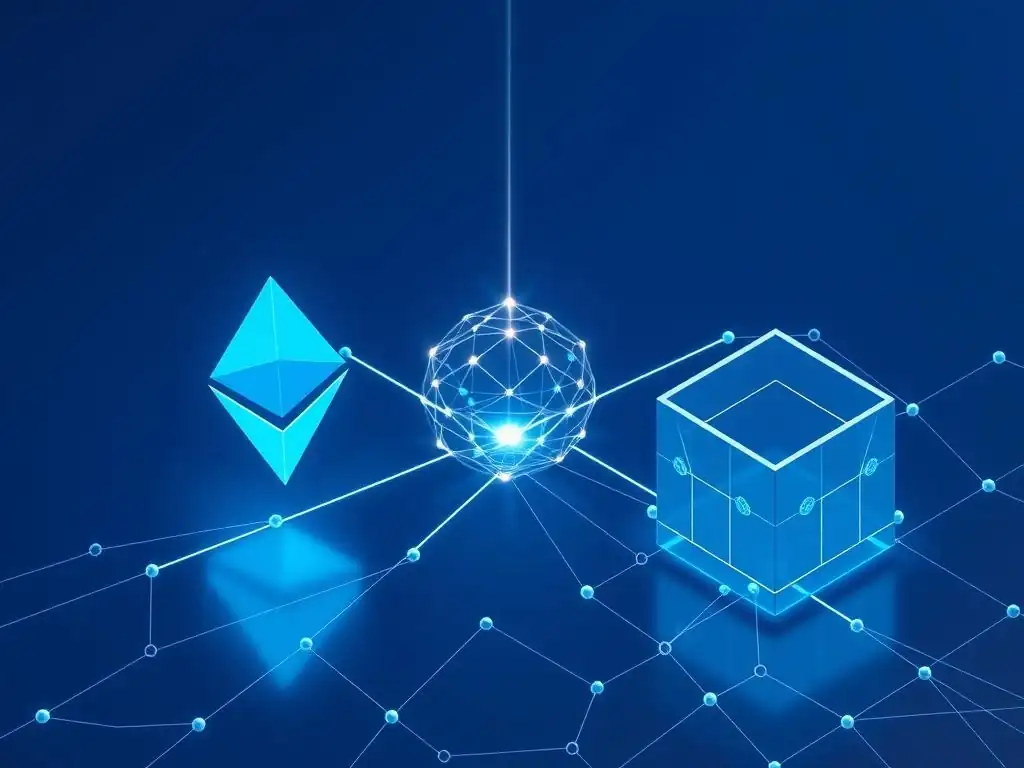
Cosmos' Inter-Blockchain Communication (IBC) Protocol: Connecting Independent Chains
Cosmos takes a different approach to interoperability, envisioning itself as the "Internet of Blockchains." Its core technology is the Inter-Blockchain Communication (IBC) protocol, which enables independent blockchains, known as zones, to communicate and transact with each other. Unlike Polkadot's shared security model, Cosmos zones are sovereign blockchains with their own validators and governance. IBC provides a standardized protocol for these independent chains to interoperate, fostering a network of interconnected blockchains while maintaining their sovereignty. Cosmos prioritizes scalability through the creation of application-specific blockchains, allowing each chain to be optimized for its intended purpose.
The IBC protocol is the cornerstone of Cosmos' interoperability strategy. It allows for the secure and reliable transfer of assets and data between connected blockchains. This interoperability enables the creation of cross-chain applications and services, expanding the functionality and utility of the entire Cosmos ecosystem. Cosmos' approach emphasizes blockchain sovereignty and customization, allowing developers to build chains tailored to their specific needs while still benefiting from interoperability through IBC. This model contrasts with Polkadot's shared security approach, offering a different trade-off between customization and shared security.
Key Projects and Innovations Driving Cosmos Ecosystem Growth
The Cosmos ecosystem is experiencing significant growth, driven by a diverse range of projects and innovations. Cosmos Hub is the central hub of the Cosmos network, secured by the ATOM token and providing services to the wider ecosystem. Osmosis is a leading decentralized exchange (DEX) built on Cosmos, specifically designed for interchain assets and leveraging IBC for seamless cross-chain trading.
Terra (now Terra Classic and Terra 2.0), while experiencing significant challenges, was initially a prominent project in the Cosmos ecosystem, showcasing the potential for stablecoin and payments applications on Cosmos. These projects, along with many others, are contributing to the expansion and diversification of the Cosmos ecosystem.
Beyond specific projects, Cosmos' Tendermint Core is a crucial innovation driving ecosystem growth. Tendermint Core is a Byzantine Fault Tolerant (BFT) consensus engine that simplifies the process of building blockchains. It provides developers with a robust and secure consensus mechanism, allowing them to focus on application logic rather than consensus implementation.
Tendermint Core is widely used in the Cosmos ecosystem and beyond, making it easier for projects to launch their own blockchains and contribute to the interconnected web of blockchains envisioned by Cosmos. The ease of building blockchains with Tendermint and the interoperability provided by IBC are key drivers of Cosmos ecosystem growth.
Assessing Cosmos' Position in the Interoperable Blockchain Landscape
Cosmos occupies a unique position in the interoperable blockchain landscape, distinct from both Ethereum and Polkadot. Cosmos emphasizes blockchain sovereignty and application-specificity, allowing for greater customization and control for individual projects. This contrasts with Ethereum's general-purpose smart contract platform and Polkadot's shared security model. Cosmos' IBC protocol provides a robust solution for interoperability between sovereign blockchains, while Ethereum is still developing its cross-chain capabilities and Polkadot relies on its parachain architecture for interoperability within its network.
However, Cosmos' focus on sovereign chains also presents challenges. Securing each individual Cosmos zone requires its own validator set, which can be more resource-intensive compared to Polkadot's shared security model. The fragmentation of security across multiple zones is a different security trade-off compared to Polkadot's pooled security.
Furthermore, Cosmos' DeFi ecosystem, while growing, is less developed than Ethereum's and Polkadot's in terms of overall TVL and the number of established DeFi protocols. Cosmos' strength lies in its flexibility, scalability through application-specific chains, and robust interoperability via IBC, positioning it as a key player in the multi-chain future, particularly for projects prioritizing sovereignty and customization.
Cosmos DeFi Growth Strategies: Osmosis Decentralized Exchange
Osmosis Decentralized Exchange is a core Cosmos DeFi growth strategy, serving as a prominent interchain DEX within the Cosmos ecosystem. Osmosis is specifically designed for trading assets from different IBC-connected blockchains, leveraging IBC's interoperability to provide seamless cross-chain trading experiences. By focusing on interchain DeFi, Osmosis aims to become the central liquidity hub for the Cosmos ecosystem, attracting users and projects seeking to trade and utilize assets from various Cosmos zones. Osmosis' design emphasizes customizable liquidity pools and features like superfluid staking, enhancing capital efficiency and user participation.
Osmosis' strategy is to capitalize on Cosmos' strength in interoperability by building a DEX that natively supports interchain assets. This differentiates Osmosis from DEXs primarily focused on single-chain ecosystems like Ethereum. By providing a user-friendly platform for trading and providing liquidity for interchain assets, Osmosis aims to drive DeFi activity within the Cosmos ecosystem and attract liquidity from other blockchain networks. The success of Osmosis as the leading interchain DEX is crucial for the overall growth of Cosmos DeFi, providing a vital infrastructure component for interchain financial applications.
Cosmos DeFi Growth Strategies: IBC-Enabled Lending and Borrowing Platforms
IBC-Enabled Lending and Borrowing Platforms represent another important Cosmos DeFi growth strategy. Leveraging IBC's interoperability, projects are developing lending and borrowing platforms that allow users to lend and borrow assets across different Cosmos zones. These platforms enable users to utilize assets on one Cosmos chain as collateral to borrow assets on another chain, creating new opportunities for cross-chain capital efficiency and DeFi strategies. The development of IBC-enabled lending and borrowing platforms is expanding the scope and functionality of Cosmos DeFi, moving beyond simple asset transfers and trading to more complex financial applications.
These cross-chain lending and borrowing platforms are crucial for building a more interconnected and robust DeFi ecosystem within Cosmos. By enabling users to access and utilize assets across different Cosmos zones, these platforms enhance liquidity and capital flow throughout the ecosystem. For example, a user holding ATOM on the Cosmos Hub could use it as collateral to borrow stablecoins on another Cosmos zone focused on stablecoin issuance. This cross-chain functionality expands the utility of assets within the Cosmos ecosystem and attracts users seeking more sophisticated DeFi opportunities, driving the overall growth and maturation of Cosmos DeFi.
Ethereum vs. Polkadot vs. Cosmos: A Comparative Analysis of Ecosystem Growth Potential
DeFi Ecosystem Comparison: Ethereum, Polkadot, and Cosmos
When comparing the DeFi ecosystems of Ethereum, Polkadot, and Cosmos, Ethereum currently holds a dominant position in terms of Total Value Locked (TVL) and the number of DeFi protocols. As of late 2023, Ethereum's DeFi TVL is significantly larger than both Polkadot's and Cosmos', although these figures fluctuate and are subject to market conditions. Ethereum boasts a mature and well-established DeFi ecosystem with a wide range of protocols, including leading DEXs like Uniswap and SushiSwap, lending platforms like Aave and Compound, and numerous yield aggregators and other DeFi applications.
Polkadot and Cosmos, while experiencing rapid growth, have smaller DeFi ecosystems compared to Ethereum. Polkadot's DeFi ecosystem is developing with projects like Acala, Moonbeam, and Centrifuge gaining traction. Cosmos' DeFi ecosystem is also growing, with Osmosis DEX and emerging IBC-enabled DeFi platforms contributing to its expansion. While Ethereum currently leads in DeFi ecosystem size and maturity, Polkadot and Cosmos offer unique architectural advantages in scalability and interoperability, which could potentially lead to significant DeFi growth in the future as these ecosystems mature and attract more projects and users.
Scalability Solutions: A Crucial Factor for Future Growth
Scalability is a critical factor for the future growth of all three ecosystems. Ethereum is addressing scalability through Ethereum 2.0 and Layer-2 solutions like Optimism and Arbitrum. These solutions aim to increase transaction throughput and reduce gas fees, making Ethereum more accessible and efficient. Polkadot's parachain architecture is inherently designed for scalability, distributing transaction processing across multiple parachains. Cosmos achieves scalability through application-specific blockchains, allowing each zone to be optimized for its particular use case and avoid network congestion.
Each platform offers different scalability approaches with varying trade-offs. Ethereum's Layer-2 solutions provide immediate scalability improvements, while Ethereum 2.0 represents a long-term, more fundamental scalability upgrade. Polkadot's parachain model offers inherent scalability but requires projects to build and operate their own parachains. Cosmos' application-specific blockchains provide scalability but require each application to exist on its own sovereign chain. The effectiveness of these scalability solutions will be a key determinant of the long-term growth potential of each ecosystem, particularly in supporting the increasing demands of DeFi and other decentralized applications.
Developer Activity and Community Engagement: Gauging Long-Term Viability
Developer activity and community engagement are crucial indicators of the long-term viability and growth potential of blockchain ecosystems. Ethereum boasts the largest and most active developer community, benefiting from its first-mover advantage and mature ecosystem. Ethereum's developer community is constantly innovating and building new applications, contributing to the continuous evolution of the platform. Polkadot and Cosmos also have growing and active developer communities, attracted by their innovative architectures and interoperability features.
Community engagement is also vital for ecosystem growth. A strong and engaged community provides feedback, supports projects, and contributes to the overall vibrancy of the ecosystem. Ethereum benefits from a large and established community, while Polkadot and Cosmos are actively building and nurturing their respective communities. Monitoring developer activity, measured by metrics like the number of active developers, commits to code repositories, and the launch of new projects, and community engagement, assessed through social media activity, forum participation, and governance participation, provides valuable insights into the long-term growth potential of each ecosystem.
Interoperability and Cross-Chain Functionality: The Key to Wider Adoption
Interoperability and cross-chain functionality are increasingly recognized as essential for the wider adoption of blockchain technology. Ethereum, while initially focused on its own ecosystem, is now actively exploring interoperability solutions through bridges and cross-chain protocols. Polkadot and Cosmos are built from the ground up with interoperability as a core design principle. Polkadot's relay chain and XCM protocol facilitate seamless communication and asset transfer between parachains. Cosmos' IBC protocol enables interoperability between sovereign blockchains, creating a network of interconnected chains.
The ability to seamlessly transfer assets and data between different blockchains is crucial for creating a more unified and user-friendly decentralized web. Interoperability unlocks new use cases and applications that are not possible within isolated blockchain ecosystems. For DeFi, interoperability enables cross-chain trading, lending, and borrowing, enhancing capital efficiency and user experience. The platforms that effectively deliver on the promise of interoperability are likely to be best positioned for long-term growth and adoption, as interoperability becomes a critical requirement for the mainstream adoption of blockchain technology.
The Future of Blockchain Ecosystems: Growth Trajectories and Emerging Trends
Decentralized Finance (DeFi) Innovation and Adoption
The future of blockchain ecosystems is inextricably linked to the continued innovation and adoption of Decentralized Finance (DeFi). DeFi is expected to continue to evolve and mature, expanding beyond its current focus on lending, borrowing, and trading to encompass a wider range of financial services. Emerging trends in DeFi include the growth of Real-World Asset (RWA) tokenization, the development of more sophisticated DeFi instruments, and increased institutional adoption of DeFi protocols. Ethereum, Polkadot, and Cosmos are all actively pursuing DeFi growth strategies, recognizing the transformative potential of decentralized finance.
The adoption of DeFi is expected to increase as regulatory clarity improves and user-friendly interfaces and tools become more readily available. Mainstream adoption of DeFi could revolutionize traditional finance, offering more accessible, transparent, and efficient financial services. The blockchain ecosystems that effectively foster DeFi innovation, address security concerns, and improve user experience are likely to be the leaders in the decentralized finance revolution. The growth trajectory of blockchain ecosystems will be significantly influenced by the pace and extent of DeFi adoption and innovation.
Enterprise Blockchain Solutions: Beyond Cryptocurrencies
Beyond DeFi, enterprise blockchain solutions represent a significant growth area for blockchain ecosystems. Enterprises are increasingly exploring the potential of blockchain technology for various applications, including supply chain management, digital identity, data management, and more. Enterprise adoption of blockchain is moving beyond pilot projects to real-world implementations, driven by the potential for increased efficiency, transparency, and security. Ethereum, Polkadot, and Cosmos are all attracting enterprise interest, with projects and platforms tailored to enterprise use cases emerging within each ecosystem.
The growth of enterprise blockchain solutions will contribute to the diversification and maturation of blockchain ecosystems, moving beyond a sole focus on cryptocurrencies. Enterprise adoption brings significant capital and real-world use cases to the blockchain space, driving further innovation and development. The blockchain platforms that effectively cater to enterprise needs, providing scalable, secure, and enterprise-grade solutions, are likely to capture a significant share of the enterprise blockchain market and contribute to the overall growth of their ecosystems.
Regulatory Landscape and its Impact on Ecosystem Growth
The regulatory landscape is a crucial factor shaping the future growth of blockchain ecosystems. Regulatory clarity and supportive regulatory frameworks are essential for fostering innovation and mainstream adoption of blockchain technology. Uncertainty and restrictive regulations can stifle growth and hinder the development of blockchain ecosystems. Governments and regulatory bodies around the world are grappling with how to regulate cryptocurrencies and blockchain technologies, with varying approaches and levels of clarity.
The regulatory landscape is constantly evolving, and its impact on blockchain ecosystems is significant. Positive regulatory developments, such as the establishment of clear legal frameworks for cryptocurrencies and DeFi, can accelerate ecosystem growth and attract institutional investment. Conversely, negative regulatory developments, such as outright bans or overly burdensome regulations, can hinder growth and drive innovation to more favorable jurisdictions. The ability of blockchain ecosystems to navigate the evolving regulatory landscape and advocate for sensible and supportive regulations will be crucial for their long-term success and growth.
Conclusion: Identifying the Leaders in the Blockchain Ecosystem Race
Ethereum, Polkadot, and Cosmos are all vying to be leaders in the expanding blockchain ecosystem. Ethereum, with its established DeFi dominance and large developer community, currently holds a significant lead. Its ongoing transition to Ethereum 2.0 and the development of Layer-2 scaling solutions are crucial for maintaining its leadership position. Polkadot, with its focus on interoperability and scalability through its parachain architecture, presents a strong challenge to Ethereum, particularly in the multi-chain future. Cosmos, with its emphasis on blockchain sovereignty and interoperability via IBC, offers a unique and compelling vision for the "Internet of Blockchains."
Identifying a single "leader" in this race is complex and may be premature. Each platform has its strengths and weaknesses, and each caters to different needs and priorities. Ethereum's mature DeFi ecosystem and network effects are significant advantages. Polkadot's inherent scalability and interoperability are compelling features for a multi-chain world.
Cosmos' flexibility and sovereignty appeal to projects seeking greater control and customization. Ultimately, the "leaders" in the blockchain ecosystem race may not be singular entities but rather a diverse landscape of interconnected and interoperable platforms, each contributing to the growth and evolution of the decentralized web. The continued development and adoption of Ethereum, Polkadot, and Cosmos will collectively shape the future of blockchain technology and its transformative potential.
Frequently Asked Questions
What are the key factors driving Ethereum DeFi growth strategies?
The main drivers are increased accessibility through user-friendly interfaces, innovative financial instruments like yield farming and lending protocols, and the network effect of existing DeFi applications attracting more users and developers.
How does the Ethereum network compare to Polkadot and Cosmos in terms of Ecosystem Expansion?
Ethereum boasts a larger and more established ecosystem, offering a wider range of DeFi applications. Polkadot and Cosmos offer interoperability solutions and potentially lower transaction fees, attracting projects seeking alternatives.
What are some potential challenges to the continued growth potential of the Ethereum network?
Scalability issues and high transaction fees (gas fees) can hinder wider adoption. Competition from other blockchain platforms with faster and cheaper transactions also poses a significant challenge.
What role do regulations play in influencing the future of decentralized systems, particularly regarding Ethereum DeFi growth strategies?
Regulatory uncertainty can create compliance challenges and potentially stifle innovation. Clear and supportive regulations are crucial for fostering sustainable and responsible growth in the DeFi space.
Beyond cryptocurrencies, what enterprise applications are emerging on the Ethereum blockchain that contribute to its overall ecosystem expansion?
Supply chain management, digital identity solutions, and tokenized assets are gaining traction. These applications leverage Ethereum's security and transparency to improve efficiency and build trust in various industries.
The analysis of Ethereum, Polkadot, and Cosmos highlights a crucial truth: the future of decentralized finance hinges on the sustainable growth of their respective ecosystems. As we've explored the unique strengths and challenges of each network, it becomes clear that effective DeFi growth strategies are not merely about technological advancements, but also about fostering vibrant communities and ensuring seamless interoperability. The potential for these platforms to reshape the financial landscape is immense, but realizing that potential requires a continued commitment to innovation and collaboration.
The ongoing evolution of these ecosystems profoundly impacts the cultural and social landscape, moving us closer to a more equitable and accessible financial system. Witnessing this transformation firsthand reinforces the importance of understanding the underlying principles and actively participating in shaping its trajectory. The future is already here – it's just not evenly distributed.
- William Gibson. This quote resonates deeply as we consider the uneven adoption and understanding of DeFi, underscoring the need for education and inclusive development to ensure its benefits are widely accessible.
Now, as you reflect on the potential of Ethereum, Polkadot, and Cosmos, consider your own role in this decentralized future. How can you contribute to the growth of these ecosystems, whether through active participation, informed investment, or simply by spreading awareness? The power to shape the future of finance lies within each of us. Embrace the opportunity to learn, experiment, and build a more inclusive and decentralized world.
Okay, I'm ready to craft a compelling Call to Action for the end of your article, "Ecosystem Expansion: Analyzing the Growth Potential of Ethereum, Polkadot, and Cosmos Networks," for Blockchain Trends (blockchaintrends.org). Here it is:
Ignite Your Blockchain Future!
Thank you for delving into the exciting world of Ethereum, Polkadot, and Cosmos! Now that you've gained valuable insights into their growth potential, it's time to put your knowledge into action and become a part of this evolving landscape.
Here are some ways you can dive deeper:
- Deepen Your Understanding: Start by exploring the developer documentation of your chosen network (Ethereum, Polkadot, or Cosmos) to understand the technical nuances of building within that ecosystem. This hands-on approach will solidify your knowledge.
- Join the Conversation: Engage with the vibrant communities surrounding these platforms on platforms like Discord and Reddit. Share your thoughts, learn from others, and contribute to the collective knowledge.
- Track Emerging Trends: Follow key influencers, projects, and dApps built on these networks to stay ahead of the curve and identify potential investment or collaboration opportunities.
Which ecosystem—Ethereum, Polkadot, or Cosmos—most excites you, and what specific project are you most eager to explore further? Share your thoughts in the comments below!
Leave a Reply