
Ethereum 2.0 vs. Polkadot: The Scalability Solutions HeadtoHead


Welcome to Blockchain Trends, your compass in the rapidly evolving world of decentralized technology. Beyond the hype of cryptocurrencies lies a profound revolution reshaping industries and redefining trust. Are you ready to delve deeper? In this article, we cut through the noise and examine the critical Ethereum 2.0 scalability solutions being developed to address network congestion and enhance transaction throughput. Discover how these solutions stack up against rival platforms like Polkadot, and explore what this means for the future of blockchain adoption. The future is decentralized; let's explore it together.
Ethereum 2.0 vs. Polkadot: The Scalability Solutions Head-to-Head
- Introduction: Comparing Ethereum 2.0 and Polkadot for Scalable Blockchain Solutions
- Ethereum 2.0 Scalability Solutions: A Deep Dive
- Polkadot's Scalability Architecture: A Multi-Chain Approach
- Key Differences: Ethereum 2.0 vs. Polkadot Scalability Mechanisms
- Performance Benchmarks: Evaluating Scalability in Practice
- Development Ecosystems: Building Scalable Applications
- Security Considerations: Securing Scalable Blockchains
- The Future of Blockchain Scalability: Ethereum 2.0 and Polkadot's Trajectory
- Conclusion: Choosing the Right Scalability Solution for Your Needs
-
Frequently Asked Questions
- How does Ethereum 2.0 aim to improve scalability compared to the original Ethereum blockchain?
- What are the main differences between Ethereum 2.0's approach to scalability and Polkadot's approach?
- What role does the Beacon Chain play in Ethereum 2.0's scalability efforts?
- What are the potential advantages and disadvantages of Ethereum 2.0's sharding solution for scalability?
- How might regulatory considerations impact the adoption and development of Ethereum 2.0 scalability solutions?
- Final Reflection: Embracing the Future of Scalable Blockchains
- Unlock Your Crypto Future: Dive Deeper Now!
Introduction: Comparing Ethereum 2.0 and Polkadot for Scalable Blockchain Solutions
The Need for Scalability: Addressing Blockchain Limitations
Blockchain technology, since its inception, has promised decentralization, security, and transparency. However, early blockchain iterations, particularly platforms like Ethereum 1.0 and Bitcoin, faced significant hurdles in scalability. Scalability refers to a blockchain's ability to handle a growing number of transactions per second (TPS) without compromising speed or increasing transaction costs excessively.
The limitations of early blockchains became evident as network usage grew, leading to congestion, slow transaction processing times, and soaring gas fees, especially during periods of high demand. For instance, during peak periods on Ethereum 1.0, transaction fees could spike to tens or even hundreds of dollars, making microtransactions and everyday use economically unviable. This bottleneck effectively hindered the widespread adoption of blockchain technology for applications requiring high throughput and low latency, such as decentralized finance (DeFi), supply chain management, and high-volume data processing.
The quest for scalability is not merely about increasing transaction speed; it's about enabling blockchains to support a future where decentralized applications can rival the performance and user experience of traditional centralized systems. Without significant scalability improvements, the transformative potential of blockchain technology remains constrained. Imagine a decentralized social media platform struggling to handle millions of users or a global payment system unable to process transactions quickly and affordably.
These scenarios highlight the critical importance of overcoming scalability limitations to unlock the true promise of blockchain and facilitate its mainstream adoption across diverse industries. The challenges of scalability have spurred intense innovation, leading to the development of various solutions, including those pioneered by Ethereum 2.0 and Polkadot, which aim to revolutionize blockchain performance and accessibility.
Ethereum 2.0 and Polkadot: A Comparative Overview
Ethereum 2.0 and Polkadot represent two of the most ambitious and prominent projects tackling blockchain scalability. While both aim to overcome the limitations of earlier blockchain generations, they employ fundamentally different architectural approaches. Ethereum 2.0, often referred to as Eth2 or Serenity, is not a completely new blockchain but rather a significant upgrade to the existing Ethereum network.
Its primary goal is to enhance scalability, security, and sustainability through a series of phased upgrades. Key components of Ethereum 2.0's scalability strategy include sharding, which aims to distribute the network load across multiple parallel chains, and a transition to Proof-of-Stake (PoS) consensus, which improves energy efficiency and lays the groundwork for further scalability enhancements.
Polkadot, on the other hand, is designed as a heterogeneous multi-chain architecture from the ground up. It envisions a network of interconnected blockchains, known as parachains, each capable of processing transactions in parallel. At the heart of Polkadot is the Relay Chain, which provides shared security and interoperability for connected parachains.
Polkadot's approach focuses on enabling specialized blockchains tailored for specific use cases to operate seamlessly together, achieving scalability through parallel processing and cross-chain communication. Both Ethereum 2.0 and Polkadot are complex ecosystems with distinct philosophies and technological implementations. Understanding their respective scalability solutions is crucial for grasping the evolving landscape of blockchain technology and its potential to address real-world challenges.
Ethereum 2.0 Scalability Solutions: A Deep Dive
Sharding is a database partitioning technique that Ethereum 2.0 adopts to significantly improve transaction throughput. In essence, sharding breaks down the Ethereum blockchain into multiple smaller pieces, known as shards. Each shard operates as a separate blockchain, processing its own set of transactions and smart contracts.
This parallel processing dramatically increases the network's capacity, as transactions are no longer processed sequentially on a single chain. Imagine a highway with only one lane versus a highway expanded to multiple lanes; sharding is akin to adding multiple lanes to the blockchain highway. In the initial phases of Ethereum 2.0's sharding implementation, the focus is on data sharding, where shards primarily handle data availability and storage, preparing the groundwork for full execution sharding.
The long-term vision for Ethereum 2.0 sharding involves full execution sharding, where each shard will be capable of independently executing smart contracts and processing transactions, further amplifying the network's processing power. While the complete rollout of sharding is a complex and phased process, the potential impact on Ethereum's scalability is substantial.
Early estimations suggest that sharding could potentially increase Ethereum's transaction processing capacity by orders of magnitude, moving from the pre-upgrade capacity of around 15-30 transactions per second (TPS) to potentially tens of thousands or even exceeding 100,000 TPS when combined with Layer 2 scaling solutions. This enhanced throughput is crucial for supporting a wider range of decentralized applications and accommodating increasing user demand without leading to network congestion and exorbitant transaction fees.
Proof-of-Stake (PoS) Consensus: Energy Efficiency and Scalability Improvements
The transition to Proof-of-Stake (PoS) consensus is a foundational element of Ethereum 2.0, bringing significant improvements in both energy efficiency and scalability. Ethereum 1.0 relied on Proof-of-Work (PoW), a consensus mechanism that requires miners to expend considerable computational power to validate transactions and secure the network. PoW is energy-intensive and inherently limits scalability due to the sequential nature of block creation and the computational resources required.
Proof-of-Stake, in contrast, replaces miners with validators who stake or lock up a certain amount of Ether (ETH) to participate in block validation. Validators are randomly selected to propose and attest to new blocks, and they are rewarded for honest participation and penalized for malicious behavior.
The shift to PoS in Ethereum 2.0, spearheaded by the Beacon Chain, offers several scalability advantages. Firstly, PoS significantly reduces the computational overhead associated with block validation, leading to faster block times and increased transaction throughput. Block times in PoS Ethereum are targeted to be around 12 seconds, compared to the approximately 15 seconds in PoW Ethereum.
Secondly, PoS is more energy-efficient, reducing the environmental impact of the network and making it more sustainable in the long run. The reduced energy consumption also translates to lower operational costs for validators, potentially contributing to lower transaction fees over time. Furthermore, PoS is considered a more scalable consensus mechanism compared to PoW, providing a more robust foundation for future scalability enhancements like sharding and Layer 2 solutions.
Layer 2 Scaling Solutions on Ethereum 2.0: Rollups (Optimistic & ZK) and Channels
Layer 2 scaling solutions are protocols built on top of the Ethereum base layer (Layer 1) to enhance transaction throughput and reduce costs without fundamentally altering the underlying blockchain structure. Ethereum 2.0 heavily relies on Layer 2 solutions to achieve its ambitious scalability goals. Two prominent categories of Layer 2 solutions are rollups and channels.
Rollups bundle or "roll up" multiple transactions off-chain and submit them to the main Ethereum chain as a single transaction, along with cryptographic proof of their validity. This drastically reduces the transaction load on the main chain and significantly lowers gas fees for users. There are two main types of rollups: Optimistic Rollups and Zero-Knowledge (ZK) Rollups.
Optimistic Rollups, such as Arbitrum and Optimism, assume transactions are valid unless proven otherwise. They post transaction data to the main chain and allow a challenge period during which anyone can submit a fraud proof if they detect an invalid transaction. This approach is simpler to implement but introduces a delay for transaction finality due to the challenge period.
ZK-Rollups, like zkSync and StarkNet, use zero-knowledge proofs to cryptographically verify the validity of off-chain transactions before submitting them to the main chain. ZK-Rollups offer faster finality and enhanced security compared to Optimistic Rollups but are generally more complex to develop and deploy. Channels, another type of Layer 2 solution, enable direct, off-chain transactions between two or more parties.
State channels, for example, allow participants to open a channel, conduct multiple transactions off-chain, and then settle the final state on the main chain. Layer 2 solutions, particularly rollups, are already playing a crucial role in enhancing Ethereum's scalability and are expected to become even more integral to the Ethereum 2.0 ecosystem.
Ethereum 2.0's Impact on Transaction Speed and Cost
The combined effect of sharding, Proof-of-Stake, and Layer 2 scaling solutions in Ethereum 2.0 is aimed at dramatically increasing transaction speed and reducing costs. Ethereum 1.0, prior to the upgrades, could process approximately 15-30 transactions per second, and during periods of high network activity, users experienced slow confirmation times and exorbitant gas fees. Ethereum 2.0's scalability roadmap targets a significant improvement in these metrics.
With sharding and PoS, the base layer is expected to handle a substantially higher throughput compared to Ethereum 1.0. However, the most significant gains in scalability are anticipated to come from the widespread adoption of Layer 2 solutions.
Optimistic and ZK-Rollups, for instance, can potentially increase Ethereum's transaction processing capacity to thousands of transactions per second, and in some estimations, even exceeding 100,000 TPS when fully optimized. This increase in throughput directly translates to faster transaction confirmation times and significantly lower gas fees for users.
While precise figures will depend on the specific implementation and adoption rates of these technologies, the goal is to make Ethereum a platform capable of supporting mass adoption and a wide range of applications, from DeFi and NFTs to gaming and enterprise solutions, without being bottlenecked by scalability limitations. The ongoing development and deployment of Ethereum 2.0 scalability solutions are crucial steps towards realizing this vision of a highly scalable and affordable blockchain ecosystem.
Polkadot's Scalability Architecture: A Multi-Chain Approach
Parachains: Customizable Blockchains Connected to the Relay Chain
Polkadot's scalability architecture is fundamentally built around the concept of parachains. Parachains are independent, customizable blockchains that connect to and are secured by the Polkadot Relay Chain. Unlike Ethereum 2.0's sharding approach, which divides a single blockchain, Polkadot's parachains are entirely separate blockchains that operate in parallel.
Each parachain can be optimized for a specific use case, allowing developers to tailor blockchain functionality to the needs of their applications. For example, one parachain might be designed for DeFi applications, while another could be optimized for supply chain management or identity solutions. This specialization enables greater efficiency and performance compared to a general-purpose blockchain attempting to cater to all use cases.
Parachains achieve scalability through parallel processing. Since each parachain operates independently and processes its own transactions, the Polkadot network can handle a significantly higher volume of transactions compared to a single-chain architecture. The Relay Chain acts as the central coordinator, ensuring security and interoperability between parachains.
Parachain slots on the Relay Chain are limited and are typically obtained through parachain slot auctions, where projects bid for the right to connect their parachain to the Polkadot network for a specific period. This auction mechanism ensures that parachain slots are allocated to projects that are likely to contribute meaningfully to the Polkadot ecosystem and utilize the network's resources effectively.
Relay Chain: The Heart of Polkadot's Interoperability and Security
The Relay Chain is the core of Polkadot's architecture and plays a crucial role in providing both security and interoperability to the network. It is a central blockchain that does not handle application-specific transactions itself. Instead, its primary function is to coordinate the Polkadot ecosystem, secure the network, and facilitate communication between parachains. The Relay Chain utilizes a Nominated Proof-of-Stake (NPoS) consensus mechanism, which is a variation of Proof-of-Stake. In NPoS, token holders can nominate validators to participate in block production and network security. This system is designed to be both energy-efficient and highly secure.
The Relay Chain provides shared security to all connected parachains. Instead of each parachain needing to establish its own security model independently, they benefit from the pooled security of the Relay Chain validators. This shared security model is a key advantage of Polkadot, making it easier for new projects to launch secure blockchains without having to bootstrap their own validator networks.
Furthermore, the Relay Chain is responsible for facilitating cross-chain communication through Polkadot's Cross-Consensus Messaging (XCM) protocol, enabling parachains to seamlessly interact and exchange value with each other. The Relay Chain's robust security and interoperability features are fundamental to Polkadot's vision of a scalable and interconnected multi-chain ecosystem.
Polkadot's Cross-Chain Communication Protocol: Cross-Consensus Messaging (XCM)
Cross-Consensus Messaging (XCM) is Polkadot's native protocol for cross-chain communication, designed to enable seamless interaction and value transfer between parachains connected to the Relay Chain. XCM is a crucial component of Polkadot's scalability and interoperability strategy, allowing parachains to not only operate in parallel but also to communicate and collaborate effectively. Unlike bridging solutions often used in other blockchain ecosystems, XCM is a built-in protocol within Polkadot, designed for secure and efficient cross-chain communication. It allows for various types of messages to be exchanged between parachains, including token transfers, smart contract calls, and data sharing.
XCM is designed to be generic and extensible, capable of supporting a wide range of cross-chain interactions. It is not limited to simple token transfers but can facilitate complex cross-chain functionalities, enabling the development of truly interconnected decentralized applications. For example, a DeFi application on one parachain could interact with a data oracle service on another parachain or trigger actions on a gaming parachain based on events happening on a social networking parachain.
The development and evolution of XCM are ongoing, with continuous improvements aimed at enhancing its capabilities and making cross-chain communication even more seamless and secure within the Polkadot ecosystem. XCM is a key differentiator for Polkadot, enabling a level of interoperability that is often challenging to achieve in other blockchain architectures.
Achieving Scalability through Parallel Processing on Polkadot
Polkadot achieves scalability primarily through its parallel processing capabilities enabled by parachains and the Relay Chain architecture. By allowing multiple parachains to operate simultaneously and process transactions independently, Polkadot can significantly increase the overall transaction throughput of the network. Each parachain functions as a dedicated blockchain, optimized for specific use cases, and contributes to the collective processing power of the Polkadot ecosystem. The Relay Chain orchestrates this parallel processing, ensuring security and interoperability between parachains. This multi-chain approach contrasts sharply with single-chain architectures, which are inherently limited in their ability to scale as network usage grows.
The theoretical scalability potential of Polkadot is substantial. The network is designed to support a large number of parachains, potentially hundreds or even more in the future. Each additional parachain effectively adds processing capacity to the network.
While the exact transaction throughput of the entire Polkadot network depends on various factors, including the number of parachains, their individual performance characteristics, and the nature of transactions being processed, the architecture is inherently designed for high scalability. This parallel processing model allows Polkadot to handle a significantly larger volume of transactions compared to earlier generation blockchains and positions it as a platform capable of supporting mass adoption and complex, interconnected decentralized applications requiring high throughput and low latency.
Key Differences: Ethereum 2.0 vs. Polkadot Scalability Mechanisms
Consensus Mechanisms: PoS vs. Nominated Proof-of-Stake (NPoS)
While both Ethereum 2.0 and Polkadot utilize Proof-of-Stake (PoS) based consensus mechanisms, there are key differences in their implementations. Ethereum 2.0 employs a standard Proof-of-Stake system where validators stake ETH to participate in block production and network security. Validators are randomly selected to propose and attest to blocks, and their stake is at risk if they act maliciously. Polkadot, on the other hand, utilizes Nominated Proof-of-Stake (NPoS), a more sophisticated variant of PoS. In NPoS, token holders (DOT holders in Polkadot's case) can nominate validators they trust to participate in the consensus process.
This nomination process adds a layer of delegation and allows for a larger pool of token holders to contribute to network security, even if they do not want to run validator nodes themselves. Validators in Polkadot are selected based on the stake nominated to them, and they share rewards with their nominators.
NPoS is designed to be more efficient and secure than basic PoS by encouraging broader participation in staking and optimizing validator selection. Both PoS and NPoS are significantly more energy-efficient and scalable than Proof-of-Work, but NPoS introduces an additional layer of complexity and delegation that distinguishes Polkadot's consensus mechanism from Ethereum 2.0's standard PoS.
Architecture: Sharding vs. Parachains
The fundamental architectural difference between Ethereum 2.0 and Polkadot lies in their approach to scalability. Ethereum 2.0 utilizes sharding, which involves dividing a single blockchain into multiple shards to process transactions in parallel. Essentially, Ethereum 2.0 aims to scale a monolithic blockchain by partitioning it. All shards are still part of the same underlying Ethereum network and share the same state, albeit partitioned. Polkadot, in contrast, adopts a multi-chain architecture with parachains. Parachains are independent, customizable blockchains that connect to the Relay Chain. Polkadot scales by enabling multiple independent blockchains to operate in parallel and communicate with each other.
This difference in architecture has significant implications. Sharding in Ethereum 2.0 is a more complex technical undertaking as it involves modifying the core structure of an existing blockchain. Parachains in Polkadot, being independent blockchains designed from the outset to be interconnected, offer greater flexibility and customization. Ethereum 2.0's sharding aims to maintain a unified state across shards, while Polkadot's parachains can have their own independent states and governance models, offering greater sovereignty. The choice between sharding and parachains represents a fundamental divergence in design philosophy for achieving blockchain scalability.
Governance: On-Chain Governance vs. Polkadot's Governance System
Governance is another area where Ethereum 2.0 and Polkadot exhibit distinct approaches. Ethereum has historically had a more informal and off-chain governance process, with decisions often made through community discussions, Ethereum Improvement Proposals (EIPs), and core developer consensus. While Ethereum is moving towards more formalized on-chain governance, it is still evolving. Polkadot, from its inception, has incorporated a robust on-chain governance system. Polkadot's governance is designed to be decentralized and community-driven, allowing DOT token holders to participate in decision-making processes related to network upgrades, parameter changes, and treasury management.
Polkadot's on-chain governance system involves a council, elected by DOT holders, and a technical committee, composed of experienced development teams. Proposals for network changes can be submitted by anyone, and they undergo a referendum process where DOT holders vote to approve or reject them. This on-chain governance mechanism allows for faster and more transparent decision-making compared to more informal off-chain processes. While Ethereum is gradually adopting more on-chain governance elements, Polkadot's governance system is more mature and deeply integrated into its network operations, providing a clear framework for network evolution and community participation.
Interoperability: Layer 2 Bridges vs. Native Cross-Chain Communication
Interoperability, the ability for different blockchains to communicate and interact with each other, is approached differently by Ethereum 2.0 and Polkadot. Ethereum 2.0 primarily relies on Layer 2 bridges to achieve interoperability with other blockchains. These bridges are often third-party protocols that facilitate the transfer of assets and data between Ethereum and other chains. While bridges can provide interoperability, they can also introduce complexities and potential security risks, as they often rely on intermediary entities and can be vulnerable to exploits.
Polkadot, on the other hand, offers native cross-chain communication through its Cross-Consensus Messaging (XCM) protocol. XCM is a built-in protocol within the Polkadot architecture, designed for secure and efficient communication between parachains connected to the Relay Chain. This native cross-chain communication is a key advantage of Polkadot, as it avoids the complexities and potential security concerns associated with external bridges.
XCM enables seamless interaction between parachains, allowing for the development of interconnected decentralized applications within the Polkadot ecosystem. While Ethereum relies on external solutions for interoperability, Polkadot prioritizes native cross-chain communication as a core feature of its architecture, fostering a more integrated and interoperable multi-chain environment.
Performance Benchmarks: Evaluating Scalability in Practice
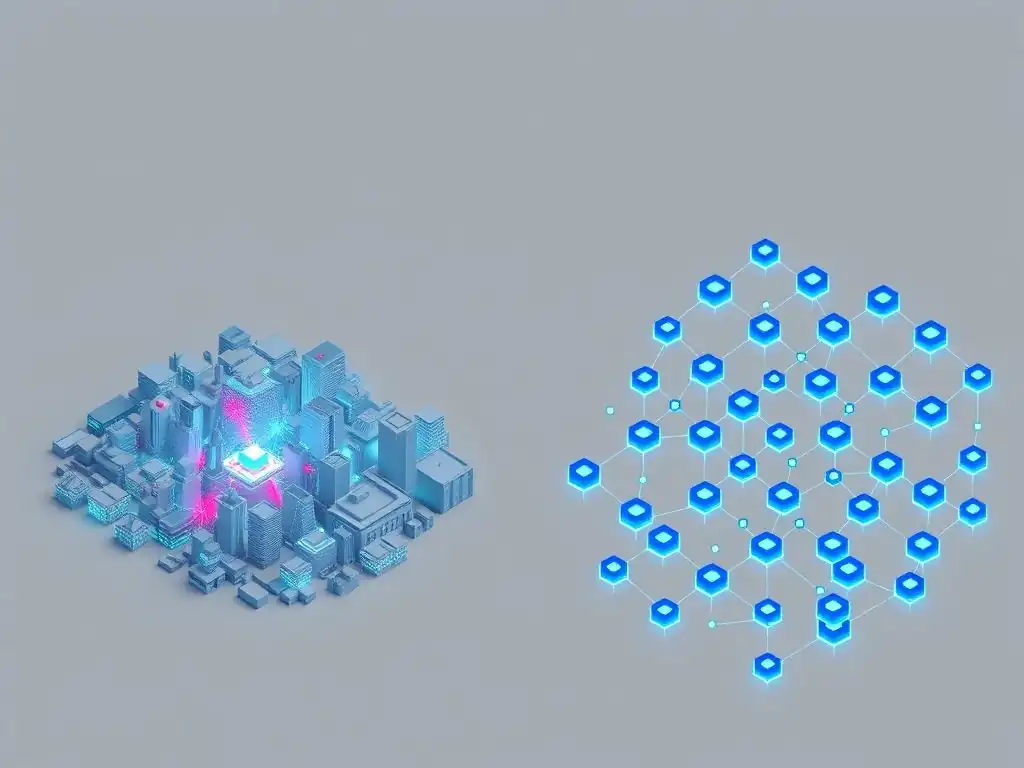
Transaction Throughput (TPS) Comparison
Comparing the transaction throughput (TPS) of Ethereum 2.0 and Polkadot requires considering their different architectures and scaling solutions. Ethereum 1.0, before the upgrades, had a TPS of approximately 15-30. Ethereum 2.0, with the implementation of sharding and Layer 2 solutions, aims to significantly increase this capacity. Estimations for Ethereum 2.0's TPS after full sharding and with widespread Layer 2 adoption range from tens of thousands to potentially over 100,000 TPS. Layer 2 solutions like rollups are expected to contribute the most substantial gains in TPS for Ethereum.
Polkadot, with its parachain architecture, is designed for high throughput from the outset. The theoretical TPS of Polkadot is considerably higher than Ethereum 1.0 and potentially exceeds that of Ethereum 2.0 in its base layer. Polkadot's TPS capacity is distributed across its parachains, and the total network throughput depends on the number of active parachains and their individual performance.
Estimates for Polkadot's overall network TPS range from thousands to potentially millions of TPS, depending on the configuration and utilization of parachains. Direct TPS comparisons are complex due to the different scaling approaches and ongoing development of both platforms. However, both Ethereum 2.0 and Polkadot represent significant improvements in transaction throughput compared to earlier blockchain generations, with Polkadot potentially offering higher theoretical limits due to its multi-chain architecture.
Latency and Confirmation Times: A Scalability Perspective
Latency and confirmation times are crucial aspects of blockchain performance, directly impacting user experience. In Ethereum 1.0, block times were around 15 seconds, and confirmation times could vary significantly depending on network congestion, often taking several minutes or even longer during peak periods. Ethereum 2.0's Proof-of-Stake consensus aims to reduce block times to approximately 12 seconds. Furthermore, with the finalization mechanism in PoS, transactions are expected to achieve finality much faster than in PoW Ethereum, reducing the time required for secure confirmations. Layer 2 solutions like ZK-Rollups can offer near-instant transaction finality, further improving user experience.
Polkadot boasts even faster block times, with a target of around 6 seconds for the Relay Chain and parachains. Due to its efficient consensus mechanism and architecture, transaction confirmation times in Polkadot are typically very fast, often within seconds. The rapid block times and confirmation times in Polkadot contribute to a smoother and more responsive user experience compared to earlier generation blockchains. Both Ethereum 2.0 and Polkadot are designed to reduce latency and improve confirmation times compared to Ethereum 1.0, but Polkadot's architecture currently offers lower latency and faster finality due to its optimized design and consensus mechanisms.
Network Congestion Handling: Ethereum 2.0 and Polkadot under Stress
Network congestion is a critical issue for blockchains, particularly during periods of high demand, leading to slow transaction processing and increased fees. Ethereum 1.0 has frequently experienced network congestion, especially during periods of high DeFi or NFT activity, resulting in soaring gas fees and delayed transactions. Ethereum 2.0's scalability solutions are designed to mitigate network congestion significantly. Sharding aims to distribute the transaction load across multiple shards, reducing congestion on any single part of the network. Layer 2 solutions further offload transaction processing from the main chain, reducing congestion on Layer 1.
Polkadot's parachain architecture is inherently designed to handle network congestion more effectively. Because each parachain operates independently, congestion on one parachain is less likely to impact the performance of other parachains or the overall network. Parachains can also be optimized for specific types of transactions, further isolating potential congestion issues.
The Relay Chain, being separate from application-specific transactions, is less prone to congestion caused by dApp activity. While both Ethereum 2.0 and Polkadot aim to address network congestion, Polkadot's multi-chain architecture provides a more robust and inherently resilient approach to handling high network load compared to Ethereum 2.0's sharding-based approach.
Real-World Use Cases and Scalability Demands: DeFi and Supply Chain Management
Scalability is paramount for enabling blockchain adoption in real-world use cases with high transaction volume and data throughput requirements. Decentralized Finance (DeFi) is a prime example of an industry that demands high scalability. DeFi applications often involve frequent and complex transactions, requiring low latency and low transaction fees to be viable for mainstream adoption.
Ethereum 1.0's scalability limitations have been a bottleneck for the growth of DeFi, leading to high gas fees and slow transaction times, particularly during periods of market volatility. Ethereum 2.0's scalability solutions are crucial for enabling DeFi to scale and reach its full potential, supporting a wider range of financial applications and users.
Supply chain management is another sector where scalability is essential. Tracking goods and data across complex supply chains involves a massive volume of transactions and data points. Blockchain solutions for supply chain management require high throughput and low transaction costs to be practical for tracking large volumes of products across global networks.
Both Ethereum 2.0 and Polkadot, with their enhanced scalability, are better positioned to support demanding use cases like DeFi and supply chain management compared to earlier generation blockchains. The ability to handle high transaction volumes and low latency is critical for blockchain technology to move beyond niche applications and become a foundational technology for various industries and real-world scenarios.
Development Ecosystems: Building Scalable Applications
Ethereum 2.0 Development Tools and Resources
Ethereum 2.0 benefits from a mature and extensive development ecosystem, built upon years of development for Ethereum 1.0. Developers have access to a wide array of tools, libraries, and resources for building decentralized applications on Ethereum 2.0. Smart contract development primarily relies on Solidity, a widely adopted programming language specifically designed for Ethereum. Development frameworks like Truffle and Hardhat provide comprehensive environments for smart contract development, testing, and deployment. Remix IDE offers a browser-based integrated development environment for quick prototyping and smart contract development.
For front-end development and interaction with Ethereum 2.0, libraries like Web3.js and Ethers.js are widely used, providing JavaScript APIs for interacting with Ethereum nodes and smart contracts. Extensive documentation, tutorials, and community support are readily available for Ethereum developers, making it relatively accessible for new developers to get started and build applications. The large and active Ethereum developer community is a significant asset, contributing to the continuous improvement of development tools and resources, and fostering innovation within the Ethereum ecosystem.
Polkadot Development Tools and Resources
Polkadot, while newer than Ethereum, has a rapidly growing and robust development ecosystem. Polkadot is built using Substrate, a modular blockchain framework developed by Parity Technologies. Substrate provides developers with a powerful and flexible toolkit for building custom blockchains and parachains for Polkadot. Smart contract development on Polkadot primarily utilizes Rust, a performant and secure programming language, and Ink!, a smart contract language specifically designed for Substrate and Polkadot. The Substrate framework itself provides extensive documentation and tutorials for developers looking to build on Polkadot.
The Polkadot-JS API offers a JavaScript library for interacting with Polkadot nodes and parachains, enabling front-end development and integration with Polkadot-based applications. While the Polkadot development ecosystem is still evolving compared to Ethereum's, it is rapidly maturing, with increasing availability of tools, resources, and community support. Substrate's modularity and flexibility, combined with the growing Polkadot developer community, are attracting developers seeking to build scalable and interoperable decentralized applications within the Polkadot ecosystem.
Developer Adoption and Community Support: Ethereum vs. Polkadot
Ethereum boasts a significantly larger and more established developer community compared to Polkadot. Years of first-mover advantage and extensive ecosystem growth have resulted in a vast pool of Ethereum developers, contributing to a rich and mature development ecosystem. The sheer size of the Ethereum developer community provides a strong network effect, with readily available expertise, support, and resources. Ethereum's community is highly active and engaged, fostering innovation and driving the continued development of the platform and its ecosystem.
Polkadot's developer community, while smaller than Ethereum's, is growing rapidly and is highly dedicated. The Polkadot ecosystem is attracting developers interested in building interoperable and scalable decentralized applications. The Substrate framework and Polkadot's focus on interoperability and customization are appealing to developers seeking greater flexibility and control over their blockchain projects. While Ethereum currently holds a larger share of developer mindshare and community support, Polkadot's community is vibrant and expanding, indicating a growing adoption and interest in the Polkadot ecosystem.
Smart Contract Languages and Compatibility: Solidity vs. Rust/Ink!
Ethereum's primary smart contract language is Solidity, a language specifically designed for the Ethereum Virtual Machine (EVM). Solidity is widely adopted within the Ethereum ecosystem and has a large body of existing code and developer expertise. However, Solidity is sometimes criticized for certain security vulnerabilities and limitations. Polkadot's primary smart contract languages are Rust and Ink!. Rust is a general-purpose programming language known for its performance, security, and memory safety. Ink! is a smart contract language built specifically for Substrate and Polkadot, leveraging Rust's strengths.
Rust and Ink! are often considered to offer greater security and performance compared to Solidity. However, Solidity has a much larger existing developer base and a more mature ecosystem of smart contracts. Compatibility with existing Ethereum smart contracts is a significant consideration.
Ethereum 2.0 aims to maintain compatibility with existing Ethereum smart contracts to facilitate a smooth transition. Polkadot, being a different architecture, is not directly compatible with Ethereum smart contracts. However, bridges and compatibility layers are being developed to enable interoperability between Ethereum and Polkadot, potentially allowing for the migration or integration of Ethereum-based applications into the Polkadot ecosystem.
Security Considerations: Securing Scalable Blockchains
Ethereum 2.0 Security Audits and Vulnerability Mitigation
Securing Ethereum 2.0 is a paramount concern, given the scale and complexity of the upgrades. Extensive security audits are being conducted on all components of Ethereum 2.0, including the Beacon Chain, sharding, and Layer 2 scaling solutions. These audits are performed by independent security firms and researchers to identify potential vulnerabilities and ensure the robustness of the system. Vulnerability mitigation strategies are continuously being developed and implemented based on audit findings and ongoing security research. The phased rollout of Ethereum 2.0 allows for incremental security assessments and mitigations as each component is deployed.
The Proof-of-Stake consensus mechanism itself introduces a different security model compared to Proof-of-Work. While PoS is considered more energy-efficient and scalable, it also presents unique security considerations, such as validator collusion and long-range attacks. Ethereum 2.0's security model incorporates mechanisms to mitigate these risks, including slashing penalties for malicious validators and finality gadgets to enhance chain security. Layer 2 solutions also introduce their own security considerations, and robust security audits are essential for ensuring the safety of funds and data on Layer 2 protocols.
Polkadot Security Model and Parachain Security
Polkadot's security model is centered around the Relay Chain providing shared security to all connected parachains. This shared security model is a key advantage, as parachains do not need to bootstrap their own independent security mechanisms. The Relay Chain's Nominated Proof-of-Stake (NPoS) consensus mechanism is designed to be highly secure and resilient. The parachain slot auction process also contributes to security by ensuring that parachains connected to the Relay Chain are projects with sufficient resources and commitment to contribute positively to the ecosystem.
While parachains benefit from the shared security of the Relay Chain, they also have some degree of security autonomy. Parachains can implement their own security measures and consensus mechanisms within their parachain environment, as long as they adhere to the Relay Chain's validation requirements. The security of the overall Polkadot network relies on the robustness of the Relay Chain's consensus mechanism and the integrity of the parachain validation process. Ongoing security research and audits are crucial for maintaining the security and resilience of the Polkadot ecosystem as it grows and evolves.
Risk Assessment: Potential Weaknesses in Scalability Solutions
Both Ethereum 2.0 and Polkadot, while offering advanced scalability solutions, also present potential risks and weaknesses. Ethereum 2.0's sharding implementation is a complex and ambitious undertaking, and there are inherent risks associated with coordinating and securing multiple shards. The complexity of sharding also increases the attack surface, and vulnerabilities in one shard could potentially impact the entire network. Layer 2 solutions, while enhancing scalability, also introduce additional layers of complexity and potential security risks, as bridges and rollups are separate protocols built on top of the base layer.
Polkadot's multi-chain architecture, while offering scalability and flexibility, also introduces complexities related to cross-chain communication and governance across multiple parachains. The security of Polkadot relies heavily on the Relay Chain, and any vulnerabilities in the Relay Chain could impact the security of all connected parachains. The parachain auction process, while designed to allocate resources effectively, could also lead to centralization risks if a small number of entities accumulate a large number of parachain slots. Ongoing monitoring, security audits, and community vigilance are essential for identifying and mitigating potential weaknesses in both Ethereum 2.0 and Polkadot's scalability solutions.
Decentralization and Security Trade-offs
Scalability, decentralization, and security are often considered the blockchain trilemma, where optimizing for one aspect can sometimes come at the expense of others. Both Ethereum 2.0 and Polkadot strive to achieve a balance between these three aspects, but trade-offs are inherent in their design choices. Ethereum 2.0's sharding approach aims to maintain a high degree of decentralization while improving scalability and security. However, the complexity of sharding and the potential for increased resource requirements for validators could potentially impact decentralization to some extent.
Polkadot's parachain architecture prioritizes scalability and interoperability, and its shared security model aims to enhance security for parachains. However, the Relay Chain, being the central coordinator, could become a point of centralization if governance and validator power become overly concentrated. The parachain slot auction process also introduces a form of resource allocation that could influence decentralization dynamics. Maintaining a healthy balance between scalability, decentralization, and security requires ongoing attention and adaptation as both Ethereum 2.0 and Polkadot continue to evolve and mature.
The Future of Blockchain Scalability: Ethereum 2.0 and Polkadot's Trajectory
Roadmap and Upcoming Developments for Ethereum 2.0
Ethereum 2.0 is undergoing a phased rollout, with ongoing development and planned upgrades to further enhance its scalability and functionality. The Merge, which transitioned Ethereum to Proof-of-Stake, was a major milestone. The next major phase is focused on implementing sharding. Initially, Ethereum 2.0 will implement data sharding to increase data availability and lay the groundwork for full execution sharding. Full execution sharding, where shards independently process transactions and smart contracts, is a more complex undertaking and is expected to be rolled out in subsequent phases.
Further improvements to Layer 2 scaling solutions are also a key focus for Ethereum 2.0's roadmap. Ongoing research and development are aimed at optimizing rollups, improving cross-rollup communication, and exploring new Layer 2 technologies. Ethereum's roadmap is dynamic and subject to change based on research findings, community feedback, and evolving technological landscapes. The long-term vision for Ethereum 2.0 is to become a highly scalable, secure, and sustainable platform capable of supporting the next generation of decentralized applications and mass adoption of blockchain technology.
Roadmap and Upcoming Developments for Polkadot
Polkadot's roadmap also includes ongoing developments and planned enhancements to its scalability, interoperability, and functionality. Parachain slot auctions are an ongoing process, with new parachains being onboarded to the Polkadot network regularly. The development and evolution of Cross-Consensus Messaging (XCM) are a key focus, with continuous improvements aimed at enhancing cross-chain communication capabilities and enabling more complex cross-parachain functionalities. Polkadot is also exploring further scalability enhancements beyond parachains, such as nested relay chains and parathreads, which could further increase network capacity and flexibility.
Governance improvements and decentralization initiatives are also part of Polkadot's roadmap. The Polkadot community is actively involved in shaping the future direction of the network through its on-chain governance system. The long-term vision for Polkadot is to become the internet of blockchains, a highly scalable and interoperable platform that connects diverse blockchains and enables seamless interaction and value transfer across different ecosystems. Polkadot's roadmap is also dynamic and driven by ongoing research, community proposals, and the evolving needs of the blockchain space.
The Evolving Landscape of Scalable Blockchain Technology
The landscape of blockchain scalability is constantly evolving, with ongoing innovation and research pushing the boundaries of what is possible. Ethereum 2.0 and Polkadot are at the forefront of this evolution, pioneering different approaches to address the scalability challenge. Other scalability solutions are also emerging, including alternative Layer 1 architectures, interchain protocols, and advancements in cryptography and consensus mechanisms. The optimal scalability solutions for different use cases and blockchain applications may vary, and a multi-faceted approach to scalability is likely to be necessary to meet the diverse needs of the blockchain ecosystem.
The competition and collaboration between projects like Ethereum 2.0 and Polkadot are driving innovation and accelerating the progress of blockchain scalability. As blockchain technology matures and adoption grows, scalability will remain a critical area of focus and development. The future of blockchain technology hinges on the ability to overcome scalability limitations and create platforms that can support mass adoption and a wide range of real-world applications, and Ethereum 2.0 and Polkadot are playing pivotal roles in shaping this future.
Conclusion: Choosing the Right Scalability Solution for Your Needs
Ethereum 2.0 Scalability Solutions Strengths and Weaknesses
Ethereum 2.0's scalability solutions, including sharding, Proof-of-Stake, and Layer 2 rollups, offer several strengths. Ethereum benefits from a vast and mature developer ecosystem, extensive tooling, and a large community. Layer 2 rollups are already demonstrating significant improvements in transaction throughput and cost reduction. Ethereum 2.0 aims to maintain compatibility with existing Ethereum smart contracts, facilitating a smoother transition for existing applications.
However, Ethereum 2.0's sharding implementation is complex and still under development. The full benefits of sharding may take time to materialize, and Layer 2 solutions introduce additional complexities and potential security considerations. Migration to Ethereum 2.0 and adoption of Layer 2 solutions require effort from developers and users.
Polkadot Scalability Solutions Strengths and Weaknesses
Polkadot's scalability solutions, based on parachains and the Relay Chain, offer distinct strengths. Polkadot's multi-chain architecture is inherently designed for high scalability and interoperability. Parachains provide flexibility and customization for specific use cases. Polkadot's native cross-chain communication protocol (XCM) enables seamless interaction between parachains. The shared security model of the Relay Chain simplifies security for parachains.
However, Polkadot's ecosystem is still younger and smaller than Ethereum's. Developer tooling and community support are growing but less mature compared to Ethereum. Parachain slots are limited and require projects to participate in auctions. Interoperability with Ethereum is primarily achieved through bridges, which introduce complexities.
Final Thoughts: A Comparative Analysis of Scalable Blockchain Platforms
Choosing between Ethereum 2.0 and Polkadot for scalable blockchain solutions depends on specific project requirements and priorities. Ethereum 2.0 is a strong choice for projects already deeply embedded in the Ethereum ecosystem, leveraging its vast developer community and existing tooling. Layer 2 solutions on Ethereum are readily available and offer immediate scalability improvements.
Polkadot is well-suited for projects prioritizing high scalability, interoperability, and customization, particularly those building new blockchains from the ground up. Polkadot's multi-chain architecture and native cross-chain communication are advantageous for building interconnected decentralized ecosystems. Ultimately, both Ethereum 2.0 and Polkadot represent significant advancements in blockchain scalability, offering distinct strengths and catering to different needs within the evolving blockchain landscape.
Frequently Asked Questions
How does Ethereum 2.0 aim to improve scalability compared to the original Ethereum blockchain?
Ethereum 2.0 implements sharding and a Proof-of-Stake (PoS) consensus mechanism to achieve higher transaction throughput and lower fees, addressing the scalability issues of the original Proof-of-Work (PoW) chain. This allows for parallel processing of transactions.
What are the main differences between Ethereum 2.0's approach to scalability and Polkadot's approach?
Ethereum 2.0 focuses on on-chain scaling through sharding, while Polkadot uses a parachain architecture that allows multiple blockchains to connect and interoperate, handling transactions in parallel across different chains. Polkadot's is interoperability focused.
What role does the Beacon Chain play in Ethereum 2.0's scalability efforts?
The Beacon Chain is the central coordinating chain in Ethereum 2.0. It manages the Proof-of-Stake consensus, oversees the sharded chains, and ensures the overall security and integrity of the network.
What are the potential advantages and disadvantages of Ethereum 2.0's sharding solution for scalability?
Advantages include potentially vastly increased transaction throughput. Disadvantages include the complexity of implementation and the potential for security vulnerabilities if sharding isn't carefully managed.
How might regulatory considerations impact the adoption and development of Ethereum 2.0 scalability solutions?
Regulatory uncertainty surrounding DeFi and cryptocurrencies could slow down adoption. Clearer regulations would foster greater institutional investment and innovation in Ethereum 2.0 and its scaling solutions.
Final Reflection: Embracing the Future of Scalable Blockchains
The ongoing debate between Ethereum 2.0 and Polkadot, as explored in this article, highlights the critical need for scalable blockchain solutions in today's increasingly digital world. The limitations of current blockchain technology, particularly in transaction speed and cost, hinder widespread adoption. Therefore, understanding and comparing these competing approaches is not just an academic exercise, but a crucial step towards unlocking the true potential of decentralized applications and Web3.
The pursuit of scalability is more than just a technical challenge; it's about shaping the future of the internet and empowering individuals with greater control over their data and digital assets. This quest for a more efficient and accessible blockchain ecosystem resonates deeply, as it promises to democratize access to financial services, streamline supply chains, and foster innovation across countless industries. The future of finance is decentralized, and the future of the internet is decentralized. We're building that future.
- Vitalik Buterin. This vision underscores the profound impact these scalability solutions will have on our lives.
As we stand at the cusp of this technological revolution, I invite you to reflect on the role you can play in shaping this future. Consider the implications of these advancements for your own work, your community, and the world at large. How can you leverage the power of scalable blockchains to build a more equitable, transparent, and innovative future? The answers lie not just in the technology itself, but in the vision and dedication of those who dare to build upon it.
Unlock Your Crypto Future: Dive Deeper Now!
Thank you for exploring the fascinating world of blockchain scalability with us. We hope this comparison of Ethereum 2.0 and Polkadot has provided valuable insights into the future of decentralized technology. Now, it's time to take action!
Consider the following steps to continue your journey:
- Research and compare projects built on both Ethereum 2.0 and Polkadot to see how they address scalability challenges in real-world applications.
- Follow Blockchain Trends on social media for daily updates and the latest developments in the blockchain industry.
- Join online forums and communities discussing the technical aspects and challenges of these scalability solutions. Share your insights and learn from others!
What specific real-world problem do you believe blockchain scalability will solve first? Share your thoughts in the comments below!
Leave a Reply