
Ethereum Alternatives: Exploring Platforms Beyond the Dominant Network

Welcome to Blockchain Trends, your compass in the rapidly evolving world of decentralized technologies. Are you ready to look beyond the familiar? This week, we dive deep into the exciting landscape of Ethereum alternatives within decentralized finance (DeFi). Discover the innovative platforms challenging the status quo and shaping the future of finance. What advantages do they offer, and how do they stack up against the giant? Let's explore!
- Ethereum Alternatives: Exploring Platforms Beyond the Dominant Network
- Understanding Ethereum's Limitations in Decentralized Finance
- Key Features to Consider When Choosing an Ethereum Alternative
-
Top Ethereum Alternatives for Decentralized Finance Applications
- Solana: High-Speed Transactions and Low Fees
- Avalanche: Fast Finality and Subnets
- Cardano: Research-Driven Development and Sustainability
- Polkadot: Interoperability and Parachains
- Binance Smart Chain (BSC): EVM Compatibility and Centralization Trade-offs
- Polygon (MATIC): Layer-2 Scaling Solution for Ethereum
-
Comparing Ethereum Alternatives: A Detailed Analysis
- Scalability Comparison: TPS and Transaction Finality
- Gas Fee Comparison: Cost-Effectiveness for Users
- Security Comparison: Consensus Mechanisms and Vulnerabilities
- Developer Ecosystem Comparison: Tools and Resources
- Community Support: Activity and Engagement
- Decentralization: Degrees of Decentralization Across Platforms
- The Future of Decentralized Finance: Beyond Ethereum
- Conclusion: Selecting the Right Ethereum Alternative for Your Needs
-
Frequently Asked Questions
- What are some popular Ethereum alternatives in decentralized finance (DeFi)?
- Why might developers choose an Ethereum alternative for their DeFi projects?
- What are the key advantages of using Ethereum for DeFi compared to its alternatives?
- How do Ethereum alternatives handle transaction validation and security?
- What regulatory challenges do Ethereum and its alternatives face in the DeFi space?
- Final Reflection: Embracing the Decentralized Future
- Unveil Your Next Blockchain Adventure!
Ethereum Alternatives: Exploring Platforms Beyond the Dominant Network
Introduction: The Need for Ethereum Alternatives in DeFi
Ethereum, while pioneering smart contract technology and decentralized applications (dApps), has encountered limitations that have spurred the search for viable alternatives, particularly within the rapidly expanding realm of Decentralized Finance (DeFi). Initially designed to be the 'world computer', Ethereum's network congestion and associated high transaction costs have become significant hurdles for widespread DeFi adoption.
These challenges have prompted developers and users alike to explore other blockchain platforms that offer enhanced performance, lower fees, and innovative features, all while maintaining a robust and secure environment for DeFi applications. The quest for Ethereum alternatives is not about replacing Ethereum entirely, but rather about finding complementary ecosystems that can address its shortcomings and contribute to a more scalable and accessible decentralized financial future.
The emergence of numerous layer-1 and layer-2 blockchain solutions signals a healthy diversification within the blockchain space. This diversification is crucial for the continued growth and evolution of DeFi. By examining these alternatives, we can identify platforms that not only offer immediate relief from Ethereum's constraints but also bring unique technological advancements and philosophical approaches to decentralized finance. This exploration is essential for anyone involved in or considering entering the DeFi space, be it developers, investors, or users, to make informed decisions and understand the evolving landscape of blockchain technology.
Understanding Ethereum's Limitations in Decentralized Finance
High Gas Fees on Ethereum: A Barrier to Entry
One of the most prominent challenges users face on the Ethereum network is the consistently high gas fees. Gas, the unit of computation cost on Ethereum, fluctuates dramatically based on network demand. During periods of high activity, such as during popular NFT mints or DeFi protocol interactions, gas prices can skyrocket.
For instance, in peak periods of 2021 and 2022, simple token swaps on decentralized exchanges like Uniswap could cost upwards of $50 to $100, rendering many smaller transactions economically unviable. This pricing structure effectively excludes a large segment of potential users, particularly those in developing economies or those engaging in smaller-value DeFi activities.
These exorbitant fees are a direct consequence of Ethereum's architecture and its proof-of-work consensus mechanism in its earlier stages. Every transaction on the network requires computational resources, and users must bid for their transactions to be included in the next block by offering gas.
This auction-based system, while ensuring network security, inadvertently creates a barrier to entry for many. While the shift to Proof-of-Stake with "The Merge" aimed to address environmental concerns, it has not fundamentally resolved the issue of high gas fees during peak network congestion, highlighting the ongoing need for more scalable and cost-effective blockchain solutions for DeFi.
Scalability Issues Impacting Ethereum's Performance
Ethereum's scalability limitations are intrinsically linked to its high gas fees. The network's original architecture was designed to process a limited number of transactions per second (TPS), often cited to be around 15-20 TPS. This relatively low throughput capacity becomes a bottleneck when network activity increases, leading to congestion and transaction delays. During periods of high demand, transactions can get stuck in the mempool, awaiting confirmation, or users may need to increase their gas bids to expedite processing, further driving up costs.
The impact of these scalability issues is felt across the entire Ethereum ecosystem, particularly within DeFi. Complex DeFi operations, such as yield farming strategies, liquidations, or arbitrage opportunities, require timely transaction execution. Network congestion can lead to missed opportunities, failed transactions, and front-running vulnerabilities, where malicious actors exploit delayed transactions.
While Ethereum's Layer-2 scaling solutions like rollups (Optimistic and ZK-Rollups) are making strides in improving scalability, they are still under development and have not yet fully alleviated the primary scalability constraints of the main Ethereum chain. This ongoing challenge reinforces the need for alternative Layer-1 blockchains that are designed from the ground up to handle higher transaction volumes and offer improved scalability.
Ethereum's Environmental Concerns: Exploring Eco-Friendly Options
Prior to the Merge, Ethereum's reliance on a Proof-of-Work (PoW) consensus mechanism was a significant source of environmental concern. PoW requires vast amounts of energy consumption for mining, contributing to a substantial carbon footprint. Estimates in 2021 suggested Ethereum's energy consumption was comparable to that of entire countries like Kazakhstan. This environmental impact became increasingly scrutinized as global awareness of climate change grew, prompting calls for more sustainable blockchain technologies.
The successful transition to Proof-of-Stake (PoS) through "The Merge" in September 2022 significantly reduced Ethereum's energy consumption by an estimated 99.95%. PoS replaces energy-intensive mining with staking, where validators lock up ETH to secure the network. While the Merge addressed the major environmental concerns associated with PoW, the legacy of energy consumption and the ongoing search for even more efficient and sustainable blockchain solutions remain relevant.
Many newer Ethereum alternatives were designed from their inception with PoS or other energy-efficient consensus mechanisms, positioning themselves as inherently more environmentally friendly options for building and utilizing DeFi applications. This focus on sustainability is a key differentiator for some platforms and aligns with the growing emphasis on green technologies across various sectors.
Key Features to Consider When Choosing an Ethereum Alternative
Scalability Solutions: Layer-2 and Beyond
When evaluating Ethereum alternatives, scalability stands out as a paramount feature. Scalability refers to a blockchain's ability to handle an increasing number of transactions without sacrificing speed or increasing costs. While Ethereum itself is actively developing Layer-2 scaling solutions, many alternatives offer inherent Layer-1 scalability advantages. These Layer-1 solutions often employ different consensus mechanisms and architectural designs to achieve higher throughput. For example, Solana utilizes a Proof-of-History (PoH) mechanism combined with Proof-of-Stake (PoS) to achieve significantly faster transaction speeds and higher TPS compared to Ethereum's base layer.
Beyond Layer-1 scalability, the availability and maturity of Layer-2 solutions within an alternative ecosystem is also crucial. Platforms like Polygon (MATIC), while initially designed as an Ethereum Layer-2, have also expanded their scope to offer their own independent ecosystem and scaling solutions. Understanding the types of scaling solutions available, such as rollups, sidechains, or state channels, and their respective trade-offs in terms of security, decentralization, and complexity, is essential when choosing an Ethereum alternative for DeFi projects that require high transaction volume and low latency.
Transaction Costs: Comparing Gas Fees Across Platforms
Transaction costs, often referred to as "gas fees" on Ethereum-like networks, are a critical consideration for DeFi users and developers. High gas fees can hinder the accessibility and usability of DeFi applications, especially for smaller transactions or users with limited capital. Ethereum alternatives frequently boast significantly lower transaction fees compared to Ethereum's mainnet. For instance, platforms like Solana and Avalanche are known for their consistently low gas fees, often costing fractions of a cent per transaction. This cost-effectiveness makes them attractive for users engaging in frequent DeFi activities like trading, yield farming, and participating in decentralized governance.
When comparing transaction costs across different platforms, it's important to consider not only the absolute fees but also the consistency and predictability of these fees. Some platforms may have variable gas fees that fluctuate with network congestion, while others aim for more stable and predictable fee structures. Furthermore, the complexity of the DeFi operations being performed can influence the gas costs.
While a simple token transfer might be inexpensive on most platforms, more complex smart contract interactions can incur higher gas costs, albeit often still lower than on Ethereum's mainnet. Therefore, analyzing typical transaction costs for the specific DeFi use case is crucial when evaluating Ethereum alternatives.
Smart Contract Functionality and Compatibility
Smart contract functionality is the bedrock of DeFi applications. When considering Ethereum alternatives, the capabilities and compatibility of their smart contract platforms are paramount. Ethereum's smart contracts are primarily written in Solidity, and the Ethereum Virtual Machine (EVM) is the standard execution environment. Many Ethereum alternatives aim for EVM compatibility to facilitate easier porting of existing Ethereum-based DeFi projects and to leverage the large pool of Solidity developers. Binance Smart Chain (BSC) and Polygon (MATIC), for example, are explicitly designed to be EVM-compatible, allowing developers to deploy Ethereum smart contracts with minimal modifications.
However, not all Ethereum alternatives prioritize EVM compatibility. Platforms like Solana and Cardano utilize different smart contract languages and virtual machines, offering unique advantages in terms of performance, security, or programming paradigms. Solana uses Rust for smart contracts, while Cardano employs Plutus and Marlowe.
Choosing between EVM-compatible and non-EVM-compatible platforms depends on the specific project requirements, developer expertise, and the desired trade-offs between compatibility and potential performance or security benefits. For projects aiming for rapid deployment and leveraging existing Ethereum tooling and developer talent, EVM compatibility can be a significant advantage. For projects prioritizing performance and exploring new programming paradigms, non-EVM alternatives may be more suitable.
Security Measures and Consensus Mechanisms
Security is of utmost importance in the DeFi space, where substantial financial value is at stake. The security of a blockchain platform is heavily influenced by its consensus mechanism and the overall network architecture. Ethereum, after the Merge, utilizes Proof-of-Stake (PoS), which is generally considered more energy-efficient than Proof-of-Work (PoW) and provides robust security when implemented correctly. However, the specific implementation details and parameters of PoS can vary across different platforms, impacting their security profiles.
Ethereum alternatives employ a range of consensus mechanisms, including variations of PoS like Delegated Proof-of-Stake (DPoS) used by platforms like EOSIO (though EOSIO is not typically considered a primary Ethereum alternative for DeFi anymore due to other factors), and unique mechanisms like Proof-of-History (PoH) in Solana and Snowball consensus in Avalanche. Each consensus mechanism has its own trade-offs in terms of security, speed, decentralization, and energy efficiency.
Evaluating the security measures of an Ethereum alternative involves understanding its consensus mechanism, the number and distribution of validators, the network's history of security incidents, and the overall robustness of its architecture against various attack vectors. A platform's security track record and the transparency of its security audits are crucial factors to consider.
Developer Community and Ecosystem Support
A vibrant and active developer community is a strong indicator of a blockchain platform's long-term viability and growth potential, particularly for DeFi. A large developer community translates to more readily available tools, libraries, documentation, and support resources. Ethereum boasts the largest and most mature developer community in the blockchain space, which is a significant advantage. However, many Ethereum alternatives are rapidly growing their developer ecosystems.
Ecosystem support encompasses various factors, including the availability of developer grants, educational resources, community forums, and the overall infrastructure supporting dApp development. Platforms actively investing in developer tooling, providing comprehensive documentation, and fostering a supportive community are more likely to attract and retain developers. When evaluating Ethereum alternatives, assessing the size and activity of their developer communities, the availability of developer resources, and the level of ecosystem support is crucial. A strong developer ecosystem is essential for the continued innovation and growth of DeFi applications on any platform.
Decentralization Level and Governance Models
Decentralization is a core tenet of blockchain technology and a critical factor in the security, censorship resistance, and long-term sustainability of DeFi platforms. While "decentralization" can be interpreted in various ways, it generally refers to the distribution of control and decision-making power across a network, rather than being concentrated in the hands of a few entities. Ethereum, despite ongoing debates about its centralization in certain aspects like client diversity, is generally considered to be relatively decentralized compared to some alternatives.
Ethereum alternatives exhibit varying degrees of decentralization. Some platforms may prioritize high transaction throughput and low fees by making trade-offs in decentralization, potentially relying on a smaller set of validators or employing more centralized governance models. Binance Smart Chain (BSC), for example, is often criticized for its relatively centralized validator set compared to Ethereum.
Other platforms, like Cardano and Polkadot, place a strong emphasis on decentralization and robust governance mechanisms. Understanding the degree of decentralization of an Ethereum alternative, its governance model, and the distribution of network control is crucial for assessing its long-term resilience and alignment with the principles of decentralized finance. The trade-off between decentralization and performance is a key consideration when choosing a platform for DeFi applications.
Top Ethereum Alternatives for Decentralized Finance Applications
Solana: High-Speed Transactions and Low Fees
Solana has emerged as a prominent Ethereum alternative, particularly lauded for its exceptional speed and remarkably low transaction fees. It is designed to handle a high volume of transactions, making it suitable for applications requiring fast and frequent interactions, such as decentralized exchanges (DEXs) and high-frequency trading strategies in DeFi. Solana's architecture and technological innovations have positioned it as a strong contender in the competitive landscape of blockchain platforms.
Solana's Architecture and Scalability
Solana's high scalability is achieved through a combination of innovative technologies, most notably Proof-of-History (PoH). PoH is a cryptographic clock that provides a historical record of events, allowing nodes to agree on transaction order without needing to communicate extensively, significantly speeding up transaction processing. Combined with a Proof-of-Stake (PoS) consensus mechanism, Solana can theoretically achieve thousands of transactions per second (TPS), far exceeding Ethereum's base layer capacity.
Other key architectural components contributing to Solana's scalability include Turbine for block propagation, Gulf Stream for transaction forwarding, and Sealevel for parallel transaction processing. These innovations work in concert to enable Solana's impressive throughput and low latency, making it a compelling platform for DeFi applications demanding high performance.
DeFi Projects Building on Solana
Solana's technical capabilities have attracted a growing ecosystem of DeFi projects. Notable DeFi protocols on Solana include Serum, a decentralized exchange with a central limit order book, Raydium, an automated market maker (AMM) similar to Uniswap, and Marinade Finance, a liquid staking protocol. These projects leverage Solana's speed and low fees to offer users a fast and cost-effective DeFi experience.
The Solana ecosystem is also experiencing growth in lending and borrowing platforms, yield aggregators, and NFT marketplaces integrated with DeFi functionalities. While the total value locked (TVL) in Solana DeFi is still smaller than Ethereum's, its rapid growth and the increasing number of innovative projects suggest a promising future for DeFi on Solana. The platform's focus on performance and user experience continues to attract developers and users seeking alternatives to Ethereum's limitations.
Avalanche: Fast Finality and Subnets
Avalanche is another leading Ethereum alternative that emphasizes speed and scalability, while also offering unique features like subnets, which allow for customizable and application-specific blockchains within the Avalanche network. Avalanche's consensus mechanism and architecture are designed to provide fast transaction finality, meaning transactions are confirmed and irreversible very quickly, enhancing the user experience for DeFi applications.
Avalanche's Consensus Mechanism
Avalanche utilizes a novel consensus mechanism called Snowball, which is a family of protocols including Snowball, SnowFlake, and Snowman. Unlike traditional Byzantine Fault Tolerance (BFT) or Nakamoto consensus, Snowball employs repeated random sampling and gossiping to achieve consensus rapidly and efficiently. This approach allows Avalanche to achieve sub-second transaction finality, significantly faster than Ethereum's block times. The Snowball consensus is also designed to be highly scalable and energy-efficient. Its unique architecture enables Avalanche to process a large number of transactions with low latency, making it well-suited for DeFi applications requiring fast and reliable transaction confirmations.
Exploring Avalanche's DeFi Ecosystem
Avalanche's DeFi ecosystem, often referred to as Avalanche Rush, has experienced substantial growth. Prominent DeFi protocols on Avalanche include Trader Joe, a popular decentralized exchange and lending platform, Benqi, a lending and borrowing protocol, and Platypus Finance, a stablecoin exchange. Avalanche's low fees and fast finality have made it attractive for DeFi users seeking a smoother and more cost-effective experience compared to Ethereum.
The platform's subnets feature also allows for the creation of custom blockchains tailored for specific DeFi applications, offering greater flexibility and control. The Avalanche Foundation has actively incentivized DeFi development on the platform through grants and programs, contributing to the expansion and diversification of its DeFi ecosystem.
Cardano: Research-Driven Development and Sustainability
Cardano distinguishes itself as a blockchain platform built on rigorous academic research and a strong emphasis on sustainability and security. Its development is characterized by a phased approach, with each phase undergoing peer review and formal verification. Cardano's commitment to scientific principles and its focus on long-term scalability and sustainability differentiate it from some other Ethereum alternatives.
Cardano's Ouroboros Protocol
At the heart of Cardano's architecture is the Ouroboros consensus protocol, the first provably secure Proof-of-Stake protocol. Ouroboros is designed to be energy-efficient and scalable, ensuring the network's sustainability. It employs a slot-leader election mechanism where slots are divided into epochs, and slot leaders are randomly selected to create blocks. This design ensures that block production is distributed and secure, while minimizing energy consumption compared to Proof-of-Work. Cardano's commitment to research and formal verification extends to Ouroboros, with multiple peer-reviewed papers validating its security and performance properties.
DeFi Opportunities on Cardano
While Cardano's DeFi ecosystem developed at a slower pace compared to some other platforms, it has been steadily growing. Key DeFi protocols on Cardano include Minswap, a decentralized exchange, SundaeSwap, another DEX focusing on scalability, and Liqwid, a lending and borrowing protocol. Cardano's focus on security and formal verification has resonated with developers and users who prioritize robustness and long-term stability in DeFi.
The platform's development roadmap includes ongoing enhancements to smart contract functionality and scalability, aiming to further expand its DeFi capabilities. Cardano's unique approach and its growing DeFi ecosystem offer a distinct alternative for those seeking a research-backed and sustainable blockchain platform.
Polkadot: Interoperability and Parachains
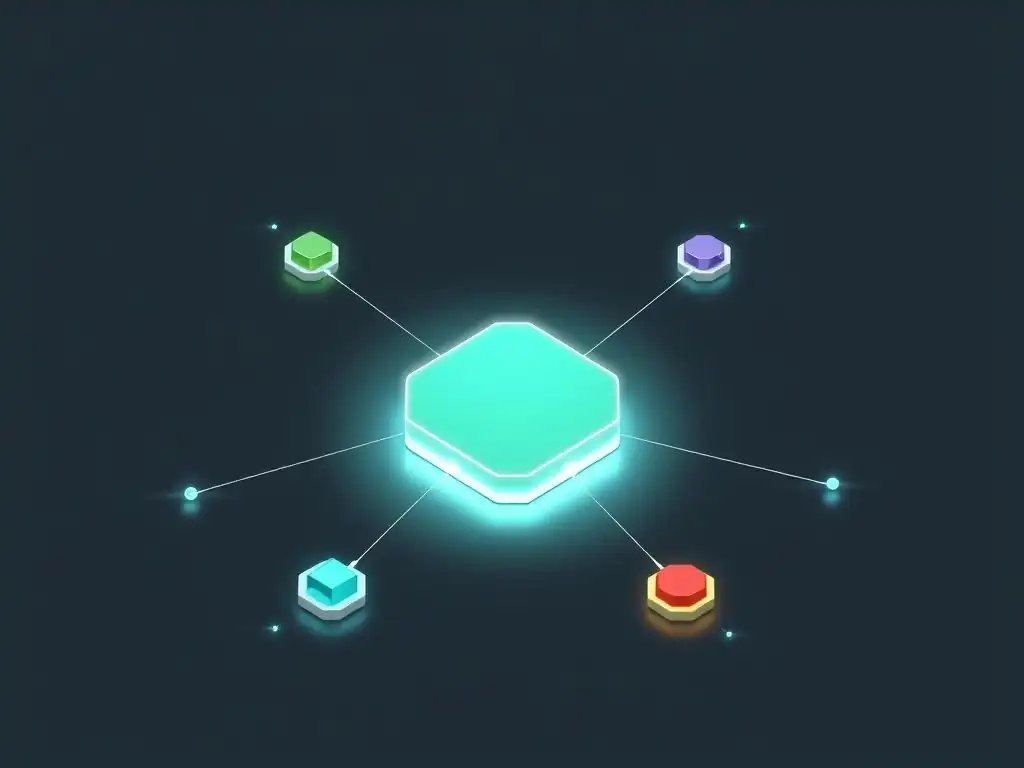
Polkadot is designed as a multi-chain platform, focusing on interoperability and scalability through its parachain model. It aims to connect different blockchains, enabling seamless communication and value transfer between them. Polkadot's architecture and vision for a web of interconnected blockchains make it a unique and powerful platform for building decentralized applications, including DeFi protocols that require cross-chain functionality.
Polkadot's Relay Chain and Parachain Model
Polkadot's architecture consists of a central Relay Chain, which provides security and interoperability, and multiple parachains (parallel chains) connected to the Relay Chain. Parachains are independent blockchains that can have their own customized features and governance models, while benefiting from the security and interoperability provided by the Relay Chain. This parachain model allows for parallel transaction processing, enhancing scalability and enabling the creation of specialized blockchains tailored for specific use cases, including DeFi. Polkadot's Relay Chain utilizes a Nominated Proof-of-Stake (NPoS) consensus mechanism, which is designed to be secure and energy-efficient.
DeFi Applications Utilizing Polkadot's Interoperability
Polkadot's interoperability features make it well-suited for building cross-chain DeFi applications. Projects like Acala, a DeFi hub and stablecoin platform, and Moonbeam, an EVM-compatible parachain, are leveraging Polkadot's architecture to create interconnected DeFi services. Acala aims to provide a comprehensive DeFi suite, including stablecoins, decentralized exchanges, and staking derivatives, all within the Polkadot ecosystem. Moonbeam enables developers to easily port Ethereum-based DeFi projects to Polkadot, bridging the Ethereum and Polkadot ecosystems. Polkadot's focus on interoperability and its growing ecosystem of parachains are fostering the development of a more interconnected and collaborative DeFi landscape.
Binance Smart Chain (BSC): EVM Compatibility and Centralization Trade-offs
Binance Smart Chain (BSC) is an EVM-compatible blockchain launched by the Binance exchange. BSC gained rapid adoption in the DeFi space due to its low transaction fees and its compatibility with Ethereum tooling and smart contracts. While offering advantages in cost and ease of migration for Ethereum projects, BSC also faces scrutiny regarding its degree of centralization compared to more decentralized alternatives.
BSC's Ecosystem and DeFi Offerings
BSC quickly built a substantial DeFi ecosystem, largely mirroring many popular Ethereum DeFi protocols. PancakeSwap, a decentralized exchange based on the AMM model, became one of the most widely used DeFi platforms on BSC. Other prominent BSC DeFi projects include Venus, a lending and borrowing protocol, and Beefy Finance, a yield aggregator. BSC's low fees and fast transaction times attracted a large user base seeking more affordable DeFi opportunities compared to Ethereum's mainnet. The platform's EVM compatibility made it relatively easy for Ethereum developers to deploy their projects on BSC, contributing to its rapid ecosystem growth.
Considerations Regarding BSC's Centralized Nature
A key consideration when evaluating BSC is its centralized nature. BSC operates with a smaller set of validators compared to Ethereum and other more decentralized platforms. This centralized validator set raises concerns about censorship resistance and potential points of failure. While BSC offers cost-effectiveness and speed, its trade-off in decentralization is a factor that users and developers should carefully consider, particularly for DeFi applications where censorship resistance and trust minimization are paramount. The level of centralization in BSC is a subject of ongoing discussion and debate within the blockchain community.
Polygon (MATIC): Layer-2 Scaling Solution for Ethereum
Polygon (MATIC), initially known as Matic Network, started as a Layer-2 scaling solution for Ethereum, focusing on providing faster and cheaper transactions. Polygon has since evolved into a more comprehensive platform, offering a suite of scaling solutions and its own independent blockchain ecosystem. Its EVM compatibility and focus on scalability have made it a popular choice for DeFi projects seeking to overcome Ethereum's limitations.
Polygon's Architecture and Functionality
Polygon employs a variety of scaling solutions, including its Proof-of-Stake (PoS) commit-chain, which is EVM-compatible and provides faster and cheaper transactions than Ethereum's mainnet. Polygon also supports other scaling technologies like zk-Rollups and Optimistic Rollups, offering developers a range of options to improve the scalability of their Ethereum-based applications. Polygon's architecture is designed to be modular and flexible, allowing for the integration of new scaling solutions and features. Its focus remains on enhancing Ethereum's scalability and user experience.
DeFi Projects Leveraging Polygon for Scalability
Polygon has attracted a significant number of DeFi projects seeking to escape Ethereum's high gas fees and congestion. Many popular Ethereum DeFi protocols, such as Aave and Curve, have deployed versions of their platforms on Polygon, offering users access to familiar DeFi services with significantly lower transaction costs. QuickSwap, a decentralized exchange on Polygon, has also gained popularity as a cost-effective alternative to Ethereum-based DEXs. Polygon's scalability and EVM compatibility have made it a leading Layer-2 ecosystem for DeFi, providing a bridge between Ethereum's vast ecosystem and the need for improved performance and affordability.
Comparing Ethereum Alternatives: A Detailed Analysis
Scalability Comparison: TPS and Transaction Finality
Comparing the scalability of Ethereum alternatives requires considering both Transactions Per Second (TPS) and transaction finality. Solana stands out with the highest theoretical TPS, often cited in the thousands, and very fast transaction finality, typically under a second. Avalanche also boasts sub-second finality and a high TPS, although slightly lower than Solana's peak. Polygon, as a Layer-2 solution, significantly improves Ethereum's scalability, achieving thousands of TPS within its PoS chain and near-instant finality.
Cardano, while prioritizing security and research, has a lower TPS compared to Solana and Avalanche, but is continuously working on scalability improvements through its Hydra Layer-2 solution. BSC offers a moderate TPS and relatively fast finality, but its centralized nature influences its performance characteristics. Ethereum itself, even post-Merge, still has a lower base layer TPS, but Layer-2 solutions are progressively enhancing its overall scalability.
| Platform | Estimated TPS (Layer-1) | Transaction Finality | Scalability Notes |
|---|---|---|---|
| Solana | Thousands | Sub-second | Proof-of-History, High throughput focused |
| Avalanche | Thousands | Sub-second | Snowball Consensus, Fast finality |
| Polygon (MATIC) | Thousands (Layer-2) | Near Instant | Layer-2 PoS Chain, Scaling Ethereum |
| Cardano | ~250 | Minutes | Ouroboros Protocol, Focus on security and research |
| BSC | Moderate | Seconds | Centralized validators, EVM compatible |
| Ethereum | ~15-20 | Minutes | Layer-2 solutions improving scalability |
Note: TPS figures are estimates and can vary depending on network conditions and measurement methodologies.
Gas Fee Comparison: Cost-Effectiveness for Users
Gas fees are a critical factor influencing the user experience in DeFi. Solana and Avalanche are consistently recognized for their exceptionally low gas fees, often costing fractions of a cent per transaction. Polygon also offers significantly lower gas fees compared to Ethereum mainnet, making it a cost-effective alternative for DeFi users.
BSC generally has lower gas fees than Ethereum, although they can fluctuate more than Solana or Avalanche fees. Cardano, while fees are not as consistently low as Solana or Avalanche, still aims for reasonable transaction costs. Ethereum mainnet continues to have the highest and most volatile gas fees, especially during periods of network congestion.
| Platform | Typical Gas Fees | Cost-Effectiveness Rank | Notes |
|---|---|---|---|
| Solana | Very Low (~$0.0001) | 1 (Most Cost-Effective) | Consistently lowest fees |
| Avalanche | Very Low (~$0.005) | 2 | Consistently very low fees |
| Polygon (MATIC) | Low (~$0.01 - $0.1) | 3 | Significantly lower than Ethereum mainnet |
| BSC | Low to Moderate (~$0.1 - $1) | 4 | Lower than Ethereum, but can fluctuate |
| Cardano | Moderate (~$0.1 - $0.5) | 5 | Reasonable fees, aiming for cost-effectiveness |
| Ethereum | High (>$1 - $100+) | 6 (Least Cost-Effective) | Highest and most volatile fees |
Note: Gas fee ranges are approximate and can vary significantly based on network activity and transaction complexity.
Security Comparison: Consensus Mechanisms and Vulnerabilities
Security in blockchain platforms is paramount, especially for DeFi applications. Ethereum, now utilizing Proof-of-Stake (PoS), is considered to have robust security, although the PoS model is still relatively newer compared to Proof-of-Work. Solana's Proof-of-History (PoH) combined with PoS offers a unique security model, but it is also a relatively newer technology with ongoing scrutiny. Avalanche's Snowball consensus is designed for security and fault tolerance, and has been subject to security audits.
Cardano's Ouroboros protocol is the first provably secure PoS protocol, backed by academic research. Polygon's security relies on Ethereum's security as a Layer-2, but its own PoS chain also has its security considerations. BSC's security is often debated due to its centralized validator set, which could potentially make it more vulnerable to certain types of attacks compared to more decentralized platforms.
| Platform | Consensus Mechanism | Security Strengths | Security Considerations |
|---|---|---|---|
| Solana | PoH + PoS | High throughput, novel consensus mechanism | Relatively newer technology, PoH complexity |
| Avalanche | Snowball | Fast finality, designed for fault tolerance | Snowball consensus complexity |
| Polygon (MATIC) | PoS | Ethereum Layer-2 security (partially), PoS chain | Reliance on Ethereum security for Layer-2, PoS chain security |
| Cardano | Ouroboros | Provably secure PoS, research-backed | Slower development pace |
| BSC | PoA (Modified PoS) | Fast block times, EVM compatibility | Centralized validator set, censorship resistance concerns |
| Ethereum | PoS | Mature network, large validator set, PoS security | PoS still relatively newer compared to PoW |
Note: Security assessments are complex and ongoing. This table provides a simplified overview.
Developer Ecosystem Comparison: Tools and Resources
Ethereum boasts the largest and most mature developer ecosystem, with a vast array of tools, libraries, documentation, and developer communities. Polygon, being EVM-compatible and focused on Ethereum scaling, benefits from Ethereum's developer ecosystem and tooling. BSC, also EVM-compatible, similarly leverages Ethereum's developer resources. Solana and Avalanche are rapidly growing their developer ecosystems, offering developer grants, comprehensive documentation, and active community support. Solana utilizes Rust, which has a growing developer community, while Avalanche supports Solidity and other languages. Cardano's developer ecosystem is also expanding, with increasing tooling and resources available for Plutus and Marlowe development.
| Platform | Developer Ecosystem Size | Developer Tools & Resources | Language Support | Ecosystem Growth |
|---|---|---|---|---|
| Ethereum | Largest & Most Mature | Extensive, well-established | Solidity, Vyper | Mature |
| Polygon (MATIC) | Large (Leverages Ethereum) | Strong, EVM-compatible | Solidity | Rapidly Growing |
| BSC | Large (Leverages Ethereum) | Good, EVM-compatible | Solidity | Rapidly Growing |
| Solana | Growing | Expanding, good documentation | Rust, C, C++ | Rapidly Growing |
| Avalanche | Growing | Expanding, good documentation | Solidity, Go, Rust | Rapidly Growing |
| Cardano | Growing | Expanding, improving | Plutus, Marlowe, Haskell | Steadily Growing |
Note: Developer ecosystem size and growth are dynamic and subject to change.
Community Support: Activity and Engagement
Community support is crucial for the vitality and adoption of a blockchain platform. Ethereum has a massive and highly active community, benefiting from its first-mover advantage and widespread adoption. Polygon and BSC also have large and active communities, often overlapping with the Ethereum community due to their EVM compatibility. Solana and Avalanche are building rapidly growing and highly engaged communities, driven by their technological innovations and growing DeFi ecosystems. Cardano has a dedicated and passionate community, known for its long-term commitment to the platform and its research-driven approach.
| Platform | Community Size | Community Activity & Engagement | Community Focus |
|---|---|---|---|
| Ethereum | Massive | Very High, Global | DeFi, NFTs, Web3 |
| Polygon (MATIC) | Large & Active | High, Ethereum-aligned | Ethereum Scaling, DeFi |
| BSC | Large & Active | High, Binance-centric | DeFi, Low Fees |
| Solana | Growing & Active | High, Tech-focused | High Performance, DeFi |
| Avalanche | Growing & Active | High, DeFi-focused | Fast Finality, DeFi |
| Cardano | Dedicated & Active | Moderate, Research-focused | Sustainability, Research |
Note: Community size and engagement are subjective and can fluctuate.
Decentralization: Degrees of Decentralization Across Platforms
Decentralization is a spectrum, and different platforms exhibit varying degrees of decentralization. Ethereum is generally considered relatively decentralized, although there are ongoing discussions about client diversity and other centralization risks. Solana, while innovative, has faced some criticism regarding its validator set and potential centralization points. Avalanche aims for high decentralization through its Snowball consensus, allowing for a large number of validators.
Cardano prioritizes decentralization and has a growing and geographically diverse validator set. Polygon, as a Layer-2 solution, inherits some decentralization from Ethereum but also has its own validator set for its PoS chain. BSC is often cited as being more centralized compared to other platforms due to its smaller validator set and close ties to Binance.
| Platform | Decentralization Level | Validator Set Size | Governance Model | Centralization Concerns |
|---|---|---|---|---|
| Ethereum | Relatively High | Large, Growing | On-chain & Off-chain | Client diversity, MEV |
| Solana | Moderate to High | Growing, large | On-chain | Validator concentration |
| Avalanche | High | Large, Open | On-chain | Initial distribution |
| Cardano | High | Growing, Large | On-chain | Development control |
| Polygon (MATIC) | Moderate | Moderate | Off-chain & On-chain | Validator set size |
| BSC | Low to Moderate | Small, Permissioned | Centralized Governance | Validator centralization |
Note: Decentralization is a complex and evolving aspect of blockchain platforms.
The Future of Decentralized Finance: Beyond Ethereum
Multi-Chain DeFi: The Rise of Interoperability
The future of DeFi is increasingly envisioned as multi-chain, where different blockchain platforms coexist and interact seamlessly. The limitations of single-chain dominance, exemplified by Ethereum's congestion and high fees, have accelerated the adoption of alternative Layer-1 and Layer-2 solutions. Interoperability is becoming a key focus, with projects like Polkadot and Cosmos specifically designed to connect different blockchains. Cross-chain bridges, such as those connecting Ethereum to Polygon, Avalanche, and BSC, are facilitating the movement of assets and data between different ecosystems.
Multi-chain DeFi aims to unlock greater liquidity, diversification, and resilience in the decentralized finance space. Users will be able to access the best features and opportunities across different blockchains, rather than being confined to a single ecosystem. Developers can build applications that leverage the unique strengths of multiple platforms, creating more sophisticated and interconnected DeFi services. The rise of interoperability protocols and multi-chain infrastructure is paving the way for a more fragmented yet connected DeFi landscape, moving beyond the limitations of a single dominant network.
Layer-2 Solutions and Their Impact on Ethereum Alternatives
Layer-2 scaling solutions for Ethereum, such as rollups (Optimistic and ZK-Rollups) and sidechains, are rapidly maturing and gaining adoption. These solutions are significantly improving Ethereum's scalability and reducing transaction costs, directly addressing its primary limitations. The success of Layer-2 solutions will have a notable impact on the landscape of Ethereum alternatives. As Ethereum becomes more scalable and affordable through Layer-2s, the immediate pressure to migrate to alternative Layer-1 platforms may lessen for some DeFi projects.
However, Layer-2 solutions are not a panacea. They introduce their own complexities, such as bridging delays, security considerations, and varying degrees of decentralization. Furthermore, Ethereum alternatives often offer unique features and architectural advantages beyond just scalability, such as faster finality, different consensus mechanisms, and specialized functionalities. Layer-2 solutions will likely coexist with Ethereum alternatives, with each catering to different needs and preferences within the DeFi ecosystem. The development of robust Layer-2 solutions will shape the competitive dynamics and potentially shift the focus towards specific strengths and specializations of different blockchain platforms.
The Role of Regulation in Shaping the DeFi Landscape
Regulation is an increasingly important factor that will significantly shape the future of DeFi, including the adoption and development of Ethereum alternatives. Governments and regulatory bodies worldwide are grappling with how to approach decentralized finance, considering issues related to investor protection, financial stability, and illicit activities. Regulatory clarity and frameworks will be crucial for the mainstream adoption of DeFi and the long-term viability of blockchain platforms.
The regulatory landscape is still evolving, and different jurisdictions may adopt varying approaches. Regulations could impact various aspects of DeFi, including token issuance, decentralized exchanges, lending protocols, and stablecoins. The regulatory environment will likely influence the design and operation of DeFi protocols, potentially favoring platforms that prioritize compliance and transparency. Ethereum alternatives, like Ethereum itself, will need to adapt to the evolving regulatory landscape to ensure their long-term sustainability and to foster trust and confidence among users and institutions. The interplay between innovation and regulation will be a defining factor in the future trajectory of DeFi.
Emerging Trends in Decentralized Finance
Decentralized Finance is a rapidly evolving field, with numerous emerging trends shaping its future direction. One key trend is the increasing focus on institutional adoption of DeFi. Traditional financial institutions are exploring ways to participate in DeFi, seeking yield opportunities and exploring the potential of decentralized technologies. This institutional interest could bring significant capital and maturity to the DeFi space.
Another trend is the development of more sophisticated and user-friendly DeFi products and services. Efforts are underway to improve the user experience, reduce complexity, and make DeFi more accessible to a wider audience. This includes advancements in user interfaces, simplified onboarding processes, and the development of more intuitive DeFi applications.
Furthermore, the integration of DeFi with traditional finance (TradFi) is an emerging area, aiming to bridge the gap between decentralized and centralized financial systems. Real-world asset tokenization, decentralized identity solutions, and the development of regulatory-compliant DeFi platforms are also significant trends that will shape the future of decentralized finance beyond Ethereum and its alternatives.
Conclusion: Selecting the Right Ethereum Alternative for Your Needs
Evaluating Your Specific Requirements for DeFi
Choosing the right Ethereum alternative for your DeFi needs requires a careful evaluation of your specific requirements and priorities. Consider the type of DeFi applications you intend to build or use. If high transaction throughput and low latency are paramount, platforms like Solana or Avalanche might be more suitable. If cost-effectiveness is the primary concern, Polygon or BSC could be attractive options. If security and research-driven development are prioritized, Cardano might be a better fit. If interoperability is key, Polkadot could be the platform of choice.
Assess your technical expertise and developer resources. EVM-compatible platforms like Polygon and BSC offer easier migration and leverage existing Ethereum tooling and developer talent. Non-EVM platforms like Solana and Cardano may require learning new programming languages and development paradigms. Consider the desired level of decentralization and censorship resistance. Platforms like Ethereum and Cardano prioritize decentralization, while BSC has a more centralized architecture. Carefully weigh these factors against your project goals and select the Ethereum alternative that best aligns with your specific needs and priorities in the dynamic DeFi landscape.
Considering Long-Term Viability and Ecosystem Growth
When selecting an Ethereum alternative, it's crucial to consider the long-term viability and growth potential of the platform and its ecosystem. Assess the platform's technology roadmap, its community support, developer activity, and the overall momentum of its ecosystem. A vibrant and growing ecosystem is a strong indicator of a platform's long-term success. Look for platforms with active developer communities, robust tooling, and a clear vision for the future.
Evaluate the platform's governance model and its ability to adapt to evolving market conditions and technological advancements. A well-governed platform with a strong community and a clear roadmap is more likely to thrive in the long run. Consider the platform's track record and its resilience to past challenges and security incidents.
Long-term viability also depends on factors like regulatory compliance and the platform's ability to attract and retain users and developers. Choosing an Ethereum alternative is not just about addressing immediate needs, but also about selecting a platform with the potential for sustained growth and success in the future of DeFi.
Staying Informed About Developments in the Blockchain Space
The blockchain and DeFi space is constantly evolving, with new technologies, platforms, and trends emerging rapidly. Staying informed about these developments is essential for making informed decisions and adapting to the changing landscape. Continuously monitor industry news, research reports, and community discussions to stay abreast of the latest advancements in Ethereum alternatives and DeFi. Follow reputable sources of information and engage with the blockchain community to gain insights and perspectives.
Experiment with different platforms and DeFi protocols to gain firsthand experience and understanding. Participate in community forums, attend industry events, and network with other developers and users. The more informed you are about the evolving blockchain space, the better equipped you will be to navigate the complexities of DeFi and to select the right Ethereum alternatives for your needs. Continuous learning and adaptation are key to success in this dynamic and innovative field.
Frequently Asked Questions
What are some popular Ethereum alternatives in decentralized finance (DeFi)?
Several platforms compete with Ethereum, including Solana, Avalanche, and Binance Smart Chain. These networks offer faster transaction speeds and often lower fees, making them attractive alternatives for DeFi applications.
Why might developers choose an Ethereum alternative for their DeFi projects?
Developers might opt for alternatives due to Ethereum's scalability issues and high gas fees. These alternative platforms can offer a more cost-effective and efficient environment for deploying and running decentralized applications.
What are the key advantages of using Ethereum for DeFi compared to its alternatives?
Ethereum boasts a larger developer community and a more mature ecosystem. This means more tools, resources, and a broader network effect, contributing to greater security and stability for DeFi projects.
How do Ethereum alternatives handle transaction validation and security?
Ethereum alternatives often employ different consensus mechanisms like Proof-of-Stake or Delegated Proof-of-Stake. These mechanisms aim to improve transaction speeds and reduce energy consumption, while still maintaining a degree of security.
What regulatory challenges do Ethereum and its alternatives face in the DeFi space?
Both Ethereum and its alternatives face ongoing scrutiny regarding regulatory compliance, particularly concerning securities laws and anti-money laundering (AML) regulations. The evolving legal landscape presents a significant challenge for the growth and adoption of DeFi.
Final Reflection: Embracing the Decentralized Future
The exploration of Ethereum alternatives in the realm of decentralized finance ( DeFi) isn't merely an academic exercise; it's a crucial step towards fostering a more resilient and innovative financial ecosystem. As we've seen, the limitations of a single network, even one as powerful as Ethereum, necessitate the development and adoption of diverse platforms to truly unlock the potential of DeFi. The future of finance hinges on this diversification.
The rise of these alternatives has profoundly influenced the cultural and social landscape surrounding blockchain technology, moving beyond the initial hype and towards practical applications. Witnessing the evolution of these platforms, and their potential to democratize access to financial tools, is incredibly inspiring. The best way to predict the future is to create it.
- Peter Drucker. This quote encapsulates the spirit of innovation driving the development of Ethereum alternatives, pushing the boundaries of what's possible in the decentralized world.
Now, consider how you can contribute to this evolving landscape. Reflect on the potential of these alternative platforms to address specific challenges in your own community or industry. Explore, experiment, and engage with these technologies. The future of decentralized finance is not predetermined; it's being actively shaped by the choices we make today. Embrace the opportunity to be a part of this transformative movement.
Unveil Your Next Blockchain Adventure!
Thanks for exploring the world of blockchain platforms beyond Ethereum! We hope you’ve gained a clearer understanding of the diverse options available and their unique features. Now, it's time to take the next step and discover what lies beyond the most popular network.
- Dive deeper! Explore one of the leading alternative platforms like Solana, Cardano, or Polkadot. Visit their official websites and review their documentation to learn more.
- Share your insights! Discuss this article with your network on social media using #BlockchainTrends and tell us which platform interests you most.
- Consider building. Check out the development tools offered by these platforms and think about a small project you could develop.
Which blockchain platform beyond Ethereum caught your attention the most, and what innovative application do you hope to create? Let us know in the comments below!
Leave a Reply