
Evaluating User Experience: The Future of Blockchain Platforms for EndUsers


Welcome to Blockchain Trends, your gateway to understanding the revolution unfolding beyond just cryptocurrencies. Are you ready to delve into the critical role of design in shaping the future of decentralized technologies? This article explores the pressing blockchain user experience challenges and uncovers innovative solutions paving the way for wider adoption. Discover how intuitive interfaces and seamless interactions are becoming essential for blockchain's mainstream appeal, and what it means for the future of user-centric blockchain platforms. Intrigued? Let's dive in!
Evaluating User Experience: The Future of Blockchain Platforms for End-Users
- Introduction: The Critical Role of User Experience in Blockchain Adoption
- Blockchain User Experience Challenges: A Deep Dive
-
Addressing Blockchain User Experience Challenges: Solutions and Strategies
- Simplifying Blockchain Interactions Through Abstraction Layers
- Designing Intuitive User Interfaces for Blockchain Applications
- Improving Security Perceptions Through Transparent Communication and Education
- Leveraging Layer-2 Scaling Solutions to Enhance User Experience
- Mobile-First Design for Widespread Blockchain Adoption
- The Role of User Research in Improving Blockchain UX
- Blockchain UX Design Principles: Best Practices for Developers
- Emerging Trends in Blockchain UX: Shaping the Future
- Case Studies: Successful Blockchain Platforms with Exceptional User Experience
- The Future of Blockchain Platforms: Prioritizing the End-User
- Conclusion: The Path to Mainstream Blockchain Adoption Through Enhanced User Experience
-
Frequently Asked Questions
- What are some key blockchain user experience challenges that hinder wider adoption?
- How does poor user experience impact the growth and acceptance of decentralized applications (dApps)?
- What are some potential solutions to improve the user experience of blockchain platforms?
- How can enterprise blockchain applications benefit from improved user experience design?
- What role will regulation play in shaping the future of blockchain user experience?
- Final Reflection: Embracing Intuition in the Blockchain Revolution
- Unveiling Blockchain's User-Friendly Future!
Introduction: The Critical Role of User Experience in Blockchain Adoption
Understanding the Current State of Blockchain User Experience (UX)
Currently, blockchain user experience (UX) is often perceived as a significant hurdle to mainstream adoption. Many platforms and applications built on blockchain technology suffer from interfaces that are complex, unintuitive, and intimidating for the average user. For instance, interacting with decentralized applications (dApps) frequently requires users to manage cryptographic keys, understand gas fees, and navigate unfamiliar wallet interfaces.
A recent study by a UX research firm indicated that approximately 70% of potential blockchain users abandon the onboarding process due to its complexity. This high drop-off rate highlights the critical need for improvement in blockchain UX to broaden its appeal beyond a niche audience of tech enthusiasts.
The current state of blockchain UX can be compared to the early days of the internet, where navigating online spaces required a level of technical expertise that excluded the majority of the population. Just as the internet evolved with more user-friendly browsers and interfaces, blockchain technology must undergo a similar transformation to become accessible to everyone. Early adopters, often technologically savvy individuals, have been more tolerant of the steep learning curve.
However, to reach mass adoption, blockchain platforms must prioritize user-centered design principles and address the existing pain points that hinder wider acceptance. The focus must shift from functionality alone to usability and accessibility for a diverse user base.
Why User Experience Matters for the Future of Blockchain Platforms
User experience is not merely an aesthetic concern; it is a fundamental factor determining the future success and mainstream adoption of blockchain platforms. A positive UX directly impacts user engagement, trust, and ultimately, the perceived value of blockchain technology. If users find blockchain platforms difficult to use, confusing, or frustrating, they are unlikely to embrace them, regardless of the underlying technological innovation.
Consider the example of mobile banking apps. Their widespread adoption is largely attributed to their intuitive interfaces and ease of use, making complex financial transactions accessible to anyone with a smartphone. Blockchain platforms must strive for a similar level of user-friendliness.
Moreover, superior user experience can be a key differentiator in a rapidly evolving blockchain landscape. As more blockchain platforms and dApps emerge, users will naturally gravitate towards those that offer the most seamless and enjoyable experiences. Platforms that prioritize UX are more likely to attract and retain users, fostering vibrant ecosystems and driving network effects. For businesses exploring blockchain solutions, a user-friendly platform translates to reduced training costs, increased productivity, and higher customer satisfaction. Ultimately, the future of blockchain platforms hinges on their ability to deliver not just innovative technology, but also exceptional and accessible user experiences.
Blockchain User Experience Challenges: A Deep Dive
Complexity and Technical Jargon: Barriers to Entry for New Users
One of the most significant blockchain user experience challenges is the inherent complexity and technical jargon that permeates the space. Concepts like "private keys," "public addresses," "gas fees," "consensus mechanisms," and "cryptographic hashes" are often alienating and confusing for individuals unfamiliar with cryptography and distributed systems. Imagine trying to explain the intricacies of blockchain to someone who is just starting to use online banking; the technical overload can be overwhelming. This complexity creates a steep learning curve, acting as a substantial barrier to entry for new users and hindering wider adoption.
Furthermore, many blockchain platforms and applications fail to adequately translate technical terms into user-friendly language. Interfaces often assume a level of pre-existing knowledge, leaving novice users feeling lost and discouraged. For example, error messages in blockchain applications frequently display cryptic technical codes instead of clear, actionable guidance. This lack of clarity can lead to user frustration, mistakes, and ultimately, abandonment of the platform. Addressing this challenge requires a conscious effort to simplify terminology, provide clear explanations, and design interfaces that abstract away unnecessary technical details, making blockchain accessible to a broader audience.
Security Concerns and the Perception of Risk in Blockchain Interactions
Security is paramount in blockchain, but the way it is often presented and implemented can negatively impact user experience and create a perception of risk. While blockchain's cryptographic security is a strength, the responsibility placed on individual users to manage private keys and secure their digital assets can be daunting.
Stories of lost private keys leading to irreversible loss of funds, or phishing scams targeting cryptocurrency holders, contribute to a perception of blockchain as inherently risky and complex to secure. A survey conducted in 2023 indicated that over 60% of respondents cited security concerns as a major deterrent to using blockchain-based applications.
The user experience around security in blockchain often lacks the intuitive safeguards found in traditional web applications. For instance, password recovery in Web2 is typically straightforward, but losing a private key in blockchain can be catastrophic.
Moreover, the irreversible nature of blockchain transactions, while a core feature, can be perceived as a risk by users accustomed to the recourse options available in traditional financial systems. Improving blockchain UX in this area involves not only enhancing actual security measures but also focusing on transparent communication about security protocols, providing user-friendly security tools, and designing recovery mechanisms where feasible, to build user confidence and mitigate perceived risks.
Scalability Issues and Their Impact on User Experience
Scalability limitations in some blockchain networks directly translate into poor user experience. When a blockchain network becomes congested, transaction processing times increase significantly, and gas fees can skyrocket. This results in slow and expensive transactions, which are unacceptable for mainstream applications requiring fast and affordable interactions. Imagine trying to make a simple online purchase and having to wait minutes or even hours for the transaction to be confirmed, with transaction fees exceeding the purchase price itself. This is the reality users sometimes face on less scalable blockchain platforms.
The impact of scalability issues on UX is multifaceted. Slow transaction times lead to frustration and a perception of inefficiency. High gas fees make blockchain transactions prohibitively expensive for everyday use cases, effectively excluding users with limited resources. Furthermore, network congestion can lead to application instability and unresponsiveness, further degrading the user experience. Addressing scalability is therefore not just a technical challenge but a crucial step towards improving blockchain user experience and enabling its widespread adoption for applications demanding high throughput and low latency. Solutions like Layer-2 scaling solutions are emerging to tackle these blockchain user experience challenges effectively.
Lack of User-Friendly Interfaces and Intuitive Design
A significant contributor to poor blockchain user experience is the prevalence of interfaces that lack user-friendliness and intuitive design principles. Many blockchain applications are built with a focus on technical functionality rather than user-centered design. This results in interfaces that are cluttered, visually unappealing, and difficult to navigate, especially for users who are not technically proficient. Consider the early interfaces of cryptocurrency exchanges, often filled with complex charts, order books, and technical indicators, which were overwhelming for novice traders.
The lack of intuitive design extends to onboarding processes, transaction flows, and error handling within blockchain applications. Onboarding is often cumbersome, requiring users to navigate multiple steps, configure wallets, and understand complex concepts before they can even begin using the application. Transaction flows can be confusing, with unclear steps and insufficient feedback. Error messages, as mentioned before, are often cryptic and unhelpful. Improving blockchain UX necessitates a shift towards user-centered design methodologies, incorporating usability testing, user feedback, and iterative design processes to create interfaces that are simple, intuitive, and enjoyable to use.
Key Blockchain User Experience (UX) Issues
To summarize, key blockchain user experience (UX) issues revolve around several core challenges. Complexity remains a major hurdle, stemming from technical jargon and intricate processes. Security perceptions, despite blockchain's inherent security, are often negative due to the responsibility placed on users and the irreversible nature of transactions. Scalability limitations lead to slow transactions and high fees, hindering usability.
Lack of user-friendly interfaces and intuitive design further exacerbate these issues, making blockchain platforms difficult and frustrating to use for the average person. These interconnected blockchain user experience challenges need to be addressed comprehensively to unlock the full potential of blockchain technology and achieve mainstream adoption. Addressing these blockchain user experience challenges solutions are critical for the future of blockchain platforms.
Addressing Blockchain User Experience Challenges: Solutions and Strategies
Simplifying Blockchain Interactions Through Abstraction Layers
One effective strategy to address blockchain user experience challenges is to implement abstraction layers. Abstraction layers simplify complex underlying blockchain mechanics, shielding end-users from unnecessary technical details. Think of email clients; users don't need to understand SMTP, POP3, or IMAP protocols to send and receive emails. Similarly, abstraction layers in blockchain can handle complexities like private key management, gas fee calculations, and transaction confirmations in the background, allowing users to interact with applications in a more familiar and intuitive way.
For example, wallet providers are increasingly incorporating features like "gasless transactions," where the application or platform sponsors the gas fees on behalf of the user, removing a significant point of friction. Account abstraction, a broader concept discussed later, further enhances this by enabling smart contract wallets with more user-friendly features. By abstracting away the technical intricacies, developers can create blockchain applications that feel more like traditional web or mobile apps, significantly improving the user experience and lowering the barrier to entry for new users. This approach directly tackles the complexity aspect of blockchain user experience challenges solutions.
Designing Intuitive User Interfaces for Blockchain Applications
Designing intuitive user interfaces (UI) is paramount for enhancing blockchain user experience. This involves applying established UX/UI design principles to create interfaces that are visually appealing, easy to navigate, and require minimal learning. Focus should be placed on clear visual hierarchy, consistent design language, and familiar interaction patterns. For instance, using recognizable icons, straightforward navigation menus, and progress indicators during transactions can significantly improve usability.
Furthermore, onboarding processes should be streamlined and simplified. Instead of overwhelming new users with technical jargon, onboarding should guide them through the essential steps in a clear and concise manner, using tutorials, tooltips, and interactive guides. Applications should also provide contextual help and support within the interface, allowing users to easily access information and resolve issues without leaving the application. Investing in professional UX/UI designers and conducting thorough usability testing are crucial steps in creating blockchain applications that are truly user-friendly and address the blockchain user experience challenges solutions related to interface design.
Improving Security Perceptions Through Transparent Communication and Education
Addressing security perceptions is as important as enhancing actual security measures. Transparent communication about security protocols and user education are key strategies in building user trust and mitigating the perceived risks associated with blockchain interactions. Platforms should clearly explain the security measures they have in place to protect user assets and data, using clear and accessible language, avoiding overly technical jargon.
User education is equally crucial. Providing users with clear and concise information about best security practices, such as secure private key management and phishing awareness, empowers them to interact with blockchain platforms more confidently and safely. Interactive tutorials, FAQs, and easily accessible help documentation can be effective tools for user education. Furthermore, incorporating security features like multi-factor authentication and transaction confirmations with clear risk warnings within the user interface can enhance both actual security and user perception of security, directly addressing blockchain user experience challenges solutions related to security concerns.
Leveraging Layer-2 Scaling Solutions to Enhance User Experience
Layer-2 scaling solutions are crucial for overcoming scalability limitations and improving blockchain user experience. These solutions, such as rollups, sidechains, and state channels, operate on top of the main blockchain (Layer-1) to process transactions faster and more cost-effectively. By offloading transaction processing to Layer-2, these solutions significantly reduce network congestion, leading to faster transaction times and lower gas fees for end-users.
For example, Optimistic Rollups and zk-Rollups are increasingly being adopted to scale Ethereum applications, enabling near-instant transactions and dramatically reduced gas costs. Sidechains like Polygon provide alternative blockchains that are interoperable with the main chain, offering faster and cheaper transactions for specific use cases. By leveraging Layer-2 solutions, blockchain platforms can deliver a user experience that is comparable to traditional web applications in terms of speed and cost, effectively addressing the blockchain user experience challenges solutions related to scalability and performance.
Mobile-First Design for Widespread Blockchain Adoption
Adopting a mobile-first design approach is essential for widespread blockchain adoption. Mobile devices are the primary computing devices for a vast majority of internet users globally. Designing blockchain applications with mobile users in mind ensures accessibility and convenience for a wider audience. This means creating responsive interfaces that adapt seamlessly to different screen sizes and mobile operating systems.
Mobile-first design also considers the specific context of mobile usage, such as shorter user sessions and on-the-go interactions. Blockchain mobile applications should be optimized for quick and easy access, with simplified workflows and intuitive navigation. Features like mobile wallets, QR code scanning for transactions, and push notifications for transaction updates enhance the mobile user experience. Prioritizing mobile-first design is crucial for making blockchain technology accessible to the masses and addressing the blockchain user experience challenges solutions related to accessibility and user convenience.
The Role of User Research in Improving Blockchain UX
User research plays a vital role in understanding and addressing blockchain user experience challenges. Conducting user research, including usability testing, user interviews, and surveys, provides valuable insights into user needs, pain points, and expectations. This data-driven approach allows developers to identify specific UX issues and validate design solutions, ensuring that improvements are based on real user feedback rather than assumptions.
Usability testing involves observing users interacting with blockchain applications to identify areas of confusion or frustration. User interviews provide qualitative data about user motivations, perceptions, and challenges. Surveys can gather quantitative data on user preferences and satisfaction. By incorporating user research throughout the development process, from initial concept to iterative improvements, blockchain platforms can ensure that they are building user-centered applications that effectively address blockchain user experience challenges solutions and meet the needs of their target audience.
Blockchain UX Design Principles: Best Practices for Developers
Prioritizing User Needs and Understanding User Journeys
At the heart of effective blockchain UX design lies the principle of prioritizing user needs. Developers must shift their focus from technology-centric development to user-centered design, placing the end-user at the forefront of the design process. This involves deeply understanding the target audience, their motivations, their technical proficiency, and their goals when interacting with blockchain applications.
Creating user journey maps is a valuable tool for visualizing the user's end-to-end experience, from initial onboarding to achieving their desired outcome within the application. By mapping out user journeys, developers can identify potential pain points, friction areas, and opportunities for improvement. Understanding user needs and journeys is the foundational step in designing blockchain applications that are not only functional but also enjoyable and effective for their intended users, directly addressing blockchain user experience challenges solutions by focusing on user-centricity.
Creating Seamless and Frictionless Onboarding Processes
Seamless and frictionless onboarding is crucial for retaining new blockchain users. The initial onboarding experience often sets the tone for the entire user journey. A complex and confusing onboarding process can lead to user frustration and abandonment before they even experience the core value proposition of the platform. Onboarding should be simplified to the bare essentials, guiding users through the necessary steps in a clear and concise manner.
Progressive disclosure is a useful technique for onboarding, revealing information gradually as users progress through the process, avoiding information overload. Interactive tutorials, tooltips, and visual cues can guide users through each step. Consider offering different onboarding paths for users with varying levels of technical expertise. Making onboarding as smooth and intuitive as possible is a key principle in improving blockchain UX and addressing the blockchain user experience challenges solutions related to user entry and engagement.
Emphasizing Clarity and Transparency in Blockchain Operations
Clarity and transparency are essential design principles for building trust and improving user understanding in blockchain applications. Blockchain operations, while inherently transparent at the code level, can appear opaque to the average user. Interfaces should strive to make blockchain processes more understandable and transparent, providing users with clear feedback and context throughout their interactions.
For example, when a user initiates a transaction, the interface should clearly communicate the steps involved, the expected transaction time, and any associated fees. Transaction status updates should be provided in real-time, keeping users informed of the progress. Explaining complex concepts like gas fees in simple terms and providing visual representations of transaction flows can enhance user understanding and trust. Emphasizing clarity and transparency directly addresses the blockchain user experience challenges solutions related to complexity and security perceptions.
Providing Contextual Help and Support for Users
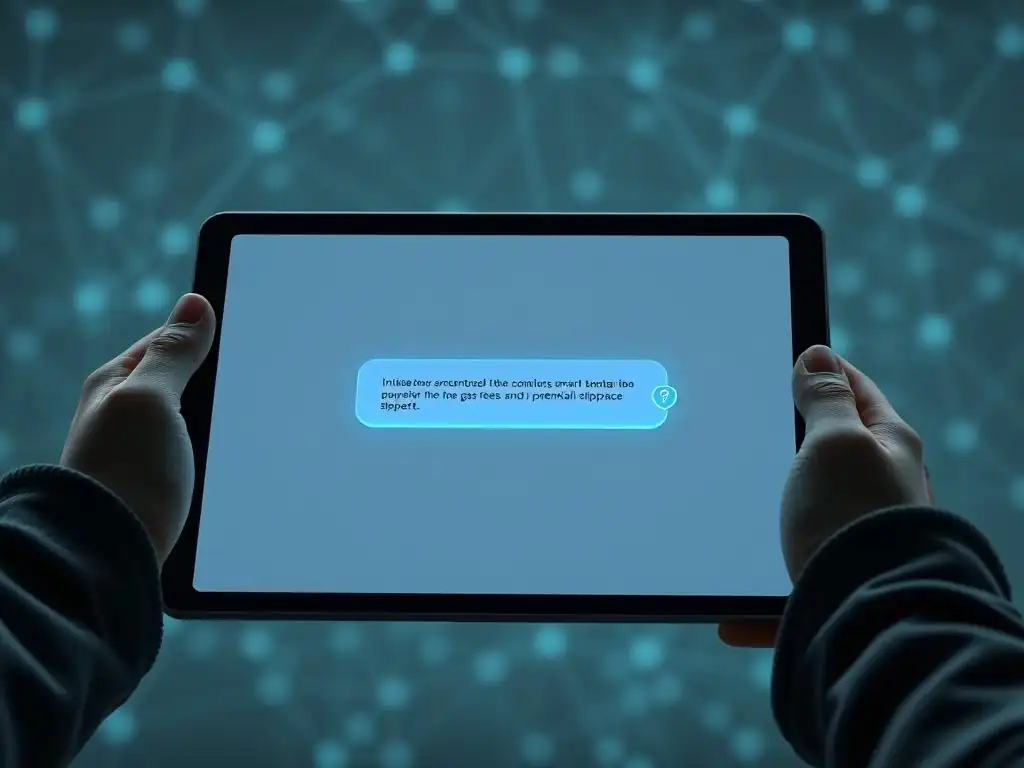
Contextual help and support are vital for empowering users to navigate blockchain applications effectively and resolve issues independently. Providing readily accessible help documentation, FAQs, and tutorials within the application interface allows users to find answers to their questions without leaving the application flow. Contextual help, such as tooltips and inline explanations, provides guidance exactly when and where users need it.
Chatbots and live support channels can offer more direct assistance for complex issues. Building a comprehensive support system that is easily accessible and responsive is crucial for fostering user confidence and satisfaction. Proactive support, such as anticipating potential user pain points and providing preemptive guidance, can further enhance the user experience. Providing robust contextual help and support directly addresses the blockchain user experience challenges solutions related to user frustration and lack of guidance.
Iterative Design and Continuous Improvement Based on User Feedback
Iterative design and continuous improvement based on user feedback are fundamental principles for creating successful blockchain applications. UX design is not a one-time effort but an ongoing process of refinement and optimization. After launching an application, it is crucial to continuously monitor user behavior, gather user feedback, and iterate on the design based on these insights.
Regularly conducting usability testing, analyzing user analytics, and soliciting user feedback through surveys and feedback forms provide valuable data for identifying areas for improvement. A/B testing different design variations can help optimize specific UI elements and workflows. Adopting an iterative design approach ensures that blockchain applications evolve to meet the changing needs and expectations of their users, continuously addressing blockchain user experience challenges solutions and enhancing the overall user experience over time.
Emerging Trends in Blockchain UX: Shaping the Future
Account Abstraction: Enhancing User Control and Flexibility
Account abstraction is an emerging trend poised to revolutionize blockchain UX. Currently, most blockchain accounts are externally owned accounts (EOAs), controlled by private keys. Account abstraction aims to enable smart contract wallets, which are programmable and offer greater flexibility and user control. This allows for features like social recovery of lost keys, customizable transaction logic, and batched transactions, significantly improving usability and security.
Smart contract wallets can abstract away the complexities of private key management by enabling key recovery through trusted guardians or social circles, similar to account recovery in traditional web services. They can also automate transaction processes and enable more sophisticated security features. Account abstraction represents a significant step towards making blockchain more user-friendly and accessible, addressing core blockchain user experience challenges solutions related to key management and account security.
Decentralized Identity (DID) and its Impact on User Authentication
Decentralized Identity (DID) is another emerging trend with the potential to transform blockchain UX, particularly in user authentication. DID allows users to control their own digital identities without relying on centralized intermediaries. Instead of creating separate accounts and passwords for each blockchain application, users can use their DID to securely authenticate and access various services.
DID simplifies the user authentication process, reducing friction and improving user privacy. Users have greater control over their personal data and can selectively share information with applications as needed. DID can also enable self-sovereign identity, empowering users to own and manage their digital identities. The adoption of DID standards will contribute to a more seamless and user-centric blockchain experience, addressing blockchain user experience challenges solutions related to account management and identity verification.
Gamification and Rewards Systems to Incentivize User Engagement
Gamification and rewards systems are increasingly being explored as tools to enhance user engagement and improve blockchain UX. By incorporating game-like elements, such as points, badges, leaderboards, and challenges, blockchain platforms can make interactions more fun, engaging, and rewarding. This can be particularly effective for onboarding new users and encouraging continued participation.
Rewards systems, such as token incentives or loyalty programs, can further incentivize user engagement and adoption. For example, users could earn tokens for completing tasks, contributing to the community, or providing feedback. Gamification and rewards can transform mundane tasks into more enjoyable experiences, making blockchain interactions less intimidating and more appealing to a wider audience. These strategies address blockchain user experience challenges solutions by enhancing user motivation and making blockchain platforms more engaging.
Integrating Blockchain with Familiar Web2 Technologies
Integrating blockchain with familiar Web2 technologies is a crucial trend for bridging the gap between the current web and the decentralized web. Users are accustomed to the user experience of Web2 applications. Making blockchain applications feel more like familiar Web2 experiences can significantly reduce the learning curve and improve user adoption. This involves leveraging existing web technologies and design patterns to create blockchain interfaces that are intuitive and recognizable.
For example, integrating familiar login mechanisms, social media sharing features, and traditional payment gateways into blockchain applications can make them more accessible and user-friendly. Progressively introducing blockchain elements into existing Web2 platforms, rather than requiring users to completely switch to new decentralized systems, can also facilitate smoother adoption. This integration strategy addresses blockchain user experience challenges solutions by leveraging user familiarity and reducing the perceived novelty and complexity of blockchain.
The Rise of UX-Focused Blockchain Development Tools
The emergence of UX-focused blockchain development tools is a positive trend that is making it easier for developers to build user-friendly blockchain applications. These tools provide pre-built UI components, design templates, and UX libraries specifically tailored for blockchain development. They streamline the design process and help developers create more consistent and user-friendly interfaces.
Frameworks and libraries that abstract away blockchain complexities and provide developer-friendly APIs also contribute to improved UX. These tools empower developers to focus on user experience without having to delve into the intricate technical details of blockchain protocols. The growing availability of UX-focused development tools is accelerating the progress of blockchain UX and directly addressing the blockchain user experience challenges solutions by empowering developers to build better user experiences.
Case Studies: Successful Blockchain Platforms with Exceptional User Experience
Uniswap - A Case Study in Simplified UX for Decentralized Exchange
Uniswap stands out as a prime example of a blockchain platform with exceptional user experience, particularly within the decentralized finance (DeFi) space. Uniswap revolutionized decentralized exchanges (DEXs) by simplifying the process of swapping tokens. Its intuitive interface and automated market maker (AMM) model abstract away the complexities of traditional order books, making token swapping accessible to anyone, regardless of their trading experience.
Uniswap's interface is clean, minimalist, and easy to navigate. Users can quickly connect their wallets, select tokens, and execute swaps with just a few clicks. The platform clearly displays transaction details, including estimated gas fees, and provides real-time price updates. Uniswap's success demonstrates the power of simplified UX in driving adoption, even in complex domains like DeFi, providing a model for blockchain user experience challenges solutions in decentralized applications.
MetaMask - A Case Study in Secure and Intuitive Wallet Design
MetaMask is a leading cryptocurrency wallet that has achieved widespread adoption due to its secure and intuitive design. As a browser extension and mobile app, MetaMask seamlessly integrates with web browsers and mobile devices, allowing users to easily interact with blockchain applications and manage their digital assets. Its user-friendly interface and robust security features have made it a popular choice for both novice and experienced blockchain users.
MetaMask simplifies private key management, providing a secure vault for storing keys and enabling users to easily sign transactions. The wallet interface is clean and well-organized, with clear displays of balances, transaction history, and network information. MetaMask's success highlights the importance of secure and intuitive wallet design as a cornerstone of positive blockchain UX, offering valuable insights for blockchain user experience challenges solutions in wallet technology.
Axie Infinity - A Case Study in Gamified User Engagement
Axie Infinity showcases the potential of gamification to drive user engagement in blockchain platforms. This play-to-earn game combines blockchain technology with engaging gameplay, creating a compelling user experience that has attracted millions of players worldwide. Axie Infinity's success demonstrates how gamification can overcome the perceived complexity of blockchain and make it accessible and enjoyable for a mainstream audience.
The game's user interface is visually appealing and easy to navigate, with familiar game mechanics that are intuitive even for users new to blockchain. The play-to-earn model incentivizes user participation and creates a sense of ownership and reward. Axie Infinity's case study provides valuable lessons on leveraging gamification to enhance blockchain UX and address blockchain user experience challenges solutions by making blockchain interactions fun and rewarding.
The Future of Blockchain Platforms: Prioritizing the End-User
The Importance of Accessibility and Inclusivity in Blockchain Design
The future of blockchain platforms hinges on prioritizing accessibility and inclusivity in design. To achieve mainstream adoption, blockchain technology must be accessible to users of all backgrounds, regardless of their technical expertise, socioeconomic status, or geographical location. This means designing platforms that are not only user-friendly but also cater to diverse user needs and preferences.
Accessibility includes considerations for users with disabilities, ensuring that blockchain applications are usable by everyone. Inclusivity means designing for a global audience, considering different languages, cultural contexts, and internet access levels. Blockchain platforms that prioritize accessibility and inclusivity are more likely to reach a wider user base and contribute to a more equitable and decentralized future, directly addressing the ethical dimension of blockchain user experience challenges solutions.
The Convergence of Blockchain and Web3: A User-Centric Vision
The convergence of blockchain and Web3 is driven by a user-centric vision of the internet. Web3 aims to create a decentralized, user-owned, and user-controlled web, built on blockchain technology. User experience is central to the Web3 vision, as the success of Web3 depends on making decentralized technologies accessible and usable for mainstream users. This convergence necessitates a strong focus on UX design to bridge the gap between complex blockchain infrastructure and user-friendly applications.
Web3 initiatives are actively exploring new UX paradigms that empower users, enhance privacy, and promote decentralization without sacrificing usability. Account abstraction, decentralized identity, and user-owned data are key components of this user-centric vision. The future of blockchain and Web3 is intertwined, with user experience serving as the crucial bridge to realizing the potential of a decentralized and user-empowering internet, driving the evolution of blockchain user experience challenges solutions in the context of Web3.
Predictions for the Future of Blockchain User Experience
Looking ahead, several predictions can be made about the future of blockchain user experience. Firstly, simplification will be paramount. Blockchain platforms will continue to abstract away technical complexities, making interactions as seamless and intuitive as traditional web applications. Secondly, mobile-first UX will become the standard. Mobile devices will be the primary access point for blockchain applications, driving a focus on mobile-optimized design.
Thirdly, personalization and customization will increase. Blockchain platforms will offer more personalized experiences tailored to individual user needs and preferences. Fourthly, security UX will evolve. Security measures will become more user-friendly and transparent, building user trust without adding unnecessary friction. Finally, UX research and testing will become integral. User-centered design methodologies and iterative development will be standard practice in blockchain development. These predictions point towards a future where blockchain user experience is significantly enhanced, overcoming current blockchain user experience challenges solutions and enabling mainstream adoption.
Conclusion: The Path to Mainstream Blockchain Adoption Through Enhanced User Experience
Key Takeaways: Improving Blockchain User Experience (UX)
Enhancing blockchain user experience is not merely a desirable improvement, but a critical prerequisite for mainstream adoption. Addressing blockchain user experience challenges solutions is paramount to unlocking the transformative potential of blockchain technology for a wider audience. Key takeaways for improving blockchain UX include:
- Prioritize simplicity and abstraction: Hide technical complexities behind user-friendly interfaces.
- Focus on intuitive design: Apply established UX/UI principles to create easy-to-use applications.
- Enhance security perceptions: Communicate security measures transparently and educate users.
- Leverage scaling solutions: Utilize Layer-2 technologies to improve performance and reduce costs.
- Adopt mobile-first design: Optimize for mobile accessibility and convenience.
- Conduct user research: Base design decisions on user feedback and data.
- Embrace emerging trends: Explore account abstraction, DID, gamification, and Web3 integration.
By focusing on these key areas, the blockchain industry can overcome current UX hurdles and pave the way for a future where blockchain technology is accessible, user-friendly, and seamlessly integrated into everyday life. The path to mainstream blockchain adoption is paved with enhanced user experience.
Frequently Asked Questions
What are some key blockchain user experience challenges that hinder wider adoption?
A major challenge is the complexity of blockchain technology itself, including cryptographic keys and transaction processes. This creates a steep learning curve for new users.
How does poor user experience impact the growth and acceptance of decentralized applications (dApps)?
Poor UX can significantly limit dApp adoption because users are less likely to engage with applications that are difficult to navigate or understand, leading to low user retention.
What are some potential solutions to improve the user experience of blockchain platforms?
Solutions include simplifying interfaces, abstracting away complex technical details, and integrating user-friendly wallets and onboarding processes to provide a smoother experience.
How can enterprise blockchain applications benefit from improved user experience design?
Better UX in enterprise applications can lead to increased efficiency, reduced training costs, and enhanced user satisfaction, ultimately driving greater adoption within organizations.
What role will regulation play in shaping the future of blockchain user experience?
Regulations may influence UX by mandating certain security or privacy features, which could impact the user interface and overall user journey. Compliance with regulations will be essential for mass adoption.
Final Reflection: Embracing Intuition in the Blockchain Revolution
The journey through evaluating user experience on blockchain platforms reveals a critical truth: the future of blockchain adoption hinges on bridging the gap between complex technology and intuitive design. We've explored the challenges and potential solutions, but the core takeaway is that blockchain's transformative power remains locked behind a wall of user-unfriendliness. Overcoming this obstacle is not just about improving interfaces; it's about democratizing access to a technology poised to reshape our world.
The impact of poor blockchain user experience extends far beyond frustrated users. It directly hinders the technology's potential to empower individuals, foster transparency, and revolutionize industries. My own exploration of various dApps has consistently reinforced the need for a human-centered approach, where technology serves the user, not the other way around. Technology is best when it brings people together.
- Matt Mullenweg. This quote encapsulates the essence of what we strive for: a blockchain ecosystem that is inclusive, accessible, and ultimately, beneficial for everyone.
Now, consider the implications of this exploration for your own interactions with technology. How can you advocate for user-centered design in the blockchain space and beyond? How can you demand intuitive interfaces and seamless experiences from the platforms you use? The future of blockchain, and indeed, the future of technology itself, is shaped by our collective commitment to prioritizing the human element. Let us all strive to build a world where technology empowers, not overwhelms, and where the power of blockchain is truly accessible to all.
Okay, here's a potential Call to Action for the end of the web article "Evaluating User Experience: The Future of Blockchain Platforms for End-Users" on Blockchain Trends (blockchaintrends.org):
Unveiling Blockchain's User-Friendly Future!
Thank you for exploring how user experience is shaping the next generation of blockchain platforms. You've gained valuable insights into the importance of intuitive design and accessibility in driving mainstream adoption. Now, it's time to be a part of that future!
Here are some ways you can contribute:
- Actively explore and provide feedback on emerging blockchain platforms. Your voice matters in shaping their development!
- Share this article with fellow tech enthusiasts and spark discussions on improving blockchain UX.
- Consider designing a simplified onboarding process for a blockchain app you use regularly and share your ideas online.
What's one small step you can take today to help make blockchain technology more accessible for everyone?
Leave a Reply