
Exploring the Solana Metaverse Ecosystem: Virtual Worlds and Digital Ownership

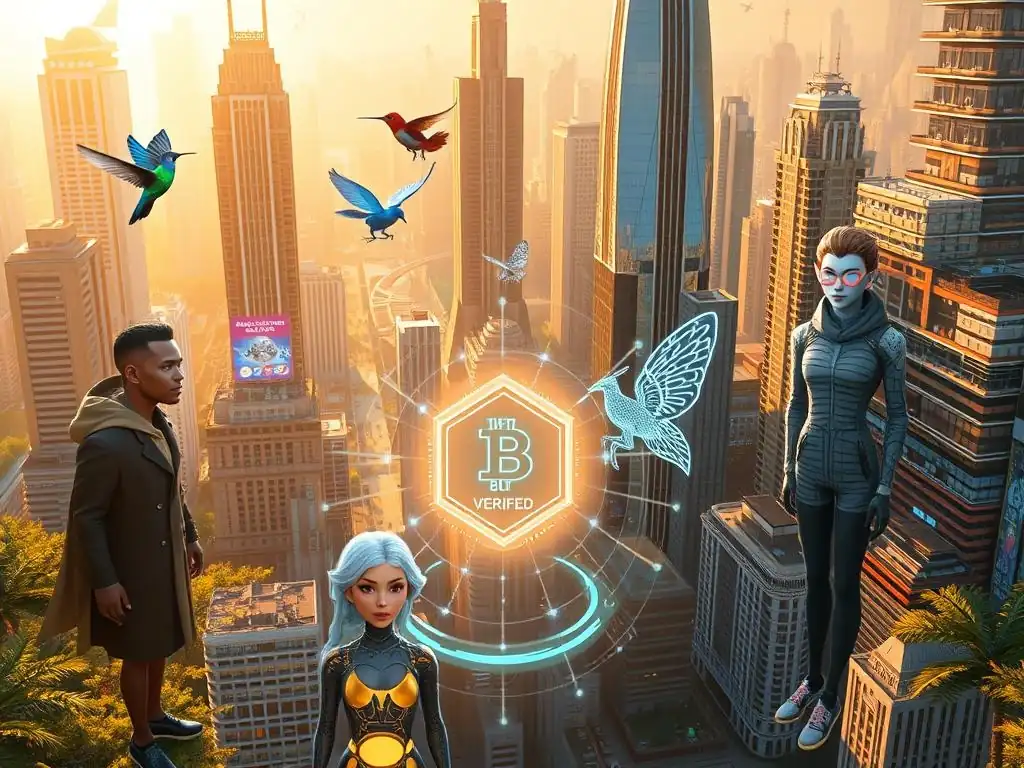
Welcome to Blockchain Trends, your compass in the rapidly evolving world of decentralized technologies. Prepare to journey beyond the hype and discover the real-world applications of blockchain. This week, we're diving deep into the vibrant and innovative Solana metaverse ecosystem, exploring how it's revolutionizing virtual worlds and redefining digital ownership. Intrigued by the possibilities? Read on to uncover the potential shaping the future of the metaverse.
Exploring the Solana Metaverse Ecosystem: Virtual Worlds and Digital Ownership
- Introduction to the Solana Metaverse and Digital Assets
- Solana's Advantages for Metaverse Development
- Key Solana Metaverse Projects and Virtual Worlds
- Digital Ownership in the Solana Metaverse: NFTs and Beyond
- Use Cases for Solana Metaverse Digital Ownership
- The Future of the Solana Metaverse: Challenges and Opportunities
- Investing in the Solana Metaverse: Opportunities and Risks
- Conclusion: Solana's Role in the Evolution of the Metaverse
-
Frequently Asked Questions
- What is the Solana Metaverse Ecosystem, and how does it differ from other metaverse platforms?
- How does the Solana blockchain facilitate digital ownership within its metaverse environments?
- What are some examples of virtual worlds or projects currently being built on the Solana metaverse?
- What are the potential benefits and risks associated with investing in Solana metaverse digital assets?
- How is the Solana metaverse ecosystem being regulated, and what are the implications for users and developers?
- Final Reflection: Embracing the Decentralized Future
- Unleash Your Metaverse Potential on Solana!
Introduction to the Solana Metaverse and Digital Assets
Understanding the Metaverse Landscape on Solana
The metaverse, once a futuristic concept, is rapidly becoming a tangible reality, and Solana is emerging as a significant player in its development. The Solana metaverse is not a single, unified virtual world, but rather a constellation of interconnected platforms and experiences built on the Solana blockchain. This decentralized approach fosters innovation and diverse virtual environments, ranging from immersive gaming worlds to virtual marketplaces and social hubs.
Unlike some metaverse initiatives built on more centralized platforms, the Solana ecosystem leverages the power of blockchain technology to empower users with true digital ownership of their assets within these virtual realms. This foundation is crucial for creating sustainable and user-centric metaverse experiences.
Solana's architecture is particularly well-suited for the demands of the metaverse. Its high throughput and low transaction fees make it an attractive platform for developers and users alike, enabling seamless interactions and economies within virtual worlds. The ecosystem is attracting a growing number of projects, each contributing to the expanding Solana metaverse landscape.
From sophisticated virtual worlds to decentralized applications (dApps) facilitating digital ownership, Solana is becoming a vibrant hub for metaverse innovation. This growth is driven by the increasing recognition of the value proposition of blockchain-based metaverses: user empowerment through digital asset ownership and the potential for new economic models within virtual spaces.
The Rise of Digital Ownership on High-Performance Blockchains
Digital ownership is a paradigm shift in how we interact with the digital world, and high-performance blockchains like Solana are at the forefront of this revolution. Traditionally, digital assets within games or virtual platforms are often controlled by centralized entities. Users might purchase in-game items or virtual land, but they rarely truly own these assets. They are often subject to the platform's terms of service and can be removed or altered at the platform's discretion. Blockchain technology, particularly through Non-Fungible Tokens (NFTs), changes this dynamic.
NFTs on blockchains like Solana provide verifiable proof of ownership for digital assets. This means that when a user acquires an NFT representing a virtual item, they have demonstrable and immutable ownership recorded on the blockchain. High-performance blockchains like Solana are essential for enabling digital ownership in the metaverse because they can handle the high volume of transactions and interactions required for virtual economies to flourish.
The low transaction costs on Solana are also critical, making it economically viable for users to buy, sell, and trade digital assets frequently within metaverse environments. This empowers users with greater control and agency over their digital lives and assets within the Solana metaverse.
Solana's Advantages for Metaverse Development
High Throughput and Low Latency: Key to Metaverse Performance
For a metaverse to feel truly immersive and engaging, it requires high throughput and low latency. Imagine a virtual concert in the metaverse: thousands, or even millions, of users might be interacting simultaneously, requiring the platform to process a massive volume of transactions and interactions in real-time. Solana's blockchain is designed to handle this level of demand. While other blockchains might struggle with network congestion and slow transaction speeds during peak metaverse activity, Solana boasts significantly higher transaction throughput and lower block times.
Solana's theoretical throughput can reach up to 65,000 transactions per second (TPS), far exceeding that of many older blockchain platforms. This high throughput is crucial for processing the constant stream of actions within a bustling metaverse, such as player movements, asset trades, and social interactions. Low latency, the delay between an action and its effect, is equally important for a seamless metaverse experience.
Solana's fast block times, typically around 400 milliseconds, contribute to low latency, ensuring that actions within the metaverse feel responsive and immediate. This combination of high throughput and low latency makes Solana a powerful infrastructure for building performant and engaging metaverse experiences.
Scalability Solutions for a Growing Metaverse Population on Solana
As the metaverse grows in popularity and user base, scalability becomes paramount. A metaverse platform needs to be able to accommodate an increasing number of users and transactions without compromising performance or increasing costs prohibitively. Solana addresses scalability through a combination of innovative technologies, including Proof of History (PoH), Turbine, and Gulf Stream. Proof of History acts as a decentralized clock, allowing transactions to be ordered chronologically without relying on validators to constantly communicate with each other, significantly increasing efficiency.
Turbine optimizes transaction propagation across the network, breaking down transaction data into smaller packets that are transmitted more efficiently, further enhancing throughput. Gulf Stream pre-forwards transactions to validators before the previous block is finalized, reducing confirmation times and improving overall network speed. These technologies, working in concert, enable Solana to scale effectively to meet the demands of a rapidly expanding metaverse population. This scalability ensures that the Solana metaverse can grow to accommodate millions of users without sacrificing the speed, responsiveness, and affordability that are crucial for mass adoption.
Cost-Effective Transactions: Lowering the Barrier to Entry for Solana Metaverse Users
High transaction fees, often referred to as "gas fees," can be a significant barrier to entry for users in blockchain-based platforms, including metaverses. On some blockchains, these fees can fluctuate wildly and become prohibitively expensive, especially for frequent interactions within a virtual world, such as trading in-game items or participating in metaverse economies. Solana is designed to offer significantly lower transaction fees compared to many other blockchains, making it a more accessible and attractive platform for metaverse users and developers.
The average transaction fee on Solana is typically fractions of a cent, often quoted as being around $0.00025 per transaction. This cost-effectiveness is a major advantage for metaverse applications, where users might engage in numerous small transactions throughout their virtual experiences.
Lower fees reduce the financial friction associated with participating in metaverse economies, making it viable for a wider range of users to buy, sell, and trade digital assets, play play-to-earn games, and engage in other economic activities within the Solana metaverse. This accessibility fosters a more inclusive and vibrant metaverse ecosystem on Solana, attracting both users and developers seeking a cost-effective platform for their virtual world endeavors.
Key Solana Metaverse Projects and Virtual Worlds
Star Atlas: A Deep Dive into a Grand Strategy Space Metaverse
Star Atlas stands out as one of the most ambitious and visually stunning metaverse projects built on Solana. It is a grand strategy space exploration and combat game set in a futuristic universe in 2620. Players can explore a vast galaxy, mine resources, build spaceships, engage in political intrigue, and participate in interstellar battles. Star Atlas leverages the power of Unreal Engine 5 to deliver breathtaking graphics and immersive gameplay, pushing the boundaries of visual fidelity in blockchain gaming.
Within the Star Atlas metaverse, digital ownership is central to the experience. Players own their spaceships, land, resources, and in-game assets as NFTs on the Solana blockchain. This true ownership empowers players to control their assets and participate in a player-driven economy. Star Atlas envisions a complex and dynamic metaverse economy where players can trade resources, rent out spaceships, form guilds, and even establish political factions. The project has garnered significant attention and investment due to its ambitious scope, high-fidelity graphics, and commitment to digital ownership, positioning it as a flagship project within the Solana metaverse ecosystem.
Aurory: Exploring a Play-to-Earn JRPG and its Digital Economy
Aurory is another prominent metaverse project on Solana, offering a charming and engaging play-to-earn experience inspired by Japanese Role-Playing Games (JRPGs). Players explore a vibrant world called Antik, collect creatures known as Nefties, and engage in turn-based battles. Aurory distinguishes itself with its appealing art style, accessible gameplay, and focus on building a robust and sustainable play-to-earn economy.
In Aurory, Nefties are represented as NFTs, allowing players to own, trade, and battle with their digital creatures. The game incorporates various play-to-earn mechanics, rewarding players for their engagement and skill. Players can earn AURY tokens, Aurory's native cryptocurrency, by participating in battles, completing quests, and contributing to the game's ecosystem.
Aurory is designed to be both fun and rewarding, attracting a broad audience of gamers and crypto enthusiasts. Its focus on accessible gameplay and a well-designed play-to-earn model makes it a notable example of how blockchain technology can enhance the gaming experience and empower players within the Solana metaverse.
Comparing Popular Solana Metaverse Platforms: Features and Functionality
Beyond Star Atlas and Aurory, the Solana metaverse ecosystem hosts a growing array of platforms, each with unique features and functionalities. Projects like Portals offer customizable metaverse spaces for communities and brands, focusing on social interaction and virtual events. Genopets combines move-to-earn mechanics with Tamagotchi-style pet raising, integrating physical activity with digital asset ownership within the metaverse. These examples highlight the diversity and innovation within the Solana metaverse landscape.
Comparing these platforms reveals different approaches to metaverse development. Some prioritize immersive gaming experiences with complex economies, like Star Atlas and Aurory. Others focus on social interaction and community building, such as Portals. Still others explore novel mechanics like move-to-earn, as seen in Genopets. Functionally, these platforms leverage Solana's capabilities for fast and affordable transactions to enable various metaverse activities, from trading NFTs and participating in virtual economies to attending virtual events and engaging in social interactions. This diverse ecosystem showcases the versatility of Solana as a metaverse platform and the range of experiences being built upon it.
Digital Ownership in the Solana Metaverse: NFTs and Beyond
Solana NFTs: Powering Digital Collectibles and In-Game Assets
Non-Fungible Tokens (NFTs) are the cornerstone of digital ownership in the Solana metaverse. Solana's blockchain is well-suited for NFTs due to its low transaction fees and high throughput, making it practical for minting, trading, and utilizing NFTs within metaverse environments. Solana NFTs represent a wide range of digital assets, from in-game items like weapons and characters to virtual land, avatars, digital art, and collectibles within various metaverse platforms.
The Solana NFT ecosystem has witnessed significant growth, with marketplaces like Magic Eden and Solanart becoming popular destinations for trading Solana-based NFTs. These marketplaces facilitate the discovery, buying, and selling of digital assets within the Solana metaverse. The low gas fees on Solana make it economically feasible to trade NFTs frequently, fostering a vibrant and active NFT market within the ecosystem. This robust NFT infrastructure empowers users with true digital ownership within the Solana metaverse, allowing them to control and monetize their virtual assets.
Fractionalized NFTs are emerging as an innovative way to expand access to and ownership of high-value digital assets within the Solana metaverse. Fractionalization involves dividing an NFT into smaller, tradable fractions. This allows multiple individuals to own a share of a single NFT, lowering the barrier to entry for owning valuable digital assets like virtual land or rare in-game items that might be prohibitively expensive to acquire individually.
Within the Solana metaverse, fractionalized NFTs can enable shared ownership of virtual land, allowing communities or groups of players to collectively own and manage virtual spaces. They can also facilitate shared ownership of high-value in-game assets, enabling collaborative gameplay and economic models. Platforms are emerging on Solana that specialize in fractionalizing NFTs, making it easier for users to participate in shared ownership models within metaverse environments. This innovation democratizes access to valuable digital assets and opens up new possibilities for collaborative ownership and governance within the Solana metaverse.
Managing and Securing Your Digital Assets on the Solana Blockchain
Securing and managing digital assets is crucial for users participating in the Solana metaverse and embracing digital ownership. Users need secure wallets to store their Solana tokens and NFTs. Popular Solana wallets include Phantom, Solflare, and Sollet, each offering varying features and levels of security. It is essential for users to understand best practices for wallet security, such as securely storing seed phrases, enabling two-factor authentication, and being cautious of phishing attempts.
Beyond wallet security, managing digital assets within the Solana metaverse involves understanding how to interact with different metaverse platforms and NFT marketplaces. Users need to learn how to connect their wallets to these platforms, browse and transact NFTs, and manage their digital asset portfolios. Tools and platforms are being developed to help users track and manage their digital assets across different Solana metaverse projects, simplifying the process of navigating and participating in the growing ecosystem. Proper management and security practices are paramount for users to fully benefit from digital ownership and confidently engage within the Solana metaverse.
Use Cases for Solana Metaverse Digital Ownership
Gaming and Play-to-Earn Opportunities in Solana Metaverses
Gaming is a leading use case for digital ownership in the Solana metaverse, with play-to-earn models gaining significant traction. Solana's low transaction fees and high throughput make it ideal for supporting the microtransactions and frequent interactions inherent in blockchain-based games. Play-to-earn games on Solana empower players to earn cryptocurrency and NFTs by playing games, contributing to game ecosystems, and engaging with other players.
Games like Aurory and Star Atlas exemplify the play-to-earn potential within the Solana metaverse. Players can earn tokens and NFTs through gameplay, which they can then trade, sell, or use within the game. This creates new economic opportunities for players and aligns incentives between game developers and players. The rise of play-to-earn gaming on Solana is transforming the gaming industry, shifting from a purely entertainment-focused model to one where players can also earn real-world value through their gaming activities. This is attracting a new wave of gamers and crypto enthusiasts to the Solana metaverse.
Virtual Real Estate and Land Ownership on Solana
Virtual real estate and land ownership are emerging as significant use cases within the Solana metaverse, mirroring the concepts of real-world property ownership in virtual spaces. Metaverse platforms on Solana offer virtual land as NFTs, allowing users to own, develop, and monetize virtual plots. These virtual lands can be used for various purposes, such as building virtual storefronts, hosting virtual events, creating social hubs, or developing interactive experiences.
Projects like Portals and other metaverse platforms on Solana feature virtual land sales, allowing users to acquire digital plots. The value of virtual land in the Solana metaverse is driven by factors similar to real-world real estate, including location, scarcity, and potential for development and traffic. Virtual land ownership in the Solana metaverse offers opportunities for investment, creativity, and building virtual businesses and communities. As the metaverse evolves, virtual real estate is expected to become an increasingly important asset class within the Solana ecosystem.
Digital Art and Collectibles: Showcasing Creativity on the Solana Blockchain
Digital art and collectibles are thriving within the Solana metaverse, leveraging NFTs to establish provenance and ownership of digital creations. Solana's low fees and fast transactions have made it a popular platform for artists and collectors alike to mint, trade, and showcase digital art NFTs. The Solana NFT art scene is diverse and vibrant, encompassing various styles and mediums, from generative art and pixel art to 3D animations and interactive digital installations.
Platforms like Magic Eden and Solanart host thriving marketplaces for Solana-based digital art NFTs. Artists can directly connect with collectors, bypassing traditional intermediaries and retaining greater control over their creations. Collectors can acquire unique digital artworks, support artists, and build digital art collections. The Solana metaverse provides a fertile ground for digital artists to experiment with new forms of creative expression and for collectors to engage with and appreciate digital art in innovative ways. Digital ownership through NFTs is empowering artists and collectors within the Solana ecosystem and beyond.
The Future of the Solana Metaverse: Challenges and Opportunities
Interoperability and Cross-Chain Compatibility in the Metaverse
Interoperability and cross-chain compatibility are critical challenges and opportunities for the future of the Solana metaverse and the broader metaverse ecosystem. Currently, metaverses tend to be siloed environments, with limited interaction or asset transfer between different platforms. Achieving interoperability, allowing users and assets to seamlessly move between different metaverses, is crucial for creating a truly interconnected and open metaverse experience.
Cross-chain compatibility, enabling Solana-based metaverse platforms to interact with other blockchains and metaverse ecosystems, is also essential. Solutions like bridges and cross-chain protocols are being developed to facilitate interoperability and cross-chain asset transfers. The future of the metaverse likely involves a more interconnected landscape where users can move freely between different virtual worlds, bringing their avatars and digital assets with them. Overcoming the challenges of interoperability and cross-chain compatibility will unlock the full potential of the metaverse and create a more seamless and user-centric virtual experience.
Addressing Scalability and Security Concerns in Solana Metaverses
While Solana offers significant scalability advantages, ongoing development and optimization are crucial to address potential scalability and security concerns as the Solana metaverse continues to grow. As metaverse platforms become more complex and user bases expand, ensuring continued high performance and network stability is paramount. Solana's developers are continuously working on network upgrades and optimizations to enhance scalability and resilience.
Security is another critical consideration for the Solana metaverse. As digital assets within the metaverse become more valuable, security vulnerabilities and exploits become more attractive targets. Robust security measures, both at the blockchain level and within individual metaverse platforms, are essential to protect user assets and data. Ongoing research and development in blockchain security, as well as best practices for metaverse platform security, are crucial for building a safe and trustworthy Solana metaverse ecosystem. Addressing scalability and security proactively will be vital for the long-term success and adoption of the Solana metaverse.
The Role of DAOs in Shaping the Solana Metaverse Ecosystem
Decentralized Autonomous Organizations (DAOs) are poised to play a significant role in shaping the future of the Solana metaverse ecosystem. DAOs are community-governed organizations that operate based on smart contracts, enabling decentralized decision-making and community ownership. Within the Solana metaverse, DAOs can be used to govern metaverse platforms, manage virtual land, and control in-game economies, empowering users and communities to have a direct say in the development and direction of these virtual worlds.
Several Solana metaverse projects are exploring the integration of DAOs to decentralize governance and empower their communities. DAOs can enable token holders to vote on proposals, allocate resources, and shape the rules and policies of metaverse platforms. This decentralized governance model aligns with the ethos of blockchain technology and can foster more transparent, equitable, and user-centric metaverse ecosystems. The increasing adoption of DAOs within the Solana metaverse is likely to lead to more community-driven and decentralized virtual worlds in the future.
Investing in the Solana Metaverse: Opportunities and Risks
Evaluating Metaverse Projects and Digital Assets on Solana
Investing in the Solana metaverse involves evaluating both metaverse projects and digital assets within these virtual worlds. When assessing Solana metaverse projects, consider factors such as the project's team, vision, technology, community, and tokenomics. Research the project's whitepaper, roadmap, and community sentiment to understand its potential and risks. Look for projects with experienced teams, clear value propositions, and active communities.
Evaluating digital assets within the Solana metaverse, such as NFTs and virtual land, requires understanding their utility, scarcity, and demand within the specific metaverse platform and the broader ecosystem. Consider the project's long-term vision and the potential for the digital asset to appreciate in value over time. Analyzing market trends, trading volumes, and community interest can provide insights into the potential of specific digital assets within the Solana metaverse. Thorough research and due diligence are essential before investing in any metaverse project or digital asset on Solana.
Understanding the Volatility of the Solana Metaverse Market
The Solana metaverse market, like the broader cryptocurrency and NFT markets, is characterized by volatility. The value of metaverse tokens and digital assets can fluctuate significantly in short periods, influenced by market sentiment, project developments, and broader economic trends. Investors in the Solana metaverse should be prepared for potential price swings and understand the inherent risks associated with this emerging market.
Volatility presents both risks and opportunities. While price drops can lead to losses, they can also create buying opportunities for long-term investors. It is crucial to manage risk by diversifying investments, investing only what you can afford to lose, and avoiding over-leveraging. Understanding market cycles and adopting a long-term perspective can help navigate the volatility of the Solana metaverse market. Investors should conduct thorough research, stay informed about market developments, and approach metaverse investments with caution and realistic expectations.
Long-Term Potential of Digital Ownership on the Solana Blockchain
Despite the volatility and nascent stage of the Solana metaverse market, the long-term potential of digital ownership on the Solana blockchain remains significant. The fundamental shift towards digital ownership, empowered by blockchain technology and NFTs, is likely to reshape how we interact with the digital world and participate in virtual economies. Solana's technological advantages, including high throughput, low fees, and scalability, position it as a leading platform for realizing this potential.
As the metaverse evolves and adoption grows, the value of digital assets and virtual experiences is expected to increase. Solana's ecosystem is attracting innovative metaverse projects and a growing community of users and developers. The long-term potential of the Solana metaverse lies in its ability to empower users with true digital ownership, create new economic opportunities, and foster immersive and engaging virtual experiences. While the market is still young and evolving, the underlying trends and technological advancements suggest a promising future for digital ownership on the Solana blockchain and the Solana metaverse ecosystem.
Conclusion: Solana's Role in the Evolution of the Metaverse
The Impact of Solana on the Future of Virtual Worlds
Solana is playing a pivotal role in shaping the future of virtual worlds and the evolution of the metaverse. Its high-performance blockchain infrastructure, characterized by high throughput, low latency, and cost-effective transactions, provides a robust foundation for building immersive, scalable, and user-friendly metaverse experiences. Solana is enabling the creation of virtual worlds that can accommodate large numbers of users, support complex economies, and offer seamless interactions.
The Solana ecosystem is fostering innovation in metaverse development, attracting a diverse range of projects spanning gaming, social interaction, virtual real estate, and digital art. Solana's commitment to digital ownership through NFTs is empowering users with greater control and agency within virtual worlds, paving the way for new economic models and user-centric metaverse experiences. Solana's impact extends beyond technology, fostering a vibrant community of developers, creators, and users who are collectively shaping the future of virtual worlds.
Solana Metaverse: A New Frontier for Digital Ownership and Innovation
The Solana metaverse represents a new frontier for digital ownership and innovation. It is a dynamic and rapidly evolving ecosystem where blockchain technology is being used to create immersive virtual worlds and empower users with true ownership of their digital assets. Solana's technological advantages and vibrant community are driving innovation in metaverse development and pushing the boundaries of what is possible in virtual spaces.
As the Solana metaverse continues to grow, it promises to unlock new opportunities for creativity, economic participation, and social interaction in the digital realm. Digital ownership within the Solana metaverse is not just about owning virtual assets; it is about empowering users, fostering new forms of digital expression, and building a more open and user-centric metaverse. The Solana metaverse is at the forefront of this evolution, offering a glimpse into the future of virtual worlds and the transformative potential of digital ownership.
Frequently Asked Questions
What is the Solana Metaverse Ecosystem, and how does it differ from other metaverse platforms?
The Solana metaverse ecosystem leverages the Solana blockchain's high speed and low costs to offer a more scalable and efficient virtual world experience. It stands apart because of its focus on decentralized digital ownership and seamless integration with DeFi applications.
How does the Solana blockchain facilitate digital ownership within its metaverse environments?
Solana enables digital ownership through NFTs (Non-Fungible Tokens), which represent ownership of virtual assets within the metaverse. These NFTs are secured on the Solana blockchain, providing verifiable scarcity and transferability of digital assets.
What are some examples of virtual worlds or projects currently being built on the Solana metaverse?
Examples include Star Atlas, a space-themed metaverse, and Aurory, a play-to-earn game. These projects utilize Solana's infrastructure to offer unique experiences centered around digital asset ownership and trading.
What are the potential benefits and risks associated with investing in Solana metaverse digital assets?
Benefits include the potential for high returns from appreciating digital assets and participation in decentralized economies. Risks involve market volatility, regulatory uncertainty, and the nascent nature of the metaverse.
How is the Solana metaverse ecosystem being regulated, and what are the implications for users and developers?
Regulation is still evolving, but there's increasing scrutiny on digital asset platforms and NFT projects. This could impact user privacy, developer responsibilities, and the overall legal framework surrounding the Solana metaverse.
Final Reflection: Embracing the Decentralized Future
The exploration of the Solana metaverse ecosystem reveals more than just virtual worlds; it unveils a paradigm shift in digital ownership and user empowerment. The rapid growth and innovative applications within this space demonstrate a clear demand for decentralized, community-driven experiences, challenging traditional notions of ownership and control in the digital realm.
The Solana metaverse, with its focus on digital ownership, has profoundly influenced the way we perceive value and interaction online. This shift towards decentralized ownership is not just a technological advancement; it's a cultural revolution, empowering individuals and fostering a more equitable digital landscape. The metaverse is coming, and it will affect every product, company, and person that we touch.
- Matthew Ball, Metaverse Expert. This quote encapsulates the transformative potential of these virtual worlds and the importance of understanding the principles of digital ownership that underpin them.
As we stand on the cusp of a truly immersive digital future, let us embrace the opportunities presented by the Solana metaverse and its commitment to digital ownership. Consider how you can leverage these technologies to create, connect, and contribute to a more decentralized and empowering digital world. The future of the metaverse is not just about technology; it's about the values we embed within it. Let's build a future where digital ownership truly belongs to the people.
Unleash Your Metaverse Potential on Solana!
Thank you for exploring the Solana ecosystem for virtual worlds and digital ownership. We hope you've gained valuable insights into this innovative blockchain space. Now, it's time to take the next step and become an active participant in the Solana metaverse revolution!
Here are some actions you can take right now:
- Explore a Solana-based virtual world platform: Discover platforms like Star Atlas or Portals to experience firsthand the possibilities of digital ownership and immersive environments. This is your first step to engaging with the metaverse.
- Join the blockchain community: Participate in our social media channels to share your thoughts, discuss insights, ask questions, and stay updated with the latest news about Solana.
- Start a personal project: If you're a developer, experiment with Solana by developing your own virtual assets, environments, or experiences within the ecosystem.
Are you ready to create your first digital asset on Solana and help shape the future of the metaverse?
Leave a Reply