
Gaming's Next Level: Blockchain Integration with Ethereum, Polkadot, and Cosmos

Welcome to Blockchain Trends, your compass in the rapidly evolving world of decentralized technology!
Intrigued by how blockchain is revolutionizing industries beyond just cryptocurrency? Dive in with us as we explore DeFi, enterprise solutions, and the regulatory landscape shaping the future. This week, we're leveling up with an in-depth look at the blockchain gaming ecosystem growth, comparing the strengths of Ethereum, Polkadot, and Cosmos in this exciting space. What advantages do each bring to the table? Let's unlock the potential together!
- Blockchain Gaming: Integrating Ethereum, Polkadot, and Cosmos
- Ethereum in Blockchain Gaming
- Polkadot's Interoperability and Scalability for Gaming
- Cosmos: Sovereign Gaming Zones with IBC
- Ethereum vs. Polkadot vs. Cosmos: A Comparison
- Real-World Examples: Blockchain Games
- The Future of Blockchain Gaming: Trends and Predictions
- Developing Blockchain Games: Key Considerations
-
Frequently Asked Questions
- How are Ethereum, Polkadot, and Cosmos contributing to the blockchain gaming ecosystem growth?
- What are the primary benefits of integrating blockchain technology into gaming?
- What are some examples of blockchain gaming applications beyond just cryptocurrency integration?
- What are the biggest challenges facing the blockchain gaming ecosystem growth?
- How might regulations impact the future of blockchain gaming ecosystem growth?
- Final Reflection: Embracing the Decentralized Gaming Frontier
- Embark on Your Blockchain Gaming Adventure!
Blockchain Gaming: Integrating Ethereum, Polkadot, and Cosmos
The Convergence of Gaming and Blockchain
The intersection of gaming and blockchain technology represents a paradigm shift in how digital entertainment is created, consumed, and monetized. Initially met with skepticism, blockchain's potential to revolutionize gaming is now increasingly recognized and realized. This convergence is not merely about integrating cryptocurrencies into games; it's about leveraging blockchain's core attributes—decentralization, transparency, and immutability—to fundamentally alter game economies, player ownership, and the very nature of game worlds.
As players spend countless hours and significant sums within virtual environments, the demand for true digital ownership and control over in-game assets has surged. Blockchain offers a solution by enabling the creation of unique, verifiable digital items represented as Non-Fungible Tokens (NFTs), fostering a new era of player empowerment and economic opportunity within games.
The growth of the blockchain gaming ecosystem is being driven by several factors. Firstly, gamers are increasingly seeking more tangible value for their time and investment in games. Traditional gaming models often leave players with no real ownership of in-game assets, which can disappear if a game shuts down.
Blockchain-based games, conversely, offer players the ability to own, trade, and even earn from their in-game items, creating a more engaging and rewarding experience. Secondly, developers are exploring blockchain to create new forms of gameplay, enhanced security, and innovative monetization strategies. The potential for decentralized autonomous organizations (DAOs) to govern game worlds and community-driven development is also attracting significant interest, promising a future where games are more collaborative and player-centric.
Why Blockchain is Transforming Gaming
Blockchain technology's transformative power in gaming stems from its ability to address several long-standing limitations of traditional gaming models. One of the most significant changes is the introduction of true digital ownership through NFTs. Unlike traditional in-game items which are controlled by game developers and exist solely within the game's ecosystem, NFTs on a blockchain grant players verifiable ownership of their digital assets.
This ownership extends beyond a single game, potentially allowing assets to be used across different games or platforms within the same blockchain ecosystem, creating a more interconnected and open metaverse. The implications for in-game economies are profound, as players can freely trade, sell, and lend their assets in open marketplaces, fostering player-driven economies and new forms of income generation.
Furthermore, blockchain enhances game security and transparency. By recording transactions on a distributed ledger, blockchain ensures that in-game asset ownership and transactions are transparent, immutable, and auditable. This reduces the risks of fraud, cheating, and centralized control that plague traditional online games.
Smart contracts, self-executing agreements coded on the blockchain, automate game mechanics, asset distribution, and rewards, ensuring fairness and predictability in gameplay. For example, smart contracts can automate the distribution of tournament prizes or manage the scarcity of rare in-game items, fostering trust and confidence within the gaming community. This increased trust and transparency, combined with the potential for player ownership and new economic models, are driving the rapid expansion of the blockchain gaming ecosystem and attracting both players and developers to explore its vast potential.
Ethereum in Blockchain Gaming
Ethereum's Smart Contracts for In-Game Assets
Ethereum, the pioneering platform for smart contracts, has become a cornerstone of the blockchain gaming revolution. Its robust and mature ecosystem provides the infrastructure necessary to create complex and decentralized gaming experiences. Smart contracts on Ethereum are the engine that drives the functionality of many blockchain games, enabling the creation, management, and trading of in-game assets in a secure and transparent manner.
These contracts define the rules of ownership, scarcity, and utility for digital items, ensuring that players have verifiable control over their virtual possessions. For example, a smart contract can dictate the number of unique swords available in a game, how they can be earned or purchased, and the conditions under which they can be traded or sold.
The versatility of Ethereum's smart contract capabilities allows developers to implement a wide range of gaming mechanics. From simple collectible card games to complex virtual worlds, smart contracts can manage everything from player inventories and character attributes to game logic and economic systems.
The Ethereum Virtual Machine (EVM), the runtime environment for smart contracts, ensures that these contracts are executed consistently across the network, providing a reliable and predictable platform for game development. The widespread adoption of Ethereum also means a large community of developers, tools, and resources are readily available, making it an attractive choice for both established game studios and independent creators looking to enter the blockchain gaming space.
ERC-721 and ERC-1155: NFTs on Ethereum
Ethereum's ERC-721 and ERC-1155 standards have been instrumental in popularizing NFTs and their application in gaming. ERC-721 is the standard for unique NFTs, where each token represents a distinct digital asset, such as a unique character, a rare weapon, or a piece of virtual land. This standard is ideal for items where individuality and scarcity are paramount. Games like CryptoKitties, one of the earliest and most famous examples, utilized ERC-721 to represent unique digital cats, each with distinct traits and collectible value. The success of ERC-721 demonstrated the potential of NFTs to create truly unique and tradable in-game assets.
ERC-1155, on the other hand, is a multi-token standard that allows for the efficient creation of both fungible and non-fungible tokens within a single contract. This standard is particularly useful for games with a large number of items, where some items might be unique (NFTs) and others might be semi-fungible or fungible (like in-game currency or common resources). For instance, a game might use ERC-1155 to represent both unique hero characters (NFTs) and common potions or gold coins (fungible tokens) within the same smart contract.
This significantly reduces gas costs and simplifies the management of diverse in-game assets. The flexibility and efficiency of ERC-1155 have made it a popular choice for more complex blockchain games seeking to manage a wide array of digital items.
Scalability Challenges and Solutions for Ethereum Games
Despite its strengths, Ethereum has faced scalability challenges that impact blockchain gaming. The original Ethereum network, often referred to as Layer-1, can process a limited number of transactions per second (TPS), typically around 15-30 TPS.
This limited throughput can lead to network congestion and high transaction fees (gas fees), especially during periods of high demand, which can be problematic for games that require frequent and low-cost transactions, such as real-time strategy games or massively multiplayer online games (MMORPGs). High gas fees can deter players from trading in-game assets or participating in on-chain activities, hindering the growth of the blockchain gaming ecosystem on Ethereum Layer-1.
To address these scalability issues, various Layer-2 scaling solutions have emerged for Ethereum. These solutions, such as Polygon, Optimism, and Arbitrum, operate on top of the main Ethereum chain and process transactions off-chain, significantly increasing transaction throughput and reducing gas fees. Polygon, for example, is a popular Layer-2 scaling solution that provides a faster and cheaper environment for Ethereum-based games.
By migrating game logic and asset management to Layer-2 solutions, developers can overcome the scalability limitations of Ethereum Layer-1, enabling smoother gameplay experiences and more affordable in-game transactions. The ongoing development and adoption of Layer-2 solutions are crucial for the continued growth and mainstream adoption of blockchain gaming on Ethereum.
Polkadot's Interoperability and Scalability for Gaming
Parachains and Blockchain Game Development
Polkadot offers a unique architecture that addresses scalability and interoperability challenges in blockchain gaming through its parachain system. Parachains are independent blockchains that run in parallel and connect to Polkadot's central Relay Chain, which provides shared security and facilitates interoperability. This architecture allows for the creation of specialized parachains optimized for specific use cases, including gaming. Game developers can build their own parachains tailored to the unique requirements of their games, such as high transaction throughput, low latency, and custom governance models. This dedicated infrastructure allows for greater flexibility and control compared to building on a general-purpose blockchain.
The parachain model enables horizontal scalability, meaning that as more parachains are added to the Polkadot network, the overall transaction processing capacity of the network increases. This is a significant advantage for gaming, where scalability is crucial to support a large number of players and in-game transactions.
Furthermore, parachains can be customized to use different consensus mechanisms and governance structures, allowing game developers to fine-tune their blockchain environment to best suit their game design and community needs. For instance, a game might choose a faster consensus mechanism optimized for real-time interactions or implement a DAO-based governance system for community involvement in game development decisions.
Cross-Chain Gaming with Polkadot
Polkadot's inherent interoperability is a key differentiator for blockchain gaming, enabling seamless cross-chain interactions between different game ecosystems and blockchain networks. Through Polkadot's Cross-Consensus Messaging (XCM) format, parachains can communicate and exchange information and assets with each other.
This opens up possibilities for creating interconnected game worlds where players can move assets and identities across different games running on separate parachains within the Polkadot ecosystem. Imagine a scenario where a player earns a rare sword in one game on a Polkadot parachain and can then use that same sword in another game running on a different parachain, fostering a more connected and expansive gaming metaverse.
This cross-chain functionality extends beyond games within the Polkadot ecosystem. Bridges can be built to connect Polkadot parachains to other blockchain networks, such as Ethereum or Cosmos, enabling even broader interoperability. This means that game assets and players could potentially interact across different blockchain platforms, breaking down silos and creating a more unified blockchain gaming landscape. The ability to move assets and data seamlessly between different blockchains enhances the utility and value of in-game items and creates new opportunities for collaboration and innovation across the blockchain gaming industry.
Polkadot's Advantages for Game Developers
Polkadot offers several distinct advantages for game developers looking to build blockchain games. Firstly, its parachain architecture provides scalability and customization options that are not readily available on other platforms. Developers can create dedicated parachains tailored to their game's specific needs, optimizing for performance, cost, and governance. This level of control allows for the creation of more sophisticated and scalable gaming experiences. Secondly, Polkadot's focus on interoperability enables cross-chain functionality, opening up possibilities for interconnected game worlds and asset portability across different blockchain ecosystems. This fosters a more open and collaborative environment for blockchain gaming.
Furthermore, Polkadot's ecosystem is rapidly growing, with a vibrant community of developers and projects building on the platform. The Substrate framework, Polkadot's blockchain development kit, provides a modular and flexible toolkit for building parachains and blockchain applications. Substrate simplifies the development process and reduces the barriers to entry for game developers wanting to build on Polkadot. The combination of scalability, interoperability, customization, and a strong development community makes Polkadot an attractive platform for the next generation of blockchain games seeking to push the boundaries of decentralized gaming experiences.
Cosmos: Sovereign Gaming Zones with IBC
Cosmos SDK for Dedicated Gaming Blockchains
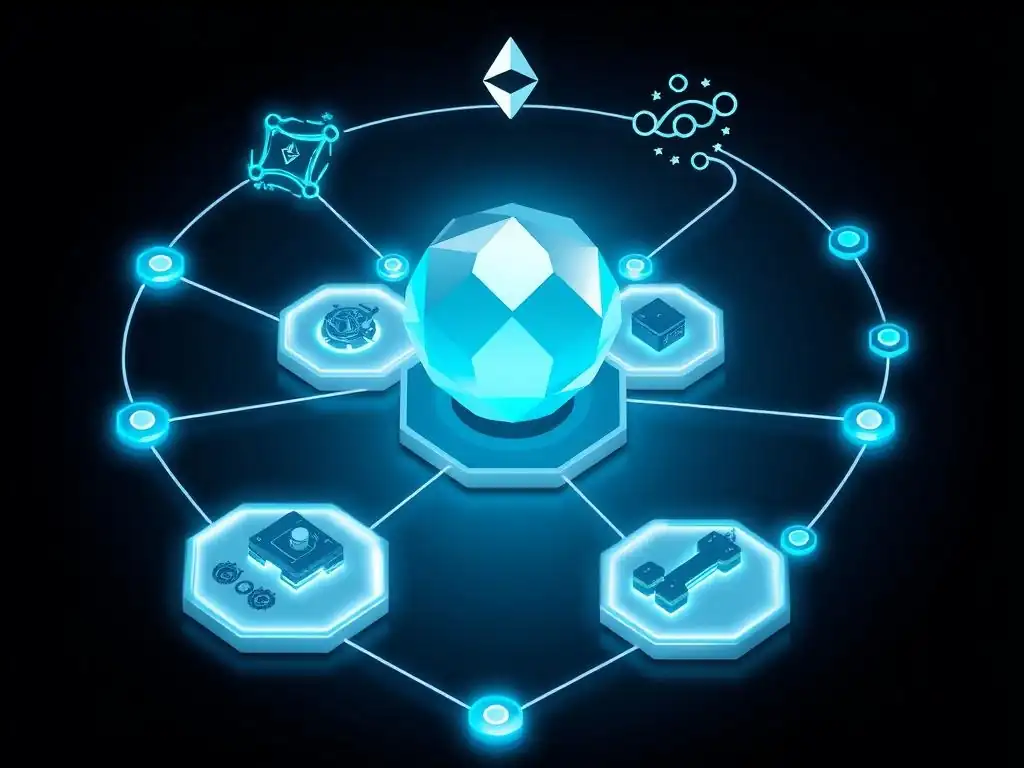
Cosmos offers a different approach to blockchain gaming through its vision of an "Internet of Blockchains," enabling developers to build sovereign and interoperable gaming zones using the Cosmos SDK (Software Development Kit). The Cosmos SDK is a modular framework that simplifies the process of building application-specific blockchains, allowing game developers to create dedicated blockchains tailored precisely to the needs of their games. These sovereign gaming blockchains, or "zones" in Cosmos terminology, operate independently while being able to connect and communicate with other blockchains within the Cosmos ecosystem through the Inter-Blockchain Communication (IBC) protocol.
The Cosmos SDK provides developers with pre-built modules for core blockchain functionalities, such as consensus, governance, and staking, allowing them to focus on building game-specific logic and features. This significantly reduces the development time and complexity compared to building a blockchain from scratch. Game developers can customize these modules and add their own custom modules to create a blockchain that is perfectly optimized for their game's mechanics, tokenomics, and community governance. This sovereignty allows for maximum flexibility and control over the gaming environment.
IBC Protocol: Interoperable Gaming Worlds
The Inter-Blockchain Communication (IBC) protocol is central to Cosmos' vision of interoperable blockchain gaming worlds. IBC enables secure and reliable communication and asset transfers between independent blockchains built with the Cosmos SDK.
This means that gaming zones within the Cosmos ecosystem can interact with each other, allowing for the creation of interconnected game universes where players can move assets and identities across different games running on separate blockchains. Imagine a player earning resources in a strategy game on one Cosmos zone and then using those resources to craft items in an RPG running on a different Cosmos zone, creating a richer and more interconnected gaming experience.
IBC's interoperability extends beyond gaming applications within the Cosmos ecosystem. Bridges can be built to connect Cosmos zones to other blockchain networks, such as Ethereum or Polkadot, expanding the potential for cross-chain gaming interactions. This broad interoperability allows for a more open and collaborative blockchain gaming landscape, where assets and players can flow freely between different gaming worlds and blockchain platforms. The IBC protocol is a crucial component in realizing the vision of a truly interconnected and interoperable blockchain gaming metaverse.
Benefits of Sovereign Chains for Game Design
Utilizing sovereign chains built with the Cosmos SDK offers significant benefits for game design and development. Firstly, sovereignty provides game developers with complete control over their blockchain environment. They can customize every aspect of their gaming zone, from the consensus mechanism and block time to the tokenomics and governance rules, ensuring that the blockchain is perfectly aligned with their game's design and community needs. This level of customization is not possible when building on shared, general-purpose blockchains.
Secondly, sovereign chains enhance scalability and performance. By having a dedicated blockchain for their game, developers avoid competing for resources with other applications on a shared network. This dedicated infrastructure can lead to higher transaction throughput and lower latency, crucial for demanding gaming applications. Furthermore, if a specific gaming zone becomes highly popular, it can scale independently without affecting other zones in the Cosmos ecosystem. The combination of control, customization, and scalability offered by sovereign chains makes the Cosmos ecosystem a powerful platform for creating innovative and high-performance blockchain games.
Ethereum vs. Polkadot vs. Cosmos: A Comparison
Transaction Speed and Cost for Gaming
When comparing Ethereum, Polkadot, and Cosmos for blockchain gaming in terms of transaction speed and cost, significant differences emerge. Ethereum's base layer, while foundational, suffers from lower transaction speeds (around 15-30 TPS) and higher gas fees, especially during peak network activity. While Layer-2 solutions like Polygon improve this, they add complexity and are still reliant on Ethereum Layer-1 for security. Transaction costs on Ethereum can fluctuate significantly, making it less predictable for microtransactions common in gaming.
Polkadot and Cosmos, designed with scalability in mind, generally offer faster transaction speeds and lower costs. Polkadot's parachain architecture allows for parallel processing, increasing overall throughput. Transaction costs on parachains are expected to be lower than on Ethereum mainnet. Cosmos, with its sovereign zones, also provides high throughput within each zone and cost-effective transactions, as each zone can optimize its own transaction processing. For games requiring high transaction volume and low fees, Polkadot and Cosmos offer a more advantageous infrastructure compared to Ethereum's base layer, especially before widespread adoption of Ethereum 2.0 and further matured Layer-2 solutions.
Security Considerations for Blockchain Games
Security is paramount for blockchain games, as they involve digital assets and player economies. Ethereum benefits from its established and battle-tested security, with a large and decentralized validator network. However, smart contract vulnerabilities remain a concern, and projects need rigorous auditing. Layer-2 solutions inherit security from Ethereum but introduce their own complexities.
Polkadot offers shared security through its Relay Chain, where parachains benefit from the pooled security of Polkadot's validators. This shared security model simplifies security for individual game parachains compared to bootstrapping security independently. Cosmos zones are sovereign and responsible for their own security, offering flexibility but requiring more effort to establish robust security measures. For game developers, Polkadot's shared security can be attractive for its convenience, while Cosmos' sovereignty allows for tailored security models but demands greater responsibility. Ethereum, while secure, requires careful smart contract development and auditing, and Layer-2 solutions introduce a nuanced security landscape.
Development Tools and Community Support
The availability of development tools and community support significantly impacts the ease and speed of blockchain game development. Ethereum boasts the most mature and extensive ecosystem, with a vast array of development tools, libraries (like Truffle and Hardhat), and a large community of developers. This makes it easier to find resources, documentation, and experienced developers for Ethereum-based game projects.
Polkadot's Substrate framework provides a powerful and modular toolkit for building parachains, but the ecosystem is relatively newer than Ethereum's. While Substrate is well-documented and supported by the Parity Technologies team, the community and tooling are still growing. Cosmos SDK is also well-documented and offers a modular approach to blockchain development, with a growing ecosystem and community, particularly focused on application-specific blockchains.
For developers familiar with JavaScript and Solidity, Ethereum might offer a lower barrier to entry initially due to its mature tooling and larger community. However, Substrate and Cosmos SDK provide robust frameworks for building more customized and scalable blockchain solutions, and their communities are rapidly expanding. The choice often depends on the project's specific needs, technical expertise, and desired level of customization versus ease of development.
Real-World Examples: Blockchain Games
Axie Infinity on Ethereum: NFT-Based Battler
Axie Infinity, built on Ethereum, is a prominent example of an NFT-based battling game that showcased the potential of blockchain gaming. Players collect, breed, and battle digital creatures called Axies, which are NFTs represented by ERC-721 tokens.
Axie Infinity leveraged the Ethereum blockchain to create a play-to-earn (P2E) model where players could earn cryptocurrency (Smooth Love Potion - SLP and Axie Infinity Shards - AXS) by playing the game, contributing to the game's ecosystem, and trading Axies on marketplaces. At its peak in 2021, Axie Infinity saw millions of daily active users and generated billions of dollars in NFT trading volume, demonstrating the economic potential of blockchain gaming.
While initially facing scalability issues on Ethereum Layer-1, Axie Infinity later migrated to Ronin, a sidechain built specifically for the game, to address transaction speed and cost concerns. This move highlighted the importance of scalability solutions for blockchain games aiming for mass adoption. Axie Infinity's success story, despite later economic challenges within its P2E model, played a crucial role in popularizing blockchain gaming and demonstrating the viability of NFT-based game assets and player-driven economies within virtual worlds.
Efinity on Polkadot: NFT Marketplace
Efinity, built on Polkadot, is designed as a dedicated parachain optimized for NFTs and metaverse applications. Created by Enjin, a company with a long history in the gaming and NFT space, Efinity aims to provide a scalable, low-cost, and developer-friendly platform for creating, distributing, and trading NFTs. While not a game itself, Efinity serves as a critical infrastructure component for blockchain gaming on Polkadot, offering a specialized NFT marketplace and tools for developers to integrate NFTs into their games and metaverse experiences.
Efinity leverages Polkadot's parachain architecture to achieve high transaction throughput and low fees, addressing the scalability limitations that have plagued NFT marketplaces on other blockchains. It also introduces innovative features like "paratokens," a new NFT standard designed for efficiency and flexibility. Efinity represents Polkadot's commitment to building a robust ecosystem for NFTs and blockchain gaming, providing a platform for developers to create next-generation NFT-based games and metaverse experiences with improved scalability and user experience.
Osmosis on Cosmos: Decentralized Exchange for Game Assets
Osmosis, built as a decentralized exchange (DEX) on Cosmos, exemplifies the interoperability and application-specific focus of the Cosmos ecosystem in the context of gaming. While not directly a game, Osmosis serves as a critical infrastructure for trading assets from various Cosmos-based gaming zones. Osmosis utilizes the IBC protocol to enable cross-chain asset swaps between different Cosmos blockchains, allowing players to trade in-game assets from various games running on separate Cosmos zones in a decentralized and permissionless manner.
Osmosis showcases the potential of Cosmos to create an interconnected gaming metaverse where assets can flow freely between different games and blockchain platforms. For instance, a player might earn in-game tokens in a Cosmos-based strategy game and then use Osmosis to swap those tokens for assets in a different Cosmos-based RPG. This interoperability enhances the utility and liquidity of in-game assets and fosters a more connected and vibrant blockchain gaming ecosystem within the Cosmos network. Osmosis demonstrates how Cosmos' focus on sovereign zones and IBC can create powerful infrastructure for decentralized gaming economies.
The Future of Blockchain Gaming: Trends and Predictions
The Evolution of Play-to-Earn (P2E)
The play-to-earn (P2E) model, while initially hyped, is undergoing significant evolution in blockchain gaming. Early P2E models, like Axie Infinity, faced challenges with economic sustainability and player retention due to inflationary tokenomics and a focus primarily on earning rather than engaging gameplay. The future of P2E is likely to shift towards more sustainable and balanced "play-and-earn" or "play-to-own" models. These models will prioritize fun and engaging gameplay first, with earning opportunities integrated more organically and sustainably into the game's economy.
We can expect to see more games incorporating diverse earning mechanisms beyond simply grinding for tokens, such as skill-based rewards, creative contributions, and participation in in-game economies. Games will likely focus on creating intrinsic value within the game itself, rather than solely relying on external token markets. Furthermore, the rise of "play-to-own" models, where players genuinely own their assets and have more control over the game's economy, will likely gain prominence, empowering players and fostering more sustainable and engaging blockchain gaming ecosystems.
Metaverse Integration and Blockchain Gaming
The integration of blockchain gaming with the metaverse is a significant trend shaping the future of digital entertainment. Blockchain technology provides the infrastructure for creating truly decentralized and interoperable metaverses, where players can own their digital identities, assets, and virtual spaces. Blockchain games are becoming increasingly interconnected and integrated into broader metaverse experiences, blurring the lines between games, social platforms, and virtual economies.
We can expect to see more metaverse platforms incorporating blockchain-based gaming experiences, allowing players to seamlessly move between different games and virtual worlds while retaining ownership of their avatars, assets, and progress. NFTs will play a crucial role in representing digital ownership within the metaverse, enabling users to own virtual land, avatars, items, and experiences. This integration will create more immersive and persistent virtual worlds where gaming is not just entertainment but also a significant part of the digital economy and social interaction within the metaverse.
Regulatory Impact on Blockchain Gaming
Regulatory developments will significantly impact the future trajectory of blockchain gaming. As blockchain gaming gains mainstream adoption and involves financial transactions and digital assets, regulatory scrutiny is increasing globally. Governments and regulatory bodies are grappling with how to classify and regulate blockchain games, NFTs, and in-game cryptocurrencies. Clarity and consistency in regulations are crucial for fostering innovation and growth in the blockchain gaming industry while protecting consumers and preventing illicit activities.
The regulatory landscape is still evolving, and different jurisdictions are taking varying approaches. Some regions are adopting a more crypto-friendly stance, while others are expressing concerns and imposing stricter regulations. The industry needs to proactively engage with regulators to educate them about the unique characteristics of blockchain gaming and advocate for balanced and sensible regulations that promote innovation while addressing legitimate concerns. The future success and mainstream adoption of blockchain gaming will depend, in part, on navigating the evolving regulatory landscape effectively and ensuring compliance with applicable laws and guidelines.
Developing Blockchain Games: Key Considerations
Choosing the Right Blockchain Platform
Selecting the appropriate blockchain platform is a crucial decision for blockchain game developers, as it impacts scalability, cost, security, and development complexity. Ethereum, Polkadot, and Cosmos each offer distinct advantages and disadvantages, as discussed previously. The choice depends on the specific requirements of the game project, including the desired level of scalability, interoperability, customization, security needs, and budget constraints.
For projects prioritizing a mature ecosystem and ease of development, Ethereum, especially with Layer-2 solutions, remains a viable option. For games requiring high scalability and interoperability, Polkadot and Cosmos offer more compelling architectures. Polkadot's shared security and cross-chain capabilities are attractive for interconnected gaming ecosystems, while Cosmos' sovereign zones provide maximum customization and control for application-specific blockchains. Developers need to carefully evaluate the trade-offs between these platforms and choose the one that best aligns with their game's vision and technical requirements.
Implementing Secure and Scalable Solutions
Building secure and scalable blockchain games requires careful planning and implementation. Security vulnerabilities in smart contracts and game logic can lead to asset losses and damage player trust. Rigorous smart contract auditing, secure coding practices, and robust security measures are essential. Scalability challenges need to be addressed proactively, considering Layer-2 solutions on Ethereum, parachains on Polkadot, or sovereign zones on Cosmos to handle high transaction volumes and user growth.
Optimizing game performance, minimizing gas fees (where applicable), and ensuring a smooth user experience are critical for player adoption. Developers should consider using efficient NFT standards like ERC-1155 or paratokens, optimizing on-chain data storage, and leveraging off-chain solutions where appropriate to enhance scalability and reduce costs. A well-designed architecture that prioritizes both security and scalability is crucial for the long-term success of blockchain games.
Building a Blockchain Game Community
Building a strong and engaged community is paramount for the success of any blockchain game. Community is not just a player base; it's a vital part of the decentralized ecosystem, contributing to game governance, content creation, and overall growth. Developers should focus on fostering a transparent and inclusive community environment, actively engaging with players, and soliciting feedback. Decentralized Autonomous Organizations (DAOs) can be implemented to empower the community and enable player participation in game governance and decision-making.
Early community building, transparent communication, and rewarding community contributions are essential strategies. Creating a vibrant and supportive community fosters player loyalty, attracts new players, and contributes to the long-term sustainability of the blockchain game. A strong community can also act as a decentralized marketing force, spreading awareness and attracting more participants to the blockchain gaming ecosystem.
Frequently Asked Questions
How are Ethereum, Polkadot, and Cosmos contributing to the blockchain gaming ecosystem growth?
These platforms offer different blockchain solutions that cater to gaming. Ethereum provides a robust foundation for smart contracts and NFTs, while Polkadot and Cosmos offer scalability and interoperability for more complex game mechanics.
What are the primary benefits of integrating blockchain technology into gaming?
Blockchain integration offers benefits such as true ownership of in-game assets, enhanced security and transparency, and new economic models like play-to-earn.
What are some examples of blockchain gaming applications beyond just cryptocurrency integration?
Beyond crypto, blockchain allows for unique in-game items represented as NFTs, decentralized marketplaces for trading assets, and transparent game governance through DAOs.
What are the biggest challenges facing the blockchain gaming ecosystem growth?
Scalability issues, regulatory uncertainty, and the need for user-friendly interfaces are some key challenges. Further adoption also depends on overcoming negative perceptions surrounding cryptocurrencies.
How might regulations impact the future of blockchain gaming ecosystem growth?
Regulations could either foster innovation by establishing clear guidelines or hinder growth through overly restrictive policies. Clear legal frameworks are crucial for long-term sustainability and mainstream adoption.
Final Reflection: Embracing the Decentralized Gaming Frontier
The exploration of blockchain integration within gaming, particularly through Ethereum, Polkadot, and Cosmos, reveals a landscape ripe with potential. The burgeoning blockchain gaming ecosystem growth is not merely a technological advancement; it represents a fundamental shift in how we perceive ownership, interaction, and value within virtual worlds, impacting both developers and players alike.
The influence of blockchain gaming extends far beyond simple in-game transactions. It's reshaping the cultural and social dynamics of online communities, fostering a sense of true ownership and empowering players in unprecedented ways. Witnessing this evolution firsthand underscores the profound impact decentralized technologies can have on established industries. The future of gaming is not just about better graphics or more immersive experiences; it's about giving players real ownership and control over their digital assets.
- Anonymous Blockchain Gaming Developer
As we stand on the cusp of this decentralized gaming revolution, it's crucial to consider the implications of this technology and its potential to reshape our digital lives. Let us all reflect on the possibilities that lie ahead, and actively participate in shaping a future where gaming is not just a pastime, but a powerful tool for empowerment, creativity, and community building. Embrace the change, explore the opportunities, and contribute to the vibrant tapestry of the blockchain gaming ecosystem.
Embark on Your Blockchain Gaming Adventure!
Thank you for exploring the exciting intersection of gaming and blockchain with us. We hope you've gained valuable insights into how blockchain platforms are set to revolutionize the gaming experience. Now, it's time to take your knowledge and put it into action!
Here are a few steps you can take to dive deeper:
- Try out a blockchain-integrated game within the next month. Experience firsthand how decentralized ownership and play-to-earn mechanics enhance the gaming experience.
- Explore existing blockchain gaming projects built on popular platforms. Join their communities on Discord or Telegram to stay informed about the latest developments.
- Share this article with friends and fellow enthusiasts. Let's spread the word about the future of gaming!
What innovative blockchain gaming concept would you love to see become a reality? Share your ideas in the comments below!
Leave a Reply