
Hyperledger and IoT: Connecting Devices and Data with Enterprise Blockchain


Welcome to Blockchain Trends, your guide to navigating the evolving landscape of decentralized technologies.
Dive in and discover how Hyperledger IoT enterprise blockchain is revolutionizing industries beyond just cryptocurrency. We explore its potential to connect devices and data securely, offering unprecedented transparency and efficiency. But is it the right solution for your enterprise? Keep reading to uncover the possibilities and the challenges.
Hyperledger and IoT: Connecting Devices and Data with Enterprise Blockchain
- Introduction: Bridging the Gap Between IoT and Enterprise Blockchain with Hyperledger
- Why Hyperledger is a Good Fit for IoT Solutions
- Hyperledger Frameworks for IoT Applications: A Comparison
- Use Cases: Real-World Applications of Hyperledger IoT Enterprise Blockchain
- Implementing Hyperledger IoT Solutions: Key Considerations
- The Future of Hyperledger and IoT: Trends and Opportunities
- Conclusion: Harnessing the Power of Hyperledger for Enterprise IoT Blockchain Solutions
-
Frequently Asked Questions
- What is the role of Hyperledger in IoT solutions, particularly within an enterprise context?
- How does Hyperledger address the challenges of security and scalability in IoT deployments?
- What are some practical applications of Hyperledger and IoT working together in an enterprise setting?
- What are the regulatory considerations when implementing Hyperledger-based IoT solutions, especially concerning data privacy?
- How does Hyperledger contribute to the future of decentralized systems and the broader adoption of IoT?
- Final Reflection: Bridging the Physical and Digital with Trust
- Unleash the Power of Secure IoT: Start Building Today!
Introduction: Bridging the Gap Between IoT and Enterprise Blockchain with Hyperledger
The Convergence of IoT and Blockchain Technology
The Internet of Things (IoT) has exploded in recent years, connecting billions of devices and generating vast amounts of data. From smart sensors in factories monitoring machinery performance to wearable devices tracking health metrics, IoT is transforming industries and daily life. However, this proliferation of connected devices also brings significant challenges, particularly around data security, scalability, and interoperability.
Simultaneously, blockchain technology, initially popularized by cryptocurrencies, has emerged as a powerful tool for enhancing trust and transparency in digital transactions. Enterprise blockchain solutions, like Hyperledger, are specifically designed to address the needs of businesses, offering permissioned and scalable platforms. The convergence of IoT and blockchain, especially through Hyperledger, presents a compelling opportunity to overcome the limitations of traditional IoT systems and unlock new levels of efficiency and security.
The synergy between IoT and blockchain stems from their complementary strengths. IoT excels at data generation and collection, while blockchain provides a secure and transparent infrastructure for managing and sharing that data. Traditional IoT systems often rely on centralized cloud platforms, which can be single points of failure and vulnerable to cyberattacks.
Blockchain's decentralized and distributed nature offers a more robust and resilient alternative. By integrating Hyperledger, an open-source enterprise blockchain platform, with IoT networks, businesses can create secure, scalable, and interoperable systems that leverage the power of both technologies. This integration paves the way for innovative applications across various sectors, fostering a more connected and trustworthy digital ecosystem.
Understanding the Role of Hyperledger in Enterprise Solutions
Hyperledger is not a cryptocurrency or a single blockchain, but rather an umbrella project hosted by the Linux Foundation. It comprises a suite of open-source blockchain frameworks, tools, and libraries designed for enterprise-grade solutions. Unlike public blockchains like Bitcoin or Ethereum, Hyperledger focuses on permissioned or private blockchains, where participants are known and authorized.
This permissioned nature is crucial for enterprise adoption, as it allows businesses to maintain control over access and data privacy while still benefiting from blockchain's core principles. Hyperledger's modular architecture enables businesses to select and customize components to meet their specific needs, making it highly adaptable to various industry use cases.
Within the Hyperledger project, frameworks like Fabric, Sawtooth, and Iroha stand out as powerful platforms for building enterprise blockchain applications. Hyperledger Fabric, perhaps the most well-known, is a highly modular and versatile framework, offering features like pluggable consensus mechanisms and support for smart contracts (chaincode). Hyperledger Sawtooth emphasizes modularity and supports a range of consensus algorithms, including Proof of Elapsed Time (PoET).
Hyperledger Iroha is designed for simplicity and ease of deployment, particularly for mobile and resource-constrained environments. These frameworks provide the building blocks for creating robust and scalable enterprise blockchain solutions, and their relevance in the context of IoT is increasingly recognized.
Why Hyperledger is a Good Fit for IoT Solutions
Addressing IoT Challenges with Blockchain: Security, Scalability, and Interoperability
IoT deployments, while offering transformative potential, grapple with significant challenges. Security is paramount, as the sheer volume of connected devices creates numerous entry points for cyberattacks. Traditional centralized systems are often vulnerable to single points of failure and data breaches. Scalability is another critical concern. As IoT networks grow to encompass thousands or even millions of devices, the underlying infrastructure must handle the increasing data volume and transaction load. Interoperability is also a major hurdle. Different IoT devices and platforms often use proprietary protocols and data formats, hindering seamless communication and data exchange.
Enterprise blockchain, particularly Hyperledger, offers compelling solutions to these IoT challenges. Blockchain's inherent security features, including cryptography and distributed consensus, enhance data integrity and protect against unauthorized access and tampering. The decentralized nature of blockchain eliminates single points of failure, improving system resilience.
Hyperledger frameworks are designed for scalability, capable of handling high transaction throughput and large datasets, crucial for large-scale IoT deployments. Furthermore, blockchain can act as a unifying layer, facilitating interoperability between disparate IoT devices and platforms by providing a shared, transparent, and secure data infrastructure. By leveraging Hyperledger, businesses can build more secure, scalable, and interoperable IoT solutions, unlocking the full potential of connected devices.
Hyperledger's Modular Architecture for IoT Integration
Hyperledger's modular architecture is a key advantage when integrating blockchain with IoT systems. This modularity allows developers to select and configure specific components of the Hyperledger framework that are most relevant to their IoT application. For example, in an IoT network with stringent data privacy requirements, Hyperledger Fabric's permissioned channels can be used to restrict data access to authorized participants only. Similarly, the pluggable consensus mechanisms in Hyperledger frameworks enable optimization for different IoT use cases. For instance, in resource-constrained IoT environments, consensus algorithms with lower computational overhead can be chosen.
This flexibility extends to the integration with existing IoT infrastructure. Hyperledger can be designed to work alongside existing IoT platforms and protocols, rather than requiring a complete overhaul. APIs and SDKs provided by Hyperledger frameworks simplify the process of connecting IoT devices and applications to the blockchain network.
Furthermore, the modular nature allows for gradual adoption of blockchain technology in IoT systems. Businesses can start by implementing blockchain for specific IoT functionalities, such as data provenance or access control, and then progressively expand its use as needed. This adaptable approach makes Hyperledger a particularly well-suited enterprise blockchain solution for the diverse and evolving landscape of IoT.
Enhancing Data Integrity and Trust in IoT Networks
Data integrity and trust are fundamental requirements for reliable IoT systems, especially in critical applications like supply chain management, healthcare, and smart cities. In traditional IoT systems, data can be vulnerable to manipulation or loss as it passes through various stages of collection, transmission, and storage. Blockchain, with its immutable and transparent ledger, provides a powerful mechanism to enhance data integrity and establish trust in IoT networks. Once data is recorded on a Hyperledger blockchain, it cannot be altered or deleted, creating an auditable and tamper-proof record of IoT events and data.
This enhanced data integrity is crucial for building trust among participants in an IoT ecosystem. For example, in a supply chain scenario, tracking product provenance and condition using Hyperledger IoT enterprise blockchain provides verifiable proof of origin and authenticity, reducing counterfeiting and improving consumer confidence. In healthcare, blockchain can secure patient data generated by wearable devices and medical sensors, ensuring data privacy and enabling secure sharing with authorized healthcare providers. By leveraging Hyperledger, businesses can build IoT networks where data is not only collected but also trusted, fostering greater transparency and accountability.
Hyperledger Frameworks for IoT Applications: A Comparison
Hyperledger Fabric for IoT: Permissioned Blockchain and Smart Contracts
Hyperledger Fabric stands out as a robust framework for IoT applications requiring a permissioned blockchain environment and sophisticated smart contract capabilities. Its permissioned nature ensures that only authorized participants can access and transact on the network, critical for maintaining data privacy and control in enterprise IoT deployments.
Fabric's architecture supports channels, which allow for private and confidential transactions between specific subsets of network members, further enhancing data security for sensitive IoT data. For example, in a smart factory setting, different departments might have access to different channels based on their roles and responsibilities, ensuring data segregation and controlled access to production data.
Smart contracts, known as chaincode in Fabric, play a crucial role in automating business logic and interactions within an IoT network. Chaincode can be used to define rules for data validation, access control, and automated responses to IoT events. For instance, in a predictive maintenance scenario, chaincode can automatically trigger maintenance alerts based on sensor data from IoT-enabled machinery, streamlining workflows and minimizing downtime.
Hyperledger Fabric's mature ecosystem, extensive documentation, and active community support make it a popular choice for enterprises seeking to build complex and scalable Hyperledger IoT enterprise blockchain solutions. Its performance and scalability are continuously being improved, with advancements in areas like consensus mechanisms and data sharding to handle the increasing demands of IoT data volumes.
Hyperledger Sawtooth for IoT: Modular Design and Consensus Mechanisms
Hyperledger Sawtooth is another compelling framework for IoT applications, particularly those emphasizing modularity and flexible consensus mechanisms. Its modular design allows developers to easily swap out components, including consensus algorithms, to optimize performance for specific IoT use cases. Sawtooth's support for Proof of Elapsed Time (PoET), a consensus algorithm designed to be energy-efficient and scalable, makes it well-suited for resource-constrained IoT environments. PoET leverages secure enclaves within processors to randomly select block leaders, offering a more environmentally friendly alternative to computationally intensive consensus mechanisms like Proof-of-Work.
Sawtooth's design also promotes scalability, allowing IoT networks to expand and accommodate a growing number of devices and transactions. Its transaction families provide a structured way to define and process different types of IoT data and interactions. For example, separate transaction families could be defined for sensor data readings, device management commands, and access control policies.
This modularity simplifies development and maintenance of complex Hyperledger IoT enterprise blockchain applications. While perhaps not as widely adopted as Fabric, Sawtooth offers unique advantages in terms of modularity and consensus flexibility, making it a strong contender for certain IoT use cases, especially those prioritizing energy efficiency and adaptability.
Hyperledger Iroha for IoT: Mobile-Focused and Easy to Deploy
Hyperledger Iroha distinguishes itself with its focus on simplicity and ease of deployment, making it particularly attractive for IoT applications where mobile devices and resource-constrained environments are prevalent. Designed to be lightweight and easy to understand, Iroha simplifies the development process for blockchain-based IoT solutions. Its straightforward architecture and command-line tools facilitate rapid prototyping and deployment, reducing the barrier to entry for businesses exploring Hyperledger IoT enterprise blockchain. Iroha is particularly well-suited for scenarios where ease of use and speed of implementation are critical factors.
Iroha's emphasis on mobile integration makes it a good fit for IoT applications involving mobile devices as data sources or endpoints. For example, in supply chain tracking or asset management, mobile devices equipped with sensors can directly interact with an Iroha-based blockchain network.
While Iroha might not offer the same level of advanced features and customization as Fabric or Sawtooth, its simplicity and ease of deployment make it a valuable option for specific IoT use cases, particularly those requiring rapid development and mobile-centric solutions. Its focus on developer-friendliness makes it accessible to a wider range of developers, facilitating broader adoption of Hyperledger IoT enterprise blockchain in diverse industries.
Use Cases: Real-World Applications of Hyperledger IoT Enterprise Blockchain
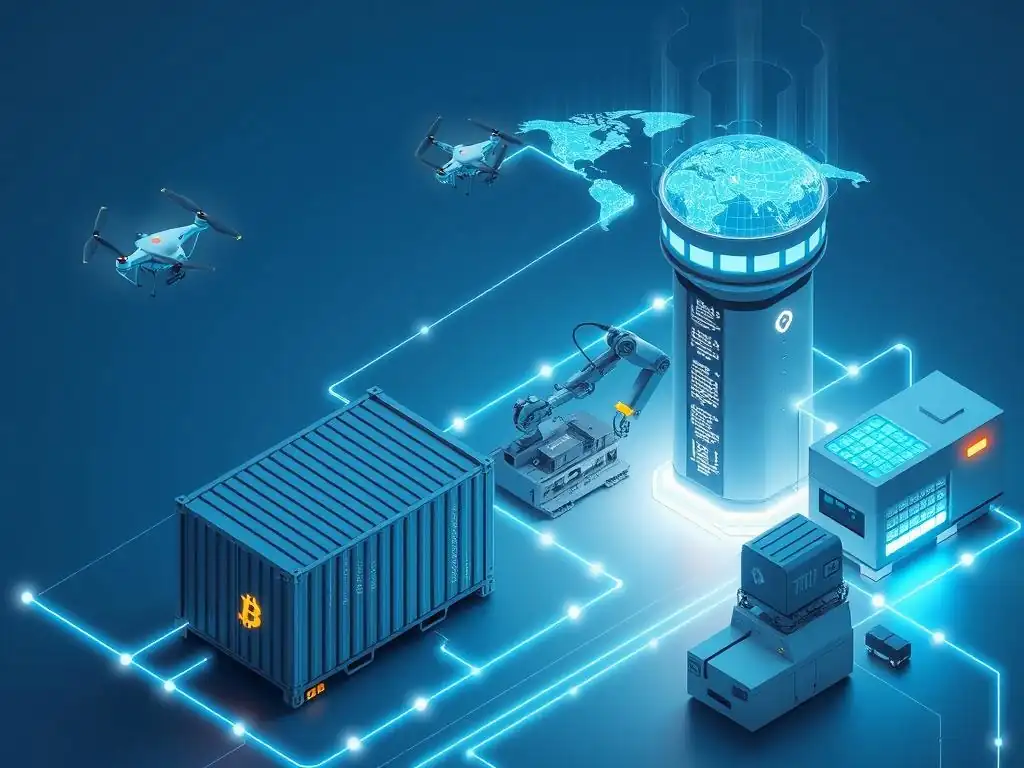
Supply Chain Management: Tracking Assets and Ensuring Transparency with Hyperledger
Supply chain management is a prime example of how Hyperledger IoT enterprise blockchain can deliver tangible benefits. Traditional supply chains often suffer from opacity, inefficiencies, and a lack of trust among participants. Integrating IoT devices with a Hyperledger blockchain creates a transparent and auditable record of product journey, from origin to consumer. IoT sensors embedded in products or shipping containers can continuously monitor location, temperature, humidity, and other critical parameters. This data is securely recorded on the Hyperledger blockchain, providing all stakeholders with real-time visibility and verifiable proof of product condition and provenance.
For instance, consider the pharmaceutical industry. Counterfeit drugs pose a significant threat to public health. By tracking pharmaceuticals throughout the supply chain using IoT sensors and Hyperledger, manufacturers, distributors, and retailers can ensure the authenticity and integrity of medications. Temperature sensors can verify cold chain compliance for temperature-sensitive drugs, preventing spoilage and ensuring efficacy. The immutable record on the blockchain provides irrefutable evidence of product handling and origin, enhancing trust and reducing the risk of counterfeit drugs entering the market. This application of Hyperledger IoT enterprise blockchain not only improves efficiency but also safeguards consumers and strengthens brand reputation.
Smart Cities: Secure and Efficient Data Management for Urban Infrastructure
Smart cities rely heavily on interconnected devices and sensors to manage urban infrastructure and services efficiently. From smart traffic lights and environmental monitoring systems to smart grids and public safety cameras, IoT devices generate vast amounts of data that need to be securely managed and shared. Hyperledger IoT enterprise blockchain provides a robust platform for creating secure and efficient data management systems for smart cities. Blockchain can ensure the integrity and provenance of data collected from various IoT devices, preventing tampering and enabling trusted data sharing among city agencies and stakeholders.
Imagine a smart transportation system using Hyperledger IoT enterprise blockchain. Data from traffic sensors, connected vehicles, and public transportation systems can be securely recorded on the blockchain, providing a comprehensive and real-time view of urban mobility. This data can be used to optimize traffic flow, improve public transportation efficiency, and enhance road safety.
Moreover, blockchain can facilitate secure data sharing between different city departments, breaking down data silos and enabling more coordinated and data-driven decision-making. For example, data from environmental sensors can be shared with public health agencies to monitor air quality and proactively address pollution issues. Hyperledger IoT enterprise blockchain empowers smart cities to build more resilient, efficient, and citizen-centric urban environments.
Healthcare: Protecting Patient Data and Streamlining Processes
The healthcare industry is increasingly adopting IoT devices for remote patient monitoring, wearable health trackers, and connected medical equipment. However, the sensitive nature of patient data demands robust security and privacy measures. Hyperledger IoT enterprise blockchain offers a secure and compliant platform for managing healthcare data generated by IoT devices. Blockchain's inherent security features, combined with Hyperledger's permissioned architecture, can protect patient data from unauthorized access and ensure compliance with regulations like HIPAA.
For example, consider remote patient monitoring using wearable devices. Data from these devices, such as heart rate, blood pressure, and activity levels, can be securely recorded on a Hyperledger blockchain. Patients retain control over their data and can grant permission to healthcare providers to access it.
Blockchain ensures data integrity and auditability, providing a trusted record of patient health metrics. Furthermore, smart contracts on Hyperledger can automate processes like medication reminders and appointment scheduling, streamlining workflows and improving patient engagement. Hyperledger IoT enterprise blockchain has the potential to transform healthcare by enhancing data security, improving efficiency, and empowering patients with greater control over their health information.
Automotive: Secure and Transparent Vehicle Data Management
The automotive industry is undergoing a significant transformation with the rise of connected and autonomous vehicles. These vehicles generate massive amounts of data, including sensor data, telematics data, and diagnostic information. Securing and managing this data is crucial for vehicle safety, performance, and future mobility services. Hyperledger IoT enterprise blockchain provides a robust platform for secure and transparent vehicle data management. Blockchain can ensure data integrity, prevent tampering, and facilitate secure data sharing among automotive manufacturers, suppliers, and service providers.
Consider the use case of vehicle maintenance and diagnostics. Data from vehicle sensors and onboard diagnostics systems can be securely recorded on a Hyperledger blockchain. This data can be used to track vehicle health, predict maintenance needs, and streamline repair processes.
Automotive manufacturers can access this data to improve vehicle design and performance, while service providers can offer proactive maintenance services based on real-time vehicle data. Furthermore, blockchain can facilitate secure over-the-air software updates for vehicles, ensuring that vehicles are always running the latest and most secure software versions. Hyperledger IoT enterprise blockchain empowers the automotive industry to build safer, more efficient, and more connected vehicles.
Implementing Hyperledger IoT Solutions: Key Considerations
Security Best Practices for Hyperledger and IoT Integration
Integrating Hyperledger with IoT requires careful consideration of security best practices to protect both the blockchain network and the connected devices. Securing IoT devices themselves is paramount. Strong device authentication, secure boot processes, and regular firmware updates are essential to prevent devices from being compromised. Data encryption, both in transit and at rest, should be implemented to protect sensitive IoT data. Furthermore, access control policies must be rigorously enforced to ensure that only authorized devices and users can access the Hyperledger network and IoT data.
Within the Hyperledger network, security best practices include robust key management, secure smart contract development, and regular security audits. Key management systems should be implemented to securely generate, store, and manage cryptographic keys used for authentication and encryption. Smart contracts should be developed using secure coding practices to prevent vulnerabilities that could be exploited by attackers.
Regular security audits and penetration testing should be conducted to identify and address any potential security weaknesses in the integrated Hyperledger IoT system. A layered security approach, addressing both device-level and blockchain-level security, is crucial for building resilient and trustworthy Hyperledger IoT enterprise blockchain solutions.
Scalability Challenges and Solutions for Enterprise Blockchain IoT Networks
Scalability is a significant challenge for enterprise blockchain IoT networks, given the potential for massive numbers of connected devices and high data volumes. Traditional blockchain architectures can struggle to handle the transaction throughput and data storage demands of large-scale IoT deployments. Addressing scalability requires careful consideration of blockchain architecture, consensus mechanisms, and data management strategies. Hyperledger frameworks offer various scalability solutions, including channel architectures in Fabric for transaction partitioning and modular consensus mechanisms that can be optimized for performance.
Data sharding, a technique for partitioning blockchain data across multiple nodes, can significantly improve scalability. Off-chain data storage solutions, such as databases or distributed file systems, can be used to store large volumes of IoT data, with only metadata or hashes stored on the blockchain for integrity and auditability. Furthermore, optimizing smart contract execution and minimizing on-chain processing can improve transaction throughput.
Careful performance testing and benchmarking are essential to ensure that the Hyperledger IoT network can meet the scalability requirements of the specific use case. Continuous monitoring and optimization are crucial for maintaining performance as the IoT network grows.
Interoperability with Existing IoT Devices and Systems
Integrating Hyperledger blockchain with existing IoT devices and systems can be complex due to the diverse range of protocols, data formats, and communication standards used in the IoT ecosystem. Interoperability is crucial for seamless integration and data exchange between blockchain and legacy IoT infrastructure. Developing standardized APIs and data formats is essential for facilitating interoperability. Gateway devices and middleware can be used to bridge the gap between blockchain networks and existing IoT devices that may not natively support blockchain protocols.
Adopting open standards and protocols for IoT device communication and data exchange can significantly improve interoperability with blockchain systems. Industry consortia and standardization bodies are working on developing interoperability standards for IoT and blockchain. Furthermore, leveraging blockchain-agnostic interoperability solutions, such as Interledger Protocol, can enable communication and data exchange between different blockchain platforms and IoT networks. A phased approach to integration, starting with pilot projects and gradually expanding blockchain adoption, can help address interoperability challenges and ensure smooth integration with existing IoT infrastructure.
Data Governance and Regulatory Compliance
Data governance and regulatory compliance are critical considerations for implementing Hyperledger IoT enterprise blockchain solutions, particularly in industries with stringent regulatory requirements, such as healthcare and finance. Data privacy regulations, such as GDPR and CCPA, mandate specific requirements for data collection, storage, and processing. Hyperledger's permissioned architecture and data privacy features can help organizations comply with these regulations. Implementing robust access control policies, data encryption, and data minimization techniques are essential for ensuring data privacy and compliance.
Data governance frameworks should be established to define roles and responsibilities for data management, access control, and data quality. Compliance with industry-specific regulations, such as HIPAA in healthcare and PCI DSS in finance, must be carefully addressed. Regular audits and compliance assessments should be conducted to ensure ongoing adherence to regulatory requirements. Legal and compliance experts should be consulted to ensure that the Hyperledger IoT solution meets all applicable data governance and regulatory obligations. Transparency and accountability in data management are crucial for building trust and ensuring regulatory compliance in Hyperledger IoT enterprise blockchain deployments.
The Future of Hyperledger and IoT: Trends and Opportunities
Edge Computing and Decentralized IoT Applications
Edge computing, which brings computation and data storage closer to the source of data generation, is a growing trend in IoT. Combining edge computing with Hyperledger opens up new possibilities for decentralized IoT applications. Processing data at the edge, closer to IoT devices, reduces latency, bandwidth consumption, and reliance on centralized cloud infrastructure. Hyperledger can be deployed at the edge to enable secure and decentralized data processing, storage, and sharing within localized IoT networks.
Edge-based Hyperledger nodes can act as local blockchain ledgers, processing and validating transactions generated by nearby IoT devices. This decentralized approach enhances resilience and reduces the risk of single points of failure. Edge computing also enables privacy-preserving IoT applications, as sensitive data can be processed and stored locally, minimizing data transmission and exposure. The combination of edge computing and Hyperledger empowers the development of highly scalable, resilient, and privacy-focused decentralized IoT applications, particularly in scenarios with limited connectivity or stringent latency requirements.
The Role of AI and Machine Learning in Hyperledger IoT Ecosystems
Artificial intelligence (AI) and machine learning (ML) are increasingly being integrated with IoT to enable intelligent automation, predictive analytics, and data-driven decision-making. Combining AI/ML with Hyperledger IoT enterprise blockchain enhances trust, transparency, and security in AI-powered IoT applications. Blockchain can provide a verifiable audit trail of AI/ML model training data and model parameters, ensuring transparency and accountability in AI decision-making processes. Smart contracts can be used to automate AI-driven workflows and enforce data governance policies for AI models operating within the IoT ecosystem.
For example, in predictive maintenance, AI/ML models can analyze sensor data from IoT-enabled machinery to predict potential failures. Hyperledger can secure the data used to train these models and track the performance of the models over time. Blockchain can also facilitate secure and transparent sharing of AI models and insights among different stakeholders in the IoT ecosystem. The synergy between AI/ML and Hyperledger IoT enterprise blockchain unlocks new possibilities for building intelligent, trustworthy, and secure AI-powered IoT applications across various industries.
Integration with Digital Twins for Predictive Maintenance
Digital twins, virtual representations of physical assets or systems, are gaining traction in IoT applications, particularly in industrial settings. Integrating digital twins with Hyperledger IoT enterprise blockchain enhances data integrity, transparency, and trust in digital twin-based predictive maintenance solutions. IoT data from physical assets can be securely recorded on a Hyperledger blockchain and synchronized with their digital twins. Blockchain ensures the accuracy and provenance of data used to update and maintain digital twins, providing a trusted foundation for predictive maintenance and asset management.
Smart contracts can automate workflows related to digital twin updates, maintenance scheduling, and asset performance monitoring. For example, if sensor data from an IoT-enabled machine indicates a potential failure, a smart contract can automatically trigger a maintenance request and update the digital twin to reflect the predicted issue. Hyperledger provides a secure and transparent platform for managing digital twin data and interactions, enabling more efficient and proactive predictive maintenance strategies. The combination of digital twins and Hyperledger IoT enterprise blockchain empowers organizations to optimize asset performance, reduce downtime, and improve operational efficiency.
Conclusion: Harnessing the Power of Hyperledger for Enterprise IoT Blockchain Solutions
Key Takeaways: The Benefits of Combining Hyperledger and IoT
The integration of Hyperledger and IoT represents a powerful synergy, addressing critical challenges in IoT deployments and unlocking new opportunities for innovation. Hyperledger IoT enterprise blockchain solutions offer enhanced security, scalability, and interoperability compared to traditional centralized IoT systems. Blockchain's inherent security features protect IoT data from tampering and unauthorized access, while Hyperledger's permissioned architecture ensures data privacy and control in enterprise environments. Hyperledger frameworks are designed for scalability, capable of handling the data volumes and transaction throughput of large-scale IoT networks. Furthermore, blockchain can act as a unifying layer, improving interoperability between disparate IoT devices and platforms.
By leveraging Hyperledger, businesses can build trusted and transparent IoT ecosystems, fostering greater collaboration and efficiency across industries. Real-world use cases in supply chain management, smart cities, healthcare, and automotive demonstrate the tangible benefits of Hyperledger IoT enterprise blockchain, including improved data integrity, enhanced transparency, streamlined processes, and increased security. The modularity and flexibility of Hyperledger frameworks enable businesses to customize solutions to meet their specific needs and integrate blockchain with existing IoT infrastructure.
Future Directions for Hyperledger IoT Development
The future of Hyperledger IoT enterprise blockchain is bright, with ongoing development and innovation driving further advancements. Key areas of focus include enhancing scalability to support ever-larger IoT networks, improving interoperability with diverse IoT devices and platforms, and integrating advanced technologies like edge computing, AI/ML, and digital twins. Research and development efforts are underway to optimize Hyperledger frameworks for resource-constrained IoT environments and to simplify deployment and management of Hyperledger IoT solutions.
The growing adoption of IoT across industries, coupled with the increasing recognition of blockchain's benefits for data security and transparency, will drive further demand for Hyperledger IoT enterprise blockchain solutions. As the technology matures and becomes more accessible, we can expect to see wider adoption and innovative applications of Hyperledger IoT enterprise blockchain across a broader range of industries and use cases, shaping the future of connected devices and data-driven ecosystems.
Frequently Asked Questions
What is the role of Hyperledger in IoT solutions, particularly within an enterprise context?
Hyperledger provides a permissioned blockchain framework ideal for IoT applications. It enables secure and transparent data exchange between devices and enterprise systems, ensuring data integrity and provenance.
How does Hyperledger address the challenges of security and scalability in IoT deployments?
Hyperledger offers robust security features like access control and encryption, crucial for protecting sensitive IoT data. Its modular architecture supports scalable solutions to manage the vast number of devices and transactions in IoT networks.
What are some practical applications of Hyperledger and IoT working together in an enterprise setting?
Examples include supply chain management, where Hyperledger tracks goods throughout the process, and smart manufacturing, where it enables secure data sharing between machines. This leads to increased efficiency and transparency.
What are the regulatory considerations when implementing Hyperledger-based IoT solutions, especially concerning data privacy?
Implementing Hyperledger IoT requires careful consideration of regulations like GDPR. Data privacy must be prioritized through data anonymization and consent management mechanisms built into the blockchain solution.
How does Hyperledger contribute to the future of decentralized systems and the broader adoption of IoT?
Hyperledger provides a trustworthy and decentralized platform for IoT data, fostering innovation and collaboration. It helps to unlock the full potential of IoT by enabling secure and efficient data exchange in a transparent environment.
Final Reflection: Bridging the Physical and Digital with Trust
The convergence of Hyperledger, IoT, and enterprise blockchain is no longer a futuristic concept, but a present-day reality. The secure and transparent connection of devices and data, facilitated by these technologies, is fundamentally reshaping industries and redefining trust in the digital age. From supply chain management to smart cities, the potential for increased efficiency, security, and accountability is immense, and its impact is only beginning to be felt.
The journey towards widespread adoption of Hyperledger IoT enterprise blockchain solutions is a continuous evolution, one that demands collaboration, innovation, and a deep understanding of the ethical implications. It's a journey that resonates deeply with the need for verifiable truth in an increasingly complex world. As Alan Kay famously said, The best way to predict the future is to invent it.
And in this context, we are all inventors, shaping the future of trust and connectivity.
As you consider the possibilities presented by Hyperledger IoT enterprise blockchain, I invite you to reflect on the role you can play in this technological revolution. How can you leverage these tools to build more secure, transparent, and equitable systems? How can you contribute to a future where data empowers, rather than exploits? The answers lie within your own creativity and commitment to building a better, more connected world.
Unleash the Power of Secure IoT: Start Building Today!
Thank you for exploring the potential of blockchain technology and IoT with us. We hope you now have a clearer understanding of how blockchain can revolutionize your approach to connected devices. Now, let's put this knowledge into action!
Ready to take the next step?
- Begin developing a small-scale IoT solution using enterprise blockchain frameworks to experience firsthand the enhanced security and data integrity.
- Explore the ecosystem of blockchain projects focused on IoT: Visit the official foundation website to discover additional tools and resources tailored for IoT integration.
- Share this article: Help spread awareness of the powerful synergy between blockchain and IoT by sharing this article with your network.
What innovative IoT application are you most excited to secure with blockchain technology? Share your thoughts in the comments below!
Leave a Reply