
Hyperledger vs. Quorum: Choosing the Right Enterprise Ethereum Solution


Welcome to Blockchain Trends, your compass in the rapidly evolving world of decentralized technology!
Beyond cryptocurrencies, blockchain is reshaping industries and redefining what's possible. Are you navigating the complex landscape of enterprise blockchain solutions? Our in-depth article, " Hyperledger vs. Quorum: Choosing the Right Enterprise Ethereum Solution," is your essential enterprise blockchain platform selection guide. Discover the critical factors to consider when selecting the right platform for your business and unlock the potential of this transformative technology. Ready to dive in and find the perfect fit?
Enterprise Blockchain Platform Selection: Hyperledger Fabric vs. Quorum
- Understanding Enterprise Blockchain Needs: A Foundation for Platform Selection
- Hyperledger Fabric: Permissioned Blockchain for Complex Business Networks
- Quorum: JPMorgan's Enterprise Ethereum Blockchain Platform
-
Hyperledger Fabric vs. Quorum: A Detailed Comparison of Enterprise Blockchain Solutions
- Architecture and Design: Hyperledger Fabric's Flexibility vs. Quorum's Ethereum Compatibility
- Consensus Mechanisms: Performance and Scalability Considerations
- Privacy and Security: Protecting Data on the Blockchain
- Smart Contract Support: Solidity and Chaincode Development
- Developer Ecosystem and Community Support: Finding the Right Expertise
- Use Cases: Where Hyperledger Fabric and Quorum Shine
- Factors to Consider When Choosing Between Hyperledger Fabric and Quorum
- Making the Right Choice: Selecting the Best Enterprise Blockchain Platform
-
Frequently Asked Questions
- What are the key differences between Hyperledger and Quorum that enterprises should consider?
- Which platform is better suited for enterprises prioritizing data privacy and confidentiality?
- How does the development process differ between Hyperledger and Quorum?
- What are the typical use cases for each platform in enterprise settings?
- Which platform offers better long-term support and community engagement for enterprise adoption?
- Final Reflection: Navigating the Enterprise Blockchain Landscape
- Unlock Your Enterprise Blockchain Potential!
Understanding Enterprise Blockchain Needs: A Foundation for Platform Selection
Defining Key Requirements for Your Enterprise Blockchain Solution
When embarking on an enterprise blockchain journey, the first crucial step is to meticulously define the specific requirements that the solution must address. This foundational stage is paramount for successful enterprise blockchain platform selection. Organizations must delve deep into their operational processes and identify the pain points that blockchain technology can effectively alleviate.
This involves a comprehensive assessment of data security needs, transaction throughput demands, desired levels of transparency and control, and integration requirements with existing legacy systems. For example, a supply chain company might prioritize traceability and provenance, demanding a platform that can handle high volumes of transactions and provide secure data sharing across a complex network of suppliers, manufacturers, and distributors. Conversely, a financial institution exploring tokenized assets will place a premium on robust security, regulatory compliance, and the ability to manage sensitive financial data with utmost confidentiality.
Furthermore, defining key requirements involves considering the long-term scalability and adaptability of the chosen blockchain platform. Enterprises operate in dynamic environments, and their blockchain solutions must evolve alongside their changing business needs and technological advancements. Factors such as the platform's ability to handle increasing transaction volumes, accommodate new participants, and integrate with emerging technologies are critical.
A well-defined set of requirements acts as a compass, guiding the enterprise blockchain platform selection process and ensuring that the chosen solution aligns perfectly with the organization's strategic objectives and operational necessities. This clarity upfront minimizes the risk of misaligned implementations and maximizes the potential for realizing tangible business value from blockchain adoption.
Evaluating Use Cases for Enterprise Blockchain Adoption
The landscape of enterprise blockchain adoption is rapidly expanding, with diverse use cases emerging across industries. Evaluating potential use cases is crucial for understanding how blockchain can deliver tangible benefits to an organization. One prominent area is supply chain management, where blockchain's immutable ledger can enhance transparency, traceability, and efficiency.
Imagine a pharmaceutical company using blockchain to track drugs from manufacturing to patient delivery, ensuring authenticity and combating counterfeiting. Another compelling use case lies in digital identity management, where blockchain can empower individuals with greater control over their personal data, fostering secure and verifiable identity solutions for various applications, from KYC/AML compliance to secure online interactions.
Beyond supply chain and identity, enterprise blockchain is proving its value in financial services, particularly in areas like trade finance and cross-border payments. Blockchain's ability to streamline complex processes, reduce intermediaries, and enhance security makes it an ideal technology for optimizing financial transactions. Consider the potential of blockchain to accelerate and reduce the cost of international remittances, benefiting both businesses and individuals.
Furthermore, the emergence of tokenization opens up new avenues for asset management and fractional ownership, enabling businesses to create new financial instruments and enhance liquidity in previously illiquid markets. By carefully evaluating these diverse use cases and aligning them with their specific business challenges and opportunities, organizations can strategically leverage enterprise blockchain to drive innovation, efficiency, and competitive advantage.
Hyperledger Fabric: Permissioned Blockchain for Complex Business Networks
Hyperledger Fabric's Modular Architecture: Flexibility and Customization
Hyperledger Fabric distinguishes itself as a highly modular and flexible permissioned blockchain platform, specifically engineered for enterprise-grade deployments. Its architecture is designed around pluggable components, allowing organizations to customize and tailor the blockchain network to their precise needs. This modularity extends to key aspects such as consensus mechanisms, membership services, and data storage.
For instance, enterprises can choose from various consensus algorithms depending on their performance and security requirements, or integrate their existing identity management systems through Fabric's pluggable Membership Service Provider (MSP). This adaptability is a significant advantage for large organizations with complex and varied business processes, as it allows them to build blockchain solutions that seamlessly integrate with their existing infrastructure and meet specific regulatory and compliance demands.
The modular design of Hyperledger Fabric fosters innovation and future-proofing. As blockchain technology evolves, Fabric's architecture enables organizations to readily adopt new advancements and integrate them into their existing networks. This reduces vendor lock-in and provides greater control over the technology stack. Furthermore, the open-source nature of Hyperledger Fabric, under the Linux Foundation umbrella, ensures a vibrant and active community contributing to its ongoing development and improvement. This collaborative ecosystem accelerates innovation and provides access to a wealth of expertise and support, making Hyperledger Fabric a robust and future-proof choice for enterprises seeking a customizable and adaptable blockchain platform.
Key Features of Hyperledger Fabric for Enterprise Applications
Hyperledger Fabric is packed with features specifically designed to address the demands of enterprise applications, focusing on scalability, security, and confidentiality. These features collectively contribute to making Fabric a robust platform for building complex business networks.
Channel Architecture: Private and Confidential Transactions
Channels in Hyperledger Fabric are a cornerstone of its privacy and confidentiality capabilities. They enable the creation of separate, private "sub-networks" within the larger Fabric network. This allows for data segregation and restricted access, ensuring that sensitive transaction information is only shared with authorized participants.
Imagine a supply chain network with multiple tiers of suppliers and retailers; channels can be used to create private communication and transaction pathways between specific groups, for example, between a manufacturer and its direct suppliers, without exposing sensitive pricing or contract details to other participants in the broader network. This granular control over data visibility is crucial for enterprises operating in regulated industries or dealing with commercially sensitive information.
The channel architecture significantly enhances privacy and security by isolating data and transactions. This minimizes the risk of unauthorized access and data breaches, as only channel members have visibility into the transactions occurring within that channel. Furthermore, channels contribute to improved performance and scalability by reducing network congestion and transaction processing overhead. By segmenting the network into smaller, manageable channels, Fabric can handle a higher volume of transactions and accommodate a larger number of participants without compromising performance. This makes Fabric well-suited for complex enterprise ecosystems with diverse data privacy and performance requirements.
Chaincode: Smart Contract Development and Execution
Chaincode, Hyperledger Fabric's equivalent of smart contracts, provides the logic and rules for business transactions on the blockchain. Developed using languages like Go, Java, and Node.js, chaincode allows developers to define the terms and conditions of agreements and automate transaction execution based on predefined rules. For instance, in a trade finance application, chaincode can be used to automate the process of issuing letters of credit, verifying shipping documents, and releasing payments upon fulfillment of contractual obligations. This automation streamlines complex workflows, reduces manual errors, and accelerates transaction settlement times.
The flexibility of chaincode development languages allows enterprises to leverage their existing developer skills and integrate blockchain logic seamlessly with their current IT infrastructure. Fabric's chaincode execution environment is designed for security and performance, ensuring that smart contracts are executed reliably and efficiently. Furthermore, Fabric supports chaincode upgrades, allowing businesses to evolve their smart contract logic as their business needs change, without disrupting the entire blockchain network. This adaptability and ease of development make chaincode a powerful tool for building sophisticated and customized enterprise blockchain applications.
Membership Service Provider (MSP): Identity Management and Access Control
The Membership Service Provider (MSP) component in Hyperledger Fabric is critical for managing identities and controlling access within the permissioned blockchain network. MSP defines the rules and mechanisms for identifying valid network participants and granting them appropriate permissions. This ensures that only authorized entities can transact on the network, maintaining security and trust. Enterprises can integrate their existing identity management systems, such as Active Directory or LDAP, with Fabric's MSP, simplifying user management and ensuring consistent access control policies across the organization.
MSP supports various identity types, including digital certificates and cryptographic keys, providing a robust and flexible framework for authentication and authorization. By leveraging MSP, organizations can implement fine-grained access control policies, defining who can access specific data, invoke certain chaincode functions, or participate in specific channels. This granular control over network participation and resource access is essential for maintaining the integrity and security of enterprise blockchain applications, particularly in highly regulated industries where compliance and data protection are paramount.
Quorum: JPMorgan's Enterprise Ethereum Blockchain Platform
Quorum's Privacy Features: Protecting Sensitive Data on the Blockchain
Quorum, initially developed by JPMorgan Chase and now maintained by ConsenSys, is a permissioned blockchain platform built upon the foundations of Ethereum. It is specifically designed to address the privacy and scalability requirements of enterprise use cases, particularly within the financial industry. Quorum's core differentiator lies in its robust privacy features, enabling confidential transactions and data sharing within a permissioned network.
Unlike public Ethereum, where all transactions are visible to all participants, Quorum offers mechanisms to selectively disclose transaction details to only authorized parties. This is crucial for enterprises dealing with sensitive financial information, intellectual property, or personal data that must be protected from unauthorized access.
Quorum achieves enhanced privacy through features like private transactions and private state databases. These mechanisms allow businesses to conduct confidential transactions and store sensitive data on the blockchain without exposing it to the entire network. This capability opens up possibilities for collaborative data sharing and secure multi-party computations while maintaining data confidentiality and complying with stringent privacy regulations like GDPR or CCPA. Quorum's focus on privacy makes it a compelling choice for enterprises in regulated industries or those handling sensitive data in collaborative business networks.
Quorum's Consensus Mechanisms: Performance and Security Considerations
Quorum departs from Ethereum's Proof-of-Work (PoW) consensus and offers pluggable consensus mechanisms optimized for permissioned networks. These alternative consensus algorithms are designed to provide higher throughput, faster transaction finality, and lower energy consumption compared to PoW. Quorum supports consensus algorithms like Raft and Istanbul Byzantine Fault Tolerance (IBFT), both of which are well-suited for permissioned environments where participants are known and trusted. Raft, a crash-fault-tolerant algorithm, is known for its simplicity and performance, while IBFT, a Byzantine-fault-tolerant algorithm, offers greater resilience against malicious actors within the network.
The choice of consensus mechanism in Quorum is crucial for balancing performance and security requirements. For applications demanding high transaction throughput and low latency, Raft might be a suitable choice. For scenarios requiring stronger security and fault tolerance, especially in environments with less trust among participants, IBFT offers a more robust solution. Quorum's pluggable consensus architecture provides enterprises with the flexibility to select the consensus mechanism that best aligns with their specific application needs and risk tolerance, making it a versatile platform for diverse enterprise blockchain deployments.
Key Features and Capabilities of the Quorum Blockchain Platform
Quorum builds upon the Ethereum foundation and extends it with features tailored for enterprise needs, focusing on privacy, performance, and permissioning.
Private Transactions: Constellation and Tessera
Quorum's private transaction capabilities are primarily facilitated by two key components: Constellation and Tessera. These are transaction managers that work in conjunction with the Quorum blockchain to enable confidential transactions between specific participants. Constellation employs a peer-to-peer messaging layer to distribute encrypted transaction payloads only to authorized parties, ensuring that transaction details remain private from other network participants. Tessera, another popular transaction manager, provides similar functionality and offers robust key management and encryption capabilities.
Using Constellation or Tessera, businesses can conduct private transactions on Quorum, selectively disclosing transaction details only to the intended recipients. This is achieved through encryption and access control mechanisms that prevent unauthorized parties from accessing sensitive transaction data. For example, in a syndicated loan scenario, participating banks can use private transactions to share loan agreement details and transaction updates only among themselves, without revealing this information to other participants on the Quorum network. This feature is paramount for maintaining confidentiality and complying with data privacy regulations in enterprise blockchain deployments.
Pluggable Consensus: Raft and Istanbul BFT (IBFT)
As previously mentioned, Quorum offers pluggable consensus mechanisms, allowing enterprises to choose the algorithm that best suits their needs. Raft and Istanbul BFT (IBFT) are two prominent consensus options available in Quorum. Raft is a leader-based consensus algorithm that is relatively simple to implement and provides high throughput and fast transaction finality.
It is well-suited for permissioned networks with a known and trusted set of participants. IBFT, on the other hand, is a Byzantine Fault Tolerant consensus algorithm that can tolerate a certain number of malicious or faulty nodes in the network. IBFT offers enhanced security and resilience compared to Raft, making it suitable for scenarios where trust assumptions are weaker or security is paramount.
The pluggable consensus architecture in Quorum provides enterprises with the flexibility to optimize their blockchain network for performance or security based on their specific application requirements. For applications prioritizing speed and efficiency in a trusted environment, Raft can be a suitable choice. For applications requiring stronger security and fault tolerance in a less trusted environment, IBFT offers a more robust consensus mechanism. This flexibility is a key advantage of Quorum, allowing businesses to tailor the platform to their specific security and performance needs.
Permissioning: Control Network Access and Participation
Quorum, as a permissioned blockchain platform, inherently incorporates robust permissioning capabilities to control network access and participation. This ensures that only authorized entities can join the network, participate in transactions, and access network resources. Quorum's permissioning mechanisms are typically managed through smart contracts or configuration settings that define the rules for network membership and access control. Enterprises can define granular permissioning policies, specifying which entities are allowed to join the network, who can perform specific actions, and what data they can access.
Permissioning in Quorum is crucial for maintaining security, compliance, and governance within enterprise blockchain networks. It ensures that the network remains controlled and trustworthy, preventing unauthorized access and malicious activities. Enterprises can leverage Quorum's permissioning features to create secure and compliant blockchain networks tailored to their specific governance requirements and regulatory obligations. This control over network participation is a fundamental aspect of enterprise-grade blockchain solutions and a key strength of the Quorum platform.
Hyperledger Fabric vs. Quorum: A Detailed Comparison of Enterprise Blockchain Solutions
Architecture and Design: Hyperledger Fabric's Flexibility vs. Quorum's Ethereum Compatibility
When comparing Hyperledger Fabric and Quorum, their fundamental architectural differences become apparent. Hyperledger Fabric is designed with a highly modular architecture, emphasizing flexibility and customization. Its pluggable components allow enterprises to tailor the blockchain network to their specific needs, choosing from various consensus mechanisms, membership services, and data storage options. This modularity provides significant adaptability but can also introduce complexity in initial setup and configuration.
Quorum, on the other hand, is built as a direct fork of Ethereum, inheriting its architecture and tooling. This Ethereum compatibility is a key advantage, as it allows Quorum to leverage the vast Ethereum developer ecosystem, smart contract languages (Solidity), and existing tools. While Quorum offers enterprise-grade privacy and permissioning features on top of Ethereum, its core architecture remains closer to the public Ethereum model than Fabric's more modular and enterprise-centric design. Choosing between these architectures depends on an organization's priorities: Fabric for maximum flexibility and customization, or Quorum for leveraging Ethereum's ecosystem and faster time-to-market with familiar tools.
Consensus Mechanisms: Performance and Scalability Considerations
Both Hyperledger Fabric and Quorum deviate from public blockchain consensus mechanisms like Proof-of-Work and offer consensus algorithms optimized for permissioned networks. However, their approaches and available options differ. Fabric supports a range of pluggable consensus mechanisms, including SOLO (for development), Kafka (for ordering service), and Raft (via Fabric-orderer). These mechanisms are designed for high throughput and scalability within a permissioned setting, focusing on crash fault tolerance rather than Byzantine fault tolerance in most common configurations.
Quorum, similarly, offers pluggable consensus, primarily featuring Raft and Istanbul BFT (IBFT). IBFT, in particular, provides Byzantine fault tolerance, offering stronger security guarantees compared to Fabric's commonly used consensus options. While both platforms can achieve high transaction throughput compared to public blockchains, the specific performance characteristics will depend on the chosen consensus mechanism and network configuration. Organizations need to carefully evaluate their performance and security requirements when selecting between Fabric and Quorum, considering the trade-offs associated with different consensus algorithms.
Privacy and Security: Protecting Data on the Blockchain
Privacy and security are paramount for enterprise blockchain deployments, and both Hyperledger Fabric and Quorum address these concerns, albeit with different approaches. Fabric's channel architecture is a central privacy feature, enabling data segregation and restricted access through private sub-networks. Combined with features like Private Data Collections, Fabric offers granular control over data visibility and access. Security in Fabric is also robust, with features like MSP for identity management and support for cryptographic modules.
Quorum's core differentiator is its focus on privacy at the transaction level. Features like private transactions using Constellation or Tessera, and private state databases, allow for confidential data handling within the blockchain. Quorum's security is also strong, inheriting Ethereum's security foundation and incorporating enterprise-grade permissioning and access control mechanisms. While both platforms offer robust privacy and security features, Quorum's emphasis on transaction-level privacy might make it a more natural fit for applications with stringent data confidentiality requirements, particularly in financial services.
Smart Contract Support: Solidity and Chaincode Development
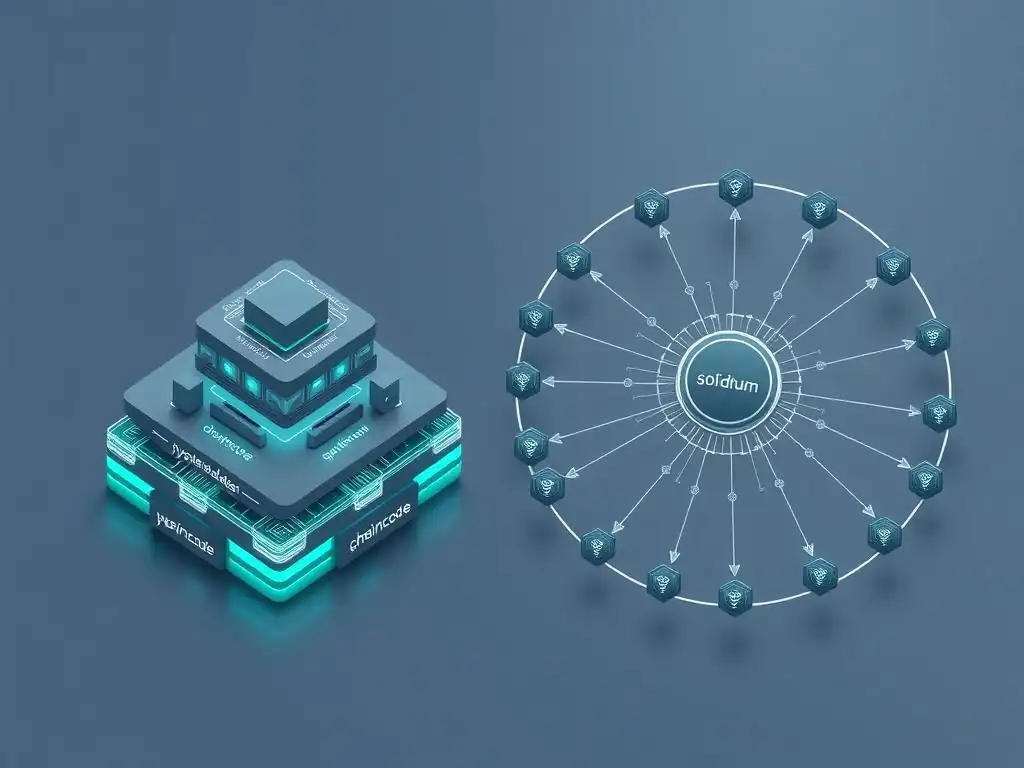
Smart contract development is a core aspect of blockchain application development, and Hyperledger Fabric and Quorum differ in their smart contract paradigms. Fabric utilizes "chaincode," which can be developed in languages like Go, Java, and Node.js. This flexibility allows developers to leverage a broader range of programming skills and potentially integrate with existing enterprise systems more easily. However, chaincode development and deployment can be more complex compared to Solidity smart contracts.
Quorum, being Ethereum-based, natively supports Solidity, the dominant smart contract language in the Ethereum ecosystem. This provides Quorum with a significant advantage in terms of developer availability, tooling, and existing smart contract libraries. Solidity's maturity and widespread adoption make Quorum a more accessible platform for organizations already familiar with Ethereum development or seeking to leverage the vast Ethereum developer community. The choice between chaincode and Solidity depends on an organization's existing developer skills, preferred programming languages, and the complexity of the smart contracts being developed.
Developer Ecosystem and Community Support: Finding the Right Expertise
The strength of a blockchain platform's developer ecosystem and community support is crucial for its long-term success and ease of adoption. Quorum, by virtue of being Ethereum-based, benefits from the massive and vibrant Ethereum developer community. This translates to a larger pool of readily available developers, extensive online resources, and a mature tooling ecosystem. Finding developers skilled in Solidity and Ethereum development is generally easier compared to finding Hyperledger Fabric specialists.
Hyperledger Fabric, while having a smaller developer community compared to Ethereum, boasts a strong and dedicated community within the Linux Foundation's Hyperledger project. The Hyperledger community is actively contributing to Fabric's development, providing documentation, and offering support. While the Fabric developer ecosystem is growing, it is still smaller and potentially less readily accessible than the Ethereum ecosystem. Organizations need to consider the availability of skilled developers and the level of community support when making their platform selection, particularly if they anticipate needing significant external expertise for development and maintenance.
Use Cases: Where Hyperledger Fabric and Quorum Shine
Hyperledger Fabric Use Cases: Supply Chain Traceability, Asset Tracking, and Trade Finance
Hyperledger Fabric's architecture and features make it particularly well-suited for use cases requiring complex business networks, granular control over data access, and high transaction throughput. Supply chain traceability is a prime example, where Fabric's channel architecture can create private communication pathways between different tiers of suppliers, manufacturers, and distributors, ensuring data confidentiality and efficient information sharing. Asset tracking applications also benefit from Fabric's capabilities, enabling secure and transparent tracking of physical or digital assets across complex networks, such as tracking goods in logistics or managing intellectual property rights.
Trade finance is another area where Hyperledger Fabric demonstrates strong potential. Its ability to handle complex workflows, automate processes through chaincode, and provide secure data sharing among multiple financial institutions makes it ideal for streamlining trade finance operations, reducing paperwork, and mitigating risks. Real-world examples include applications for automating letter of credit processes and creating digital platforms for trade document exchange. Fabric's flexibility and enterprise-grade features make it a compelling choice for these and other use cases demanding robust security, scalability, and control in complex business environments.
Quorum Use Cases: Tokenized Assets, Cross-Border Payments, and Data Sharing
Quorum's strengths in privacy and Ethereum compatibility position it favorably for use cases requiring confidential transactions, interoperability with the Ethereum ecosystem, and rapid development using Solidity. Tokenized assets are a natural fit for Quorum, as its privacy features enable the secure and confidential issuance, trading, and management of digital assets, particularly in regulated financial markets. Cross-border payments also benefit from Quorum's capabilities, offering the potential to streamline international transactions, reduce costs, and enhance transparency while maintaining data privacy and regulatory compliance.
Secure data sharing is another area where Quorum shines. Its private transaction capabilities allow organizations to share sensitive data selectively with authorized partners, enabling collaborative data analysis and multi-party computations without compromising confidentiality. Real-world examples include applications for confidential data sharing in healthcare and financial services. Quorum's Ethereum foundation, combined with its enterprise-grade privacy features, makes it a strong contender for these and other use cases demanding rapid development, Ethereum ecosystem integration, and robust data confidentiality.
Factors to Consider When Choosing Between Hyperledger Fabric and Quorum
Business Requirements: Matching the Platform to Your Specific Needs
The most critical factor in enterprise blockchain platform selection is aligning the chosen platform with specific business requirements. Organizations must meticulously analyze their use case, considering factors like data privacy needs, transaction throughput demands, desired levels of control, and integration requirements with existing systems. If data privacy and confidential transactions are paramount, and leveraging the Ethereum ecosystem is desirable, Quorum might be a more suitable choice. Conversely, if maximum flexibility, customization, and granular control over network architecture are prioritized, and the use case involves complex business networks, Hyperledger Fabric might be a better fit.
Furthermore, the complexity of the use case and the required level of decentralization should be considered. For highly complex business processes and networks with diverse participants and varying trust levels, Fabric's modularity and channel architecture can offer greater flexibility and control. For simpler use cases or those where rapid prototyping and deployment using Ethereum tools are desired, Quorum might provide a faster path to implementation. A thorough assessment of business requirements is paramount for making an informed and effective platform selection decision.
Technical Expertise: Assessing Your Team's Capabilities
Evaluating the technical expertise available within an organization is crucial for successful enterprise blockchain adoption. Hyperledger Fabric and Quorum have different technology stacks and developer ecosystems, requiring distinct skill sets. If an organization already has expertise in Go, Java, or Node.js, and is comfortable with a more complex and modular architecture, Hyperledger Fabric might be a good choice. Conversely, if the team has experience with Solidity and Ethereum development, or prefers leveraging the vast Ethereum developer community, Quorum could be a more accessible option.
Furthermore, the level of in-house blockchain expertise and the willingness to invest in training and development should be considered. Both platforms require specialized skills for development, deployment, and maintenance. Organizations need to assess their current capabilities and determine whether they need to build in-house expertise, partner with external blockchain specialists, or adopt a hybrid approach. Choosing a platform that aligns with the organization's technical capabilities and resource availability is essential for ensuring successful implementation and long-term sustainability.
Budget and Resources: Evaluating the Costs of Implementation and Maintenance
Budget and resource constraints are practical considerations in any enterprise technology adoption, and blockchain is no exception. The costs associated with implementing and maintaining Hyperledger Fabric and Quorum can vary depending on factors like platform complexity, deployment architecture, development effort, and ongoing maintenance requirements. Hyperledger Fabric's modularity and customization options can potentially lead to higher initial setup and integration costs, especially for complex deployments. Quorum, being Ethereum-based, might offer a faster time-to-market and lower initial development costs due to the readily available Ethereum tooling and developer ecosystem.
However, long-term maintenance and operational costs should also be factored in. Both platforms require ongoing maintenance, security updates, and potential upgrades. The complexity of the chosen architecture and the level of customization can influence these ongoing costs. Organizations need to carefully evaluate the total cost of ownership (TCO) for both platforms, considering both upfront investment and long-term operational expenses, to make a financially sound platform selection decision.
Compliance and Regulatory Considerations
Compliance and regulatory requirements are paramount for many enterprise blockchain applications, particularly in regulated industries like finance and healthcare. Both Hyperledger Fabric and Quorum offer features that can aid in compliance, but their approaches and strengths differ. Fabric's permissioned nature, channel architecture for data segregation, and robust identity management capabilities can support compliance with data privacy regulations and industry-specific standards. Quorum's focus on transaction-level privacy and permissioning mechanisms also contributes to regulatory compliance, particularly in financial services.
Organizations need to carefully evaluate their specific regulatory obligations and assess how well each platform aligns with these requirements. Factors like data residency, auditability, access control, and compliance with data privacy regulations like GDPR or CCPA should be considered. Engaging with legal and compliance experts to assess the regulatory implications of each platform and ensure compliance with relevant laws and regulations is crucial for mitigating risks and ensuring the long-term viability of the blockchain solution.
Making the Right Choice: Selecting the Best Enterprise Blockchain Platform
A Decision-Making Framework for Enterprise Blockchain Adoption
Selecting the right enterprise blockchain platform requires a structured decision-making framework that considers various factors and aligns the chosen platform with the organization's strategic objectives and operational needs. This framework should begin with a thorough assessment of business requirements, clearly defining the use case, desired outcomes, and key performance indicators. Next, a detailed evaluation of platform capabilities is essential, comparing Hyperledger Fabric and Quorum across architecture, privacy, security, consensus mechanisms, smart contract support, and developer ecosystem.
Technical expertise and resource availability should be carefully assessed, considering the organization's existing skills, budget constraints, and willingness to invest in training or external partnerships. Compliance and regulatory considerations must be thoroughly evaluated, ensuring that the chosen platform can meet all relevant legal and regulatory obligations. Finally, a comprehensive cost-benefit analysis should be conducted, comparing the total cost of ownership for each platform against the anticipated business benefits and return on investment. By systematically working through this decision-making framework, organizations can make an informed and strategic platform selection that maximizes the chances of successful enterprise blockchain adoption.
Future Trends in Enterprise Blockchain Technology
The enterprise blockchain landscape is continuously evolving, with several key trends shaping its future trajectory. Interoperability is becoming increasingly important, with efforts to bridge different blockchain platforms and enable seamless data and asset transfer across networks. This trend will likely reduce vendor lock-in and foster greater collaboration and data sharing across ecosystems. Another significant trend is the growing focus on scalability and performance, with ongoing research and development aimed at improving transaction throughput, reducing latency, and optimizing consensus mechanisms for enterprise-grade demands.
Privacy-enhancing technologies (PETs) are also gaining prominence, with advancements in areas like zero-knowledge proofs and secure multi-party computation further enhancing data confidentiality and enabling new privacy-preserving blockchain applications. Furthermore, the integration of blockchain with other emerging technologies, such as AI, IoT, and cloud computing, is expected to drive innovation and unlock new use cases across industries. Staying abreast of these future trends and anticipating their impact on enterprise blockchain platforms is crucial for making future-proof platform selection decisions and leveraging the full potential of blockchain technology.
Real-World Implementations: Examples of Hyperledger Fabric and Quorum in Production
Real-world implementations provide valuable insights into the practical applications and performance of Hyperledger Fabric and Quorum. Hyperledger Fabric has seen adoption in diverse industries, including supply chain management, food safety, and trade finance. For example, Walmart uses Hyperledger Fabric for its food traceability initiative, enhancing transparency and accountability throughout its supply chain. TradeLens, a shipping platform co-developed by IBM and Maersk, also leverages Hyperledger Fabric to streamline global trade processes and improve supply chain visibility.
Quorum has gained traction primarily in the financial services sector, with applications in areas like tokenized assets, payments, and data sharing. JPMorgan Chase, the platform's initial developer, has utilized Quorum for various internal applications and external initiatives, including the Interbank Information Network (IIN), a payment messaging system designed to improve cross-border payments. Furthermore, Broadridge, a financial technology firm, uses Quorum for its distributed ledger repo platform, streamlining repurchase agreement transactions. These real-world examples demonstrate the diverse applications and proven capabilities of both Hyperledger Fabric and Quorum in production environments, showcasing their value in addressing real-world business challenges.
Frequently Asked Questions
What are the key differences between Hyperledger and Quorum that enterprises should consider?
The primary difference lies in their governance and consensus mechanisms. Hyperledger is an open-source project with a modular architecture, while Quorum, built on Ethereum, offers permissioned blockchains with pluggable consensus algorithms suited for privacy.
Which platform is better suited for enterprises prioritizing data privacy and confidentiality?
Quorum is generally preferred for high-security and privacy requirements because of its private transaction capabilities. It allows for selective data sharing and control over who can access specific information on the blockchain.
How does the development process differ between Hyperledger and Quorum?
Hyperledger offers multiple frameworks like Fabric and Besu, requiring developers to learn specific ledger-specific languages and APIs. Quorum, being Ethereum-based, leverages the familiar Solidity language and Ethereum tooling, potentially easing the learning curve for some developers.
What are the typical use cases for each platform in enterprise settings?
Hyperledger is often used for supply chain management, trade finance, and identity management. Quorum is frequently implemented in financial services, particularly for areas like payments processing and secure data sharing among institutions.
Which platform offers better long-term support and community engagement for enterprise adoption?
Hyperledger benefits from a large and active open-source community, ensuring ongoing development and support. Quorum, while initially developed by J.P. Morgan, now has a dedicated community and support options, but its future roadmap may be more dependent on ConsenSys's direction.
The exploration of Hyperledger Besu and Quorum, as presented in this guide, underscores the critical importance of strategic enterprise blockchain platform selection in today's rapidly evolving technological landscape. Understanding the nuances of each platform, their strengths, and their suitability for specific use cases is no longer a luxury, but a necessity for organizations seeking to leverage the transformative power of blockchain. The right choice can unlock unprecedented efficiency, transparency, and security, while the wrong one can lead to costly setbacks and missed opportunities.
The influence of these platforms extends far beyond mere technological implementation. They are shaping the future of industries, fostering new business models, and redefining trust in a digital world. My own journey researching these platforms has solidified my belief in the potential of blockchain to revolutionize how we interact and transact. As Albert Einstein wisely stated, The measure of intelligence is the ability to change.
The ability to adapt and embrace innovative technologies like Hyperledger and Quorum is paramount for organizations striving to remain competitive and relevant in the years to come.
Now, dear reader, I invite you to reflect on the insights shared within this guide. Consider how the principles of platform selection, the considerations of scalability, security, and governance, can be applied to your own organization's unique challenges and opportunities. Embrace the power of informed decision-making, and embark on your own journey to unlock the transformative potential of enterprise blockchain. The future is decentralized, and it's waiting for you to build it.
Unlock Your Enterprise Blockchain Potential!
Thank you for exploring the differences between Hyperledger and Quorum with Blockchain Trends. We hope this comparison has provided valuable insights into selecting the best Ethereum-based solution for your organization's needs. Now, it's time to turn that knowledge into action!
Ready to move forward? Here’s how:
- Analyze your specific business requirements and compare them to the features offered by Hyperledger and Quorum. Develop a detailed matrix to identify your top priorities.
- Explore real-world use cases by researching companies currently leveraging these platforms within your industry, and consider how similar applications could benefit your organization.
- Share this article with colleagues and start a discussion about which platform best fits your enterprise blockchain strategy.
What challenge will your enterprise blockchain solution address first? Share your thoughts in the comments below!
Leave a Reply