
The Role of Oracles in Blockchain Platforms: Bridging the Real World and the Chain


Welcome to Blockchain Trends, your compass navigating the ever-evolving landscape of blockchain technology.
Ever wondered how blockchain applications access and utilize real-world data? Dive into our exploration of blockchain oracles data feeds and discover how these crucial components bridge the gap between the digital realm and the tangible world. Uncover the vital role they play in decentralized finance (DeFi), enterprise solutions, and the future of decentralized systems. Are you ready to unravel the intricacies of this essential technology? Read on to learn more!
- Blockchain Oracles: Connecting Real-World Data to Blockchain Platforms
- What are Blockchain Oracles and How Do They Work?
- The Critical Role of Oracles in Decentralized Applications (dApps)
- Challenges and Considerations When Choosing Blockchain Oracles
- Selecting the Right Oracle Solution for Your Blockchain Platform
- The Future of Blockchain Oracles: Innovation and Development
- Conclusion: Empowering Blockchain Platforms with Real-World Data Through Oracles
-
Frequently Asked Questions
- What are blockchain oracles and why are they important?
- How do blockchain oracles enhance the utility of DeFi (Decentralized Finance) applications?
- What are some potential security risks associated with using blockchain oracles?
- Besides price feeds, what other types of data can blockchain oracles provide?
- How is the issue of oracle reliability being addressed in the blockchain space?
- Final Reflection: The Enduring Bridge of Trust
- Unlock the Power of Connected Chains!
Blockchain Oracles: Connecting Real-World Data to Blockchain Platforms
Understanding the Importance of Oracles for Blockchain Functionality
Blockchain technology, at its core, operates as a self-contained, deterministic system. This inherent characteristic, while ensuring security and immutability, presents a significant challenge: blockchains cannot inherently access data from the external, real world. Smart contracts, the self-executing agreements residing on blockchains, often require information originating outside the blockchain to trigger actions or fulfill their terms.
For instance, a decentralized insurance contract might need to know the actual weather data to automatically process a claim, or a decentralized finance (DeFi) application requires real-time price feeds to accurately execute trades. This is where blockchain oracles become indispensable.
They act as crucial intermediaries, bridging the gap between the on-chain and off-chain realms, enabling smart contracts to interact with and react to real-world events and data. Without oracles, the potential of blockchain platforms would be severely limited, confined to processing only on-chain data and unable to interact with the vast amount of information residing outside their networks.
The necessity for blockchain oracles stems from the fundamental design of blockchain consensus mechanisms. Blockchains are designed to achieve agreement on data within their network, ensuring all participants have an identical and verifiable record. However, this consensus mechanism does not extend to external data sources. Blockchains cannot natively verify the accuracy or authenticity of information originating from outside their network. Imagine a smart contract designed to pay out based on the price of Bitcoin.
The blockchain itself has no inherent knowledge of Bitcoin's price. It needs a reliable source to provide this information. Oracles fulfill this critical role by securely and reliably fetching external data and feeding it into the blockchain, making it usable by smart contracts. This capability unlocks a vast array of potential applications for blockchain technology, moving it beyond simple cryptocurrency transactions to encompass complex, real-world use cases across various industries.
What are Blockchain Oracles and How Do They Work?
Defining Blockchain Oracles: The Bridge Between On-Chain and Off-Chain Data
Blockchain oracles are essentially data feeds and services that act as a bridge between blockchains and the external world. They are third-party services that supply smart contracts with external information. Think of them as messengers that listen to requests from smart contracts, retrieve relevant data from off-chain sources, and then relay that information back to the blockchain in a format that smart contracts can understand and utilize.
This process is crucial because smart contracts, by design, cannot directly access external APIs, databases, or real-world data streams. They operate within the isolated environment of the blockchain. Oracles effectively break down this isolation, enabling smart contracts to become aware of and react to events happening outside the blockchain network.
Consider a simple analogy: a smart contract is like a judge in a courtroom (the blockchain), who can only make rulings based on evidence presented within the courtroom itself. Blockchain oracles are like witnesses who go out into the real world, gather evidence (data), and bring it back to the judge (smart contract) in a verifiable and trustworthy manner. Without these "witnesses," the judge's ability to make informed and relevant decisions would be severely restricted.
Similarly, without blockchain oracles data feeds, smart contracts would be confined to operating solely on information already present on the blockchain, drastically limiting their utility and practical applications. Oracles empower smart contracts to become truly "smart" by providing them with access to the vast and dynamic world of off-chain data.
How Oracle Data Feeds Function: The Data Flow Process
The operation of blockchain oracle data feeds typically follows a structured process to ensure data accuracy and integrity when transferring information from the real world to the blockchain. This process can be broken down into several key steps. First, a smart contract initiates a request for external data. This request is essentially a call to the oracle network, specifying the type of data needed, such as the current price of a specific asset, weather conditions, or the outcome of a sporting event.
Second, the oracle network, composed of individual oracle nodes or services, receives this request. Each oracle in the network then independently retrieves the requested data from designated external sources. These sources can range from APIs of financial exchanges for price data to weather APIs for meteorological information, or even IoT sensor networks for physical data.
Third, after retrieving the data, the oracle nodes process and format it to be compatible with the blockchain and smart contract requirements. This might involve data aggregation, validation against multiple sources, or conversion into a specific data type. Fourth, the processed data is then submitted back to the blockchain network.
Depending on the oracle type and implementation, this submission can involve a consensus mechanism among multiple oracles to ensure data accuracy and prevent manipulation. For example, decentralized oracles often employ voting or aggregation methods to finalize the data feed.
Finally, once the data is on-chain and validated, the smart contract can access and utilize it to execute its predefined logic. This entire data flow process, from the initial request by the smart contract to the final delivery of validated data on-chain, is designed to be secure, reliable, and transparent, ensuring that smart contracts can confidently rely on the information provided by blockchain oracles data feeds.
Types of Blockchain Oracles: A Comprehensive Overview
Blockchain oracles are not monolithic entities; they come in various forms, each designed to cater to different data needs and application scenarios. Categorizing oracles helps in understanding their strengths, weaknesses, and suitability for specific use cases. A primary categorization is based on the direction of information flow: inbound oracles bring external data onto the blockchain, while outbound oracles send blockchain data to the external world.
However, a more common and practical classification focuses on the source and nature of the data and how it is obtained. This includes software oracles, hardware oracles, consensus-based oracles, and human oracles, each offering unique functionalities and addressing different aspects of data integration.
Software Oracles: API Integration and Data Retrieval
Software oracles are perhaps the most prevalent type, relying on APIs (Application Programming Interfaces) to retrieve data from online sources. They act as intermediaries that query web servers, databases, or other online data providers and relay the information onto the blockchain. These oracles are particularly well-suited for accessing digital data that is readily available online, such as financial market data, weather information, or flight schedules.
For example, a DeFi platform might use a software oracle to fetch real-time price feeds from cryptocurrency exchanges via their APIs. Similarly, a supply chain dApp could use a software oracle to access shipping information from logistics company APIs. The efficiency and scalability of software oracles make them a popular choice for many blockchain applications requiring access to readily available online data.
The reliance on APIs also means that software oracles can be integrated relatively easily into existing blockchain platforms and dApps. Many oracle providers offer pre-built software oracle solutions that developers can readily incorporate into their projects. However, the security and reliability of software oracles are heavily dependent on the trustworthiness of the API providers and the oracle operator itself.
If the API is compromised or the oracle operator is malicious, the data fed into the blockchain can be manipulated, potentially leading to adverse outcomes for smart contracts relying on that data. Therefore, choosing reputable API sources and implementing security measures for software oracles are crucial considerations.
Hardware Oracles: Physical Data Input for Blockchain Applications
Hardware oracles bridge the gap between the physical world and the blockchain by using physical sensors and devices to collect data and feed it into smart contracts. Unlike software oracles that deal with digital data, hardware oracles capture real-world events and conditions. Examples include sensors measuring temperature, humidity, location, or even physical measurements from IoT (Internet of Things) devices.
These oracles are essential for applications that require interaction with the physical environment, such as supply chain tracking, environmental monitoring, and insurance applications based on real-world conditions. For instance, in supply chain management, hardware oracles, like RFID (Radio-Frequency Identification) tags or GPS trackers, can provide verifiable data about the location and condition of goods as they move through the supply chain, triggering smart contract actions based on pre-defined parameters.
Consider a scenario where a smart contract is used to insure perishable goods during transportation. Hardware oracles equipped with temperature sensors can continuously monitor the temperature of the cargo container. If the temperature exceeds a pre-defined threshold, indicating potential spoilage, the hardware oracle can automatically trigger the smart contract to initiate a claim payout.
This automation, enabled by hardware oracles, significantly enhances efficiency and transparency in industries that rely on physical data and real-world events. However, hardware oracles introduce complexities related to sensor reliability, data security at the physical level, and the potential for physical tampering. Ensuring the integrity of the hardware and the secure transmission of data are critical challenges associated with hardware oracle implementations.
Consensus-Based Oracles: Decentralized Data Validation
Consensus-based oracles, also known as decentralized oracles, address the issue of single points of failure and trust associated with centralized oracles. They achieve data validation through a network of multiple independent oracle nodes, relying on a consensus mechanism to agree on the accuracy and authenticity of the data before it is fed into the blockchain. This decentralized approach enhances the reliability and trustworthiness of the oracle data feed, as it mitigates the risk of manipulation or failure from a single source.
Several decentralized oracle networks operate on this principle, employing various consensus algorithms to achieve data agreement. For example, if a smart contract requests the price of Ethereum, multiple oracle nodes in a consensus-based network will independently fetch this data from different exchanges.
The data retrieved by each oracle node is then aggregated and subjected to a consensus process. This process might involve averaging the data points, using median values, or employing more sophisticated voting mechanisms to identify and discard outliers or potentially malicious data submissions. Once a consensus is reached on the accurate data value, it is then securely delivered to the smart contract.
The decentralized nature of these oracles makes them more resilient to censorship and manipulation compared to centralized oracles. However, achieving consensus across a distributed network introduces complexities in terms of latency and scalability. Decentralized oracles often involve trade-offs between security, decentralization, and performance, which need to be carefully considered based on the specific application requirements.
Human Oracles: Relying on Human Expertise for Data Verification
Human oracles, in contrast to software and hardware oracles, rely on human expertise and judgment to provide or verify data for smart contracts. They are particularly useful for situations where data is subjective, requires interpretation, or involves qualitative assessments that cannot be easily automated or obtained from APIs or sensors. Examples of scenarios where human oracles are valuable include legal disputes, insurance claims requiring manual review, or prediction markets involving subjective judgments.
For instance, in a decentralized prediction market on the outcome of a subjective event, like the "best movie of the year," human oracles could be used to verify the final results based on expert opinions or established awards. Similarly, in complex insurance claims, human oracles, acting as expert assessors, could evaluate the details of a claim and determine the payout amount based on policy terms and real-world circumstances.
The process of using human oracles typically involves designated individuals or groups acting as validators. When a smart contract requires human input, it sends a request to the human oracle network. These human oracles then review the relevant information, apply their expertise, and provide their verified data or judgment back to the smart contract.
To ensure reliability and prevent manipulation, human oracle systems often incorporate reputation mechanisms, staking requirements, and dispute resolution processes. These mechanisms aim to incentivize honest reporting and mitigate the risks associated with relying on human input, such as bias or collusion. While human oracles introduce a degree of subjectivity and potential latency, they are essential for blockchain applications that require nuanced judgments and qualitative data that cannot be readily obtained through automated means.
The Critical Role of Oracles in Decentralized Applications (dApps)
Enhancing dApp Functionality with Real-World Information
Blockchain oracles are not merely add-ons; they are fundamental building blocks that significantly enhance the functionality and scope of decentralized applications (dApps). Without oracles, dApps would be largely confined to processing on-chain transactions and data, limiting their real-world utility. Oracles empower dApps to interact with the external world, enabling them to respond to real-world events, access off-chain data sources, and integrate with traditional systems. This capability is crucial for creating dApps that are truly useful and can address a wide range of real-world problems across various industries.
Consider the example of a decentralized lending platform. To function effectively, such a platform needs to accurately assess the value of collateral provided by borrowers. This requires real-time price feeds for various cryptocurrencies and other assets, which are obtained through blockchain oracles data feeds.
Similarly, a decentralized insurance dApp needs access to external data to verify the occurrence of insured events, such as weather data for parametric insurance or flight delay information for travel insurance. Oracles bridge this informational gap, allowing dApps to operate based on real-world conditions and data, making them more versatile and applicable to diverse use cases. The integration of oracles essentially transforms dApps from isolated blockchain applications into powerful tools capable of interacting with and impacting the real world.
Use Cases for Oracles: Expanding Blockchain Applications
The versatility of blockchain oracles unlocks a vast landscape of potential applications across numerous industries. By providing a reliable bridge to external data, oracles enable blockchain technology to extend its reach beyond cryptocurrencies and into diverse sectors. From revolutionizing finance with DeFi to streamlining supply chains and automating insurance processes, oracles are instrumental in realizing the transformative potential of blockchain.
DeFi Applications: Price Feeds, Lending Platforms, and Stablecoins
In the realm of Decentralized Finance (DeFi), oracles are indispensable. Price feeds are perhaps the most critical application, providing real-time and accurate price data for various cryptocurrencies and traditional assets to decentralized exchanges (DEXs), lending platforms, and other DeFi protocols. DEXs rely on oracles to ensure accurate trading prices, preventing arbitrage opportunities based on stale or manipulated data.
Lending platforms utilize oracle price feeds to determine the collateral value of assets and manage loan-to-value ratios, mitigating risks associated with price volatility. Stablecoins, particularly algorithmic stablecoins, often depend on oracles to maintain their peg to fiat currencies or other assets, adjusting their supply based on oracle-provided price data. For example, Chainlink, a prominent oracle provider, powers price feeds for numerous DeFi protocols, securing billions of dollars in value within the DeFi ecosystem.
Consider MakerDAO, a leading DeFi lending platform that issues DAI, a decentralized stablecoin pegged to the US dollar. MakerDAO relies heavily on blockchain oracles data feeds to track the price of Ether (ETH) and other collateral assets used to back DAI. These price feeds, provided by oracle networks, are crucial for maintaining the stability of DAI and ensuring the platform's solvency. Without reliable price oracles, DeFi applications would be highly vulnerable to price manipulation and market inefficiencies, hindering their widespread adoption and real-world applicability.
Supply Chain Management: Tracking Goods and Ensuring Transparency
Blockchain oracles are revolutionizing supply chain management by providing enhanced transparency and traceability of goods as they move through complex networks. Hardware oracles, such as IoT sensors and RFID tags, can track the location, temperature, humidity, and other conditions of products in real-time. This data is then relayed to the blockchain via oracles, providing immutable and verifiable records of product provenance and condition. For instance, in the pharmaceutical industry, temperature-sensitive medications require strict temperature control throughout the supply chain. Hardware oracles can monitor and record temperature data, ensuring compliance and preventing the distribution of compromised products.
Imagine a global food supply chain where consumers want to verify the origin and journey of their food. Blockchain integrated with oracles can provide a transparent and traceable record, from farm to table. Oracles can capture data at each stage of the supply chain – from farm location and harvest date to processing details and transportation conditions – and record it on the blockchain.
Consumers can then scan a QR code on the product packaging to access this information, ensuring authenticity and building trust in the supply chain. This enhanced transparency and traceability, enabled by blockchain oracles, can significantly improve efficiency, reduce fraud, and enhance consumer confidence in supply chain operations.
Insurance Applications: Automating Claims Processing
The insurance industry is ripe for disruption by blockchain and oracles, particularly in automating claims processing and creating parametric insurance products. Parametric insurance relies on predefined parameters or triggers, such as weather events or flight delays, to automatically determine payouts, eliminating the need for lengthy claims investigations. Blockchain oracles are crucial for verifying these triggers by providing reliable and tamper-proof data feeds.
For example, a parametric crop insurance contract could be triggered by rainfall data obtained from weather oracles. If rainfall falls below a pre-defined threshold, the oracle automatically confirms the event, and the smart contract triggers an automatic payout to the farmer.
Consider flight delay insurance. Traditionally, claiming flight delay insurance involves manual processes and paperwork. With blockchain and oracles, this process can be automated. Oracles can monitor real-time flight data from aviation APIs. If a flight is delayed beyond a pre-defined threshold, the oracle automatically triggers the smart contract to initiate an instant payout to the insured passenger. This automation significantly reduces administrative overhead, speeds up claims processing, and enhances transparency and fairness in insurance payouts. The use of blockchain oracles in insurance applications has the potential to create more efficient, transparent, and customer-centric insurance products.
Prediction Markets: Utilizing External Data for Accurate Predictions
Prediction markets leverage the "wisdom of the crowd" to forecast future events. These markets rely on participants to bet on the outcomes of events, and the collective predictions often prove to be surprisingly accurate. Blockchain oracles play a vital role in prediction markets by providing verifiable and objective data to resolve the outcomes of events and trigger payouts to winning participants. For instance, in a prediction market on the outcome of an election, oracles are needed to provide the official election results from a trusted source once the election is concluded.
Imagine a decentralized prediction market for sports events. Participants can bet on the outcome of a football match. Once the match is over, a blockchain oracle is used to fetch the official results from a reputable sports data provider.
This oracle data feed is then used to automatically determine the winners and distribute payouts according to the market rules. Without reliable oracles, prediction markets would be vulnerable to manipulation and disputes regarding event outcomes. Oracles ensure the integrity and fairness of prediction markets by providing objective and verifiable data for settlement, fostering trust and participation in these decentralized forecasting platforms.
Challenges and Considerations When Choosing Blockchain Oracles
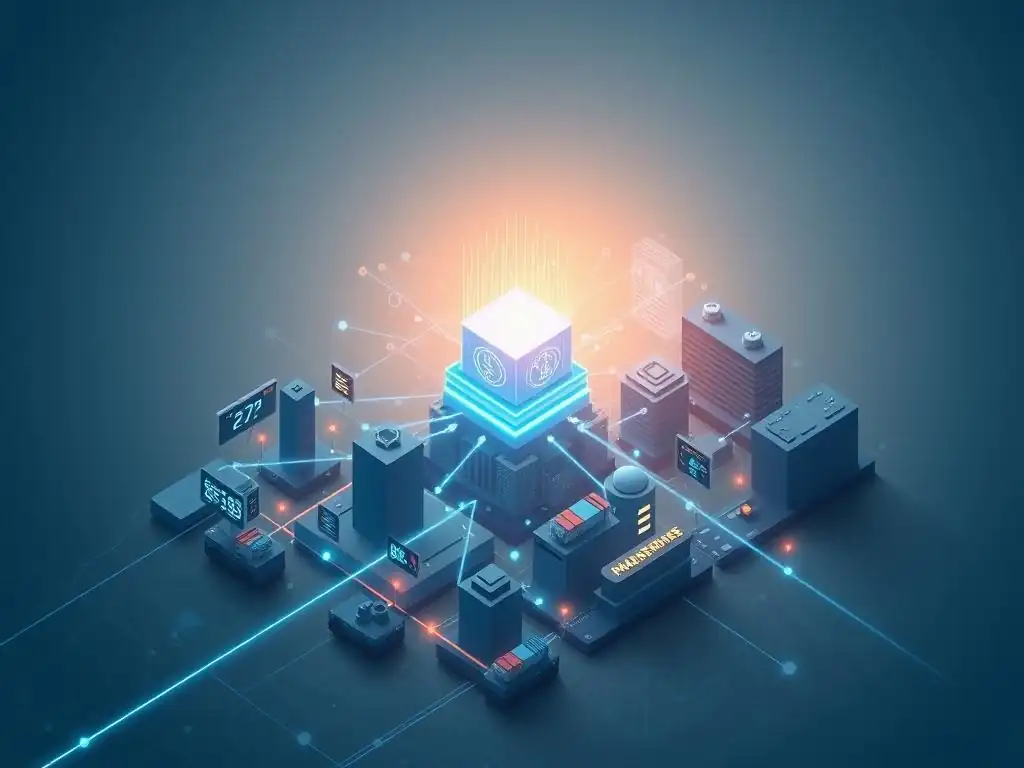
The Oracle Problem: Ensuring Data Accuracy and Reliability
The "Oracle Problem" is a fundamental challenge in blockchain technology, highlighting the inherent difficulty in ensuring the accuracy and reliability of data provided by oracles. Since blockchains operate on the principle of trustlessness and verifiable consensus, relying on external oracles introduces a potential point of trust. If the data provided by an oracle is inaccurate, manipulated, or compromised, smart contracts relying on this data will execute incorrectly, potentially leading to significant financial losses or operational failures. This problem stems from the fact that blockchains cannot directly verify the authenticity of off-chain data sources or the honesty of oracle operators.
For example, consider a DeFi lending platform that relies on a price oracle. If the price oracle is compromised and reports an artificially low price for a collateral asset, it could trigger unwarranted liquidations of user positions, resulting in substantial losses for users. Similarly, in a supply chain application, if a hardware oracle tracking temperature data malfunctions or is tampered with, it could lead to the distribution of spoiled goods without triggering necessary alerts.
Addressing the oracle problem is paramount for the widespread adoption of blockchain technology, requiring robust mechanisms to enhance data accuracy, reliability, and trust in oracle systems. Strategies to mitigate the oracle problem include using decentralized oracle networks, employing multiple data sources for cross-validation, and implementing reputation systems for oracle providers.
Security Risks and Mitigation Strategies for Oracle Vulnerabilities
Blockchain oracles, while essential for bridging the gap between blockchains and the real world, also introduce potential security vulnerabilities. As intermediaries handling off-chain data, oracles can become targets for malicious actors seeking to manipulate smart contracts or disrupt blockchain applications. Common security risks associated with oracles include data manipulation, oracle downtime, and oracle collusion.
Data manipulation occurs when an attacker compromises an oracle and feeds false or manipulated data to the blockchain, causing smart contracts to execute based on incorrect information. Oracle downtime, or the unavailability of an oracle service, can disrupt the functioning of smart contracts that depend on real-time data feeds. Oracle collusion occurs when multiple oracle nodes conspire to provide false data, especially in decentralized oracle networks where consensus is required.
Mitigation strategies to address these security risks include employing decentralized oracle networks to reduce reliance on single points of failure, using multiple independent data sources for cross-validation to detect inconsistencies and anomalies, and implementing cryptographic techniques, such as data signing and encryption, to ensure data integrity and authenticity. Furthermore, reputation systems and staking mechanisms for oracle providers can incentivize honest behavior and penalize malicious actions.
Regular security audits of oracle systems and smart contracts are also crucial to identify and address potential vulnerabilities. By implementing robust security measures and choosing reputable oracle providers, blockchain projects can minimize the security risks associated with oracle integration and enhance the overall security and reliability of their applications.
Decentralization and Trustworthiness of Oracle Networks
The level of decentralization in oracle networks significantly impacts their trustworthiness and resilience. Centralized oracles, while potentially efficient, present a single point of failure and trust. If a centralized oracle is compromised, manipulated, or goes offline, all smart contracts relying on it are at risk.
Decentralized oracle networks, on the other hand, distribute data retrieval and validation across multiple independent oracle nodes, enhancing robustness and reducing the risk of single points of failure. Decentralization also makes it more difficult for malicious actors to manipulate the oracle data feed, as they would need to compromise a significant portion of the oracle network to influence the consensus.
However, achieving true decentralization in oracle networks is a complex challenge. Factors to consider include the number of independent oracle nodes, their geographic distribution, the consensus mechanism employed, and the governance structure of the oracle network. A truly decentralized oracle network should be resistant to censorship, manipulation, and collusion, ensuring that the data provided is accurate, reliable, and trustworthy.
Blockchain projects should carefully evaluate the level of decentralization and the trustworthiness of oracle networks when selecting an oracle solution, prioritizing decentralized options whenever possible to enhance the security and integrity of their applications. Reputable decentralized oracle providers often undergo rigorous security audits and have transparent governance models, further enhancing their trustworthiness.
Cost and Efficiency Considerations for Oracle Implementation
Implementing blockchain oracles involves cost and efficiency considerations that blockchain projects need to carefully evaluate. Oracle services are not free; oracle providers typically charge fees for data feeds and oracle network usage. These fees can vary depending on factors such as the frequency of data updates, the complexity of data retrieval, the number of data sources used, and the specific oracle provider.
For blockchain projects, oracle costs can represent a significant operational expense, especially for applications that require frequent data updates or complex data feeds. Furthermore, the efficiency of oracle data delivery, measured by latency and speed, is crucial for time-sensitive applications, such as DeFi trading platforms that require real-time price feeds.
Different oracle solutions offer varying levels of cost and efficiency. Centralized oracles might be more cost-effective and faster in data delivery but compromise on decentralization and trust. Decentralized oracles, while enhancing security and trustworthiness, may incur higher costs and introduce latency due to the consensus process and network overhead.
Blockchain projects need to carefully balance cost, efficiency, security, and decentralization when choosing an oracle solution, considering the specific requirements of their application. Optimizing oracle implementation, such as reducing the frequency of data requests when appropriate or using efficient data aggregation techniques, can help minimize costs and improve efficiency without compromising data accuracy and reliability.
Selecting the Right Oracle Solution for Your Blockchain Platform
Evaluating Oracle Data Feed Providers: Key Factors to Consider
Choosing the right oracle solution is a critical decision for blockchain projects, as it directly impacts the security, reliability, and functionality of their applications. Several key factors should be carefully evaluated when assessing oracle data feed providers and selecting the most suitable solution. These factors include data accuracy and reliability metrics, latency and speed of data delivery, security protocols and reputation of the provider, and cost-effectiveness and pricing models. A thorough evaluation of these factors will enable blockchain projects to make informed decisions and choose oracle solutions that best meet their specific needs and requirements.
Data Accuracy and Reliability Metrics
Data accuracy and reliability are paramount considerations when evaluating oracle data feed providers. Blockchain projects must ensure that the data provided by oracles is accurate, up-to-date, and consistently reliable. Key metrics to assess data accuracy include the sources of data used by the oracle provider, the methodology for data aggregation and validation, and historical data accuracy records.
Reputable oracle providers typically source data from multiple reputable sources and employ robust data validation techniques to ensure accuracy. Reliability metrics include uptime guarantees, historical performance data, and redundancy measures in place to prevent data feed interruptions. Blockchain projects should carefully examine these metrics and choose oracle providers with a proven track record of data accuracy and reliability.
For instance, when evaluating price oracle providers for a DeFi platform, it is crucial to assess the exchanges from which they source price data, the frequency of data updates, and the mechanisms they use to detect and mitigate price manipulation. Providers who source data from a wide range of reputable exchanges, use volume-weighted average price calculations, and have robust outlier detection mechanisms are generally preferred for their data accuracy and reliability.
Latency and Speed of Data Delivery
Latency and speed of data delivery are critical factors for applications that require real-time data feeds, such as DeFi trading platforms, real-time gaming dApps, or applications that respond to rapidly changing market conditions. Latency refers to the delay between a data request and the delivery of the data to the blockchain. Lower latency and faster data delivery are generally preferred, especially for time-sensitive applications. Blockchain projects should evaluate the latency and speed of data delivery offered by different oracle providers and choose solutions that meet their application's performance requirements.
Factors that influence latency and speed include the oracle network architecture, the geographical distribution of oracle nodes, and the communication protocols used. Decentralized oracle networks might introduce some latency due to the consensus process, while centralized oracles could offer faster data delivery. Blockchain projects need to consider this trade-off and select oracle solutions that balance latency, speed, security, and decentralization based on their application's specific needs. Providers often publish latency metrics and performance benchmarks, which should be carefully reviewed during the evaluation process.
Security Protocols and Reputation of the Provider
Security protocols and the reputation of the oracle provider are crucial factors in ensuring the overall security and trustworthiness of the oracle solution. Blockchain projects must assess the security measures implemented by oracle providers to protect against data manipulation, oracle downtime, and other security risks. Key security protocols to evaluate include data encryption, secure communication channels, redundancy measures, and security audit reports.
The reputation of the oracle provider, based on their track record, client testimonials, and community reviews, is also an important indicator of their reliability and trustworthiness. Choosing reputable oracle providers with strong security protocols minimizes the risks associated with oracle vulnerabilities and enhances the overall security posture of blockchain applications.
Reputable oracle providers often undergo independent security audits by reputable cybersecurity firms and publicly disclose their security protocols and audit reports. They also typically have established reputations within the blockchain community and positive client testimonials. Blockchain projects should prioritize oracle providers with strong security measures and a proven track record of reliability and security.
Cost-Effectiveness and Pricing Models
Cost-effectiveness and pricing models are practical considerations for blockchain projects when selecting oracle solutions. Oracle providers offer various pricing models, including subscription-based pricing, usage-based pricing, and custom pricing plans. Subscription-based pricing involves recurring fees, while usage-based pricing charges based on the volume of data requests or data consumed. Blockchain projects should evaluate the pricing models offered by different oracle providers and choose solutions that are cost-effective for their specific usage patterns and budget constraints. Cost-effectiveness should be balanced with other critical factors, such as data accuracy, reliability, security, and performance.
For projects with predictable data usage patterns, subscription-based pricing might be more cost-effective. For projects with variable data usage, usage-based pricing could be more suitable. Blockchain projects should carefully analyze their data requirements, usage patterns, and budget limitations when comparing pricing models and selecting the most cost-effective oracle solution without compromising on essential quality and security aspects.
Oracle Implementation Best Practices for Blockchain Projects
Implementing blockchain oracles effectively requires adherence to best practices to maximize their benefits and mitigate potential risks. These best practices encompass various aspects, from oracle selection and integration to ongoing monitoring and maintenance. Following these guidelines ensures that oracles are implemented securely, reliably, and efficiently, contributing to the overall success of blockchain projects.
Best practices include starting with a clear understanding of the data requirements of the smart contracts and dApps, carefully selecting reputable and reliable oracle providers based on the evaluation factors discussed previously, and implementing redundancy by using multiple oracles or diverse data sources to enhance data reliability and prevent single points of failure. Furthermore, implementing robust data validation techniques, such as cross-validation and outlier detection, is crucial to ensure data accuracy. Continuous monitoring of oracle performance, data feed accuracy, and security is essential to detect and address any issues promptly.
Regular security audits of oracle integrations and smart contracts are also recommended to identify and mitigate potential vulnerabilities. By adhering to these best practices, blockchain projects can effectively leverage oracles to enhance their applications while minimizing risks and ensuring data integrity.
The Future of Blockchain Oracles: Innovation and Development
Emerging Trends in Oracle Technology: Cross-Chain Oracles
The future of blockchain oracles is marked by continuous innovation and development, driven by the evolving needs of the blockchain ecosystem and the increasing demand for more sophisticated and versatile oracle solutions. One prominent emerging trend is the development and adoption of cross-chain oracles.
As the blockchain landscape becomes increasingly multi-chain, with various blockchains operating independently, the need for oracles that can bridge data across different blockchains is growing. Cross-chain oracles enable smart contracts on one blockchain to access data and interact with applications on other blockchains, fostering interoperability and unlocking new possibilities for cross-chain DeFi, data sharing, and application integration.
Several projects are actively developing cross-chain oracle solutions, utilizing various techniques to achieve interoperability. These solutions often involve relay chains, bridges, or specialized oracle protocols that can securely and reliably transfer data across different blockchain networks. The emergence of cross-chain oracles is expected to significantly enhance the functionality and interconnectedness of the blockchain ecosystem, enabling more complex and collaborative applications that span multiple blockchains. For example, a cross-chain DeFi application could leverage oracles to access liquidity or assets from different blockchains, creating more efficient and versatile financial instruments.
The Impact of Oracles on the Evolution of Blockchain Technology
Blockchain oracles are not just a supporting technology; they are a driving force in the evolution of blockchain technology. By bridging the gap between blockchains and the real world, oracles are expanding the scope and applicability of blockchain technology far beyond its initial focus on cryptocurrencies. Oracles are enabling the development of increasingly complex and sophisticated smart contracts that can interact with real-world events, data streams, and traditional systems. This, in turn, is fueling the growth of diverse blockchain applications across various industries, from DeFi and supply chain management to insurance, healthcare, and beyond.
As oracle technology continues to evolve and improve, we can expect to see even more innovative and impactful blockchain applications emerge. Advancements in oracle decentralization, security, efficiency, and interoperability will further enhance the trustworthiness and versatility of oracle solutions, making them an even more integral component of the blockchain ecosystem. Oracles are paving the way for a future where blockchain technology becomes seamlessly integrated with the real world, powering a wide range of decentralized and transparent applications that transform industries and improve lives.
Oracles and the Convergence of Blockchain with IoT and AI
The convergence of blockchain technology with other transformative technologies, such as the Internet of Things (IoT) and Artificial Intelligence (AI), is creating exciting new opportunities, and oracles are playing a crucial role in enabling this convergence. IoT devices generate vast amounts of real-world data, and blockchain provides a secure and transparent platform for managing and utilizing this data.
Oracles act as the crucial link between IoT devices and blockchain networks, enabling IoT data to be securely and reliably fed into smart contracts for automated actions and data-driven decision-making. For example, IoT sensors in a smart city could provide real-time data on traffic flow, environmental conditions, or energy consumption, which oracles can then relay to blockchain-based smart contracts to optimize city operations and resource allocation.
Similarly, the integration of AI with blockchain is enhanced by oracles. AI algorithms often require access to vast datasets to train and operate effectively. Oracles can provide AI systems with access to real-world data stored on blockchains or data feeds from external sources, enabling the development of more intelligent and data-driven AI applications within the blockchain ecosystem.
Conversely, AI can also be used to improve oracle performance, such as in data validation, anomaly detection, and oracle network management. The synergistic convergence of blockchain, IoT, and AI, facilitated by oracles, is poised to unlock a new era of intelligent and interconnected decentralized systems that can transform industries and create new value across various domains.
Conclusion: Empowering Blockchain Platforms with Real-World Data Through Oracles
Blockchain oracles are indispensable components of blockchain platforms, serving as the critical bridge that connects the inherently isolated blockchain environment with the vast and dynamic real world. By providing secure and reliable access to off-chain data, blockchain oracles data feeds empower smart contracts to interact with real-world events, data streams, and systems, unlocking a vast array of potential applications across diverse industries. From revolutionizing finance with DeFi to streamlining supply chains, automating insurance processes, and enabling innovative prediction markets, oracles are instrumental in realizing the transformative potential of blockchain technology.
As blockchain technology continues to evolve, so too will the sophistication and versatility of oracles. Emerging trends, such as cross-chain oracles and the convergence of blockchain with IoT and AI, promise to further expand the capabilities and impact of oracles, paving the way for a future where blockchain platforms are seamlessly integrated with the real world, powering a wide range of decentralized, transparent, and impactful applications.
Choosing the right oracle solution and implementing best practices are crucial for blockchain projects to leverage the power of oracles effectively and securely, ensuring data accuracy, reliability, and the overall success of their blockchain initiatives.
Frequently Asked Questions
What are blockchain oracles and why are they important?
Blockchain oracles are third-party services that provide smart contracts with data from the outside world. They are crucial because blockchains cannot inherently access external data, hindering their ability to interact with real-world events.
How do blockchain oracles enhance the utility of DeFi (Decentralized Finance) applications?
Oracles supply DeFi platforms with price feeds, enabling accurate and reliable lending, borrowing, and trading activities. This data ensures fair market conditions and prevents manipulation in decentralized financial systems, contributing to trust and stability.
What are some potential security risks associated with using blockchain oracles?
One major risk is the 'oracle problem', where inaccurate or compromised data from an oracle can lead to flawed smart contract execution. This can result in financial losses or other unintended consequences for users relying on the data.
Besides price feeds, what other types of data can blockchain oracles provide?
Oracles can supply a wide range of information, including weather data, sports scores, and real-world event outcomes. This broadens the scope of blockchain applications beyond finance, enabling use cases in supply chain management, insurance, and more.
How is the issue of oracle reliability being addressed in the blockchain space?
Solutions include using decentralized oracle networks that aggregate data from multiple sources to reduce the risk of single points of failure. Reputation systems and economic incentives are also employed to encourage oracles to provide accurate and truthful information.
Final Reflection: The Enduring Bridge of Trust
The exploration of blockchain oracles and their crucial role in providing accurate and reliable data feeds underscores a fundamental truth: blockchain technology, for all its innovation, cannot exist in isolation. It requires a bridge to the real world, a conduit for information that empowers smart contracts and decentralized applications to truly flourish. The ongoing demand for secure and verifiable data feeds highlights the critical importance of robust oracle solutions in shaping the future of decentralized finance and beyond.
This intricate dance between the digital and physical realms, facilitated by blockchain oracles, has profoundly influenced the development of decentralized ecosystems. The ability to trustlessly integrate real-world data into blockchain applications has unlocked a wave of innovation, fostering new business models and empowering individuals in unprecedented ways. Data is the new oil, but oracles are the pipelines that deliver it to the blockchain economy.
This quote encapsulates the essential role oracles play in fueling the growth and utility of blockchain platforms, ensuring that the promise of decentralization is not limited by the constraints of on-chain information.
As we stand at the cusp of a new era of decentralized technologies, let us reflect on the power of connection and the importance of building bridges of trust. Consider how you can contribute to the development and adoption of secure and reliable blockchain oracles. Embrace the challenge of ensuring that the data that powers our decentralized future is accurate, verifiable, and accessible to all. The future of blockchain depends on our collective commitment to building a robust and trustworthy ecosystem, one data feed at a time.
Okay, here's a Call to Action (CTA) crafted for the end of a web article titled "The Role of Oracles in Blockchain Platforms: Bridging the Real World and the Chain" on the website Blockchain Trends (blockchaintrends.org):
Unlock the Power of Connected Chains!
Thanks for exploring how oracles are revolutionizing blockchain's capabilities! Now that you understand their crucial role in connecting real-world data to the chain, let's put that knowledge into action. Ready to dive deeper?
- Dive into Practical Application: Begin researching real-world oracle implementation within industries that fascinate you, focusing on sectors like supply chain management or decentralized finance.
- Explore the potential risks and vulnerabilities associated with specific oracle types. This understanding is crucial for building more robust and secure blockchain applications.
- Share this article with your network and spark a conversation about the future of oracles and their impact on the blockchain ecosystem.
What real-world data point do you believe holds the most potential to transform the blockchain landscape via oracles? Share your thoughts below!
Leave a Reply