
Can AI Enhance Decentralized Cybersecurity? Exploring the Potential and Pitfalls


Welcome to Blockchain Trends, your compass in the rapidly evolving world of decentralized technologies!
Are you ready to delve into the intriguing intersection of artificial intelligence and blockchain security? In this article, we're exploring the powerful potential – and potential pitfalls – of AI decentralized cybersecurity benefits. Discover how AI can fortify blockchain networks against ever-sophisticated threats, and what challenges lie ahead. This journey into Blockchain Security & Risks starts now. Ready to unlock the future of decentralized protection?
Can AI Enhance Decentralized Cybersecurity? Exploring the Potential and Pitfalls
- Introduction: The Convergence of AI and Decentralized Cybersecurity
- Understanding Decentralized Cybersecurity and Its Limitations
- AI for Enhanced Decentralized Cybersecurity: Potential Benefits
- AI in Decentralized Cybersecurity: Potential Pitfalls and Challenges
- Case Studies: AI Applications in Decentralized Cybersecurity
- Overcoming the Challenges: Best Practices for AI-Driven Decentralized Security
- The Future of AI and Decentralized Cybersecurity: Trends and Predictions
- Conclusion: Realizing the Potential of AI for Decentralized Cybersecurity While Mitigating Risks
-
Frequently Asked Questions
- How can AI improve decentralized cybersecurity?
- What are the potential downsides of using AI in decentralized cybersecurity?
- What role does blockchain play in securing AI models used for cybersecurity?
- How does the combination of AI and decentralized cybersecurity impact regulatory compliance?
- What are the key benefits of integrating AI into decentralized cybersecurity architectures?
- Final Reflection: Embracing the Symbiosis of Intelligence and Trust
- Revolutionize Your Cybersecurity Strategy Today!
Introduction: The Convergence of AI and Decentralized Cybersecurity
The Growing Need for Robust Cybersecurity in Decentralized Systems
Decentralized systems, particularly those built upon blockchain technology, are revolutionizing various sectors, from finance with DeFi to supply chain management. These systems, by their very nature, aim to distribute control and eliminate single points of failure. However, this distributed nature also introduces unique cybersecurity challenges.
Unlike traditional centralized systems, decentralized networks operate across numerous nodes, increasing the attack surface and requiring novel security approaches. The immutability and transparency of blockchain, while strengths in many aspects, can also become vulnerabilities if security flaws are exploited, as every transaction is permanently recorded. As decentralized platforms handle increasingly sensitive data and larger financial values, the need for robust and adaptable cybersecurity measures becomes paramount to ensure trust and long-term viability.
The rapid growth of decentralized finance (DeFi) highlights this escalating need. In 2023 alone, DeFi exploits and hacks resulted in losses exceeding \$2 billion, according to reports from blockchain security firms like Chainalysis. These incidents underscore that despite the inherent security features of blockchain, vulnerabilities exist at the application layer, in smart contracts, and in the consensus mechanisms themselves. The decentralized and often pseudonymous nature of participants also complicates incident response and attribution in the event of a security breach, making proactive and sophisticated security solutions indispensable for the continued growth and adoption of decentralized technologies.
Exploring the Intersection: How AI Can Bolster Blockchain Security
Artificial intelligence (AI) offers a powerful toolkit to address the evolving cybersecurity landscape in decentralized systems. AI's ability to analyze vast datasets, identify patterns, and automate responses presents a compelling solution to many of the security challenges inherent in blockchain and decentralized networks.
From detecting anomalous transaction patterns to predicting potential vulnerabilities in smart contracts, AI algorithms can provide a layer of security that traditional methods may struggle to achieve in these complex environments. The proactive and adaptive nature of AI, capable of learning from new threats and adjusting security protocols in real-time, aligns well with the dynamic and ever-evolving threat landscape of decentralized ecosystems.
The potential benefits of integrating AI into decentralized cybersecurity are multifaceted. AI can enhance threat detection by analyzing network traffic and user behavior across numerous nodes simultaneously, something incredibly difficult for human analysts to manage manually. It can automate security audits, penetration testing, and vulnerability scanning, significantly reducing the time and resources required for security assessments.
Furthermore, AI can improve access control and authentication mechanisms, moving beyond static passwords to dynamic, behavior-based systems that are harder to compromise. By leveraging AI, decentralized systems can move towards a more proactive, resilient, and ultimately more secure operational model, fostering greater confidence and wider adoption.
Understanding Decentralized Cybersecurity and Its Limitations
Current Cybersecurity Challenges in Blockchain Networks
Blockchain networks, while designed with inherent security features like cryptography and consensus mechanisms, face a unique set of cybersecurity challenges. Smart contract vulnerabilities represent a significant attack vector. These self-executing contracts, written in languages like Solidity for Ethereum, can contain coding errors that malicious actors can exploit to drain funds or manipulate contract logic.
Reentrancy attacks, integer overflows, and timestamp dependencies are just a few examples of common smart contract vulnerabilities that have led to substantial financial losses in DeFi. According to a report by Immunefi, smart contract exploits accounted for over 80% of total crypto losses in Q1 2023.
Another critical challenge is related to consensus mechanism attacks. While mechanisms like Proof-of-Work and Proof-of-Stake are designed to be secure, they are not impervious to attacks. 51% attacks, where a single entity or group gains control of more than half the network's hashing power or stake, can allow for transaction manipulation and double-spending.
Furthermore, vulnerabilities in the underlying network infrastructure, such as node compromise or Distributed Denial of Service (DDoS) attacks targeting network nodes, can disrupt network operations and potentially expose sensitive data. The distributed nature of these networks, while a strength in terms of resilience, also creates a larger attack surface that requires constant monitoring and sophisticated security strategies.
Limitations of Traditional Security Measures in Decentralized Environments
Traditional cybersecurity measures, designed primarily for centralized systems, often fall short in addressing the unique security needs of decentralized environments. Firewalls and intrusion detection systems, effective in perimeter security, are less relevant in peer-to-peer networks where there is no central point of control. Traditional vulnerability scanners, while useful for identifying known software flaws, may not be adept at detecting the logic-based vulnerabilities often found in smart contracts. The sheer volume of transactions and data generated in large blockchain networks can overwhelm traditional security information and event management (SIEM) systems that rely on manual analysis and rule-based detection.
Moreover, the decentralized and often pseudonymous nature of participants in blockchain networks complicates traditional security approaches like identity and access management. Relying solely on password-based authentication or centralized identity providers becomes problematic in environments designed to minimize reliance on central authorities. Incident response in decentralized systems also presents unique challenges. The lack of a central authority to enforce security measures or rollback malicious transactions necessitates decentralized and automated response mechanisms, which traditional security frameworks are not designed to provide. Therefore, novel security approaches, leveraging technologies like AI, are crucial to effectively secure decentralized systems.
AI for Enhanced Decentralized Cybersecurity: Potential Benefits
AI-Powered Threat Detection in Decentralized Networks: A Proactive Approach
Real-time Anomaly Detection using AI Algorithms
AI algorithms excel at identifying anomalies within vast datasets, making them exceptionally well-suited for real-time threat detection in decentralized networks. In blockchain, this translates to analyzing transaction patterns, network traffic, and user behavior to flag suspicious activities that might indicate an ongoing attack. For example, machine learning models can be trained on historical transaction data to establish a baseline of normal network behavior.
Deviations from this baseline, such as unusually large transactions, rapid fund movements to unfamiliar addresses, or sudden spikes in network latency, can trigger alerts and initiate automated security responses. This proactive approach contrasts sharply with reactive security measures that only respond after an attack has already been identified.
Consider the example of detecting flash loan attacks in DeFi. These attacks exploit smart contract vulnerabilities through rapid borrowing and lending within a single transaction block. AI algorithms can be trained to recognize the characteristic patterns of flash loan attacks, such as extremely large transaction volumes originating from a single address within a short timeframe, coupled with specific sequences of smart contract interactions.
By detecting these anomalies in real-time, AI-powered systems can automatically pause or revert suspicious transactions, preventing significant financial losses before they occur. This capability is particularly valuable in the fast-paced environment of DeFi where attacks can unfold and cause damage within minutes.
Identifying and Mitigating Smart Contract Vulnerabilities with AI
Beyond real-time threat detection, AI can also play a crucial role in proactively identifying and mitigating smart contract vulnerabilities before they are exploited. Static analysis tools, powered by AI, can analyze smart contract code to detect potential flaws and security weaknesses. These tools can go beyond basic syntax checking to understand the semantic meaning of the code and identify vulnerabilities like reentrancy, integer overflows, and gas limit issues. Machine learning models can be trained on a large dataset of known smart contract vulnerabilities to improve the accuracy and comprehensiveness of these automated code audits.
For example, AI-powered fuzzing techniques can automatically generate a wide range of inputs and test cases to probe smart contracts for unexpected behavior and potential vulnerabilities. This automated testing process can uncover edge cases and vulnerabilities that might be missed by manual code reviews or traditional testing methods.
Furthermore, AI can assist developers in writing more secure smart contracts by providing real-time feedback and suggestions during the coding process, highlighting potential security risks and recommending best practices. By integrating AI into the smart contract development lifecycle, decentralized platforms can significantly reduce the attack surface and enhance the overall security of their applications.
Automated Security Audits and Penetration Testing with AI
Security audits and penetration testing are crucial for ensuring the robustness of any system, but they are often resource-intensive and time-consuming, particularly in the rapidly evolving landscape of decentralized technologies. AI offers the potential to automate and significantly enhance these processes. AI-powered tools can perform automated security audits of smart contracts, blockchain networks, and decentralized applications, identifying potential vulnerabilities and weaknesses at scale and speed. These tools can be trained to recognize common attack patterns and vulnerabilities, and can continuously learn and improve their detection capabilities as new threats emerge.
Penetration testing, which simulates real-world attacks to identify vulnerabilities, can also be augmented by AI. AI algorithms can be used to intelligently explore the attack surface of a decentralized system, identify potential entry points, and simulate various attack scenarios. This automated penetration testing can go beyond pre-defined attack patterns and discover novel vulnerabilities by leveraging AI's ability to learn and adapt.
For instance, AI can be used to optimize fuzzing strategies, generate more effective exploit payloads, and analyze the system's response to simulated attacks to pinpoint weaknesses. By automating and enhancing security audits and penetration testing with AI, decentralized platforms can achieve more comprehensive and frequent security assessments, improving their overall security posture.
Improved Access Control and Authentication through AI-Driven Behavioral Analysis
Traditional access control mechanisms, often based on static passwords and role-based access, are vulnerable to phishing attacks, credential theft, and insider threats. AI-driven behavioral analysis offers a more dynamic and secure approach to access control in decentralized environments. By analyzing user behavior patterns – such as transaction history, network interactions, and even typing patterns – AI can establish a baseline of normal user activity. Deviations from this baseline, such as unusual transaction patterns, access attempts from unfamiliar locations, or changes in typical interaction patterns, can trigger alerts and initiate enhanced authentication measures, or even temporarily restrict access.
For example, in a decentralized exchange (DEX), AI can monitor user trading behavior, withdrawal patterns, and network activity. If a user's account suddenly starts making unusually large trades or attempting to withdraw funds to a new address, the AI system can flag this activity as suspicious. This might trigger a request for multi-factor authentication, or temporarily freeze the account pending manual review.
This behavior-based approach adds a layer of security beyond static credentials, making it significantly harder for attackers to compromise accounts even if they obtain passwords or private keys. AI-driven access control can also adapt to evolving user behavior and learn to distinguish between legitimate changes in user activity and malicious actions, enhancing both security and user experience.
Enhanced Data Privacy and Security via AI-Enabled Differential Privacy
While transparency is a core principle of many blockchain systems, there are scenarios where data privacy is paramount, particularly when dealing with sensitive user information or confidential business data. AI-enabled differential privacy techniques can enhance data privacy in decentralized systems without sacrificing the utility of the data for analysis and security purposes. Differential privacy adds carefully calibrated noise to datasets before they are shared or analyzed, ensuring that individual data points remain private while still allowing for aggregate statistical analysis and machine learning model training.
In the context of decentralized cybersecurity, differential privacy can be used to train AI models on sensitive data, such as transaction histories or user behavior logs, without revealing individual user data. For instance, an AI model used for anomaly detection could be trained on differentially private transaction data, allowing it to learn patterns of malicious activity without exposing the specific transactions of individual users.
This approach enables the benefits of AI-powered security while upholding the principles of data privacy and decentralization. Furthermore, techniques like federated learning, combined with differential privacy, can enable collaborative AI model training across decentralized networks without requiring nodes to share their raw data, further enhancing both security and privacy.
AI in Decentralized Cybersecurity: Potential Pitfalls and Challenges
The Risk of AI Bias and Algorithmic Vulnerabilities in Security Systems
While AI offers significant potential for enhancing decentralized cybersecurity, it is crucial to acknowledge and address the potential pitfalls. One significant concern is the risk of AI bias. AI models are trained on data, and if this training data reflects existing biases – for example, if historical transaction data disproportionately flags certain demographic groups as suspicious – the AI system may perpetuate and even amplify these biases in its security decisions. This can lead to unfair or discriminatory security measures, disproportionately affecting certain user groups within decentralized platforms.
Algorithmic vulnerabilities are another critical concern. AI algorithms themselves are complex software systems, and like any software, they can contain vulnerabilities that malicious actors can exploit. Adversarial attacks, specifically designed to fool AI systems, can be used to bypass security measures, manipulate threat detection, or even cause the AI system to malfunction.
For example, attackers could craft carefully designed malicious transactions that are specifically intended to evade detection by an AI-powered anomaly detection system, effectively rendering the security system ineffective. Therefore, rigorous testing, validation, and ongoing monitoring of AI security systems are essential to mitigate the risks of bias and algorithmic vulnerabilities.
Data Privacy Concerns: Balancing AI Training with Decentralized Principles
Training effective AI models typically requires large datasets. In decentralized environments, collecting and centralizing such data can raise significant data privacy concerns, directly contradicting the principles of decentralization and user control. Aggregating user data for AI training can create new points of vulnerability and potentially expose sensitive information to unauthorized parties. Furthermore, the very act of collecting and analyzing user data, even for security purposes, can be perceived as intrusive and violate user expectations of privacy in decentralized systems. Balancing the need for robust AI-powered security with the commitment to data privacy is a critical challenge in decentralized cybersecurity.
Solutions like federated learning offer a promising approach to mitigate these data privacy concerns. Federated learning allows AI models to be trained directly on decentralized data sources, without requiring the data to be centralized. Instead of moving data to a central server, the AI model is distributed to the decentralized nodes, where it is trained locally on the data residing on each node.
Only the model updates, not the raw data itself, are aggregated and shared, preserving data privacy. Combining federated learning with techniques like differential privacy can further enhance data privacy during AI training in decentralized environments, ensuring that security is not achieved at the expense of user privacy.
The Potential for AI-Driven Attacks on Decentralized Systems
Adversarial AI and the Future of Blockchain Attacks
Just as AI can be used to enhance cybersecurity, it can also be weaponized to launch more sophisticated and effective attacks on decentralized systems. Adversarial AI, a subfield of AI focusing on techniques to fool or manipulate AI systems, poses a significant threat. Attackers can use adversarial AI to craft malicious inputs that are specifically designed to evade AI-powered threat detection systems, bypass AI-driven access controls, or even corrupt AI models used for security. This could lead to a new generation of blockchain attacks that are significantly more difficult to detect and defend against using traditional security methods.
For example, attackers could use generative adversarial networks (GANs) to create synthetic malicious transactions that closely resemble normal transactions, making them harder for AI anomaly detection systems to identify. They could also use adversarial AI to craft inputs that exploit vulnerabilities in the AI models themselves, causing them to misclassify malicious activity as benign or vice versa. The arms race between AI-powered cybersecurity and AI-driven attacks is likely to intensify in the future, requiring constant innovation and adaptation on both sides.
The Challenge of Securing AI Models in Decentralized Environments
Securing the AI models themselves in decentralized environments presents a unique challenge. In centralized systems, AI models can be protected by traditional security measures like firewalls and access controls. However, in decentralized systems, where data and computation are distributed across numerous nodes, protecting the integrity and confidentiality of AI models becomes more complex. If AI models are compromised or manipulated, the security of the entire decentralized system could be at risk.
For instance, in a decentralized AI-powered security system, if an attacker gains access to and modifies the AI model, they could effectively disable or subvert the security system, opening the door for undetected attacks. Ensuring the provenance and integrity of AI models in decentralized environments is crucial. Techniques like blockchain-based model verification, cryptographic hashing, and secure multi-party computation can be employed to enhance the security and trustworthiness of AI models used in decentralized cybersecurity. Furthermore, decentralized governance mechanisms can play a role in managing and auditing AI models, ensuring transparency and accountability in their development and deployment.
The Complexity and Cost of Implementing AI in Decentralized Security
Implementing AI in decentralized cybersecurity is not a trivial undertaking. It involves significant technical complexity, requiring expertise in both AI and blockchain technologies. Developing and deploying AI models for security tasks, such as anomaly detection or vulnerability analysis, requires specialized skills in machine learning, data science, and cybersecurity. Integrating these AI systems into existing decentralized platforms and protocols can be technically challenging, requiring careful consideration of system architecture, data flows, and interoperability.
The cost of implementing AI-driven security solutions can also be substantial. Developing and training AI models requires significant computational resources and infrastructure. Furthermore, maintaining and updating AI systems in the face of evolving threats requires ongoing investment in research, development, and skilled personnel. For smaller decentralized projects or communities with limited resources, the complexity and cost of implementing advanced AI security solutions may be a significant barrier. Therefore, it is crucial to consider the practicalities of implementation, including technical feasibility, cost-effectiveness, and the availability of skilled resources, when evaluating the potential of AI for decentralized cybersecurity.
Case Studies: AI Applications in Decentralized Cybersecurity
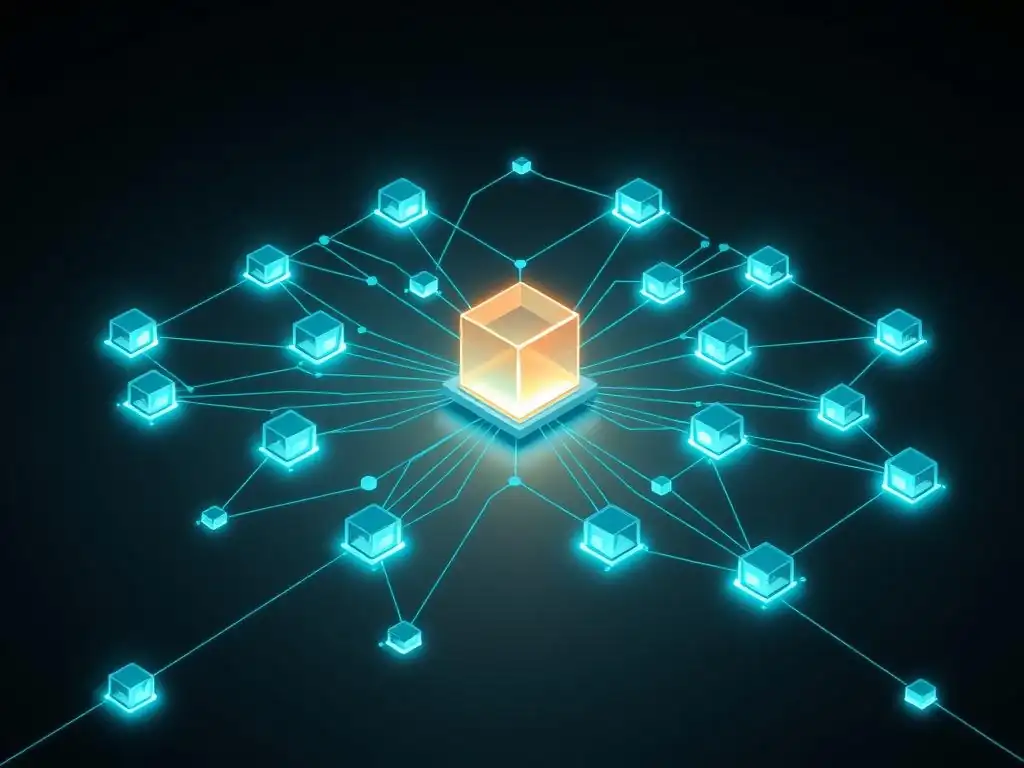
AI-Powered Anomaly Detection for Transaction Monitoring on Ethereum
Several projects are exploring the use of AI-powered anomaly detection for transaction monitoring on the Ethereum blockchain. For example, companies like Elliptic and Chainalysis utilize machine learning algorithms to analyze Ethereum transaction data and identify suspicious activities, such as money laundering, illicit fund flows, and potential hacks. These systems learn normal transaction patterns and flag deviations that may indicate illicit behavior. By monitoring vast amounts of transaction data in real-time, these AI-powered tools provide an early warning system for potential security threats and compliance violations on the Ethereum network.
One specific application is the detection of wash trading on decentralized exchanges built on Ethereum. Wash trading, a form of market manipulation, involves artificially inflating trading volume by repeatedly buying and selling the same asset. AI algorithms can be trained to identify patterns of wash trading by analyzing transaction sequences, trading volumes, and user behavior on DEXs.
By flagging potential wash trading activity, these systems help maintain the integrity and fairness of decentralized markets, protecting users from manipulative trading practices. The effectiveness of these AI-powered monitoring systems is constantly improving as algorithms become more sophisticated and are trained on larger datasets of blockchain transaction history.
Using AI to Identify and Prevent Sybil Attacks in a Decentralized Identity System
Decentralized identity systems aim to give users greater control over their digital identities, but they are vulnerable to Sybil attacks, where a single attacker creates multiple fake identities to gain disproportionate influence or disrupt the system. AI can be employed to enhance the security of decentralized identity systems by identifying and preventing Sybil attacks. Machine learning algorithms can analyze various data points, such as user behavior patterns, network interactions, and social connections within the decentralized identity system, to distinguish between legitimate users and Sybil identities.
For example, AI can analyze the graph of connections between users in a decentralized social network built on a decentralized identity system. Sybil identities often exhibit different connection patterns compared to legitimate users, such as having fewer connections to established users or forming dense clusters among themselves. By detecting these anomalous connection patterns, AI algorithms can identify and flag potential Sybil accounts for further investigation or mitigation. This AI-powered approach can significantly enhance the resilience of decentralized identity systems against Sybil attacks, ensuring the integrity and trustworthiness of these systems.
Overcoming the Challenges: Best Practices for AI-Driven Decentralized Security
Developing Robust and Transparent AI Algorithms for Cybersecurity
To mitigate the risks of bias and algorithmic vulnerabilities, it is crucial to develop robust and transparent AI algorithms for decentralized cybersecurity. This involves careful selection of training data to minimize bias, rigorous testing and validation of AI models against adversarial attacks, and implementing explainable AI (XAI) techniques to understand the decision-making processes of AI systems. Transparency in AI algorithms is particularly important in security applications, as it allows for auditing and verification of security decisions, building trust and accountability in AI-powered systems.
Furthermore, incorporating security considerations into the AI development lifecycle is essential. This includes adopting secure coding practices for AI algorithms, implementing robust input validation and sanitization, and regularly updating and patching AI systems to address newly discovered vulnerabilities. Collaboration between AI researchers, cybersecurity experts, and blockchain developers is crucial to develop AI algorithms that are both effective in enhancing security and resilient against potential attacks and biases. Open-source development and community review of AI security algorithms can also contribute to greater transparency and robustness.
Implementing Federated Learning to Protect Data Privacy During AI Training
To address data privacy concerns associated with AI training in decentralized environments, implementing federated learning is a best practice. Federated learning enables AI models to be trained on decentralized data sources without centralizing sensitive user data. By training AI models locally on each node and only aggregating model updates, federated learning preserves data privacy and aligns with the principles of decentralization. Integrating differential privacy techniques with federated learning can further enhance data privacy by adding noise to model updates, ensuring that even aggregated model information does not reveal sensitive individual data.
When implementing federated learning in decentralized cybersecurity, it is important to consider the specific characteristics of the decentralized network, such as network latency, data heterogeneity, and node reliability. Optimizing federated learning algorithms for these decentralized environments and developing robust communication protocols for model aggregation are crucial for successful deployment. Furthermore, establishing clear data governance policies and user consent mechanisms for federated learning is essential to ensure ethical and responsible data handling in decentralized AI-powered security systems.
Establishing Clear Governance and Ethical Guidelines for AI in Decentralized Security
The deployment of AI in decentralized cybersecurity raises important governance and ethical considerations. Establishing clear governance frameworks and ethical guidelines for the development, deployment, and use of AI in these contexts is crucial. This includes defining roles and responsibilities for AI system oversight, establishing mechanisms for auditing and accountability, and addressing potential biases and discriminatory outcomes of AI-powered security measures. Decentralized governance mechanisms, such as on-chain voting or community-led decision-making, can be employed to manage and oversee AI systems in decentralized environments, ensuring that AI is used responsibly and ethically.
Ethical guidelines for AI in decentralized security should address issues such as data privacy, algorithmic fairness, transparency, and accountability. These guidelines should be developed through a multi-stakeholder process, involving AI researchers, cybersecurity experts, blockchain developers, and community members. Regularly reviewing and updating these guidelines in response to evolving technologies and societal values is also essential. By establishing clear governance and ethical frameworks, decentralized platforms can harness the benefits of AI for cybersecurity while mitigating the potential risks and ensuring responsible and trustworthy AI deployment.
The Future of AI and Decentralized Cybersecurity: Trends and Predictions
The Rise of Autonomous Security Agents in Blockchain Networks
The future of decentralized cybersecurity is likely to see the rise of autonomous security agents powered by AI. These agents will operate within blockchain networks, continuously monitoring for threats, automatically responding to security incidents, and proactively adapting security measures in real-time. Autonomous security agents will leverage AI algorithms for threat detection, vulnerability analysis, and incident response, acting as intelligent guardians of decentralized systems. These agents could be deployed as smart contracts or decentralized applications, operating autonomously and collaboratively within the network.
For example, autonomous security agents could be deployed to monitor transaction pools for suspicious activity, automatically isolate compromised nodes in a network, or trigger automated smart contract patches in response to detected vulnerabilities. These agents will enhance the resilience and responsiveness of decentralized systems to security threats, reducing reliance on manual intervention and enabling faster and more effective incident response. The development of robust and trustworthy autonomous security agents will be a key trend in the evolution of decentralized cybersecurity.
The Integration of AI and Zero-Knowledge Proofs for Enhanced Privacy
The integration of AI with zero-knowledge proofs (ZKPs) holds significant promise for enhancing privacy in decentralized cybersecurity. Zero-knowledge proofs allow for verifying the truth of a statement without revealing any information beyond the statement itself. Combining AI with ZKPs can enable privacy-preserving AI applications in decentralized systems, where security decisions can be made based on AI analysis without revealing sensitive underlying data. This integration can address the data privacy concerns associated with AI-powered security, enabling both robust security and strong privacy protection.
For instance, ZKPs could be used to verify the integrity of AI models deployed in decentralized environments without revealing the model parameters or training data. They could also be used to prove that an AI system has detected a security threat without revealing the specific details of the threat or the data used for detection. This combination of AI and ZKPs can unlock new possibilities for privacy-preserving security solutions in decentralized systems, enabling secure and private data analysis and decision-making.
The Evolution of AI-Driven Threat Intelligence for Decentralized Ecosystems
AI-driven threat intelligence will play an increasingly crucial role in securing decentralized ecosystems. AI can analyze vast amounts of cybersecurity data from various sources, including blockchain networks, threat feeds, and open-source intelligence, to identify emerging threats, predict attack trends, and provide actionable intelligence to decentralized platforms and users. AI-powered threat intelligence systems can proactively identify new vulnerabilities, detect sophisticated attack campaigns, and provide early warnings of potential security breaches, enabling proactive security measures and faster incident response.
Decentralized threat intelligence platforms, leveraging blockchain technology and AI, could emerge in the future. These platforms could enable collaborative threat intelligence sharing among decentralized communities, fostering collective security and resilience. AI could be used to analyze and curate threat intelligence data contributed by various sources, ensuring the accuracy and relevance of the intelligence. The evolution of AI-driven threat intelligence will be essential for staying ahead of the evolving threat landscape and maintaining the security and trustworthiness of decentralized ecosystems.
Conclusion: Realizing the Potential of AI for Decentralized Cybersecurity While Mitigating Risks
Key Takeaways: AI Decentralized Cybersecurity Benefits and Considerations
Integrating AI into decentralized cybersecurity offers significant benefits, including enhanced threat detection through real-time anomaly analysis, proactive vulnerability identification in smart contracts, automated security audits and penetration testing, and improved access control via behavioral analysis. AI-enabled differential privacy also provides avenues for enhancing data privacy while leveraging AI for security purposes. These benefits contribute to a more robust and resilient security posture for decentralized platforms, crucial for fostering user trust and wider adoption.
However, the integration of AI also presents potential pitfalls and challenges. Risks of AI bias and algorithmic vulnerabilities, data privacy concerns during AI training, and the potential for AI-driven attacks necessitate careful consideration and mitigation strategies. The complexity and cost of implementing AI in decentralized security also require pragmatic evaluation and resource planning. Addressing these challenges through best practices, such as developing robust and transparent AI algorithms, implementing federated learning, and establishing clear governance and ethical guidelines, is essential to responsibly harness the power of AI for decentralized cybersecurity.
The future of blockchain security is inextricably linked to the advancements and responsible application of AI. As decentralized systems become more complex and interconnected, and as cyber threats become more sophisticated, AI will be an indispensable tool for maintaining security and resilience. Autonomous security agents, privacy-preserving AI techniques, and AI-driven threat intelligence represent key trends that will shape the future of decentralized cybersecurity. By proactively addressing the challenges and embracing the best practices outlined, the decentralized ecosystem can navigate this evolving landscape, realizing the transformative potential of AI to build a more secure and trustworthy decentralized future.
Frequently Asked Questions
How can AI improve decentralized cybersecurity?
AI can enhance threat detection by analyzing patterns and anomalies in network traffic, providing faster and more accurate responses than traditional methods. It can also automate security tasks, freeing up human experts to focus on complex issues.
What are the potential downsides of using AI in decentralized cybersecurity?
Over-reliance on AI could create single points of failure, and AI systems can be vulnerable to adversarial attacks designed to manipulate their behavior. Ensuring data privacy is also crucial when using AI for cybersecurity.
What role does blockchain play in securing AI models used for cybersecurity?
Blockchain can provide transparency and auditability to AI models, ensuring they haven't been tampered with. It can also facilitate secure data sharing for training AI models without compromising privacy.
How does the combination of AI and decentralized cybersecurity impact regulatory compliance?
The increased complexity of these systems may require new regulatory frameworks. Demonstrating accountability and transparency in AI-driven security measures will be vital for compliance.
What are the key benefits of integrating AI into decentralized cybersecurity architectures?
Integrating AI can lead to improved threat detection, automated incident response, and enhanced overall security posture for decentralized systems, leading to better protection against cyber threats.
Final Reflection: Embracing the Symbiosis of Intelligence and Trust
The exploration of AI's role in decentralized cybersecurity reveals a landscape brimming with potential, yet shadowed by inherent risks. The promise of AI decentralized cybersecurity benefits lies in its ability to automate threat detection, enhance resilience, and democratize security measures, but realizing this vision requires careful consideration of ethical implications and potential vulnerabilities. This delicate balance between innovation and responsibility is crucial as we navigate the future of digital security.
The integration of AI into decentralized systems is not merely a technological advancement; it's a cultural shift, reshaping our understanding of trust and security in the digital age. Witnessing the evolution of cybersecurity from centralized control to distributed intelligence underscores the importance of adaptability and continuous learning. The future of cybersecurity is not about building walls, but about building bridges – bridges of trust, collaboration, and shared intelligence.
This quote encapsulates the essence of decentralized cybersecurity, emphasizing the need for collective action and shared responsibility in safeguarding our digital assets.
As you consider the potential of AI decentralized cybersecurity benefits, I urge you to reflect on your own role in shaping this future. How can you contribute to the development of secure, ethical, and accessible AI-powered security solutions? Embrace the challenge, explore the possibilities, and become a champion for a more secure and decentralized digital world. The future of cybersecurity is not just about technology; it's about us, and the choices we make today will define the security landscape of tomorrow.
Revolutionize Your Cybersecurity Strategy Today!
Thank you for exploring the exciting possibilities of AI in decentralized cybersecurity. We hope this article has highlighted both the opportunities and the challenges. Now, it's time to take action and see how you can apply these insights.
Here are some steps to get started:
- Assess your current decentralized cybersecurity setup and identify key areas where AI-driven solutions could provide stronger protection. This is a crucial first step toward harnessing AI's full potential.
- Stay informed by reviewing recent research and case studies on AI's role in blockchain security to remain ahead of industry developments.
- Share this article with colleagues and peers, and open a discussion about the ethical and practical considerations of integrating AI into decentralized cybersecurity.
What innovative approaches are you considering to incorporate AI into your blockchain security measures? Share your ideas, and let’s learn and grow together!
Leave a Reply