
Smart Contract Vulnerability Databases and Resources: Staying Informed About Known Threats


Welcome to Blockchain Trends, your go-to source for understanding the evolving landscape of blockchain technology! Beyond the hype of cryptocurrencies lies a universe of transformative applications, and here, we dive deep into DeFi, enterprise solutions, and the regulatory hurdles shaping this exciting future.
Are you building or auditing smart contracts? Then you absolutely need to know where to find the most up-to-date information on known vulnerabilities. In this article, we're unveiling a comprehensive smart contract security resources list, designed to empower developers and security professionals alike. Don't let your code be the next target – discover the essential tools and databases to stay ahead of the curve and secure the decentralized future. Read on to unlock the knowledge you need to protect your blockchain projects!
Smart Contract Vulnerability Databases and Resources: Staying Informed About Known Threats
- Introduction: The Importance of Smart Contract Security Resources
- Understanding Smart Contract Vulnerabilities
- Key Smart Contract Vulnerability Databases
- Smart Contract Security Resources List: Essential Tools and Platforms
- Community-Driven Smart Contract Security Resources
- Staying Updated: Monitoring New Smart Contract Vulnerabilities
- Best Practices for Using Smart Contract Security Resources
- The Future of Smart Contract Security Resources
- Conclusion: Leveraging Resources for Robust Smart Contract Security
-
Frequently Asked Questions
- What are smart contract vulnerability databases, and why are they important?
- How can I use a Smart Contract Security Resources List to improve my smart contract security?
- What are some key categories of resources that should be included in a comprehensive Smart Contract Security Resources List?
- Beyond databases, what other resources are crucial for developers to master smart contract security?
- How frequently should a Smart Contract Security Resources List be updated to remain relevant and effective?
- Final Reflection: Fortifying the Future of Smart Contracts
- Fortify Your Future: Secure Your Smart Contracts Today!
Introduction: The Importance of Smart Contract Security Resources
Smart contracts, self-executing agreements written in code and deployed on blockchains, are revolutionizing various industries by automating processes and removing intermediaries. However, their immutable nature on the blockchain means that once deployed, vulnerabilities are extremely difficult, if not impossible, to fix without complex and often contentious hard forks. A single flaw can lead to devastating consequences, including significant financial losses and reputational damage for projects and users alike.
Therefore, understanding and mitigating potential risks is paramount, making smart contract security resources list a vital tool for developers, auditors, and anyone involved in the blockchain ecosystem. This article will explore essential databases and resources dedicated to smart contract security, highlighting their importance in staying ahead of potential threats and building more robust decentralized applications.
Understanding Smart Contract Vulnerabilities
Smart contract vulnerabilities are flaws or weaknesses in the code that can be exploited to cause unintended behavior, leading to security breaches and financial losses. Unlike traditional software vulnerabilities, those in smart contracts have unique characteristics due to the blockchain's inherent properties. The immutability of deployed code means that vulnerabilities cannot be easily patched in place.
Furthermore, the transparent and decentralized nature of blockchains, while beneficial, also means that vulnerabilities are publicly visible and potentially exploitable by anyone once discovered. The financial stakes are often high, as smart contracts frequently manage substantial amounts of cryptocurrency or digital assets, making them attractive targets for malicious actors. Understanding the nature and common types of these vulnerabilities is the first step in effectively utilizing smart contract security resources list to protect against them.
Common Types of Smart Contract Vulnerabilities
Smart contract vulnerabilities can manifest in various forms, stemming from coding errors, logical flaws, or misunderstandings of the underlying blockchain platform. One prevalent type is Reentrancy, where a contract function makes an external call to another contract before updating its own state. This can allow a malicious contract to recursively call back into the vulnerable function, potentially draining funds. For example, the infamous DAO hack in 2016, which resulted in the theft of approximately $50 million USD worth of Ether, exploited a reentrancy vulnerability.
Another common category is Overflow and Underflow. These occur when arithmetic operations exceed the maximum or fall below the minimum value that a data type can hold, respectively. While newer versions of Solidity often include safeguards, older contracts or those compiled with specific compiler versions may still be vulnerable to these issues, leading to unexpected behavior and potential manipulation of balances or other critical variables. Timestamp Dependence is another vulnerability where smart contracts rely on block timestamps for critical logic.
Block timestamps are not always precisely accurate and can be influenced by miners, making them unreliable sources of randomness or time-sensitive conditions. Exploiting timestamp dependence can lead to manipulation of contract execution based on predictable or miner-influenced block timestamps. These examples illustrate just a few of the many types of vulnerabilities that developers must be aware of and actively mitigate by leveraging comprehensive smart contract security resources list.
The Growing Need for Smart Contract Security Awareness
The increasing adoption of blockchain technology and the rapid growth of Decentralized Finance (DeFi) have amplified the need for robust smart contract security awareness. DeFi protocols, which are almost entirely governed by smart contracts, now manage billions of dollars in digital assets. This concentration of value makes them prime targets for attackers.
According to a report by Immunefi, a bug bounty platform, DeFi projects suffered losses exceeding $3 billion USD in 2022 due to hacks and exploits, many stemming from smart contract vulnerabilities. This figure underscores the substantial financial risks associated with insecure smart contracts. Beyond financial losses, security breaches erode user trust and can hinder the broader adoption of blockchain technologies.
Regulatory bodies are also increasingly paying attention to the security of smart contracts and DeFi, with potential regulations on the horizon. For instance, jurisdictions are starting to consider frameworks for DeFi regulation, emphasizing the need for secure and auditable smart contract implementations. Therefore, staying informed about known threats and utilizing smart contract security resources list is not just a best practice but a crucial necessity for the sustainable growth and trustworthiness of the entire blockchain ecosystem.
Key Smart Contract Vulnerability Databases
To effectively combat smart contract vulnerabilities, it's essential to have access to comprehensive and up-to-date databases of known weaknesses. These databases serve as invaluable resources for developers, auditors, and researchers, providing structured information about vulnerabilities, their potential impact, and mitigation strategies. Several key databases are particularly relevant to smart contract security, offering different perspectives and levels of detail. Understanding and utilizing these databases is a cornerstone of proactive security practices and a vital component of any comprehensive smart contract security resources list.
NIST National Vulnerability Database (NVD) and Smart Contracts
The NIST National Vulnerability Database (NVD) is a U.S. government repository of standards-based vulnerability management data. While not exclusively focused on smart contracts, the NVD provides a wealth of information on vulnerabilities across various software and hardware systems, including those relevant to blockchain infrastructure and, indirectly, smart contracts. NVD entries typically include a Common Vulnerabilities and Exposures (CVE) identifier, a detailed description of the vulnerability, affected products and versions, severity scores (CVSS), and references to related advisories and patches.
While direct smart contract vulnerabilities may not always be explicitly listed in the NVD, vulnerabilities in underlying blockchain platforms, compilers (like Solidity), or related libraries can be found. For example, if a critical vulnerability is discovered in a widely used Solidity compiler version, this would likely be documented in the NVD, alerting developers to the need to update their compiler versions and potentially re-audit contracts compiled with the vulnerable version.
Furthermore, the NVD's categorization and severity scoring system provides a standardized framework for understanding and prioritizing vulnerabilities, which can be adapted for smart contract security assessments. Therefore, while not a dedicated smart contract security resources list, the NVD serves as a valuable supplementary resource for a broader understanding of software vulnerabilities and their potential implications in the blockchain context.
SWC Registry: A Comprehensive Smart Contract Weakness Classification
The Smart Contract Weakness Classification and Test Cases (SWC Registry) is a community-driven project specifically designed to categorize and document weaknesses in Ethereum smart contracts. Unlike general vulnerability databases, the SWC Registry focuses exclusively on smart contract vulnerabilities, providing a detailed classification scheme and practical examples for each weakness. Each SWC entry includes a unique identifier (e.g., SWC-101: Integer Overflow and Underflow), a comprehensive description of the weakness, potential attack scenarios, and recommended mitigations.
Crucially, the SWC Registry also provides curated test cases (Solidity code snippets) that demonstrate how each weakness can be exploited and how to write secure code to prevent it. This makes it an incredibly practical resource for developers learning about smart contract security and for auditors looking for specific vulnerability patterns during code reviews. The SWC Registry is actively maintained and updated by the smart contract security community, ensuring its relevance and comprehensiveness.
It is arguably one of the most essential resources within any smart contract security resources list, providing targeted and actionable information directly applicable to smart contract development and auditing. For instance, if an auditor is reviewing a contract and suspects a reentrancy vulnerability, they can consult the SWC-107 (Reentrancy) entry in the registry to understand the nuances of this weakness, review example code, and apply appropriate detection techniques.
DASP Top 10: Decentralized Application Security Project Top 10
The Decentralized Application Security Project (DASP) Top 10 is analogous to the OWASP Top 10 for web application security, but specifically tailored to the unique security risks of decentralized applications (DApps) and smart contracts. DASP Top 10 is a regularly updated list of the ten most critical security risks facing DApps, based on real-world exploits and industry trends. The list aims to raise awareness among developers and the broader blockchain community about the most common and impactful vulnerabilities. The DASP Top 10 categories are broader than individual SWC weaknesses but often encompass multiple related vulnerabilities.
For example, "Insecure Control Flow" in DASP Top 10 might include vulnerabilities like reentrancy, improper authorization, and logical flaws in contract execution flow. The DASP Top 10 provides a high-level overview of the most pressing security concerns, making it a valuable starting point for understanding the threat landscape. While it doesn't provide the same level of technical detail as the SWC Registry for individual weaknesses, it offers a crucial prioritization framework, highlighting the areas that developers and auditors should focus on most intensely.
The DASP Top 10 is often cited in security audits and serves as a benchmark for evaluating the security posture of DApps. Including the DASP Top 10 in a smart contract security resources list is essential for providing a practical, risk-based perspective on smart contract security. For instance, if a development team is prioritizing security efforts, they might start by addressing the top risks identified in the latest DASP Top 10 list, ensuring they are mitigating the most common and impactful vulnerability categories first.
Smart Contract Security Resources List: Essential Tools and Platforms
Beyond vulnerability databases, a robust smart contract security resources list must include practical tools and platforms that developers and auditors can use to proactively identify and mitigate vulnerabilities during the development lifecycle. These tools span various security testing methodologies, from automated static analysis to rigorous formal verification. Choosing and effectively utilizing these resources is crucial for building secure and resilient smart contracts.
Static Analysis Tools for Smart Contract Security
Static analysis tools analyze source code without actually executing it, identifying potential vulnerabilities based on code patterns and rules. For smart contracts, several powerful static analysis tools have emerged, becoming indispensable components of a comprehensive smart contract security resources list. Slither, developed by Trail of Bits, is a widely used static analyzer for Solidity. It excels at detecting a broad range of common vulnerabilities, including reentrancy, timestamp dependence, and gas-related issues.
Slither is known for its speed and ease of integration into development workflows. Mythril, another popular tool, employs symbolic execution to explore possible execution paths in a smart contract and identify vulnerabilities like arithmetic overflows and access control issues. Mythril is particularly effective at finding vulnerabilities related to complex control flow. Securify, developed by ChainSecurity, uses formal verification techniques alongside static analysis to provide more rigorous security guarantees.
Securify focuses on verifying specific security properties of smart contracts, such as compliance with access control policies. These tools, while not foolproof, provide an automated first line of defense against common smart contract vulnerabilities, significantly reducing the likelihood of deploying flawed code. For example, integrating Slither into a continuous integration pipeline can automatically scan every code commit for potential vulnerabilities, providing early warnings to developers and preventing the introduction of security flaws into production. The use of static analysis tools is a recommended best practice and an essential element of a proactive security strategy.
Dynamic Analysis and Fuzzing Tools for Smart Contracts
Dynamic analysis tools, in contrast to static analysis, involve executing the smart contract code in a controlled environment to observe its behavior and identify vulnerabilities during runtime. Fuzzing, a type of dynamic analysis, involves feeding a program with a large volume of randomly generated or mutated inputs to trigger unexpected behavior and uncover potential vulnerabilities. These techniques are crucial for finding vulnerabilities that might be missed by static analysis, especially those related to complex interactions and edge cases. Echidna, developed by Trail of Bits, is a powerful fuzzing tool specifically designed for Ethereum smart contracts.
Echidna uses property-based testing, where developers define properties that the smart contract should always satisfy, and Echidna attempts to find inputs that violate these properties, revealing potential bugs. Harvey, another fuzzing tool, focuses on generating more targeted and intelligent fuzzing inputs by analyzing the contract's bytecode. Both Echidna and Harvey are valuable additions to a smart contract security resources list, enabling developers to rigorously test their contracts under a wide range of conditions and uncover runtime vulnerabilities.
For instance, using Echidna, a developer might define a property that "the contract balance should never decrease below zero." Echidna would then fuzz the contract with various transactions to try and violate this property, potentially revealing vulnerabilities like underflow errors or incorrect state updates that could lead to unexpected balance changes. Dynamic analysis and fuzzing are essential for complementing static analysis and providing a more comprehensive security assessment.
Formal Verification for Smart Contract Security
Formal verification is the most rigorous approach to smart contract security, using mathematical techniques to prove the correctness of a contract's code against a formal specification of its intended behavior. While more complex and resource-intensive than static or dynamic analysis, formal verification provides the highest level of assurance, mathematically guaranteeing the absence of certain classes of vulnerabilities. Certora Prover is a prominent formal verification tool for Solidity smart contracts.
It allows developers to write formal specifications of their contract's properties using a dedicated specification language (Certora Verification Language - CVL). The Certora Prover then uses mathematical reasoning to verify whether the contract code satisfies these specifications under all possible execution scenarios. Formal verification can detect complex vulnerabilities that might be missed by other techniques, particularly those related to intricate logic and state transitions.
However, it requires specialized expertise and is typically applied to critical smart contracts where the highest level of security is paramount. While not always practical for every smart contract, formal verification tools like Certora Prover are increasingly becoming part of advanced smart contract security resources list, particularly for high-value DeFi protocols and mission-critical applications. For example, a DeFi protocol dealing with billions of dollars in assets might employ formal verification to rigorously prove the correctness of its core logic and ensure that it behaves as intended under all circumstances, minimizing the risk of catastrophic exploits.
Security Auditing Firms Specializing in Smart Contracts
Engaging a reputable security auditing firm specializing in smart contracts is a crucial step in ensuring the security of complex or high-value projects. Security audits provide an independent, expert review of smart contract code, typically combining manual code review with automated tool-assisted analysis. Several firms have established themselves as leaders in smart contract security audits, forming an important part of the smart contract security resources list.
ConsenSys Diligence, a part of ConsenSys, is one of the pioneering firms in smart contract security, offering comprehensive audit services and contributing significantly to the development of security best practices. Trail of Bits is another highly respected firm known for its deep technical expertise and contributions to security research and tooling, including tools like Slither and Echidna. OpenZeppelin, beyond its popular smart contract libraries, also provides audit services, leveraging its extensive experience in developing and securing decentralized systems.
These firms employ experienced security auditors who understand the nuances of smart contract vulnerabilities and the specific challenges of blockchain security. A typical security audit process involves understanding the contract's functionality, performing static and dynamic analysis, manually reviewing the code for logical flaws and vulnerabilities, and providing a detailed report with findings and remediation recommendations. Engaging a reputable audit firm provides an independent validation of a smart contract's security posture and significantly reduces the risk of deploying vulnerable code, making it a vital resource for serious blockchain projects.
Community-Driven Smart Contract Security Resources
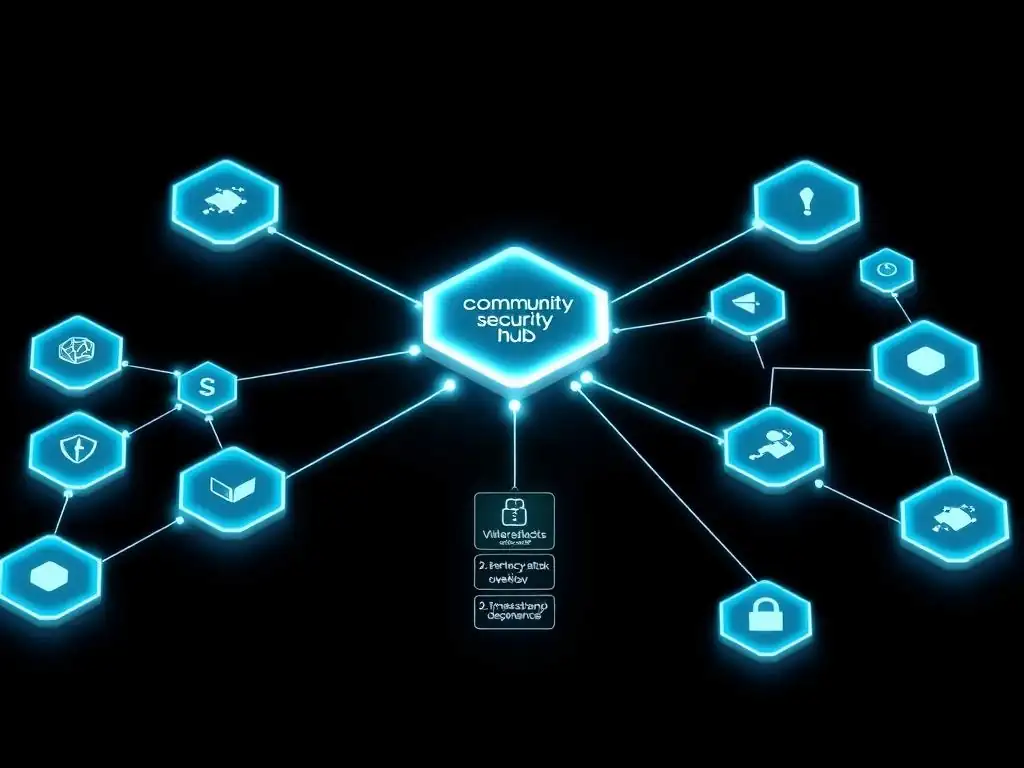
The blockchain and smart contract security space is characterized by a strong and active community that plays a vital role in identifying vulnerabilities, sharing knowledge, and developing security tools. Community-driven initiatives are invaluable components of a comprehensive smart contract security resources list, fostering collaboration and collective security improvements.
Open Source Smart Contract Security Projects
Open source projects are fundamental to the development and advancement of smart contract security. Many of the essential tools mentioned previously, such as Slither, Mythril, and Echidna, are open source, allowing for community contributions, transparency, and wider accessibility. Beyond tools, numerous open-source libraries and educational resources contribute to the collective knowledge base.
For example, OpenZeppelin Contracts is a widely adopted open-source library of secure smart contract components, providing audited and reusable implementations of common smart contract patterns and functionalities. Using libraries like OpenZeppelin Contracts reduces the likelihood of introducing common vulnerabilities by leveraging pre-built, well-vetted code. Furthermore, various open-source educational platforms and repositories provide tutorials, best practices guides, and vulnerability examples, empowering developers to learn about smart contract security and contribute back to the community.
The collaborative nature of open-source development in the security domain allows for continuous improvement, peer review, and faster identification and patching of vulnerabilities. Contributing to and utilizing open-source smart contract security projects is a valuable way to strengthen the overall ecosystem and access a wealth of community-driven expertise within the smart contract security resources list.
Bug Bounty Programs for Smart Contracts
Bug bounty programs incentivize security researchers and ethical hackers to find and report vulnerabilities in smart contracts in exchange for rewards. These programs are a proactive approach to security, leveraging the collective intelligence of the security community to identify weaknesses before malicious actors can exploit them. Platforms like Immunefi specialize in bug bounty programs for blockchain and DeFi projects, connecting projects with security researchers and facilitating the responsible disclosure of vulnerabilities.
Projects often offer substantial rewards for critical vulnerabilities, sometimes reaching hundreds of thousands or even millions of dollars for high-impact findings. Bug bounty programs not only help projects identify and fix vulnerabilities but also contribute to the overall security knowledge base by publicly disclosing (with permission) vulnerability details and remediation strategies after a fix is implemented. Participating in or launching bug bounty programs is a valuable strategy for enhancing smart contract security and a key element of a comprehensive smart contract security resources list.
For example, a DeFi protocol might launch a bug bounty program on Immunefi, offering rewards for reporting vulnerabilities in their smart contracts. This encourages security researchers to actively test the protocol's code, increasing the chances of finding and fixing vulnerabilities before they can be exploited in a real-world attack.
Online Forums and Communities for Smart Contract Security Discussions
Online forums and communities dedicated to smart contract security are invaluable resources for staying updated on the latest threats, sharing knowledge, and seeking help from peers and experts. Platforms like Stack Exchange (Ethereum) and dedicated subreddits like r/ethdev and r/smartcontracts serve as hubs for discussions on smart contract development and security. These communities provide a space for developers to ask questions, share insights, and learn from each other's experiences.
Specialized Discord channels and Telegram groups focused on blockchain security also offer real-time discussions and information sharing. Following security researchers and experts on platforms like Twitter is another way to stay informed about emerging threats and security news in the smart contract space.
Engaging with these online communities is essential for staying current with the rapidly evolving landscape of smart contract security, accessing a wealth of collective knowledge, and contributing to the shared understanding of best practices. These online forums and communities are integral to a comprehensive smart contract security resources list, providing ongoing learning and collaborative problem-solving opportunities.
Staying Updated: Monitoring New Smart Contract Vulnerabilities
The smart contract security landscape is constantly evolving, with new vulnerabilities being discovered and new attack vectors emerging. Staying updated on the latest threats is crucial for proactively mitigating risks and maintaining the security of deployed contracts. A comprehensive smart contract security resources list must include strategies for continuous monitoring and threat intelligence.
Following Security News and Alerts for Smart Contracts
Actively following security news sources and alert systems is essential for staying informed about newly discovered smart contract vulnerabilities. Several security firms and organizations regularly publish blog posts, security advisories, and vulnerability reports specifically focused on smart contracts and blockchain technologies. Websites like HackenProof Blog, PeckShield Blog, and CertiK Security Leaderboard are valuable sources for security news and analysis.
Following security researchers and audit firms on platforms like Twitter can also provide real-time updates on emerging threats and vulnerabilities. Subscribing to security newsletters and email alerts from these organizations ensures that you receive timely notifications about critical vulnerabilities and security best practices.
Regularly monitoring these news sources and alert systems allows developers and security professionals to proactively identify and address potential risks to their smart contracts, ensuring they are aware of the latest threats and mitigation strategies. This proactive approach to security monitoring is a vital component of staying ahead of attackers and maintaining a robust security posture, making security news sources an essential element of a smart contract security resources list.
Subscribing to Smart Contract Security Mailing Lists
Subscribing to specialized mailing lists focused on smart contract security is another effective way to receive direct updates and alerts about vulnerabilities and security best practices. Several security firms, research groups, and community organizations maintain mailing lists that disseminate valuable security information. For instance, some security audit firms send out newsletters summarizing recent vulnerabilities they have discovered and audited, along with remediation recommendations.
Community-driven mailing lists may focus on specific aspects of smart contract security, such as vulnerability analysis, tool updates, or security best practices. These mailing lists provide a curated stream of security information directly to your inbox, ensuring you don't miss critical updates.
By subscribing to relevant smart contract security resources list mailing lists, developers and security professionals can proactively stay informed about emerging threats and receive timely guidance on mitigating potential risks. This direct and targeted information delivery mechanism complements broader security news monitoring and helps maintain a continuous awareness of the evolving smart contract security landscape.
Utilizing Threat Intelligence Platforms for Smart Contracts
Threat intelligence platforms aggregate and analyze security information from various sources to provide actionable insights into emerging threats and vulnerabilities. While dedicated threat intelligence platforms specifically focused on smart contracts are still evolving, general threat intelligence platforms can be adapted and utilized to monitor and analyze threats relevant to blockchain and smart contracts.
These platforms often provide features like vulnerability databases, threat feeds, indicators of compromise (IOCs), and security analytics dashboards. By configuring threat intelligence platforms to monitor sources relevant to smart contracts, such as blockchain security news feeds, vulnerability databases, and social media discussions, organizations can gain a more comprehensive and proactive understanding of the threat landscape.
While the application of threat intelligence platforms to smart contracts is still a developing area, they hold significant potential for enhancing security monitoring and proactive threat mitigation. As the smart contract ecosystem matures, specialized threat intelligence platforms tailored to blockchain and DeFi are likely to emerge, becoming a valuable addition to the smart contract security resources list for advanced security monitoring and incident response capabilities.
Best Practices for Using Smart Contract Security Resources
Effectively utilizing smart contract security resources list requires integrating them into the smart contract development lifecycle and adopting proactive security practices. Simply having access to these resources is not enough; it's crucial to implement them strategically and prioritize security throughout the development process.
Integrating Security Resources into the Development Lifecycle
Security should not be an afterthought but rather an integral part of the entire smart contract development lifecycle, from initial design to deployment and ongoing maintenance. Integrating smart contract security resources list at each stage is crucial for building robust and secure applications. During the design phase, referencing vulnerability databases like SWC Registry and DASP Top 10 can inform architectural decisions and help avoid common vulnerability patterns from the outset.
During development, utilizing static analysis tools like Slither and Mythril as part of the continuous integration/continuous deployment (CI/CD) pipeline ensures that code is automatically scanned for vulnerabilities with every commit. Dynamic analysis and fuzzing tools like Echidna should be used during the testing phase to rigorously test contract behavior and uncover runtime vulnerabilities. Before deployment, engaging a reputable security audit firm provides an independent expert review and validation of the contract's security posture.
After deployment, continuous monitoring of security news and alerts, subscribing to mailing lists, and potentially utilizing threat intelligence platforms ensures ongoing awareness of new threats and vulnerabilities. By systematically integrating these smart contract security resources list into each stage of the development lifecycle, security becomes a proactive and continuous process, significantly reducing the risk of deploying vulnerable smart contracts.
Prioritizing Vulnerability Remediation in Smart Contracts
When vulnerabilities are identified, whether through automated tools, security audits, or bug bounty programs, prioritizing their remediation is critical, especially in the context of immutable smart contracts. Not all vulnerabilities pose the same level of risk; therefore, a risk-based approach to prioritization is essential. Vulnerabilities should be assessed based on their severity (potential impact) and likelihood of exploitation. Severity can be determined using common vulnerability scoring systems (like CVSS) or by considering the potential financial and reputational damage.
Likelihood of exploitation depends on factors like the vulnerability's accessibility, the complexity of exploitation, and the presence of public exploits or proof-of-concepts. High-severity, high-likelihood vulnerabilities should be addressed immediately. Medium-severity vulnerabilities should be addressed in a timely manner, while low-severity vulnerabilities can be addressed in subsequent updates or maintenance cycles if possible.
In the context of immutable smart contracts, remediation options are often limited. For critical vulnerabilities in deployed contracts, options might include deploying a patched version (if possible with upgradeable contracts), mitigating the vulnerability through external contracts or governance mechanisms, or, in extreme cases, considering a hard fork. Having a well-defined vulnerability response plan that incorporates smart contract security resources list and prioritizes remediation based on risk is crucial for minimizing the impact of discovered vulnerabilities and maintaining the security and trustworthiness of smart contract applications.
DAO Hack: Analysis and Remediation Lessons
The DAO hack in 2016 serves as a stark reminder of the devastating consequences of smart contract vulnerabilities and provides valuable lessons for vulnerability remediation. The DAO (Decentralized Autonomous Organization) was a complex smart contract designed as a decentralized venture capital fund. A reentrancy vulnerability in the DAO's withdrawal function allowed an attacker to repeatedly withdraw funds, draining approximately $50 million USD worth of Ether. The vulnerability was publicly known before the hack, highlighting the importance of proactive security measures and timely remediation. In the aftermath of the DAO hack, the Ethereum community faced a difficult decision regarding remediation.
Due to the immutable nature of the blockchain, patching the deployed DAO contract directly was impossible. After significant debate and controversy, the Ethereum community opted for a hard fork to revert the blockchain state to before the hack, effectively recovering the stolen funds. However, this hard fork was a contentious decision, as it violated the principle of immutability and led to the split of the Ethereum community into Ethereum (ETH) and Ethereum Classic (ETC). The DAO hack and its aftermath underscore several key lessons for smart contract security and remediation.
Firstly, proactive security measures, including thorough audits and utilization of smart contract security resources list, are crucial for preventing vulnerabilities in the first place. Secondly, even when vulnerabilities are discovered, remediation in immutable smart contracts is extremely challenging and often involves difficult trade-offs. Thirdly, community consensus and governance mechanisms play a vital role in responding to security incidents in decentralized systems. The DAO hack remains a critical case study, emphasizing the importance of robust smart contract security practices and the complexities of vulnerability remediation in the blockchain context.
The Future of Smart Contract Security Resources
The field of smart contract security is rapidly evolving, driven by the increasing adoption of blockchain technology and the emergence of new types of vulnerabilities and attack vectors. The future of smart contract security resources list will likely be shaped by emerging trends in vulnerability detection and the increasing role of artificial intelligence and machine learning in security analysis.
Emerging Trends in Smart Contract Vulnerability Detection
Several emerging trends are shaping the future of smart contract vulnerability detection. Symbolic execution and formal verification techniques are becoming more sophisticated and accessible, enabling more rigorous and automated analysis of smart contract code. Advancements in static analysis tools are leading to more precise and comprehensive vulnerability detection, reducing false positives and improving the identification of complex vulnerabilities.
Dynamic analysis and fuzzing techniques are also evolving, with researchers exploring more intelligent fuzzing strategies and combining dynamic analysis with symbolic execution to improve code coverage and vulnerability discovery. AI-powered security tools are beginning to emerge, leveraging machine learning to identify anomaly patterns, predict potential vulnerabilities, and automate aspects of security analysis. Furthermore, the community is increasingly focusing on proactive security measures, such as security-by-design principles, secure coding guidelines, and continuous security monitoring, rather than solely relying on reactive vulnerability detection.
These emerging trends suggest a future where smart contract security tools and techniques become more automated, more rigorous, and more integrated into the development lifecycle, leading to more secure and resilient decentralized applications. The continued development and refinement of smart contract security resources list will be crucial for staying ahead of evolving threats and building a more secure blockchain ecosystem.
The Role of AI and Machine Learning in Smart Contract Security Analysis
Artificial intelligence (AI) and machine learning (ML) are poised to play an increasingly significant role in smart contract security analysis. ML techniques can be applied to analyze vast amounts of smart contract code, identify patterns associated with known vulnerabilities, and predict potential security flaws. AI-powered static analysis tools can leverage ML models to improve vulnerability detection accuracy, reduce false positives, and identify more subtle and complex vulnerabilities that might be missed by traditional rule-based static analysis.
ML-based fuzzing techniques can generate more intelligent and targeted fuzzing inputs, increasing code coverage and improving the efficiency of dynamic analysis. Anomaly detection algorithms can be used to monitor deployed smart contracts for unusual behavior patterns that might indicate a security breach or exploit attempt. Furthermore, AI can assist in automating security audits, by pre-analyzing code, highlighting potential areas of concern, and accelerating the manual audit process.
While AI and ML are still in the early stages of adoption in smart contract security, their potential to enhance vulnerability detection, automate security analysis, and improve the overall security posture of smart contracts is substantial. As AI and ML technologies continue to advance, they are likely to become integral components of future smart contract security resources list, augmenting traditional security tools and techniques and contributing to a more proactive and intelligent approach to smart contract security.
Conclusion: Leveraging Resources for Robust Smart Contract Security
Securing smart contracts is a paramount concern in the blockchain ecosystem, and a comprehensive understanding and effective utilization of smart contract security resources list is essential for mitigating risks and building robust decentralized applications. This article has explored key vulnerability databases, essential security tools, community-driven resources, and best practices for staying informed and proactive about smart contract security.
From vulnerability databases like SWC Registry and DASP Top 10 to static analysis tools like Slither and dynamic analysis tools like Echidna, a wealth of resources is available to developers and auditors. Community collaboration through open-source projects, bug bounty programs, and online forums further strengthens the collective security knowledge and capabilities.
By integrating these resources into the development lifecycle, prioritizing vulnerability remediation, and staying updated on emerging threats, developers can significantly enhance the security of their smart contracts. As the field continues to evolve, embracing emerging trends like AI and ML in security analysis and continuously leveraging and contributing to the smart contract security resources list will be crucial for building a more secure and trustworthy future for blockchain technology and decentralized applications.
Frequently Asked Questions
What are smart contract vulnerability databases, and why are they important?
Smart contract vulnerability databases are curated repositories of known security flaws in smart contracts. They are important because they help developers identify and mitigate potential risks before deploying their code, leading to safer and more reliable decentralized applications.
How can I use a Smart Contract Security Resources List to improve my smart contract security?
A Smart Contract Security Resources List provides a centralized access point to tools, databases, and educational materials focused on smart contract security. By using this list, developers can stay updated on the latest threats and best practices.
What are some key categories of resources that should be included in a comprehensive Smart Contract Security Resources List?
A comprehensive list should include categories such as vulnerability databases, static analysis tools, auditing services, security blogs and forums, and educational courses covering smart contract security best practices.
Beyond databases, what other resources are crucial for developers to master smart contract security?
Beyond databases, developers need to utilize static analysis tools to automatically detect vulnerabilities, engage in code audits by security experts, and actively participate in security communities to learn from others' experiences.
How frequently should a Smart Contract Security Resources List be updated to remain relevant and effective?
A Smart Contract Security Resources List should be updated regularly, ideally monthly or quarterly, to reflect the evolving landscape of smart contract vulnerabilities and the emergence of new security tools and resources.
Final Reflection: Fortifying the Future of Smart Contracts
The proliferation of smart contracts has undeniably revolutionized various sectors, but as we've explored, their security remains a paramount concern. The ongoing battle against vulnerabilities is a critical aspect of ensuring the long-term viability and trustworthiness of blockchain technology. Ignoring the known threats outlined in this article is akin to building a house on sand; the consequences could be devastating.
The journey of understanding and mitigating smart contract vulnerabilities is a continuous one, demanding constant vigilance and adaptation. It's not merely about patching existing flaws, but about fostering a culture of proactive security within the development community. Security is not a product, but a process.
This quote perfectly encapsulates the need for ongoing learning, collaboration, and the diligent use of resources like the databases and tools we've discussed.
As you navigate the complex world of smart contract development, remember that knowledge is your strongest defense. Embrace the resources available, contribute to the community's collective understanding, and strive to build secure and resilient applications. Let us all commit to building a future where smart contracts are not just innovative, but also inherently trustworthy and secure, ensuring the benefits of this technology are accessible to all.
Fortify Your Future: Secure Your Smart Contracts Today!
Thank you for exploring the world of smart contract security! Now that you understand the importance of vulnerability databases and resources, it's time to take action to protect your projects. Let’s move from learning to implementation.
Here are a few steps you can take right now:
- Start auditing your smart contracts by reviewing recent vulnerabilities related to your projects or similar ones. This proactive approach can help you identify and fix issues before they cause problems.
- Share this article with your developer community to spread awareness about these valuable resources and work together to create a more secure blockchain ecosystem.
- Consider contributing to a vulnerability database by documenting and reporting any new issues you discover, helping to strengthen the collective knowledge.
What specific vulnerability will you investigate first based on what you've learned here? How will that influence your smart contract development strategies moving forward? Share your thoughts in the comments below!
Leave a Reply