
AI and Blockchain Architecture: Synergies and Potential Applications

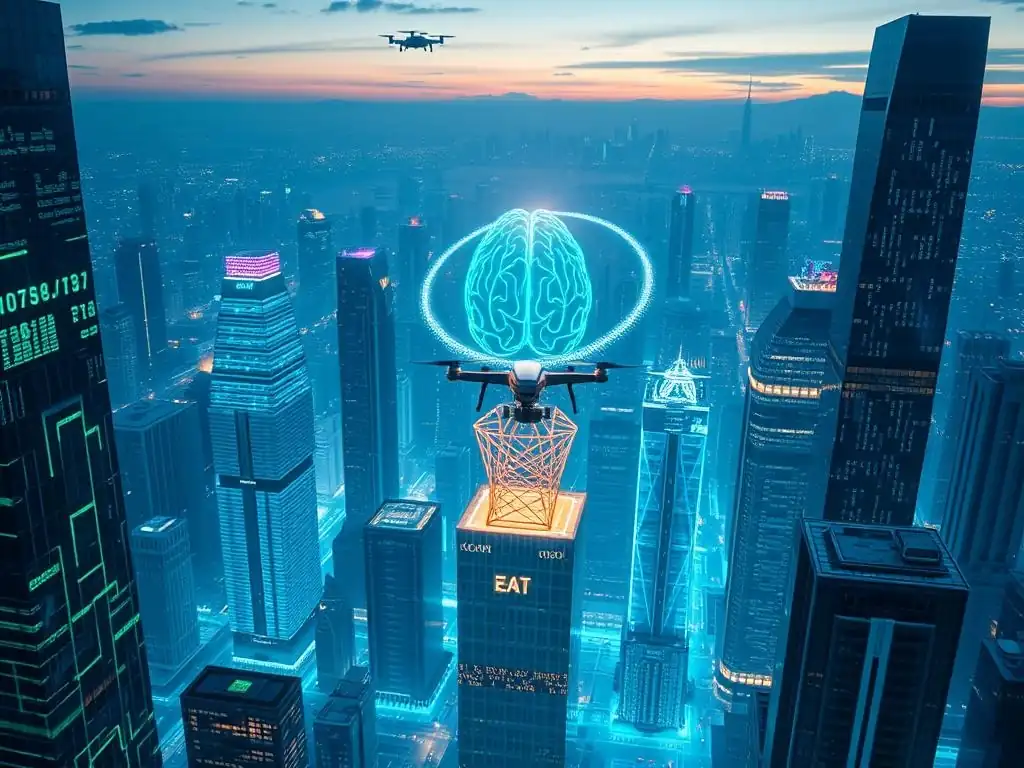
Welcome to Blockchain Trends, your compass in the rapidly evolving world of decentralized technologies!
Delve into the transformative power of blockchain, moving beyond the hype and uncovering its real-world applications. Are you ready to explore the exciting frontier where innovation meets efficiency? Then, prepare to discover the groundbreaking blockchain AI integration opportunities that are reshaping industries and redefining what's possible. Intrigued? Keep reading to unlock the potential!
AI and Blockchain Architecture: Synergies and Real-World Applications
- Introduction: Unveiling Opportunities in Integrating AI and Blockchain
- Understanding the Fundamentals: AI and Blockchain
- Synergies: Enhancing Capabilities Through Integration
- Real-World Applications of Integrated Blockchain and AI
- Addressing the Challenges of Integration
- Case Studies: Real-World Examples
- The Future: Trends and Predictions
- Conclusion: Maximizing the Potential for Innovation
-
Frequently Asked Questions
- How can AI enhance blockchain security?
- What are the primary Blockchain AI integration opportunities in DeFi?
- In what ways can AI optimize blockchain's scalability issues?
- What are the potential regulatory implications of Blockchain AI integration?
- Beyond finance, where else can Blockchain AI integration be applied?
- Final Reflection: Embracing the Blockchain AI Integration Opportunities
- Unveil Your AI-Blockchain Future: Take the First Step!
Introduction: Unveiling Opportunities in Integrating AI and Blockchain
The Convergence of Artificial Intelligence and Blockchain Technology
The intersection of Artificial Intelligence (AI) and blockchain technology is rapidly emerging as a transformative force across various industries. Individually, both technologies hold immense potential. AI excels in data analysis, pattern recognition, and automation, while blockchain offers decentralization, security, and transparency.
However, when combined, they create a powerful synergy that surpasses the capabilities of either technology in isolation. This convergence is not merely a theoretical concept; it's a practical evolution driven by the increasing need for secure, efficient, and intelligent systems in today's data-driven world. The potential for blockchain AI integration opportunities is vast and spans from enhancing data security to creating entirely new business models.
The Growing Importance of Exploring Synergies
Exploring the synergies between AI and blockchain is no longer optional but increasingly crucial for organizations seeking a competitive edge. In a landscape marked by data breaches, lack of transparency, and inefficient processes, the integrated approach offers solutions to critical challenges. For instance, AI can enhance blockchain's analytical capabilities, enabling smarter contracts and predictive insights from on-chain data.
Conversely, blockchain can provide a secure and auditable infrastructure for AI algorithms, addressing concerns around data integrity and algorithmic bias. This mutual reinforcement creates robust and trustworthy systems, driving innovation and fostering new levels of operational efficiency and trust. The exploration of these blockchain AI integration opportunities is thus vital for businesses aiming to leverage the full potential of both technologies and stay ahead in the evolving technological landscape.
Understanding the Fundamentals: AI and Blockchain
Blockchain Technology: A Decentralized System
Blockchain technology is fundamentally a decentralized, distributed ledger system that records transactions across many computers. This distributed nature is key to its resilience and security. Instead of relying on a central authority, blockchain operates on a consensus mechanism where multiple participants validate transactions, making it exceptionally difficult to tamper with the recorded data.
Each block in the chain contains a set of validated transactions, cryptographically linked to the previous block, forming an immutable chain. This chain structure ensures a chronological and tamper-proof record of all transactions. The architecture of blockchain promotes transparency as all participants can typically view the ledger, although the level of transparency can be adjusted based on the type of blockchain (public, private, consortium).
Key Characteristics: Immutability, Transparency, Security
Blockchain's core characteristics are immutability, transparency, and security, which are critical for its widespread adoption. Immutability means that once data is recorded on the blockchain, it cannot be altered or deleted. This feature is crucial for applications requiring data integrity and audit trails. Transparency, while configurable, allows for greater visibility into transactions and data flow compared to traditional centralized systems, fostering trust and accountability.
Security is inherent in blockchain's design due to cryptographic hashing and consensus mechanisms. These features collectively make blockchain a robust platform for applications where data integrity, trust, and security are paramount. These characteristics are further amplified when considering blockchain AI integration opportunities, as they provide a solid foundation for secure and trustworthy AI applications.
Artificial Intelligence: Automation and Insight
Artificial Intelligence (AI) encompasses a wide range of computational techniques designed to mimic human cognitive abilities. At its core, AI aims to create systems that can learn, reason, problem-solve, and make decisions autonomously. This broad field includes various sub-disciplines, each with its unique approach and applications.
From automating routine tasks to providing deep insights from complex datasets, AI's capabilities are transforming industries across the board. The power of AI lies in its ability to process vast amounts of data, identify patterns invisible to humans, and generate predictions or recommendations, leading to increased efficiency, improved decision-making, and the development of innovative products and services.
Core Concepts: Machine Learning, Deep Learning, Natural Language Processing
Within AI, several core concepts are particularly relevant for understanding its potential in conjunction with blockchain. Machine Learning (ML) is a subset of AI that focuses on enabling systems to learn from data without explicit programming. Deep Learning (DL) is a more advanced form of ML, utilizing artificial neural networks with multiple layers to analyze complex patterns in large datasets, proving particularly effective in image and speech recognition.
Natural Language Processing (NLP) enables computers to understand, interpret, and generate human language, facilitating communication between humans and machines, and allowing for analysis of textual data. These AI sub-disciplines are crucial in unlocking the potential of blockchain AI integration opportunities, as they provide the analytical and cognitive capabilities to enhance blockchain applications and derive meaningful insights from blockchain data.
Synergies: Enhancing Capabilities Through Integration
Enhanced Security and Trust
The integration of AI with blockchain architecture significantly enhances both security and trust within systems. Blockchain inherently provides a secure and transparent ledger, but AI can further bolster this security by adding layers of intelligent threat detection and prevention. AI algorithms can analyze blockchain transaction patterns in real-time to identify anomalies indicative of fraudulent activities or security breaches. For instance, AI can detect unusual transaction volumes, suspicious account behaviors, or attempts to manipulate smart contracts, providing early warnings and enabling proactive security measures.
Conversely, blockchain enhances trust in AI systems by providing an immutable audit trail of AI decision-making processes. This transparency is critical in addressing concerns about algorithmic bias and ensuring accountability, especially in sensitive applications like finance and healthcare. This synergistic effect is central to realizing the full potential of blockchain AI integration opportunities in building more secure and trustworthy systems.
Improved Data Management and Analytics
Combining AI and blockchain creates powerful capabilities for improved data management and analytics. Blockchain provides a secure and auditable environment for data storage and sharing, ensuring data integrity and provenance. AI, on the other hand, excels at processing and analyzing large datasets to extract valuable insights. When integrated, AI can be applied to blockchain data to perform sophisticated analytics, identify trends, and generate predictive models.
This is particularly valuable in supply chain management, where blockchain can track product provenance and AI can optimize logistics based on real-time data analysis. Furthermore, AI can automate data management tasks on blockchain, such as data validation, cleansing, and organization, freeing up human resources and improving data quality. The synergy between AI and blockchain in data management and analytics unlocks significant blockchain AI integration opportunities for data-driven decision-making and operational efficiency.
Optimized Automation and Efficiency
The synergy between AI and blockchain architecture leads to optimized automation and efficiency across various processes. Blockchain-based smart contracts automate the execution of agreements when predefined conditions are met, removing intermediaries and reducing manual processes. AI further enhances this automation by adding intelligent decision-making capabilities to smart contracts. For example, AI can analyze real-world data feeds and trigger smart contract execution based on complex criteria, adapting to dynamic conditions and optimizing outcomes.
In supply chain applications, AI-powered smart contracts can automatically manage payments, inventory levels, and logistics based on real-time data from IoT sensors and blockchain-tracked shipments. This integration not only streamlines operations but also reduces errors, costs, and processing time. The potential for optimized automation and efficiency is a key driver for exploring blockchain AI integration opportunities in various industries.
Real-World Applications of Integrated Blockchain and AI
Supply Chain Management: Traceability and Efficiency
In supply chain management, the integration of blockchain and AI offers transformative solutions for enhancing traceability and efficiency. Blockchain's immutable ledger provides a transparent and secure record of product provenance, tracking goods from origin to consumer. AI algorithms can be layered on top of this blockchain data to optimize various aspects of the supply chain. For example, AI can analyze real-time data from blockchain-tracked shipments, weather patterns, and market demands to predict potential disruptions, optimize routes, and manage inventory levels more effectively. This integration enhances transparency for consumers, reduces counterfeiting, and improves overall supply chain resilience and responsiveness.
Predictive Analytics for Supply Chain Optimization
AI's predictive analytics capabilities are particularly impactful when integrated with blockchain in supply chain management. By analyzing historical and real-time data recorded on the blockchain, AI can forecast demand fluctuations, identify potential bottlenecks, and optimize logistics planning. For instance, AI can predict demand surges for specific products based on seasonal trends and market events, allowing companies to proactively adjust production and inventory levels.
Furthermore, AI can analyze blockchain data to identify inefficiencies in transportation routes, warehouse operations, and supplier performance, providing actionable insights for optimization. Real-world examples include companies using AI and blockchain to track food products from farm to table, ensuring food safety and reducing waste. These applications highlight the tangible benefits of blockchain AI integration opportunities in creating more efficient and resilient supply chains.
Healthcare: Secure and Intelligent Data Sharing
The healthcare sector faces significant challenges in data security, interoperability, and efficient data sharing. Integrating blockchain and AI offers solutions to these critical issues. Blockchain can provide a secure and patient-centric platform for managing medical records, ensuring data privacy and control.
AI can then be applied to this blockchain-secured data to enhance diagnostics, personalize treatment plans, and improve overall healthcare delivery. Blockchain ensures that patient data is securely stored and accessible only to authorized parties, while AI can analyze anonymized patient data to identify patterns and improve population health management. This integration has the potential to revolutionize healthcare by creating more efficient, secure, and patient-focused systems.
AI-Driven Diagnostics and Personalized Medicine
AI-driven diagnostics and personalized medicine are significantly enhanced by the secure and reliable data infrastructure provided by blockchain. AI algorithms require large datasets to train effectively and provide accurate diagnoses. Blockchain can facilitate the secure and ethical sharing of medical data, enabling AI models to access diverse datasets while maintaining patient privacy and data ownership.
AI can then analyze this data to identify disease patterns, predict patient outcomes, and develop personalized treatment plans tailored to individual patient needs. For example, AI can analyze blockchain-secured genomic data to predict individual predispositions to certain diseases and recommend preventative measures. This synergy unlocks significant blockchain AI integration opportunities in advancing medical research and improving patient care through AI-powered diagnostics and personalized medicine.
Finance: Transforming Financial Services
The financial services industry is ripe for disruption through the integration of blockchain and AI. Blockchain can enhance security, transparency, and efficiency in financial transactions, while AI can improve risk management, fraud detection, and customer service. Blockchain can streamline processes like cross-border payments, trade finance, and securities settlement, reducing costs and processing times. AI can be applied to blockchain-recorded transaction data to detect fraudulent activities, assess credit risk, and personalize financial products and services. This integration has the potential to create a more efficient, secure, and inclusive financial system.
Fraud Detection and Risk Management
AI's capabilities in pattern recognition and anomaly detection are particularly valuable for enhancing fraud detection and risk management in the financial sector when integrated with blockchain. Blockchain provides an immutable record of all financial transactions, creating a rich dataset for AI to analyze. AI algorithms can be trained to identify suspicious transaction patterns, detect fraudulent activities in real-time, and flag high-risk transactions for further investigation.
For instance, AI can analyze transaction networks on blockchain to identify money laundering schemes or detect insider trading activities. Furthermore, AI can assess credit risk more accurately by analyzing blockchain-based financial histories and predicting potential defaults. Real-world applications include financial institutions leveraging AI and blockchain to combat fraud and improve risk assessment, demonstrating the practical benefits of blockchain AI integration opportunities in finance.
Identity Management: Secure and Decentralized Verification

Identity management is a critical area where the synergy of blockchain and AI can provide significant improvements in security and decentralization. Traditional identity management systems are often centralized and vulnerable to data breaches. Blockchain offers a decentralized and self-sovereign identity framework, empowering individuals to control their own digital identities.
AI can enhance this system by providing intelligent verification mechanisms and personalized identity management solutions. Blockchain can securely store and verify identity credentials, while AI can automate the verification process and provide enhanced security through biometric authentication and behavioral analysis. This integration has the potential to create more secure, private, and user-centric identity management systems.
Biometric Authentication
Biometric authentication, such as fingerprint recognition, facial recognition, and voice recognition, can be seamlessly integrated with blockchain-based identity management systems through AI. AI algorithms are essential for processing and analyzing biometric data to verify user identities. When combined with blockchain, biometric data can be securely linked to a user's decentralized digital identity, providing a robust and user-friendly authentication mechanism.
For example, a user could use facial recognition to unlock access to blockchain-based services, with the biometric verification processed by AI and the identity securely stored and managed on the blockchain. This integration enhances security by reducing reliance on passwords and provides a more seamless user experience. The combination of AI-powered biometric authentication with blockchain identity management represents a significant blockchain AI integration opportunity for secure and user-centric identity solutions.
IoT (Internet of Things): Securing and Optimizing Networks
The Internet of Things (IoT) involves a vast network of interconnected devices generating massive amounts of data. Security and efficient data management are crucial challenges in IoT deployments. Integrating blockchain and AI can address these challenges by providing secure data communication, decentralized control, and intelligent data analysis.
Blockchain can secure IoT data streams, ensuring data integrity and provenance from sensor to application. AI can then analyze this blockchain-secured IoT data to optimize network performance, predict device failures, and enable smart automation in IoT ecosystems. This integration is essential for realizing the full potential of IoT in various sectors, from smart cities to industrial automation.
AI Analyzes Blockchain-Secured IoT Data for Predictive Maintenance
Predictive maintenance in industrial IoT applications is a prime example of the powerful synergy between AI and blockchain. IoT sensors deployed in industrial equipment generate vast amounts of operational data, such as temperature, vibration, and pressure. Blockchain can secure this data stream, ensuring its integrity and preventing tampering.
AI algorithms can then analyze this blockchain-secured IoT data to detect anomalies, predict equipment failures, and schedule maintenance proactively. For instance, AI can identify subtle patterns in sensor data that indicate impending machine failure, allowing maintenance teams to intervene before a breakdown occurs, minimizing downtime and reducing maintenance costs. Real-world applications include manufacturing plants using AI and blockchain to optimize equipment maintenance schedules, showcasing the tangible benefits of blockchain AI integration opportunities in enhancing IoT system efficiency and reliability.
Addressing the Challenges of Integration
Data Privacy and Security Considerations
While the integration of AI and blockchain offers enhanced security, it also introduces new data privacy and security considerations that must be carefully addressed. Blockchain's transparency, while beneficial for many applications, can raise privacy concerns if sensitive data is stored directly on the chain. Furthermore, AI algorithms often require large datasets for training, and accessing and processing data on a blockchain must be done in a way that respects data privacy regulations like GDPR.
Techniques like zero-knowledge proofs and homomorphic encryption can be used to enhance privacy on blockchain, allowing AI to process data without revealing the underlying information. Careful consideration of data governance, access control, and anonymization techniques is crucial when implementing blockchain AI integration opportunities to ensure compliance with privacy regulations and maintain data security.
Scalability Solutions
Scalability is a well-known challenge for blockchain technology, and it becomes even more critical when integrating AI, which often demands high throughput and low latency data processing. Traditional blockchain architectures can struggle to handle the volume of transactions and data generated by AI applications, especially in IoT and data-intensive use cases. Layer-2 scaling solutions, such as state channels and sidechains, are being developed to address blockchain scalability limitations.
Furthermore, advancements in blockchain consensus mechanisms, like sharding, aim to improve transaction processing speeds. Choosing the right blockchain architecture and implementing appropriate scaling solutions are essential for realizing the full potential of blockchain AI integration opportunities, particularly in applications requiring high performance and scalability.
Interoperability Solutions
Interoperability between different blockchain platforms and AI systems is another significant challenge in realizing seamless integration. Different blockchain platforms may use different protocols and data formats, making it difficult for AI algorithms to access and process data across multiple blockchains. Similarly, integrating AI models developed in different frameworks with blockchain applications requires standardization and interoperability solutions.
Cross-chain protocols and APIs are being developed to enable communication and data exchange between different blockchains. Standardizing data formats and interfaces for AI and blockchain integration is crucial for fostering broader adoption and realizing the full potential of blockchain AI integration opportunities across diverse ecosystems.
Case Studies: Real-World Examples
Decentralized Energy Trading Platform
One compelling real-world example of blockchain and AI integration is in decentralized energy trading platforms. These platforms leverage blockchain to facilitate peer-to-peer (P2P) energy trading, eliminating intermediaries and empowering consumers and producers to trade energy directly. AI is integrated to optimize energy distribution, predict energy demand, and manage smart grids more efficiently.
For instance, AI algorithms can analyze real-time data from smart meters and weather forecasts to predict energy consumption patterns and optimize energy pricing on the blockchain platform. This integration creates a more efficient, resilient, and sustainable energy system, reducing reliance on centralized energy grids and promoting renewable energy adoption. Several pilot projects and initiatives are exploring decentralized energy trading platforms using blockchain and AI, showcasing the practical viability of blockchain AI integration opportunities in the energy sector.
AI-Powered Crop Insurance on Blockchain
Another innovative application is AI-powered crop insurance on blockchain. Traditional crop insurance processes are often slow, inefficient, and prone to fraud. Integrating blockchain and AI can streamline and automate crop insurance, making it more accessible and transparent for farmers. Blockchain can be used to record and verify crop data, weather data, and insurance claims, ensuring data integrity and preventing fraud.
AI can analyze satellite imagery, weather data, and historical crop yields recorded on blockchain to assess crop damage, verify insurance claims, and automate payouts. This integration reduces administrative costs, speeds up claim processing, and provides more accurate and transparent crop insurance services for farmers, particularly in developing countries. Several agricultural technology companies are exploring AI-powered crop insurance platforms on blockchain, demonstrating the real-world impact of blockchain AI integration opportunities in agriculture.
The Future: Trends and Predictions
Decentralized AI
Decentralized AI is an emerging trend that aims to distribute AI models and computations across a decentralized network, often leveraging blockchain technology. Traditional AI models are often centralized, raising concerns about data privacy, algorithmic bias, and single points of failure. Decentralized AI seeks to address these concerns by distributing AI training and inference processes across a network of participants, enhancing transparency, resilience, and data privacy.
Blockchain can provide the infrastructure for decentralized AI, enabling secure data sharing, verifiable computation, and decentralized governance of AI models. This trend represents a significant shift towards more democratic and trustworthy AI systems, and the synergy between blockchain and decentralized AI is poised to unlock new blockchain AI integration opportunities in various domains.
Regulation's Role
Regulation will play a crucial role in shaping the future of blockchain and AI integration. As these technologies mature and become more widely adopted, regulatory frameworks are needed to address challenges related to data privacy, security, algorithmic bias, and consumer protection. Governments and regulatory bodies are increasingly focusing on developing regulations for both blockchain and AI, aiming to foster innovation while mitigating risks.
Regulations may address issues such as data governance on blockchain, accountability for AI decision-making, and interoperability standards. Clear and well-defined regulations will be essential for fostering trust and promoting the responsible development and deployment of blockchain AI integration opportunities across industries.
Emerging Architectural Trends
Emerging architectural trends are further enhancing the integration of blockchain and AI. One trend is the development of hybrid architectures that combine the strengths of both technologies. For example, some architectures use blockchain for secure data storage and provenance, while AI is used for off-chain data processing and analytics.
Another trend is the development of AI-powered oracles that bridge the gap between blockchain and real-world data, enabling smart contracts to interact with external data sources in a secure and verifiable manner. Furthermore, advancements in hardware, such as specialized AI chips and secure enclaves, are enabling more efficient and secure execution of AI algorithms on blockchain networks. These architectural trends are paving the way for more sophisticated and scalable blockchain AI integration opportunities in the future.
Conclusion: Maximizing the Potential for Innovation
The Transformative Power of Integration
The integration of AI and blockchain architecture represents a transformative power that extends beyond the capabilities of either technology in isolation. This synergy creates systems that are not only more secure and transparent but also more intelligent, efficient, and adaptable. From enhancing data security and management to optimizing automation and enabling new business models, the combined power of AI and blockchain is driving innovation across industries.
The real-world applications in supply chain, healthcare, finance, IoT, and beyond demonstrate the tangible benefits of this integration. As these technologies continue to evolve and mature, the transformative potential of blockchain AI integration opportunities will only continue to grow.
Steps for Businesses Exploring Solutions
For businesses exploring solutions based on the integration of AI and blockchain, several key steps are crucial. Firstly, identify specific business problems or opportunities where the combined strengths of AI and blockchain can provide a competitive advantage. Secondly, carefully assess data privacy, security, scalability, and interoperability requirements for the intended application. Thirdly, explore different blockchain platforms and AI frameworks to select the most suitable technologies for the specific use case.
Fourthly, consider partnering with technology providers and experts who have experience in both blockchain and AI. Finally, adopt an iterative and agile approach to development and deployment, starting with pilot projects and gradually scaling up as the solution matures. By taking these steps, businesses can effectively leverage blockchain AI integration opportunities to drive innovation, improve efficiency, and create new value.
Frequently Asked Questions
How can AI enhance blockchain security?
AI can improve blockchain security by detecting anomalous transactions and identifying potential vulnerabilities. This helps in creating a more resilient and secure blockchain network. AI can also automate security audits.
What are the primary Blockchain AI integration opportunities in DeFi?
Blockchain AI integration opportunities in DeFi involve using AI for automated trading strategies, risk assessment, and personalized financial services. This can lead to more efficient and accessible financial solutions.
In what ways can AI optimize blockchain's scalability issues?
AI can help optimize blockchain scalability by dynamically managing network resources and improving consensus mechanisms. By using AI, blockchain can achieve higher throughput and lower latency.
What are the potential regulatory implications of Blockchain AI integration?
Regulatory implications include addressing data privacy concerns, ensuring algorithmic transparency, and establishing guidelines for responsible AI deployment within blockchain systems. New frameworks are needed to address these complexities.
Beyond finance, where else can Blockchain AI integration be applied?
Beyond finance, Blockchain AI integration can be applied in areas like supply chain management for enhanced traceability and efficiency, healthcare for secure data sharing and diagnostics, and identity management for verifiable credentials.
Final Reflection: Embracing the Blockchain AI Integration Opportunities
The exploration of AI and blockchain architecture reveals not just technological advancements, but a profound shift in how we approach data security, transparency, and intelligent automation. The convergence of these two powerful technologies presents unprecedented opportunities to revolutionize industries and reshape our digital future. This synergy is no longer a theoretical concept; it's a tangible reality with the potential to address critical challenges across various sectors, from supply chain management to healthcare and finance.
This integration has already begun to subtly, yet powerfully, influence the cultural and social landscape. The promise of decentralized AI, where algorithms are transparent and auditable, is particularly compelling, offering a counterpoint to the often opaque nature of traditional AI systems. This shift towards trust and accountability is crucial for fostering wider adoption and mitigating potential biases. The future of AI is not just about building smarter machines, but about building machines that are trustworthy and aligned with human values.
This quote encapsulates the core principle driving the integration of blockchain and AI – a commitment to ethical and responsible technological development.
As we stand on the cusp of this technological revolution, it's crucial to consider the implications of Blockchain AI integration opportunities and actively participate in shaping its trajectory. What role will you play in harnessing the power of this synergy? How can you leverage these technologies to create a more secure, transparent, and equitable future? The answers lie within each of us, waiting to be unlocked through innovation, collaboration, and a commitment to responsible technological advancement.
Unveil Your AI-Blockchain Future: Take the First Step!
Thank you for exploring the exciting intersection of AI and blockchain with us! We hope you've gained valuable insights into the remarkable potential these technologies offer. Now, it's time to turn that knowledge into action.
Here are a few ways you can begin making a difference:
- Start brainstorming: Identify an area in your work or community where AI and blockchain could work together to create innovative solutions. Think about improving efficiency, enhancing security, or developing new applications.
- Join the conversation: Share this article with colleagues and encourage discussions about potential AI and blockchain applications in your field.
- Dive deeper: Explore open-source AI and blockchain projects on platforms like GitHub to understand their codebases and assess how they might be integrated into your projects.
Ready to start building the future with AI and blockchain? What specific challenge would you like to address by combining these technologies? Share your ideas in the comments below!
Leave a Reply