
Data Privacy in Blockchain Architecture: Design Considerations and Techniques


Welcome to Blockchain Trends!
Intrigued by how blockchain can safeguard your data? This isn't just about cryptocurrencies; it's about revolutionizing data privacy. Dive into our deep dive on Blockchain data privacy techniques and discover the innovative design considerations and strategies shaping the future of secure, decentralized systems. Ready to unlock the secrets of truly private blockchain applications and how they're being implemented across industries? Let's explore!
- Introduction to Data Privacy Challenges in Blockchain
-
Frequently Asked Questions
- What are some key blockchain data privacy techniques discussed in the context of blockchain architecture?
- How can DeFi (Decentralized Finance) benefit from incorporating blockchain data privacy techniques?
- What are some design considerations when implementing blockchain data privacy techniques within an enterprise setting?
- How do regulations influence the development and adoption of blockchain data privacy techniques?
- What is the future outlook for blockchain data privacy techniques, and how will they impact the evolution of decentralized systems?
- Final Reflection: Securing the Future of Blockchain Data
- Secure Your Data Future: Dive Deeper into Blockchain Privacy!
Introduction to Data Privacy Challenges in Blockchain
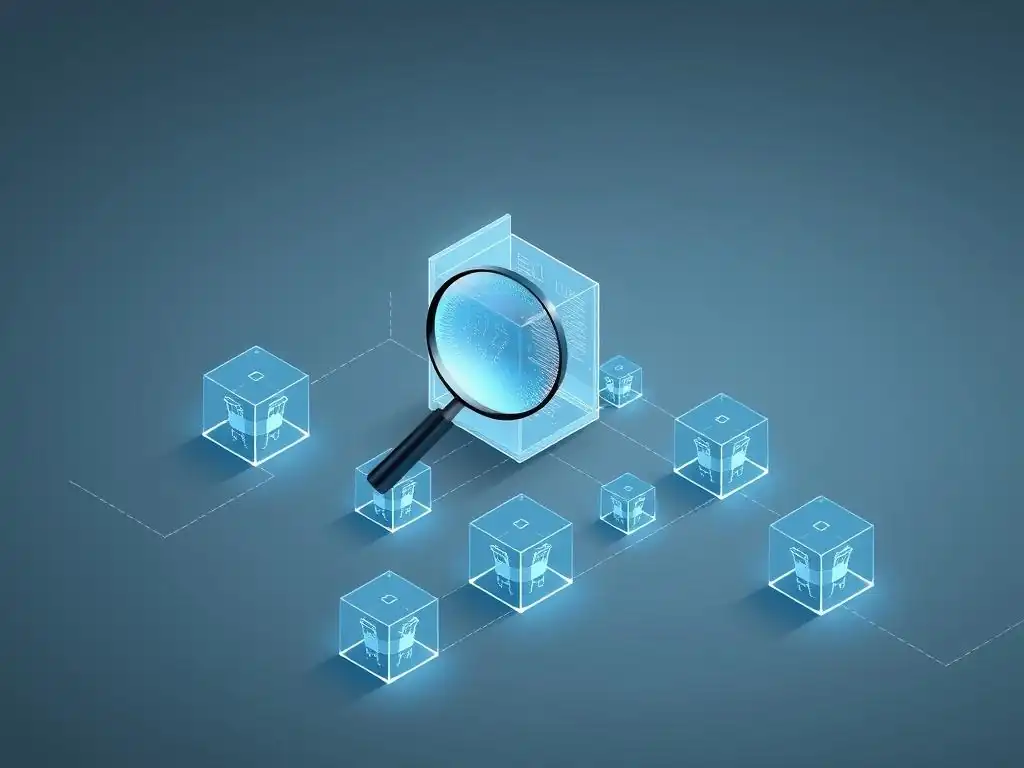
Understanding the inherent privacy limitations of traditional blockchains
Traditional blockchains, by their very design, operate on principles of transparency and immutability. Every transaction and piece of data recorded on a typical blockchain is publicly accessible and permanently stored across a distributed network. This inherent transparency, while beneficial for auditability and trust, poses significant challenges to data privacy.
Consider Bitcoin, the first widely adopted blockchain; all transaction details, including sender and receiver addresses and transaction amounts, are visible to anyone with an internet connection and a blockchain explorer. This level of openness means that sensitive information, if not properly managed, can be readily exposed, potentially leading to privacy breaches and security risks. The very nature of distributed ledger technology, which aims to create a shared and verifiable record, can inadvertently conflict with the growing demand for data privacy and control in the digital age.
Furthermore, the concept of pseudonymity often associated with blockchain does not equate to true anonymity. While users are typically identified by public addresses rather than real-world identities, these addresses can often be linked back to individuals or entities through transaction analysis, IP address tracking, or exchange account information.
Blockchain analytics firms are increasingly sophisticated in their ability to deanonymize blockchain transactions, highlighting the limitations of pseudonymity as a sole privacy measure. This inherent transparency and the potential for deanonymization underscore the critical need for robust blockchain data privacy techniques to mitigate these limitations and ensure responsible data handling in blockchain applications.
The increasing need for data protection in blockchain applications
The escalating need for data protection in blockchain applications is driven by a confluence of factors, including evolving regulatory landscapes, growing user awareness of privacy rights, and the expansion of blockchain technology into sensitive sectors. Regulations like the General Data Protection Regulation (GDPR) in Europe and the California Consumer Privacy Act (CCPA) mandate stringent requirements for data processing, storage, and user consent.
These regulations directly impact blockchain applications, particularly those handling personal data, necessitating the implementation of privacy-enhancing technologies to ensure compliance and avoid hefty penalties. For instance, a blockchain-based supply chain solution tracking product origins might inadvertently collect personal data about suppliers or consumers, requiring careful consideration of data minimization and privacy preservation.
Beyond regulatory compliance, user expectations for data privacy are also on the rise. Individuals are becoming increasingly aware of the value of their personal data and are demanding greater control over how it is collected, used, and shared. In blockchain applications, this translates to a demand for privacy-preserving features that protect user identities and sensitive transaction details.
This is particularly crucial in sectors like healthcare and finance, where data sensitivity is paramount. Imagine a blockchain-based healthcare record system; patients would expect their medical information to be securely stored and accessed only with proper authorization, demanding robust blockchain data privacy techniques to maintain confidentiality and trust in the system. The expansion of blockchain into these sensitive application areas further amplifies the importance of incorporating data privacy as a core design principle.
Overview of blockchain data privacy techniques
To address the inherent privacy challenges in blockchain and meet the growing demand for data protection, a range of blockchain data privacy techniques have emerged. These techniques can be broadly categorized into cryptographic methods, architectural approaches, and anonymization strategies. Encryption techniques, such as symmetric, asymmetric, and homomorphic encryption, play a crucial role in securing data confidentiality by transforming readable data into an unreadable format, accessible only with decryption keys.
Hashing and commitment schemes ensure data integrity and can be used to selectively reveal data without disclosing the entire dataset. Zero-Knowledge Proofs (ZKPs) allow for the verification of information without revealing the information itself, providing a powerful tool for privacy-preserving authentication and transaction validation.
Secure Multi-Party Computation (SMPC) enables collaborative data processing without revealing individual inputs, allowing multiple parties to jointly compute a function on their private data while keeping their inputs confidential. Differential Privacy techniques introduce statistical noise to datasets to protect individual privacy while enabling meaningful data analysis at an aggregate level.
Data masking and anonymization techniques involve redacting or pseudonymizing sensitive data to obscure identities and reduce the risk of re-identification. These diverse blockchain data privacy techniques offer a toolkit for developers and architects to build privacy-preserving blockchain systems tailored to specific application requirements and regulatory obligations, ultimately fostering greater trust and adoption of blockchain technology.
Frequently Asked Questions
What are some key blockchain data privacy techniques discussed in the context of blockchain architecture?
The article discusses techniques like zero-knowledge proofs (ZKPs), homomorphic encryption, and differential privacy to protect sensitive information. These techniques allow for data processing without revealing the underlying data itself.
How can DeFi (Decentralized Finance) benefit from incorporating blockchain data privacy techniques?
By implementing techniques such as private transactions and secure multi-party computation, DeFi platforms can enhance user anonymity and protect sensitive financial data. This fosters greater trust and wider adoption.
What are some design considerations when implementing blockchain data privacy techniques within an enterprise setting?
Enterprises must consider factors like regulatory compliance, data governance, and scalability when choosing and implementing privacy solutions. Balancing privacy with auditability is also crucial.
How do regulations influence the development and adoption of blockchain data privacy techniques?
Regulations such as GDPR and CCPA impose strict requirements for data protection, driving the need for privacy-enhancing technologies (PETs) within blockchain systems. Compliance is a major factor.
What is the future outlook for blockchain data privacy techniques, and how will they impact the evolution of decentralized systems?
The future involves further advancements in privacy-preserving computation and standardization of privacy protocols. This will lead to more secure, scalable, and trustworthy decentralized systems.
Final Reflection: Securing the Future of Blockchain Data
The exploration of blockchain data privacy techniques, as detailed in this article, isn't just an academic exercise; it's a critical imperative for the widespread adoption and ethical application of blockchain technology. As we increasingly entrust our data to decentralized systems, the ability to safeguard sensitive information becomes paramount, shaping the very future of trust in the digital realm.
The ongoing debate surrounding data privacy highlights the delicate balance between transparency and confidentiality. This article underscores the importance of proactively designing privacy-preserving mechanisms into blockchain architectures, rather than retrofitting them as an afterthought. Privacy is not an option, and it shouldn't come at a price; it's a fundamental right.
- Tim Cook. This quote resonates deeply, reminding us that data privacy isn't a luxury, but a cornerstone of a just and equitable digital society.
Now, as you navigate the ever-evolving landscape of blockchain technology, consider how you can champion data privacy. Whether you're a developer, an entrepreneur, or simply a user, strive to understand and implement these crucial techniques. Let's collectively build a future where blockchain empowers, rather than exposes, and where data privacy is not just a feature, but a fundamental principle.
Secure Your Data Future: Dive Deeper into Blockchain Privacy!
Thank you for exploring the essential relationship between data privacy and blockchain architecture with us. Now that you've learned about key design considerations and techniques, it's time to apply this knowledge to create a more secure and trustworthy blockchain ecosystem.
Here’s how you can continue your journey:
- Prioritize implementing at least one privacy-enhancing technique, such as zero-knowledge proofs or homomorphic encryption, in your next blockchain project.
- Explore open-source blockchain privacy tools and contribute your insights and experiences to the community.
- Share this article with your network and start a conversation about the ethical implications of data privacy in blockchain technology.
What specific data privacy challenge in blockchain are you most eager to address next? Share your thoughts and let's work together to build a more secure future!
Leave a Reply