
Data Storage in Blockchain Architecture: OnChain vs. OffChain Approaches


Welcome to Blockchain Trends, your portal to understanding the real-world impact of blockchain technology! Forget just cryptocurrencies – we're diving deep into DeFi, enterprise solutions, and the evolving regulatory landscape. Ever wondered how blockchain actually stores its data? Today, we unravel the complexities of Blockchain data storage methods, comparing OnChain and OffChain approaches. This Blockchain Technology Deep Dive will leave you questioning everything you thought you knew about data immutability and security. Ready to explore the future of decentralized systems? Let's begin.
Data Storage in Blockchain Architecture: On-Chain vs. Off-Chain Approaches
- Introduction to Blockchain Data Storage Methods
-
On-Chain Data Storage: Advantages and Disadvantages
- What is On-Chain Data Storage? A Detailed Explanation
- Advantages of Storing Data Directly on the Blockchain
- Disadvantages of On-Chain Data Storage Solutions
- What is Off-Chain Data Storage? A Detailed Explanation
- How Off-Chain Storage Complements Blockchain Technology
- Advantages of Using Off-Chain Data Storage Solutions
- Disadvantages of Off-Chain Data Storage Solutions
- On-Chain vs. Off-Chain: A Detailed Comparison of Data Storage Techniques
- Use Cases for On-Chain and Off-Chain Data Storage
- Hybrid Approaches: Combining On-Chain and Off-Chain Data Storage
- Future Trends in Blockchain Data Storage
- Conclusion: Choosing the Right Blockchain Data Storage Method for Your Needs
-
Frequently Asked Questions
- What are the primary data storage methods used in blockchain architecture?
- What are the advantages of using On-Chain data storage?
- What are the drawbacks of using On-Chain data storage?
- What are the benefits of utilizing Off-Chain data storage in blockchain systems?
- How do On-Chain and Off-Chain storage approaches impact the performance and security of a blockchain application?
- Final Reflection: Navigating the Future of Trust
- Unveil Your Optimal Blockchain Storage Strategy!
Introduction to Blockchain Data Storage Methods
The Importance of Efficient Data Storage in Blockchain Technology
Efficient data storage is paramount in blockchain technology, serving as the backbone for its functionality and scalability. Blockchains are fundamentally distributed ledgers designed to record transactions in a secure, transparent, and immutable manner. The way data is stored directly impacts a blockchain's speed, cost-effectiveness, security, and overall usability.
A well-designed data storage strategy ensures that the blockchain network can handle increasing volumes of information without compromising its core principles. As blockchain technology expands beyond cryptocurrencies into diverse sectors like supply chain management, healthcare, and digital identity, the need for optimized data storage solutions becomes even more critical for real-world adoption and sustained growth.
The choice of data storage method is not just a technical detail; it's a strategic decision that influences the entire architecture of a blockchain application. Poorly managed data storage can lead to network congestion, exorbitant transaction fees, and limited scalability, effectively hindering the potential of blockchain solutions. Conversely, effective data storage solutions can unlock new possibilities, enabling blockchains to support complex applications, process large datasets, and accommodate a growing user base. Therefore, understanding and implementing efficient data storage mechanisms are crucial for building robust and scalable blockchain ecosystems.
Understanding the Limitations of Traditional Databases in Blockchain Applications
Traditional databases, while highly efficient for centralized systems, are fundamentally different from blockchain and present limitations when applied to decentralized applications. Relational databases, for example, rely on a central server to manage and control data, ensuring consistency and transactional integrity within a single point of authority.
This centralized nature contradicts the core tenets of blockchain, which aims to distribute trust and control across a network of participants, eliminating single points of failure and censorship. Furthermore, traditional databases are not inherently designed for transparency and auditability in the way blockchains are, where every transaction is cryptographically linked and verifiable by all participants.
Another key limitation lies in the immutability requirement often associated with blockchain applications. Once data is written to a traditional database, it can typically be modified or deleted by administrators. This flexibility, while useful in many contexts, undermines the need for tamper-proof records in blockchain systems, especially in applications requiring high levels of trust and verifiability, such as supply chain provenance or digital asset ownership.
While traditional databases excel in scenarios demanding speed and mutable data management within controlled environments, they often fall short when it comes to meeting the decentralized, transparent, and immutable data storage needs of blockchain-based applications. This necessitates the exploration of storage methods specifically tailored for blockchain architectures, including on-chain and off-chain solutions.
On-Chain Data Storage: Advantages and Disadvantages
What is On-Chain Data Storage? A Detailed Explanation
On-chain data storage refers to the practice of storing transaction data directly on the blockchain itself. In this approach, every piece of information, whether it's transactional details, smart contract code, or even application-specific data, is recorded within the blocks that constitute the blockchain ledger. This means that the data becomes an integral part of the blockchain's history and is replicated across all nodes participating in the network. Bitcoin transactions, for instance, are examples of on-chain data storage, where details of each transfer, including sender, receiver, and amount, are permanently recorded in the blockchain.
The fundamental characteristic of on-chain storage is that data is processed and validated by the consensus mechanism of the blockchain network. When a transaction containing data is broadcast, it undergoes verification by multiple nodes before being included in a block. Once a block is added to the chain, the data within it becomes immutable and cryptographically secured.
This inherent feature of blockchain ensures that on-chain data is highly resistant to tampering and censorship. For example, in Ethereum, smart contract code and the state changes resulting from contract execution are all stored on-chain, making them accessible and verifiable by anyone with access to the blockchain.
Advantages of Storing Data Directly on the Blockchain
Immutability and Security of On-Chain Data
One of the most compelling advantages of on-chain data storage is its inherent immutability and robust security. Once data is written to the blockchain and confirmed through the consensus mechanism, it becomes virtually impossible to alter or delete. This immutability stems from the cryptographic hashing and distributed nature of blockchain.
Each block contains a hash of the previous block, creating a chain of linked blocks that is computationally infeasible to tamper with retroactively. To alter a single transaction deep within the blockchain would require re-calculating the hashes of all subsequent blocks, a task that demands immense computing power and coordination across the majority of the network, making it practically unachievable in established blockchains like Bitcoin or Ethereum.
Furthermore, the security of on-chain data is reinforced by the distributed consensus mechanism. In proof-of-work systems, for instance, miners compete to solve complex cryptographic puzzles to validate transactions and add new blocks. This process not only secures the network against attacks but also ensures data integrity.
The decentralized nature of blockchain also eliminates single points of failure, making on-chain data storage significantly more resilient to cyberattacks and data breaches compared to centralized storage solutions. The combination of cryptographic security and distributed consensus makes on-chain storage ideal for applications requiring the highest levels of data integrity and tamper-proof records, such as land registry or voting systems.
Transparency and Auditability of On-Chain Records
On-chain data storage inherently provides unparalleled transparency and auditability. Because the blockchain is a distributed public ledger, all data stored on-chain is typically accessible to anyone with a network connection and the necessary software to interact with the blockchain. This open access fosters transparency, allowing for independent verification of transactions and data records by multiple parties without the need for intermediaries or trusted authorities. For example, in supply chain applications using on-chain data, consumers can potentially trace the provenance of a product from origin to purchase simply by examining the publicly available blockchain records.
This transparency also enhances auditability. Every transaction is timestamped and cryptographically signed, creating an auditable trail of all data modifications. This makes on-chain data storage particularly attractive for industries with strict regulatory compliance requirements, such as finance and healthcare. Auditors can independently verify the integrity and history of data directly from the blockchain, reducing reliance on internal controls and potentially streamlining audit processes. The combination of transparency and auditability inherent in on-chain storage builds trust and accountability in systems where data integrity and verifiable records are paramount.
Disadvantages of On-Chain Data Storage Solutions
Scalability Challenges with On-Chain Storage
A significant disadvantage of on-chain data storage is the inherent scalability limitations of most blockchain networks. Storing large amounts of data directly on the blockchain can quickly lead to network congestion and slower transaction processing times. Blockchains like Bitcoin and Ethereum, while highly secure, have relatively limited throughput in terms of transactions per second (TPS). Bitcoin, for instance, can process approximately 7 TPS, while Ethereum, before its major upgrades, hovered around 15-20 TPS. Storing large files or substantial volumes of application data on-chain would drastically reduce network performance and potentially bring transaction speeds to a crawl.
The size of the blockchain itself also grows with every transaction stored on-chain. As more data is added, the blockchain ledger becomes larger, requiring more storage space for each node in the network.
This increasing storage demand can make it more resource-intensive to run a full node, potentially leading to centralization as fewer participants are willing or able to maintain the infrastructure. For applications requiring high data throughput and large storage volumes, such as decentralized social media platforms or applications dealing with large media files, relying solely on on-chain storage becomes impractical and unsustainable due to these inherent scalability challenges.
High Transaction Costs Associated with On-Chain Data
Storing data on-chain is generally more expensive than off-chain alternatives due to the transaction fees required to record data on the blockchain. Every operation that writes data to the blockchain, whether it's a simple transaction or a complex smart contract execution, incurs a transaction fee, often referred to as "gas" on networks like Ethereum. These fees compensate miners or validators for processing transactions and securing the network. When storing large amounts of data on-chain, these transaction costs can accumulate rapidly and become prohibitively expensive for many applications.
The cost of on-chain storage is also influenced by network congestion. During periods of high network activity, transaction fees tend to increase as users compete to have their transactions processed quickly. This volatility in transaction costs makes it difficult to predict and budget for on-chain data storage expenses.
For applications that require frequent data updates or storage of large datasets, the cumulative transaction fees associated with on-chain storage can be a significant barrier to adoption, especially when compared to the relatively lower costs of traditional cloud storage solutions or off-chain alternatives. For example, storing a gigabyte of data directly on Ethereum could potentially cost hundreds or even thousands of dollars in gas fees, depending on network conditions.
Privacy Concerns and Data Sensitivity on Public Blockchains
Storing sensitive data directly on a public blockchain raises significant privacy concerns. Public blockchains, by design, are transparent and accessible to anyone. While transactions are often pseudonymized using addresses instead of real-world identities, the data itself is generally visible to all participants. This lack of inherent privacy makes on-chain storage unsuitable for sensitive information such as personal medical records, confidential financial data, or proprietary business secrets. Once data is written to a public blockchain, it is extremely difficult, if not impossible, to remove or redact, meaning any sensitive information stored on-chain could be permanently exposed.
While cryptographic techniques like encryption can be employed to protect data stored on-chain, managing encryption keys and ensuring data confidentiality within a public, decentralized environment introduces complexities. Furthermore, even encrypted data on a public blockchain might be vulnerable to future decryption methods as computing power and cryptographic techniques advance.
For applications that must comply with data privacy regulations like GDPR or HIPAA, storing sensitive personal data directly on a public blockchain is generally not a viable or compliant solution due to these inherent transparency and privacy limitations. Therefore, careful consideration of data sensitivity and privacy requirements is crucial when evaluating on-chain data storage options.
What is Off-Chain Data Storage? A Detailed Explanation
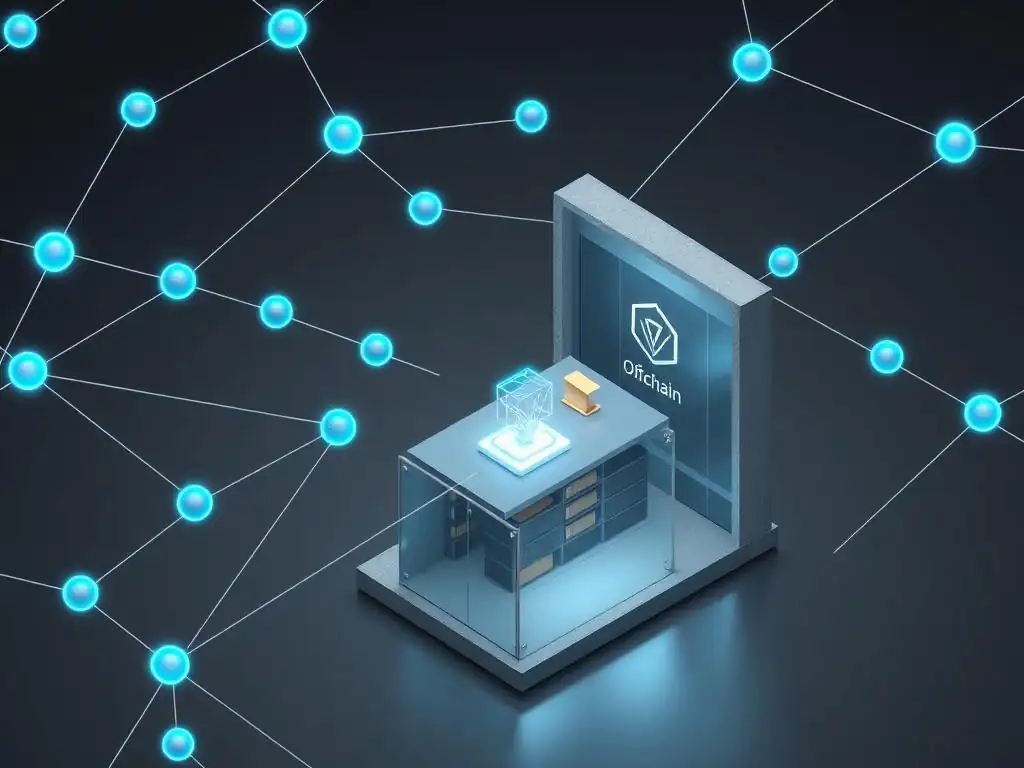
Off-chain data storage refers to methods of storing data outside of the blockchain itself, while still leveraging the blockchain for specific purposes like data verification or access control. In this approach, only essential information, such as cryptographic hashes or pointers to the off-chain data, are stored on the blockchain, while the bulk of the actual data resides in separate storage systems.
These off-chain systems can range from centralized cloud storage services to decentralized storage networks or even traditional databases. The key distinction is that the data itself is not replicated across the blockchain network and does not directly contribute to the blockchain's transaction processing load.
Off-chain storage solutions are designed to complement blockchain technology by addressing some of the limitations of on-chain storage, particularly scalability and cost. By decoupling data storage from the blockchain's core ledger, applications can handle larger volumes of data and more complex data structures without overwhelming the blockchain network.
For example, in a decentralized social media platform using off-chain storage, user profiles, posts, and media files could be stored off-chain, while the blockchain might be used to manage user identities, ownership of content, and timestamps of posts. This hybrid approach allows applications to benefit from the security and transparency of blockchain for critical functions while utilizing more scalable and cost-effective solutions for data storage.
How Off-Chain Storage Complements Blockchain Technology
Off-chain storage plays a crucial role in complementing blockchain technology by mitigating some of its inherent limitations and expanding its applicability to a wider range of use cases. As previously discussed, on-chain storage faces challenges related to scalability, cost, and privacy when dealing with large datasets or sensitive information.
Off-chain solutions directly address these issues by providing alternative storage mechanisms that are more efficient, cost-effective, and privacy-preserving for certain types of data. By offloading the burden of storing large volumes of data from the blockchain, off-chain storage enables blockchain networks to focus on their core strengths: security, immutability, and decentralized consensus for critical transactional data and state changes.
The synergy between on-chain and off-chain storage creates a more flexible and scalable architecture for blockchain applications. Applications can selectively choose what data to store on-chain and what data to store off-chain based on their specific requirements for security, transparency, performance, and cost.
For instance, in supply chain tracking, critical events like product ownership transfers or key milestones might be recorded on-chain for immutability and auditability, while detailed sensor data or large image files associated with the product could be stored off-chain to manage data volume and cost. This combined approach allows developers to leverage the best aspects of both on-chain and off-chain storage, creating more practical and efficient blockchain solutions.
Advantages of Using Off-Chain Data Storage Solutions
Improved Scalability and Performance
Off-chain data storage significantly enhances the scalability and performance of blockchain applications. By storing the bulk of the data outside the blockchain, applications can process and manage much larger datasets without impacting the blockchain network's throughput or transaction speed. This is because only minimal metadata, such as hashes or pointers to the off-chain data, are recorded on the blockchain, keeping transaction sizes small and processing times fast. For applications requiring high data throughput, like decentralized video streaming platforms or online gaming, off-chain storage is essential to achieve the necessary performance levels.
Furthermore, off-chain storage solutions can leverage existing, highly scalable storage infrastructure, such as cloud storage services or decentralized storage networks like IPFS (InterPlanetary File System) or Filecoin. These systems are designed to handle massive data volumes and provide fast data access, allowing blockchain applications to scale effectively to meet growing user demands. By decoupling data storage from the blockchain's processing limitations, off-chain storage unlocks the potential for blockchain to be used in applications that require handling large amounts of data and high transaction volumes, which would be impractical with purely on-chain storage.
Reduced Transaction Costs and Network Congestion
Utilizing off-chain data storage drastically reduces transaction costs associated with data storage in blockchain applications. Since only minimal data is written to the blockchain, the number and size of on-chain transactions are minimized, leading to lower transaction fees. This cost reduction is particularly significant for applications that require frequent data updates or involve large datasets, as the cumulative transaction costs of on-chain storage could quickly become prohibitive. By offloading data storage to more cost-effective off-chain solutions, developers can build economically viable blockchain applications, especially for use cases where cost sensitivity is a major factor.
Moreover, reduced on-chain transaction volume also helps to alleviate network congestion on the blockchain. By minimizing the data burden on the blockchain network, off-chain storage contributes to faster transaction processing times and lower overall network fees for all users. This benefit is particularly important for public blockchains with limited throughput capacity, where network congestion can lead to slow transaction confirmations and high gas prices. Off-chain storage, therefore, not only reduces storage costs for individual applications but also contributes to the overall efficiency and usability of the blockchain network.
Enhanced Privacy and Control Over Data
Off-chain data storage offers enhanced privacy and control over data, particularly when compared to storing sensitive information directly on a public blockchain. By storing data off-chain, applications can implement various privacy-enhancing techniques and access control mechanisms that are not readily available or practical on public blockchains. For instance, data stored off-chain can be encrypted using stronger encryption algorithms and managed with more granular access permissions, allowing applications to comply with data privacy regulations and protect sensitive user information.
Furthermore, off-chain storage allows applications to choose storage solutions that align with their specific privacy requirements. For applications requiring strict data sovereignty or control over data location, they can opt for private cloud storage or decentralized storage networks that offer greater control over data residency and access. This flexibility in choosing storage infrastructure and implementing privacy controls enables developers to build blockchain applications that can handle sensitive data in a more secure and compliant manner, addressing the privacy limitations inherent in public on-chain storage.
Disadvantages of Off-Chain Data Storage Solutions
Reliance on Third-Party Storage Providers
One of the primary disadvantages of off-chain data storage is the potential reliance on third-party storage providers. Depending on the chosen off-chain solution, applications may need to entrust their data to external entities, such as centralized cloud storage providers or decentralized storage networks.
This reliance introduces a level of dependency and trust that is not present with on-chain storage, where data is inherently distributed and controlled by the blockchain network itself. If an application uses a centralized cloud provider for off-chain storage, it becomes vulnerable to the provider's outages, security breaches, or policy changes, which could impact data availability and integrity.
Even when using decentralized storage networks, applications still rely on the network's infrastructure and governance mechanisms. While decentralized networks aim to distribute trust and control across multiple participants, they are not entirely immune to risks such as network failures, governance disputes, or economic incentives that could compromise data availability or integrity. Therefore, when choosing off-chain storage solutions, applications must carefully evaluate the trust assumptions and potential risks associated with relying on external providers, whether centralized or decentralized.
Potential Security Risks and Data Integrity Issues
While off-chain storage can offer certain security advantages, it also introduces potential security risks and data integrity challenges that are different from those associated with on-chain storage. Data stored off-chain may not benefit from the inherent immutability and cryptographic security of the blockchain itself. Depending on the chosen off-chain storage solution, data could be vulnerable to tampering, data loss, or unauthorized access if not properly secured. For example, data stored in a centralized cloud storage service is susceptible to data breaches or insider threats if the provider's security measures are compromised.
Ensuring data integrity in off-chain storage systems requires implementing robust security protocols, such as encryption, access controls, and data redundancy. Applications need to carefully consider the security risks associated with their chosen off-chain storage solution and implement appropriate security measures to protect data integrity and confidentiality. Furthermore, verifying data integrity in off-chain storage can be more complex than with on-chain data. While blockchain can be used to store cryptographic hashes of off-chain data to verify its integrity, the actual data resides outside the blockchain's direct control, requiring additional mechanisms to ensure data has not been tampered with or corrupted.
Complexity in Data Synchronization and Consistency
Implementing off-chain data storage can introduce complexities in data synchronization and consistency, especially when data needs to be linked to on-chain transactions or smart contracts. Maintaining consistency between on-chain and off-chain data requires careful design and implementation to ensure that data references and updates are properly synchronized and that the overall application state remains consistent. For instance, if an application stores user profile data off-chain and user identity on-chain, mechanisms are needed to ensure that the off-chain profile data is correctly associated with the on-chain identity and that updates to either data source are properly reflected.
Managing data consistency across distributed systems, including blockchain and off-chain storage, is a complex challenge in computer science. Applications need to implement robust data synchronization protocols and potentially utilize techniques like atomic transactions or consensus mechanisms to ensure data consistency, especially in scenarios where data updates are frequent or involve multiple data sources. Failure to properly manage data synchronization and consistency can lead to data inconsistencies, application errors, and potential security vulnerabilities.
On-Chain vs. Off-Chain: A Detailed Comparison of Data Storage Techniques
Key Differences in Data Accessibility and Control
The accessibility and control of data differ significantly between on-chain and off-chain storage methods. On-chain data is inherently public and accessible to anyone with access to the blockchain network. This open accessibility is a core feature of public blockchains, ensuring transparency and auditability. Control over on-chain data is distributed across the network, governed by the consensus mechanism and network rules, rather than residing with a single entity. Once data is on-chain, no single party can unilaterally alter or remove it, reflecting the decentralized and immutable nature of blockchain.
Conversely, off-chain data storage offers more varied levels of accessibility and control. Depending on the chosen off-chain solution, data accessibility can range from completely private and restricted to selectively shared with authorized parties. Control over off-chain data typically resides with the application developers or the chosen storage provider. This allows for greater flexibility in implementing access control mechanisms and managing data privacy. For example, applications can use encryption and access permissions to restrict access to off-chain data to authorized users only, a level of control not easily achievable with public on-chain data.
Contrasting Security Models: On-Chain vs. Off-Chain
On-chain and off-chain storage methods rely on different security models. On-chain security is primarily rooted in cryptography and decentralized consensus. The immutability of on-chain data is guaranteed by cryptographic hashing and the distributed nature of the blockchain, making it extremely difficult to tamper with or censor data. The consensus mechanism ensures that all transactions are validated by multiple nodes, enhancing security against fraudulent activities. The security of on-chain data is thus tied to the robustness of the blockchain network itself.
Off-chain security models are more diverse and depend heavily on the specific storage solution chosen. Centralized off-chain storage solutions rely on traditional security measures employed by the storage provider, such as physical security, access controls, and data encryption. Decentralized off-chain storage networks aim to distribute security risks by storing data across multiple nodes and using cryptographic techniques for data integrity and availability. However, off-chain security is generally more reliant on implementation details and less inherently guaranteed than on-chain security, requiring careful consideration of potential vulnerabilities and security best practices.
Comparing Costs and Performance Metrics
Cost and performance metrics are critical differentiating factors between on-chain and off-chain data storage. On-chain storage is generally more expensive and offers lower performance compared to off-chain options. The cost of on-chain storage is driven by transaction fees associated with writing data to the blockchain, which can be substantial, especially for large datasets or frequent updates. Performance is limited by the blockchain's throughput capacity, resulting in slower transaction processing times and potential network congestion when storing large volumes of data on-chain.
Off-chain storage, in contrast, is typically more cost-effective and offers superior performance. Off-chain storage costs are generally lower, especially when using established cloud storage services or decentralized storage networks designed for efficient data storage. Performance is significantly better as off-chain storage systems are optimized for handling large data volumes and providing fast data access, without being constrained by the blockchain's transaction processing limitations. This makes off-chain storage a more practical choice for applications requiring high performance and cost efficiency, while on-chain storage is better suited for critical data requiring utmost security and immutability, despite higher costs and lower performance.
Use Cases for On-Chain and Off-Chain Data Storage
On-Chain Storage Use Cases: Smart Contract Code, Identity Verification, Digital Certificates
On-chain data storage is particularly well-suited for use cases that demand high levels of security, immutability, transparency, and auditability. Smart contract code is a prime example. Storing smart contract code on-chain ensures that the logic governing decentralized applications is transparently auditable and tamper-proof. Once deployed on-chain, smart contract code becomes immutable, guaranteeing that the contract will execute as intended without the possibility of unauthorized modifications. This immutability is crucial for the trust and reliability of decentralized applications.
Identity verification is another strong use case for on-chain storage. Storing cryptographic hashes of identity documents or verifiable credentials on-chain allows for secure and tamper-proof identity verification processes. For instance, a university could issue digital certificates to students, recording a hash of the certificate on the blockchain.
Employers or other institutions could then verify the authenticity of the certificate by comparing its hash to the on-chain record, ensuring the credential's validity and preventing forgery. This on-chain verification process enhances trust and efficiency in identity management. Similarly, digital certificates for various assets or qualifications can benefit from on-chain storage of their essential data or verification fingerprints.
Off-Chain Storage Use Cases: Large Media Files, Supply Chain Tracking Data, Medical Records
Off-chain data storage excels in scenarios where large volumes of data, high performance, cost efficiency, or enhanced privacy are paramount. Large media files, such as images, videos, and audio files, are prime candidates for off-chain storage. Storing these files directly on-chain would be prohibitively expensive and inefficient due to blockchain's scalability limitations. Instead, applications can store media files off-chain and record only metadata, such as content hashes or URLs, on the blockchain to link the media to on-chain records or transactions. This approach allows for efficient management of large media assets in decentralized applications.
Supply chain tracking data, especially detailed sensor data, location information, and product specifications, often generates substantial data volumes. Storing all this granular data on-chain would be impractical. Off-chain storage enables efficient management of this large dataset, while the blockchain can be used to record key events in the supply chain, such as ownership transfers or shipment milestones.
Cryptographic links between on-chain events and off-chain data can ensure data integrity and traceability throughout the supply chain. Medical records, due to their large size and sensitive nature, are also better suited for off-chain storage. While patient identifiers and access control information could be managed on-chain for security and auditability, the bulk of the medical record data can be stored off-chain with appropriate encryption and privacy controls, ensuring both data security and regulatory compliance.
Hybrid Approaches: Combining On-Chain and Off-Chain Data Storage
Leveraging the Strengths of Both Methods
Hybrid approaches to data storage in blockchain architecture aim to leverage the complementary strengths of both on-chain and off-chain methods. By strategically combining these techniques, applications can achieve a balance between security, immutability, transparency (offered by on-chain storage) and scalability, cost-efficiency, and privacy (provided by off-chain storage). Hybrid solutions allow developers to tailor their data storage strategy to the specific needs of their application, optimizing for different priorities and use case requirements. This integrated approach recognizes that neither on-chain nor off-chain storage is universally superior; rather, the optimal solution often involves a thoughtful combination of both.
The key to successful hybrid implementations lies in carefully identifying which data components are best suited for on-chain versus off-chain storage. Critical data requiring high security, immutability, and transparency, such as transaction records, digital asset ownership, and verifiable credentials, are typically stored on-chain. Large volumes of data, sensitive information, and data requiring high performance access are generally better managed off-chain. The blockchain then acts as a secure and auditable anchor, verifying the integrity and provenance of off-chain data through cryptographic links and on-chain records of essential metadata.
Architecting Hybrid Data Storage Solutions for Blockchain Applications
Architecting hybrid data storage solutions involves several key considerations. First, it's crucial to classify data based on its sensitivity, size, and access frequency. This classification helps determine which data components should be prioritized for on-chain versus off-chain storage. Second, establish robust cryptographic links between on-chain records and off-chain data. This typically involves storing hashes of off-chain data on-chain to ensure data integrity and enable verification. Third, design efficient data synchronization mechanisms to maintain consistency between on-chain and off-chain data, especially when updates occur.
Furthermore, select appropriate off-chain storage technologies that align with the application's requirements for scalability, cost, security, and privacy. Options range from centralized cloud storage to decentralized storage networks, each with its own trade-offs. Finally, implement secure access control mechanisms for both on-chain and off-chain data, ensuring that only authorized parties can access and modify data as needed. Careful planning and implementation of these architectural elements are essential for building robust and effective hybrid data storage solutions for blockchain applications.
Healthcare data management exemplifies a successful application of hybrid data storage. Patient identity, access permissions, and summaries of medical records can be stored on-chain for enhanced security, auditability, and patient control. The bulk of sensitive medical records, including detailed patient history, diagnostic images, and treatment plans, are stored off-chain in encrypted and HIPAA-compliant storage systems.
Blockchain is used to manage access control, ensuring that only authorized healthcare providers and patients can access specific records, while off-chain storage handles the large data volumes and privacy requirements of medical information. This hybrid approach balances data security and patient privacy with the practicalities of managing large medical datasets.
Decentralized social media platforms also commonly employ hybrid data storage architectures. User identities, ownership of content, and timestamps of posts can be recorded on-chain, providing transparency and censorship resistance. User profiles, posts, comments, and media files, which constitute large volumes of data and may contain sensitive user information, are stored off-chain in decentralized storage networks like IPFS or Arweave.
The blockchain ensures content ownership and prevents censorship, while off-chain storage provides scalability and cost-efficiency for managing user-generated content. This hybrid model enables the creation of social media platforms that are both decentralized and performant, addressing the limitations of purely on-chain storage for content-rich applications.
Future Trends in Blockchain Data Storage
Emerging Technologies for Data Management on Blockchains
Several emerging technologies are shaping the future of data management on blockchains. State channels and sidechains are layer-2 solutions that enable off-chain transaction processing and data storage, reducing the burden on the main blockchain. State channels allow participants to conduct multiple transactions off-chain and only commit the final state to the main chain, improving scalability. Sidechains are separate blockchains that run parallel to the main chain and can handle specific types of transactions or data, offering increased throughput and customization.
Zero-knowledge proofs (ZKPs) are cryptographic techniques that allow for data verification without revealing the underlying data itself. ZKPs can enhance privacy in blockchain data storage by enabling applications to prove data integrity and validity without disclosing sensitive information on-chain. Verifiable computation is another promising area, allowing computations to be performed off-chain while generating cryptographic proofs that the computation was performed correctly. These technologies are paving the way for more scalable, private, and efficient data management solutions for blockchain applications.
The Role of Layer-2 Solutions in Scaling Data Storage
Layer-2 solutions are playing an increasingly crucial role in scaling data storage for blockchain applications. As discussed, technologies like state channels and sidechains offload transaction processing and data storage from the main blockchain, significantly improving scalability and reducing costs. Rollups are another prominent layer-2 scaling solution that aggregates multiple transactions into a single on-chain transaction, increasing throughput and reducing gas fees. Validium is a variation of rollups that stores transaction data off-chain while still committing validity proofs on-chain, further enhancing scalability and cost efficiency.
Decentralized storage networks integrated with layer-2 solutions offer a powerful combination for scaling data storage and access. By combining the scalability of layer-2 solutions with the decentralized nature of storage networks, applications can achieve high performance, cost-effective, and secure data management without overwhelming the main blockchain. Layer-2 solutions are becoming essential components in the blockchain ecosystem, enabling the development of more scalable and practical applications that can handle larger data volumes and user bases.
Innovations in Decentralized Storage Networks
Decentralized storage networks are undergoing rapid innovation, offering increasingly robust and feature-rich solutions for off-chain data storage in blockchain applications. IPFS (InterPlanetary File System) and Filecoin are leading examples, providing content-addressable storage and incentivized storage models. IPFS uses content addressing to uniquely identify files based on their content, enabling efficient content distribution and deduplication. Filecoin incentivizes storage providers to contribute storage space to the network and users to store their data, creating a decentralized storage marketplace.
Arweave is another notable decentralized storage network, focusing on permanent data storage. Arweave uses a blockweave structure and a sustainable endowment mechanism to ensure data permanence and availability over long periods. Sia and Storj are also decentralized storage platforms that utilize blockchain technology to create decentralized cloud storage marketplaces. These networks are continuously evolving, improving their performance, reliability, and security, and becoming increasingly viable alternatives to traditional centralized cloud storage for blockchain applications. Innovations in decentralized storage networks are crucial for realizing the full potential of decentralized web and empowering users with greater control over their data.
Conclusion: Choosing the Right Blockchain Data Storage Method for Your Needs
Key Considerations for Selecting an Appropriate Storage Strategy
Selecting the right blockchain data storage method requires careful consideration of several key factors. Data sensitivity and privacy requirements are paramount. If the data is sensitive or requires strict privacy, off-chain storage with robust encryption and access controls may be more appropriate than public on-chain storage. Scalability and performance needs are also critical.
Applications handling large data volumes or requiring high transaction throughput should strongly consider off-chain or hybrid solutions to avoid overwhelming the blockchain network. Cost efficiency is another significant factor. On-chain storage is generally more expensive than off-chain options, so cost-sensitive applications should explore off-chain or hybrid approaches to manage storage expenses.
Security and immutability requirements must be carefully evaluated. If data immutability and tamper-proof records are crucial, on-chain storage or a hybrid approach with critical data anchored on-chain is essential. Data accessibility and transparency needs also play a role. Public on-chain storage offers maximum transparency, while off-chain storage allows for more controlled data access. Finally, regulatory compliance requirements may influence the choice of storage method. Certain regulations may dictate specific data storage and privacy practices, requiring careful consideration of on-chain versus off-chain options to ensure compliance.
Balancing Security, Scalability, and Cost Efficiency
Choosing a blockchain data storage method often involves balancing the trade-offs between security, scalability, and cost efficiency. On-chain storage prioritizes security and immutability but typically at the expense of scalability and cost efficiency. It is best suited for critical data where security and transparency are paramount, even if it means higher costs and lower performance.
Off-chain storage excels in scalability and cost efficiency but may introduce more complexity in security and data integrity management compared to on-chain solutions. It is well-suited for large data volumes, performance-sensitive applications, and scenarios where cost is a primary concern, provided that appropriate security measures are implemented.
Hybrid approaches offer a balanced solution, aiming to combine the strengths of both on-chain and off-chain storage. By strategically allocating data between on-chain and off-chain storage based on specific application requirements, hybrid solutions can achieve a better balance between security, scalability, and cost efficiency. The optimal choice ultimately depends on the specific priorities and constraints of each blockchain application, requiring a thoughtful evaluation of these trade-offs to select the most appropriate data storage strategy.
The Future of Data Management in the Decentralized Web
The future of data management in the decentralized web is likely to be characterized by the increasing adoption of hybrid and layer-2 solutions, alongside continued innovation in decentralized storage networks. As blockchain technology matures and expands into more diverse applications, hybrid architectures that combine on-chain and off-chain storage will become increasingly prevalent. These hybrid models will enable developers to build more scalable, cost-effective, and privacy-preserving decentralized applications, overcoming the limitations of purely on-chain storage.
Layer-2 scaling solutions will play a vital role in enhancing the scalability of blockchain data storage, enabling blockchains to handle larger data volumes and higher transaction throughput. Innovations in decentralized storage networks will continue to drive the development of more robust, efficient, and user-friendly off-chain storage options, providing viable alternatives to centralized cloud storage in the decentralized web. The convergence of these trends will shape the future of data management in the decentralized web, paving the way for more powerful, scalable, and user-centric blockchain applications that can transform various industries and empower individuals with greater control over their data.
Frequently Asked Questions
What are the primary data storage methods used in blockchain architecture?
The two main approaches are On-Chain storage, where data is directly recorded on the blockchain, and Off-Chain storage, where data is stored externally and linked to the blockchain via hashes or references.
What are the advantages of using On-Chain data storage?
On-Chain storage offers immutability and transparency, as all data is permanently recorded and publicly verifiable on the blockchain. This ensures a high degree of data integrity and trust.
What are the drawbacks of using On-Chain data storage?
On-Chain storage can be expensive and inefficient due to the high cost of writing data to the blockchain and the limited storage capacity. It also raises concerns about data privacy and scalability.
What are the benefits of utilizing Off-Chain data storage in blockchain systems?
Off-Chain storage solutions offer greater scalability and cost-effectiveness, allowing for the storage of large volumes of data without burdening the blockchain network. It also provides more flexibility for data management and privacy controls.
How do On-Chain and Off-Chain storage approaches impact the performance and security of a blockchain application?
On-Chain storage enhances security and transparency but can negatively impact performance due to its limitations. Off-Chain storage improves performance and scalability but requires careful consideration of security measures to maintain data integrity.
The exploration of on-chain and off-chain data storage methods within blockchain architecture reveals a critical juncture in the evolution of decentralized systems. The balance between immutability and scalability is no longer a theoretical debate, but a practical challenge shaping the very foundation of Web3 and beyond. The choices we make today regarding data storage will directly impact the efficiency, accessibility, and ultimately, the adoption of blockchain technology across diverse industries.
The ongoing tension between the desire for absolute transparency and the pragmatic need for efficient data management has profoundly influenced the development of blockchain solutions. This delicate dance, between the ideals of decentralization and the realities of real-world application, highlights the inherent complexities of building a truly trustless system. Data is the new oil, but blockchain is the refinery.
This quote encapsulates the potential of blockchain to transform data management, but also underscores the need for careful consideration of how that data is stored and processed.
As we stand at the precipice of a future increasingly reliant on decentralized technologies, I invite you to reflect on the role you can play in shaping its trajectory. Consider the implications of your data choices, the trade-offs between security and scalability, and the potential for innovation that lies within these emerging paradigms. The future of trust is not predetermined; it is being built, block by block, by individuals like you. Embrace the challenge, explore the possibilities, and contribute to a more transparent and equitable digital world.
Unveil Your Optimal Blockchain Storage Strategy!
Thank you for exploring the differences between on-chain and off-chain data storage! We hope this overview has helped clarify the best approaches for your blockchain projects. Now, it's time to take action.
Ready to improve your data management? Consider the following next steps:
- Evaluate your current project's data storage requirements and decide whether on-chain or off-chain solutions are more appropriate based on performance, cost, and security considerations. This should be your top priority.
- Investigate innovative hybrid methods, such as anchoring off-chain data to the blockchain using Merkle trees, and test their feasibility within your project.
- Share this article with your colleagues and initiate a discussion about the advantages and disadvantages of each approach in relation to your specific use cases.
Which storage strategy are you most eager to implement, and what unique challenges do you anticipate in applying it to your project? Share your thoughts in the comments below!
Leave a Reply