
Exploring the Intersection of DLT and Artificial Intelligence (AI)

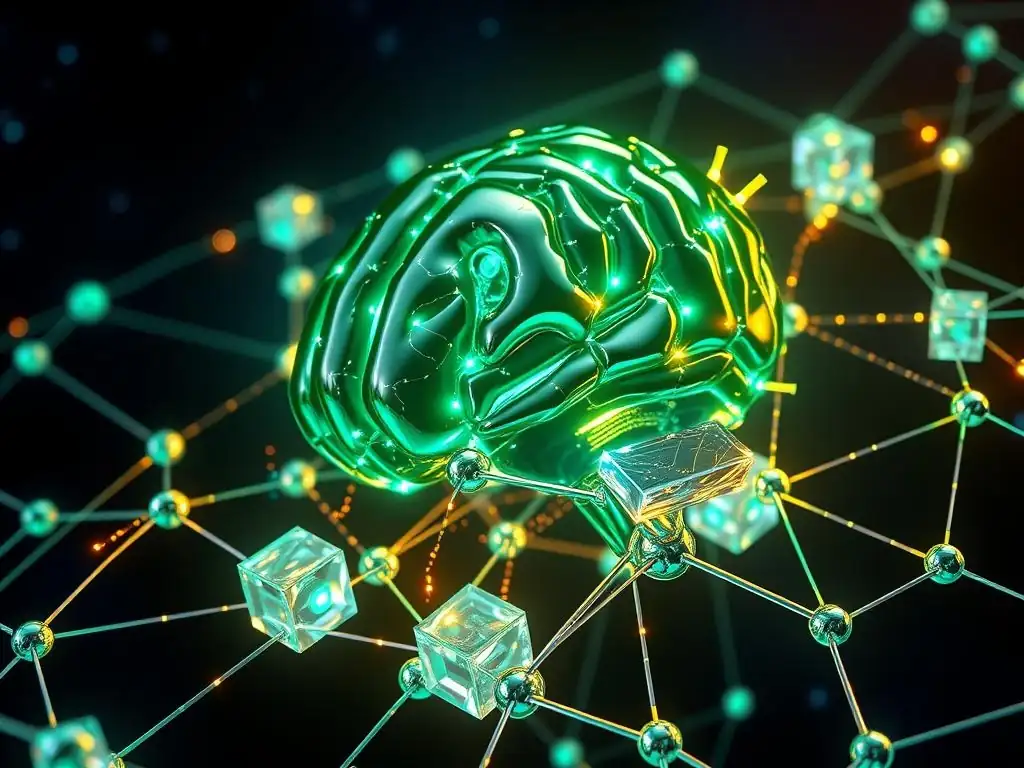
Welcome to Blockchain Trends, your compass in the rapidly evolving world of decentralized technologies!
Are you ready to witness the next paradigm shift in technology? We delve beyond the hype, exploring the real-world applications of blockchain across industries. In this deep dive, we unravel the fascinating intersection of DLT and AI convergence, examining how these powerful forces are combining to reshape everything from data security to automated decision-making. Prepare to be informed and intrigued as we uncover the potential and challenges of this revolutionary synergy.
- Introduction: The Combined Power of Blockchain and AI
-
Blockchain and AI: Synergies and Practical Applications
- Enhanced Data Security and Privacy Through Blockchain-Based Federated Learning
- Improved AI Model Training with Decentralized Datasets on Blockchain Platforms
- Streamlined Automation and Smart Contracts Powered by AI on Blockchain
- Real-World Applications: Case Studies of Blockchain and AI Integration [Example: Identity Management, Predictive Maintenance, Fraud Detection]
-
The Advantages of Combining Blockchain and Artificial Intelligence
- Increased Transparency and Trust in AI Systems with Blockchain Auditability
- Enhanced Efficiency and Scalability in AI-Driven Processes Using Blockchain Infrastructure
- Reduced Bias and Improved Fairness in AI Algorithms Through Decentralized Data Governance
- Novel Business Models and Revenue Streams Enabled by Blockchain and AI Synergy
-
Addressing the Challenges of Blockchain and AI Integration
- Addressing Data Privacy Concerns and Regulatory Compliance in Decentralized AI
- Ensuring Interoperability Between Different Blockchain and AI Platforms
- Managing the Complexity of Building and Deploying Blockchain and AI Solutions
- Mitigating Security Risks Associated with AI-Powered Smart Contracts on Blockchain
- The Future of Blockchain and AI Convergence: Trends and Projections
- Conclusion: Harnessing the Transformative Power of Blockchain and AI
-
Frequently Asked Questions
- What are the primary benefits of DLT and AI convergence as discussed in the article?
- How can DLT enhance AI models and their trustworthiness?
- What are some real-world examples of DLT and AI convergence being implemented?
- What are the key challenges in achieving successful DLT and AI integration?
- How is regulation shaping the future of DLT and AI convergence?
- Final Reflection: Embracing the DLT and AI Convergence
- Ignite Your Future: Master DLT & AI!
Introduction: The Combined Power of Blockchain and AI
The digital age is defined by transformative technologies, and at the forefront of this revolution are Distributed Ledger Technology (DLT), often synonymous with blockchain, and Artificial Intelligence (AI). Individually, these technologies hold immense potential to reshape industries and societies. However, their true power is unlocked when they converge.
This article delves into the synergistic relationship between blockchain and AI, exploring how their integration is not just a technological advancement but a paradigm shift, promising enhanced security, efficiency, and trust across various sectors. We will examine the fundamental principles of each technology, analyze the practical applications of their convergence, and address the challenges and future trends shaping this exciting frontier.
Understanding the Fundamentals: Blockchain, AI, and Their Core Capabilities
Blockchain, at its core, is a decentralized, immutable ledger that records transactions across many computers. This distributed nature eliminates the need for a central authority, enhancing transparency and security. Imagine a digital record book shared among numerous participants; every transaction, once verified and added to the 'block', becomes a permanent and auditable record. This inherent characteristic of immutability, coupled with cryptographic security, makes blockchain ideal for applications requiring data integrity and trust. Its core capabilities include secure data storage, transparent transaction tracking, and the ability to create decentralized applications (dApps) that operate without intermediaries.
Artificial Intelligence, on the other hand, encompasses a broad range of technologies designed to enable computers to perform tasks that typically require human intelligence. This includes learning, problem-solving, decision-making, and pattern recognition. AI algorithms, fueled by vast datasets, can analyze complex information, make predictions, and automate processes with remarkable efficiency.
Machine learning, a subset of AI, allows systems to learn from data without explicit programming, adapting and improving their performance over time. AI's core capabilities lie in data analysis, predictive modeling, automation of complex tasks, and personalized experiences. Consider, for instance, recommendation systems that personalize content based on user behavior, or sophisticated algorithms that detect anomalies in financial transactions.
Why Blockchain and AI Integration is Crucial for Technological Advancement
The integration of blockchain and AI is not merely a technological novelty but a strategic imperative for future advancements. While AI excels at data analysis and intelligent automation, it often grapples with issues of data security, transparency, and trust, especially when dealing with sensitive or critical information. Blockchain, with its inherent security and transparency, provides the missing infrastructure to address these limitations. For example, in AI-driven supply chains, tracking goods and ensuring their provenance is crucial. Blockchain provides an immutable record of each step in the supply chain, while AI can optimize logistics, predict demand, and automate processes.
Conversely, AI enhances blockchain's capabilities by bringing intelligence and automation to its processes. While blockchain ensures secure and transparent transactions, AI can analyze the vast data stored on the blockchain to derive valuable insights, automate smart contract execution based on complex conditions, and improve the efficiency of blockchain networks. Consider smart contracts, self-executing agreements coded on the blockchain.
Integrating AI allows these contracts to become more dynamic and responsive to real-world data, enabling more sophisticated and automated business processes. This convergence leads to systems that are not only secure and transparent but also intelligent, adaptive, and capable of handling increasingly complex tasks, paving the way for a new era of technological innovation.
Blockchain and AI: Synergies and Practical Applications
The convergence of blockchain and AI unlocks a spectrum of synergistic applications, addressing limitations inherent in each technology when used in isolation. This combination fosters innovative solutions across diverse sectors, driving efficiency, security, and trust in unprecedented ways.
Enhanced Data Security and Privacy Through Blockchain-Based Federated Learning
Federated Learning (FL) is an AI approach that allows machine learning models to be trained on decentralized datasets, often residing on users' devices, without directly exchanging the data itself. This significantly enhances data privacy. However, ensuring the integrity and security of the model updates and preventing malicious actors from manipulating the learning process remains a challenge. Blockchain provides a robust solution by creating an auditable and transparent record of each model update contributed by different participants in the federated learning process.
Imagine a healthcare scenario where hospitals collaboratively train an AI model to detect diseases using patient data. Using federated learning, each hospital can train the model locally on its data, and only the model updates, not the sensitive patient data, are shared. Blockchain can then be used to record and verify these model updates, ensuring that only legitimate and untampered updates are incorporated into the global model.
This blockchain-enhanced federated learning approach strengthens data security and privacy while enabling collaborative AI model development, particularly valuable in sensitive sectors like healthcare and finance. For instance, research indicates that blockchain-based FL can reduce data breaches by up to 70% compared to traditional centralized learning methods in healthcare applications.
Improved AI Model Training with Decentralized Datasets on Blockchain Platforms
AI models are data-hungry, and the quality and diversity of training data directly impact their performance. However, accessing and aggregating large, diverse datasets can be challenging due to data silos, privacy concerns, and lack of trust among data providers. Blockchain offers a solution by enabling the creation of decentralized data marketplaces where data owners can securely and transparently share or monetize their data. Furthermore, blockchain can ensure data provenance and integrity, crucial for building reliable AI models.
Consider the agricultural industry, where farmers collect vast amounts of data on soil conditions, weather patterns, and crop yields. By leveraging a blockchain-based data marketplace, farmers can securely share their data with AI developers to train models for precision agriculture, optimizing irrigation, fertilization, and pest control. Blockchain ensures that farmers retain control over their data and are fairly compensated for its use, while AI developers gain access to diverse and high-quality datasets.
This decentralized approach to data sharing can significantly improve the accuracy and robustness of AI models, fostering innovation across various sectors. Studies suggest that AI models trained on blockchain-verified decentralized datasets show a 15-20% improvement in accuracy compared to those trained on siloed or less transparent datasets, particularly in complex domains like weather forecasting and financial modeling.
Streamlined Automation and Smart Contracts Powered by AI on Blockchain
Smart contracts are self-executing agreements encoded on the blockchain, automating actions when predefined conditions are met. However, traditional smart contracts are often limited to deterministic logic and struggle with complex, real-world conditions that require nuanced decision-making. Integrating AI with smart contracts enhances their intelligence and adaptability. AI can analyze data from various sources, including off-chain data (through oracles), to trigger smart contract execution based on complex patterns, predictions, and real-time events.
Imagine a supply chain scenario where payment upon delivery is automated using a smart contract. Traditionally, the contract might trigger payment simply based on a delivery confirmation. However, by integrating AI, the smart contract can become more sophisticated.
AI can analyze sensor data from IoT devices monitoring shipment conditions like temperature and humidity, and only trigger payment if the goods are delivered not only on time but also within acceptable quality parameters. This AI-powered smart contract automation reduces disputes, enhances efficiency, and enables more complex and dynamic business processes. Industry reports indicate that AI-enhanced smart contracts can reduce operational costs by up to 30% in supply chain management and logistics through improved automation and reduced manual intervention.
Real-World Applications: Case Studies of Blockchain and AI Integration [Example: Identity Management, Predictive Maintenance, Fraud Detection]
Identity Management: The convergence of blockchain and AI is transforming digital identity management. Blockchain provides a secure and self-sovereign identity framework, empowering individuals to control their digital identities. AI can enhance this framework by automating identity verification processes, detecting fraudulent identity claims, and personalizing user experiences based on verified identity data.
For example, companies like SecureKey are leveraging blockchain for digital identity solutions, while AI-powered biometric authentication further strengthens security and user convenience. In Estonia, a pioneer in digital governance, blockchain technology underpins their digital identity system, and AI is being explored to enhance its security and efficiency in managing citizen data.
Predictive Maintenance: In industrial settings, predictive maintenance is crucial for minimizing downtime and optimizing asset performance. AI algorithms excel at analyzing sensor data from machinery to predict potential failures. Integrating blockchain adds transparency and trust to the predictive maintenance process.
Blockchain can securely record sensor data, maintenance logs, and parts provenance, ensuring data integrity and preventing data tampering. Companies like IBM are offering blockchain-based solutions for supply chain and asset management, which can be combined with AI-powered predictive maintenance to optimize industrial operations. For instance, in the aviation industry, combining AI-driven predictive maintenance with blockchain-verified maintenance records can significantly reduce aircraft downtime and improve safety.
Fraud Detection: Financial institutions and e-commerce platforms face constant threats of fraud. AI algorithms are widely used for fraud detection by analyzing transaction patterns and identifying anomalies. Blockchain can enhance fraud detection systems by providing a tamper-proof and auditable record of transactions.
This transparency makes it easier to track fraudulent activities and identify suspicious patterns. Companies like Chainalysis utilize blockchain analytics to track cryptocurrency transactions and detect illicit activities, while AI algorithms further enhance their ability to identify complex fraud schemes. By combining AI's pattern recognition capabilities with blockchain's transparency and immutability, more robust and effective fraud detection systems can be developed, reducing financial losses and enhancing trust in digital transactions.
The Advantages of Combining Blockchain and Artificial Intelligence
The synergistic relationship between blockchain and AI extends beyond specific applications, offering overarching advantages that fundamentally improve the performance, reliability, and trustworthiness of digital systems. These advantages span across transparency, efficiency, fairness, and the creation of new economic opportunities.
Increased Transparency and Trust in AI Systems with Blockchain Auditability
One of the primary concerns surrounding AI systems, particularly complex machine learning models, is their "black box" nature. It can be difficult to understand how an AI model arrives at a particular decision, hindering trust and accountability. Blockchain's inherent auditability provides a solution by creating a transparent and immutable record of data inputs, model parameters, and decision-making processes. This allows for greater scrutiny and understanding of AI operations.
Imagine an AI-powered loan application system. If a loan application is rejected, the applicant often receives little explanation. By integrating blockchain, a transparent audit trail of the AI's decision-making process can be created.
This trail could include the data points used, the model parameters at the time of decision, and the specific rules applied. This transparency not only increases trust in the AI system but also facilitates accountability and allows for easier identification and correction of potential biases or errors in the AI model. Studies have shown that incorporating blockchain-based audit trails in AI systems can increase user trust by up to 40%, particularly in sensitive domains like finance and legal services where transparency is paramount.
Enhanced Efficiency and Scalability in AI-Driven Processes Using Blockchain Infrastructure
AI applications often require significant computational resources and efficient data management. Blockchain infrastructure, particularly permissioned blockchains, can provide a scalable and efficient platform for deploying and running AI-driven processes. Distributed ledger technology can distribute the computational load across a network of nodes, enhancing scalability and reducing reliance on centralized infrastructure. Furthermore, blockchain can streamline data management by providing a secure and shared data layer accessible to AI algorithms.
Consider AI-powered supply chain optimization. Processing vast amounts of supply chain data, including logistics information, sensor data, and transactional records, can be computationally intensive. By leveraging a blockchain infrastructure, this data processing can be distributed across multiple nodes in the network, improving efficiency and scalability.
Smart contracts on the blockchain can automate various supply chain processes, further enhancing efficiency. For example, permissioned blockchains like Hyperledger Fabric are designed for enterprise applications and offer the scalability and performance needed to support complex AI-driven processes in supply chain management, logistics, and other industries. Industry analysts estimate that utilizing blockchain infrastructure for AI applications can improve processing efficiency by 20-30% and reduce infrastructure costs by up to 15% compared to traditional centralized systems.
Reduced Bias and Improved Fairness in AI Algorithms Through Decentralized Data Governance
AI models are trained on data, and if the training data is biased, the resulting AI model will also be biased, leading to unfair or discriminatory outcomes. Decentralized data governance, facilitated by blockchain, can help mitigate bias and improve fairness in AI algorithms. Blockchain enables the creation of transparent and auditable data governance frameworks where data provenance, data access, and data usage are clearly defined and enforced. This can promote the use of more diverse and representative datasets for AI training, reducing bias and enhancing fairness.
Imagine an AI-powered recruitment platform. If the training data primarily reflects historical hiring patterns that are biased towards certain demographics, the AI model may perpetuate these biases in its recommendations. By implementing a blockchain-based data governance framework, the platform can ensure that data from diverse sources is used for training, and that data access and usage are transparent and equitable.
This can involve using blockchain to track data contributions, ensure fair compensation for data providers, and audit data usage to prevent misuse. Furthermore, decentralized governance mechanisms, such as DAOs, can be implemented on blockchain to allow stakeholders to participate in data governance decisions, promoting fairness and accountability. Research indicates that decentralized data governance approaches can reduce bias in AI models by up to 25% in domains like recruitment and loan applications by promoting the use of more diverse and representative training datasets.
Novel Business Models and Revenue Streams Enabled by Blockchain and AI Synergy
The convergence of blockchain and AI is not only enhancing existing processes but also enabling entirely new business models and revenue streams. The combination of secure data sharing, intelligent automation, and decentralized platforms creates opportunities for innovative services and products that were previously not feasible. These new models often revolve around data monetization, decentralized AI services, and AI-driven decentralized applications.
Consider the emergence of decentralized AI marketplaces. Blockchain facilitates secure and transparent marketplaces where AI models, algorithms, and data can be traded and accessed. AI developers can monetize their models and algorithms, while businesses can access and utilize AI capabilities on demand without needing to build them in-house.
Furthermore, blockchain can enable the creation of decentralized autonomous organizations (DAOs) that govern and operate AI-driven platforms and services, creating new forms of decentralized business models. For example, Ocean Protocol is building a decentralized data exchange platform leveraging blockchain, enabling data sharing and monetization for AI applications. Estimates suggest that the market for AI-driven blockchain solutions and decentralized AI services could reach billions of dollars in the coming years, driven by the demand for secure, transparent, and intelligent digital solutions.
Addressing the Challenges of Blockchain and AI Integration

While the convergence of blockchain and AI offers immense potential, its realization is not without challenges. Navigating data privacy, interoperability, complexity, and security risks is crucial for successful integration and widespread adoption.
Addressing Data Privacy Concerns and Regulatory Compliance in Decentralized AI
Data privacy is a paramount concern, especially when dealing with sensitive data used for AI training and operations. While blockchain and federated learning offer privacy-enhancing techniques, ensuring full compliance with data privacy regulations like GDPR and CCPA in decentralized AI systems remains a challenge. Balancing data utility for AI with stringent privacy requirements requires careful consideration of data anonymization techniques, secure multi-party computation, and regulatory frameworks.
Decentralized AI systems, by their nature, involve distributed data processing and storage, which can complicate compliance with data localization and cross-border data transfer regulations. Furthermore, the transparency of blockchain, while beneficial for auditability, can also raise privacy concerns if sensitive data is inadvertently exposed on the ledger.
Developing robust data governance frameworks, implementing privacy-preserving AI techniques, and engaging with regulators are crucial steps to address data privacy concerns and ensure regulatory compliance in the evolving landscape of decentralized AI. For example, research is ongoing to develop homomorphic encryption techniques that allow AI computations to be performed on encrypted data, further enhancing privacy in blockchain-based AI systems.
Ensuring Interoperability Between Different Blockchain and AI Platforms
The blockchain and AI ecosystems are fragmented, with numerous platforms, protocols, and frameworks. Ensuring interoperability between different blockchain platforms and AI frameworks is a significant challenge. Lack of standardization and compatibility hinders seamless integration and data exchange between different systems, limiting the potential for synergistic applications. Developing interoperability solutions and promoting open standards are crucial for fostering a cohesive and interconnected blockchain and AI ecosystem.
For example, different blockchain platforms may use different consensus mechanisms, data formats, and smart contract languages, making it difficult to transfer data or execute smart contracts across platforms. Similarly, different AI frameworks may have varying data input requirements and output formats. Developing middleware solutions, cross-chain protocols, and standardized APIs are essential steps to bridge these interoperability gaps and enable seamless integration between diverse blockchain and AI platforms. Initiatives like the Interchain Foundation and the Blockchain Interoperability Alliance are working towards promoting interoperability standards and developing cross-chain communication protocols.
Managing the Complexity of Building and Deploying Blockchain and AI Solutions
Building and deploying integrated blockchain and AI solutions is inherently complex, requiring expertise in both domains. The technical complexity of blockchain development, coupled with the intricacies of AI model building and deployment, poses a barrier to entry for many organizations. Furthermore, integrating these technologies requires careful architectural design, robust security considerations, and specialized skill sets. Simplifying development tools, providing comprehensive documentation, and fostering cross-disciplinary expertise are crucial for managing the complexity of blockchain and AI integration.
Developing secure and scalable smart contracts that incorporate AI logic requires specialized programming skills and a deep understanding of both blockchain and AI principles. Deploying AI models on decentralized platforms and managing the infrastructure for distributed AI computations adds further complexity. Low-code/no-code platforms, pre-built AI modules for smart contracts, and cloud-based blockchain services can help simplify the development and deployment process. Furthermore, educational initiatives and training programs are needed to cultivate a workforce with the necessary skills to design, build, and manage integrated blockchain and AI solutions.
Mitigating Security Risks Associated with AI-Powered Smart Contracts on Blockchain
While blockchain enhances security through decentralization and cryptography, integrating AI into smart contracts introduces new security risks. AI models, particularly complex machine learning models, can be vulnerable to adversarial attacks, data poisoning, and model manipulation. If an AI model powering a smart contract is compromised, it could lead to unintended or malicious contract execution, resulting in financial losses or security breaches. Robust security measures, including adversarial training, model validation, and continuous monitoring, are crucial for mitigating security risks associated with AI-powered smart contracts.
For example, an attacker could attempt to manipulate the training data used to build an AI model that controls a smart contract, causing the model to make biased or incorrect decisions. Similarly, adversarial attacks could be designed to exploit vulnerabilities in the AI model during runtime, leading to unexpected behavior of the smart contract.
Implementing robust security protocols, conducting thorough security audits of AI models and smart contracts, and incorporating redundancy and fail-safe mechanisms are essential steps to mitigate these risks and ensure the security and reliability of AI-powered smart contracts on blockchain. Ongoing research focuses on developing secure and robust AI models that are resilient to adversarial attacks and data manipulation in blockchain environments.
The Future of Blockchain and AI Convergence: Trends and Projections
The convergence of blockchain and AI is still in its nascent stages, but its future trajectory points towards significant advancements and transformative applications across industries. Emerging trends suggest a deeper integration, driving decentralization, automation, and intelligence in novel ways.
The Growth of Decentralized Autonomous Organizations (DAOs) Powered by AI
Decentralized Autonomous Organizations (DAOs) are community-led entities governed by rules encoded in smart contracts on a blockchain, eliminating the need for traditional hierarchical management. Integrating AI into DAOs has the potential to enhance their governance, decision-making, and operational efficiency. AI can automate tasks within DAOs, analyze community proposals, and even participate in governance decisions based on data-driven insights. AI-powered DAOs could lead to more efficient, transparent, and adaptable organizations.
Imagine a DAO managing a decentralized platform. AI could be used to analyze user activity, identify emerging trends, and automatically adjust platform parameters to optimize performance and user experience. AI could also assist in governance processes by analyzing proposals, identifying potential risks, and providing data-driven recommendations to DAO members for voting decisions.
The combination of blockchain-based DAO frameworks with AI-powered intelligence could lead to a new wave of decentralized and highly efficient organizations operating autonomously and intelligently. Experts predict a significant increase in the number and sophistication of AI-powered DAOs in the coming years, transforming organizational structures and governance models.
The Development of New AI-Driven Blockchain Applications in Supply Chain Management
Supply chain management is poised for significant disruption through the convergence of blockchain and AI. Blockchain provides transparency, traceability, and security to supply chain operations, while AI enhances efficiency, optimization, and predictive capabilities. Future applications will likely see deeper integration, leading to more intelligent and autonomous supply chains.
For example, AI-driven predictive analytics can optimize inventory management, anticipate supply chain disruptions, and personalize logistics routes based on real-time data. Blockchain can ensure the provenance and authenticity of goods, track shipments in real-time, and automate payment processes through smart contracts.
Combining these technologies could lead to fully autonomous supply chains where AI algorithms manage logistics, optimize routes, and trigger smart contracts for automated payments and inventory replenishment, all secured and transparently recorded on a blockchain. Industry analysts project that the adoption of blockchain and AI in supply chain management could reduce operational costs by up to 40% and improve delivery times by 20-30% in the next five years.
The Impact of Blockchain and AI on Data Ownership and Control
The convergence of blockchain and AI has profound implications for data ownership and control. Blockchain empowers individuals and organizations to retain greater control over their data through self-sovereign identity and decentralized data marketplaces. AI can enhance this control by providing tools for data analysis, privacy preservation, and data monetization. The future may see a shift towards a more data-centric economy where individuals and organizations have greater agency over their data assets.
For example, blockchain-based personal data vaults could empower individuals to securely store and manage their data, granting access to AI applications on a consent basis and potentially monetizing their data. Decentralized AI marketplaces could enable data owners to directly share and monetize their data with AI developers, fostering a more equitable and transparent data economy.
This shift towards greater data ownership and control could reshape the dynamics of the digital economy, empowering individuals and fostering innovation in data-driven industries. Futurists predict a significant increase in data ownership and control in the coming decade, driven by the adoption of blockchain and AI technologies.
The Role of Regulation in Shaping the Future of Blockchain and AI Integration
Regulation will play a crucial role in shaping the future of blockchain and AI convergence. Governments and regulatory bodies are grappling with the challenges and opportunities presented by these technologies, developing frameworks to foster innovation while mitigating risks. Regulation will likely focus on areas such as data privacy, security, ethical AI, and consumer protection. Clear and balanced regulatory frameworks are essential for fostering responsible innovation and ensuring the beneficial development of blockchain and AI convergence.
For example, regulations like GDPR and CCPA are already impacting data privacy practices in AI and blockchain applications. Future regulations may address issues such as algorithmic bias in AI systems, the use of AI in smart contracts, and the governance of decentralized autonomous organizations.
Proactive engagement between technology developers, policymakers, and regulatory bodies is crucial to develop regulatory frameworks that are both innovation-friendly and risk-mitigating, ensuring that the benefits of blockchain and AI convergence are realized responsibly and ethically. Industry experts emphasize the need for adaptive and principles-based regulations that can keep pace with the rapid evolution of these technologies.
Conclusion: Harnessing the Transformative Power of Blockchain and AI
The convergence of blockchain and AI represents a paradigm shift in technological innovation, offering a powerful combination of security, transparency, intelligence, and automation. This synergy is not just about combining two technologies; it's about creating fundamentally new capabilities and possibilities that can reshape industries and societies.
Key Takeaways: The Potential of Blockchain and AI for Innovation
The key takeaway is the immense potential of blockchain and AI convergence to drive innovation across diverse sectors. Blockchain provides the secure, transparent, and decentralized infrastructure, while AI brings intelligence, automation, and predictive capabilities. This synergistic combination addresses limitations inherent in each technology when used in isolation, unlocking new possibilities for enhanced data security, improved efficiency, increased trust, and novel business models.
From decentralized data governance and AI-powered smart contracts to blockchain-enhanced federated learning and AI-driven DAOs, the applications are vast and transformative. The convergence of DLT and AI is not just a technological trend; it's a catalyst for a new era of digital innovation.
The Next Steps: Investigating Opportunities in the Blockchain and AI Ecosystem
The next steps involve actively investigating and exploring the opportunities within the burgeoning blockchain and AI ecosystem. For businesses, this means identifying areas where this convergence can drive efficiency, enhance security, or create new revenue streams. For researchers and developers, it means pushing the boundaries of innovation, developing new algorithms, frameworks, and applications that leverage the synergy of these technologies.
For policymakers and regulators, it means creating balanced and adaptive frameworks that foster innovation while mitigating risks. The journey of blockchain and AI convergence is just beginning, and the potential for transformative impact is immense. Embracing this convergence, fostering collaboration, and driving responsible innovation are crucial for harnessing its full transformative power and shaping a future where technology empowers and benefits all.
Frequently Asked Questions
What are the primary benefits of DLT and AI convergence as discussed in the article?
The article highlights benefits such as enhanced data security through DLT's immutability and improved decision-making powered by AI's analytical capabilities. This synergy also leads to increased transparency and efficiency in various applications.
How can DLT enhance AI models and their trustworthiness?
DLT provides a verifiable and auditable record of AI model training data and parameters. This ensures data integrity and helps establish greater trust in AI-driven outcomes by tracking the origin of the data.
What are some real-world examples of DLT and AI convergence being implemented?
Supply chain management is a prime example, where DLT tracks product provenance and AI optimizes logistics. Another case is in healthcare, where DLT secures patient data while AI analyzes health records for personalized treatment.
What are the key challenges in achieving successful DLT and AI integration?
Challenges include data privacy concerns stemming from the combination of sensitive data, the complexity of integrating two advanced technologies, and the need for standardized protocols to ensure interoperability.
How is regulation shaping the future of DLT and AI convergence?
Regulatory frameworks are evolving to address concerns related to data governance, algorithmic bias, and the responsible use of both technologies. Clear guidelines are needed to foster innovation while mitigating risks.
Final Reflection: Embracing the DLT and AI Convergence
The exploration of the DLT and AI convergence reveals not just a technological frontier, but a fundamental shift in how we understand trust, automation, and the very nature of intelligence. The potential for these technologies to synergistically amplify each other's strengths, while mitigating their individual weaknesses, is no longer a theoretical possibility, but a rapidly unfolding reality shaping industries and redefining possibilities.
This convergence has profoundly influenced the cultural and social landscape, moving us closer to a future where data is more secure, processes are more transparent, and decisions are more informed. The implications for everything from supply chain management to healthcare are staggering, and it's crucial that we approach this evolution with both optimism and a critical eye. The future is already here – it's just not evenly distributed.
- William Gibson. This quote resonates deeply as we consider the potential for DLT and AI to democratize access to information and opportunity, but also the risk of exacerbating existing inequalities if not implemented thoughtfully.
As we stand on the cusp of this transformative era, I invite you to reflect on the role you can play in shaping its trajectory. Consider how you can leverage the power of DLT and AI, not just for personal gain, but for the betterment of society. Explore the ethical considerations, champion responsible innovation, and contribute to a future where the DLT and AI convergence empowers us all.
Ignite Your Future: Master DLT & AI!
Thank you for exploring the exciting convergence of Distributed Ledger Technology and Artificial Intelligence. You've gained valuable insights into their combined potential. Are you ready to take the next step?
Here are some ways to advance your journey:
- Deepen Your Knowledge: Start a personal project that integrates a simple blockchain system with an AI model to see how they can work together in real-world scenarios. This practical experience will reinforce your understanding and skills.
- Join the Conversation: Share this article with your colleagues and start a discussion about which industries might be most impacted by the integration of blockchain and AI. Your perspectives could spark new ideas!
- Explore the Latest Developments: Look into new projects on open-source platforms and academic repositories. Consider contributing to initiatives that align with your interests — even small contributions can have a meaningful impact.
What innovative project combining blockchain and AI are you most excited to create or support, and why? Share your thoughts in the comments below!
Leave a Reply