
Government Use Cases of Blockchain Cryptography: Secure and Transparent Public Services


Welcome to Blockchain Trends, your go-to source for understanding the revolutionary impact of blockchain technology.
Are you ready to discover how blockchain is moving beyond cryptocurrencies and into the realm of secure, transparent, and efficient public services? This article delves deep into Blockchain Public Service Security Solutions, uncovering government use cases that are reshaping citizen engagement and trust. Explore how decentralized cryptography is being leveraged to build a more secure and accountable future. Curious to know how blockchain is fortifying our public institutions? Let's begin...
-
Government Use Cases of Blockchain Cryptography: Secure and Transparent Public Services
- Introduction: Blockchain's Transformative Potential in Government
- Understanding Blockchain Cryptography for Public Sector Applications
- Use Case 1: Secure Land Registry with Blockchain
- Use Case 2: Enhanced Voting Systems Using Blockchain
- Use Case 3: Supply Chain Management for Government Procurement
- Use Case 4: Identity Management and Citizen Services on the Blockchain
- Use Case 5: Healthcare Data Management with Blockchain Security
- Addressing the Challenges of Blockchain Implementation in Government
- The Future of Blockchain in Public Service Security Solutions
- Conclusion: Embracing Blockchain for a More Secure and Transparent Government
-
Frequently Asked Questions
- How can blockchain enhance security in public services?
- What are some examples of government use cases for blockchain technology?
- How does blockchain contribute to transparency in government?
- What regulatory challenges exist for implementing blockchain in public services?
- How can blockchain improve the efficiency of government services?
- Final Reflection: Embracing Blockchain for a Secure Future
- Unleash the Potential: Reimagine Governance with Blockchain!
Government Use Cases of Blockchain Cryptography: Secure and Transparent Public Services
Introduction: Blockchain's Transformative Potential in Government
Governments worldwide are increasingly exploring innovative technologies to enhance public services, improve efficiency, and build citizen trust. Among these technologies, blockchain stands out due to its inherent cryptographic security and transparency features. Initially recognized for its role in cryptocurrencies, blockchain's potential extends far beyond digital currencies, offering robust solutions for various governmental operations.
By leveraging blockchain cryptography, governments can create more secure, transparent, and accountable systems for managing data, delivering services, and interacting with citizens. This article delves into the practical applications of blockchain cryptography within the public sector, examining specific use cases and exploring the transformative impact this technology can have on governance.
The adoption of blockchain technology in government represents a paradigm shift towards decentralized and secure systems. Traditional government infrastructures often rely on centralized databases, which are susceptible to single points of failure, data breaches, and manipulation. Blockchain, with its distributed ledger technology, mitigates these risks by distributing data across multiple nodes, making it incredibly difficult to tamper with information. This inherent security, coupled with the transparency and auditability of blockchain networks, provides a compelling value proposition for governments seeking to modernize their operations and strengthen their relationships with citizens through enhanced blockchain public service security solutions.
Understanding Blockchain Cryptography for Public Sector Applications
What is Blockchain Cryptography? A Primer
Blockchain cryptography is the backbone of blockchain technology, ensuring the security and integrity of data recorded on the distributed ledger. At its core, it utilizes cryptographic hash functions, digital signatures, and encryption techniques to create a tamper-proof and transparent record of transactions. Unlike traditional databases that rely on centralized security measures, blockchain cryptography distributes trust across a network of participants, making it inherently more resilient to attacks and fraud. This cryptographic foundation is what enables blockchain to offer secure and transparent blockchain public service security solutions.
In essence, blockchain cryptography works by creating a chain of blocks, where each block contains a set of transactions and a cryptographic hash of the previous block. This chaining mechanism ensures that any alteration to a block would require changing all subsequent blocks, which is computationally infeasible in a well-established blockchain network. Furthermore, cryptographic techniques ensure that transactions are authenticated and encrypted, protecting sensitive data and guaranteeing the integrity of the information stored on the blockchain. This combination of technologies makes blockchain a powerful tool for securing public sector operations and enhancing trust in government services.
Key Cryptographic Principles Enabling Secure Public Services
Hashing Algorithms and Data Integrity
Hashing algorithms are fundamental cryptographic tools in blockchain, playing a crucial role in ensuring data integrity. A hash function takes an input of any size and produces a fixed-size output, known as a hash or message digest. Crucially, hash functions are designed to be one-way, meaning it's computationally impossible to reverse the process and derive the original input from the hash.
Furthermore, even a minor change to the input data will result in a drastically different hash output, a property known as the avalanche effect. This characteristic is vital for detecting any unauthorized modifications to data stored on a blockchain.
In the context of blockchain public service security solutions, hashing algorithms are used to create a unique fingerprint of each block's data. This hash is then included in the header of the subsequent block, forming an unbroken chain of data. If any data within a block is tampered with, the hash of that block will change, invalidating the link in the chain and immediately revealing the alteration.
For example, SHA-256, a widely used hashing algorithm, is employed in Bitcoin and many other blockchains to ensure the integrity of transaction data and block linkages. Governments can leverage these robust hashing techniques to secure sensitive public records, ensuring that information remains unaltered and verifiable over time, a cornerstone of secure and transparent public services.
Digital Signatures and Identity Verification
Digital signatures are another cornerstone of blockchain cryptography, providing mechanisms for identity verification and non-repudiation in digital transactions. Analogous to handwritten signatures in the physical world, digital signatures cryptographically link a document or transaction to its originator. They rely on public-key cryptography, where each user possesses a pair of keys: a private key, kept secret, and a public key, which can be shared openly.
To create a digital signature, the sender uses their private key to encrypt a hash of the document or transaction. Recipients can then verify the signature using the sender's public key, confirming both the authenticity and integrity of the message.
For blockchain public service security solutions, digital signatures are crucial for verifying the identity of participants in government systems and ensuring the legitimacy of transactions. For instance, in a blockchain-based voting system, digital signatures can be used to authenticate voters and ensure that only eligible citizens can cast ballots.
Similarly, in land registry applications, digital signatures can verify the identities of property owners and officials involved in land transactions, preventing fraudulent claims and ensuring accountability. The use of digital signatures enhances trust and security in public services by providing irrefutable proof of origin and consent, contributing significantly to robust blockchain public service security solutions.
Encryption for Confidential Government Data
Encryption is a vital cryptographic technique for protecting the confidentiality of sensitive government data stored and transmitted on blockchain networks. While blockchain inherently provides transparency, there are scenarios where certain data needs to remain confidential, especially in public services dealing with personal or classified information. Encryption algorithms transform readable data (plaintext) into an unreadable format (ciphertext), making it incomprehensible to unauthorized parties. Only individuals with the correct decryption key can revert the ciphertext back to plaintext, ensuring data privacy and security.
In government applications of blockchain public service security solutions, encryption can be applied in various ways. For example, in healthcare data management, patient records stored on a blockchain can be encrypted to protect patient privacy while still allowing authorized healthcare providers to access and share information securely.
Similarly, in government procurement processes, bids or sensitive contract details can be encrypted until a specific time, ensuring fair competition and preventing premature disclosure. Advanced encryption standards (AES) and other robust algorithms are commonly used to protect sensitive data within blockchain systems, ensuring compliance with data privacy regulations and enhancing the overall security posture of public services.
Use Case 1: Secure Land Registry with Blockchain
The Problem: Fraud and Inefficiency in Traditional Land Registry Systems
Traditional land registry systems, often paper-based and centrally managed, are plagued by inefficiencies and vulnerabilities to fraud. In many countries, land records are manually maintained, leading to slow and cumbersome processes for property registration, transfers, and title searches. This lack of digitization also makes records susceptible to errors, loss, and physical damage. Furthermore, centralized systems are vulnerable to corruption and manipulation, where officials may alter records for personal gain or to favor specific parties. Land disputes arising from unclear or fraudulent records cost governments and citizens significant time and resources in legal battles and investigations.
The World Bank estimates that billions of dollars are lost annually due to land administration inefficiencies and corruption globally. In countries like India, land disputes account for a significant portion of all civil litigation, with cases often dragging on for decades due to the complexity and lack of transparency in land records.
The manual nature of these systems also hinders economic development, as unclear land titles discourage investment and limit access to credit. These inherent weaknesses in traditional land registry systems highlight the urgent need for more secure, efficient, and transparent solutions to ensure property rights and promote economic stability, driving the exploration of blockchain public service security solutions.
Blockchain Solution: Immutable and Transparent Land Records
Blockchain technology offers a powerful solution to address the shortcomings of traditional land registry systems by creating immutable and transparent records of land ownership and transactions. By recording land titles and transaction history on a blockchain, governments can establish a secure and auditable record that is resistant to tampering and fraud. Each land transaction, including property transfers, mortgages, and ownership changes, is recorded as a block on the blockchain, timestamped and cryptographically secured. This creates a permanent and verifiable history of land ownership, accessible to authorized parties.
The distributed and decentralized nature of blockchain ensures that there is no single point of failure or control, significantly reducing the risk of manipulation and corruption. Once a land record is recorded on the blockchain, it cannot be altered or deleted, providing a robust and trustworthy system. Governments can implement permissioned blockchains for land registry, controlling access and ensuring compliance with legal frameworks. Several countries, including Georgia and Sweden, have piloted or implemented blockchain-based land registry systems to improve the security and efficiency of their land administration processes, demonstrating the practical application of blockchain public service security solutions.
Benefits: Increased Security, Reduced Corruption, and Streamlined Processes
Implementing blockchain for land registry offers numerous benefits, primarily enhancing security, reducing corruption, and streamlining processes. The immutable nature of blockchain records significantly increases security by making it virtually impossible to fraudulently alter land titles or transaction history. This reduces land disputes and provides greater certainty and security of tenure for property owners. Transparency is also significantly improved, as all transactions are recorded on a public or permissioned ledger, auditable by authorized parties, fostering greater trust in the land administration system.
Furthermore, blockchain streamlines land registry processes by automating workflows and reducing manual paperwork. Smart contracts can be used to automate property transfers and other transactions, speeding up processes and reducing bureaucratic delays. This increased efficiency can lead to significant cost savings for governments and citizens alike. By minimizing opportunities for corruption and improving the efficiency of land administration, blockchain-based land registry systems contribute to economic growth, improved governance, and enhanced citizen trust in government services, showcasing the comprehensive benefits of blockchain public service security solutions.
Use Case 2: Enhanced Voting Systems Using Blockchain
The Problem: Concerns about Voter Fraud and Election Integrity
Traditional voting systems face persistent challenges related to voter fraud and election integrity. Concerns about ballot tampering, voter impersonation, and manipulation of vote counts undermine public trust in democratic processes. Paper-based voting systems are particularly vulnerable to errors and fraud, while electronic voting systems, although more efficient, often raise concerns about security and auditability. Centralized election management systems can also be targeted by cyberattacks or insider threats, potentially compromising election outcomes.
The lack of transparency in many voting systems contributes to public skepticism and distrust. Post-election audits and recounts are often complex and time-consuming, and their effectiveness in detecting and correcting fraud is sometimes questioned. In several countries, allegations of voter fraud and election manipulation have led to social unrest and political instability, highlighting the critical need for more secure and transparent voting systems. These challenges underscore the importance of exploring innovative solutions like blockchain public service security solutions to enhance election integrity and restore public confidence in democratic processes.
Blockchain Solution: Secure and Auditable Voting Platform
Blockchain technology offers a compelling solution to enhance voting systems by providing a secure, transparent, and auditable platform for elections. A blockchain-based voting system can ensure that each vote is recorded immutably and transparently, making it extremely difficult to tamper with election results. Voters can be authenticated using digital identities or cryptographic keys, preventing voter impersonation and ensuring only eligible citizens can vote. Votes can be encrypted and recorded on the blockchain, maintaining voter privacy while ensuring each vote is counted accurately.
The decentralized nature of blockchain provides resilience against single points of failure and cyberattacks. The auditability of blockchain allows for independent verification of election results, enhancing transparency and public trust. Organizations like Voatz and Follow My Vote have developed blockchain-based voting platforms that have been piloted in various elections and demonstrations, showcasing the feasibility of blockchain public service security solutions in enhancing electoral processes. By leveraging the cryptographic security and transparency of blockchain, governments can build more trustworthy and resilient voting systems.
Benefits: Increased Trust, Improved Transparency, and Reduced Risk of Manipulation
The implementation of blockchain in voting systems offers significant benefits, primarily increasing trust, improving transparency, and reducing the risk of manipulation. The immutable nature of blockchain records ensures that votes cannot be altered or deleted, providing a high level of security against voter fraud. Transparency is dramatically enhanced as all votes are recorded on a public or permissioned ledger, allowing for independent audits and verification of election results. This increased transparency builds public trust in the integrity of the electoral process.
Furthermore, blockchain can streamline the voting process, potentially reducing costs and improving efficiency. Remote voting via blockchain platforms can increase voter turnout and accessibility, particularly for citizens in remote areas or with disabilities. By reducing the risk of manipulation and enhancing transparency, blockchain-based voting systems contribute to stronger democratic institutions and increased citizen engagement, demonstrating the transformative potential of blockchain public service security solutions in the electoral domain.
Use Case 3: Supply Chain Management for Government Procurement
The Problem: Lack of Visibility and Accountability in Government Supply Chains
Government procurement processes often involve complex and opaque supply chains, making it difficult to track goods from origin to delivery and ensure accountability. Lack of visibility in supply chains can lead to inefficiencies, delays, and increased costs. Furthermore, it creates opportunities for fraud, counterfeiting, and unethical sourcing practices. Verifying the authenticity and origin of goods, especially in sectors like pharmaceuticals or defense, can be challenging in traditional supply chain systems.
The reliance on paper-based documentation and manual processes in many government supply chains further exacerbates these problems. Information silos and lack of interoperability between different systems hinder real-time tracking and monitoring of goods. This opacity makes it difficult for governments to ensure compliance with regulations, detect and prevent corruption, and optimize supply chain operations. These challenges highlight the need for more transparent, efficient, and accountable supply chain management solutions, leading to the exploration of blockchain public service security solutions.
Blockchain Solution: Tracking and Tracing Goods from Origin to Delivery
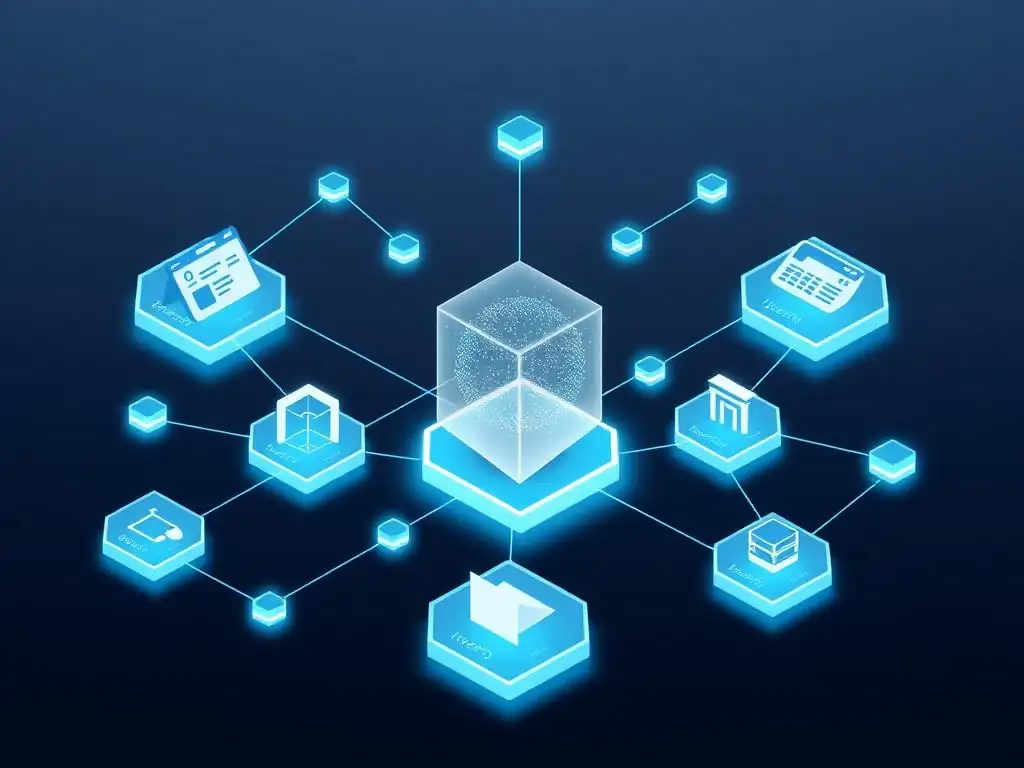
Blockchain technology provides a robust solution for enhancing government supply chain management by enabling transparent tracking and tracing of goods from origin to delivery. By recording each step in the supply chain on a blockchain, governments can create an immutable and auditable record of the movement and provenance of goods. This includes information about the origin of materials, manufacturing processes, transportation routes, and delivery confirmations. Each participant in the supply chain, from suppliers to distributors to government agencies, can securely access and update information on the blockchain, creating a shared and transparent view of the entire supply chain.
Blockchain's cryptographic security ensures the integrity of supply chain data, preventing tampering and counterfeiting. Smart contracts can be used to automate processes such as payments and verification of milestones, streamlining operations and reducing administrative overhead. Companies like IBM and Maersk have successfully implemented blockchain-based supply chain solutions in the private sector, demonstrating the technology's potential to improve efficiency and transparency. Governments can leverage similar blockchain public service security solutions to enhance accountability and visibility in their procurement processes.
Benefits: Reduced Counterfeiting, Improved Efficiency, and Enhanced Transparency
Implementing blockchain for government supply chain management offers significant benefits, including reduced counterfeiting, improved efficiency, and enhanced transparency. The ability to track and trace goods throughout the supply chain makes it easier to verify the authenticity and origin of products, reducing the risk of counterfeit goods entering government procurement systems. This is particularly critical for sectors like pharmaceuticals and medical supplies, where counterfeiting can have serious consequences.
Efficiency is improved through streamlined processes, reduced paperwork, and automated workflows. Real-time visibility into the supply chain enables better inventory management and reduces delays. Transparency is significantly enhanced as all participants have access to a shared and auditable record of supply chain activities. This increased transparency fosters accountability, reduces opportunities for corruption, and improves trust in government procurement processes, demonstrating the comprehensive advantages of blockchain public service security solutions in supply chain management.
Use Case 4: Identity Management and Citizen Services on the Blockchain
The Problem: Inefficient and Insecure Citizen Identity Verification
Traditional citizen identity verification processes are often inefficient, fragmented, and vulnerable to security breaches. Citizens typically need to manage multiple identity documents and credentials across different government agencies and services, leading to inconvenience and administrative burdens. Centralized identity databases are attractive targets for cyberattacks and data breaches, potentially exposing sensitive personal information of millions of citizens. Identity fraud and theft are significant problems, costing governments and citizens billions of dollars annually.
The lack of interoperability between different identity systems further complicates citizen service delivery. Verifying citizen identity across different agencies and departments can be time-consuming and cumbersome, hindering efficient access to government services. In many developing countries, a significant portion of the population lacks formal identification, excluding them from accessing essential public services and participating in the formal economy. These challenges underscore the need for more secure, efficient, and citizen-centric identity management solutions, driving the exploration of blockchain public service security solutions.
Blockchain Solution: Self-Sovereign Identity (SSI) for Citizens
Blockchain technology enables the implementation of Self-Sovereign Identity (SSI) solutions, empowering citizens to control their own digital identities and securely access government services. SSI gives individuals ownership and control over their identity data, rather than relying on centralized authorities. Using blockchain, citizens can create and manage their digital identities, storing verified credentials and attributes on a decentralized ledger. These credentials can be selectively shared with government agencies and service providers as needed, without revealing unnecessary personal information.
SSI solutions enhance privacy and security by minimizing the reliance on centralized identity databases. Citizens have greater control over who has access to their personal data and for what purpose. Blockchain's cryptographic security ensures the integrity and authenticity of identity credentials, reducing the risk of identity fraud and theft. Organizations like the Sovrin Foundation and the Decentralized Identity Foundation are actively developing SSI frameworks and technologies, promoting the adoption of blockchain public service security solutions for citizen identity management.
Benefits: Enhanced Privacy, Streamlined Access to Government Services, and Reduced Identity Theft
Implementing SSI solutions using blockchain offers numerous benefits for citizens and governments, including enhanced privacy, streamlined access to government services, and reduced identity theft. Citizens gain greater control over their personal data and can selectively share information with government agencies, enhancing privacy and reducing the risk of data breaches. SSI empowers individuals to manage their identities securely and conveniently.
Access to government services is streamlined as citizens can use their digital identities to seamlessly authenticate and access various online and offline services. This reduces the need for multiple identity documents and simplifies citizen interactions with government agencies. The decentralized and secure nature of SSI reduces the risk of identity theft and fraud, protecting citizens from financial losses and reputational damage. By empowering citizens with control over their identities and enhancing the security and efficiency of identity management, SSI solutions based on blockchain represent a significant advancement in blockchain public service security solutions.
Use Case 5: Healthcare Data Management with Blockchain Security
The Problem: Data Breaches and Lack of Interoperability in Healthcare Systems
Healthcare systems worldwide face significant challenges related to data breaches and a lack of interoperability. Sensitive patient data is frequently targeted by cyberattacks, leading to data breaches that compromise patient privacy and erode trust in healthcare providers. Centralized healthcare databases are vulnerable to single points of failure and security vulnerabilities. Furthermore, the lack of interoperability between different healthcare systems and providers hinders efficient data sharing and coordination of care.
The fragmented nature of healthcare data management leads to inefficiencies, duplication of effort, and increased costs. Patients often struggle to access and control their own health records, limiting their ability to participate actively in their care. The lack of secure and interoperable data sharing also impedes medical research and public health initiatives. These challenges highlight the urgent need for more secure, interoperable, and patient-centric healthcare data management solutions, driving the exploration of blockchain public service security solutions.
Blockchain Solution: Secure and Interoperable Healthcare Data Sharing
Blockchain technology offers a promising solution for creating secure and interoperable healthcare data sharing systems. By storing patient health records on a blockchain, governments can enhance data security, privacy, and interoperability. Blockchain's cryptographic security protects patient data from unauthorized access and tampering. Permissioned blockchains can be used to control access to patient records, ensuring that only authorized healthcare providers and patients themselves can access sensitive information.
Interoperability is enhanced through the shared and distributed nature of blockchain. Different healthcare providers and systems can securely exchange patient data on the blockchain, improving care coordination and reducing data silos. Patients can have greater control over their health records, granting access to specific providers as needed. Organizations like Medicalchain and BurstIQ are developing blockchain-based healthcare platforms that demonstrate the potential of blockchain public service security solutions to transform healthcare data management.
Benefits: Improved Data Security, Enhanced Patient Privacy, and Streamlined Healthcare Delivery
Implementing blockchain for healthcare data management offers significant benefits, including improved data security, enhanced patient privacy, and streamlined healthcare delivery. Blockchain's cryptographic security significantly reduces the risk of data breaches and unauthorized access to patient records, improving data security and building patient trust. Patient privacy is enhanced as individuals have greater control over their health data and can selectively share information with healthcare providers.
Healthcare delivery is streamlined through improved data interoperability and care coordination. Healthcare providers can access comprehensive patient records securely and efficiently, leading to better diagnoses, treatment decisions, and patient outcomes. Reduced administrative overhead and improved data sharing can also lead to cost savings for healthcare systems. By enhancing data security, privacy, and interoperability, blockchain-based healthcare solutions contribute to a more efficient, patient-centric, and secure healthcare ecosystem, showcasing the transformative power of blockchain public service security solutions in the healthcare domain.
Addressing the Challenges of Blockchain Implementation in Government
Scalability and Performance Considerations for Public Sector Blockchains
While blockchain offers numerous benefits for government applications, scalability and performance are critical considerations for successful implementation. Public sector blockchains need to handle potentially large volumes of transactions and data, especially for nationwide applications like voting systems or citizen identity management. Traditional public blockchains like Bitcoin and Ethereum have faced scalability limitations, with transaction processing speeds and throughput lagging behind centralized systems.
For government use cases, permissioned blockchains or private blockchains are often preferred, as they offer greater control over network participation and can be optimized for specific performance requirements. Technological advancements like sharding, layer-2 solutions, and consensus mechanism optimizations are being explored to improve the scalability of blockchain networks. Governments need to carefully assess the scalability and performance requirements of their intended blockchain applications and choose appropriate blockchain platforms and architectures to ensure efficient and reliable operation of blockchain public service security solutions.
Regulatory and Legal Frameworks for Blockchain Adoption in Government
The adoption of blockchain technology in government requires the development of appropriate regulatory and legal frameworks. Existing laws and regulations may not adequately address the unique characteristics of blockchain and decentralized systems. Governments need to establish clear legal frameworks for blockchain-based applications, addressing issues such as data governance, smart contract enforceability, and legal recognition of digital identities and blockchain records.
Regulatory frameworks should balance innovation with risk management, fostering the responsible adoption of blockchain technology while protecting citizens and ensuring compliance with legal principles. Collaboration between government agencies, industry stakeholders, and legal experts is essential to develop effective and adaptable regulatory frameworks for blockchain public service security solutions. International harmonization of blockchain regulations can also facilitate cross-border interoperability and adoption.
Data Privacy and Compliance with GDPR and Other Regulations
Data privacy and compliance with regulations like the General Data Protection Regulation (GDPR) are paramount considerations for blockchain implementation in government. Blockchain's inherent transparency and immutability raise questions about data privacy, particularly when handling sensitive personal information. While encryption can protect data confidentiality, ensuring compliance with GDPR principles, such as the right to be forgotten and data minimization, requires careful design and implementation of blockchain systems.
Governments need to adopt privacy-enhancing technologies and implement robust data governance frameworks for blockchain-based applications. Techniques like zero-knowledge proofs and homomorphic encryption can enable privacy-preserving data processing on blockchain. Compliance with data privacy regulations is crucial for building public trust and ensuring the ethical and responsible deployment of blockchain public service security solutions. Data protection impact assessments and ongoing monitoring are essential to ensure continued compliance.
The Future of Blockchain in Public Service Security Solutions
Emerging Trends in Blockchain Cryptography for Government Applications
The field of blockchain cryptography is constantly evolving, with emerging trends promising to further enhance blockchain public service security solutions in government. Advancements in cryptographic algorithms, such as post-quantum cryptography, are being developed to address potential threats from quantum computing. Zero-knowledge proofs are gaining traction for privacy-preserving applications, allowing verification of information without revealing the underlying data. Homomorphic encryption enables computations on encrypted data, further enhancing data privacy and security in blockchain systems.
Interoperability solutions, such as cross-chain protocols and blockchain bridges, are being developed to enable seamless data exchange and interaction between different blockchain networks. These advancements will facilitate the integration of blockchain-based public services and enhance their functionality. The development of more energy-efficient consensus mechanisms and sustainable blockchain platforms is also a key trend, addressing environmental concerns and promoting the long-term viability of blockchain technology for government applications.
The Role of Decentralized Technologies in Building Trust and Transparency
Decentralized technologies, including blockchain, are playing an increasingly important role in building trust and transparency in government. By distributing power and control away from centralized authorities, these technologies can enhance accountability, reduce corruption, and empower citizens. Blockchain's transparency and auditability foster greater openness and accountability in government operations, enabling citizens to scrutinize public services and hold officials accountable.
Decentralized governance models and decentralized autonomous organizations (DAOs) are emerging as innovative approaches to public service delivery and citizen engagement. These models leverage blockchain to create more participatory and transparent governance structures, fostering greater trust between governments and citizens. The shift towards decentralized technologies represents a fundamental change in the way public services are designed and delivered, with blockchain public service security solutions at the forefront of this transformation.
Decentralized Autonomous Organizations (DAOs) for Public Service Delivery
Decentralized Autonomous Organizations (DAOs) represent a novel approach to public service delivery, leveraging blockchain technology to create transparent, efficient, and citizen-centric organizations. DAOs are organizations governed by rules encoded in smart contracts on a blockchain, operating autonomously without traditional hierarchical structures. Decisions in DAOs are made through community voting and consensus mechanisms, ensuring democratic and transparent governance.
DAOs can be applied to various public service domains, such as managing community resources, delivering social services, and overseeing public infrastructure projects. The transparency and auditability of DAOs built on blockchain enhance accountability and reduce the risk of corruption. Citizen participation in DAO governance can empower communities and foster greater trust in public service delivery. While DAOs are still in their early stages of development, they hold significant potential to revolutionize public service delivery and enhance blockchain public service security solutions through decentralized governance.
Conclusion: Embracing Blockchain for a More Secure and Transparent Government
Blockchain cryptography offers a transformative toolkit for governments seeking to enhance the security, transparency, and efficiency of public services. From securing land registries and voting systems to streamlining supply chains and managing citizen identities and healthcare data, blockchain provides robust blockchain public service security solutions to address critical challenges facing the public sector.
While challenges related to scalability, regulation, and data privacy need to be carefully addressed, the potential benefits of blockchain in building more trustworthy, accountable, and citizen-centric governments are undeniable. By embracing blockchain technology and its cryptographic foundations, governments can pave the way for a more secure and transparent future for public service delivery, ultimately fostering greater trust and engagement with citizens.
Frequently Asked Questions
How can blockchain enhance security in public services?
Blockchain offers immutable records and tamper-proof data through its cryptographic nature, making it difficult to alter or falsify information. This enhances data integrity and reduces the risk of fraud in public service operations.
What are some examples of government use cases for blockchain technology?
Governments can use blockchain for secure land registries, digital identity management, and supply chain tracking for government contracts. This ensures transparency and accountability in various public service areas.
How does blockchain contribute to transparency in government?
Blockchain's distributed ledger allows for open and auditable records of transactions and data. This increased visibility can help to combat corruption and promote public trust in government operations.
What regulatory challenges exist for implementing blockchain in public services?
Establishing clear legal frameworks and data privacy regulations are crucial. The lack of standardized regulations can hinder the widespread adoption of blockchain solutions in the public sector.
How can blockchain improve the efficiency of government services?
By automating processes and streamlining workflows, blockchain can reduce administrative overhead and processing times for various government services. This leads to more efficient and cost-effective operations.
Final Reflection: Embracing Blockchain for a Secure Future
The exploration of blockchain cryptography within government use cases reveals a profound shift in how public services can be delivered. The promise of secure and transparent public services, once a distant aspiration, is now within reach thanks to the innovative application of blockchain technology. This article has highlighted the potential of blockchain to revolutionize everything from voting systems to land registries, offering a glimpse into a future where trust and accountability are embedded in the very fabric of governance.
The impact of blockchain on the cultural and social landscape is only beginning to unfold, but its potential to foster greater citizen engagement and trust in government is undeniable. The ability to verify information and track transactions in a tamper-proof manner is not just a technological advancement; it's a fundamental shift in power dynamics, empowering citizens with greater control over their data and interactions with the state. Blockchain is more than just a technology; it's a philosophy of decentralization and trust that can reshape our institutions for the better.
This quote encapsulates the transformative potential of blockchain beyond mere efficiency gains, highlighting its ability to build a more equitable and transparent society.
As we stand on the cusp of this technological revolution, let us not be passive observers. Consider how you can advocate for the responsible implementation of blockchain in your own community. Reflect on the ways in which increased transparency and security can improve the services you rely on daily. The future of governance is being written now, and your voice, your understanding, and your engagement are crucial to ensuring that blockchain serves as a powerful tool for building a more just and equitable world for all.
Unleash the Potential: Reimagine Governance with Blockchain!
Thank you for exploring how blockchain can transform government services with greater security and transparency. Now that you've seen the possibilities, it's time to get involved and help shape the future of governance.
Here are some ways to participate:
- Become an Advocate: Share this article with local government officials and community leaders to encourage discussions about adopting blockchain solutions.
- Explore Further: Read more articles on Blockchain Trends to learn about ongoing blockchain projects being tested or implemented by governments around the world.
- Get Creative: Develop a small-scale blockchain prototype for a public service improvement you're passionate about, even if just conceptually.
In your opinion, which government service would benefit most from blockchain technology, and why? Share your thoughts in the comments below!
Leave a Reply