
Hashing Algorithms and Data Compression in Blockchain: Optimizing Storage and Efficiency


Welcome to Blockchain Trends, your gateway to understanding the revolutionary impact of blockchain technology beyond the hype. Are you ready to dive deeper than just cryptocurrency? Today, we unravel a critical aspect of blockchain scalability: blockchain storage optimization techniques. Discover how hashing algorithms and data compression are reshaping the landscape, making decentralized systems more efficient and accessible. Curious how these methods are being implemented and what the future holds? Read on to unlock the secrets of optimizing blockchain storage and efficiency.
- Blockchain Optimization: Hashing, Compression, and Storage Efficiency
- Hashing Algorithms: Ensuring Data Integrity
- Data Compression: Reducing Storage Footprint
- Combining Hashing and Compression for Optimization
- Future Trends in Blockchain Storage
- Conclusion: Efficient Storage Strategies
-
Frequently Asked Questions
- How do hashing algorithms contribute to blockchain storage optimization?
- What is the role of data compression techniques in optimizing blockchain storage?
- Can blockchain storage optimization techniques improve the speed and performance of a blockchain network?
- How does the "Blockchain Trends" website address the importance of blockchain storage optimization techniques?
- What are some of the challenges associated with implementing blockchain storage optimization techniques?
- Final Reflection: Forging a More Efficient Blockchain Future
- Ignite Blockchain Efficiency: Optimize Your Impact!
Blockchain Optimization: Hashing, Compression, and Storage Efficiency
The Demand for Efficient Blockchain Storage
The advent of blockchain technology has revolutionized various sectors, promising transparency, security, and decentralization. However, as blockchain networks grow and transaction volumes increase, the demand for efficient blockchain storage becomes paramount. Blockchains, by their nature, are designed to be immutable and append-only ledgers, meaning every transaction and piece of data is permanently recorded and replicated across numerous nodes.
This inherent characteristic, while crucial for security and trust, leads to a rapid accumulation of data. Efficient storage solutions are not just about saving space; they are critical for maintaining the scalability, speed, and long-term viability of blockchain networks. Without optimized storage, blockchains risk becoming unwieldy, expensive to operate, and ultimately less accessible, hindering their widespread adoption.
The need for efficient blockchain storage is further amplified by the expanding use cases of blockchain technology. Beyond simple cryptocurrency transactions, blockchains are now being deployed in complex applications such as supply chain management, digital identity, healthcare records, and decentralized finance (DeFi). These applications often involve storing larger and more diverse types of data, including documents, images, and even code.
As the ecosystem evolves from basic transactional blockchains to platforms supporting rich data applications, the pressure on storage infrastructure intensifies. Therefore, innovative blockchain storage optimization techniques are no longer a luxury but a necessity for ensuring the sustainable growth and practical application of blockchain technology across diverse industries.
Limitations of Naive Blockchain Storage
Initially, many blockchain implementations adopted a straightforward approach to storage: every node in the network stores a complete copy of the entire blockchain. While this simplistic model reinforces decentralization and data redundancy, it presents significant limitations as the blockchain grows. This "naive" approach, where all historical data is replicated across all participating nodes, becomes increasingly unsustainable in the long run. Consider Bitcoin, for example, whose blockchain size has grown to hundreds of gigabytes. This necessitates significant storage capacity for each full node, increasing the barrier to entry for individuals and smaller entities to participate in network validation.
The limitations of naive blockchain storage extend beyond just disk space. Storing and processing massive amounts of data impacts network performance, synchronization times, and overall operational costs. As blockchains become larger, the time required to download, verify, and synchronize the entire chain increases dramatically, potentially leading to slower transaction processing and network congestion.
Furthermore, the energy consumption associated with maintaining and accessing large datasets on numerous nodes is also a growing concern. Therefore, relying solely on naive storage methods hinders scalability, increases operational costs, and can negatively impact the performance and accessibility of blockchain networks, making blockchain storage optimization techniques essential for overcoming these limitations.
Data Size Impact on Blockchain Performance
The sheer size of blockchain data directly and significantly impacts network performance across multiple dimensions. Firstly, larger blockchains demand more computational resources for data processing and verification. Every time a new block is added, nodes must validate transactions and update their local copy of the ledger. As the blockchain grows, this verification process becomes more resource-intensive, potentially leading to longer block processing times and reduced transaction throughput. For instance, in blockchains with high transaction volumes, inefficient storage can become a bottleneck, slowing down the entire network.
Secondly, data size directly affects network synchronization time. When a new node joins the network, or when an existing node needs to catch up after being offline, it must download and synchronize the entire blockchain history. A larger blockchain translates to longer synchronization times, which can delay the node's ability to participate fully in the network.
This delay can be particularly problematic for networks with frequent node additions or in scenarios requiring rapid recovery after outages. Moreover, the increased data transfer associated with larger blockchains consumes more bandwidth, potentially leading to network congestion, especially during peak periods or in networks with limited bandwidth availability. Therefore, managing data size through blockchain storage optimization techniques is crucial for maintaining optimal network performance and ensuring a smooth user experience.
Hashing Algorithms: Ensuring Data Integrity
Hashing Algorithms in Blockchain
Hashing algorithms are fundamental cryptographic tools at the heart of blockchain technology, playing a crucial role in ensuring data integrity and security. In the context of blockchain, a hashing algorithm takes an input of any size – be it a transaction, a block of data, or even the entire blockchain – and produces a fixed-size, unique output called a hash. This hash acts as a digital fingerprint of the input data.
A critical property of cryptographic hash functions is their deterministic nature; the same input will always produce the same hash output. This predictability allows for consistent verification of data integrity across the distributed network.
Within a blockchain, hashing algorithms are employed in several critical processes. Firstly, they are used to create unique identifiers for each block, linking blocks together in a chronological and tamper-evident chain. The hash of a block includes the hash of the previous block, forming a cryptographic chain of hashes.
Secondly, hashing is used to create transaction identifiers and to summarize transaction data within a block, often using Merkle Trees. These summarized hashes, known as the Merkle root, are included in the block header and contribute to the efficient verification of transaction inclusion within a block. The selection of robust and secure hashing algorithms is paramount for maintaining the integrity and security of the entire blockchain system, making them indispensable components of blockchain storage optimization techniques related to data integrity.
Hashing for Immutability and Security
Hashing algorithms are instrumental in achieving immutability and security in blockchain systems. The cryptographic properties of these algorithms ensure that any alteration to the original data, no matter how small, will result in a completely different hash output. This "avalanche effect" makes it computationally infeasible to tamper with blockchain data without detection. If even a single bit of data within a transaction or block is changed, the recalculated hash will no longer match the originally recorded hash in the blockchain. This mismatch immediately signals data corruption or malicious tampering to any node verifying the chain.
The chained nature of blockchain, where each block's hash includes the hash of the preceding block, further reinforces immutability. To alter a transaction deep within the blockchain, an attacker would not only need to modify the data itself but also recalculate the hashes of that block and all subsequent blocks in the chain to maintain consistency. This would require immense computational power, especially in established blockchains with a long history and distributed across numerous nodes.
The computational cost of such an attack, coupled with the distributed consensus mechanisms inherent in blockchain, renders it practically impossible to retroactively alter blockchain data without being detected by the network. Therefore, hashing algorithms are not merely for data identification but are core security components that underpin the fundamental principles of blockchain immutability and data integrity.
Hashing Algorithms (SHA-256, RIPEMD-160, Blake2b)
Various hashing algorithms are employed in blockchain technology, each with different characteristics in terms of security, performance, and output size. SHA-256 (Secure Hash Algorithm 256-bit) is perhaps the most widely recognized, notably used in Bitcoin. SHA-256 produces a 256-bit (32-byte) hash value. It is known for its robust security and resistance to collision attacks, although it can be computationally intensive compared to newer algorithms. Bitcoin’s reliance on SHA-256 has contributed to its reputation for security, demonstrating its effectiveness in a high-stakes environment.
RIPEMD-160 (RACE Integrity Primitives Evaluation Message Digest - 160-bit) is another hashing algorithm, producing a 160-bit (20-byte) hash. It is often considered a good balance between security and performance, offering a smaller hash size than SHA-256 while still maintaining strong security properties. RIPEMD-160 has been used in various cryptocurrencies and blockchain applications, particularly where a smaller hash size is preferred for storage or bandwidth efficiency. For example, early versions of Ethereum used RIPEMD-160 for address derivation.
Blake2b is a more modern hashing algorithm that is gaining traction in blockchain and cryptography. It is designed to be significantly faster than SHA-256 while offering comparable or even enhanced security. Blake2b comes in different variants, including versions that produce 256-bit hashes (Blake2b-256) and larger.
Its speed advantage makes it attractive for applications where hashing performance is critical, such as in high-throughput blockchains or systems with resource constraints. Zcash, a privacy-focused cryptocurrency, utilizes Blake2b, highlighting its adoption in projects prioritizing both security and efficiency. The choice of hashing algorithm in a blockchain system is a critical design decision, balancing security requirements with performance considerations and blockchain storage optimization techniques.
Collision Resistance and Mitigation
Collision resistance is a crucial property of cryptographic hash functions, especially in the context of blockchain security and data integrity. A collision occurs when two different inputs produce the same hash output. While theoretically, collisions are possible with any hash function due to the pigeonhole principle (mapping a larger set of inputs to a smaller set of outputs), a cryptographically secure hash function should be computationally infeasible to find such collisions. In other words, the probability of accidentally or intentionally finding a collision should be astronomically low.
The importance of collision resistance in blockchain is paramount because collisions could undermine the integrity and security of the system. If an attacker could find a collision, they could potentially create a fraudulent transaction or block that has the same hash as a legitimate one.
This could lead to double-spending attacks, data manipulation, or other security breaches. While no hash function is perfectly collision-free in a theoretical sense, strong algorithms like SHA-256 and Blake2b are designed to be practically collision-resistant.
Mitigation strategies against potential collision attacks include using hash functions with larger output sizes (e.g., 256-bit or larger), regularly reviewing and updating the cryptographic algorithms used in the blockchain, and implementing other security measures such as digital signatures and consensus mechanisms to further protect against malicious activities. The ongoing research and development in cryptography are essential to ensure that hashing algorithms used in blockchain remain robust and resistant to emerging collision-finding techniques, contributing to overall blockchain storage optimization techniques for secure data management.
Data Compression: Reducing Storage Footprint
Data Compression in Blockchain
Data compression techniques are increasingly important in blockchain technology as a vital strategy for blockchain storage optimization. Given the continuous growth of blockchain ledgers, compressing data before storing it on the chain can significantly reduce the overall storage footprint. This reduction in storage requirements translates to numerous benefits, including lower storage costs for nodes, faster synchronization times, reduced bandwidth consumption, and improved overall network efficiency. Data compression aims to represent the same information using fewer bits, thereby optimizing storage space and potentially improving data transmission speeds.
In blockchain, data compression can be applied at various levels. Transaction data, block headers, and even state data can be compressed before being stored on the blockchain. The choice of compression algorithm and its implementation needs to be carefully considered to balance compression ratio, computational overhead, and compatibility with blockchain functionalities.
For instance, compressing transaction data can reduce the size of blocks, leading to faster propagation across the network and reduced storage requirements. Similarly, compressing state data in state-based blockchains can significantly reduce the storage burden for nodes maintaining the current state of the ledger. Integrating data compression techniques effectively is becoming a crucial aspect of designing scalable and efficient blockchain systems, directly addressing blockchain storage optimization techniques.
Lossless vs. Lossy Compression
Data compression techniques are broadly categorized into two main types: lossless and lossy compression. Lossless compression algorithms reduce data size without any loss of information. This means that the original data can be perfectly reconstructed from the compressed data. Lossless compression is essential for blockchain applications where data integrity is paramount, and any loss of information is unacceptable. Examples of lossless compression algorithms include Run-Length Encoding (RLE), Huffman Coding, Lempel-Ziv algorithms (LZ77, LZ78, LZW), LZ4, and Zstandard (Zstd). These algorithms exploit redundancies in the data to achieve compression, ensuring perfect reconstruction of the original data upon decompression.
Lossy compression, on the other hand, achieves higher compression ratios by permanently removing some information from the data. While this can significantly reduce file sizes, it results in some loss of data fidelity. Lossy compression is generally not suitable for blockchain applications where data accuracy and immutability are critical.
Lossy compression techniques are more commonly used in multimedia applications like image and audio compression (e.g., JPEG, MP3) where some degree of data loss is acceptable for the sake of smaller file sizes. In the context of blockchain storage optimization techniques, lossless compression is the preferred approach to maintain data integrity while reducing storage requirements.
Run-Length Encoding (RLE)
Run-Length Encoding (RLE) is a simple and effective lossless data compression technique, particularly useful for data containing long sequences of repeating characters or values. RLE works by replacing consecutive runs of the same data value with a single instance of the value and the count of repetitions. For example, if a block of data contains the sequence "AAAAABBBCC", RLE would compress it to "A5B3C2", representing five 'A's, three 'B's, and two 'C's. This can significantly reduce the data size when dealing with data that exhibits such repetitive patterns.
In blockchain, RLE can be applied to compress various types of data, such as transaction records, state data, or even parts of block headers if they contain repetitive sequences. While RLE is straightforward to implement and has low computational overhead, its compression efficiency depends heavily on the nature of the data. It is most effective when dealing with data that has long runs of identical values.
In scenarios where blockchain data contains significant redundancy or repetitive patterns, RLE can offer a quick and easy way to achieve some level of blockchain storage optimization. However, for data with less redundancy or more complex patterns, other compression algorithms may offer better compression ratios.
Huffman Coding
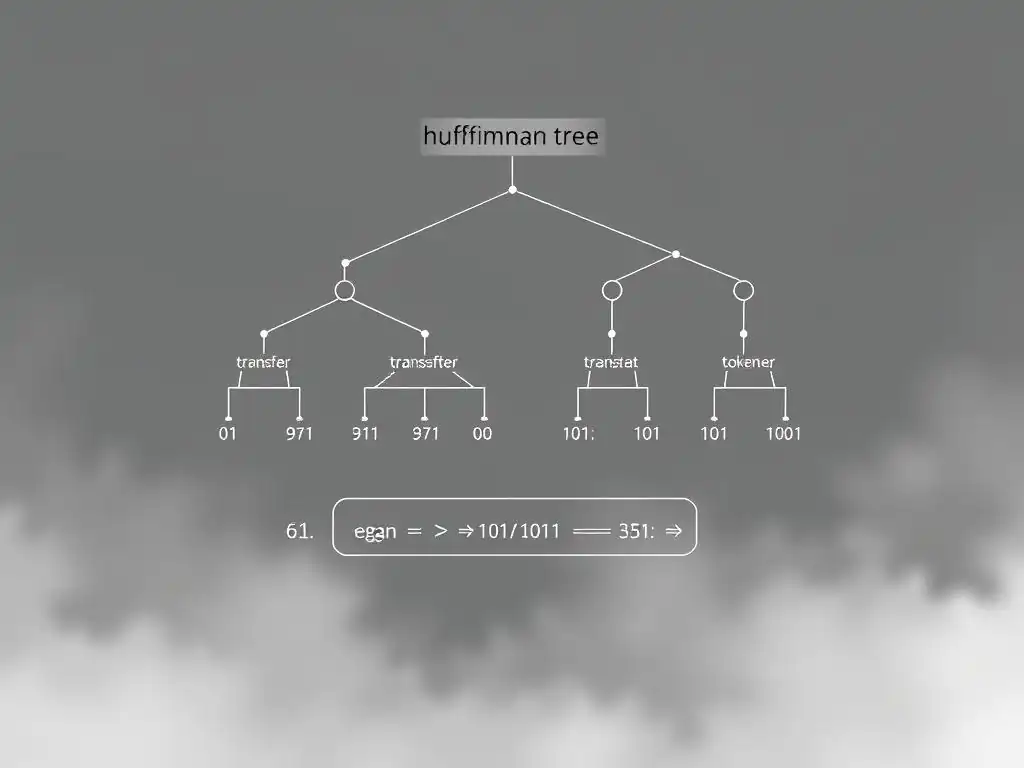
Huffman Coding is another widely used lossless data compression algorithm that achieves compression by assigning variable-length codes to different characters or symbols based on their frequency of occurrence in the data. More frequent characters are assigned shorter codes, while less frequent characters are assigned longer codes. This variable-length encoding results in an overall reduction in the average number of bits needed to represent the data. Huffman Coding is particularly effective for text data or data where certain symbols or values appear more frequently than others.
In the context of blockchain storage optimization techniques, Huffman Coding can be applied to compress transaction data, metadata, or even smart contract code. By analyzing the frequency distribution of bytes or characters in blockchain data, Huffman Coding can create an optimized encoding scheme that reduces the overall data size. The algorithm involves building a Huffman tree based on the frequency of symbols and then traversing the tree to generate the variable-length codes.
While Huffman Coding offers better compression ratios than RLE for many types of data, it also has a slightly higher computational overhead for encoding and decoding. However, the trade-off between compression efficiency and computational cost is often favorable, making Huffman Coding a valuable tool for reducing the storage footprint of blockchain data.
Advanced Compression Methods (LZ4, Zstandard)
For more demanding blockchain storage optimization needs, advanced lossless compression algorithms like LZ4 and Zstandard (Zstd) offer significantly higher compression speeds and competitive compression ratios compared to simpler methods like RLE or Huffman Coding. LZ4 is renowned for its extremely fast compression and decompression speeds, making it suitable for real-time compression and applications where performance is critical. While LZ4's compression ratio might be slightly lower than some other algorithms, its speed advantage is a major benefit, especially in high-throughput blockchain systems.
Zstandard (Zstd) is another modern lossless compression algorithm that provides an excellent balance between compression speed and compression ratio. Zstd typically achieves compression ratios comparable to or better than DEFLATE (used in gzip) while offering significantly faster compression and decompression speeds. It is highly configurable, allowing users to tune the compression level to prioritize either speed or compression ratio based on their specific needs.
Zstd's versatility and performance have made it a popular choice in various applications, including data storage, archiving, and network communication. In blockchain, LZ4 and Zstd can be effectively used to compress large volumes of transaction data, state data, or even entire blocks, providing substantial blockchain storage optimization without introducing significant performance bottlenecks. Their speed and efficiency make them well-suited for integration into blockchain systems requiring rapid data processing and reduced storage overhead.
Combining Hashing and Compression for Optimization
Hashing for Compressed Data Verification
Combining hashing and compression is a powerful strategy for blockchain storage optimization that maintains data integrity while reducing storage footprint. When data is compressed to save space, it's crucial to ensure that the compressed data remains verifiable and tamper-proof. Hashing algorithms play a vital role in this process. Typically, in a combined approach, data is first compressed using a lossless compression algorithm to reduce its size, and then the compressed data is hashed using a cryptographic hash function. This hash value serves as a digital fingerprint of the compressed data.
The benefit of hashing compressed data is that it allows for efficient verification of data integrity. When retrieving the compressed data, it can be decompressed, and its hash can be recalculated and compared to the originally stored hash. If the hashes match, it confirms that the compressed data has not been tampered with during storage or transmission.
This approach ensures that the storage optimization achieved through compression does not compromise the fundamental security and immutability properties of blockchain. Hashing acts as a safeguard, guaranteeing that the compressed data retains its integrity and can be reliably verified, making it a cornerstone of robust blockchain storage optimization techniques.
Optimizing Block Size
Block size is a critical parameter in blockchain design that directly impacts both storage efficiency and transaction throughput. Larger block sizes can potentially accommodate more transactions per block, leading to higher transaction throughput and reduced transaction fees. However, larger blocks also increase the storage requirements for blockchain nodes and can lead to longer block propagation times across the network. Finding the optimal block size is a balancing act that involves considering various factors, including network bandwidth, node storage capacity, and desired transaction processing speed.
Data compression techniques can play a significant role in optimizing block size. By compressing transaction data within blocks, blockchains can effectively increase the number of transactions that can fit into a block of a given size without actually increasing the physical block size on disk. This approach allows for achieving higher transaction throughput without excessively increasing storage requirements or block propagation times.
For instance, if transaction data within a block is compressed by 50%, the effective transaction capacity of the block is doubled without increasing its on-chain storage footprint. Therefore, combining data compression with careful block size management is a crucial aspect of blockchain storage optimization techniques aimed at maximizing both efficiency and performance.
Merkle Trees and Compression
Merkle Trees, also known as hash trees, are data structures widely used in blockchain to efficiently summarize and verify the integrity of large datasets, particularly transaction lists within blocks. A Merkle Tree works by recursively hashing pairs of data blocks until a single root hash, called the Merkle Root, is obtained. This Merkle Root represents the cryptographic summary of all the data blocks in the tree. Merkle Trees are highly efficient for verifying the inclusion of specific data within a large dataset without needing to download and verify the entire dataset.
In the context of blockchain storage optimization techniques, Merkle Trees can be combined with data compression to further enhance efficiency. While Merkle Trees themselves do not directly compress data, they facilitate efficient verification of compressed data blocks. For example, if transaction data within a block is compressed, a Merkle Tree can be constructed using the hashes of the compressed transaction chunks.
The Merkle Root then provides a concise cryptographic summary of the entire compressed transaction set. This allows nodes to efficiently verify the integrity of individual compressed transactions by only downloading a small Merkle path, rather than the entire compressed block. This combination of Merkle Trees and compression enables both storage reduction and efficient partial verification of blockchain data, contributing to overall blockchain storage optimization.
Case Study: Hashing and Compression for Decentralized Identity Management
Decentralized Identity Management (DID) systems are increasingly leveraging blockchain technology to provide users with greater control over their digital identities. However, storing complete identity data on-chain can be storage-intensive and raise privacy concerns. A practical case study illustrating the benefits of hashing and compression for blockchain storage optimization is in the context of DID. Consider a DID system where users need to store verifiable credentials, such as educational diplomas or professional certifications, on a blockchain. Storing the full documents on-chain for each user would quickly consume significant storage space.
To address this, a system can employ a combination of hashing and compression. Instead of storing the entire credential document on-chain, the system could compress the document using a lossless compression algorithm like Zstandard, significantly reducing its size. Then, a cryptographic hash of the compressed credential document (e.g., SHA-256) can be stored on the blockchain.
The actual compressed document can be stored off-chain in a decentralized storage solution like IPFS or Arweave. When verification is required, the verifier can retrieve the compressed document from the off-chain storage, decompress it, calculate its hash, and compare it with the hash stored on the blockchain.
A match confirms the integrity and authenticity of the credential without requiring the entire document to be stored permanently and redundantly on the blockchain. This approach effectively utilizes blockchain storage optimization techniques to manage identity data efficiently while maintaining security and verifiability, demonstrating a real-world application of these methods.
Future Trends in Blockchain Storage
Emerging Technologies
The field of blockchain storage optimization is continuously evolving, with several emerging technologies poised to shape the future of efficient blockchain data management. One promising area is the development of more advanced compression algorithms specifically tailored for blockchain data characteristics. Researchers are exploring compression techniques that can exploit the unique redundancies and patterns found in transaction data, state data, and smart contract code to achieve even higher compression ratios and faster processing speeds. Furthermore, advancements in hardware, such as faster storage devices and more efficient processors, are also contributing to improved blockchain storage and processing capabilities.
Another emerging trend is the integration of data pruning and state management techniques to reduce the historical data that needs to be stored by full nodes. State pruning, for instance, aims to remove historical state data that is no longer needed for current network operations, significantly reducing the state database size.
Zero-knowledge proofs and succinct non-interactive arguments of knowledge (SNARKs) are also being explored for their potential to compress the verification process itself, allowing for more efficient validation of blockchain data without requiring full data replication. These emerging technologies, combined with ongoing research and development, are driving the evolution of blockchain storage optimization techniques towards more scalable, efficient, and sustainable blockchain systems.
Federated Learning and Compression for Privacy
Federated learning, a machine learning technique that allows training models across decentralized devices or servers holding local data samples without exchanging them, is increasingly relevant in blockchain contexts, particularly where data privacy is paramount. Combining federated learning with data compression techniques can offer synergistic benefits for both privacy and storage efficiency in blockchain-based applications. In federated learning, models are trained locally on individual nodes, and only model updates (gradients or parameters) are aggregated centrally, preserving data privacy.
Data compression can be applied to reduce the size of these model updates before they are transmitted and aggregated, minimizing bandwidth consumption and improving communication efficiency. Furthermore, compression can also be used to reduce the storage footprint of local datasets used for federated learning on blockchain nodes.
For example, compressed versions of training datasets can be stored on-chain or off-chain, reducing storage requirements while still allowing for decentralized model training. This combination of federated learning and compression not only enhances privacy by keeping data localized but also optimizes resource utilization and improves the scalability of privacy-preserving blockchain applications, showcasing advanced blockchain storage optimization techniques for privacy-focused systems.
Sharding is a database partitioning technique that is being adapted for blockchain to improve scalability by dividing the blockchain into smaller, manageable pieces called shards. Each shard processes a subset of transactions and maintains only a portion of the blockchain state, distributing the workload and reducing the burden on individual nodes. Combining sharding with data compression can further enhance the scalability and efficiency of sharded blockchain systems. Within each shard, data compression can be used to reduce the storage requirements for transaction data, state data, and block headers, minimizing the storage burden on nodes responsible for maintaining that shard.
Moreover, compression can also improve the efficiency of cross-shard communication and data synchronization. When data needs to be transferred between shards, compressed data can be transmitted more quickly and with less bandwidth consumption. The combination of sharding and compression addresses both computational and storage scalability challenges in blockchain.
Sharding distributes the processing and storage load across multiple nodes, while compression reduces the size of data that needs to be stored and transmitted within each shard and across the network. This synergistic approach is crucial for building highly scalable blockchain platforms capable of handling massive transaction volumes and large datasets, representing a powerful application of blockchain storage optimization techniques for scalability.
Decentralized Storage Solutions (IPFS, Arweave)
Decentralized storage solutions like IPFS (InterPlanetary File System) and Arweave are emerging as complementary technologies to blockchain, offering alternative approaches to blockchain storage optimization. Instead of storing all data directly on the blockchain, which can be costly and inefficient, these solutions enable storing large files and datasets off-chain in a decentralized and content-addressable manner. IPFS uses content-addressing to identify files based on their content hash, ensuring that data is immutable and verifiable. Arweave provides permanent and decentralized data storage by incentivizing nodes to store data indefinitely.
By integrating blockchain with decentralized storage solutions, applications can store only hashes or metadata on the blockchain, pointing to the actual data stored off-chain on IPFS or Arweave. This drastically reduces the storage burden on the blockchain itself while still leveraging blockchain for secure data linking, immutability, and access control.
For example, in a decentralized application storing large media files, the media files can be stored on IPFS or Arweave, and only their content hashes are recorded on the blockchain. This approach combines the strengths of blockchain for security and decentralized storage solutions for efficient data management, representing a significant trend in blockchain storage optimization techniques for handling large datasets and complex applications.
Conclusion: Efficient Storage Strategies
Key Takeaways
Efficient blockchain storage is no longer optional but a critical necessity for the widespread adoption and scalability of blockchain technology. As blockchain networks grow and applications become more data-intensive, optimizing storage becomes paramount for maintaining performance, reducing costs, and ensuring long-term sustainability. Hashing algorithms are fundamental for ensuring data integrity and immutability within blockchains, acting as digital fingerprints and enabling tamper-proof data verification. Data compression techniques, particularly lossless methods, offer effective ways to reduce the storage footprint of blockchain data without compromising data integrity.
Combining hashing and compression strategies provides a powerful approach to blockchain storage optimization, allowing for both space savings and secure data verification. Emerging technologies like advanced compression algorithms, state pruning, sharding, and decentralized storage solutions are continuously pushing the boundaries of efficient blockchain data management. Decentralized storage solutions like IPFS and Arweave offer compelling alternatives for off-chain data storage, complementing blockchain's strengths in security and immutability. Ultimately, a multifaceted approach incorporating hashing, compression, optimized block sizes, Merkle Trees, and strategic use of decentralized storage is essential for achieving truly scalable and efficient blockchain systems.
Ongoing Evolution of Storage Solutions
The quest for efficient blockchain storage is an ongoing journey, with continuous innovation and research driving the evolution of storage solutions. As blockchain technology matures and new use cases emerge, the demands on storage infrastructure will only intensify. Future advancements in cryptography, compression algorithms, distributed systems, and hardware will undoubtedly lead to even more sophisticated and effective blockchain storage optimization techniques. The integration of artificial intelligence and machine learning may also play a role in dynamically optimizing storage strategies based on network conditions and data patterns.
The blockchain community is actively exploring and developing a diverse range of storage solutions, from layer-2 scaling solutions that reduce on-chain data to entirely new blockchain architectures designed with storage efficiency as a core principle. The future of blockchain storage is likely to be characterized by a hybrid approach, combining on-chain and off-chain storage, leveraging decentralized storage networks, and employing intelligent data management techniques to achieve optimal balance between security, scalability, and efficiency. This ongoing evolution is crucial for unlocking the full potential of blockchain technology and enabling its widespread adoption across various industries and applications.
Frequently Asked Questions
How do hashing algorithms contribute to blockchain storage optimization?
Hashing algorithms create a fixed-size fingerprint of data. This compressed representation significantly reduces the storage space required for transaction data within blocks.
What is the role of data compression techniques in optimizing blockchain storage?
Data compression methods reduce the overall size of data stored on the blockchain. By removing redundancy, they make storing transaction histories more efficient.
Can blockchain storage optimization techniques improve the speed and performance of a blockchain network?
Yes, reducing the amount of data stored and processed allows for faster data retrieval and improved network scalability. This leads to better overall performance.
How does the "Blockchain Trends" website address the importance of blockchain storage optimization techniques?
"Blockchain Trends" highlights the significance of these techniques in overcoming storage limitations and enhancing the practicality of blockchain applications beyond just cryptocurrencies.
What are some of the challenges associated with implementing blockchain storage optimization techniques?
Challenges include maintaining data integrity during compression and decompression, ensuring compatibility across different blockchain platforms, and managing computational overhead.
Final Reflection: Forging a More Efficient Blockchain Future
The exploration of hashing algorithms and data compression within blockchain technology reveals a critical need for blockchain storage optimization techniques in today's rapidly expanding digital landscape. As blockchains grow exponentially, the insights gleaned from this analysis are not merely theoretical; they are essential for ensuring the scalability, accessibility, and long-term viability of decentralized systems. The future of blockchain hinges on our ability to efficiently manage and compress the vast amounts of data it generates.
This journey into the intricacies of hashing and compression has underscored the profound impact these technologies have on the cultural and social fabric of decentralized systems. The ability to securely and efficiently store data is not just a technical challenge; it's a cornerstone of trust and accessibility in the digital age. Data is the new oil, but only if it's refined and efficiently stored.
This quote encapsulates the essence of our exploration, highlighting the necessity of optimizing blockchain storage to unlock its full potential and democratize access to information.
Now, as you consider the implications of these advancements, I invite you to reflect on your own role in shaping the future of blockchain. How can you contribute to the development and implementation of more efficient storage solutions? How can you advocate for the adoption of these techniques to ensure a more sustainable and accessible decentralized future? The power to optimize blockchain lies not just in the hands of developers, but in the collective awareness and action of every individual who believes in the transformative potential of this technology.
Ignite Blockchain Efficiency: Optimize Your Impact!
Thank you for exploring the role of hashing algorithms and data compression in blockchain technology. We hope you've gained valuable insights into how these tools are driving the development of more efficient and scalable decentralized systems. Now, it's time to apply that knowledge!
Consider taking practical steps to deepen your understanding and contribute to the blockchain community:
- Implement a basic hashing function in a personal project or testing environment. This hands-on experience will help you better understand the core concepts.
- Experiment with different data compression libraries, such as Zstandard or LZ4, and evaluate their performance on blockchain-related datasets to discover their strengths and limitations.
- Share this article with your network on LinkedIn or Twitter, and tag colleagues who might find this information useful. Let's work together to spread knowledge and foster innovation!
What creative use cases do you see for combining hashing and compression techniques to improve blockchain storage and efficiency? Share your ideas in the comments below!
Leave a Reply