
Public vs. Private Blockchain Architecture: Choosing the Right Path for Decentralization


Welcome to Blockchain Trends, your compass in the rapidly evolving world of decentralized technologies. Beyond the hype of cryptocurrencies, blockchain is reshaping industries, from finance to supply chain management. Curious about how businesses are leveraging this powerful technology? This month, we delve into the crucial decision facing organizations: Public vs. Private Blockchain Architecture. Discover the implementation benefits of private blockchain architecture and how it can unlock efficiency and security for your specific needs. Read on to find out if a private blockchain is the right path for your decentralization journey and what factors you need to consider.
- Private Blockchain Architecture Implementation Benefits
-
Frequently Asked Questions
- What are the key differences between public and private blockchain architectures?
- What are the Private blockchain architecture implementation benefits mentioned in the article?
- How does choosing between public and private blockchains impact decentralization?
- What types of enterprise applications are best suited for a private blockchain architecture?
- How might regulatory considerations influence the choice between public and private blockchain architectures?
- Final Reflection: Embracing Decentralization's Diverse Paths
- Unleash Your Decentralized Future!
Private Blockchain Architecture Implementation Benefits
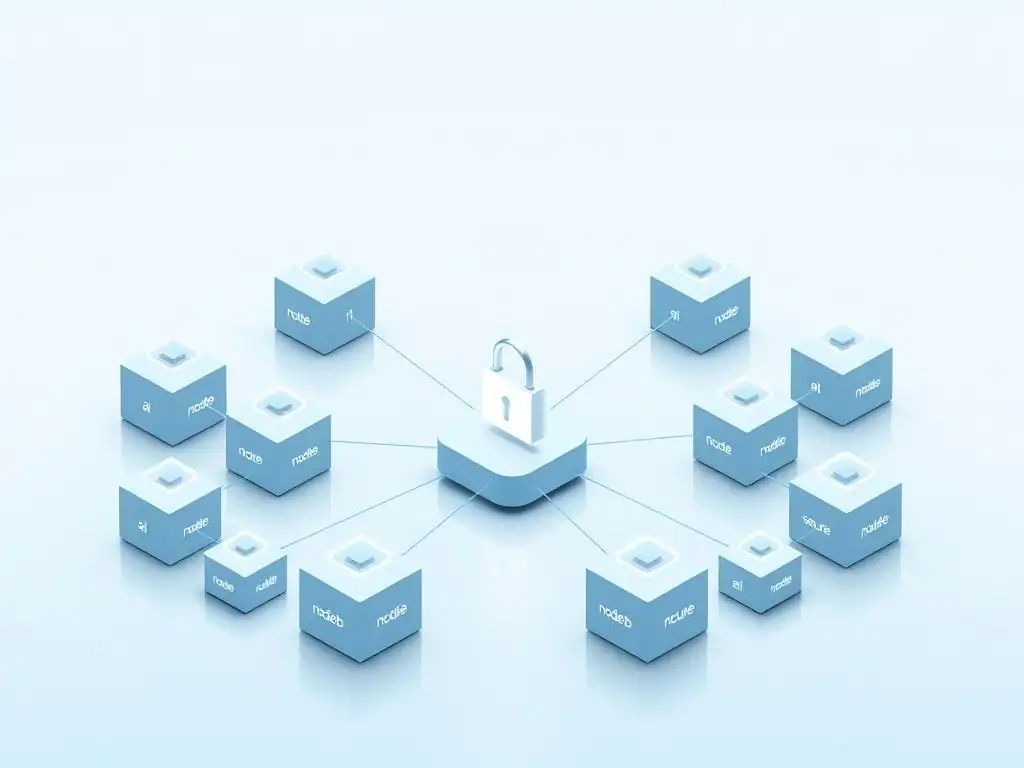
Advantages of Private Blockchains for Enterprises
Private blockchains offer a compelling suite of advantages for enterprises seeking to leverage distributed ledger technology within a controlled environment. Unlike public blockchains which are open to anyone, private blockchains operate on a permissioned basis, granting organizations granular control over network access and participation. This controlled access translates directly into enhanced security, improved efficiency, and greater customization, making private blockchain architecture a particularly attractive option for businesses dealing with sensitive data and specific operational requirements. Organizations across various sectors are recognizing these benefits and exploring private blockchain implementation for internal processes and collaborative initiatives.
One of the primary drivers for adopting private blockchain architecture stems from the need for enhanced security and data privacy. In a private blockchain, the organization dictates who can participate in the network, view transaction data, and validate transactions. This level of control significantly reduces the risk of unauthorized access and malicious activities, which are inherent concerns in public, permissionless networks.
For instance, consider a consortium of pharmaceutical companies sharing research data. A private blockchain allows them to securely share information, knowing that only authorized members within the consortium can access and contribute to the ledger, safeguarding sensitive intellectual property and maintaining competitive advantage. This controlled environment is a significant advantage for industries operating under strict regulatory frameworks and handling confidential information.
Enhanced Security and Control in Private Blockchains
The permissioned nature of private blockchains inherently bolsters security and control compared to their public counterparts. In a private blockchain, access is restricted to invited participants, often known entities within a consortium or enterprise. This controlled environment significantly diminishes the attack surface, as the network is not exposed to the vast and anonymous internet community.
Furthermore, organizations implementing private blockchains can enforce stringent identity verification and access control policies, ensuring that only trusted parties can interact with the network and its data. This contrasts sharply with public blockchains, where anyone can participate, making them more susceptible to Sybil attacks and other forms of malicious activity from unknown actors.
Beyond access control, private blockchains offer greater control over the consensus mechanism and network governance. Enterprises can select consensus algorithms that prioritize speed and efficiency over the robustness required for a trustless public network. For example, a private blockchain might utilize a Practical Byzantine Fault Tolerance (PBFT) consensus mechanism, which is known for its high throughput and finality in a permissioned setting.
This allows for faster transaction processing and quicker settlement times, crucial for enterprise applications requiring rapid operations. Moreover, organizations can tailor the governance structure to align with their internal policies and operational needs, enabling swift decision-making and adaptability within the blockchain network.
Improved Efficiency and Scalability in Private Blockchains
Private blockchain architecture often leads to improved efficiency and scalability compared to public blockchains, especially in enterprise settings. Because private blockchains operate within a controlled environment with a known set of participants, they can achieve faster transaction processing speeds and higher throughput. The streamlined consensus mechanisms, often chosen for their efficiency rather than fault tolerance against unknown actors, contribute significantly to this performance boost. For example, Hyperledger Fabric, a popular private blockchain framework, can achieve transaction speeds in the thousands per second, far exceeding the transaction capabilities of many public blockchains.
Furthermore, private blockchains can be designed for better scalability within an enterprise context. As the network participants are known and often limited, capacity planning and resource allocation become more predictable and manageable. Organizations can scale their private blockchain infrastructure based on anticipated transaction volumes and network growth, optimizing resources and avoiding the congestion issues that can sometimes plague public blockchains during periods of high demand. This scalability advantage is crucial for enterprises anticipating significant growth in blockchain adoption within their operations and requiring a solution that can adapt to increasing demands over time.
Customization Options for Private Blockchain Solutions
One of the most compelling benefits of private blockchain architecture lies in its extensive customization options. Enterprises are not constrained by the rigid protocols and governance structures often found in public blockchains. Instead, they can tailor their private blockchain solutions to precisely match their specific business requirements and operational workflows. This customization extends to various aspects of the blockchain, including consensus mechanisms, data structures, smart contract logic, and permissioning models.
For instance, a financial institution implementing a private blockchain for interbank payments might customize the smart contracts to incorporate specific regulatory compliance requirements and integrate directly with their existing banking systems. They could also choose a consensus mechanism optimized for speed and finality within a closed network of trusted financial institutions.
Furthermore, enterprises can control the level of data visibility and privacy within the network, ensuring that sensitive information is only accessible to authorized parties. This level of customization allows organizations to create blockchain solutions that are perfectly aligned with their unique needs, maximizing the benefits and minimizing disruptions to existing operations.
Implementing Private Blockchain Solutions: A Step-by-Step Guide
Implementing a private blockchain solution requires a strategic and methodical approach. Success hinges on careful planning, a clear understanding of business needs, and a phased deployment strategy. Organizations should not rush into implementation without first thoroughly assessing their requirements and choosing the right technology and approach. A well-defined implementation plan, starting with pilot projects and gradually expanding, minimizes risks and maximizes the chances of successful private blockchain adoption.
The journey towards private blockchain implementation typically involves several key steps, starting with identifying the right use cases and defining clear requirements. This foundational phase is crucial for ensuring that the blockchain solution effectively addresses specific business challenges and delivers tangible value. Following this, selecting the appropriate private blockchain platform and integrating it seamlessly with existing IT infrastructure are critical technical steps. Finally, ongoing monitoring, maintenance, and iterative improvements are essential for ensuring the long-term success and sustainability of the private blockchain solution.
Defining Use Cases and Requirements for Private Blockchain Implementation
The first and arguably most critical step in implementing a private blockchain is to clearly define the use case and associated requirements. Organizations need to identify specific business problems or opportunities where a private blockchain can offer a demonstrable advantage over traditional solutions. This involves a thorough analysis of current processes, pain points, and potential benefits of decentralization, enhanced security, and improved transparency. A well-defined use case acts as a guiding light throughout the implementation process, ensuring that the blockchain solution remains focused on delivering tangible business value.
For example, a manufacturing company might identify supply chain traceability as a prime use case. Their requirements might include real-time tracking of goods, improved visibility across the supply chain network, enhanced product authenticity verification, and secure data sharing with authorized partners. Once the use case and requirements are clearly defined, organizations can then proceed to evaluate different private blockchain platforms and design a solution that effectively addresses these specific needs. Without a clear understanding of the problem and desired outcomes, private blockchain implementation can easily become misdirected and fail to deliver the anticipated benefits.
Choosing the Right Private Blockchain Platform
Selecting the right private blockchain platform is a crucial decision that significantly impacts the success of implementation. Several platforms are available, each with its own strengths, weaknesses, and suitability for different use cases. Factors to consider when choosing a platform include the platform's maturity, scalability, security features, customization options, developer community support, and integration capabilities. Organizations should carefully evaluate different platforms based on their specific requirements and technical expertise.
Popular private blockchain platforms include Hyperledger Fabric, R3 Corda, and Quorum. Hyperledger Fabric, for instance, is known for its modular architecture, strong enterprise focus, and extensive customization capabilities, making it suitable for a wide range of use cases. R3 Corda, on the other hand, is specifically designed for financial applications and emphasizes data privacy and regulatory compliance. Quorum, built on Ethereum, offers smart contract capabilities and a vibrant developer ecosystem. Choosing the platform that best aligns with the defined use case, technical capabilities, and long-term strategic goals is paramount for successful private blockchain implementation.
Integrating Private Blockchains with Existing Systems
Seamless integration with existing IT systems is essential for realizing the full potential of private blockchain solutions and minimizing disruption to ongoing operations. Private blockchains rarely operate in isolation; they typically need to interact with existing databases, enterprise resource planning (ERP) systems, customer relationship management (CRM) platforms, and other business applications. Effective integration ensures data consistency, streamlines workflows, and allows organizations to leverage their existing infrastructure while reaping the benefits of blockchain technology.
Integration can be achieved through various methods, including application programming interfaces (APIs), middleware solutions, and data connectors. For example, a private blockchain used for supply chain management might need to integrate with a company's ERP system to automatically update inventory levels and trigger procurement processes based on blockchain-tracked shipments. Careful planning and execution of integration are crucial for ensuring data integrity, interoperability, and a smooth transition to blockchain-enabled processes. Organizations should prioritize integration considerations early in the implementation process to avoid potential bottlenecks and ensure a cohesive and efficient overall system.
Frequently Asked Questions
What are the key differences between public and private blockchain architectures?
Public blockchains are permissionless and decentralized, allowing anyone to participate. Private blockchains are permissioned, restricting access and control to authorized participants, often within a single organization or consortium.
What are the Private blockchain architecture implementation benefits mentioned in the article?
Private blockchain architecture implementation benefits include increased privacy, improved efficiency due to controlled access, and enhanced regulatory compliance compared to public blockchains.
How does choosing between public and private blockchains impact decentralization?
Choosing a private blockchain limits decentralization because centralized control is maintained by the owner or administrator. Public blockchains offer true decentralization due to their open and permissionless nature.
What types of enterprise applications are best suited for a private blockchain architecture?
Private blockchains are well-suited for applications requiring data confidentiality and controlled access, such as supply chain management, healthcare record sharing, and internal data management within a company.
How might regulatory considerations influence the choice between public and private blockchain architectures?
Regulations concerning data privacy and compliance often favor private blockchains, as they offer greater control and auditing capabilities. Public blockchains may face challenges in meeting strict regulatory requirements in certain industries.
Final Reflection: Embracing Decentralization's Diverse Paths
The exploration of public versus private blockchain architectures reveals that true decentralization is not a monolithic concept, but a spectrum of choices tailored to specific needs. The benefits of private blockchain architecture implementation, as we've discussed, are particularly compelling for organizations prioritizing control, compliance, and efficiency within a defined ecosystem. This understanding is crucial in a world increasingly grappling with data security and the desire for transparent, yet regulated, systems.
The ongoing influence of blockchain technology, both public and private, is undeniable. It's reshaping industries, challenging traditional power structures, and forcing us to reconsider the very nature of trust. The choice between public and private isn't a binary one; it's about finding the right balance between openness and control to achieve specific goals. The blockchain is more than just a technology; it's a philosophical shift towards distributed trust and shared governance.
This quote encapsulates the profound impact blockchain is having on our world, urging us to think critically about how we implement it.
As you consider the potential of blockchain technology, I encourage you to reflect on your own needs and priorities. Are you seeking radical transparency and open access, or do you require a more controlled and permissioned environment? The answer to this question will guide you towards the right path, empowering you to harness the transformative power of blockchain and contribute to a more decentralized future, one carefully considered implementation at a time.
Unleash Your Decentralized Future!
Thank you for exploring the differences between public and private blockchains with us. We hope you now have a clearer understanding of which approach aligns best with your decentralization goals. It's time to turn that knowledge into action.
Here are some steps to continue advancing your blockchain expertise:
- Build a proof-of-concept application using a public testnet or a private blockchain framework. This practical experience will deepen your understanding.
- Explore the governance models associated with different blockchain architectures, as understanding these is key to long-term success.
- Share this article with colleagues or on social media to foster discussions about the most suitable decentralization strategies for various use cases.
Which type of blockchain—public or private—do you believe offers the greatest potential for innovation in your industry? Share your thoughts in the comments below!
Leave a Reply