
The Role of DLT in the Metaverse: Building Decentralized Virtual Worlds

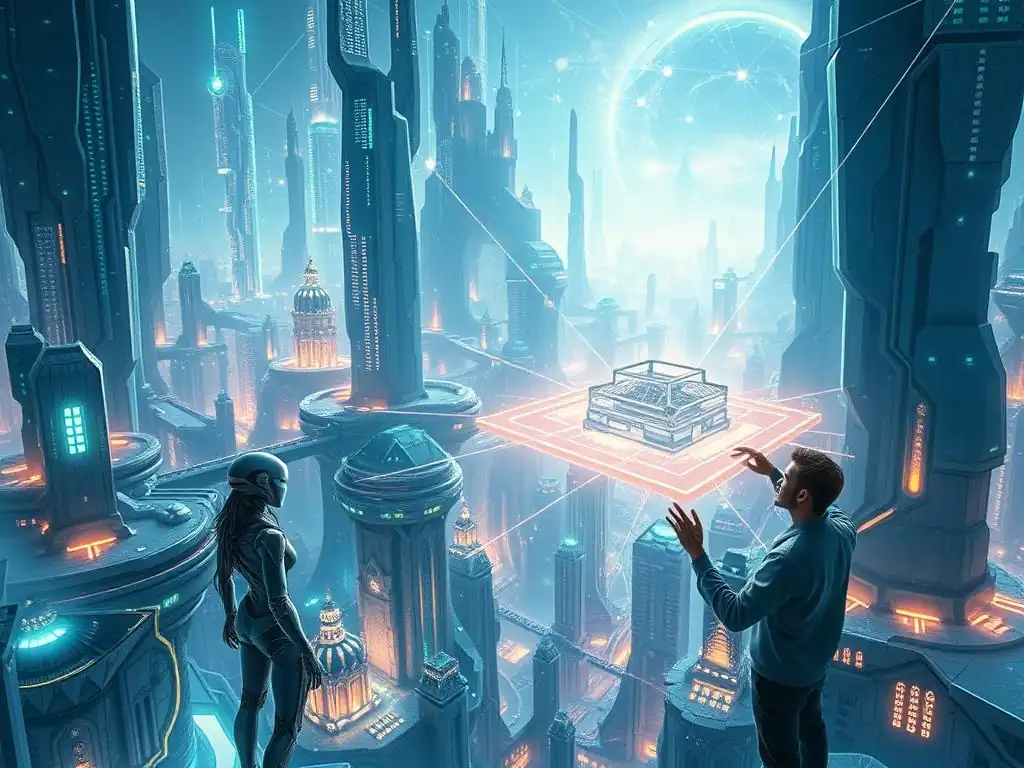
Welcome to Blockchain Trends, your guide to understanding the revolution beyond the hype. Dive into the transformative power of blockchain technology as we explore its diverse applications, from DeFi to enterprise solutions. Today, we're taking a deep dive into the fascinating intersection of blockchain and virtual realities. Are you ready to unravel the potential of Decentralized Metaverse World Building and discover how Distributed Ledger Technology (DLT) is shaping the future of digital interaction? Let's begin...
The Role of DLT in the Metaverse: Building Decentralized Virtual Worlds
- Introduction: DLT's Transformative Potential in Metaverse Development
- Understanding the Core Concepts: DLT, Blockchain, and the Metaverse
- Why DLT is Crucial for a Decentralized Metaverse
- DLT Use Cases in Metaverse World Building
- Exploring Specific DLT Platforms for Metaverse Development
- The Benefits of a DLT-Powered Decentralized Metaverse
- Challenges and Opportunities in DLT-Based Metaverse Development
- Future Trends in DLT and Metaverse Integration
- Conclusion: Embracing Decentralization in the Metaverse with DLT
-
Frequently Asked Questions
- What role does Distributed Ledger Technology (DLT) play in constructing a decentralized metaverse?
- How can blockchain contribute to the decentralized metaverse world building experience?
- What are the regulatory challenges associated with building a decentralized metaverse using blockchain?
- Beyond cryptocurrencies, what other applications of blockchain are relevant to the future of the decentralized metaverse?
- How does decentralization ensure a more equitable and accessible world building experience in the metaverse?
- Final Reflection: Embracing Decentralized Metaverse World Building
- Unleash the Metaverse Architect Within!
Introduction: DLT's Transformative Potential in Metaverse Development
Exploring Decentralized Metaverse World Building with Distributed Ledger Technology
The metaverse, envisioned as an immersive and persistent digital universe, is rapidly evolving from a futuristic concept to a tangible reality. However, the prevailing models for virtual worlds often rely on centralized architectures, mirroring the limitations of the early internet. Distributed Ledger Technology (DLT) emerges as a pivotal solution, offering a pathway to build truly decentralized metaverse experiences.
This shift towards decentralized metaverse world building is not merely a technical upgrade; it represents a fundamental change in how virtual worlds are owned, governed, and experienced. Imagine virtual spaces where users, not corporations, control their digital assets, identities, and destinies. This is the promise of a DLT-powered metaverse, where the underlying infrastructure itself is democratized and resilient.
The ambition of decentralized metaverse world building extends beyond simply replicating existing virtual world functionalities in a decentralized manner. It unlocks entirely new paradigms for user interaction, economic models, and governance. By leveraging the inherent properties of DLT, such as transparency, security, and immutability, we can construct metaverses that are more equitable, secure, and user-centric. This exploration delves into the core principles of DLT and their application in shaping the future of the metaverse, examining how this technology is instrumental in realizing the vision of truly open and decentralized virtual worlds.
The Convergence of DLT and Metaverse: A New Era of Digital Experiences
The confluence of Distributed Ledger Technology and the metaverse marks the beginning of a new era for digital experiences. While early metaverse iterations often focused on virtual reality interfaces and gaming applications, the integration of DLT fundamentally reshapes the underlying architecture and value proposition. This convergence moves us beyond centralized platforms controlled by single entities to permissionless and transparent ecosystems.
Consider the implications: users gain verifiable ownership of their digital assets, transactions become transparent and auditable, and governance models can be distributed amongst participants. This departure from traditional centralized models is not just about technological advancement; it's about empowering users within these digital realms.
This new era of digital experiences, powered by DLT, promises a more democratic and equitable metaverse. Instead of being subject to the rules and whims of a single corporation, users in a DLT-based metaverse can participate in shared economies, contribute to community governance, and build their digital identities with greater autonomy.
The convergence is fostering innovation in areas like digital art and collectibles through NFTs, decentralized finance (DeFi) within virtual worlds, and new forms of social interaction and collaboration. This synergistic relationship between DLT and the metaverse is paving the way for richer, more engaging, and ultimately more empowering digital experiences for users worldwide.
Understanding the Core Concepts: DLT, Blockchain, and the Metaverse
What is Distributed Ledger Technology (DLT)? A Primer
Distributed Ledger Technology (DLT) at its core is a database replicated and shared across a network of computers. Unlike traditional databases managed by a central authority, DLT distributes control and data across multiple participants, making it inherently more resilient and transparent. Imagine a shared digital spreadsheet accessible to many, where every change is recorded, verified, and visible to all participants. This shared and synchronized record of transactions is maintained without the need for a central intermediary. A key characteristic of many DLTs is their cryptographic security, ensuring data integrity and preventing unauthorized modifications.
DLT encompasses various types of technologies, with blockchain being the most well-known. However, it's important to understand that not all DLTs are blockchains. Examples of DLTs beyond blockchain include Hashgraph and Directed Acyclic Graphs (DAGs). Regardless of the specific implementation, the fundamental principle remains the same: distributing data and control across a network to enhance transparency, security, and efficiency. This distributed nature is crucial for applications requiring trust and immutability, making DLT a foundational technology for decentralized systems and, importantly, for decentralized metaverse world building.
Blockchain Technology: The Foundation of Decentralized Systems
Blockchain technology, a specific type of DLT, has emerged as a cornerstone for building decentralized systems, including many metaverse initiatives. A blockchain organizes data into blocks, which are cryptographically linked together in a chronological chain. Each block contains a set of transactions, and once a block is added to the chain, it becomes extremely difficult to alter or remove, thanks to cryptographic hashing and consensus mechanisms. Think of it as a digital ledger where each page (block) is permanently bound to the previous page, creating an immutable and auditable record.
The decentralized nature of blockchain stems from its distributed architecture and consensus mechanisms. Instead of relying on a central authority to validate transactions, blockchains utilize consensus algorithms, such as Proof-of-Work or Proof-of-Stake, to achieve agreement among network participants. This decentralized consensus ensures that no single entity can control or manipulate the blockchain, making it a trustless and transparent system. Furthermore, blockchain's support for smart contracts – self-executing agreements written in code – enables automated and programmable interactions within decentralized applications, playing a vital role in the functionality and dynamism of decentralized metaverse world building.
Defining the Metaverse: Beyond Virtual Reality and Gaming
The metaverse, often conflated with virtual reality and gaming, is a much broader concept encompassing persistent, shared, 3D virtual worlds. It represents a convergence of physical and digital realities, where users can interact with each other and digital objects in immersive and often interconnected spaces. Imagine a digital extension of our physical world, where we can socialize, work, play, learn, and even transact within persistent virtual environments. While virtual reality (VR) and augmented reality (AR) technologies offer entry points into the metaverse, they are not prerequisites. Access can also be achieved through computers, mobile devices, and other interfaces.
Defining the metaverse accurately requires moving beyond the hype and recognizing its core characteristics. Persistence is key – the metaverse is not a series of disconnected games but a continuous and evolving digital space. Interoperability is another crucial aspect – ideally, users should be able to move seamlessly between different metaverse platforms with their digital identities and assets.
Furthermore, the metaverse envisions a robust digital economy, powered by virtual currencies and digital assets, enabling users to create, own, and monetize their virtual experiences. This vision of a persistent, interoperable, and economically vibrant digital realm is significantly enhanced and made more equitable through decentralized metaverse world building, leveraging the principles of DLT.
Why DLT is Crucial for a Decentralized Metaverse
Addressing Centralization Concerns in Traditional Virtual Worlds
Traditional virtual worlds, while offering engaging experiences, often suffer from inherent limitations due to their centralized nature. These platforms are typically controlled by single corporations, granting them unilateral power over user data, content moderation, and economic policies. Imagine a virtual world where your account can be suspended, your digital assets confiscated, or the platform's rules changed without your input. This centralized control raises concerns about censorship, data privacy, and lack of user agency. Furthermore, centralized systems are vulnerable to single points of failure, meaning outages or security breaches can disrupt the entire virtual world.
Decentralized metaverse world building, powered by DLT, directly addresses these centralization concerns. By distributing control and data across a network, DLT eliminates the single point of failure and reduces the risk of censorship or arbitrary platform decisions. Users in a decentralized metaverse are not merely tenants in a corporate-owned space; they become stakeholders within a more democratized ecosystem. This shift towards decentralization fosters greater user empowerment, resilience, and transparency, creating virtual worlds that are more aligned with the principles of an open and user-centric internet.
Enhancing Security and Transparency with DLT in the Metaverse
Security and transparency are paramount in the metaverse, where users are increasingly investing time, resources, and identities. Traditional centralized virtual worlds often rely on opaque security measures and proprietary systems, making it difficult for users to verify the integrity and fairness of the platform. Imagine a virtual marketplace where transaction records are hidden, or where the platform's security protocols are unknown. This lack of transparency and potential vulnerabilities can erode user trust and create risks of fraud and manipulation.
DLT inherently enhances both security and transparency in the metaverse. Cryptographic hashing and consensus mechanisms in DLT-based systems ensure data integrity and prevent unauthorized alterations. Transaction records are typically stored on a public and immutable ledger, providing auditable and transparent records of all activities within the metaverse.
This transparency builds trust and accountability, as users can independently verify the state of the virtual world and the validity of transactions. Furthermore, the distributed nature of DLT makes it more resistant to attacks compared to centralized systems, as there is no single point of failure to exploit. This combination of enhanced security and transparency is crucial for fostering a trustworthy and robust decentralized metaverse world building environment.
Enabling True Ownership and Interoperability of Digital Assets
One of the most transformative aspects of DLT in the metaverse is its ability to enable true ownership and interoperability of digital assets. In traditional virtual worlds, users may "own" in-game items or currencies, but this ownership is often limited and controlled by the platform provider. These assets are typically not transferable outside of the specific game or virtual world, and users lack true control over their digital possessions. Imagine spending significant time and resources acquiring virtual items only to have them locked within a single platform, with no ability to trade them freely or use them elsewhere.
DLT, particularly through the use of Non-Fungible Tokens (NFTs), revolutionizes digital asset ownership in the metaverse. NFTs provide a verifiable and unique digital certificate of ownership for virtual items, land, avatars, and other digital assets. This ownership is recorded on the blockchain, making it transparent, immutable, and transferable.
Furthermore, DLT opens up the possibility of interoperability, allowing users to potentially move their NFTs and digital assets between different metaverse platforms that support the same standards. This concept of true digital ownership and interoperability is a cornerstone of decentralized metaverse world building, empowering users with greater control and agency over their digital lives and investments.
DLT Use Cases in Metaverse World Building
Decentralized Identity Management in Virtual Worlds
Identity management in traditional online environments often relies on centralized systems, where users' personal data is stored and controlled by platform providers. In the metaverse, where users will likely spend even more time and engage in more complex interactions, the need for secure and user-centric identity management becomes even more critical. Imagine a metaverse where your digital identity is fragmented across multiple platforms, each requiring separate logins and potentially sharing your data without your full control. This fragmented and centralized approach to identity management poses risks to privacy, security, and user experience.
DLT offers a solution through decentralized identity management systems. These systems empower users with self-sovereign identity, allowing them to control their own digital identities and data. Using DLT, users can create and manage their digital identities, storing credentials and personal information in a secure and decentralized manner.
These identities can be selectively shared with metaverse platforms and applications, giving users greater control over their privacy and data. Decentralized identity solutions can also enhance security by reducing reliance on passwords and centralized databases that are vulnerable to breaches. This approach is fundamental for building a privacy-preserving and user-empowering decentralized metaverse world building.
Facilitating Secure and Transparent Digital Asset Transactions
The metaverse envisions a thriving digital economy where users can buy, sell, and trade virtual goods and services. In traditional virtual worlds, these transactions often rely on centralized marketplaces and payment systems, which can be less transparent and potentially subject to fees and intermediaries. Imagine a metaverse marketplace where transaction records are opaque, and users have limited visibility into the fairness and security of trades. This lack of transparency and potential inefficiencies can hinder the growth and trust in the metaverse economy.
DLT provides the infrastructure for secure and transparent digital asset transactions in the metaverse. Decentralized exchanges (DEXs) and NFT marketplaces built on DLT enable peer-to-peer trading of virtual assets without the need for intermediaries. Transactions are recorded on the blockchain, providing a transparent and auditable record of all trades.
Smart contracts can automate and enforce the terms of transactions, reducing the risk of fraud and disputes. Furthermore, DLT-based payment systems can offer lower fees and faster settlement times compared to traditional payment rails. This secure and transparent transactional framework is essential for fostering a robust and trustworthy digital economy within decentralized metaverse world building.
Creating Decentralized Governance Structures for Metaverse Communities
Governance in traditional virtual worlds is typically top-down, with platform providers dictating the rules and policies for the community. This centralized governance model can limit user participation and lead to decisions that are not always aligned with the community's interests. Imagine a metaverse community where users have little to no say in the platform's evolution or the rules that govern their interactions. This lack of community involvement and democratic governance can stifle innovation and create dissatisfaction among users.
DLT enables the creation of decentralized governance structures for metaverse communities, often through Decentralized Autonomous Organizations (DAOs). DAOs are community-led entities governed by rules encoded in smart contracts and enforced on the blockchain. Token holders in a DAO can participate in decision-making processes through voting mechanisms, proposing and voting on platform upgrades, policy changes, and resource allocation. This decentralized governance model empowers metaverse communities to collectively shape the direction of their virtual worlds, fostering a more democratic and participatory environment. Decentralized governance is a key element in realizing the vision of user-owned and community-driven decentralized metaverse world building.
Powering Metaverse Economies with DLT-Based Currencies and NFTs
Traditional virtual worlds often utilize centralized in-game currencies and proprietary asset systems, which lack real-world value and interoperability. These systems are often controlled by platform providers, limiting user agency and economic opportunities within the metaverse. Imagine a metaverse economy where in-game currency cannot be exchanged for real-world money, and virtual assets are locked within the platform's ecosystem, lacking broader utility or value. This limited economic model can hinder user engagement and the potential for creators and participants to benefit from their contributions to the metaverse.
DLT provides the foundation for more open and robust metaverse economies through DLT-based cryptocurrencies and NFTs. Cryptocurrencies native to metaverse platforms can facilitate transactions within the virtual world and potentially be exchanged for other cryptocurrencies or fiat currencies. NFTs enable verifiable ownership of digital assets, creating scarcity and value for virtual land, avatars, collectibles, and other in-world items. These DLT-based economic systems empower creators to monetize their virtual creations and users to participate in metaverse economies with greater ownership and control. This shift towards DLT-powered economies is crucial for fostering sustainable and thriving decentralized metaverse world building.
Exploring Specific DLT Platforms for Metaverse Development
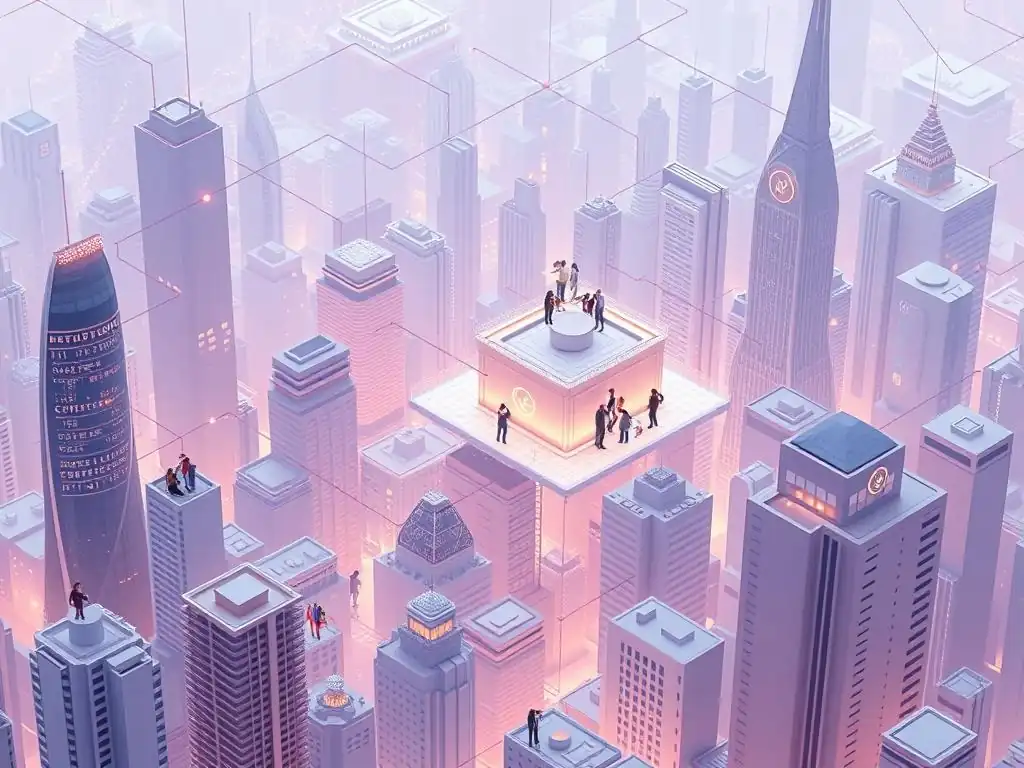
Ethereum: Smart Contracts and the Metaverse
Ethereum, a leading blockchain platform, has played a pivotal role in the development of the metaverse, particularly due to its robust smart contract capabilities and thriving ecosystem. Ethereum's smart contract functionality allows developers to build decentralized applications (dApps) with complex logic and automated execution, making it ideal for creating dynamic and interactive metaverse experiences. Consider the numerous metaverse projects built on Ethereum, leveraging smart contracts to manage virtual land ownership, facilitate NFT marketplaces, and implement decentralized governance mechanisms.
The Ethereum ecosystem has also fostered key standards for metaverse assets, most notably ERC-721 and ERC-1155, which are widely used for NFTs representing virtual land, avatars, and collectibles. These standards provide interoperability and ease of integration for metaverse projects building on Ethereum. Furthermore, Ethereum's strong community and established infrastructure make it a popular choice for developers entering the decentralized metaverse world building space. While Ethereum faces scalability challenges, ongoing developments like Ethereum 2.0 aim to address these limitations and further enhance its capabilities for supporting large-scale metaverse applications.
Solana: High-Performance Infrastructure for Immersive Experiences
Solana, a high-performance blockchain platform, is gaining traction in the metaverse space, particularly for applications demanding fast transaction speeds and low latency. Solana's innovative architecture enables significantly higher throughput and lower transaction costs compared to some other blockchains, making it well-suited for immersive metaverse experiences that require real-time interactions and frequent transactions. Imagine a metaverse game or virtual event with thousands of concurrent users, all interacting and transacting in real-time. Solana's infrastructure is designed to handle such demanding scenarios efficiently.
Several metaverse projects are leveraging Solana's capabilities to build graphically rich and interactive virtual worlds, focusing on gaming, virtual events, and social experiences. Solana's speed and scalability are particularly advantageous for metaverse applications that require seamless and responsive user experiences. While Solana's ecosystem is relatively newer compared to Ethereum's, its technological advantages are attracting developers and projects seeking high-performance infrastructure for decentralized metaverse world building.
Polygon: Scaling Solutions for Metaverse Applications
Polygon, a Layer-2 scaling solution for Ethereum, offers a practical approach to addressing scalability challenges for metaverse applications built on Ethereum. Polygon provides faster transaction speeds and lower gas fees compared to the Ethereum mainnet, while still benefiting from Ethereum's security and ecosystem. For metaverse projects aiming for mass adoption and high transaction volumes, Polygon provides a cost-effective and efficient scaling solution. Consider metaverse platforms that require numerous micro-transactions for in-world activities or asset trading. Polygon can significantly reduce transaction costs and improve user experience in such scenarios.
Many metaverse projects initially built on Ethereum are now utilizing Polygon for scaling their applications, migrating asset bridges and user interactions to the Polygon network to alleviate congestion and reduce fees on the Ethereum mainnet. Polygon's compatibility with Ethereum and its growing ecosystem make it a valuable tool for developers seeking to build scalable and user-friendly decentralized metaverse world building experiences. As the metaverse evolves and scales, Layer-2 solutions like Polygon will likely play an increasingly important role in enabling wider adoption and seamless user experiences.
The Benefits of a DLT-Powered Decentralized Metaverse
Enhanced User Empowerment and Control
A DLT-powered decentralized metaverse fundamentally shifts the balance of power from platform providers to users, leading to enhanced user empowerment and control. In traditional centralized virtual worlds, users are often subject to the rules and decisions of a single entity. In contrast, decentralized metaverse world building aims to create environments where users have greater agency over their digital lives, assets, and experiences. Imagine a metaverse where users truly own their digital identities, assets, and data, and have a voice in the governance of the virtual world.
This enhanced user empowerment stems from the core principles of DLT: decentralization, transparency, and immutability. Users in a DLT-powered metaverse can control their digital identities and data through self-sovereign identity systems. They have verifiable ownership of their digital assets through NFTs. They can participate in decentralized governance mechanisms, influencing the direction of the metaverse community. This shift towards user empowerment fosters a more equitable and user-centric metaverse, where individuals have greater control over their digital destinies.
Greater Transparency and Trust in Virtual Interactions
Transparency and trust are crucial for the long-term success and adoption of the metaverse. Traditional centralized virtual worlds often operate with limited transparency, making it difficult for users to verify the fairness and integrity of the platform. In contrast, a DLT-powered decentralized metaverse promotes greater transparency and trust in virtual interactions. Imagine a metaverse where all transactions, asset ownership records, and governance processes are transparently recorded on a public ledger.
DLT's inherent transparency, enabled by blockchain technology, provides users with verifiable records of transactions and asset ownership. Decentralized governance mechanisms ensure that community decisions are made transparently and accountably. This increased transparency builds trust among users, fostering a more reliable and secure metaverse environment. Users can have greater confidence in the fairness of virtual interactions and the integrity of the platform, contributing to a more trustworthy and sustainable decentralized metaverse world building ecosystem.
New Economic Opportunities for Creators and Participants
The decentralized nature of a DLT-powered metaverse unlocks new and significant economic opportunities for creators and participants. Traditional virtual worlds often limit economic participation, with platform providers capturing a significant portion of the value generated within the ecosystem. In contrast, decentralized metaverse world building aims to create more open and equitable economies, empowering creators and users to directly benefit from their contributions. Imagine a metaverse where creators can directly monetize their virtual creations without intermediaries, and users can earn rewards for their participation and engagement.
DLT-based cryptocurrencies and NFTs enable new economic models within the metaverse. Creators can directly sell their virtual assets as NFTs, retaining a larger share of the revenue. Play-to-earn models reward users for their participation and contributions to the metaverse ecosystem. Decentralized marketplaces facilitate peer-to-peer trading of virtual assets, empowering users to engage in economic activity without intermediaries. This expansion of economic opportunities fosters innovation, creativity, and participation in the metaverse, leading to a more vibrant and dynamic decentralized metaverse world building ecosystem.
Increased Interoperability Between Virtual Worlds
Interoperability, the ability to seamlessly move between different virtual worlds with digital identities and assets, is a key aspiration for the metaverse. Traditional virtual worlds are often siloed, limiting user mobility and asset transfer between platforms. In contrast, a DLT-powered decentralized metaverse has the potential to foster greater interoperability between virtual worlds. Imagine a metaverse where users can seamlessly travel between different virtual environments, carrying their avatars, digital assets, and social connections with them.
DLT and NFT standards can facilitate interoperability by providing common frameworks for digital asset ownership and identity management. By adopting open standards and protocols, different metaverse platforms can enable users to transfer their NFTs and digital identities across virtual worlds. This increased interoperability would create a more connected and unified metaverse experience, breaking down silos and enhancing user agency. While true interoperability is still evolving, decentralized metaverse world building, driven by DLT, offers a promising pathway towards a more interconnected and open metaverse future.
Challenges and Opportunities in DLT-Based Metaverse Development
Scalability Issues and Potential Solutions
Scalability remains a significant challenge for DLT-based metaverse development. Many existing blockchain platforms, particularly those used for decentralized applications, face limitations in transaction throughput and processing speed. For metaverse applications with large numbers of users and frequent interactions, scalability bottlenecks can lead to slow transaction times, high gas fees, and a degraded user experience. Imagine a massively multiplayer metaverse game struggling to handle a large influx of players due to blockchain scalability limitations.
However, numerous solutions are being actively developed to address scalability issues in DLT. Layer-2 scaling solutions, such as Polygon and Optimism for Ethereum, offer faster and cheaper transactions by processing transactions off-chain while still benefiting from the security of the main blockchain. Sharding, a technique to divide a blockchain into smaller, more manageable pieces, is being explored to increase throughput. Alternative consensus mechanisms, like Proof-of-Stake, can also improve scalability compared to Proof-of-Work. Continued innovation in DLT scalability is crucial for enabling the widespread adoption and seamless performance of decentralized metaverse world building.
Regulatory Uncertainty and Compliance Considerations
The regulatory landscape surrounding DLT and the metaverse is still evolving, creating uncertainty and compliance challenges for developers and projects. Governments and regulatory bodies worldwide are grappling with how to classify and regulate cryptocurrencies, NFTs, and decentralized platforms. This regulatory uncertainty can create challenges for metaverse projects in areas such as user data privacy, financial compliance, and intellectual property rights. Imagine a metaverse project facing legal challenges due to unclear or conflicting regulations regarding digital assets or user data.
Navigating regulatory uncertainty and ensuring compliance is crucial for the long-term sustainability of DLT-based metaverse development. Projects need to stay informed about evolving regulations in different jurisdictions and adopt best practices for compliance. Engaging with policymakers and industry bodies to contribute to the development of clear and appropriate regulations is also important. Addressing regulatory concerns proactively will help foster a more stable and predictable environment for decentralized metaverse world building and innovation.
Building User-Friendly Interfaces for DLT-Enabled Metaverse Applications
User experience is paramount for the mass adoption of the metaverse, and building user-friendly interfaces for DLT-enabled metaverse applications is a critical challenge. DLT technologies can be complex and unfamiliar to mainstream users, and interacting with decentralized applications often requires navigating concepts like crypto wallets, gas fees, and blockchain explorers. Imagine a metaverse application with a clunky and confusing user interface that requires users to have deep technical knowledge to participate.
Simplifying user interfaces and abstracting away the complexities of DLT is essential for making decentralized metaverse applications accessible to a wider audience. Developing intuitive user interfaces, seamless onboarding processes, and user-friendly wallet integrations are crucial steps. Educating users about the benefits of DLT and decentralized systems in a clear and accessible way is also important. Improving user experience and making DLT-enabled metaverse applications user-friendly will be key to driving mainstream adoption of decentralized metaverse world building.
Fostering Collaboration and Standardization Across DLT Platforms
The metaverse vision of interoperability and seamless experiences requires collaboration and standardization across different DLT platforms and metaverse projects. Currently, the DLT landscape is fragmented, with various platforms and projects often operating in silos. This lack of interoperability can hinder user mobility, asset transfer, and the overall cohesiveness of the metaverse. Imagine a metaverse where different platforms are incompatible, preventing users from moving their assets or identities between virtual worlds.
Fostering collaboration and standardization across DLT platforms is crucial for realizing the full potential of a decentralized metaverse. Developing open standards for NFTs, digital identities, and metaverse protocols can enable interoperability and seamless integration between different platforms. Encouraging collaboration between DLT projects, metaverse developers, and industry bodies can drive the development and adoption of these standards. Greater collaboration and standardization will pave the way for a more interconnected and user-friendly decentralized metaverse world building ecosystem.
Future Trends in DLT and Metaverse Integration
The Rise of Decentralized Autonomous Organizations (DAOs) in Virtual Worlds
Decentralized Autonomous Organizations (DAOs) are poised to play an increasingly significant role in the future of the metaverse, particularly in decentralized virtual worlds. DAOs offer a framework for community-led governance and decision-making, empowering metaverse users to collectively shape the direction of their virtual environments. Imagine a metaverse community governed by a DAO, where users vote on platform upgrades, resource allocation, and policy changes, ensuring a more democratic and participatory ecosystem.
The rise of DAOs in virtual worlds is driven by the desire for greater user ownership and control, as well as the potential for more transparent and efficient governance models. DAOs can manage virtual land ownership, treasury funds, and community development initiatives within the metaverse. As the metaverse matures, DAOs are likely to become increasingly prevalent, shaping the governance and evolution of decentralized metaverse world building and fostering more user-centric and community-driven virtual worlds.
Increased Adoption of NFTs for Digital Asset Ownership
Non-Fungible Tokens (NFTs) are expected to see continued and increased adoption as the standard for digital asset ownership in the metaverse. NFTs provide verifiable and unique ownership of virtual items, land, avatars, and other digital assets, enabling true digital property rights within virtual worlds. Imagine a metaverse where all digital assets are represented as NFTs, allowing users to seamlessly own, trade, and utilize their virtual possessions across different platforms.
The increased adoption of NFTs will drive the growth of metaverse economies and empower creators and users with greater control over their digital assets. NFTs are not limited to digital art and collectibles; they can represent a wide range of virtual assets and use cases within the metaverse. As the metaverse evolves, NFTs are likely to become even more integral to digital ownership and the foundation of decentralized metaverse world building.
The Evolution of Metaverse Governance Models
Metaverse governance models are expected to evolve beyond simple top-down or centralized approaches, moving towards more decentralized and community-driven models. The limitations of centralized governance in virtual worlds are becoming increasingly apparent, and the desire for greater user participation and democratic decision-making is growing. Imagine a metaverse where governance models are constantly evolving and adapting to the needs of the community, experimenting with new mechanisms for participation, voting, and dispute resolution.
The evolution of metaverse governance models will likely involve a combination of on-chain governance through DAOs and off-chain governance mechanisms, finding the right balance between efficiency and community participation. Experimentation with different governance models and continuous refinement will be crucial for creating sustainable and equitable metaverse ecosystems. The future of decentralized metaverse world building will be shaped by the ongoing evolution and refinement of its governance models.
The Impact of DLT on the Future of Digital Identity and Ownership
DLT is poised to have a profound impact on the future of digital identity and ownership, extending beyond the metaverse and influencing broader digital interactions. Decentralized identity solutions powered by DLT offer users greater control over their personal data and digital identities, moving away from centralized identity providers. Imagine a future where individuals control their digital identities and selectively share their data with different online services and platforms, enhancing privacy and security across the digital landscape.
Similarly, DLT and NFTs are transforming the concept of digital ownership, enabling verifiable and transferable ownership of digital assets across various online environments. This shift towards user-centric digital identity and ownership, driven by DLT, has the potential to reshape the future of the internet and empower individuals in the digital age. The impact of DLT on digital identity and ownership will extend far beyond decentralized metaverse world building, influencing the broader digital landscape and user empowerment.
Conclusion: Embracing Decentralization in the Metaverse with DLT
The Potential of Decentralized Metaverse World Building for the Future of Digital Experiences
Decentralized metaverse world building, powered by Distributed Ledger Technology, holds immense potential to revolutionize the future of digital experiences. By addressing the limitations of centralized virtual worlds, DLT paves the way for more user-centric, transparent, and equitable metaverse environments. Imagine a future where the metaverse is not controlled by corporations but owned and governed by its users, fostering a more open and democratic digital realm.
The potential of decentralized metaverse world building extends beyond gaming and entertainment, encompassing new possibilities for social interaction, commerce, education, and collaboration. DLT enables the creation of robust digital economies, user-owned digital assets, and community-driven governance models within the metaverse. Embracing decentralization in the metaverse is not just a technological advancement; it represents a fundamental shift towards a more empowering and user-centric digital future.
DLT as a Catalyst for Innovation and Empowerment in Virtual Worlds
DLT acts as a powerful catalyst for innovation and empowerment in virtual worlds. By providing the foundational infrastructure for decentralization, DLT unlocks new possibilities for metaverse development and user participation. Imagine a metaverse ecosystem fueled by innovation, where creators are empowered to build new experiences, users are incentivized to contribute, and communities collectively shape the direction of their virtual worlds.
DLT empowers creators by enabling them to monetize their virtual creations directly through NFTs and decentralized marketplaces. It empowers users by granting them true ownership of their digital assets and a voice in metaverse governance. This empowerment fosters a more dynamic and innovative metaverse ecosystem, driving the development of richer, more engaging, and ultimately more valuable virtual experiences. DLT is not just a technology; it is an enabler of innovation and user empowerment in decentralized metaverse world building.
The Importance of Responsible Development and Ethical Considerations
While the potential of decentralized metaverse world building is vast, responsible development and ethical considerations are paramount. As with any powerful technology, DLT and the metaverse can be used for both beneficial and detrimental purposes. Imagine a metaverse that prioritizes user well-being, inclusivity, and ethical conduct, fostering a positive and constructive digital environment.
Responsible development requires addressing potential risks and challenges, such as data privacy, security vulnerabilities, and the potential for misuse of decentralized technologies. Ethical considerations include ensuring inclusivity, accessibility, and fairness within the metaverse, as well as promoting responsible user behavior and mitigating potential harms. Prioritizing responsible development and ethical considerations is crucial for ensuring that decentralized metaverse world building leads to a positive and beneficial future for all users.
Frequently Asked Questions
What role does Distributed Ledger Technology (DLT) play in constructing a decentralized metaverse?
DLT, including blockchain, provides the foundational infrastructure for a decentralized metaverse by enabling secure and transparent ownership of digital assets and verifying transactions without a central authority. This fosters trust and user empowerment.
How can blockchain contribute to the decentralized metaverse world building experience?
Blockchain facilitates the creation and management of unique digital assets (NFTs) that represent virtual land, avatars, items, and experiences. This enables user-generated content and community-driven development within the decentralized metaverse.
What are the regulatory challenges associated with building a decentralized metaverse using blockchain?
Regulatory clarity remains a significant hurdle. Concerns exist around data privacy, intellectual property rights, and the potential for illegal activities within decentralized metaverse environments. International cooperation is needed.
Beyond cryptocurrencies, what other applications of blockchain are relevant to the future of the decentralized metaverse?
Decentralized finance (DeFi) can power in-world economies, while decentralized identity solutions can enhance user privacy and security. Supply chain management for virtual assets is also a promising application.
How does decentralization ensure a more equitable and accessible world building experience in the metaverse?
Decentralization empowers users with greater control over their data and virtual assets, reducing reliance on centralized platforms. This promotes a more democratic and inclusive world building environment within the metaverse.
Final Reflection: Embracing Decentralized Metaverse World Building
The journey through the potential of Distributed Ledger Technology (DLT) in shaping the Metaverse reveals a profound truth: the future of virtual worlds hinges on decentralization. No longer can we accept centralized control over our digital experiences; the promise of a truly immersive and empowering Metaverse lies in the hands of those building decentralized ecosystems. This shift is not just a technological advancement, but a fundamental reimagining of ownership, governance, and creativity within virtual spaces.
The impact of this decentralized vision extends far beyond mere gaming or entertainment. It's about creating equitable digital societies where users have agency and control over their data, assets, and identities. The potential for economic empowerment, artistic expression, and collaborative innovation within these decentralized Metaverse worlds is immense. The Metaverse is coming, and it will blur the lines between the physical and digital worlds even further. This will create new opportunities for people to work, play, and connect with each other.
- Mark Zuckerberg (with the caveat that decentralization is key to preventing corporate control).
As we stand on the cusp of this new era, let us not be passive observers. Let us actively participate in shaping the decentralized Metaverse, fostering communities built on trust, transparency, and shared ownership. Consider how you can contribute to this revolution – whether through building, creating, investing, or simply advocating for a more open and equitable digital future. The power to build the Metaverse we want lies within each of us. Let's use it wisely.
Unleash the Metaverse Architect Within!
Thank you for exploring the transformative role of Distributed Ledger Technology (DLT) in shaping the future of the Metaverse. You've gained valuable insights into how DLT is fostering decentralized, secure, and engaging virtual worlds. Now, it's time to translate that knowledge into action!
Here's how you can take your Metaverse journey further:
- Dive deep: Start experimenting with building a simple Metaverse component: using open-source DLT tools like Hyperledger Fabric or Corda. Don't just read about it – experience it!
- Share this article with your network on social media to spark conversations about the potential of DLT in the Metaverse. Let's build this future together!
- Attend or present at virtual reality or augmented reality conferences to discover the practical applications of DLT.
What groundbreaking DLT-powered experience will you bring to the Metaverse?
Leave a Reply