
Rollups: Optimizing Transaction Throughput in Blockchain Architecture


Welcome to Blockchain Trends, your go-to source for unraveling the transformative power of blockchain beyond the hype. Curious about how blockchain is evolving beyond cryptocurrencies? Dive into our latest article, where we explore the crucial role of Layer2 scaling solutions blockchain, specifically focusing on how rollups are revolutionizing transaction throughput. Discover how these innovative architectures are poised to unlock new possibilities for decentralized applications and reshape the future of blockchain. Ready to learn more?
- Introduction to Layer 2 Scaling Solutions for Blockchain
- What are Rollups? A Deep Dive into Layer 2 Blockchain Scaling
- Types of Rollups: Optimistic Rollups vs. Zero-Knowledge Rollups (ZK-Rollups)
- Rollup Architecture: Components and Functionality
- Benefits of Using Rollups for Blockchain Transaction Scaling
- Challenges and Limitations of Rollup Technology
- Real-World Applications of Rollups in the Blockchain Ecosystem
- The Future of Rollups: Roadmap and Development Trends
- Conclusion: Rollups as a Vital Component of Scalable Blockchain Architecture
-
Frequently Asked Questions
- What are Rollups and how do they relate to Layer2 scaling solutions blockchain?
- How do Rollups differ from other Layer2 scaling solutions blockchain approaches?
- What are the main types of Rollups and what are their key characteristics?
- What are the potential benefits of using Rollups for Layer2 scaling solutions blockchain?
- What are some of the challenges and limitations associated with implementing Rollups as Layer2 scaling solutions blockchain?
- Final Reflection: Scaling the Future of Trust
- Unlock the Potential: Become a Rollup Pioneer!
Introduction to Layer 2 Scaling Solutions for Blockchain
The Blockchain Scalability Problem: Bottlenecks in Transaction Throughput
Blockchain technology, since its inception with Bitcoin, has promised decentralization, security, and transparency. However, a fundamental challenge hindering its widespread adoption is scalability. Traditional blockchain architectures, particularly Layer 1 blockchains like Bitcoin and Ethereum, face limitations in transaction throughput.
For instance, Bitcoin can process approximately 7 transactions per second (TPS), while Ethereum, before its transition to Proof-of-Stake, hovered around 15-25 TPS. These figures pale in comparison to centralized payment processors like Visa, which can handle thousands of TPS, often exceeding 24,000 TPS at peak times. This disparity creates significant bottlenecks, especially as demand for blockchain applications grows, leading to network congestion and increased transaction fees.
This scalability bottleneck directly impacts user experience and the feasibility of various blockchain applications. During periods of high network activity, such as during popular NFT drops or DeFi surges, transaction fees on Layer 1 blockchains can skyrocket. In May 2021, during a peak in NFT trading, Ethereum gas fees reached exorbitant levels, sometimes costing hundreds of dollars for a simple transaction.
This makes using blockchain networks expensive and inefficient for everyday transactions and smaller-scale applications, effectively limiting the potential for mass adoption and hindering the growth of decentralized ecosystems. The need for efficient Layer2 scaling solutions blockchain becomes increasingly apparent to overcome these limitations.
Addressing Blockchain Congestion with Layer 2 Solutions
To overcome the inherent scalability limitations of Layer 1 blockchains, the blockchain community has developed various Layer 2 scaling solutions. These solutions aim to increase transaction throughput and reduce fees without compromising the security and decentralization of the underlying Layer 1 blockchain. Layer 2 solutions essentially operate "on top" of the main blockchain, handling transactions off-chain and only interacting with the Layer 1 for crucial operations like dispute resolution or data anchoring. This offloading of transaction processing significantly reduces the burden on the main chain, allowing for faster and cheaper transactions.
The landscape of Layer 2 scaling solutions blockchain is diverse, encompassing different approaches like state channels, sidechains, Plasma, and rollups. Each approach offers a unique trade-off between scalability, security, and complexity. State channels, for example, allow for direct, off-chain interaction between participants for a series of transactions, only settling the final state on the main chain.
Sidechains are independent blockchains that run parallel to the main chain and are connected via a two-way bridge. Plasma is a more complex framework that uses child chains to offload computation and data storage. Among these, rollups have emerged as a particularly promising and actively developed Layer 2 scaling solution, offering a compelling balance of scalability and security.
Understanding Rollups as a Key Layer 2 Scaling Mechanism
Rollups represent a category of Layer 2 scaling solutions blockchain that have gained significant traction due to their ability to significantly increase transaction throughput while inheriting the security of the underlying Layer 1 blockchain. The core principle behind rollups is to execute transactions off-chain but post transaction data on-chain. This approach allows rollups to process a large volume of transactions efficiently, as computation is moved away from the congested Layer 1. By posting transaction data on-chain, rollups ensure data availability and allow for the verification of transaction validity, maintaining a high level of security.
Rollups are considered a crucial part of the Layer2 scaling solutions blockchain ecosystem because they offer a pathway to achieve scalability without sacrificing the fundamental security and decentralization principles of blockchain technology. Unlike some other Layer 2 solutions that might introduce their own security assumptions, rollups inherit the security of the Layer 1 blockchain they are built upon.
This characteristic is particularly attractive for applications that require a high degree of security, such as DeFi platforms and enterprise blockchain solutions. As the blockchain space continues to evolve, rollups are poised to play a pivotal role in enabling the mass adoption of decentralized technologies by addressing the critical scalability challenge.
What are Rollups? A Deep Dive into Layer 2 Blockchain Scaling
Defining Rollups: Off-Chain Computation, On-Chain Data
Rollups, at their core, are Layer 2 scaling solutions blockchain that enhance transaction throughput by performing transaction execution outside the main Layer 1 blockchain (off-chain) while ensuring transaction data and state roots are recorded on the Layer 1 (on-chain). This separation of computation and data posting is the defining feature of rollups. By performing computation off-chain, rollups significantly reduce the computational burden on the Layer 1, which is often the primary source of scalability bottlenecks. Instead of every node in the Layer 1 network needing to execute every transaction, only a specialized rollup node (or sequencer) performs the computation.
The crucial aspect of rollups is that transaction data, including details of transactions and the resulting state changes, is posted back to the Layer 1 blockchain in batches, hence the term "rollup." This on-chain data posting ensures that the transaction history and the current state of the rollup are publicly verifiable and auditable on the Layer 1. This data availability is paramount for security, as it allows anyone to reconstruct the rollup state and verify the validity of transactions.
This design distinguishes rollups from other off-chain computation models where data might not be readily available on the main chain, potentially introducing security vulnerabilities. Therefore, rollups offer a robust approach to Layer2 scaling solutions blockchain, balancing scalability with strong security guarantees.
Key Characteristics of Rollup Technology: Data Availability and Execution
Two key characteristics define rollup technology and contribute to its effectiveness as a Layer2 scaling solutions blockchain: data availability and execution type. Data availability refers to the guarantee that transaction data posted by the rollup is accessible to anyone who needs it, particularly for verifying the rollup's state and detecting fraud. Rollups achieve data availability by posting compressed transaction data to the Layer 1 blockchain as calldata.
Calldata is a cheaper form of on-chain data storage compared to storage used for smart contract state, making it cost-effective to post large amounts of transaction data. This on-chain data availability is crucial for maintaining security and trust in the rollup system.
The execution type in rollups refers to how transaction validity is enforced. There are two primary types of rollups based on their execution and validity mechanisms: Optimistic Rollups and Zero-Knowledge Rollups (ZK-Rollups). Optimistic Rollups operate under the assumption that transactions are valid unless proven otherwise.
They employ fraud proofs to challenge invalid transactions. In contrast, ZK-Rollups use validity proofs, specifically zero-knowledge proofs, to cryptographically prove the validity of each batch of transactions before they are accepted on the Layer 1. These different approaches to execution and validity proofs define the distinct characteristics, advantages, and disadvantages of Optimistic and ZK-Rollups as Layer2 scaling solutions blockchain.
Rollups vs. Other Layer 2 Scaling Approaches: Sidechains, Validium, Plasma
When considering Layer2 scaling solutions blockchain, it's important to differentiate rollups from other approaches like sidechains, Validium, and Plasma. Sidechains are independent blockchains that run parallel to the main chain and are connected via bridges. While sidechains can offer significant scalability, they often have their own consensus mechanisms and security assumptions, which may be weaker than the Layer 1 blockchain. Validium is similar to ZK-Rollups in using validity proofs but differs in data availability. Validium typically keeps data off-chain, relying on a data availability committee, which introduces different trust assumptions compared to rollups that post data on-chain.
Plasma, an earlier Layer 2 scaling solution, utilizes child chains with fraud proofs similar to Optimistic Rollups, but Plasma has faced challenges related to data availability and complexity in handling general-purpose computation. Compared to sidechains, Validium, and Plasma, rollups offer a more robust security model by inheriting the security of the Layer 1 blockchain through on-chain data availability.
Both Optimistic and ZK-Rollups, as Layer2 scaling solutions blockchain, benefit from the established security and decentralization of the underlying Layer 1, making them a preferred choice for many applications seeking scalability without compromising security. The trade-offs between these different Layer 2 approaches often revolve around security assumptions, data availability guarantees, and the complexity of implementation.
Types of Rollups: Optimistic Rollups vs. Zero-Knowledge Rollups (ZK-Rollups)
Optimistic Rollups: Fraud Proofs and Delayed Finality
Optimistic Rollups represent one of the two primary types of rollups within Layer2 scaling solutions blockchain. They are termed "optimistic" because they optimistically assume that all transactions submitted to the rollup are valid. Instead of proactively proving the validity of each transaction, Optimistic Rollups rely on a fraud-proof mechanism to ensure correctness. This approach simplifies the rollup's operation, as it avoids the computationally intensive process of generating validity proofs for every transaction batch. However, this optimistic approach introduces a delay in transaction finality.
The security of Optimistic Rollups hinges on the possibility of anyone challenging (or "proving fraud") a transaction within a specific timeframe, typically a week. During this challenge period, the rollup state is considered provisional. If a fraudulent transaction is included in a batch, any participant can submit a fraud proof to the Layer 1 blockchain.
Upon successful verification of the fraud proof by the Layer 1 smart contract, the fraudulent transaction and subsequent transactions in the batch are reverted, and the rollup state is corrected. This fraud-proof mechanism ensures that, despite the optimistic assumption, the rollup remains secure, inheriting the security of the underlying Layer 1. This inherent delay to accommodate potential fraud proofs is a key characteristic of Optimistic Rollups as Layer2 scaling solutions blockchain.
How Optimistic Rollups Work: A Step-by-Step Explanation
The operation of Optimistic Rollups, a prominent Layer2 scaling solutions blockchain, can be broken down into a step-by-step process. First, users submit transactions to the Optimistic Rollup sequencer. The sequencer is responsible for aggregating transactions into batches and submitting these batches, along with the resulting state root, to the Layer 1 blockchain. Crucially, the sequencer does not submit validity proofs with these batches, operating under the "optimistic" assumption of validity.
Next, after a batch is submitted to Layer 1, a challenge period begins, typically lasting around 7 days. During this period, anyone monitoring the rollup can examine the transaction data posted on Layer 1 and compute the resulting state. If a participant detects a fraudulent transaction within a batch, they can submit a fraud proof to the Layer 1 rollup contract.
This fraud proof demonstrates how the sequencer made an incorrect state transition. Upon verification of the fraud proof by the Layer 1 contract, the fraudulent batch and any subsequent batches built upon it are reverted. The rollup then rolls back to the last valid state, and the sequencer might face penalties for submitting an invalid batch.
Finally, if no fraud proof is submitted within the challenge period, the batch is considered finalized on Layer 1, and the state transition is deemed valid. This fraud-proof mechanism ensures the security and correctness of Optimistic Rollups as Layer2 scaling solutions blockchain, albeit with a delayed finality.
Advantages and Disadvantages of Optimistic Rollups
Optimistic Rollups, as a Layer2 scaling solutions blockchain, offer several advantages. Primarily, they are relatively simpler to implement compared to ZK-Rollups, especially for general-purpose computation. This simpler design often translates to faster development cycles and easier integration with existing Ethereum Virtual Machine (EVM) compatible applications. Optimistic Rollups also benefit from lower computational overhead, as they avoid the complex cryptographic computations required for validity proofs in ZK-Rollups. This can result in lower gas costs for users in typical usage scenarios, as less computation is needed on both the rollup and the Layer 1.
However, Optimistic Rollups also have disadvantages. The most notable is the delayed finality of transactions due to the challenge period. This delay, typically around 7 days, can be a significant drawback for applications requiring fast finality, such as high-frequency trading or certain payment scenarios. During this challenge period, withdrawing funds from the rollup back to Layer 1 also incurs the same delay.
Furthermore, while computationally less intensive than ZK-Rollups in normal operation, Optimistic Rollups become computationally intensive during fraud proofs. Executing fraud proofs on Layer 1 can consume significant gas, potentially leading to higher costs during dispute resolution. Despite these limitations, Optimistic Rollups remain a valuable Layer2 scaling solutions blockchain, particularly for applications where moderate finality delays are acceptable in exchange for lower operational complexity and potentially lower transaction fees in typical use.
Zero-Knowledge Rollups (ZK-Rollups): Validity Proofs and Instant Finality
Zero-Knowledge Rollups (ZK-Rollups) represent the second major category of rollups within Layer2 scaling solutions blockchain. Unlike Optimistic Rollups, ZK-Rollups utilize validity proofs, specifically zero-knowledge succinct non-interactive arguments of knowledge (zk-SNARKs) or zero-knowledge succinct transparent arguments of knowledge (zk-STARKs), to prove the validity of each batch of transactions. These cryptographic proofs are generated by the rollup sequencer and submitted to the Layer 1 blockchain along with the transaction batch and the state root. The Layer 1 rollup contract then verifies these validity proofs to ensure that the state transition is correct and that all transactions in the batch are valid.
The use of validity proofs in ZK-Rollups provides a significant advantage: instant finality. Once a validity proof is verified by the Layer 1 contract, the transactions in the batch are considered finalized on Layer 1 immediately. There is no challenge period like in Optimistic Rollups. This instant finality is crucial for applications requiring fast and deterministic transaction confirmation. Furthermore, ZK-Rollups inherit strong security from the underlying Layer 1, as the validity proofs are mathematically sound and cryptographically enforced. This combination of instant finality and strong security makes ZK-Rollups a highly desirable, albeit more complex, Layer2 scaling solutions blockchain.
How ZK-Rollups Work: Leveraging Cryptographic Proofs
ZK-Rollups, as a leading Layer2 scaling solutions blockchain, operate by leveraging advanced cryptographic techniques to ensure transaction validity and achieve instant finality. The core of ZK-Rollup operation lies in the generation and verification of validity proofs.
When a sequencer in a ZK-Rollup aggregates a batch of transactions, it not only executes these transactions and updates the rollup state, but it also generates a cryptographic validity proof for this batch. This proof, typically a zk-SNARK or zk-STARK, mathematically demonstrates that the state transition resulting from the batch of transactions is correct and that all transactions within the batch adhere to the rollup's rules.
This validity proof, along with the transaction batch data and the new state root, is then submitted to the Layer 1 blockchain. The Layer 1 rollup contract contains a verifier smart contract that is specifically designed to efficiently verify the submitted validity proof. The verification process is computationally less intensive than generating the proof.
If the validity proof is successfully verified by the Layer 1 contract, it cryptographically confirms that the batch of transactions is valid and the state transition is legitimate. Consequently, the Layer 1 contract accepts the new state root, and the transactions in the batch are considered instantly finalized on the Layer 1. This cryptographic approach provides the strong security and instant finality that characterize ZK-Rollups as a powerful Layer2 scaling solutions blockchain.
Advantages and Disadvantages of ZK-Rollups: Security vs. Computational Cost
ZK-Rollups, a premier Layer2 scaling solutions blockchain, boast significant advantages, primarily centered around security and speed. The most prominent advantage is instant finality. Transactions in ZK-Rollups achieve finality on Layer 1 as soon as the validity proof is verified, eliminating the delays associated with Optimistic Rollups. This instant finality is crucial for applications requiring fast transaction confirmations and withdrawals. Furthermore, ZK-Rollups offer strong security guarantees, inheriting the cryptographic security of the underlying Layer 1 blockchain. The validity proofs provide mathematical certainty about transaction correctness, eliminating the reliance on challenge periods and potential social consensus mechanisms.
However, ZK-Rollups also come with disadvantages. The primary drawback is the high computational cost associated with generating validity proofs. Generating zk-SNARKs or zk-STARKs is a complex and resource-intensive process, requiring specialized hardware and expertise. This computational overhead can translate to higher gas costs for users, particularly for complex transactions.
Furthermore, ZK-Rollup technology is generally more complex to implement than Optimistic Rollups, especially for general-purpose computation. Developing and auditing the cryptographic circuits required for validity proofs is a challenging and time-consuming task. Despite these challenges, the security and instant finality offered by ZK-Rollups make them a highly attractive Layer2 scaling solutions blockchain, particularly for applications where these features are paramount, such as DeFi and enterprise applications.
Rollup Architecture: Components and Functionality
The Rollup Contract: Managing State and Verifying Proofs
The Rollup Contract is a crucial smart contract deployed on the Layer 1 blockchain that serves as the central component of any Layer2 scaling solutions blockchain based on rollups. This contract is responsible for managing the rollup's state, verifying submitted proofs (either fraud proofs in Optimistic Rollups or validity proofs in ZK-Rollups), and processing withdrawals from the rollup back to Layer 1. The Rollup Contract acts as the bridge between the Layer 2 rollup and the security and consensus of the Layer 1 blockchain.
In Optimistic Rollups, the Rollup Contract stores the state root of the rollup and the transaction batches submitted by the sequencer. It also implements the logic for verifying fraud proofs submitted during the challenge period. Upon successful verification of a fraud proof, the contract reverts the state to the last valid state.
In ZK-Rollups, the Rollup Contract stores the state root and transaction batches, and, more importantly, it contains the verifier logic for validating the zk-SNARK or zk-STARK validity proofs. If a validity proof is successfully verified, the contract updates the state root to reflect the new state.
In both types of rollups, the Rollup Contract also manages the withdrawal of funds from the rollup back to Layer 1, ensuring secure and verifiable asset transfers. The security and correctness of the Rollup Contract are paramount, as it is the ultimate arbiter of the rollup's state and security within the Layer2 scaling solutions blockchain ecosystem.
Sequencers: Aggregating and Ordering Transactions
Sequencers play a vital role in the architecture of Layer2 scaling solutions blockchain, specifically in rollups. The sequencer is responsible for receiving transactions from users, aggregating them into batches, ordering these transactions, and submitting these batches to the Layer 1 Rollup Contract. In essence, the sequencer acts as the transaction processor and batch builder for the rollup. The efficiency and reliability of the sequencer directly impact the performance and user experience of the rollup.
In most rollup designs, there is typically a single, centralized sequencer, at least initially. This centralized sequencer model simplifies the design and allows for faster transaction processing and lower latency. However, centralization introduces a potential point of failure and censorship risk.
To address this, ongoing research and development are focused on decentralizing sequencers, exploring solutions like decentralized sequencer networks or sequencer auctions. Regardless of the centralization model, the sequencer's core functions remain the same: efficiently collecting, ordering, and batching transactions for submission to the Layer 1, contributing significantly to the scalability gains offered by rollups as Layer2 scaling solutions blockchain.
Provers: Generating Validity or Fraud Proofs
Provers are a critical component in Layer2 scaling solutions blockchain, specifically in the context of rollups, responsible for generating the cryptographic proofs that underpin the security and validity of the rollup. The role of the prover differs significantly between Optimistic Rollups and ZK-Rollups, reflecting their distinct approaches to transaction validation.
In Optimistic Rollups, provers (often referred to as "watchtowers" or "challengers") are entities that monitor the rollup transaction data posted on Layer 1. If a prover detects a fraudulent transaction within a batch, it generates a fraud proof demonstrating the incorrect state transition. This fraud proof is then submitted to the Layer 1 Rollup Contract for verification.
In ZK-Rollups, the prover (usually the sequencer itself or a specialized proving service) is responsible for generating validity proofs (zk-SNARKs or zk-STARKs) for each batch of transactions. These validity proofs cryptographically demonstrate the correctness of the state transition and are submitted to the Layer 1 Rollup Contract along with the transaction batch. The efficiency and reliability of provers, particularly in ZK-Rollups where proof generation is computationally intensive, are crucial for the overall performance and security of rollups as Layer2 scaling solutions blockchain.
Data Availability Layer: Ensuring Data Integrity
The Data Availability (DA) Layer is a fundamental, though often implicitly understood, component of Layer2 scaling solutions blockchain, especially for rollups. Data availability refers to the guarantee that transaction data, posted by the rollup to the Layer 1, is accessible and retrievable by anyone who needs it, for as long as needed. This data availability is paramount for the security and verifiability of rollups, as it allows participants to reconstruct the rollup state, verify transaction validity, and submit fraud proofs (in Optimistic Rollups) if necessary.
Rollups primarily achieve data availability by posting compressed transaction data to the Layer 1 blockchain itself, typically as calldata. Calldata is a relatively cheaper form of on-chain data storage, making it economically feasible to post large amounts of transaction data. This on-chain data availability ensures that even if the rollup sequencer or other off-chain components become unavailable or malicious, the transaction history and rollup state can always be reconstructed and verified from the data stored on the secure Layer 1 blockchain.
Maintaining robust data availability is a cornerstone of rollup security and a key differentiator for rollups compared to other Layer 2 approaches that might rely on off-chain data availability solutions with different trust assumptions. This commitment to on-chain data availability is central to the security model of rollups as Layer2 scaling solutions blockchain.
Benefits of Using Rollups for Blockchain Transaction Scaling
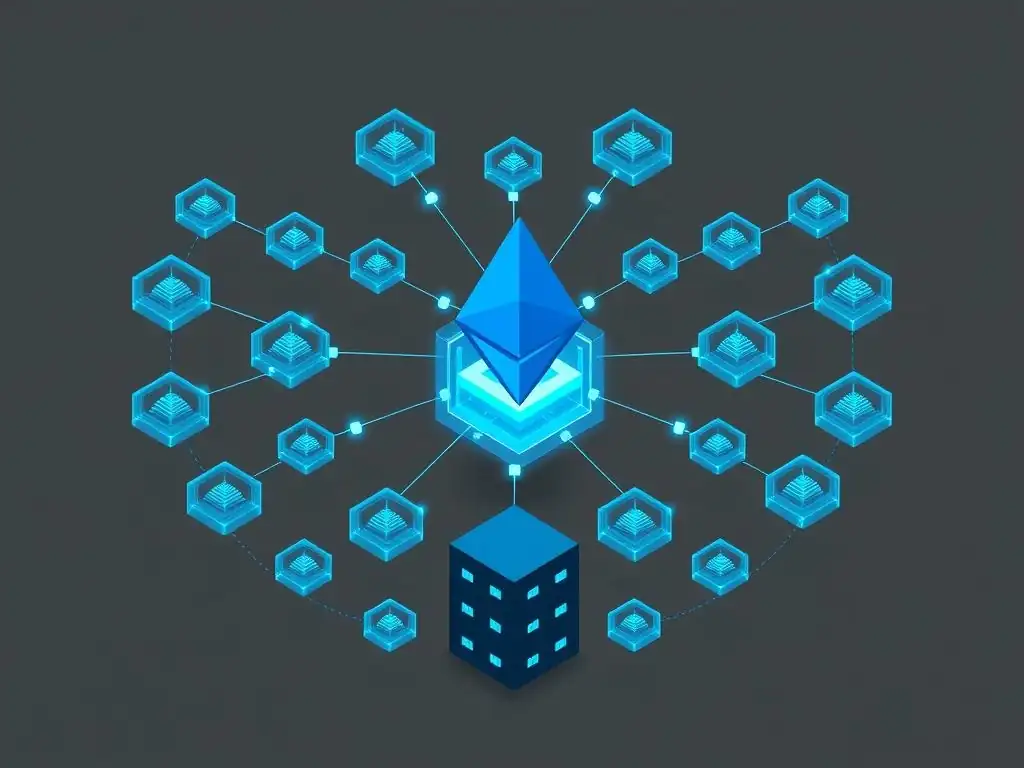
Increased Transaction Throughput: Achieving Higher TPS (Transactions Per Second)
One of the primary benefits of utilizing rollups as Layer2 scaling solutions blockchain is the significant increase in transaction throughput they enable. By moving transaction computation off-chain and batching transactions before submitting them to the Layer 1, rollups can dramatically increase the number of transactions processed per second (TPS).
For example, Optimistic Rollups like Arbitrum and Optimism have demonstrated the ability to increase Ethereum's transaction throughput by orders of magnitude, potentially reaching thousands of TPS compared to Ethereum's pre-merge capacity of around 15-25 TPS. Similarly, ZK-Rollups, while often facing higher computational overhead for proof generation, also achieve substantial TPS improvements over Layer 1.
This increased transaction throughput directly addresses the blockchain scalability problem and allows blockchain networks to handle a much larger volume of transactions. This scalability is crucial for supporting mass adoption of decentralized applications, enabling use cases that require high transaction volumes, such as high-frequency trading in DeFi, high-volume NFT marketplaces, and blockchain-based gaming. The ability of rollups to significantly boost TPS is a key factor driving their adoption as effective Layer2 scaling solutions blockchain.
Reduced Transaction Fees: Lowering Gas Costs for Users
Another significant advantage of rollups as Layer2 scaling solutions blockchain is the substantial reduction in transaction fees, often referred to as gas costs on networks like Ethereum. By processing transactions off-chain and batching multiple transactions into a single on-chain transaction, rollups amortize the Layer 1 gas costs across many user transactions. Instead of each individual transaction incurring the full Layer 1 gas cost, users on rollups share the cost of submitting the batched transaction data and proofs to the Layer 1.
This fee reduction can be dramatic. Transactions on rollups can often be significantly cheaper, sometimes by a factor of 10 to 100 or more, compared to equivalent transactions directly on Layer 1. For example, during periods of high network congestion on Ethereum, a simple token swap on a decentralized exchange (DEX) might cost tens or even hundreds of dollars in gas fees.
The same transaction performed on a DEX built on a rollup could cost just a few cents or even fractions of a cent. This drastic reduction in transaction fees makes blockchain technology more accessible and affordable for everyday users and enables new use cases that were previously economically infeasible due to high gas costs. Lower gas fees are a major driver behind the growing popularity of rollups as Layer2 scaling solutions blockchain.
Enhanced Scalability: Supporting a Larger Number of Users and Applications
The combined benefits of increased transaction throughput and reduced transaction fees offered by rollups as Layer2 scaling solutions blockchain directly translate to enhanced scalability. Scalability, in this context, refers to the ability of a blockchain network to support a larger number of users and applications without experiencing performance degradation or prohibitive costs. Rollups enable blockchain networks to scale to accommodate a significantly larger user base and a wider range of applications compared to relying solely on Layer 1 scaling.
By increasing TPS and reducing fees, rollups make blockchain technology viable for applications that require high transaction volumes and low costs, such as social media platforms, micropayments, and mass-market gaming. Furthermore, enhanced scalability facilitates the growth of existing decentralized ecosystems, such as DeFi and NFTs, by removing transaction bottlenecks and making these applications more user-friendly and accessible. Rollups are crucial for realizing the vision of a truly scalable and globally accessible blockchain infrastructure, capable of supporting the demands of a growing decentralized web. This enhanced scalability makes rollups a cornerstone of Layer2 scaling solutions blockchain.
Improved User Experience: Faster Transaction Confirmation Times
In addition to increased throughput, reduced fees, and enhanced scalability, rollups also contribute to an improved user experience by offering faster transaction confirmation times compared to Layer 1 blockchains during periods of congestion. While Optimistic Rollups have a delayed finality due to the challenge period, transaction confirmation times within the rollup itself are typically much faster than on a congested Layer 1. Users often experience near-instant confirmation that their transaction has been included in a rollup batch.
ZK-Rollups, with their instant finality, offer even faster confirmation times, as transactions are considered finalized on Layer 1 as soon as the validity proof is verified. This faster confirmation time translates to a smoother and more responsive user experience, particularly for applications that require quick feedback, such as decentralized exchanges and games. Users are less likely to experience long delays waiting for transactions to be processed, which is a common frustration on congested Layer 1 networks. This improved user experience is a significant factor in driving the adoption of rollups as user-friendly Layer2 scaling solutions blockchain.
Challenges and Limitations of Rollup Technology
Data Availability Concerns: Ensuring Data Integrity and Accessibility
While rollups significantly enhance scalability, they also introduce certain challenges and limitations. One prominent concern is data availability (DA). While rollups post transaction data on-chain to ensure DA, the cost and efficiency of this on-chain DA remain areas of ongoing research and development. As rollup transaction throughput increases, the volume of data posted on-chain also grows, potentially increasing Layer 1 gas costs and impacting overall efficiency. Ensuring that this data is readily and efficiently accessible to all participants, especially in the long term, is crucial for maintaining rollup security and verifiability.
Alternative DA solutions, such as Validium, which keeps data off-chain with a data availability committee, offer different trade-offs but introduce different trust assumptions compared to on-chain DA. Research into more efficient on-chain DA techniques, such as data sharding or specialized DA layers, is crucial for addressing this challenge and further optimizing rollups as Layer2 scaling solutions blockchain. Balancing the need for robust data availability with cost-effectiveness and scalability remains a key area of focus in rollup development.
Complexity of Implementation: Development and Integration Challenges
Another challenge associated with rollups as Layer2 scaling solutions blockchain is the complexity of their implementation and integration. Developing and deploying rollups requires significant technical expertise in areas such as cryptography, distributed systems, and smart contract development. Building robust and secure rollup infrastructure, including sequencers, provers, and rollup contracts, is a complex undertaking. ZK-Rollups, in particular, are notoriously complex to implement due to the intricate cryptographic engineering required for validity proof generation and verification.
Integrating existing decentralized applications with rollups also presents challenges. While Optimistic Rollups are often designed to be EVM-compatible, allowing for relatively easier migration of Ethereum-based applications, integration still requires careful planning and development effort. Ensuring seamless interoperability between rollups and Layer 1, as well as among different rollups, is an ongoing area of development. Simplifying rollup development and integration processes, through improved tooling, standardized interfaces, and more user-friendly development frameworks, is crucial for wider adoption of rollups as Layer2 scaling solutions blockchain.
Security Considerations: Potential Vulnerabilities and Attack Vectors
While rollups inherit security from the Layer 1 blockchain, they are not immune to security considerations and potential vulnerabilities. Optimistic Rollups rely on fraud proofs and challenge periods, which introduce potential attack vectors. For example, a "griefing attack" could involve submitting numerous frivolous fraud proofs to disrupt the rollup and consume Layer 1 gas. ZK-Rollups, while offering stronger security through validity proofs, also face security considerations related to the cryptographic assumptions underlying the proof systems and the potential for vulnerabilities in the complex proving and verifying circuits.
Furthermore, the centralized sequencer in many current rollup implementations introduces a point of vulnerability. A malicious or compromised sequencer could potentially censor transactions or even attempt to manipulate the rollup state. Decentralizing sequencers and implementing robust security measures for all rollup components are crucial for mitigating these risks and ensuring the long-term security of rollups as Layer2 scaling solutions blockchain. Ongoing security audits, rigorous testing, and community scrutiny are essential for identifying and addressing potential vulnerabilities.
Censorship Resistance: Ensuring Unbiased Transaction Inclusion
Censorship resistance is a critical consideration for any decentralized system, including Layer2 scaling solutions blockchain like rollups. In many current rollup implementations, the sequencer, often being a centralized entity, has the power to decide which transactions to include in a batch and in what order. This centralization introduces the potential for censorship, where the sequencer could refuse to process certain transactions or prioritize others based on arbitrary criteria.
While rollups inherit the censorship resistance of the underlying Layer 1 blockchain to some extent (as users can always theoretically submit transactions directly to Layer 1), censorship at the rollup level can still significantly degrade user experience and undermine the principles of decentralization. Developing decentralized sequencer solutions and implementing mechanisms to ensure fair and unbiased transaction inclusion are crucial for enhancing the censorship resistance of rollups.
Exploring solutions like decentralized sequencer networks, proposer-builder separation, and enforced transaction inclusion mechanisms is vital for ensuring that rollups truly embody the principles of open and permissionless access that are fundamental to blockchain technology and Layer2 scaling solutions blockchain.
Real-World Applications of Rollups in the Blockchain Ecosystem
Rollups in Decentralized Finance (DeFi): Scaling DEXs and Lending Platforms
Rollups are proving to be instrumental in scaling Decentralized Finance (DeFi) applications, particularly Decentralized Exchanges (DEXs) and lending platforms, which often require high transaction throughput and low fees. DEXs built on rollups, such as those based on Optimistic Rollups like Arbitrum and Optimism, and ZK-Rollups like zkSync and StarkNet, offer significantly faster transaction speeds and lower gas costs compared to DEXs operating directly on Layer 1 blockchains like Ethereum. This improved performance makes DeFi more accessible to a wider range of users and enables more complex and high-frequency trading strategies.
Lending platforms also benefit from rollups by offering lower transaction fees for borrowing, lending, and managing collateral. The reduced gas costs on rollups make smaller-sized DeFi transactions economically viable, opening up DeFi to users with smaller capital amounts. The scalability provided by rollups is crucial for DeFi to reach its full potential and become a mainstream alternative to traditional financial systems. The adoption of rollups as Layer2 scaling solutions blockchain is a key enabler for the continued growth and evolution of the DeFi ecosystem.
Rollups for Non-Fungible Tokens (NFTs): Enabling High-Volume NFT Trading
Non-Fungible Tokens (NFTs), particularly in areas like digital art, collectibles, and gaming, often require high transaction volumes, especially during popular NFT drops or in-game marketplaces. Layer 1 blockchains, with their limited transaction throughput and high gas fees, can become congested and expensive during periods of high NFT activity, hindering the NFT trading experience. Rollups offer a viable solution to scale NFT platforms and marketplaces, enabling high-volume NFT trading with significantly lower transaction fees.
NFT marketplaces built on rollups can support a much larger number of NFT transactions per second, reducing gas costs for minting, buying, selling, and transferring NFTs. This makes NFT trading more affordable and accessible to a wider audience, fostering the growth of the NFT ecosystem. Several NFT projects and marketplaces are already leveraging rollups as Layer2 scaling solutions blockchain to enhance scalability and improve user experience. Rollups are crucial for enabling the mass adoption of NFTs and supporting the development of more complex and interactive NFT-based applications.
Rollups for Gaming: Enhancing Performance and Reducing Costs
Blockchain gaming is another area where rollups are demonstrating significant potential as Layer2 scaling solutions blockchain. Many blockchain games require high transaction throughput, low latency, and minimal transaction fees to provide a smooth and engaging gaming experience. Traditional Layer 1 blockchains often fall short in meeting these requirements, leading to slow gameplay, high transaction costs for in-game actions, and a suboptimal user experience.
Rollups can significantly enhance the performance of blockchain games by enabling faster in-game transactions, reducing gas fees for in-game asset trading and actions, and improving overall responsiveness. Games built on rollups can support a larger number of players and more complex in-game economies without experiencing network congestion or prohibitive costs. The scalability and cost-effectiveness offered by rollups are essential for the widespread adoption of blockchain gaming and the development of more immersive and engaging blockchain-based gaming experiences. As blockchain gaming evolves, rollups are expected to play an increasingly important role as a foundational Layer2 scaling solutions blockchain.
Rollups for Payments: Enabling Faster and Cheaper Transactions
Rollups are also highly applicable to payment systems, particularly for enabling faster and cheaper blockchain-based payments. Traditional payment systems often rely on centralized intermediaries and can incur significant transaction fees, especially for cross-border payments. Layer 1 blockchains, while offering decentralization and transparency, can be slow and expensive for everyday payment transactions due to scalability limitations.
Rollups can provide a Layer2 scaling solutions blockchain that enables faster and cheaper payments, making blockchain technology more competitive with traditional payment rails. Rollups can process a high volume of payment transactions with significantly lower fees compared to Layer 1, facilitating micropayments, cross-border remittances, and other payment use cases. The speed and cost-effectiveness of rollups make them a compelling technology for building more efficient and accessible payment systems on blockchain, potentially disrupting traditional payment infrastructures.
The Future of Rollups: Roadmap and Development Trends
Advancements in Rollup Technology: Exploring New Innovations
The field of rollup technology is rapidly evolving, with ongoing research and development focused on further enhancing their performance, security, and usability as Layer2 scaling solutions blockchain. Advancements in cryptography, such as improved zk-SNARK and zk-STARK proving systems, are leading to faster proof generation and verification in ZK-Rollups, reducing computational overhead and potentially lowering gas costs. Research into more efficient data availability solutions, including data sharding and specialized DA layers, aims to further optimize rollup efficiency and reduce on-chain data costs.
Decentralization of sequencers is another key area of development. Various approaches are being explored to decentralize sequencer operations, such as distributed sequencer networks, sequencer auctions, and proposer-builder separation, to enhance censorship resistance and improve the overall robustness of rollups. Improvements in tooling and developer experience are also crucial for wider adoption. Efforts are underway to create more user-friendly development frameworks, standardized interfaces, and better debugging tools to simplify rollup development and integration. These ongoing advancements promise to further solidify rollups as a leading Layer2 scaling solutions blockchain.
Hybrid Rollup Solutions: Combining Optimistic and ZK-Rollup Features
Emerging trends in rollup technology include the development of hybrid rollup solutions that combine features of both Optimistic and ZK-Rollups. These hybrid approaches aim to leverage the strengths of both types of rollups while mitigating their individual weaknesses. For example, a hybrid rollup might use ZK-proofs for certain critical operations requiring instant finality and security, while relying on fraud proofs for less critical transactions to reduce computational overhead.
Another hybrid approach could involve using ZK-proofs for data availability verification while still relying on fraud proofs for transaction validity. These hybrid designs offer greater flexibility and allow for tailoring rollup solutions to specific application requirements. Exploring the design space of hybrid rollups is an active area of research and development, potentially leading to more versatile and optimized Layer2 scaling solutions blockchain that combine the best aspects of Optimistic and ZK-Rollup technologies.
The Role of Rollups in the Broader Blockchain Scaling Landscape
Rollups are increasingly recognized as a crucial component of the broader blockchain scaling landscape. As Layer2 scaling solutions blockchain, they offer a compelling balance of scalability, security, and EVM compatibility, making them a preferred choice for many applications seeking to overcome Layer 1 limitations. While other Layer 2 solutions, like sidechains and state channels, have their specific use cases, rollups are positioned to be a dominant scaling paradigm, particularly for general-purpose computation and applications requiring strong security guarantees.
The Ethereum roadmap, for example, is heavily reliant on rollups as the primary scaling strategy for the network. Ethereum's "rollup-centric roadmap" envisions a future where rollups handle the vast majority of transaction processing, while Layer 1 Ethereum focuses on data availability, consensus, and settlement. This emphasis on rollups highlights their importance in achieving the long-term scalability and sustainability of blockchain networks and solidifying their role as vital Layer2 scaling solutions blockchain.
Conclusion: Rollups as a Vital Component of Scalable Blockchain Architecture
Summarizing the Advantages of Layer 2 Rollup Solutions
Rollups have emerged as a vital component of scalable blockchain architecture, offering a compelling solution to the inherent transaction throughput limitations of Layer 1 blockchains. As Layer2 scaling solutions blockchain, rollups provide a multitude of advantages. They significantly increase transaction throughput, enabling higher TPS and supporting a larger volume of transactions. Rollups drastically reduce transaction fees, making blockchain technology more affordable and accessible to a wider range of users and applications. They enhance scalability, allowing blockchain networks to support a larger number of users and applications without performance degradation. Furthermore, rollups improve user experience by offering faster transaction confirmation times, leading to a smoother and more responsive interaction with decentralized applications.
These advantages stem from the core principles of rollup technology: off-chain computation combined with on-chain data availability. By processing transactions off-chain and posting transaction data on-chain, rollups achieve scalability while inheriting the security of the underlying Layer 1 blockchain. This balance of scalability and security makes rollups a highly attractive Layer2 scaling solutions blockchain for a wide range of use cases.
The Impact of Rollups on the Future of Decentralized Applications
The advent of rollups is poised to have a profound impact on the future of decentralized applications (dApps). By addressing the scalability bottleneck, rollups unlock the potential for dApps to reach mass adoption and support a much larger user base. The reduced transaction fees and improved user experience enabled by rollups make dApps more competitive with traditional centralized applications, fostering innovation and growth in the decentralized web.
Rollups are enabling the development of more complex and sophisticated dApps, particularly in areas like DeFi, NFTs, gaming, and payments. The scalability they provide is crucial for supporting high-frequency trading in DeFi, high-volume NFT marketplaces, immersive blockchain games, and efficient blockchain-based payment systems. As Layer2 scaling solutions blockchain, rollups are paving the way for a future where decentralized applications are not just niche technologies but mainstream alternatives to centralized services, driving the evolution of a more open, transparent, and user-centric internet.
Final Thoughts on Optimizing Blockchain Transaction Throughput with Rollups
Rollups represent a significant leap forward in optimizing blockchain transaction throughput and realizing the full potential of blockchain technology. As Layer2 scaling solutions blockchain, they offer a practical and effective approach to scaling blockchain networks without compromising security or decentralization. While challenges and limitations remain, ongoing research and development are continuously improving rollup technology, addressing concerns like data availability, complexity, and censorship resistance.
The future of blockchain scaling is increasingly intertwined with the success of rollups. As the blockchain ecosystem matures and adoption grows, rollups are expected to play an increasingly vital role in enabling blockchain networks to handle the demands of a global, decentralized web. By optimizing transaction throughput and making blockchain technology more accessible and user-friendly, rollups are paving the way for a more scalable, efficient, and inclusive blockchain future, solidifying their position as a cornerstone of Layer2 scaling solutions blockchain.
Frequently Asked Questions
What are Rollups and how do they relate to Layer2 scaling solutions blockchain?
Rollups are a type of Layer2 scaling solution for blockchain that increases transaction throughput by processing transactions off-chain and then submitting the results to the main chain. This reduces congestion and improves transaction speed.
How do Rollups differ from other Layer2 scaling solutions blockchain approaches?
Unlike some other Layer2 solutions, Rollups post transaction data on-chain, enhancing security. This contrasts with approaches that rely solely on off-chain validation, making Rollups a more robust and trustworthy scaling method.
What are the main types of Rollups and what are their key characteristics?
There are primarily two types: Optimistic Rollups and ZK-Rollups. Optimistic Rollups assume transactions are valid unless challenged, while ZK-Rollups use zero-knowledge proofs to verify transaction validity, offering potentially faster finality.
What are the potential benefits of using Rollups for Layer2 scaling solutions blockchain?
Rollups offer significant scalability improvements, reducing transaction fees and increasing transaction throughput. They also maintain a higher degree of security and decentralization compared to some alternative scaling methods.
What are some of the challenges and limitations associated with implementing Rollups as Layer2 scaling solutions blockchain?
Challenges include the complexity of implementation, potential latency issues depending on the type of Rollup, and the need for sufficient incentives for validators to ensure network security and functionality.
Final Reflection: Scaling the Future of Trust
The journey through the intricacies of rollups, as a critical component of Layer2 scaling solutions in blockchain, reveals more than just technical advancements; it highlights a fundamental shift in how we approach decentralized systems. The promise of increased transaction throughput and reduced costs, once a distant aspiration, is now tangibly within reach, paving the way for broader adoption and real-world applications of blockchain technology.
This exploration has underscored the profound impact of Layer2 scaling solutions on the evolving digital landscape. The ability to process transactions efficiently and affordably is not merely a technical improvement; it's a catalyst for innovation, enabling new business models, empowering marginalized communities, and fostering a more inclusive financial ecosystem. The future of finance is decentralized, and Layer2 scaling solutions are the key to unlocking that potential.
This sentiment resonates deeply, reminding us that the true value of blockchain lies in its ability to democratize access and empower individuals.
Now, as you consider the potential of rollups and other Layer2 scaling solutions, I invite you to reflect on your own role in shaping this future. How can you leverage these technologies to build more equitable and accessible systems? How can you contribute to the ongoing development and refinement of these solutions? The future of blockchain is not predetermined; it is being actively shaped by the choices we make today. Let us embrace the opportunity to build a more decentralized, transparent, and efficient world, one transaction at a time.
Unlock the Potential: Become a Rollup Pioneer!
Thank you for exploring the world of rollups and their transformative impact on blockchain scalability! Now that you've grasped the fundamentals, it's time to put your knowledge into action and be part of shaping the future of blockchain technology.
Here's how you can deepen your understanding and contribute to the evolution of rollups:
- Get hands-on with development! Try deploying a simple smart contract on a Layer-2 test network. Gaining practical experience will reinforce your knowledge and open up new opportunities.
- Engage with the community! Follow developers and researchers working on layer-2 scaling solutions on social media and participate in online forums. Share your insights and learn from others.
- Challenge your assumptions! Explore emerging rollup variants and consider their potential benefits and trade-offs. Could combining different approaches lead to even higher transaction throughput?
Are you ready to explore the forefront of blockchain scalability and help shape the future of decentralized applications?
Leave a Reply