
Secure MultiSignatures in Blockchain: Enhancing Transaction Security


Welcome to Blockchain Trends, your compass navigating the ever-evolving landscape of decentralized technologies!
Dive into our latest deep dive and discover how blockchain multisignature security benefits are revolutionizing transaction validation and asset management. Beyond simple transactions, multisignature schemes are emerging as a cornerstone of robust, secure systems. Curious how they work and how they're being applied across diverse industries? Explore further to unlock the power of enhanced security and control in the blockchain era!
-
Secure MultiSignatures in Blockchain: Enhancing Transaction Security
- Introduction: The Growing Need for Enhanced Blockchain Security
- Understanding Blockchain Multisignature Wallets
- Blockchain Multisignature Security Benefits: A Comprehensive Overview
- Use Cases for Blockchain Multisignature Security
- Types of Multisignature Schemes in Blockchain
- Implementing Multisignature Wallets: Practical Considerations
- Blockchain Multisignature Security vs. Traditional Security Methods
- The Future of Multisignature Technology in Blockchain
- Overcoming Challenges in Multisignature Adoption
- Conclusion: Embracing Multisignature for Robust Blockchain Security
-
Frequently Asked Questions
- What are the primary benefits of using blockchain multisignature security for transactions?
- How does multisignature security differ from standard single-signature transactions in blockchain?
- Can multisignature security be applied to Decentralized Finance (DeFi) applications, and how?
- What role does regulation play in promoting or hindering the adoption of blockchain multisignature security practices?
- What are some potential future trends in blockchain multisignature security, beyond current applications?
- Final Reflection: Embracing Blockchain Multisignature Security
- Unlock Enhanced Blockchain Security Today!
Secure MultiSignatures in Blockchain: Enhancing Transaction Security
Introduction: The Growing Need for Enhanced Blockchain Security
As blockchain technology permeates various sectors, the imperative for robust security measures intensifies. Initial perceptions of blockchain as inherently secure often overlook the vulnerabilities that can arise at the application and user level. Particularly concerning is the security of digital assets stored on blockchains. While the underlying blockchain infrastructure is cryptographically sound, the methods used to access and control these assets are often the weakest link. Single points of failure, such as compromised private keys, can lead to catastrophic losses, highlighting the pressing need for more sophisticated security solutions beyond basic cryptographic primitives.
The increasing value locked within blockchain networks, especially with the rise of decentralized finance (DeFi) and enterprise blockchain applications, makes them attractive targets for malicious actors. High-profile security breaches, such as the 2022 Ronin Network hack resulting in over $600 million in losses, underscore the critical importance of adopting advanced security mechanisms. Organizations and individuals alike are seeking more resilient and distributed security models to safeguard their blockchain-based assets and operations. This demand has propelled the development and adoption of technologies like multisignature wallets, which offer a significant enhancement to blockchain transaction security.
Understanding Blockchain Multisignature Wallets
What is a Multisignature Wallet in Blockchain?
A multisignature wallet, often referred to as a multisig wallet, is a type of digital wallet that requires multiple private keys to authorize a transaction. Unlike traditional single-signature wallets, where one private key controls all funds, multisig wallets distribute control across several keys. This fundamental difference provides a significant layer of security by eliminating the single point of failure inherent in single-signature setups. Imagine a safe that requires not just one, but multiple keys to unlock – this analogy effectively illustrates the core principle of a multisignature wallet.
In essence, a multisig wallet operates on the principle of shared responsibility and distributed authorization. It is defined by a set of participants, each holding a private key, and a predefined threshold for transaction authorization. For example, a 2-of-3 multisig wallet requires at least two out of the three designated private keys to sign and broadcast a transaction. This configuration ensures that no single key holder can unilaterally control the funds, thereby mitigating risks associated with key compromise, insider threats, or accidental loss.
How Multisignature Transactions Work: A Step-by-Step Explanation
The process of executing a multisignature transaction involves several key steps, from initiation to final broadcast on the blockchain. Firstly, the transaction is initiated by one of the participants in the multisig setup. This participant constructs the transaction, specifying the recipient address, amount, and other relevant details, similar to a standard blockchain transaction. However, instead of signing it with a single private key, this initial transaction is only partially signed.
Next, the partially signed transaction is shared with the other designated key holders. Each key holder independently reviews the transaction details to verify its legitimacy and intended purpose. Upon verification, they use their respective private keys to add their signatures to the transaction.
This process continues until the required number of signatures, as defined by the multisig configuration (e.g., 2-of-3, 3-of-5), is reached. Once the transaction has gathered the necessary signatures, it becomes valid and is broadcast to the blockchain network for processing and inclusion in a block. The network then validates the multisignature based on the predefined rules of the multisig scheme, ensuring that only transactions with sufficient valid signatures are accepted and executed.
Blockchain Multisignature Security Benefits: A Comprehensive Overview
Mitigating Single Point of Failure: Distributing Control
One of the paramount blockchain multisignature security benefits is the elimination of the single point of failure. Traditional wallets, secured by a single private key, are inherently vulnerable. If this single key is compromised, lost, or stolen, all associated funds are at risk. Multisignature wallets fundamentally alter this paradigm by distributing control over funds across multiple independent keys. This distribution drastically reduces the risk of complete fund loss due to a single point of failure, making it a crucial blockchain multisignature security benefit.
Consider a scenario where a company uses a single-signature wallet to manage its cryptocurrency holdings. If the private key holder's device is hacked, or they fall victim to a phishing attack, the entire company's crypto assets could be stolen. In contrast, if the company employs a 3-of-5 multisig wallet, even if one or two private keys are compromised, the funds remain secure as the attacker would still need to compromise at least two additional keys to gain control. This inherent resilience stemming from distributed control is a cornerstone of blockchain multisignature security benefits.
Enhanced Fraud Protection with Multisignature Authorization
Beyond mitigating single points of failure, multisignature wallets offer enhanced fraud protection. By requiring multiple authorizations for each transaction, multisig wallets introduce a crucial layer of accountability and prevent unauthorized fund movements. This is especially beneficial in organizational settings where multiple individuals or departments are involved in financial operations. The need for multiple signatures acts as a built-in check-and-balance system, significantly reducing the risk of internal fraud or malicious actions by rogue employees – a key blockchain multisignature security benefit.
Imagine a corporation where fund transfers require approval from both the CFO and the Head of Operations. Implementing a 2-of-2 multisig wallet ensures that no single individual can unilaterally move company funds. Both authorized personnel must agree and sign off on each transaction, making fraudulent activities significantly more difficult to execute. This requirement for collective authorization inherent in multisig setups strengthens internal controls and provides a strong blockchain multisignature security benefit against fraudulent activities.
Improved Key Management and Recovery Options
Effective key management is paramount for blockchain security, and multisignature wallets offer improved key management and recovery options compared to single-signature wallets. The distributed nature of multisig reduces the burden and risk associated with managing a single, highly sensitive private key. Instead of relying on a single point of key storage and backup, multisig allows for a more distributed and potentially geographically separated key management strategy. This distribution enhances security and provides more robust recovery options – a valuable blockchain multisignature security benefit.
For instance, in a 2-of-3 multisig setup, even if one key is lost or becomes inaccessible, the funds can still be recovered and managed using the remaining two keys. This redundancy significantly improves the resilience of the key management system and reduces the risk of permanent fund loss due to key mismanagement. Furthermore, multisig setups can facilitate more sophisticated key backup strategies, such as storing keys with trusted third parties or using hardware security modules in a distributed manner, contributing to enhanced blockchain multisignature security benefits in key management and recovery.
Use Cases for Blockchain Multisignature Security
Securing Cryptocurrency Exchanges with Multisig
Cryptocurrency exchanges, handling vast amounts of digital assets daily, are prime targets for cyberattacks. Multisignature wallets have become a critical security measure for exchanges to protect user funds and their own operational capital. Exchanges commonly employ multisig wallets for their hot wallets, which hold funds readily available for withdrawals, and even for cold wallets, which store the majority of assets offline. By implementing multisig, exchanges significantly reduce the risk of large-scale thefts from compromised hot wallets and enhance the overall security posture of their platforms.
For example, major exchanges like Coinbase and Kraken utilize multisignature technology to secure their operations. Coinbase, in particular, has publicly detailed its use of multisig for its hot wallets, distributing key control among geographically dispersed employees and backup systems. This approach ensures that even in the event of a major security breach or internal compromise, it is exceedingly difficult for attackers to gain control of the exchange's funds. The adoption of multisig by exchanges is a testament to its effectiveness in real-world, high-stakes environments, showcasing a practical use case for blockchain multisignature security benefits.
Enterprise Blockchain Applications: Protecting Sensitive Data
Enterprises leveraging blockchain technology for various applications, such as supply chain management, identity verification, or data management, also benefit significantly from multisignature security. In enterprise settings, blockchain is often used to store sensitive data or manage critical business processes. Securing access and control over this data and these processes is paramount, and multisignature wallets provide a robust mechanism for implementing access control policies and protecting sensitive information within enterprise blockchain deployments.
Consider a pharmaceutical company using blockchain to track drug provenance and prevent counterfeiting. Using a multisig wallet to manage access to critical data records on the blockchain ensures that only authorized personnel from different departments, such as quality control and logistics, can approve changes or updates. This multi-layered authorization process enhances data integrity and prevents unauthorized modifications, safeguarding sensitive supply chain information. This exemplifies how blockchain multisignature security benefits extend beyond cryptocurrency exchanges to secure sensitive data in enterprise applications.
Supply Chain Management: Ensuring Transaction Integrity
Supply chain management systems, increasingly reliant on blockchain for transparency and traceability, can leverage multisignature wallets to enhance transaction integrity. In complex supply chains involving multiple stakeholders – manufacturers, distributors, retailers – ensuring the authenticity and validity of transactions recorded on the blockchain is crucial. Multisignature wallets can be used to establish multi-party authorization for critical supply chain events, such as shipment confirmations, ownership transfers, or quality certifications. This multi-party validation process strengthens the integrity and trustworthiness of the supply chain data recorded on the blockchain.
For instance, a food supply chain tracking organic produce might use a multisig setup requiring signatures from the farmer, the certifier, and the distributor to validate the organic status of a shipment at each stage. This ensures that all parties agree on the authenticity and provenance of the goods being tracked. By requiring multiple signatures for key transactions, multisig wallets contribute to the overall transparency, accountability, and integrity of blockchain-based supply chain systems, demonstrating yet another practical application of blockchain multisignature security benefits.
Types of Multisignature Schemes in Blockchain
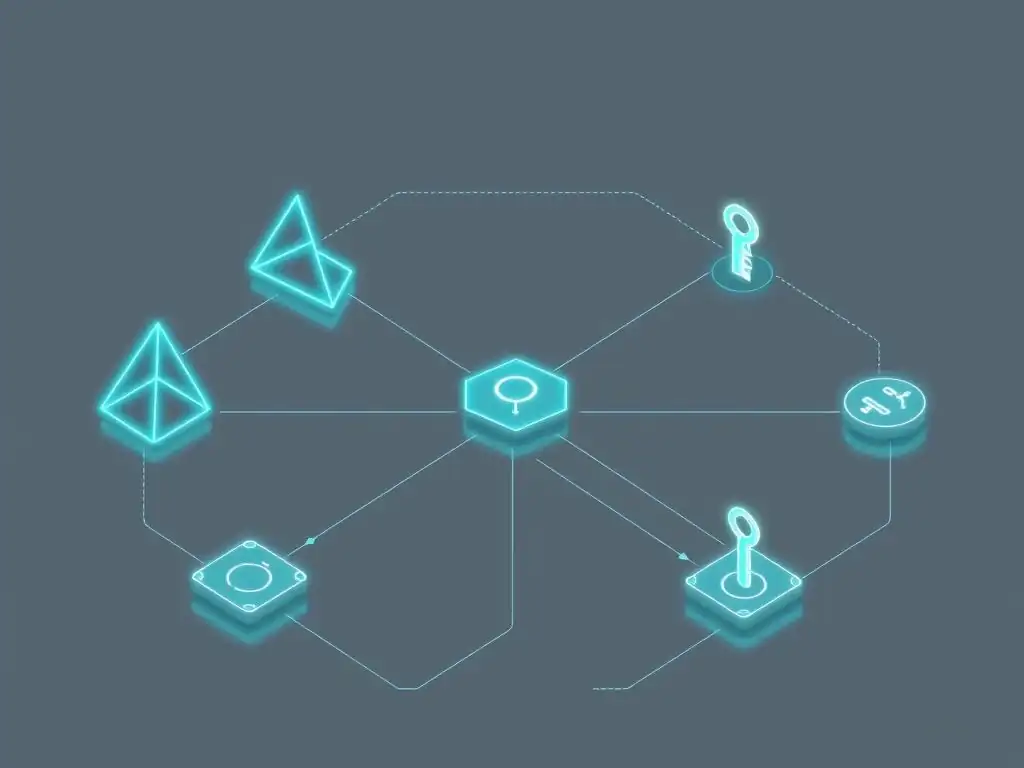
Threshold Multisignatures: m-of-n Signature Schemes
Threshold multisignatures, also known as m-of-n signature schemes, are the most common type of multisig implementation in blockchain. In an m-of-n scheme, 'n' represents the total number of private keys associated with the multisig wallet, and 'm' represents the minimum number of signatures required to authorize a transaction. This flexibility allows for customization of security protocols based on specific needs and risk tolerance. m-of-n schemes provide a versatile framework for implementing distributed control and enhancing security in various blockchain applications.
Examples of threshold schemes include 2-of-3, 3-of-5, and 4-of-7 multisig wallets. A 2-of-3 scheme is frequently used for personal wallets or small teams, offering a balance between security and usability. A 3-of-5 or higher scheme is typically employed by organizations or exchanges requiring a higher level of security and redundancy. The choice of 'm' and 'n' depends on factors such as the value of assets being protected, the number of stakeholders involved, and the desired level of operational flexibility, making threshold multisignatures a highly adaptable approach to blockchain multisignature security.
Schnorr Signatures: Aggregating Signatures for Efficiency
Schnorr signatures offer a more efficient approach to multisignature schemes through signature aggregation. Unlike traditional multisig schemes where each participant generates and appends their signature to the transaction, Schnorr signatures allow for the aggregation of multiple signatures into a single, compact signature. This aggregated signature is then verified against the public keys of all participants, resulting in reduced transaction size and lower on-chain fees, particularly beneficial in blockchains with limited block space or higher transaction costs.
The efficiency gains of Schnorr signatures are particularly significant in scenarios involving a large number of participants in a multisig setup. For instance, in a decentralized autonomous organization (DAO) with numerous voting members, using aggregated Schnorr signatures can substantially reduce the on-chain footprint of governance proposals and voting transactions. While not as widely implemented as ECDSA multisig, Schnorr signatures are gaining traction as blockchains evolve to prioritize scalability and efficiency, offering a promising avenue for enhancing blockchain multisignature security with improved performance.
Elliptic Curve Digital Signature Algorithm (ECDSA) Multisig: The Foundation of Many Blockchain Multisigs
The Elliptic Curve Digital Signature Algorithm (ECDSA) is the foundational cryptographic algorithm underpinning many blockchain multisignature implementations, particularly in blockchains like Bitcoin and Ethereum. ECDSA provides the mathematical basis for generating and verifying digital signatures, and its adaptation for multisig allows for the creation of wallets requiring multiple ECDSA signatures for transaction authorization. ECDSA multisig is a well-established and widely understood approach, benefiting from extensive research and development within the cryptographic community.
While ECDSA multisig is robust and secure, it can be less efficient than Schnorr signatures in terms of transaction size and verification complexity, especially as the number of participants increases. However, its widespread adoption and maturity make it a reliable choice for many blockchain applications requiring multisignature security. The security of ECDSA itself is based on the mathematical hardness of the elliptic curve discrete logarithm problem, which is considered computationally infeasible to solve with current technology. Therefore, ECDSA multisig provides a strong foundation for ensuring blockchain multisignature security in numerous prevalent blockchain platforms.
Implementing Multisignature Wallets: Practical Considerations
Choosing the Right Multisignature Wallet Provider
Selecting the appropriate multisignature wallet provider is a crucial step in implementing multisig security. Various wallet providers offer multisig functionality, ranging from software wallets to hardware wallets and custodial solutions. Factors to consider when choosing a provider include the supported blockchains, the level of security offered, user-friendliness, and the specific features required for the intended use case. It is essential to evaluate the security reputation and track record of the provider to ensure the chosen solution aligns with the desired security level and operational needs.
For instance, for securing large cryptocurrency holdings, a hardware wallet with multisig support, such as Ledger or Trezor, might be preferred due to the enhanced security of offline key storage. For enterprise applications, custodial multisig solutions offered by reputable custodians might be considered for ease of integration and compliance requirements. Conversely, for developers building decentralized applications, software-based multisig libraries and SDKs might be more suitable. Careful consideration of these factors is paramount in selecting a multisig wallet provider that effectively enhances blockchain multisignature security while meeting practical implementation requirements.
Setting Up a Multisignature Wallet: A Technical Guide
Setting up a multisignature wallet typically involves several technical steps, depending on the chosen wallet provider and the underlying blockchain. Generally, the process includes generating multiple key pairs, defining the multisig configuration (m-of-n parameters), and creating the multisig wallet address. Each participant in the multisig setup needs to securely generate and manage their private key. The public keys of all participants are then used to construct the multisig wallet address, which serves as the shared address for receiving and managing funds.
The specific steps vary based on the wallet software or platform. For example, using command-line tools like Bitcoin Core for Bitcoin multisig requires manual configuration and script creation. User-friendly wallet interfaces often simplify the process with guided setup wizards. Regardless of the method, it is crucial to follow best practices for key generation and secure storage throughout the setup process. Understanding the technical nuances of multisig setup ensures proper implementation and maximizes the intended blockchain multisignature security benefits.
Best Practices for Key Storage and Management in Multisig Environments
Effective key storage and management are paramount in multisignature environments. Since multisig distributes security across multiple keys, securing each key individually becomes crucial. Best practices include using hardware wallets for offline key storage, implementing strong password protection and encryption for software wallets, and geographically distributing key backups across secure locations. Regular security audits and reviews of key management procedures are also essential to proactively identify and mitigate potential vulnerabilities.
Furthermore, in organizational multisig setups, clear policies and procedures for key access, recovery, and rotation should be established and strictly enforced. Principle of least privilege should be applied when granting key access to personnel. Regular training and awareness programs for key holders are vital to promote secure key management practices and prevent human error. Adhering to these best practices ensures that the distributed security benefits of multisig are not undermined by weak key management, maximizing the overall blockchain multisignature security.
Blockchain Multisignature Security vs. Traditional Security Methods
Advantages of Multisig Over Single-Signature Wallets
Multisignature wallets offer significant advantages over traditional single-signature wallets in terms of security. The primary advantage is the elimination of the single point of failure, as discussed earlier. Single-signature wallets are inherently vulnerable to key compromise, while multisig distributes risk and requires attackers to compromise multiple keys to gain control. This distributed security model provides a much higher level of resilience against various attack vectors, including hacking, phishing, insider threats, and key loss.
Beyond security, multisig can also enhance operational efficiency in certain scenarios. For example, in organizational settings, multisig can streamline fund management by establishing clear authorization workflows and preventing unilateral actions. While single-signature wallets are simpler to set up and use, their inherent security limitations make them unsuitable for securing significant amounts of digital assets or managing critical blockchain applications. The enhanced security and control offered by multisig represent a substantial improvement over the vulnerabilities of single-signature wallets, highlighting key blockchain multisignature security benefits.
Addressing the Limitations of Traditional Security Approaches
Traditional security approaches, such as password protection and two-factor authentication (2FA), while valuable, often fall short in the context of blockchain asset security. Passwords can be phished, brute-forced, or forgotten. 2FA, while adding a layer of security, can also be circumvented through SIM swapping or man-in-the-middle attacks. These traditional methods often rely on centralized systems and are susceptible to centralized points of failure. Multisignature wallets, in contrast, leverage the decentralized nature of blockchain to provide a more robust and distributed security model.
Multisig addresses the limitations of traditional security by distributing control and eliminating reliance on a single point of authentication. It moves beyond password-based security and leverages cryptographic signatures and distributed key management to enhance security at a fundamental level. While traditional security methods remain relevant for securing access to multisig wallets themselves (e.g., protecting the devices holding private keys), multisig provides a superior layer of security for the underlying blockchain assets by fundamentally changing the authorization paradigm. This shift towards distributed cryptographic security is a key advancement offered by blockchain multisignature security.
The Future of Multisignature Technology in Blockchain
Innovations in Multisignature Protocols and Algorithms
The field of multisignature technology is continuously evolving, with ongoing research and development focused on enhancing efficiency, privacy, and functionality. Innovations include advancements in signature aggregation techniques, such as Schnorr signatures and its variations, which aim to further reduce transaction sizes and improve scalability. Privacy-enhancing multisig protocols are also being explored, such as threshold signatures with enhanced privacy features, which could obscure the identities of the signers while maintaining the security benefits of multisig.
Furthermore, research is underway to develop more flexible and programmable multisig schemes. This includes exploring smart contract-based multisig wallets that offer more complex authorization logic and conditional transaction execution based on predefined rules. These innovations aim to expand the applicability of multisignature technology beyond basic m-of-n schemes and create more versatile and adaptable security solutions for the evolving blockchain landscape. These advancements will further solidify the role of blockchain multisignature security in the future.
The Role of Multisig in Decentralized Finance (DeFi) Security
Decentralized Finance (DeFi), with its rapid growth and increasing value locked in smart contracts, presents unique security challenges. Multisignature wallets are playing an increasingly crucial role in securing DeFi platforms and protocols. Multisig is commonly used for securing smart contract administration keys, treasury management in DAOs, and safeguarding user funds in decentralized exchanges and lending platforms. The distributed control and enhanced security offered by multisig are essential for mitigating risks in the complex and often unaudited smart contract environments of DeFi.
As DeFi matures, the adoption of multisig is expected to expand further. Innovations like multi-party computation (MPC) based multisig are emerging, offering even more advanced security features and potentially overcoming some limitations of traditional multisig schemes. The future of DeFi security is inextricably linked to the continued development and adoption of robust multisignature technologies, making blockchain multisignature security a cornerstone of the DeFi ecosystem.
Overcoming Challenges in Multisignature Adoption
Addressing Complexity and User Experience Issues
Despite the significant security benefits, multisignature wallets can be perceived as complex and less user-friendly compared to single-signature wallets. The setup process, key management, and transaction signing workflows can be more intricate, potentially posing a barrier to wider adoption, especially for less technically savvy users. Improving user experience and simplifying multisig implementation is crucial for mainstream adoption.
Efforts are underway to address these challenges by developing more intuitive multisig wallet interfaces, streamlining the setup process, and providing better user guidance and educational resources. Abstracting away some of the technical complexities through user-friendly software and hardware wallets can make multisig more accessible to a broader audience. Overcoming user experience hurdles is essential to unlock the full potential of blockchain multisignature security for wider adoption.
Fostering Standardization and Interoperability
Lack of standardization and interoperability across different blockchain platforms and wallet providers can also hinder the widespread adoption of multisignature technology. Different blockchains may implement multisig schemes with varying levels of compatibility and functionality. This fragmentation can create challenges for users and developers seeking to utilize multisig across multiple blockchain ecosystems. Fostering standardization and improving interoperability are crucial for seamless multisig adoption.
Industry initiatives and collaborative efforts are needed to establish common standards for multisignature protocols and wallet implementations. Cross-chain multisig solutions and interoperability frameworks can enable users to manage assets and execute transactions across different blockchains using a unified multisig approach. Promoting standardization and interoperability will enhance the overall usability and effectiveness of blockchain multisignature security across the broader blockchain landscape.
Conclusion: Embracing Multisignature for Robust Blockchain Security
Multisignature wallets represent a significant advancement in blockchain security, offering a robust and distributed approach to safeguarding digital assets and securing blockchain applications. By eliminating single points of failure, enhancing fraud protection, and improving key management, multisig provides tangible security benefits that are increasingly crucial in the evolving blockchain ecosystem. While challenges related to complexity and standardization remain, ongoing innovations and industry efforts are paving the way for wider adoption and improved user experience.
As blockchain technology continues to mature and penetrate various industries, embracing multisignature security will become increasingly essential for organizations and individuals seeking to protect their digital assets and ensure the integrity of their blockchain operations. The enhanced security and control offered by multisig wallets position them as a cornerstone of robust blockchain security, and their continued development and adoption are vital for fostering trust and confidence in the future of decentralized systems. The blockchain multisignature security benefits are undeniable and their strategic implementation is a key step towards a more secure and resilient blockchain ecosystem.
Frequently Asked Questions
What are the primary benefits of using blockchain multisignature security for transactions?
Multisignature security enhances transaction security by requiring multiple private keys to authorize a transaction. This significantly reduces the risk of single point of failure and unauthorized access.
How does multisignature security differ from standard single-signature transactions in blockchain?
Standard transactions only need one private key, while multisignature transactions need a pre-defined number of keys. This ensures greater control and accountability over fund movement.
Can multisignature security be applied to Decentralized Finance (DeFi) applications, and how?
Yes, DeFi platforms can use multisignature wallets to manage protocol funds and require multiple stakeholders to approve critical changes, enhancing security.
What role does regulation play in promoting or hindering the adoption of blockchain multisignature security practices?
Regulation can encourage adoption by setting security standards that include multisignature requirements. However, overly complex rules could also limit its accessibility.
What are some potential future trends in blockchain multisignature security, beyond current applications?
Future trends may involve more sophisticated key management, integration with hardware security modules, and broader adoption across various enterprise blockchain applications.
Final Reflection: Embracing Blockchain Multisignature Security
The exploration of secure multisignatures in blockchain underscores a critical truth: security is not a static state, but a dynamic process of continuous improvement. In a world increasingly reliant on decentralized systems, the vulnerabilities of single-signature transactions are becoming ever more apparent. The benefits of blockchain multisignature security, as outlined in this article, offer a robust and adaptable solution to mitigate these risks, ensuring greater trust and reliability in digital transactions.
The impact of multisignature technology extends far beyond mere technical implementation. It fundamentally reshapes how we perceive and interact with digital assets, fostering a culture of shared responsibility and enhanced accountability. The ability to require multiple approvals for a transaction not only safeguards against unauthorized access but also promotes collaboration and transparency within organizations. Security is always excessive until it's not enough.
This quote perfectly encapsulates the proactive approach that multisignature schemes embody, anticipating and addressing potential threats before they materialize.
As we move forward, let us not simply acknowledge the potential of blockchain multisignature security, but actively embrace it. Consider how you can integrate these principles into your own digital practices, whether it's securing your personal crypto wallet or implementing robust governance structures within your organization. The future of blockchain security rests on our collective commitment to innovation and vigilance. Let us strive to build a more secure and trustworthy digital world, one multisignature at a time.
Unlock Enhanced Blockchain Security Today!
Thank you for exploring the world of MultiSignatures and their crucial role in securing blockchain transactions. We hope you gained valuable insights into how these mechanisms can protect your digital assets. Now, let's put that knowledge into practice!
Here are some steps you can take right now to deepen your understanding and enhance your security:
- Implement MultiSignatures on your wallet: Try setting up a MultiSignature wallet using your preferred blockchain platform. Hands-on experience is the best way to learn!
- Explore different MultiSignature protocols: Research variations such as m-of-n schemes and threshold signatures to determine which approach best suits your needs.
- Share this article with fellow blockchain enthusiasts: Help raise awareness about the importance of MultiSignatures for improved security.
Are you ready to take control of your blockchain security and experiment with MultiSignatures? Share your initial setup plan in the comments below!
Leave a Reply