
Smart Contracts and Blockchain Architecture: Automating Trust and Execution


Welcome to Blockchain Trends, your compass in the rapidly evolving world of decentralized innovation.
Dive deep into how blockchain is reshaping industries beyond cryptocurrency. This week, we unravel the secrets behind blockchain smart contract automation benefits. Discover how these self-executing agreements are revolutionizing trust and efficiency, and explore the underlying architecture that makes it all possible. Ready to unlock the potential?
Smart Contracts and Blockchain Architecture: Automating Trust and Execution
- Introduction to Smart Contracts and Blockchain Automation
- Understanding Blockchain Architecture for Smart Contracts
- The Benefits of Blockchain Smart Contract Automation
-
Use Cases of Smart Contract Automation Across Industries
- Decentralized Finance (DeFi): Lending, Borrowing, Automated Market Makers (AMMs)
- Supply Chain Management: Tracking, Traceability, and Automated Payments
- Healthcare: Secure Data Sharing, Clinical Trial Management, and Insurance Claims
- Real Estate: Streamlining Property Transactions, Tokenization, and Smart Mortgages
- Intellectual Property Management: Automated Licensing, Royalties, and Digital Rights
-
Challenges and Considerations for Smart Contract Implementation
- Smart Contract Security Vulnerabilities: Reentrancy, Overflow, and Auditing
- Regulatory Compliance and Legal Considerations: Jurisdiction, KYC/AML
- Scalability and Performance Limitations: Gas Costs, Transaction Throughput
- Interoperability Between Different Blockchains: Bridging Solutions, Cross-Chain Protocols
- The Future of Smart Contracts and Blockchain Architecture
- Conclusion: Embracing the Potential of Smart Contracts for a Decentralized Future
-
Frequently Asked Questions
- What are the primary benefits of using blockchain smart contracts for automation?
- How does blockchain architecture contribute to the trust and security of smart contract execution?
- Beyond cryptocurrencies, what are some key enterprise applications of blockchain smart contract automation?
- What are some of the regulatory challenges surrounding the use of smart contracts and blockchain automation?
- What is the future outlook for decentralized systems and the role of smart contract automation within them?
- Final Reflection: Embracing the Automated Future of Trust
- Unlock the Power of Trustless Agreements: Start Building Today!
Introduction to Smart Contracts and Blockchain Automation
Defining Smart Contracts: Self-Executing Agreements on the Blockchain
Smart contracts are self-executing agreements where the terms of the contract are directly written into code. These contracts automatically execute when predetermined conditions are met, eliminating the need for intermediaries and streamlining processes. Think of them as digital vending machines: once the conditions (like payment and selection) are fulfilled, the agreed-upon action (dispensing the product) is automatically carried out.
This automation is inherently linked to blockchain technology, as the blockchain provides the secure and transparent infrastructure for these contracts to operate. Their code is immutable and transparently recorded on the blockchain, fostering trust among parties who may not inherently trust each other.
The concept, though initially proposed in the 1990s by Nick Szabo, gained practical traction with the advent of blockchain technology, particularly platforms like Ethereum. Ethereum, launched in 2015, was specifically designed to support smart contracts through its Ethereum Virtual Machine (EVM). Before blockchain, enforcing digital contracts in a decentralized manner was a significant challenge. Blockchain's distributed ledger and cryptographic security provided the missing pieces, enabling verifiable and tamper-proof execution of these digital agreements. This has opened up a wide array of possibilities for automating trust and execution across various sectors.
The Role of Blockchain Architecture in Smart Contract Execution
Blockchain architecture is fundamental to the functionality and security of smart contracts. It provides the distributed, immutable, and transparent environment in which smart contracts can operate reliably. The decentralized nature of blockchain ensures that no single entity controls the contract's execution, reducing the risk of manipulation or censorship. Every transaction and smart contract execution is recorded across a network of nodes, creating a shared, verifiable history. This distributed ledger is secured using cryptographic techniques, making it extremely difficult to alter past records, thus ensuring the integrity of the smart contract and its outcomes.
The specific architecture of a blockchain platform directly impacts the performance, security, and capabilities of smart contracts deployed on it. Factors such as the consensus mechanism, block size, and network topology influence transaction speeds, scalability, and energy consumption. For instance, blockchains using Proof-of-Work (PoW) like Bitcoin, while highly secure, can be slower and more energy-intensive compared to Proof-of-Stake (PoS) based blockchains like Cardano or Solana.
The choice of blockchain architecture is therefore crucial when considering the specific requirements and use case for smart contract automation. Different architectures offer various trade-offs between speed, security, and decentralization, which must be carefully evaluated.
Transforming Industries: The Advantages of Blockchain-Based Smart Contract Automation
Blockchain-based smart contract automation is poised to transform industries by offering several key advantages. One of the primary benefits is increased efficiency and reduced costs. By automating contractual processes, businesses can eliminate intermediaries, reduce paperwork, and streamline workflows. For example, in supply chain management, smart contracts can automate payments upon verification of goods delivery, significantly reducing administrative overhead and delays. Studies by McKinsey suggest that blockchain-based solutions in supply chain management can reduce operational costs by up to 30%.
Furthermore, smart contracts enhance trust and transparency. The immutable nature of blockchain ensures that all contract terms and execution records are transparently available to all authorized parties. This transparency builds confidence and reduces disputes as all actions are auditable and verifiable.
In sectors like real estate, smart contracts can streamline property transactions, making them faster, more transparent, and less prone to fraud. The automation of trust and execution through blockchain smart contracts offers a compelling value proposition for businesses seeking to improve efficiency, reduce risks, and foster greater collaboration in various industries. The potential for blockchain smart contract automation benefits is vast and continues to be explored across diverse sectors.
Understanding Blockchain Architecture for Smart Contracts
Core Components of a Blockchain Supporting Smart Contracts
Consensus Mechanisms: Proof-of-Work (PoW), Proof-of-Stake (PoS), and Their Impact
Consensus mechanisms are the backbone of blockchain architecture, ensuring agreement among distributed nodes on the validity of transactions and the state of the blockchain. Proof-of-Work (PoW), pioneered by Bitcoin, requires participants (miners) to solve complex cryptographic puzzles to validate transactions and add new blocks to the chain. This computationally intensive process makes it extremely difficult to tamper with the blockchain, providing robust security. However, PoW is energy-intensive and can lead to slower transaction processing times, as seen with Bitcoin's average transaction confirmation time of around 10 minutes.
Proof-of-Stake (PoS) offers an alternative, more energy-efficient approach. In PoS systems, validators are chosen to create new blocks based on the number of tokens they "stake" or hold and are willing to lock up. PoS reduces the computational burden and energy consumption significantly compared to PoW.
Ethereum transitioned to PoS in 2022 with "The Merge," aiming to improve scalability and reduce its environmental footprint. Different consensus mechanisms have varying impacts on blockchain performance, security, and energy efficiency, directly influencing the suitability of a blockchain for smart contract applications requiring high throughput or low latency. The choice of consensus mechanism is a crucial architectural decision impacting the overall blockchain smart contract automation benefits.
Data Structures: Blocks, Merkle Trees, and the Immutable Ledger
Blockchain data structures are meticulously designed to ensure data integrity, immutability, and efficient verification. The fundamental unit is the block, which contains a batch of validated transactions. Each block includes a hash of the previous block, creating a chronological chain and making it computationally infeasible to alter past blocks without invalidating subsequent ones. This chaining is a key aspect of blockchain's security and immutability.
Merkle trees are used within blocks to efficiently summarize and verify the integrity of transactions. A Merkle tree is a tree-like data structure where each leaf node is a hash of a transaction, and each non-leaf node is a hash of its children. The root hash, known as the Merkle root, represents the cryptographic fingerprint of all transactions in the block.
Merkle trees allow for Simplified Payment Verification (SPV), enabling light nodes to verify if a specific transaction is included in a block without downloading the entire blockchain. These data structures are essential for maintaining the immutable ledger, which is crucial for the reliable and trustworthy execution of smart contracts.
Network Topology: Decentralized, Distributed, and Scalability
Blockchain networks are characterized by their decentralized and distributed topology. Decentralization means there is no central authority controlling the network, reducing single points of failure and censorship risks. Distribution implies that the blockchain data is replicated and shared across multiple nodes in the network, enhancing resilience and availability. This distributed nature is fundamental to the trustless environment required for secure smart contract execution.
Scalability, however, remains a significant challenge for many blockchain architectures. As the number of transactions and smart contract executions increases, network congestion and slower transaction processing can occur. Different blockchain architectures employ various strategies to address scalability. Layer-2 solutions, such as rollups and sidechains, are built on top of the main blockchain to handle transactions off-chain, increasing throughput. Sharding, another scaling technique, divides the blockchain into smaller partitions (shards) to process transactions in parallel. Network topology and scalability solutions are critical factors influencing the performance and widespread adoption of blockchain smart contract automation.
Smart Contract Languages and Development Platforms
Solidity and the Ethereum Virtual Machine (EVM)
Solidity is the most widely used programming language for developing smart contracts on the Ethereum blockchain. It is a high-level, statically typed, contract-oriented language inspired by C++, Python, and JavaScript. Solidity is specifically designed to target the Ethereum Virtual Machine (EVM), the runtime environment for smart contracts on Ethereum. The EVM executes the bytecode compiled from Solidity code, managing the state and execution of smart contracts on the blockchain.
The EVM is a stack-based virtual machine that provides a deterministic and secure environment for smart contract execution. It uses a gas mechanism to meter computational resources, preventing denial-of-service attacks and ensuring fair resource allocation. Solidity's popularity and the extensive tooling and community support around Ethereum have made it the dominant choice for smart contract development. However, the EVM's limitations, such as scalability and gas costs, have spurred the development of alternative smart contract languages and platforms. Despite these challenges, Solidity and the EVM remain central to the landscape of blockchain smart contract automation.
Alternative Smart Contract Languages and Platforms: Vyper, Rust on Solana, CosmWasm
While Solidity on Ethereum dominates, alternative smart contract languages and platforms are gaining traction, offering different features and addressing some limitations of the EVM ecosystem. Vyper is another smart contract language for the EVM, designed with security and simplicity in mind. Vyper aims to reduce the attack surface of smart contracts by limiting language features that have historically led to vulnerabilities in Solidity. It emphasizes auditability and formal verification, making it a compelling choice for security-critical applications.
Solana, a high-performance blockchain, utilizes Rust as its primary smart contract language. Rust is known for its memory safety and performance, enabling developers to build efficient and secure smart contracts on Solana's architecture, which is designed for high transaction throughput. CosmWasm, built on the Cosmos SDK, allows developers to write smart contracts in Rust and Go.
CosmWasm contracts can be deployed on various Cosmos-based blockchains, promoting interoperability and offering a different architectural approach compared to EVM-based systems. These alternative platforms and languages expand the possibilities for blockchain smart contract automation, offering developers more choices and addressing diverse needs in the evolving blockchain landscape.
The Benefits of Blockchain Smart Contract Automation
Enhanced Trust and Transparency in Business Processes
Blockchain smart contract automation inherently enhances trust and transparency in business processes. Traditional contracts often rely on legal frameworks and intermediaries to enforce agreements, which can be costly, time-consuming, and subject to interpretation. Smart contracts, on the other hand, codify the terms of agreements directly into executable code on a transparent and immutable blockchain. This means that all parties involved have a clear and verifiable understanding of the contract terms and the conditions for execution.
The transparency of blockchain ensures that every transaction and contract execution is recorded on a public ledger, auditable by all authorized participants. This eliminates information asymmetry and reduces the potential for disputes arising from misunderstandings or hidden clauses. For instance, in supply chain finance, using smart contracts to automate invoice payments upon delivery confirmation creates a transparent and auditable record of the transaction, fostering trust between buyers and suppliers. This enhanced trust and transparency are key blockchain smart contract automation benefits, leading to more reliable and efficient business relationships.
Reduced Costs and Increased Efficiency Through Automation
One of the most significant advantages of blockchain smart contract automation is the potential for substantial cost reduction and efficiency gains. By automating contractual processes, smart contracts eliminate the need for intermediaries such as lawyers, escrow services, and brokers in many situations. This disintermediation directly reduces transaction costs and administrative overhead. For example, in real estate transactions, smart contracts can automate the transfer of property titles and funds upon fulfillment of agreed-upon conditions, reducing reliance on traditional escrow agents and streamlining the entire process.
Furthermore, automation through smart contracts significantly speeds up processes. Contract execution is triggered automatically when predefined conditions are met, eliminating manual delays and paperwork. In industries like insurance, smart contracts can automate claim processing based on pre-agreed parameters, leading to faster payouts and improved customer satisfaction. Studies by Accenture indicate that smart contracts can reduce contract processing times by up to 90% in certain industries. These efficiency gains and cost reductions highlight the powerful blockchain smart contract automation benefits for businesses seeking to optimize their operations.
Improved Security and Reduced Risk of Fraud
Blockchain smart contract automation offers enhanced security and reduces the risk of fraud compared to traditional contract systems. Traditional contracts are susceptible to tampering, manipulation, and fraudulent activities. Smart contracts, secured by the cryptographic nature of blockchain, are inherently more resistant to such risks. Once a smart contract is deployed on the blockchain, its code is immutable and cannot be altered, ensuring that the agreed-upon terms are consistently enforced.
The decentralized nature of blockchain further enhances security by eliminating single points of failure. The distributed ledger is replicated across multiple nodes, making it extremely difficult for malicious actors to tamper with or manipulate contract executions. Moreover, the transparency of blockchain provides an auditable trail of all contract-related activities, deterring fraudulent behavior and facilitating easier detection and resolution of any discrepancies.
In areas like digital identity management and voting systems, smart contracts can provide a secure and transparent framework, significantly reducing the risk of fraud and manipulation. This improved security and fraud reduction is a crucial benefit of blockchain smart contract automation.
Increased Speed and Agility in Contract Execution
Blockchain smart contract automation leads to a significant increase in speed and agility in contract execution. Traditional contract processes often involve lengthy negotiations, manual paperwork, and bureaucratic delays. Smart contracts, in contrast, execute automatically and instantaneously once the predefined conditions are met. This speed and agility are particularly valuable in fast-paced business environments and for time-sensitive transactions.
For instance, in decentralized finance (DeFi), smart contracts enable near-instantaneous lending, borrowing, and trading of assets, operating 24/7 without the limitations of traditional banking hours. In supply chains, automated payments triggered by IoT sensor data verifying delivery can drastically reduce payment cycles and improve cash flow for suppliers. The increased speed and agility provided by smart contracts allow businesses to respond more quickly to market changes, seize opportunities faster, and operate with greater efficiency. This enhanced responsiveness is a key blockchain smart contract automation benefit, contributing to increased competitiveness and operational flexibility.
Use Cases of Smart Contract Automation Across Industries
Decentralized Finance (DeFi): Lending, Borrowing, Automated Market Makers (AMMs)
Decentralized Finance (DeFi) is one of the most prominent use cases for blockchain smart contract automation. DeFi platforms leverage smart contracts to offer financial services like lending, borrowing, and trading without traditional intermediaries. Lending and borrowing platforms use smart contracts to automatically match lenders and borrowers, manage collateral, and distribute interest payments, all in a transparent and efficient manner. For example, platforms like Aave and Compound use smart contracts to facilitate billions of dollars in loans and deposits.
Automated Market Makers (AMMs) like Uniswap and SushiSwap utilize smart contracts to enable decentralized token exchanges. AMMs use algorithms defined in smart contracts to automatically determine token prices based on supply and demand within liquidity pools. This eliminates the need for order books and central exchanges, providing continuous liquidity and enabling permissionless trading. DeFi showcases the transformative potential of blockchain smart contract automation benefits in reshaping financial services, making them more accessible, transparent, and efficient.
Supply Chain Management: Tracking, Traceability, and Automated Payments
Supply chain management is another sector where blockchain smart contract automation offers significant advantages. Smart contracts can be used to track goods as they move through the supply chain, providing real-time visibility and traceability. For example, a smart contract can be triggered when a shipment reaches a specific location, automatically updating records and notifying relevant parties. This enhanced tracking improves efficiency and reduces the risk of loss or counterfeiting. Companies like IBM and Maersk have explored blockchain-based supply chain solutions.
Furthermore, smart contracts can automate payments in the supply chain. Upon verification of delivery or completion of specific milestones, smart contracts can automatically release payments to suppliers, eliminating delays and reducing administrative costs. This automated payment system improves efficiency and trust between supply chain partners. The application of blockchain smart contract automation benefits in supply chain management can lead to more transparent, efficient, and resilient supply chains globally.
Healthcare: Secure Data Sharing, Clinical Trial Management, and Insurance Claims
Healthcare is an industry with vast potential for blockchain smart contract automation. Secure data sharing is crucial in healthcare, and blockchain can provide a platform for patients to control access to their medical records and share them securely with healthcare providers. Smart contracts can manage access permissions and ensure data privacy and compliance with regulations like HIPAA. For instance, patients could grant temporary access to their records to doctors for consultations, with access automatically revoked after a set period.
Clinical trial management can also be streamlined using smart contracts. Smart contracts can automate participant recruitment, data collection, and payment distribution in clinical trials, improving efficiency and transparency. In insurance claims processing, smart contracts can automate payouts based on predefined criteria, such as diagnosis verification and policy terms. This automation can significantly reduce processing times and improve the patient experience. The application of blockchain smart contract automation benefits in healthcare can lead to more efficient, secure, and patient-centric healthcare systems.
Real Estate: Streamlining Property Transactions, Tokenization, and Smart Mortgages
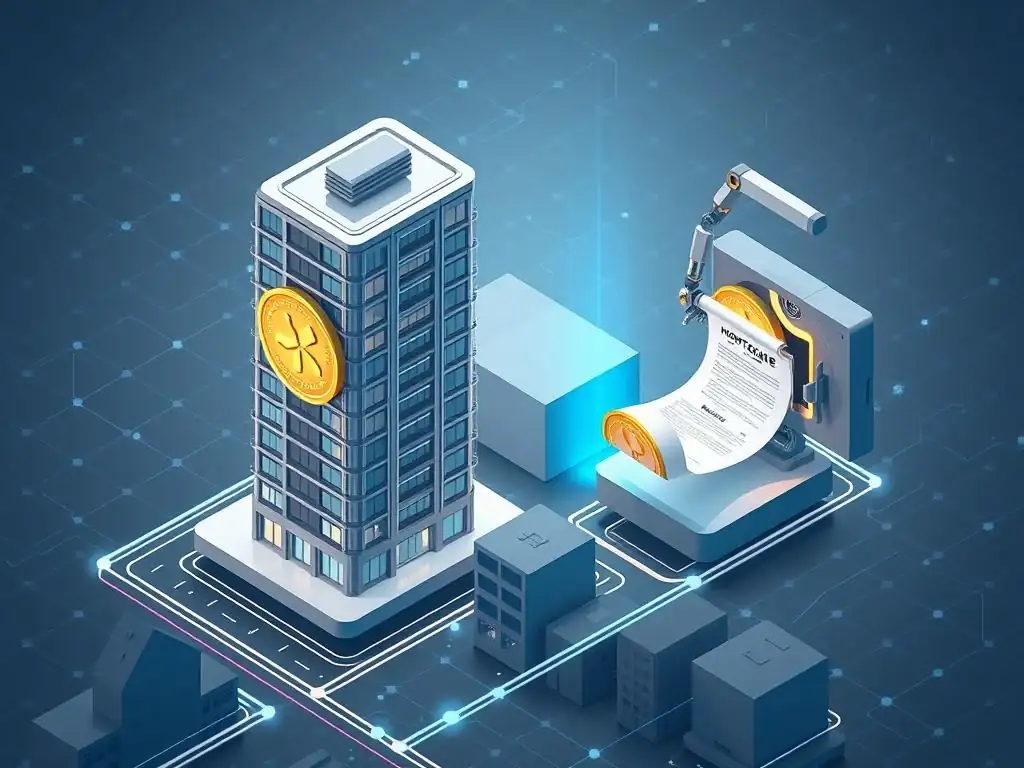
Real estate transactions are often complex, lengthy, and involve multiple intermediaries. Blockchain smart contract automation can streamline property transactions, making them faster, more transparent, and less costly. Smart contracts can automate the execution of property sales agreements, escrow services, and title transfers. For example, a smart contract can automatically transfer property ownership upon receipt of payment and verification of legal requirements, reducing paperwork and delays.
Tokenization of real estate assets using blockchain allows for fractional ownership and increased liquidity. Smart contracts can manage the issuance and trading of real estate tokens, enabling investors to buy and sell fractions of properties more easily. Smart mortgages can also be automated using smart contracts, streamlining the mortgage application, approval, and payment processes. These applications of blockchain smart contract automation benefits in real estate have the potential to revolutionize the industry, making property ownership more accessible and efficient.
Intellectual Property Management: Automated Licensing, Royalties, and Digital Rights
Intellectual property (IP) management is another area ripe for blockchain smart contract automation. Smart contracts can automate licensing agreements, ensuring that IP creators are automatically compensated for the use of their work. For example, smart contracts can automatically distribute royalties to musicians or software developers based on usage metrics tracked on the blockchain. This automated royalty system ensures fair and transparent compensation and reduces the administrative burden of tracking and distributing royalties.
Digital rights management (DRM) can also be enhanced using smart contracts. Smart contracts can control access to digital content, ensuring that only authorized users can access and use copyrighted material. This can help combat piracy and protect the rights of content creators. Furthermore, blockchain can provide a transparent and immutable record of IP ownership, simplifying IP registration and dispute resolution. The application of blockchain smart contract automation benefits in intellectual property management can empower creators, streamline licensing, and enhance digital rights protection.
Challenges and Considerations for Smart Contract Implementation
Smart Contract Security Vulnerabilities: Reentrancy, Overflow, and Auditing
Despite their benefits, smart contracts are not immune to security vulnerabilities. Due to their immutable nature once deployed, vulnerabilities in smart contract code can be exploited, leading to significant financial losses. Reentrancy attacks, integer overflows/underflows, and timestamp dependencies are common types of vulnerabilities. The infamous DAO hack in 2016, which resulted in the theft of millions of dollars in Ether, was due to a reentrancy vulnerability in the DAO's smart contract code.
Thorough security auditing is crucial before deploying smart contracts. Auditing involves expert review of the smart contract code to identify potential vulnerabilities and recommend mitigations. Formal verification methods, which use mathematical proofs to ensure the correctness of smart contract code, are also gaining importance, especially for high-value applications. Developers must follow secure coding practices, utilize security tools, and prioritize rigorous testing and auditing to mitigate smart contract security risks. Addressing these security vulnerabilities is paramount to realizing the full blockchain smart contract automation benefits.
Regulatory Compliance and Legal Considerations: Jurisdiction, KYC/AML
Regulatory compliance and legal considerations pose significant challenges for smart contract implementation. The decentralized and global nature of blockchain technology raises complex jurisdictional issues. Determining which jurisdiction's laws apply to a smart contract and its participants can be challenging, especially in cross-border transactions. Legal frameworks are still evolving to address the unique characteristics of smart contracts and blockchain-based applications.
Know Your Customer (KYC) and Anti-Money Laundering (AML) regulations are also crucial considerations, particularly in financial applications of smart contracts. Ensuring compliance with KYC/AML requirements in decentralized and pseudonymous environments requires innovative solutions. Regulatory uncertainty and evolving legal landscapes necessitate careful consideration of compliance and legal risks when implementing blockchain smart contract automation. Businesses must proactively engage with regulators and legal experts to navigate these challenges and ensure legal compliance.
Scalability and Performance Limitations: Gas Costs, Transaction Throughput
Scalability and performance limitations are ongoing challenges for many blockchain platforms supporting smart contracts. Blockchains like Ethereum, while widely used, have faced scalability issues, leading to network congestion and high transaction fees (gas costs), especially during periods of high demand. High gas costs can make complex smart contract operations expensive and hinder wider adoption.
Transaction throughput, measured as transactions per second (TPS), is another critical performance metric. Blockchains like Bitcoin and Ethereum have relatively low TPS compared to traditional payment systems. Scalability solutions, such as layer-2 scaling solutions (rollups, sidechains) and sharding, are being developed to address these limitations and improve transaction throughput and reduce gas costs. Overcoming scalability and performance bottlenecks is essential for unlocking the full potential of blockchain smart contract automation benefits for mass adoption and large-scale applications.
Interoperability Between Different Blockchains: Bridging Solutions, Cross-Chain Protocols
Interoperability between different blockchains is a significant challenge in the current blockchain ecosystem. Different blockchains often operate in silos, making it difficult to transfer assets and data between them. This lack of interoperability can limit the potential of blockchain smart contract automation, especially for applications that require interaction across multiple blockchain platforms.
Bridging solutions and cross-chain protocols are being developed to address interoperability challenges. Bridges enable the transfer of assets between different blockchains, while cross-chain protocols allow smart contracts on different blockchains to communicate and interact with each other. Projects like Polkadot and Cosmos are focused on building interoperable blockchain networks. Achieving seamless interoperability is crucial for realizing the vision of a truly interconnected and decentralized web, maximizing the blockchain smart contract automation benefits across diverse ecosystems.
The Future of Smart Contracts and Blockchain Architecture
Emerging Trends in Smart Contract Technology
Zero-Knowledge Proofs: Privacy-Preserving Smart Contracts and zk-Rollups
Zero-knowledge proofs (ZKPs) are emerging as a significant trend in smart contract technology, offering enhanced privacy and scalability. ZKPs allow one party to prove to another party that a statement is true without revealing any information beyond the validity of the statement itself. In the context of smart contracts, ZKPs can enable privacy-preserving smart contracts where sensitive data can be processed and verified without being revealed on the public blockchain.
zk-Rollups are a layer-2 scaling solution that utilizes ZKPs to improve scalability and privacy on blockchains like Ethereum. zk-Rollups bundle multiple transactions off-chain and submit a cryptographic proof (using ZKPs) to the main chain to verify the validity of these transactions. This significantly increases transaction throughput and reduces gas costs while maintaining the security and privacy of transactions. Zero-knowledge proofs and zk-Rollups are poised to play a crucial role in the future of smart contract technology, enabling more private, scalable, and versatile applications.
Cross-Chain Smart Contracts: Interoperability Solutions and Atomic Swaps
Cross-chain smart contracts are another emerging trend focused on addressing interoperability challenges. These smart contracts are designed to operate across multiple blockchain networks, enabling seamless interaction and data exchange between different blockchains. Cross-chain smart contracts can unlock new possibilities for decentralized applications that require access to data and assets across various blockchain ecosystems.
Atomic swaps are a specific type of cross-chain transaction that allows for the direct exchange of cryptocurrencies between different blockchains without the need for intermediaries. Atomic swaps are enabled by smart contracts and cryptographic techniques, ensuring secure and trustless cross-chain asset transfers. The development of robust cross-chain smart contract solutions and atomic swap technologies is crucial for realizing the full potential of blockchain interoperability and expanding the scope of blockchain smart contract automation benefits.
The Evolution of Blockchain Architecture: Sharding, Layer-2 Solutions, and Optimistic Rollups
Blockchain architecture is continuously evolving to address scalability and performance limitations. Sharding, layer-2 solutions, and optimistic rollups are key architectural innovations driving this evolution. Sharding, as discussed earlier, divides the blockchain into smaller shards to process transactions in parallel, increasing overall throughput. Layer-2 solutions, such as rollups and sidechains, offload transaction processing from the main chain to improve scalability and reduce gas costs.
Optimistic rollups are a type of layer-2 scaling solution that assumes transactions are valid by default and only requires fraud proofs in case of disputes. Optimistic rollups offer lower latency and gas costs compared to zk-Rollups but may have longer withdrawal times. The ongoing evolution of blockchain architecture, with innovations like sharding, layer-2 solutions, and rollups, is critical for enabling the scalability and performance required for widespread adoption of blockchain smart contract automation benefits.
Predictions for the Adoption of Blockchain Smart Contract Automation
Predictions for the adoption of blockchain smart contract automation are optimistic, with widespread adoption expected across various industries in the coming years. Industry analysts predict significant growth in the smart contract market, driven by the increasing recognition of their benefits in terms of efficiency, transparency, and security. According to a report by Gartner, smart contract adoption is expected to increase significantly by 2025, with a substantial portion of enterprises actively exploring or implementing blockchain-based smart contract solutions.
Sectors like finance, supply chain management, healthcare, and real estate are expected to be at the forefront of adoption, leveraging smart contracts to streamline operations, reduce costs, and enhance trust. As blockchain technology matures, regulatory clarity improves, and scalability solutions advance, the barriers to adoption are expected to decrease, paving the way for broader and more mainstream implementation of blockchain smart contract automation benefits across diverse industries and use cases.
Conclusion: Embracing the Potential of Smart Contracts for a Decentralized Future
Key Takeaways: Automation Advantages and Implementation Considerations
Smart contracts and blockchain architecture represent a paradigm shift in how agreements are executed and trust is established in digital systems. The automation advantages of smart contracts are undeniable, offering enhanced efficiency, reduced costs, increased transparency, improved security, and faster execution speeds. These benefits position blockchain smart contract automation as a transformative force across various industries, from finance and supply chain to healthcare and real estate.
However, successful implementation requires careful consideration of challenges and limitations. Smart contract security vulnerabilities, regulatory compliance, scalability issues, and interoperability challenges must be addressed proactively. Rigorous security auditing, adherence to evolving regulatory frameworks, and leveraging scalability solutions are crucial for realizing the full potential of smart contracts. A balanced approach that recognizes both the advantages and challenges is essential for successful and responsible adoption.
The Continued Evolution of Blockchain Architecture and Its Impact on Smart Contracts
The future of smart contracts is inextricably linked to the continued evolution of blockchain architecture. Innovations in consensus mechanisms, scalability solutions (like sharding and layer-2 rollups), and interoperability protocols are continuously shaping the capabilities and performance of blockchain platforms. These architectural advancements directly impact the functionality and potential applications of smart contracts.
As blockchain architecture evolves to become more scalable, secure, and interoperable, the scope and impact of smart contracts will expand further. Emerging trends like zero-knowledge proofs and cross-chain smart contracts promise to unlock new possibilities for privacy-preserving and interconnected decentralized applications. Embracing the potential of smart contracts and actively participating in the ongoing evolution of blockchain architecture are key to building a more efficient, transparent, and decentralized future powered by blockchain smart contract automation benefits.
Frequently Asked Questions
What are the primary benefits of using blockchain smart contracts for automation?
Smart contracts automate processes by enforcing pre-defined rules, reducing the need for intermediaries and minimizing human error. This leads to greater efficiency and cost savings in various applications.
How does blockchain architecture contribute to the trust and security of smart contract execution?
Blockchain's distributed ledger ensures data immutability and transparency. Every transaction is recorded and verifiable, fostering trust in the smart contract's integrity and execution.
Beyond cryptocurrencies, what are some key enterprise applications of blockchain smart contract automation?
Smart contracts streamline supply chain management, automate insurance claim processing, and facilitate secure data sharing across organizations. These are areas where automation can significantly improve efficiency.
What are some of the regulatory challenges surrounding the use of smart contracts and blockchain automation?
The legal status of smart contracts and data privacy concerns are key regulatory hurdles. Clearer guidelines are needed to address liability issues and ensure compliance with existing laws.
What is the future outlook for decentralized systems and the role of smart contract automation within them?
The future points towards wider adoption of decentralized systems, with smart contract automation playing a crucial role in building trustless platforms. This includes areas like decentralized finance (DeFi) and decentralized autonomous organizations (DAOs).
Final Reflection: Embracing the Automated Future of Trust
The exploration of smart contracts and blockchain architecture reveals a potent force reshaping how we interact and transact. The promise of blockchain smart contract automation benefits is no longer a futuristic fantasy, but a tangible reality impacting industries across the globe. From streamlining supply chains to revolutionizing financial services, the potential for increased efficiency, transparency, and trust is undeniable, demanding our attention and understanding.
This technology's influence extends far beyond mere efficiency gains; it fundamentally alters the cultural and social landscape by decentralizing power and fostering greater accountability. The ability to codify agreements and execute them autonomously offers a compelling alternative to traditional, often opaque, systems. The blockchain is not only a technology but a revolution that will transform the way we interact and trust each other online.
This quote underscores the profound shift underway, a shift towards a more equitable and transparent digital future.
As we stand on the cusp of this automated future, let us not be passive observers. Instead, let us embrace the opportunity to learn, experiment, and contribute to the responsible development and deployment of smart contracts. Consider how you can leverage these technologies to enhance trust, streamline processes, and build a more equitable world. The power to shape this future lies within each of us, urging us to explore the potential of blockchain smart contract automation benefits and actively participate in its evolution.
Unlock the Power of Trustless Agreements: Start Building Today!
Thank you for exploring the fascinating world of smart contracts and blockchain architecture with us. We hope you now have a clearer understanding of how these technologies are transforming trust and automation. Are you ready to take the next step and become part of the blockchain revolution?
Here's how you can dive deeper:
- Begin developing your first simple smart contract using a platform like Remix IDE. This hands-on experience is the best way to truly grasp the potential of automated agreements.
- Explore different blockchain architectures beyond Ethereum, such as Polkadot or Cardano, to expand your understanding of the ecosystem's diversity.
- Share this article with a colleague or friend interested in blockchain technology to help them discover the potential of decentralized applications.
What innovative problem will you solve with the power of smart contracts? Share your ideas in the comments below!
Leave a Reply