
Smart Contracts and the Metaverse: Building Decentralized Experiences in Virtual Worlds

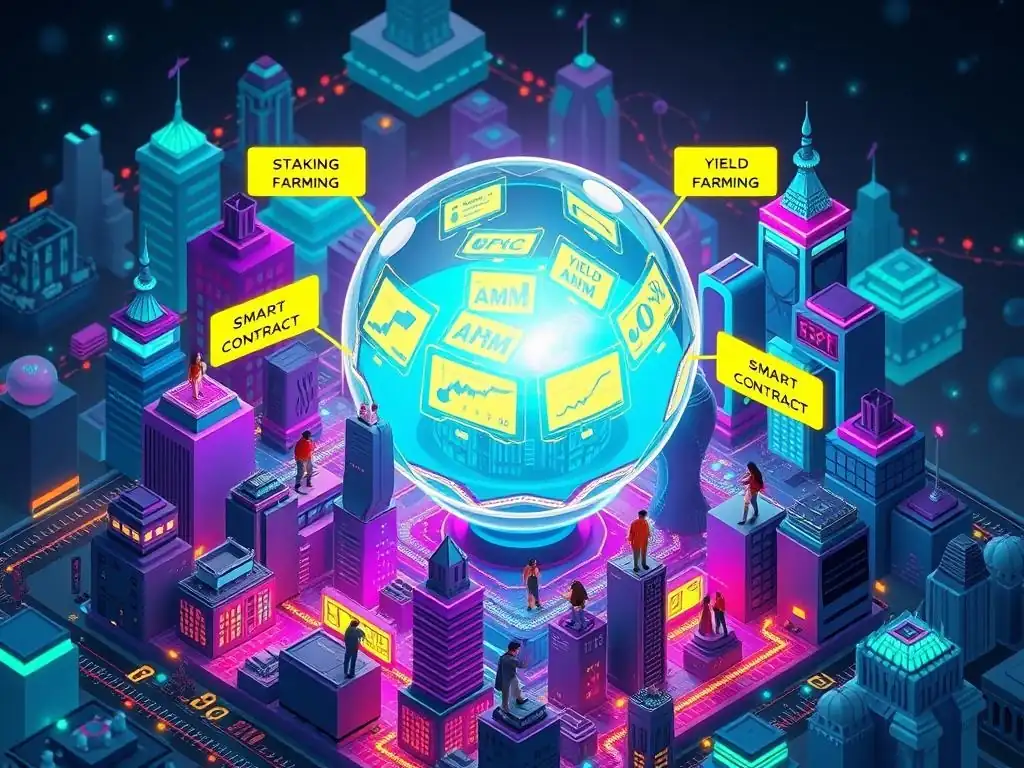
Welcome to Blockchain Trends, your compass in the rapidly evolving landscape of decentralized technology. Ever wondered how blockchain is revolutionizing more than just finance? Prepare to delve into a world where the possibilities are limitless. This week, we're diving deep into the heart of the metaverse, exploring the groundbreaking potential of Decentralized Metaverse Smart Contract Development. But what does it really take to build immersive, decentralized experiences in these virtual worlds? Let's unlock the secrets together and uncover how smart contracts are shaping the future of the metaverse.
- Introduction: The Convergence of Smart Contracts and the Metaverse
- Decentralized Metaverse Smart Contract Development: Core Concepts
-
Use Cases: Smart Contracts Powering Metaverse Experiences
- Metaverse Land Ownership and Management via Smart Contracts
- Decentralized Finance (DeFi) Integration in the Metaverse
- Gaming and Play-to-Earn (P2E) Models Powered by Smart Contracts
- Identity Management and Digital Avatars in the Decentralized Metaverse
- Creating and Trading Digital Assets with Smart Contracts
- Advantages of Using Smart Contracts in the Metaverse
- Challenges and Considerations for Decentralized Metaverse Smart Contract Development
- Future Trends in Smart Contracts and the Metaverse
- Conclusion: The Future of Decentralized Experiences
-
Frequently Asked Questions
- What role do smart contracts play in a decentralized metaverse?
- How does blockchain technology enable decentralized metaverse smart contract development?
- What are some potential enterprise applications of smart contracts within the metaverse?
- What are the key regulatory considerations surrounding decentralized metaverse smart contract development?
- What does the future hold for decentralized metaverse smart contract development and the overall future of decentralized systems?
- Final Reflection: Embracing the Decentralized Metaverse
- Ignite Your Metaverse Journey!
Introduction: The Convergence of Smart Contracts and the Metaverse
Understanding the Metaverse: A New Frontier for Digital Interaction
The metaverse represents a significant leap in how we interact with the digital world. Envisioned as a persistent, shared, 3D virtual space, it is becoming increasingly tangible, driven by advancements in technologies like virtual reality (VR), augmented reality (AR), and blockchain.
Unlike the internet as we currently know it, which is largely a collection of interconnected websites, the metaverse aims to be an immersive environment where users can interact with each other, digital objects, and experiences in real-time. Think of it as a digital twin of our physical world, or perhaps, a parallel universe where social interactions, commerce, entertainment, and even work can take place.
This evolution is not merely about enhanced gaming or social media; it's about creating a new paradigm for digital existence. Industry analysts at firms like Gartner predict that by 2026, 25% of people will spend at least one hour a day in the metaverse for work, shopping, education, social media, and/or entertainment.
This projection underscores the potential scale and impact of the metaverse, signaling a shift towards more immersive and interactive digital experiences that go beyond passive consumption of online content. The metaverse is poised to redefine digital interaction, moving from flat screens to immersive environments, and creating new opportunities and challenges for individuals and businesses alike.
The Role of Blockchain in Shaping Decentralized Virtual Worlds
Blockchain technology is emerging as a foundational pillar for building decentralized metaverses. The inherent characteristics of blockchain – decentralization, transparency, and security – directly address key challenges in creating robust and user-centric virtual worlds. Traditional online platforms often operate on centralized servers, giving control to a single entity. In contrast, a blockchain-based metaverse distributes data and control across a network of participants, diminishing the risk of single points of failure and enhancing user autonomy. This decentralized architecture is critical for fostering trust and ownership within the metaverse ecosystem.
Moreover, blockchain's immutable ledger ensures transparency and verifiability of transactions and interactions within the virtual world. Every action, from land ownership to asset transfers, can be recorded on the blockchain, creating an auditable and tamper-proof history. This transparency is crucial for establishing trust among users, especially in virtual economies where digital assets hold real-world value.
By leveraging blockchain, metaverses can move away from centralized control towards more democratic and user-owned digital spaces, fostering innovation and empowering participants in ways not possible with traditional web architectures. This shift towards decentralization is fundamental to realizing the true potential of the metaverse as an open and accessible digital realm.
Why Smart Contracts are Essential for Metaverse Development
Smart contracts are the engine that drives decentralized metaverse development. These self-executing contracts, with the terms of the agreement directly written into code, automate and enforce agreements without the need for intermediaries. In the context of the metaverse, smart contracts are essential for managing digital assets, governing virtual interactions, and creating secure and transparent systems. They enable a wide range of functionalities, from managing ownership of virtual land and digital collectibles (NFTs) to automating in-world transactions and governing decentralized autonomous organizations (DAOs) within the metaverse.
Consider the complexity of managing digital ownership in a virtual world. Without smart contracts, proving and transferring ownership of digital assets would rely on centralized platforms and databases, prone to manipulation and control. Smart contracts, however, provide a transparent and secure way to represent and manage digital ownership.
For example, when a user purchases virtual land in a metaverse, a smart contract can automatically transfer ownership of the corresponding NFT to their digital wallet, recording the transaction on the blockchain. This process eliminates the need for intermediaries and ensures that ownership is immutable and verifiable. In essence, smart contracts are not just about automating agreements; they are about building the trust and infrastructure necessary for a thriving decentralized metaverse ecosystem, enabling secure, transparent, and user-centric virtual experiences.
Decentralized Metaverse Smart Contract Development: Core Concepts
Defining Smart Contracts for Metaverse Applications
In the metaverse context, smart contracts are programs stored on a blockchain that automatically execute when predefined conditions are met within the virtual environment. They are specifically designed to manage interactions, transactions, and ownership of digital assets within these virtual worlds. Unlike traditional contracts that require legal enforcement, smart contracts are self-enforcing through code, ensuring that agreements are executed as intended. For metaverse applications, this means automating processes like virtual land sales, digital asset trading, in-game rewards distribution, and governance mechanisms without relying on central authorities.
Think of a smart contract as a digital vending machine within the metaverse. You define the rules (what items are available, their price, and conditions for purchase) in the smart contract code. When a user interacts with the "vending machine" and meets the conditions (e.g., pays the required cryptocurrency), the smart contract automatically dispenses the virtual item. This principle applies to a vast array of metaverse applications.
For example, a smart contract can govern the rules of a virtual game, automatically awarding prizes to players who achieve certain milestones. Or, it can manage the rental agreement for virtual storefronts, automatically transferring rent payments and access rights based on predefined terms. Essentially, smart contracts are the building blocks for creating programmable and autonomous systems within the metaverse, enabling trustless interactions and decentralized control.
Key Features of Smart Contracts in Virtual Environments
Several key features make smart contracts particularly well-suited for virtual environments. Firstly, automation is paramount. Smart contracts automate processes that would otherwise require manual intervention, reducing the need for intermediaries and streamlining complex interactions within the metaverse. Secondly, security is significantly enhanced. Once deployed on a blockchain, smart contracts are immutable and tamper-proof, providing a high degree of security against fraud and manipulation. This is crucial in virtual environments where digital assets can hold significant real-world value.
Thirdly, transparency is a core feature. The code of a smart contract is typically publicly auditable on the blockchain, allowing users to verify its logic and ensure fairness. This transparency builds trust and confidence in metaverse interactions, particularly in areas like virtual economies and governance. Fourthly, efficiency is improved. By automating processes and eliminating intermediaries, smart contracts can significantly speed up transactions and reduce costs within the metaverse.
For instance, transferring ownership of a virtual land parcel via a smart contract can be completed in minutes, compared to potentially lengthy and costly traditional methods. Finally, programmability allows for the creation of complex and customized functionalities within the metaverse. Developers can program smart contracts to implement unique game mechanics, sophisticated financial instruments for virtual economies, and decentralized governance systems tailored to specific virtual worlds. These combined features make smart contracts indispensable for building robust, secure, and dynamic metaverse experiences.
The Importance of Immutability and Transparency in Metaverse Interactions
Immutability and transparency are not just technical features of smart contracts; they are fundamental principles that underpin trust and fairness in metaverse interactions. Immutability, the characteristic of blockchain records being unchangeable after they are confirmed, ensures that once a smart contract is deployed and transactions are recorded, they cannot be altered or reversed.
This is vital for establishing confidence in digital ownership and agreements within the metaverse. Imagine purchasing a piece of virtual art as an NFT; the immutability of the smart contract guarantees that your ownership record is permanently and securely stored on the blockchain, preventing any possibility of it being altered or contested.
Transparency, on the other hand, allows all participants to verify the rules and execution of smart contracts. The code is often publicly accessible, and all transactions are recorded on the public blockchain ledger. This openness promotes accountability and reduces the potential for hidden agendas or unfair practices.
In a virtual economy powered by smart contracts, transparency ensures that everyone operates under the same set of rules, fostering a level playing field. For instance, if a metaverse game uses smart contracts to distribute rewards, players can examine the contract code to confirm the fairness of the reward distribution mechanism. This combination of immutability and transparency is essential for building trust in decentralized metaverse environments, enabling users to interact, trade, and participate with confidence, knowing that their digital assets and agreements are secure and verifiable.
Use Cases: Smart Contracts Powering Metaverse Experiences
Metaverse Land Ownership and Management via Smart Contracts
Tokenizing Virtual Land: NFTs and Smart Contract Integration
Smart contracts are revolutionizing metaverse land ownership by enabling the tokenization of virtual land into Non-Fungible Tokens (NFTs). Each NFT representing a piece of virtual land is unique and indivisible, acting as a digital certificate of ownership recorded on the blockchain. This tokenization process leverages smart contracts to define the properties of the virtual land parcel – its size, location, and any associated rights – and securely link it to a specific owner. Platforms like Decentraland and The Sandbox pioneered this approach, allowing users to purchase, own, and trade virtual land as NFTs.
For example, in Decentraland, each LAND token (an ERC-721 NFT) represents a 16m x 16m parcel of virtual land. When a user buys LAND, a smart contract transfers ownership of the NFT to their wallet, and this ownership is permanently recorded on the Ethereum blockchain. This system eliminates the need for centralized land registries and provides users with verifiable and immutable proof of ownership.
The integration of NFTs and smart contracts for virtual land tokenization has created a robust and transparent market for metaverse real estate, empowering users with true digital ownership and facilitating decentralized land management. The market for virtual land NFTs has seen significant growth, with sales reaching hundreds of millions of dollars, demonstrating the real-world value and demand for tokenized metaverse assets.
Decentralized Governance of Metaverse Real Estate
Smart contracts are not only facilitating ownership but also enabling decentralized governance of metaverse real estate. Through DAOs (Decentralized Autonomous Organizations) powered by smart contracts, virtual landowners can collectively manage and govern their virtual environments. These DAOs establish rules and decision-making processes encoded in smart contracts, allowing landowners to vote on proposals related to land usage, infrastructure development, and community policies within their virtual neighborhoods. This decentralized governance model shifts control from centralized platform operators to the community of landowners, fostering a more democratic and user-driven metaverse.
Consider the example of Decentraland's DAO. LAND owners can participate in governance by voting on proposals using their LAND tokens. These proposals can range from allocating community grants to deciding on changes to the platform's policies.
The voting process and the execution of decisions are all managed by smart contracts, ensuring transparency and fairness. This decentralized governance model empowers landowners to shape the future of their virtual world, promoting community ownership and aligning incentives between the platform and its users. By utilizing smart contracts for governance, metaverses are moving towards more participatory and democratic models, where users have a direct say in the development and direction of their virtual environments.
Decentralized Finance (DeFi) Integration in the Metaverse
Virtual Economies and Smart Contract-Based Transactions
Smart contracts are crucial for establishing robust virtual economies within the metaverse by enabling secure and transparent transactions. These contracts automate financial interactions, from simple peer-to-peer transfers to complex financial instruments, all within the virtual world. By eliminating intermediaries and ensuring transparent execution, smart contracts facilitate trust and efficiency in metaverse economic activities. This is essential for creating thriving virtual marketplaces and economies where users can confidently engage in buying, selling, and trading digital assets and services.
For instance, in many metaverses, users can purchase virtual goods and services using cryptocurrencies. Smart contracts power these transactions, ensuring that funds are securely transferred and digital items are correctly assigned to the buyer upon successful payment.
Furthermore, smart contracts can be used to create more sophisticated financial mechanisms within the metaverse, such as decentralized exchanges (DEXs) for trading virtual assets, lending and borrowing platforms for virtual loans, and yield farming opportunities within virtual economies. These smart contract-based financial tools are building the foundation for a truly decentralized and user-driven metaverse economy, mirroring and sometimes even surpassing the functionalities of traditional financial systems.
Earning and Spending Cryptocurrency in Metaverse Environments
Smart contracts are integral to the play-to-earn (P2E) model gaining traction in metaverse environments, allowing users to earn cryptocurrency through their participation and engagement in virtual worlds. These contracts automate the distribution of rewards based on predefined in-game achievements, contributions to the metaverse ecosystem, or participation in virtual events. This creates new economic opportunities for users to monetize their time and skills within the metaverse, fostering a more vibrant and participatory virtual economy.
Games like Axie Infinity and The Sandbox exemplify this P2E model. In Axie Infinity, players earn Smooth Love Potion (SLP) tokens by battling and completing quests, with smart contracts ensuring the transparent and automated distribution of these rewards. Similarly, in The Sandbox, creators can earn SAND tokens by creating and selling virtual assets or experiences, with smart contracts facilitating these transactions.
This ability to earn cryptocurrency within metaverse environments, facilitated by smart contracts, is transforming the gaming industry and creating new economic models where users are not just consumers but also active participants and earners in the virtual economy. The P2E model, underpinned by smart contracts, is driving significant growth and innovation in the metaverse space, attracting users seeking both entertainment and economic opportunities.
Gaming and Play-to-Earn (P2E) Models Powered by Smart Contracts
Smart Contract-Driven Game Mechanics
Smart contracts are not just for rewards; they are increasingly being integrated into the core mechanics of metaverse games, creating more transparent, fair, and engaging gameplay experiences. By encoding game rules, asset ownership, and interactions within smart contracts, developers can ensure that game mechanics are verifiable, tamper-proof, and resistant to manipulation. This level of transparency and security is crucial for building trust in play-to-earn games and creating a more equitable gaming environment.
For example, smart contracts can be used to manage in-game item ownership. When a player earns or purchases an item, its ownership is recorded as an NFT on the blockchain, secured by a smart contract. This ensures that players truly own their in-game assets and can trade or use them as they see fit, independent of the game developers' control.
Furthermore, smart contracts can govern random number generation in games, ensuring fairness in loot boxes or other chance-based game mechanics. By incorporating smart contracts directly into game logic, developers are creating a new generation of metaverse games that are more transparent, secure, and player-centric, fostering a more immersive and trustworthy gaming experience. This integration is leading to innovative game designs and mechanics that were not possible with traditional centralized gaming models.
Secure and Transparent Distribution of Rewards
One of the most impactful applications of smart contracts in metaverse gaming is the secure and transparent distribution of rewards in play-to-earn models. Smart contracts automate the payout of in-game currencies, NFTs, or other rewards based on predefined conditions, ensuring that players receive their earnings accurately and promptly. This automation eliminates the need for manual reward distribution, reducing the risk of errors or delays and building trust between players and game developers. The transparency of smart contracts further enhances trust, as players can verify the reward distribution logic and confirm that the system is fair and unbiased.
Consider a metaverse game where players earn cryptocurrency for completing daily quests. A smart contract can be programmed to track quest completion and automatically distribute the rewards to players' wallets once the conditions are met. This process is entirely automated and transparent, with all transactions recorded on the blockchain.
Players can easily verify their earnings and track the reward distribution process, fostering confidence in the game's economy. This secure and transparent reward system is a cornerstone of successful play-to-earn metaverse games, incentivizing player participation and creating a sustainable and rewarding gaming ecosystem. By leveraging smart contracts, metaverse games are establishing a new standard for fairness and transparency in reward distribution, attracting a growing community of players seeking both entertainment and economic opportunities.
Identity Management and Digital Avatars in the Decentralized Metaverse
Verifying User Identities with Blockchain Technology
Blockchain technology and smart contracts are offering innovative solutions for identity management in the decentralized metaverse. In traditional online environments, identity verification often relies on centralized platforms that collect and control user data, raising privacy concerns. Decentralized identity solutions, leveraging blockchain, empower users to control their own digital identities and selectively share verified credentials without relying on intermediaries. Smart contracts play a crucial role in managing and verifying these decentralized identities within the metaverse, enhancing user privacy and security.
Self-Sovereign Identity (SSI) is a key concept in this context. SSI allows users to create and control their own digital identities, stored in their digital wallets. These identities can be verified using blockchain-based credentials issued by trusted authorities. Within the metaverse, smart contracts can be used to verify these credentials, allowing users to prove their identity or qualifications without revealing unnecessary personal information.
For example, a user might need to prove they are over 18 to access certain areas of the metaverse. Using SSI and smart contracts, they can present a verifiable age credential without disclosing their exact date of birth, enhancing privacy. This decentralized approach to identity management is crucial for creating a more privacy-preserving and user-centric metaverse.
Controlling Avatar Ownership and Customization with Smart Contracts
Smart contracts are also enabling users to truly own and control their digital avatars in the metaverse. In many centralized platforms, users' avatars are essentially controlled by the platform provider. In contrast, decentralized metaverse platforms are using NFTs and smart contracts to represent avatar ownership and customization options. This gives users greater agency over their digital representation and allows for interoperability across different metaverse environments.
Avatars and their associated customizations (clothing, accessories, etc.) can be represented as NFTs, with ownership managed by smart contracts. When a user purchases an avatar NFT, they gain verifiable ownership of that digital representation. Furthermore, smart contracts can govern the customization options associated with avatars, allowing creators to offer unique and limited-edition avatar assets.
This NFT-based avatar system empowers users to build their digital identity and carry it across different metaverse platforms that support these standards. This vision of interoperable and user-owned avatars is a key aspect of the decentralized metaverse, promoting user agency and creativity in the digital realm. Projects like Ready Player Me are working towards creating avatar systems that can be used across multiple metaverse platforms, further driving this interoperability.
Creating and Trading Digital Assets with Smart Contracts
NFTs and Virtual Item Ownership
Non-Fungible Tokens (NFTs), powered by smart contracts, are fundamental to establishing verifiable ownership of virtual items in the metaverse. NFTs provide a unique and immutable record of ownership for digital assets, ranging from virtual land and avatars to in-game items, digital art, and collectibles. Smart contracts define the properties of these NFTs and govern their creation, transfer, and trading, creating a robust and transparent system for managing virtual asset ownership.
Before NFTs, digital items often lacked true ownership and were typically controlled by centralized platform providers. NFTs change this paradigm by giving users verifiable and transferable ownership of digital assets. When a user owns an NFT representing a virtual item, this ownership is recorded on the blockchain and secured by a smart contract.
This ensures that ownership is transparent, immutable, and easily verifiable. The use of NFTs is transforming the metaverse by enabling users to truly own and control their digital assets, fostering a more vibrant and user-driven virtual economy. The market for NFT-based virtual items has experienced explosive growth, demonstrating the demand for digital ownership in the metaverse.
Smart Contract-Enabled Marketplaces for Metaverse Assets
Smart contracts are not only essential for creating and managing NFTs but also for building decentralized marketplaces for trading metaverse assets. These smart contract-enabled marketplaces facilitate peer-to-peer trading of NFTs and other virtual items without relying on centralized intermediaries. By automating transactions and ensuring transparent execution, smart contracts create efficient, secure, and permissionless marketplaces for metaverse assets. These decentralized marketplaces are crucial for fostering a thriving virtual economy and empowering users to freely trade and monetize their digital possessions.
Platforms like OpenSea and Rarible are examples of NFT marketplaces that heavily rely on smart contracts. These platforms use smart contracts to facilitate the listing, bidding, and trading of NFTs. When a user buys or sells an NFT on these marketplaces, the transaction is executed by a smart contract, ensuring secure and transparent transfer of ownership and funds.
The decentralized nature of these marketplaces reduces fees, enhances security, and empowers creators and collectors to directly interact and trade without intermediaries. Smart contract-enabled marketplaces are becoming the backbone of the metaverse economy, facilitating the flow of virtual assets and creating new opportunities for creators and users alike. The total trading volume on NFT marketplaces reached billions of dollars, highlighting the scale and importance of these platforms in the metaverse ecosystem.
Advantages of Using Smart Contracts in the Metaverse

Enhancing Trust and Security in Virtual Interactions
Smart contracts fundamentally enhance trust and security in virtual interactions within the metaverse. In traditional online environments, trust often relies on centralized authorities and intermediaries, which can be vulnerable to manipulation or failure. Smart contracts, by automating and enforcing agreements through code on a decentralized blockchain, eliminate the need for intermediaries and create a more trustless and secure system. This is crucial for fostering confidence and participation in metaverse environments, especially in areas involving financial transactions, digital asset ownership, and governance.
The inherent features of smart contracts – immutability, transparency, and automation – contribute to this enhanced trust and security. Immutability ensures that once a smart contract is deployed, its code and the transactions it governs cannot be altered, providing a tamper-proof foundation for virtual interactions. Transparency allows all participants to inspect the contract code and verify its execution, promoting accountability and reducing the potential for hidden agendas.
Automation eliminates the risk of human error or bias in executing agreements, ensuring that transactions are carried out as intended. By leveraging these features, smart contracts create a more secure and trustworthy metaverse environment, encouraging users to engage in virtual activities with greater confidence. This enhanced trust is vital for the long-term growth and adoption of the metaverse.
Enabling Decentralized Governance and Community Control
Smart contracts are instrumental in enabling decentralized governance and community control within the metaverse. Traditional online platforms are often governed by centralized entities, which can lead to decisions that may not always align with the interests of the community. Decentralized governance, facilitated by smart contracts and DAOs, empowers metaverse communities to collectively make decisions and control the direction of their virtual environments. This shift towards community control fosters a more democratic and user-centric metaverse, where participants have a direct say in shaping their virtual world.
DAOs, powered by smart contracts, provide the framework for decentralized governance. The rules and decision-making processes of a DAO are encoded in smart contracts, allowing community members to participate in voting and propose changes. For example, in a metaverse DAO governing virtual land, landowners can vote on proposals related to land usage, infrastructure development, and community policies.
The voting process and the execution of decisions are all managed by smart contracts, ensuring transparency and fairness. This decentralized governance model promotes community ownership and aligns incentives between the platform and its users. By enabling community control, smart contracts are fostering a more participatory and democratic metaverse, where users are not just consumers but also active stakeholders in their virtual world.
Fostering Innovation and New Business Models
Smart contracts are a catalyst for innovation and the emergence of new business models within the metaverse. Their programmability and automation capabilities enable developers to create novel applications and functionalities that were not possible with traditional web technologies. This fosters a fertile ground for experimentation and the development of innovative metaverse experiences and business models. From decentralized finance (DeFi) applications within virtual worlds to new forms of virtual commerce and entertainment, smart contracts are unlocking a wave of innovation in the metaverse space.
The ability to create programmable and autonomous systems using smart contracts allows for the development of unique metaverse applications. For example, smart contracts can be used to create complex in-game economies with sophisticated financial instruments, decentralized autonomous organizations (DAOs) for community governance, and novel forms of digital art and collectibles using NFTs.
Furthermore, smart contracts enable new business models such as play-to-earn gaming, where users can monetize their participation in virtual worlds, and decentralized marketplaces for virtual assets, where creators can directly connect with their audience and monetize their creations. This innovation driven by smart contracts is transforming the metaverse from a passive consumption space to a dynamic and economically vibrant ecosystem, attracting entrepreneurs, creators, and users alike.
Improving Transparency and Accountability
Transparency and accountability are significantly improved by the use of smart contracts in the metaverse. Traditional online platforms often operate in opaque ways, with limited visibility into their operations and decision-making processes. Smart contracts, by their nature, promote transparency and accountability. The code of a smart contract is often publicly auditable, and all transactions are recorded on the public blockchain ledger, creating a transparent and verifiable record of all interactions. This transparency builds trust and confidence in metaverse environments and enhances accountability of all participants.
The open and auditable nature of smart contracts allows users to verify the rules and execution of agreements. For example, in a metaverse game using smart contracts to distribute rewards, players can inspect the contract code to confirm the fairness of the reward distribution mechanism. Similarly, in a decentralized marketplace for virtual assets, users can verify the transaction history and ensure that trades are executed as intended.
This transparency and accountability are crucial for building trust and fostering a fair and equitable metaverse environment. By reducing opacity and enhancing verifiability, smart contracts are creating a more accountable and trustworthy digital world.
Challenges and Considerations for Decentralized Metaverse Smart Contract Development
Scalability Issues and Potential Solutions
Layer-2 Scaling Solutions for Metaverse Smart Contracts
Scalability is a significant challenge for decentralized metaverse smart contract development. Many existing blockchains, particularly those popular for smart contracts like Ethereum, face limitations in transaction throughput and speed. As metaverse applications become more complex and user adoption grows, the underlying blockchain infrastructure needs to scale to handle the increasing transaction volume and computational demands. Layer-2 scaling solutions are emerging as promising approaches to address these scalability challenges for metaverse smart contracts.
Layer-2 solutions are protocols built on top of a main blockchain (Layer-1) to handle transactions off-chain, while still benefiting from the security and decentralization of the main chain. Examples include Rollups, State Channels, and Sidechains. Rollups, such as Optimistic Rollups and ZK-Rollups, process transactions off-chain and then batch them together to be submitted to the main chain, significantly increasing transaction throughput. State Channels allow for direct, off-chain interactions between participants, reducing the load on the main chain for frequent interactions.
Sidechains are separate blockchains that run parallel to the main chain and can handle a large volume of transactions. Integrating these Layer-2 scaling solutions with metaverse platforms can significantly improve the performance and scalability of smart contract-based applications, enabling smoother and more responsive metaverse experiences for a large number of users. The adoption of Layer-2 solutions is crucial for the mass adoption of decentralized metaverses.
Optimizing Smart Contract Code for Performance
Optimizing smart contract code is another critical aspect of addressing scalability challenges in decentralized metaverse development. Inefficiently written smart contracts can consume excessive computational resources and slow down transaction processing on the blockchain. Writing optimized smart contract code is essential for improving performance and reducing gas costs (transaction fees) in metaverse applications. This involves careful consideration of code structure, data storage, and gas optimization techniques.
Developers need to employ best practices for writing efficient smart contracts, such as minimizing on-chain storage, reducing computational complexity, and using gas-efficient coding patterns. For example, using efficient data structures, avoiding unnecessary loops or complex computations within smart contracts, and leveraging gas-efficient libraries can significantly improve performance. Furthermore, developers should thoroughly test and profile their smart contracts to identify and address performance bottlenecks.
Tools and techniques for gas optimization and smart contract auditing are becoming increasingly important in the metaverse development landscape. By focusing on writing optimized smart contract code, developers can contribute to building more scalable and efficient decentralized metaverse applications, ensuring a smoother and more cost-effective user experience.
Security Vulnerabilities and Best Practices
Smart Contract Audits and Security Measures
Security vulnerabilities in smart contracts are a significant concern for decentralized metaverse applications. Once deployed, smart contracts are immutable, meaning that bugs or vulnerabilities cannot be easily fixed. Exploiting these vulnerabilities can lead to significant financial losses and damage to the metaverse ecosystem. Smart contract audits and robust security measures are essential for mitigating these risks and ensuring the security of metaverse platforms and applications.
Smart contract audits involve independent security experts reviewing the code to identify potential vulnerabilities and security flaws. These audits are crucial for identifying and fixing bugs before a smart contract is deployed on the blockchain. In addition to audits, developers should implement various security best practices throughout the smart contract development lifecycle. This includes writing secure code, following secure coding guidelines, using security testing tools, and implementing access control mechanisms.
Regular security updates and monitoring are also important for identifying and addressing potential security threats. Investing in smart contract security is paramount for building trustworthy and resilient decentralized metaverses. The cost of security audits is often justified by the potential financial and reputational damage from security breaches.
Preventing Exploits and Hacks in Metaverse Applications
Preventing exploits and hacks in metaverse applications requires a multi-faceted approach that encompasses secure smart contract development, robust infrastructure security, and proactive monitoring and incident response. Exploits can target vulnerabilities in smart contract code, underlying blockchain infrastructure, or even user interfaces. A comprehensive security strategy is essential for protecting metaverse platforms and users from potential attacks.
Beyond secure smart contract development and audits, metaverse platforms need to implement robust infrastructure security measures, including secure server configurations, intrusion detection systems, and DDoS protection. User education and awareness are also crucial for preventing social engineering attacks and phishing scams targeting metaverse users. Furthermore, proactive monitoring of metaverse applications and infrastructure is essential for detecting and responding to security incidents in a timely manner.
Incident response plans should be in place to address security breaches and minimize their impact. A continuous focus on security and proactive measures are vital for building a safe and secure metaverse environment that users can trust. The metaverse, as a nascent and rapidly evolving space, requires constant vigilance and adaptation to emerging security threats.
Regulatory Compliance and Legal Considerations
Navigating the Legal Landscape of Decentralized Virtual Worlds
Regulatory compliance and legal considerations are becoming increasingly important for decentralized virtual worlds. The metaverse, with its virtual economies, digital asset ownership, and cross-border interactions, presents new challenges for existing legal frameworks. Navigating this complex legal landscape is crucial for ensuring the long-term sustainability and legitimacy of decentralized metaverse platforms and applications. Regulations related to virtual assets, data privacy, intellectual property, and consumer protection are particularly relevant to the metaverse.
The legal status of virtual assets, such as NFTs and metaverse tokens, is still evolving in many jurisdictions. Regulations related to cryptocurrency and digital asset exchanges may also apply to metaverse marketplaces. Data privacy regulations, such as GDPR and CCPA, need to be considered when collecting and processing user data within the metaverse. Intellectual property rights in virtual environments and for digital assets need to be clearly defined and protected.
Consumer protection laws may also apply to metaverse transactions and interactions. Metaverse developers and operators need to stay informed about evolving regulations and seek legal counsel to ensure compliance in relevant jurisdictions. Proactive engagement with regulators and industry bodies is also important for shaping a regulatory framework that supports innovation while protecting users.
Ensuring Smart Contracts Comply with Regulations
Ensuring smart contracts comply with regulations is a critical aspect of responsible decentralized metaverse development. While smart contracts automate agreements, they are not immune to legal and regulatory requirements. Smart contracts need to be designed and implemented in a way that adheres to applicable laws and regulations. This requires careful consideration of legal implications during the smart contract design and development process.
For instance, smart contracts used for virtual asset sales or financial transactions in the metaverse may need to comply with KYC/AML (Know Your Customer/Anti-Money Laundering) regulations. Smart contracts managing personal data may need to adhere to data privacy laws. Terms and conditions embedded in smart contracts should be legally sound and enforceable. Developers need to work with legal experts to ensure that their smart contracts are compliant with relevant regulations in the jurisdictions where their metaverse applications operate.
This may involve incorporating compliance checks into smart contract code, implementing dispute resolution mechanisms, and providing clear disclosures to users. Regulatory compliance is not just a legal obligation but also essential for building trust and fostering the mainstream adoption of decentralized metaverses. Balancing innovation with regulatory compliance is a key challenge for the metaverse industry.
Future Trends in Smart Contracts and the Metaverse
The Evolution of Metaverse Smart Contract Standards
The evolution of metaverse smart contract standards is crucial for fostering interoperability and seamless experiences across different virtual worlds. Currently, the metaverse space is fragmented, with various platforms using different smart contract standards and protocols. Developing common standards for smart contracts, particularly for digital assets, avatars, and metaverse interactions, will be essential for creating a more interconnected and user-friendly metaverse ecosystem. These evolving standards will likely focus on interoperability, security, and ease of use for developers and users.
Initiatives to develop metaverse smart contract standards are emerging, driven by industry consortia, open-source communities, and blockchain organizations. These standards may cover areas such as NFT metadata standards for virtual assets, avatar interoperability protocols, and common interfaces for metaverse interactions. Adopting standardized smart contract interfaces will simplify the development of metaverse applications that can seamlessly interact across different platforms.
This interoperability will enhance user experience, reduce fragmentation, and unlock the full potential of the metaverse as a unified digital realm. The development and adoption of these standards will be a key factor in the maturation and mainstream adoption of the metaverse.
The Rise of Interoperable Metaverse Platforms
The rise of interoperable metaverse platforms is a significant trend that will shape the future of the metaverse. Currently, many metaverse platforms operate in silos, limiting user mobility and asset portability between virtual worlds. Interoperability, the ability for different metaverse platforms to seamlessly interact and share data, assets, and user identities, is crucial for creating a truly interconnected and open metaverse. Smart contracts will play a vital role in enabling this interoperability, facilitating cross-platform asset transfers, avatar portability, and shared virtual experiences.
Interoperability can be achieved through various approaches, including standardized smart contract interfaces, cross-chain bridges, and common metaverse protocols. Cross-chain bridges allow for the transfer of digital assets and data between different blockchains, enabling asset portability across metaverses built on different blockchain platforms. Standardized protocols for avatars and virtual environments can enable users to seamlessly move their avatars and identities between different metaverse worlds.
The emergence of interoperable metaverse platforms will break down silos, enhance user experience, and create a more unified and accessible metaverse ecosystem. Projects focused on building interoperable metaverse infrastructure and protocols are gaining momentum, signaling a shift towards a more interconnected virtual future.
Integration with Other Emerging Technologies (AI, VR/AR)
The integration of smart contracts and the metaverse with other emerging technologies, such as Artificial Intelligence (AI), Virtual Reality (VR), and Augmented Reality (AR), will unlock even more immersive and intelligent virtual experiences. AI can enhance metaverse interactions, personalize user experiences, and automate complex tasks. VR and AR technologies provide the immersive interfaces for accessing and interacting with the metaverse. The convergence of these technologies with smart contracts and blockchain will create a new generation of metaverse applications that are more intelligent, engaging, and seamlessly integrated with the physical world.
AI can be integrated into metaverse smart contracts to enable more dynamic and intelligent virtual environments. For example, AI-powered NPCs (Non-Player Characters) in metaverse games can interact with users in more realistic and engaging ways, governed by smart contracts. AI algorithms can personalize metaverse experiences based on user preferences and behavior, enhancing engagement and satisfaction.
VR and AR technologies provide the immersive interfaces for accessing the metaverse, allowing users to fully immerse themselves in virtual worlds and interact with digital content in a more natural and intuitive way. The combination of smart contracts, AI, and VR/AR will drive the evolution of the metaverse towards more immersive, intelligent, and personalized experiences, blurring the lines between the physical and digital realms. This convergence represents a significant step towards realizing the full potential of the metaverse.
Predictions for Decentralized Metaverse Smart Contract Development
Predictions for decentralized metaverse smart contract development point towards continued growth and innovation in several key areas. Firstly, we can expect to see further advancements in scalability solutions for metaverse smart contracts, enabling metaverse platforms to handle massive user bases and complex applications. Layer-2 scaling solutions and optimized smart contract code will become increasingly important for mass adoption.
Secondly, security will remain a top priority, with ongoing advancements in smart contract auditing, security best practices, and proactive security measures to prevent exploits and hacks. Thirdly, interoperability will be a major focus, with the development and adoption of metaverse smart contract standards and protocols to enable seamless cross-platform experiences.
Furthermore, we can anticipate greater integration of AI, VR/AR, and other emerging technologies with metaverse smart contracts, leading to more immersive, intelligent, and personalized virtual experiences. The regulatory landscape for decentralized metaverses will continue to evolve, requiring developers and operators to navigate complex legal considerations and ensure compliance.
Finally, the play-to-earn model and virtual economies powered by smart contracts will continue to grow, creating new economic opportunities and transforming the way users interact with and participate in virtual worlds. Overall, the future of decentralized metaverse smart contract development is bright, with significant potential for innovation, growth, and mainstream adoption, shaping the next evolution of the internet and digital experiences.
Conclusion: The Future of Decentralized Experiences
Smart Contracts: The Backbone of the Decentralized Metaverse
Smart contracts are undeniably the backbone of the decentralized metaverse. They provide the essential infrastructure for trust, security, automation, and governance within virtual worlds. Without smart contracts, the vision of a truly decentralized, user-owned, and interoperable metaverse would be significantly hampered. They empower creators and users alike, enabling new forms of digital ownership, virtual economies, and immersive experiences that are not possible with traditional centralized systems. As the metaverse continues to evolve, smart contracts will remain at the core, driving innovation and shaping the future of digital interaction.
From managing virtual land ownership to powering play-to-earn games and enabling decentralized governance, smart contracts are the foundational technology that makes the decentralized metaverse a reality. They ensure transparency and fairness in virtual transactions, enhance security and trust in digital interactions, and empower communities to control their virtual environments.
The ongoing development and refinement of smart contract technologies and standards will be crucial for unlocking the full potential of the metaverse and realizing its promise of a more open, accessible, and user-centric digital future. The continued focus on scalability, security, interoperability, and regulatory compliance will pave the way for the mainstream adoption of decentralized metaverse experiences powered by smart contracts.
Embracing the Potential of Blockchain in Virtual Worlds
Embracing the potential of blockchain technology, and specifically smart contracts, is paramount for building the virtual worlds of the future. Blockchain's inherent characteristics of decentralization, transparency, and security, combined with the programmability and automation of smart contracts, offer a powerful toolkit for creating immersive, equitable, and user-empowering metaverse experiences. By leveraging these technologies, we can move beyond centralized platforms and build a more open, accessible, and democratic digital realm.
The metaverse represents a paradigm shift in how we interact with technology and with each other in the digital space. Blockchain and smart contracts are not just technological tools; they are enablers of a new digital paradigm, one that prioritizes user ownership, community governance, and decentralized control.
As we move forward, it is crucial to continue exploring and harnessing the transformative potential of blockchain and smart contracts to build metaverses that are not only technologically advanced but also ethically sound, socially inclusive, and truly beneficial for all participants. The future of decentralized experiences in virtual worlds is intrinsically linked to the continued innovation and responsible development of blockchain and smart contract technologies.
Frequently Asked Questions
What role do smart contracts play in a decentralized metaverse?
Smart contracts act as the underlying infrastructure for decentralized experiences. They automate agreements, manage virtual assets, and ensure transparent interactions within the metaverse.
How does blockchain technology enable decentralized metaverse smart contract development?
Blockchain provides the secure and immutable ledger necessary for recording transactions and ownership. This enables the creation of verifiable and transparent systems for decentralized metaverse applications.
What are some potential enterprise applications of smart contracts within the metaverse?
Enterprises can leverage smart contracts for virtual real estate management, digital asset trading, and supply chain tracking within the metaverse, creating new revenue streams.
What are the key regulatory considerations surrounding decentralized metaverse smart contract development?
Regulatory bodies are grappling with issues like data privacy, intellectual property rights, and financial compliance in the metaverse. Developers must be aware of these evolving legal landscapes.
What does the future hold for decentralized metaverse smart contract development and the overall future of decentralized systems?
The future points towards increased interoperability between metaverses, enhanced user experiences, and the widespread adoption of decentralized technologies across various industries.
Final Reflection: Embracing the Decentralized Metaverse
The journey through smart contracts and the metaverse reveals a powerful synergy, one that promises to reshape our digital interactions. The potential for truly decentralized experiences within virtual worlds is no longer a futuristic fantasy, but a rapidly approaching reality. The foundational elements are being built now, brick by digital brick, powered by the immutable logic and transparent execution of smart contracts. This shift towards decentralization offers unprecedented opportunities for creators, users, and developers alike.
This exploration has highlighted the profound impact decentralized metaverse smart contract development will have on the cultural and social landscape. The ability to own, trade, and interact within virtual spaces without centralized control represents a fundamental shift in power dynamics. It's a chance to build more equitable and engaging digital environments. The metaverse is not just a place, it's a time. It's the time when our digital lives become more meaningful than our physical lives.
This quote encapsulates the transformative potential, urging us to consider the ethical and societal implications of this emerging technology.
As we stand on the cusp of this decentralized revolution, let us not be passive observers. Reflect on the possibilities presented by smart contracts and the metaverse. Consider how you can contribute to building a more open, transparent, and empowering digital future. Embrace the opportunity to learn, experiment, and innovate within this exciting new frontier. The future of the metaverse is being written now, and your participation can shape its narrative.
Ignite Your Metaverse Journey!
Thank you for exploring how smart contracts can transform virtual worlds! Now that you see their potential to revolutionize digital experiences, it’s time to take the next step and become an active participant in this innovative space.
- * Get Hands-On: Try deploying a simple smart contract on a blockchain test network to manage a virtual asset. This practical experience will deepen your understanding of how smart contracts function within the metaverse.
- Share Your Ideas: Post your thoughts about the future of decentralized virtual experiences on social media using a dedicated hashtag to connect with others in the community. *
- Explore New Opportunities: Research emerging decentralized organizations that influence governance in virtual worlds and consider how you might contribute. *
What creative experience will you build with smart contracts in the metaverse? Share your ideas in the comments below!
Leave a Reply