
Smart Contracts and Oracles: A Symbiotic Relationship Explained

Welcome to Blockchain Trends, your compass in the ever-evolving world of decentralized innovation.
Delve into the transformative power of blockchain, far beyond the headlines. Are you ready to unlock the secrets behind seamless smart contract execution? This article offers a crucial Blockchain smart contracts oracles explained, revealing how these vital bridges connect blockchain's secure environment to the real world. Discover how this symbiotic relationship is shaping the future of DeFi, enterprise solutions, and the very fabric of decentralized systems. Intrigued? Keep reading to explore the intricacies and untapped potential within this Blockchain Technology Deep Dive.
Smart Contracts and Oracles: A Symbiotic Relationship Explained
- Understanding the Fundamentals: Smart Contracts and Blockchain
- The Oracle Problem: Connecting Smart Contracts to the Real World
- Oracles Explained: Bridging the Gap Between Blockchain and Reality
- The Symbiotic Relationship: How Smart Contracts and Oracles Work Together
- Real-World Applications: Smart Contracts Powered by Oracles
- Challenges and Solutions in Oracle Implementation
- The Future of Smart Contracts and Oracles: Innovation and Integration
-
Frequently Asked Questions
- What exactly is a smart contract in the context of blockchain technology?
- Why are oracles necessary for smart contracts to function effectively?
- How do oracles ensure the accuracy and reliability of the data they provide to smart contracts?
- What are some real-world examples of how smart contracts and oracles are being used together?
- What are the potential risks associated with using oracles in conjunction with smart contracts?
- Final Reflection: The Enduring Promise of Trustless Agreements
- Unlock the Power of Connected Contracts: Start Building Today!
Understanding the Fundamentals: Smart Contracts and Blockchain
What are Smart Contracts? A Beginner's Guide
Smart contracts are self-executing contracts with the terms of the agreement directly written into code. Imagine them as digital vending machines: once the conditions are met (like inserting the correct payment), the contract automatically executes the agreed action (dispensing the desired product). These contracts operate on blockchain technology, ensuring transparency and immutability. Instead of relying on intermediaries like lawyers or notaries, smart contracts automate processes, reduce costs, and increase efficiency. They are designed to perform specific actions when predefined conditions are satisfied, making them ideal for automating various agreements and transactions in a trustless environment.
At their core, smart contracts are pieces of code stored on a blockchain that execute automatically when certain conditions are met. Think of a simple example: an escrow service for online sales. Traditionally, a buyer sends money to a third-party escrow, who releases it to the seller upon confirmation of delivery.
A smart contract can automate this: the buyer's funds are locked in the contract, and upon delivery confirmation (perhaps through a digital signature or tracking update), the contract automatically releases the funds to the seller. This eliminates the need for a central escrow service, reducing fees and increasing speed. Smart contracts are written in programming languages like Solidity (for Ethereum) or Vyper and are deployed on a blockchain network, where they become an immutable and auditable record.
The Role of Blockchain in Smart Contract Execution
Blockchain technology is the bedrock upon which smart contracts operate and thrive. A blockchain is essentially a distributed, immutable ledger that records transactions in blocks, linked together cryptographically. This decentralized nature is crucial for smart contracts because it ensures that they are not controlled by a single entity, making them resistant to censorship and manipulation. When a smart contract is deployed on a blockchain, its code and state are replicated across numerous nodes in the network. This redundancy ensures high availability and fault tolerance.
The execution of a smart contract is also intrinsically linked to the blockchain's consensus mechanism. When a transaction triggers a smart contract, the nodes in the blockchain network must reach a consensus on the outcome of the contract execution. This consensus process, which could be Proof-of-Work (PoW) or Proof-of-Stake (PoS), depending on the blockchain, validates the transaction and updates the smart contract's state on the ledger.
This process ensures that all participants in the network agree on the contract's execution and the resulting changes, providing a secure and transparent execution environment. The immutability of the blockchain further guarantees that once a smart contract is deployed and executed, its history and outcomes are permanently recorded and cannot be altered, enhancing trust and accountability in the system.
The Oracle Problem: Connecting Smart Contracts to the Real World
Why Smart Contracts Need External Data: The Limitations of On-Chain Information
Smart contracts, by their design, operate within the confines of the blockchain environment. They can reliably access and manipulate data that is already on the blockchain, such as balances of digital assets or timestamps of transactions. However, they inherently lack the ability to directly access information from the external, real world.
This limitation stems from the deterministic nature of blockchains. For a blockchain to maintain consensus and immutability, every node in the network must be able to independently verify the execution of a smart contract and arrive at the same result. If smart contracts could directly access external data sources that are not inherently deterministic or verifiable by all nodes, it would compromise the integrity and consistency of the blockchain.
Imagine a smart contract designed to automatically pay out insurance based on weather conditions. The contract needs to know if it rained or not in a specific location to trigger the payout. This weather data exists outside the blockchain, in the real world.
Smart contracts cannot directly fetch this information from a weather API or a weather station because these are external, centralized sources of information that are not part of the blockchain's consensus mechanism. Directly linking to external APIs would introduce uncertainty and potential manipulation, undermining the trustless nature of blockchain. This inability to natively access off-chain data is a fundamental constraint and necessitates the use of oracles to bridge this gap.
Defining the Oracle Problem in Blockchain: Data Accuracy and Trust
The "Oracle Problem" in blockchain arises precisely from the need to bring external, real-world data into smart contracts in a reliable and trustworthy manner. Since smart contracts cannot directly access off-chain information, they require a mechanism to receive this data from external sources. This mechanism is provided by oracles, which act as intermediaries that fetch and verify external data and then relay it to smart contracts.
However, the introduction of oracles introduces a new challenge: trust in the data source itself. If the oracle provides inaccurate or manipulated data, the smart contract, despite its flawless code execution, will produce incorrect or unfair outcomes.
Consider a decentralized betting platform using a smart contract to settle bets based on the outcome of a sports match. The smart contract needs to know the final score of the game, which is an external data point. If the oracle providing the score is compromised or provides false information, the betting platform's integrity is immediately undermined.
Users could lose bets unfairly due to inaccurate data provided by the oracle. The core of the Oracle Problem is therefore ensuring that the data fed into smart contracts by oracles is accurate, reliable, and tamper-proof. Trust shifts from the smart contract code itself to the oracle providing the external information, highlighting the critical need for secure and trustworthy oracle solutions.
Oracles Explained: Bridging the Gap Between Blockchain and Reality
What are Blockchain Oracles? Definition and Purpose
Blockchain oracles are essentially data feeds that connect smart contracts to the external world, enabling them to interact with real-world data and systems. They act as bridges, translating and relaying information between off-chain sources and on-chain smart contracts. The primary purpose of an oracle is to provide smart contracts with the external data they need to execute their functions effectively. Without oracles, smart contracts would be isolated islands, unable to interact with the vast amount of information and events happening outside the blockchain ecosystem.
Oracles are not, themselves, part of the blockchain's core consensus mechanism. They are separate entities that operate outside the blockchain but are designed to interact with it. They fetch data from various sources, which can include APIs, web servers, IoT devices, payment systems, or even human input.
After retrieving the data, oracles verify its accuracy and authenticity, and then format it in a way that can be understood and utilized by smart contracts. This processed data is then delivered to the smart contract, triggering its execution based on the pre-defined conditions. In essence, oracles extend the capabilities of smart contracts, allowing them to react to real-world events and integrate with existing systems.
Types of Blockchain Oracles: Centralized vs. Decentralized
Blockchain oracles can be broadly categorized into centralized and decentralized oracles, each with its own trade-offs in terms of trust, security, and reliability. Centralized oracles rely on a single source to provide data. While they can be simpler and potentially faster to implement, they introduce a single point of failure and trust.
If the centralized oracle is compromised, malicious, or simply goes offline, the smart contracts relying on it will be affected. Think of a single weather API providing data to a weather insurance smart contract. If this API is hacked or provides incorrect data, the entire system is vulnerable.
Decentralized oracles, also known as Decentralized Oracle Networks (DONs), address the limitations of centralized oracles by using multiple, independent sources to retrieve and verify data. These networks aggregate data from various oracles, often employing consensus mechanisms to ensure data accuracy and prevent manipulation. This redundancy and distributed nature significantly enhance the reliability and security of the data provided to smart contracts.
For example, a decentralized oracle network fetching price feeds for a DeFi platform might aggregate data from multiple cryptocurrency exchanges, using median or average values to mitigate the impact of outliers or manipulation from a single exchange. Decentralized oracles are generally considered more robust and trustworthy for critical smart contract applications, although they can be more complex to implement and potentially slower than centralized oracles.
Examples of Oracle Use Cases: Weather Data, Price Feeds, and IoT Sensors
The versatility of blockchain oracles is evident in their wide range of use cases across diverse industries. Weather data oracles are crucial for applications like parametric insurance, where payouts are triggered automatically based on predefined weather conditions, such as rainfall levels or temperature thresholds. These oracles can fetch data from weather APIs or weather stations, enabling automated and transparent insurance claims processing. For instance, a farmer in a drought-prone region could use a smart contract linked to a weather data oracle to receive automatic compensation if rainfall falls below a certain level during the growing season.
Price feed oracles are fundamental to Decentralized Finance (DeFi) platforms. They provide real-time price data for cryptocurrencies, stocks, commodities, and other assets, enabling DeFi protocols to function correctly. Lending and borrowing platforms, decentralized exchanges, and synthetic asset platforms all heavily rely on accurate and up-to-date price feeds to determine collateralization ratios, execute trades, and maintain market stability.
For example, a decentralized lending platform uses price feed oracles to assess the value of collateral provided by borrowers and to trigger liquidations if the collateral value falls below a safe threshold. IoT sensor oracles connect smart contracts to the Internet of Things, enabling automation and data-driven decision-making in various applications.
For example, in supply chain management, IoT sensors can track the location, temperature, and humidity of goods in transit. Oracles can relay this sensor data to smart contracts, automatically triggering actions like payment release upon delivery confirmation or alerting stakeholders to potential spoilage if temperature thresholds are breached during transportation.
The Symbiotic Relationship: How Smart Contracts and Oracles Work Together
Data Flow: From Oracle to Smart Contract
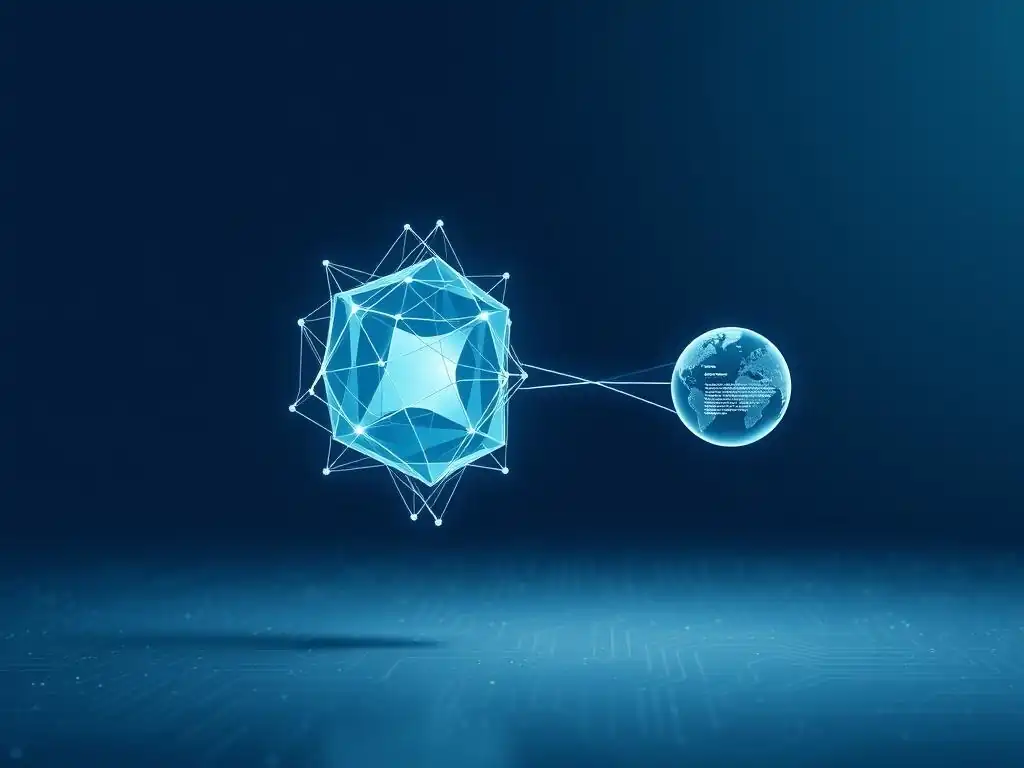
The interaction between smart contracts and oracles is a well-defined process involving a clear data flow. Typically, a smart contract initiates the request for external data. This request is sent to the oracle network or a specific oracle. The oracle then retrieves the requested data from the designated off-chain source.
This source could be a web API, a database, a sensor, or even human input. Once the data is retrieved, the oracle often performs verification and validation steps to ensure its accuracy and reliability. This might involve data aggregation from multiple sources, cryptographic verification, or consensus mechanisms within a decentralized oracle network.
After verification, the oracle formats the data into a blockchain-compatible format and transmits it back to the smart contract. This data delivery is usually done through a transaction on the blockchain, which the smart contract can then access and use to trigger its pre-programmed logic. Upon receiving the data, the smart contract executes its code based on the received information.
For instance, if the data is a price feed, the smart contract might update asset prices on a decentralized exchange. If the data is a weather report, the smart contract might trigger an insurance payout. The key is that the oracle acts as a reliable and secure intermediary, providing the necessary external input for the smart contract to function in response to real-world events.
Ensuring Data Integrity: Oracle Security and Verification Methods
Maintaining data integrity is paramount in the oracle-smart contract ecosystem. Compromised or manipulated oracle data can render even the most robust smart contract logic useless or harmful. Therefore, various security and verification methods are employed to ensure the trustworthiness of oracle data. Data source verification is a crucial first step. Reputable oracles source data from reliable and established sources, such as well-known APIs, reputable data providers, or verified sensor networks. Some oracles even provide transparency about their data sources, allowing users to assess the credibility of the information.
Data aggregation and consensus are common techniques used in decentralized oracle networks. By aggregating data from multiple independent oracles and employing consensus mechanisms, these networks mitigate the risk of relying on a single, potentially flawed or malicious oracle. Outlier detection and data validation algorithms can further enhance data accuracy by identifying and filtering out anomalous data points.
Cryptographic verification methods, such as digital signatures and hash functions, can be used to ensure data authenticity and prevent tampering during transmission from the oracle to the smart contract. Some advanced oracle solutions also utilize Trusted Execution Environments (TEEs) to create secure enclaves for data processing and verification within the oracle, further enhancing security and data integrity.
The Importance of Reliable Oracles for Smart Contract Functionality
Reliable oracles are not merely an optional add-on to smart contracts; they are absolutely essential for the vast majority of real-world smart contract applications to function effectively and securely. Without reliable oracles, smart contracts would be limited to on-chain data manipulation, severely restricting their practical use cases. The reliability of oracles directly impacts the trustworthiness and effectiveness of the entire smart contract system. If oracles provide inaccurate, delayed, or manipulated data, the smart contracts relying on them will produce incorrect or unfair outcomes, undermining user trust and potentially leading to significant financial losses or operational disruptions.
Consider the example of DeFi platforms. These platforms are heavily reliant on price feed oracles for critical functions like lending, borrowing, and trading. If price oracles are unreliable or easily manipulated, DeFi platforms become vulnerable to attacks and market manipulation, potentially causing cascading liquidations and systemic risks.
Similarly, in supply chain management, unreliable oracle data could lead to inaccurate tracking of goods, delays in payments, and inefficiencies in logistics. The robustness and security of oracles are therefore directly proportional to the robustness and security of the smart contract applications they support. Investing in and utilizing reliable oracle solutions is crucial for building trustworthy and functional blockchain-based systems that can bridge the gap between the digital and physical worlds.
Real-World Applications: Smart Contracts Powered by Oracles
Decentralized Finance (DeFi): Oracles in Lending and Borrowing Platforms
Decentralized Finance (DeFi) is arguably the sector most heavily reliant on blockchain oracles. Lending and borrowing platforms, a cornerstone of DeFi, critically depend on oracles for accurate and up-to-date price feeds. These platforms allow users to borrow cryptocurrencies by providing collateral, typically in the form of other cryptocurrencies.
Oracles provide the real-time prices of both the borrowed and collateralized assets, enabling the platform to calculate collateralization ratios and trigger liquidations when necessary. For example, if a user borrows ETH and provides BTC as collateral, price oracles continuously monitor the USD value of both ETH and BTC. If the value of BTC (collateral) drops relative to ETH (borrowed asset) to a point where the collateralization ratio falls below a predefined threshold, the smart contract will automatically liquidate a portion of the collateral to protect lenders.
Without reliable price oracles, DeFi lending platforms would be extremely vulnerable to price manipulation and market volatility. Inaccurate or delayed price feeds could lead to under-collateralization and systemic risk. Reputable DeFi platforms often employ decentralized oracle networks that aggregate price data from multiple exchanges to mitigate the risk of single-point-of-failure and price manipulation attempts on individual exchanges.
Chainlink, for example, is a prominent decentralized oracle network widely used by DeFi platforms for secure and reliable price feeds. These oracles are not just about price; they also play a role in providing interest rate data and other market information necessary for the smooth functioning of DeFi lending and borrowing protocols.
Supply Chain Management: Tracking Goods with Oracle-Verified Data
Supply chain management is another area where smart contracts and oracles are creating significant efficiencies and transparency. Oracles can connect smart contracts to real-world data about the location, condition, and provenance of goods as they move through the supply chain. IoT sensors, RFID tags, and GPS trackers can be used to collect data about products at various stages of their journey, from manufacturing to delivery. Oracles then relay this data to smart contracts, enabling automated tracking and verification of goods.
For example, a smart contract in a pharmaceutical supply chain could use oracles to monitor temperature-sensitive medications during transportation. IoT sensors embedded in shipping containers can continuously measure temperature, and oracles can feed this data to a smart contract. If the temperature exceeds a safe threshold at any point, the smart contract can automatically trigger alerts, initiate investigations, or even invalidate the batch if the temperature breach is critical.
Oracle-verified data in supply chain management can also facilitate automated payments and contract execution. For instance, upon confirmation of delivery, verified by an oracle based on GPS tracking data, a smart contract can automatically release payment to the supplier. This reduces manual paperwork, eliminates delays, and increases trust and transparency among supply chain participants. Companies like IBM and Maersk have explored blockchain-based supply chain solutions leveraging oracles to improve efficiency and traceability in global trade.
Insurance: Automated Claims Processing with Oracle-Driven Triggers
The insurance industry is ripe for disruption through smart contracts and oracles, particularly in areas like parametric insurance. Parametric insurance policies are designed to pay out based on the occurrence of a predefined event, rather than assessing actual losses. Oracles are crucial in this model to objectively verify whether these triggering events have occurred. For example, consider a flight delay insurance smart contract.
An oracle can monitor real-time flight data from aviation APIs. If a flight is delayed beyond a specified threshold, the oracle automatically relays this information to the smart contract, which then triggers an automatic payout to the insured party. This eliminates the need for lengthy claims processes and subjective assessments, providing faster and more transparent payouts.
Another example is weather insurance for farmers. Smart contracts linked to weather data oracles can automatically compensate farmers if rainfall is below a certain level or if there is excessive drought during the growing season. Oracles provide objective and verifiable data on rainfall, temperature, and other weather parameters, removing ambiguity and potential disputes in claims processing.
Companies like Arbol and Etherisc are building platforms leveraging smart contracts and oracles to offer parametric insurance solutions in areas like agriculture, disaster relief, and travel. The use of oracles in insurance leads to more efficient, transparent, and potentially cheaper insurance products, benefiting both insurers and policyholders.
Prediction Markets: Outcome Verification with Oracle Data
Prediction markets are platforms that allow users to bet on the outcome of future events, such as election results, sports matches, or economic indicators. Smart contracts are ideal for building decentralized prediction markets, ensuring fair and transparent betting and payout mechanisms. However, to settle bets, these platforms need a reliable way to determine the actual outcome of the events. This is where oracles play a crucial role.
Oracles are used to verify and report the real-world outcome of events to the prediction market smart contracts. For example, for a prediction market on the outcome of a presidential election, an oracle can be used to fetch the official election results from a reputable source after the election has concluded. This verified outcome data is then fed to the smart contract, which automatically settles the bets and distributes payouts to the winning bettors.
Reputable prediction markets often employ decentralized oracle networks to enhance the reliability and trustworthiness of outcome verification. Using multiple independent oracles and consensus mechanisms reduces the risk of manipulation or inaccurate reporting of event outcomes. Platforms like Augur and Polymarket utilize oracles to ensure the integrity of their prediction markets. The use of oracles in prediction markets ensures that payouts are based on objective and verifiable outcomes, fostering user trust and the credibility of these decentralized forecasting platforms.
Challenges and Solutions in Oracle Implementation
The Risk of Oracle Manipulation: Potential Vulnerabilities
Despite their crucial role, oracles are not without vulnerabilities. The "Oracle Problem" not only addresses data accuracy but also the potential for oracle manipulation. Since oracles act as bridges to the external world, they can become targets for malicious actors seeking to influence smart contract outcomes for their benefit. Oracle manipulation refers to the act of intentionally providing false or biased data to a smart contract through a compromised or malicious oracle. If an oracle is compromised, attackers could inject false data, causing the smart contract to execute incorrectly, potentially leading to financial losses or unfair outcomes for users.
The risk of oracle manipulation is particularly pronounced with centralized oracles, as they represent a single point of failure. If a centralized oracle is hacked or controlled by a malicious entity, the data it provides can be easily manipulated. Even with decentralized oracles, vulnerabilities can exist if the network is not sufficiently robust or if consensus mechanisms are flawed.
For example, if a decentralized oracle network relies on a small number of oracles, or if a significant portion of these oracles can be colluded or compromised, attackers might be able to sway the consensus and inject false data. The economic incentives and potential gains from manipulating oracle data, especially in high-value smart contract applications like DeFi, can be substantial, making oracle security a critical concern.
Addressing the Oracle Problem: Security Measures and Best Practices
Addressing the Oracle Problem and mitigating the risk of oracle manipulation requires a multi-faceted approach, encompassing various security measures and best practices. Decentralization is a key principle in enhancing oracle security. Decentralized Oracle Networks (DONs) are designed to distribute trust across multiple independent oracles, making it significantly harder for attackers to compromise the system compared to centralized oracles. By aggregating data from multiple sources and using consensus mechanisms, DONs reduce the reliance on any single oracle and increase the robustness of the data provided.
Reputation systems and staking mechanisms can further incentivize oracles to provide accurate data and penalize malicious behavior. Oracles with a proven track record of providing reliable data can build a positive reputation, attracting more users and higher rewards. Staking mechanisms require oracles to lock up a certain amount of cryptocurrency as collateral, which can be slashed if they are found to be providing false or malicious data.
This economic disincentive discourages malicious behavior and encourages oracles to act honestly. Data source verification and validation are also critical. Oracles should source data from reputable and reliable sources and employ robust data validation techniques, such as outlier detection and cross-referencing with multiple sources, to ensure data accuracy before relaying it to smart contracts.
Transparency and auditability of oracle operations are also important. Users should be able to understand how oracles operate, where they source their data, and how they verify it. Auditable oracle systems allow for independent scrutiny and enhance trust in the data they provide.
Decentralized Oracle Networks (DONs): Enhancing Trust and Reliability
Decentralized Oracle Networks (DONs) represent a significant advancement in addressing the Oracle Problem and enhancing the trust and reliability of oracle data. DONs are designed to overcome the limitations of centralized oracles by creating a network of independent oracle nodes that collectively provide data to smart contracts. These networks typically employ various mechanisms to ensure data accuracy, security, and resilience. Data aggregation is a core feature of DONs.
They retrieve data from multiple independent sources and aggregate it using techniques like medianization or averaging to mitigate the impact of outliers or inaccuracies from individual sources. Consensus mechanisms are used to ensure agreement among oracle nodes on the data to be provided to smart contracts. These mechanisms, similar to blockchain consensus, ensure that a majority of oracle nodes agree on the data, preventing manipulation by a small number of compromised oracles.
Incentive mechanisms are often built into DONs to reward honest oracle behavior and penalize malicious activity. These mechanisms can include staking requirements, reputation systems, and payment structures that incentivize oracles to provide accurate and timely data. Redundancy and fault tolerance are inherent benefits of DONs.
With multiple oracle nodes participating in the network, the system becomes more resilient to node failures or attacks. If some oracle nodes go offline or become compromised, the network can continue to function reliably as long as a sufficient number of honest nodes remain. Prominent examples of DONs include Chainlink, Band Protocol, and API3, which are widely used in the blockchain ecosystem to provide secure and reliable oracle services to various smart contract applications, particularly in DeFi.
The Future of Smart Contracts and Oracles: Innovation and Integration
Advancements in Oracle Technology: Trusted Execution Environments (TEEs) and Data Aggregation
The field of oracle technology is continuously evolving, with ongoing advancements aimed at enhancing security, reliability, and efficiency. Trusted Execution Environments (TEEs) are emerging as a promising technology to improve oracle security. TEEs are secure enclaves within computer processors that provide isolated environments for executing code and processing sensitive data.
By utilizing TEEs, oracles can perform data retrieval, verification, and processing within a secure and tamper-proof environment, reducing the risk of external manipulation. For example, an oracle running within a TEE can securely fetch data from an API, perform cryptographic verification, and then deliver the processed data to a smart contract, all while protecting the data and the oracle's operations from outside interference.
Advanced data aggregation techniques are also being developed to improve the accuracy and robustness of oracle data. Beyond simple medianization or averaging, more sophisticated algorithms are being explored to detect and filter out malicious data points, identify data inconsistencies, and provide more nuanced and reliable data feeds. These techniques may involve machine learning algorithms to analyze data patterns, identify anomalies, and assess the trustworthiness of different data sources.
Interoperability and cross-chain oracles are also gaining importance as the blockchain ecosystem becomes increasingly multi-chain. Oracles are being developed to facilitate data transfer and communication between different blockchains, enabling smart contracts on one blockchain to access data and interact with applications on other blockchains. This cross-chain oracle capability is crucial for building interconnected and interoperable blockchain ecosystems.
The Impact of Oracles on the Evolution of Smart Contracts
Oracles are not merely a supporting infrastructure for smart contracts; they are a key driver in their evolution and expansion of their capabilities. As oracle technology advances and becomes more robust and reliable, the potential use cases for smart contracts are expanding dramatically. With secure and trustworthy oracles, smart contracts can move beyond simple on-chain transactions and interact with the complexities of the real world, unlocking a vast array of new applications and possibilities.
Increased complexity and sophistication of smart contracts are being enabled by oracles. Smart contracts can now incorporate real-world data, respond to external events, and integrate with existing systems, leading to more complex and sophisticated decentralized applications. For instance, oracles are enabling the development of complex DeFi protocols, sophisticated supply chain management systems, and innovative insurance products that were previously impossible with blockchain technology alone.
Greater real-world adoption of smart contracts is being facilitated by reliable oracles. As businesses and industries recognize the potential of smart contracts to automate processes, reduce costs, and increase transparency, the demand for robust and secure oracle solutions is growing. Reliable oracles are essential for bridging the gap between the theoretical potential of smart contracts and their practical implementation in real-world scenarios.
The evolution of oracles is therefore intrinsically linked to the evolution of smart contracts and the broader adoption of blockchain technology. The future of blockchain technology is intertwined with the continued innovation and development of secure, reliable, and versatile oracle solutions.
Blockchain Smart Contracts Oracles Explained: Key Takeaways
The relationship between blockchain smart contracts and oracles is undeniably symbiotic. Smart contracts provide the framework for automated and trustless agreements, while oracles act as the crucial bridge connecting these digital agreements to the real world. Oracles solve the fundamental limitation of smart contracts by providing access to external data, enabling them to react to real-world events and interact with off-chain systems. Reliability and security of oracles are paramount for the integrity and trustworthiness of smart contract applications. The "Oracle Problem" highlights the challenges of ensuring data accuracy and preventing manipulation, emphasizing the need for robust oracle solutions. Decentralized Oracle Networks (DONs) are a key advancement, enhancing trust and reliability through data aggregation, consensus mechanisms, and decentralized architectures.
Real-world applications of smart contracts powered by oracles are vast and growing, spanning DeFi, supply chain management, insurance, prediction markets, and beyond. Oracles are enabling the practical implementation of smart contracts across diverse industries, driving innovation and efficiency. Ongoing advancements in oracle technology, such as TEEs and advanced data aggregation, are further enhancing security, reliability, and capabilities.
The future of smart contracts is inextricably linked to the future of oracles. As oracle technology continues to evolve and mature, we can expect to see even more innovative and impactful applications of smart contracts that bridge the gap between the blockchain world and the complexities of reality. Understanding the symbiotic relationship between blockchain smart contracts oracles is essential for anyone seeking to grasp the full potential of decentralized technology and its transformative impact on various sectors.
Frequently Asked Questions
What exactly is a smart contract in the context of blockchain technology?
A smart contract is a self-executing agreement written in code and stored on a blockchain. It automatically enforces the terms of the agreement when predefined conditions are met, eliminating the need for intermediaries.
Why are oracles necessary for smart contracts to function effectively?
Smart contracts, by design, cannot directly access off-chain data. Oracles act as bridges, providing reliable external information to smart contracts, enabling them to interact with the real world.
How do oracles ensure the accuracy and reliability of the data they provide to smart contracts?
Oracles employ various mechanisms, such as data aggregation from multiple sources and reputation systems, to enhance the trustworthiness and accuracy of the information they supply to smart contracts.
What are some real-world examples of how smart contracts and oracles are being used together?
They are used in areas like decentralized finance (DeFi) for price feeds, supply chain management for tracking goods, and insurance for automated claim settlements based on external events.
What are the potential risks associated with using oracles in conjunction with smart contracts?
The "oracle problem" poses a risk. If an oracle provides inaccurate or malicious data, the smart contract will execute based on that flawed information, potentially leading to significant losses.
Final Reflection: The Enduring Promise of Trustless Agreements
The exploration of smart contracts and oracles reveals a powerful synergy that is increasingly shaping the landscape of decentralized applications. The ability to execute agreements automatically and transparently, verified by external data sources, is no longer a futuristic fantasy, but a tangible reality impacting industries from finance to supply chain management. This burgeoning ecosystem promises to revolutionize how we interact and transact, fostering a new era of trustless collaboration.
The impact of smart contracts and oracles extends far beyond the technical realm, influencing the very fabric of our social and economic structures. The potential for increased efficiency, reduced fraud, and enhanced transparency is undeniable, yet the ethical considerations surrounding data integrity and algorithmic bias demand careful attention. The blockchain is more than just technology. It's a social and economic revolution.
- Don Tapscott. This revolution requires us to actively shape its trajectory, ensuring that these powerful tools are used to build a more equitable and just future.
As you navigate the complexities of the digital age, consider the profound implications of smart contracts and oracles. How can you leverage these technologies to create more transparent and accountable systems in your own sphere of influence? Let us all strive to understand and contribute to the responsible development of this transformative technology, ensuring that its potential benefits are realized for the betterment of society as a whole.
Unlock the Power of Connected Contracts: Start Building Today!
Thank you for exploring the essential relationship between smart contracts and oracles. You now understand how these technologies work together to bring real-world data onto the blockchain. It's time to translate that knowledge into action!
Are you ready to dive deeper and help shape the future of decentralized applications? Here's how you can get involved:
- Start experimenting by creating your own smart contract that interacts with an oracle. Choose a simple dataset and leverage a free oracle service to begin. This is your opportunity to turn ideas into reality!
- Share this article with your network to spread awareness of the vital role oracles play in blockchain development. Collaboration drives progress!
- Contribute to open-source oracle projects on platforms like GitHub. Your skills can help enhance their reliability and security.
What innovative use case can you imagine for smart contracts and oracles? What real-world problems could they help solve together? Share your thoughts in the comments below!
Leave a Reply