
Smart Contracts and Trustlessness: Eliminating the Need for Intermediaries

Welcome to Blockchain Trends, your premier source for understanding the transformative power of blockchain beyond the hype.
Ever wondered how to build truly trustless systems? This week, we delve into the heart of blockchain innovation with a deep dive into blockchain smart contracts, exploring how they eliminate the need for intermediaries and foster unprecedented levels of trust. Ready to unravel the mechanics of trustlessness? Read on to discover the future of decentralized agreements.
Smart Contracts and Trustlessness: Eliminating the Need for Intermediaries
- Understanding Blockchain Smart Contracts and Their Role in Trustless Systems
- The Problem with Intermediaries: Costs, Risks, and Inefficiencies
- How Smart Contracts Eliminate Intermediaries: A Detailed Look
- Real-World Applications: Smart Contracts in Action
- Benefits of Trustless Systems Enabled by Smart Contracts
- Challenges and Limitations of Smart Contracts
- The Future of Trustless Systems: Beyond Intermediaries
- Conclusion: Embracing the Trustless Revolution with Smart Contracts
-
Frequently Asked Questions
- What exactly are blockchain smart contracts and how do they relate to the concept of trustlessness?
- How do smart contracts help in eliminating intermediaries within various industries?
- What are some potential applications of blockchain smart contracts beyond just financial transactions?
- What are the key challenges and considerations regarding the regulation of blockchain smart contracts?
- How does the trustlessness offered by smart contracts contribute to the future of decentralized systems?
- Final Reflection: Embracing Trust Through Code
- Unlock the Power of Decentralization: Start Building Today!
Understanding Blockchain Smart Contracts and Their Role in Trustless Systems
What are Smart Contracts? A Technical Definition
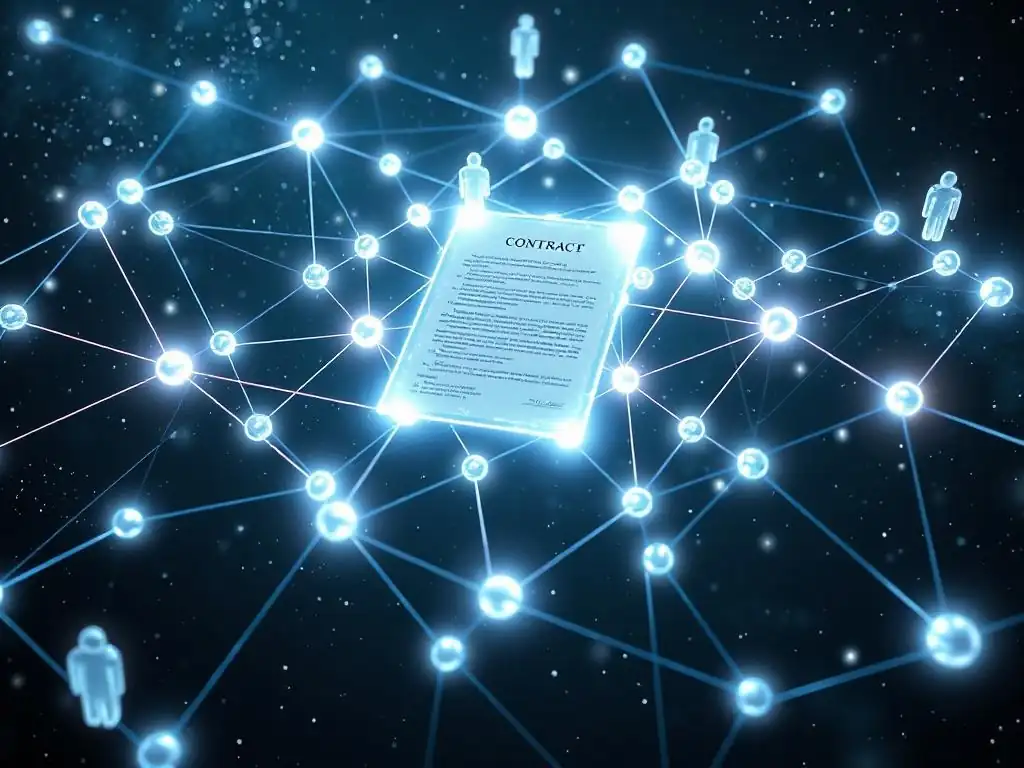
Smart contracts are self-executing agreements written in code and deployed on a blockchain network. They automatically enforce the terms of a contract when predefined conditions are met, without the need for intermediaries. Think of them as digital vending machines; once the conditions (like payment) are fulfilled, the contract automatically dispenses the agreed-upon output (like a product or service).
Technically, smart contracts are programs stored on a blockchain that run when specific conditions are verified. These conditions and the actions to be taken are all written into the code, making the execution deterministic and transparent to all participants on the network.
From a computer science perspective, a smart contract is a state machine that transitions between states based on inputs and predefined logic. The code, typically written in languages like Solidity for Ethereum or Rust for Solana, defines the contract's rules and how it interacts with blockchain data. Once deployed, the smart contract's code is immutable, meaning it cannot be altered, ensuring that the agreement will be executed exactly as programmed. This immutability is a cornerstone of the trustlessness they provide, as no single party can unilaterally change the terms after deployment.
The Core Concept: Trustlessness in Blockchain Technology
Trustlessness, in the context of blockchain and smart contracts, does not mean that trust is completely absent. Instead, it signifies a shift from relying on trust in individuals or institutions to relying on trust in a transparent and verifiable system. In traditional systems, trust is placed in intermediaries like banks, lawyers, or escrow services to ensure agreements are honored. However, these intermediaries are centralized entities that can be susceptible to human error, bias, or even corruption.
Blockchain technology and, specifically, smart contracts offer a different paradigm. Trust is embedded in the code and the decentralized nature of the blockchain itself. Participants do not need to trust each other personally; they only need to trust the underlying technology. This "trust in code" is achieved through cryptographic security, distributed consensus mechanisms, and the transparent and immutable nature of the blockchain ledger. The system is designed to be inherently resistant to manipulation, making it possible to transact and interact without relying on the good faith or operational integrity of intermediaries.
How Smart Contracts Achieve Trustless Agreements
Smart contracts achieve trustless agreements through a combination of features inherent to blockchain technology. Firstly, the code is transparent and auditable. Anyone can inspect the smart contract's code on the blockchain, ensuring that the terms and conditions are clear and understood by all parties involved. This transparency reduces information asymmetry and eliminates hidden clauses or unexpected terms.
Secondly, smart contracts are executed automatically and deterministically by the blockchain network. Once the conditions encoded in the contract are met, the network validates and executes the contract's instructions. This automation removes the need for manual intervention and the associated risks of human error or subjective interpretation. The decentralized nature of the blockchain further strengthens trustlessness, as no single entity controls the execution; instead, a distributed network of nodes verifies and validates each transaction, making manipulation extremely difficult and computationally infeasible. This combination of transparency, automation, and decentralization is what allows smart contracts to facilitate trustless agreements.
The Problem with Intermediaries: Costs, Risks, and Inefficiencies
Traditional Systems: Relying on Trusted Third Parties
Traditional systems for agreements and transactions heavily rely on trusted third parties, or intermediaries. These intermediaries can take various forms, such as banks for financial transactions, lawyers for legal contracts, escrow services for secure exchanges, and platforms like marketplaces or social media networks to facilitate interactions. The fundamental role of these intermediaries is to provide assurance and facilitate trust between parties who may not know or trust each other directly. They act as bridges, verifying identities, enforcing rules, and resolving disputes.
For instance, in a real estate transaction, multiple intermediaries are involved: real estate agents, lawyers, banks providing mortgages, and title companies. Each intermediary plays a crucial role in ensuring the transaction is legitimate and legally sound. Similarly, in international trade, banks and financial institutions act as intermediaries to handle payments and letters of credit, mitigating risks associated with cross-border transactions. While these intermediaries provide essential services, their involvement introduces costs, complexities, and potential inefficiencies.
The Drawbacks of Intermediaries: Fees, Delays, and Censorship
Relying on intermediaries comes with several significant drawbacks. Firstly, they introduce fees and costs. Each intermediary charges for their services, adding to the overall expense of a transaction or agreement. For example, in financial transactions, banks take transaction fees, and payment processors also levy charges, reducing the net value for both the sender and receiver. These fees can be particularly burdensome for small transactions or in regions with limited access to traditional banking services.
Secondly, intermediaries often introduce delays and inefficiencies. Processes involving multiple intermediaries can be time-consuming, requiring paperwork, approvals, and manual processing. International money transfers through traditional banking systems can take days, and complex legal agreements can take weeks or months to finalize. Furthermore, intermediaries are centralized entities, making them potential points of censorship or control. They can restrict access to services, block transactions, or impose arbitrary rules, potentially limiting freedom and innovation.
Why Blockchain Smart Contracts Offer a Superior Alternative
Blockchain smart contracts present a compelling alternative to traditional intermediary-based systems by addressing many of their inherent drawbacks. Smart contracts eliminate or significantly reduce the need for these intermediaries by automating agreement execution and building trust directly into the system. This automation inherently reduces costs, as fees paid to intermediaries are minimized or eliminated. Transaction fees in blockchain networks exist, but they often are significantly lower and more transparent than traditional intermediary fees, especially for cross-border transactions.
Smart contracts also drastically reduce delays. Transactions and agreements are executed automatically once the predefined conditions are met, streamlining processes and eliminating bureaucratic bottlenecks. This speed and efficiency are particularly valuable in areas like supply chain management and financial transactions where time is critical.
Moreover, the decentralized and permissionless nature of many blockchains makes them resistant to censorship. Smart contracts, once deployed, operate autonomously according to their code, reducing the possibility of arbitrary interference or control by any single entity. This combination of cost reduction, increased efficiency, and censorship resistance makes blockchain smart contracts a superior alternative in numerous scenarios.
How Smart Contracts Eliminate Intermediaries: A Detailed Look
Automating Agreements: The Power of Self-Executing Code
The core power of smart contracts in eliminating intermediaries lies in their ability to automate agreements through self-executing code. Traditional contracts rely on legal language and human interpretation, requiring intermediaries to interpret, enforce, and resolve disputes. Smart contracts, on the other hand, translate the terms of an agreement into lines of code that are automatically executed by the blockchain network. This code defines the conditions under which the contract will execute and the outcomes that will result when those conditions are met.
For example, imagine a simple escrow service. In a traditional escrow scenario, a third-party escrow agent holds funds until certain conditions are fulfilled, such as the delivery of goods. This agent charges a fee and introduces potential delays.
A smart contract can replicate this escrow service by automatically holding funds and releasing them to the seller once the buyer confirms receipt of the goods, as recorded on the blockchain. This automation removes the need for a human escrow agent, reducing costs and increasing efficiency. The self-executing nature of the code ensures that the agreement is enforced precisely as programmed, eliminating ambiguity and the need for subjective interpretation.
Smart Contracts for Secure and Transparent Transactions
Smart contracts enhance the security and transparency of transactions, further reducing the need for intermediaries whose roles often include ensuring these aspects. Security in smart contracts is derived from the cryptographic foundations of blockchain technology. Transactions are cryptographically signed and recorded on the immutable blockchain ledger, making them tamper-proof and auditable. This inherent security reduces the risk of fraud and manipulation, lessening the need for intermediaries to verify transaction integrity.
Transparency is another key advantage. The code of a smart contract and the transaction history on a blockchain are publicly accessible and verifiable. All participants can see the terms of the agreement and track the progress of the transaction, fostering trust and accountability. This transparency is in stark contrast to many traditional systems where information can be opaque and access-controlled by intermediaries. For instance, in supply chain management, smart contracts can provide transparent tracking of goods from origin to consumer, eliminating the need for intermediaries to verify product authenticity and provenance.
Reducing Counterparty Risk with Decentralized Execution
Smart contracts significantly reduce counterparty risk, which is the risk that one party in a transaction will not fulfill their obligations. Intermediaries often play a role in mitigating counterparty risk by providing guarantees or insurance. However, smart contracts achieve this risk reduction through decentralized execution and pre-defined outcomes. Because smart contracts are executed by a decentralized network, no single party can unilaterally prevent or alter the execution once the conditions are met. This decentralized execution ensures that all parties are bound by the contract's terms.
Furthermore, the outcomes of a smart contract are predetermined by its code. The contract defines exactly what will happen under various conditions, eliminating ambiguity and reducing the scope for disputes. For example, in a decentralized lending platform, smart contracts automatically manage loan disbursement, interest accrual, and collateral liquidation if the borrower defaults. This automation and pre-defined logic minimize counterparty risk because the terms of the agreement are enforced by code, not by the discretionary actions of an intermediary. The reduction in counterparty risk makes transactions more secure and reliable, diminishing the necessity for intermediaries to provide assurance.
Real-World Applications: Smart Contracts in Action
Decentralized Finance (DeFi): Cutting Out Financial Intermediaries
Decentralized Finance (DeFi) is arguably the most prominent real-world application of smart contracts, demonstrating their power to disintermediate traditional financial systems. DeFi protocols leverage smart contracts to replicate and enhance traditional financial services like lending, borrowing, trading, and asset management, but without relying on banks, brokers, or other centralized financial institutions. This disintermediation aims to create a more accessible, transparent, and efficient financial ecosystem.
DeFi's rapid growth highlights the practical benefits of smart contracts. As of late 2023, the total value locked (TVL) in DeFi protocols exceeded $50 billion, demonstrating significant adoption and user trust in these decentralized systems. This growth is fueled by the advantages of trustlessness, reduced fees, and increased accessibility that smart contracts provide in financial applications.
Smart Contracts in Lending and Borrowing Platforms
Smart contracts revolutionize lending and borrowing by creating permissionless and automated platforms. Traditional lending involves banks and financial institutions acting as intermediaries, assessing credit risk, managing loan terms, and handling repayments. DeFi lending platforms, built on smart contracts, automate these processes. Borrowers can access loans by providing collateral, often in the form of cryptocurrency, and smart contracts automatically manage loan disbursement, interest accrual, and collateral liquidation if necessary.
Platforms like Aave and Compound utilize smart contracts to facilitate lending and borrowing. These platforms operate algorithmically, adjusting interest rates based on supply and demand, and ensuring collateralization ratios are maintained. The absence of traditional intermediaries reduces operational costs and allows for faster loan processing. Furthermore, these platforms are often globally accessible, democratizing access to financial services for individuals who may be underserved by traditional banking systems.
Automated Market Makers (AMMs) and Decentralized Exchanges (DEXs)
Automated Market Makers (AMMs) and Decentralized Exchanges (DEXs) represent another significant application of smart contracts in DeFi, disrupting traditional centralized exchanges. Traditional exchanges rely on order books and intermediaries to match buyers and sellers. DEXs, powered by AMMs like Uniswap and SushiSwap, use smart contracts to create liquidity pools that automatically facilitate trading. These AMMs use algorithms to determine asset prices based on the ratio of assets in the liquidity pool, eliminating the need for order books and intermediaries to match trades.
DEXs offer several advantages over centralized exchanges. They are non-custodial, meaning users retain control of their funds. They are also generally more resistant to censorship and single points of failure. The trading fees on DEXs are often lower, and the process of listing new tokens is permissionless, fostering innovation and accessibility. The trading volume on DEXs has grown significantly, reaching billions of dollars daily, demonstrating their viability as an alternative to traditional exchanges.
Supply Chain Management: Enhancing Transparency and Traceability
Beyond finance, smart contracts are finding applications in supply chain management, aiming to enhance transparency and traceability. Traditional supply chains often involve multiple intermediaries, making it difficult to track goods accurately and verify their provenance. Smart contracts can be used to record and track goods as they move through the supply chain, creating an immutable and transparent record of each step.
For example, a smart contract can be triggered when a shipment reaches a certain location, automatically updating the status and initiating the next step in the process. This automation reduces paperwork, minimizes errors, and provides real-time visibility into the supply chain. Companies like IBM and Maersk have explored blockchain-based supply chain solutions, demonstrating the potential for smart contracts to improve efficiency and transparency in logistics and global trade. This improved traceability can be particularly valuable in industries like pharmaceuticals and food, where verifying authenticity and origin is crucial.
Digital Identity: Secure and Self-Sovereign Identity Management
Digital identity management is another area where smart contracts can play a transformative role, enabling secure and self-sovereign identity solutions. Traditional identity systems often rely on centralized authorities and intermediaries to verify and manage personal data, raising concerns about privacy and data control. Smart contracts can facilitate decentralized identity solutions where individuals have greater control over their personal information and can selectively share it with verified parties without relying on intermediaries.
Self-sovereign identity (SSI) systems, often built using blockchain and smart contracts, allow individuals to create and manage their digital identities independently. Users can control who has access to their data and for what purpose. For example, verifiable credentials, issued and verified using smart contracts, can allow individuals to prove their identity or qualifications without revealing unnecessary personal information. This approach enhances privacy, reduces reliance on centralized identity providers, and empowers individuals with greater control over their digital lives.
Healthcare: Secure and Auditable Medical Records Management
In healthcare, smart contracts are being explored to improve the security, privacy, and auditability of medical records management. Traditional healthcare systems often struggle with data silos, interoperability issues, and concerns about patient data security. Blockchain-based systems, utilizing smart contracts, can create a secure and decentralized platform for managing and sharing medical records. Smart contracts can control access to patient data, ensuring that only authorized parties, such as doctors and patients themselves, can access sensitive information.
Furthermore, the immutable nature of blockchain provides an auditable trail of all data access and modifications, enhancing accountability and transparency. For example, a smart contract can be designed to automatically grant a doctor temporary access to a patient's medical history upon patient consent, and automatically revoke access after a certain period or upon completion of the consultation. This approach can improve data security, enhance patient privacy, and streamline medical record sharing, potentially leading to more efficient and patient-centric healthcare systems.
Benefits of Trustless Systems Enabled by Smart Contracts
Increased Efficiency and Reduced Costs
One of the most significant benefits of trustless systems enabled by smart contracts is increased efficiency and reduced costs. By eliminating intermediaries, smart contracts streamline processes, automate tasks, and reduce the overhead associated with traditional systems. Transaction fees in blockchain networks are generally lower than fees charged by traditional intermediaries, especially for cross-border transactions and smaller value exchanges. Automation reduces manual labor, minimizes errors, and accelerates transaction processing times.
For businesses, this translates to lower operational costs, faster turnaround times, and improved resource allocation. For individuals, it means reduced fees for services, quicker access to funds, and more efficient interactions. In areas like supply chain management, automation through smart contracts can optimize logistics, reduce delays, and lower transportation costs. In finance, DeFi protocols offer lower transaction fees and potentially higher returns compared to traditional financial products.
Enhanced Security and Transparency
Trustless systems built with smart contracts inherently offer enhanced security and transparency compared to intermediary-based systems. Security is strengthened by cryptography, decentralization, and immutability. Blockchain's cryptographic security makes it extremely difficult to tamper with data or transactions. Decentralization reduces single points of failure and makes the system more resilient to attacks. Immutability ensures that once data is recorded on the blockchain, it cannot be altered, providing a permanent and auditable record.
Transparency is enhanced because smart contract code and transaction histories are publicly accessible and verifiable. This openness fosters trust and accountability, as all participants can see and verify the rules and operations of the system. In contrast, traditional systems often lack transparency, with processes and data hidden within centralized intermediaries. This enhanced security and transparency build confidence in the system and reduce the risks of fraud and manipulation.
Greater Accessibility and Inclusion
Smart contracts and trustless systems have the potential to promote greater accessibility and inclusion, particularly in areas like finance and identity management. Traditional financial systems often exclude individuals who lack access to banking services or credit history, particularly in developing countries or underserved communities. DeFi protocols offer permissionless access to financial services, requiring only an internet connection and a cryptocurrency wallet. This accessibility can empower individuals to participate in the global economy and access financial tools previously unavailable to them.
Similarly, decentralized identity solutions can provide individuals with greater control over their digital identities and reduce reliance on centralized identity providers. This can be particularly beneficial for individuals who lack formal identification documents or are marginalized by traditional identity systems. By lowering barriers to entry and providing more inclusive systems, smart contracts and trustless technologies can contribute to a more equitable and accessible digital world.
Increased Innovation and Composability
The open-source nature of blockchain technology and smart contracts fosters increased innovation and composability. Smart contracts are often built on open-source platforms, allowing developers to build upon existing code, collaborate, and create new applications and services. This composability, also known as "money legos" in DeFi, refers to the ability to combine and integrate different smart contracts and protocols to create more complex and innovative financial instruments and applications.
This open and composable environment accelerates innovation by reducing development time and costs. Developers can leverage existing smart contracts and protocols to build new solutions more quickly and efficiently. This rapid innovation leads to the emergence of new business models, services, and applications that were not possible with traditional, siloed systems. The potential for continuous improvement and evolution is a significant advantage of trustless systems and smart contract technology.
Challenges and Limitations of Smart Contracts
Smart Contract Security Vulnerabilities and Audits
Despite their advantages, smart contracts are not without challenges and limitations. One of the most significant concerns is security vulnerabilities. Smart contracts, being code, are susceptible to bugs and vulnerabilities that can be exploited by malicious actors. If a vulnerability is found in a deployed smart contract, especially an immutable one, it can be difficult or impossible to fix, potentially leading to significant financial losses. High-profile exploits in DeFi have demonstrated the real risks associated with smart contract vulnerabilities, with millions of dollars lost due to coding errors.
To mitigate these risks, rigorous security audits are crucial. Independent security firms specialize in auditing smart contract code to identify potential vulnerabilities before deployment. However, even with audits, the complexity of smart contract code and the evolving nature of exploits mean that vulnerabilities can still emerge. Continuous monitoring, code reviews, and formal verification techniques are essential to enhance smart contract security and build trust in these systems.
Scalability Issues on Blockchain Networks
Scalability is another significant challenge for blockchain networks and, consequently, for smart contracts. Many popular blockchain platforms, particularly those using proof-of-work consensus mechanisms, face limitations in the number of transactions they can process per second. This limited throughput can lead to network congestion, slow transaction times, and high transaction fees, especially during periods of high demand. Scalability issues can hinder the widespread adoption of smart contracts, particularly for applications requiring high transaction volumes or low latency.
Various scaling solutions are being developed and implemented, including layer-2 scaling solutions like rollups and sidechains, and improvements to layer-1 protocols through sharding and consensus mechanism upgrades. These solutions aim to increase transaction throughput and reduce costs, making blockchain networks and smart contracts more scalable and suitable for mass adoption. However, scalability remains an ongoing area of research and development in the blockchain space.
Regulatory Uncertainty and Legal Frameworks
Regulatory uncertainty and the lack of clear legal frameworks pose significant challenges to the widespread adoption of smart contracts. The legal status of smart contracts and their enforceability in traditional legal systems are still evolving. Questions remain about jurisdiction, liability, and dispute resolution in the context of smart contract-based agreements. Different jurisdictions have varying approaches to regulating blockchain and cryptocurrencies, creating a fragmented and uncertain regulatory landscape.
This regulatory uncertainty can create challenges for businesses seeking to utilize smart contracts, as they may face legal risks and compliance complexities. Clearer regulatory guidelines and legal frameworks are needed to provide legal certainty and foster wider adoption of smart contracts. Engaging with regulators and policymakers is crucial to develop appropriate and balanced regulations that promote innovation while addressing potential risks.
The Oracle Problem
The oracle problem is a fundamental challenge in smart contract technology. Smart contracts, by design, operate within the blockchain environment and cannot directly access data from the external real world. However, many smart contract applications require external data, such as price feeds, weather information, or event outcomes, to trigger contract execution. Oracles are third-party services that bridge this gap by providing external data to smart contracts.
Relying on centralized oracles introduces a new intermediary and a potential point of failure or manipulation. If an oracle provides inaccurate or manipulated data, the smart contract execution can be compromised. Decentralized oracle networks (DONs) are being developed to address this problem by using multiple independent oracles to aggregate data and reduce reliance on a single source. Ensuring the reliability, security, and decentralization of oracles is crucial for the trustworthy operation of many smart contract applications.
The Future of Trustless Systems: Beyond Intermediaries
The Evolution of Smart Contract Technology
The technology underpinning smart contracts is continuously evolving, with ongoing advancements aimed at improving their functionality, security, and scalability. New programming languages and development tools are emerging, making it easier and more secure to write and deploy smart contracts. Formal verification techniques are becoming more sophisticated, enhancing the ability to mathematically prove the correctness and security of smart contract code.
Layer-2 scaling solutions are maturing, addressing scalability limitations and making smart contracts more efficient and cost-effective for a wider range of applications. Interoperability solutions are being developed to enable smart contracts to interact across different blockchain networks, fostering greater flexibility and connectivity. These technological advancements are paving the way for more complex, robust, and user-friendly smart contract applications in the future.
The Growing Adoption of Decentralized Applications (dApps)
The adoption of decentralized applications (dApps) built on smart contracts is steadily growing across various sectors. DeFi continues to expand, with new financial products and services emerging regularly. Beyond finance, dApps are gaining traction in areas like supply chain management, gaming, digital identity, healthcare, and governance. The increasing awareness of the benefits of trustlessness, transparency, and efficiency is driving this adoption.
As dApps mature and become more user-friendly, they are attracting a wider audience beyond the early adopters in the crypto community. The development of user-friendly interfaces, improved onboarding processes, and educational resources is crucial for mainstream adoption. The growing ecosystem of dApps indicates a shift towards a more decentralized and user-centric internet, where smart contracts play a key role in enabling trustless interactions and agreements.
The Potential for a More Trustless and Transparent World
The long-term potential of smart contracts and trustless systems extends beyond specific applications to the broader societal implications of a more decentralized and transparent world. By reducing reliance on intermediaries and building trust into technology, smart contracts can foster greater efficiency, fairness, and accountability in various aspects of life. From financial transactions to supply chains to governance systems, the principles of trustlessness and transparency can lead to more equitable and efficient outcomes.
Imagine a future where complex agreements are executed automatically and transparently through smart contracts, reducing legal disputes and bureaucratic delays. Imagine supply chains where product provenance and ethical sourcing are easily verifiable, empowering consumers to make informed choices. Imagine digital identity systems that empower individuals with control over their personal data and reduce the risks of data breaches and identity theft. While challenges remain, the potential for smart contracts to contribute to a more trustless and transparent world is significant and transformative.
Conclusion: Embracing the Trustless Revolution with Smart Contracts
Key Takeaways: Smart Contracts, Trustlessness, and Intermediary Disruption
Smart contracts represent a paradigm shift in how agreements are formed and executed, moving away from reliance on intermediaries towards trustless systems. They are self-executing agreements written in code, deployed on blockchains, and automatically enforced when predefined conditions are met. Trustlessness, in this context, means relying on the transparency and verifiability of the system rather than trust in individuals or institutions. By automating processes and embedding trust in code, smart contracts eliminate or significantly reduce the need for intermediaries, leading to increased efficiency, reduced costs, enhanced security, and greater transparency.
While challenges such as security vulnerabilities, scalability issues, and regulatory uncertainty exist, the potential benefits of smart contracts are substantial. Real-world applications in DeFi, supply chain management, digital identity, and healthcare are demonstrating the transformative power of this technology. As the technology matures and adoption grows, smart contracts are poised to play an increasingly important role in shaping a more decentralized and efficient future.
The Future of Blockchain and Decentralized Trust
The future of blockchain and decentralized trust is inextricably linked to the continued development and adoption of smart contracts. As smart contract technology evolves, addressing current limitations and unlocking new capabilities, we can expect to see even more innovative applications and wider adoption across various industries. The movement towards decentralization and trustlessness represents a fundamental shift in how we interact and transact, with the potential to create more equitable, transparent, and efficient systems.
Embracing this "trustless revolution" requires ongoing innovation, collaboration, and education. Addressing the challenges and realizing the full potential of smart contracts will require collective effort from technologists, businesses, regulators, and users. By fostering a deeper understanding of smart contracts and their implications, and by working together to build secure, scalable, and user-friendly solutions, we can unlock the transformative power of blockchain and decentralized trust to create a more transparent and efficient world.
Frequently Asked Questions
What exactly are blockchain smart contracts and how do they relate to the concept of trustlessness?
Smart contracts are self-executing agreements coded on a blockchain. They enable trustless interactions because the code dictates the terms and execution, eliminating the need to rely on trust between parties.
How do smart contracts help in eliminating intermediaries within various industries?
Smart contracts automate processes previously handled by intermediaries. This automation removes the need for third-party verification or enforcement, leading to lower costs and increased efficiency.
What are some potential applications of blockchain smart contracts beyond just financial transactions?
Beyond finance, smart contracts can be used in supply chain management to track goods, in healthcare to manage patient data securely, and in voting systems for transparent and verifiable elections.
What are the key challenges and considerations regarding the regulation of blockchain smart contracts?
Regulation faces challenges in defining the legal status of smart contracts and addressing potential issues like code vulnerabilities and unintended consequences. Balancing innovation with consumer protection is crucial.
How does the trustlessness offered by smart contracts contribute to the future of decentralized systems?
Trustlessness fosters greater participation and innovation in decentralized systems. By removing the reliance on central authorities, smart contracts enable more transparent, secure, and equitable systems for various applications.
Final Reflection: Embracing Trust Through Code
The exploration of blockchain smart contracts and their potential to eliminate intermediaries isn't just a theoretical exercise; it's a fundamental shift in how we perceive and establish trust in digital interactions. The ability to execute agreements automatically and transparently, without relying on central authorities, is rapidly transforming industries and redefining the very nature of contracts.
This movement towards trustlessness, powered by blockchain technology, has profoundly influenced the cultural landscape, fostering a sense of empowerment and decentralization. It's inspiring to witness how code can become a source of reliability, replacing traditional institutions with verifiable and immutable logic. Trust, but verify,
a sentiment often attributed to Ronald Reagan, finds new meaning in the age of smart contracts, where verification is built directly into the system.
As we stand on the cusp of a future increasingly shaped by decentralized technologies, I invite you to consider the implications of trustless systems in your own life. How can you leverage the principles of transparency and automation to build stronger, more reliable relationships and systems? Embrace the potential of blockchain smart contracts to create a world where trust is not blindly given, but earned through verifiable code, and actively contribute to shaping a future where intermediaries are no longer necessary to ensure fairness and accountability.
Unlock the Power of Decentralization: Start Building Today!
Thank you for exploring the transformative potential of smart contracts and trustless systems. We hope you've gained valuable insights into how these technologies are reshaping industries by eliminating the need for traditional intermediaries. Now, it's time to turn that knowledge into action!
Here are some ways to get started:
- Explore a beginner-friendly tutorial on Solidity to learn the fundamentals of smart contract development. This is your first step toward creating decentralized applications.
- Dive into decentralized finance (DeFi) by researching projects like Aave or Compound to see how they utilize smart contracts to enable financial services without intermediaries.
- Share this article with your network on social media and start a conversation about the future of trustless technologies. What groundbreaking applications of smart contracts do you envision?
What innovative problem would you like to solve using smart contracts? Share your ideas in the comments below!
Leave a Reply