
Smart Contracts vs. Decentralized Applications (dApps): Defining the Boundaries


Welcome to Blockchain Trends, your guide to understanding the revolutionary impact of blockchain beyond the hype! Dive deep into the world of decentralized finance, enterprise solutions, and the ever-evolving regulatory landscape. Curious about the fundamental building blocks of this digital revolution? Our latest deep dive explores the crucial distinctions between Blockchain smart contracts vs dApps, unlocking the key to understanding the power and potential of decentralized systems. Discover the boundaries and unlock the future – let's begin!
- Understanding the Core Concepts: Smart Contracts and dApps
- Blockchain Smart Contracts vs dApps: A Comparative Analysis
- The Relationship Between Smart Contracts and dApps: A Symbiotic Ecosystem
- Use Cases: Exploring Real-World Applications of Smart Contracts and dApps
- Smart Contract and dApp Security Considerations
- The Future of Blockchain Smart Contracts and Decentralized Applications
- Conclusion: Navigating the Smart Contract vs dApp Landscape
-
Frequently Asked Questions
- What is the fundamental difference between a blockchain smart contract and a dApp?
- How do smart contracts contribute to the functionality of dApps?
- Can a dApp exist without using smart contracts?
- What are some examples of use cases where smart contracts and dApps intersect?
- What are the regulatory challenges associated with blockchain smart contracts and dApps?
- Final Reflection: Embracing the Decentralized Future
- Unveil the Future: Your Next Step in Blockchain
Understanding the Core Concepts: Smart Contracts and dApps
What are Smart Contracts? A Detailed Explanation
Smart contracts are self-executing contracts with the terms of the agreement directly written into code. Imagine a vending machine: you insert coins, and upon reaching the required amount, the machine automatically dispenses the selected item. Smart contracts operate similarly, but instead of vending snacks, they automate and enforce agreements on a blockchain. These contracts are not "smart" in the AI sense, but rather in their ability to automatically execute predefined actions when specific conditions are met. They eliminate the need for intermediaries, fostering trust and transparency in transactions.
At their core, smart contracts are immutable pieces of code stored on a blockchain network. Once deployed, their code cannot be altered, ensuring that the contract terms remain consistent and tamper-proof throughout their lifecycle. This immutability is a crucial aspect, providing a verifiable and auditable record of all contract executions.
For example, in a supply chain context, a smart contract could automatically trigger payment to a supplier once a shipment reaches a predefined location, as verified by an oracle providing real-world data to the blockchain. This automation reduces delays, minimizes disputes, and enhances the overall efficiency of the supply chain.
Defining Decentralized Applications (dApps): Architecture and Functionality
Decentralized Applications, or dApps, are applications built on a decentralized network, such as a blockchain. Unlike traditional applications that rely on centralized servers and databases, dApps leverage the distributed and transparent nature of blockchain technology. Think of dApps as the user-facing interfaces that allow interaction with blockchain networks and, crucially, with smart contracts residing on those networks. They aim to provide users with greater control over their data, enhanced security, and resistance to censorship.
The architecture of a dApp typically involves a frontend, which users interact with, and a backend, which is partially or entirely decentralized. The backend logic and data storage are often managed by a blockchain network and smart contracts. For instance, a decentralized finance (DeFi) exchange dApp allows users to trade cryptocurrencies directly from their wallets, without relying on a central authority.
The trading logic, order execution, and asset custody are often governed by smart contracts deployed on the blockchain, ensuring transparency and security. This decentralized architecture aims to eliminate single points of failure and enhance user autonomy compared to traditional centralized exchanges.
Key Differences: Smart Contracts and dApps
While often discussed together, smart contracts and dApps are distinct yet interconnected concepts. The primary difference lies in their function and scope. Smart contracts are the backend logic, the engine that drives automated actions and agreements on a blockchain.
They are the code that defines the rules and executes them when conditions are met. In contrast, dApps are the complete applications, encompassing the frontend interface, backend logic (often powered by smart contracts), and the entire user experience. DApps leverage smart contracts to achieve decentralization and automation, but they are broader in scope, providing a user-friendly way to interact with blockchain technology.
Another key distinction is their purpose. Smart contracts are specifically designed to automate and enforce agreements, manage digital assets, and execute predefined actions based on specific conditions. They are focused on the programmatic execution of contractual terms. DApps, on the other hand, aim to provide a full range of functionalities, from social media platforms to decentralized marketplaces, using blockchain technology to enhance transparency, security, and user control. In essence, smart contracts are a fundamental building block within the broader ecosystem of decentralized applications, acting as the programmable logic that enables dApps to function in a trustless and decentralized manner.
Blockchain Smart Contracts vs dApps: A Comparative Analysis
Functionality: How Smart Contracts and dApps Operate Differently
Functionally, smart contracts and dApps operate at different layers of the blockchain ecosystem. Smart contracts are primarily concerned with automating specific tasks and agreements. They listen for events on the blockchain, and when predefined conditions are met, they automatically execute the programmed actions. For example, a smart contract for token distribution will automatically send tokens to designated addresses once a fundraising goal is reached or a vesting period concludes. Their functionality is focused on backend automation and rule enforcement.
dApps, in contrast, provide a broader range of functionalities, encompassing user interaction, data presentation, and access to blockchain services. They act as intermediaries between users and the underlying blockchain network and smart contracts. A DeFi lending dApp, for instance, not only uses smart contracts to manage loan agreements and interest calculations but also provides a user-friendly interface for borrowers and lenders to connect, browse loan offers, manage their portfolios, and interact with the smart contracts seamlessly. DApps handle the user experience and present the functionalities of smart contracts in an accessible way.
Development: Smart Contract vs dApp Development Processes
The development processes for smart contracts and dApps also differ significantly, reflecting their distinct roles. Smart contract development is heavily focused on backend programming, requiring expertise in blockchain-specific languages like Solidity (for Ethereum) or Vyper. The process emphasizes security, immutability, and rigorous testing, as vulnerabilities in smart contracts can have severe financial consequences. Developers often employ formal verification methods and extensive auditing to ensure the robustness and security of smart contract code.
dApp development, on the other hand, combines frontend and backend development skills. Frontend developers use languages like JavaScript, React, or Vue.js to create user interfaces that interact with the blockchain. Backend development for dApps often involves integrating with blockchain networks using libraries and APIs, as well as developing server-side components for functionalities not directly handled by smart contracts, such as user authentication or data indexing. DApp development is thus a more comprehensive process, requiring a broader skill set and focusing on both user experience and blockchain integration, often leveraging smart contracts as a core component of the backend.
Deployment: Where Smart Contracts and dApps Reside
Deployment is another key differentiator between smart contracts and dApps. Smart contracts are deployed directly onto a blockchain network, becoming an immutable and integral part of the blockchain's state. Once deployed, they exist on the blockchain ledger and are executed by the network's nodes. The deployment process involves compiling the smart contract code and submitting it to the blockchain, typically incurring a transaction fee. The address of the deployed smart contract becomes its permanent identifier on the blockchain.
dApps, however, are not deployed directly onto the blockchain in their entirety. While their smart contract components reside on the blockchain, the frontend and other non-blockchain components are typically hosted on traditional web servers or decentralized storage solutions like IPFS. The deployment process for a dApp involves deploying its smart contracts to the blockchain and setting up the frontend and other infrastructure components separately. Users access dApps through web browsers, similar to traditional websites, but the dApp's frontend then interacts with the deployed smart contracts on the blockchain to provide decentralized functionalities.
User Interaction: dApps as Interfaces for Smart Contracts
dApps serve as the primary interface through which users interact with smart contracts. Directly interacting with smart contracts can be complex and requires specialized tools and technical knowledge. dApps abstract away this complexity, providing user-friendly interfaces that simplify the process of interacting with blockchain-based functionalities powered by smart contracts. They act as a bridge between the technical backend of smart contracts and the average user.
For example, consider a decentralized autonomous organization (DAO) dApp. The DAO's rules and governance mechanisms are encoded in smart contracts. The dApp provides a user-friendly interface for members to propose and vote on governance decisions, view the DAO's treasury, and participate in the community. Users interact with the dApp interface, and the dApp, in turn, communicates with the underlying smart contracts to execute actions based on user interactions and governance rules. This abstraction is crucial for making blockchain technology and smart contract functionalities accessible to a wider audience beyond technical experts.
The Relationship Between Smart Contracts and dApps: A Symbiotic Ecosystem
Smart Contracts as the Backend Logic for dApps
The relationship between smart contracts and dApps is symbiotic, with smart contracts often serving as the fundamental backend logic for dApps. Smart contracts define the rules, execute the transactions, and manage the data within a dApp's decentralized ecosystem. They handle the core functionalities that require automation, transparency, and immutability, such as token transfers, governance mechanisms, or decentralized exchange protocols. Without smart contracts, many of the core decentralized features of dApps would be impossible to implement.
Imagine a decentralized marketplace dApp for non-fungible tokens (NFTs). The smart contracts in this dApp would handle the creation, ownership transfer, and trading of NFTs. They would enforce the marketplace rules, manage escrow services, and ensure fair and transparent transactions. The dApp's frontend would then interact with these smart contracts to allow users to browse NFTs, list their own NFTs for sale, make bids, and complete purchases. The smart contracts are the unseen engine driving the marketplace's core functionalities, while the dApp provides the user-friendly interface.
dApps as the Frontend for Interacting with Blockchain Smart Contracts
Conversely, dApps act as the primary frontend for users to interact with blockchain smart contracts. While smart contracts can exist and function independently, dApps provide the necessary user interface and experience to make them accessible and usable for a broader audience. They bridge the gap between the complex world of blockchain and the everyday user, enabling interaction with smart contract functionalities through intuitive and familiar interfaces.
Consider a decentralized voting dApp. The voting logic and vote tallying are managed by smart contracts on the blockchain, ensuring transparency and tamper-proof results. However, directly interacting with these smart contracts to cast a vote would be technically challenging for most users. The dApp provides a simple and user-friendly interface where voters can easily register, review proposals, and cast their votes. The dApp then translates user actions into transactions that interact with the underlying smart contracts, making the voting process accessible and convenient for all participants.
Examples of Smart Contracts Powering dApps
Numerous real-world examples showcase how smart contracts power dApps across various industries. In Decentralized Finance (DeFi), platforms like Uniswap and Aave are dApps heavily reliant on smart contracts. Uniswap uses smart contracts for automated token exchange and liquidity provision, while Aave utilizes them for decentralized lending and borrowing. These smart contracts automate complex financial operations and ensure transparency and security in DeFi protocols.
In supply chain management, dApps are being developed to track goods and manage logistics using blockchain and smart contracts. For instance, a dApp tracking pharmaceutical products might use smart contracts to automatically verify the authenticity of drugs at each stage of the supply chain, triggering alerts if any irregularities are detected. These smart contracts automate verification processes and enhance supply chain transparency and security.
Furthermore, in decentralized identity management, dApps are emerging that leverage smart contracts to enable users to control their digital identities and data. These dApps allow users to manage their credentials and selectively share their data with applications, powered by smart contracts that enforce access control and data privacy rules.
Use Cases: Exploring Real-World Applications of Smart Contracts and dApps
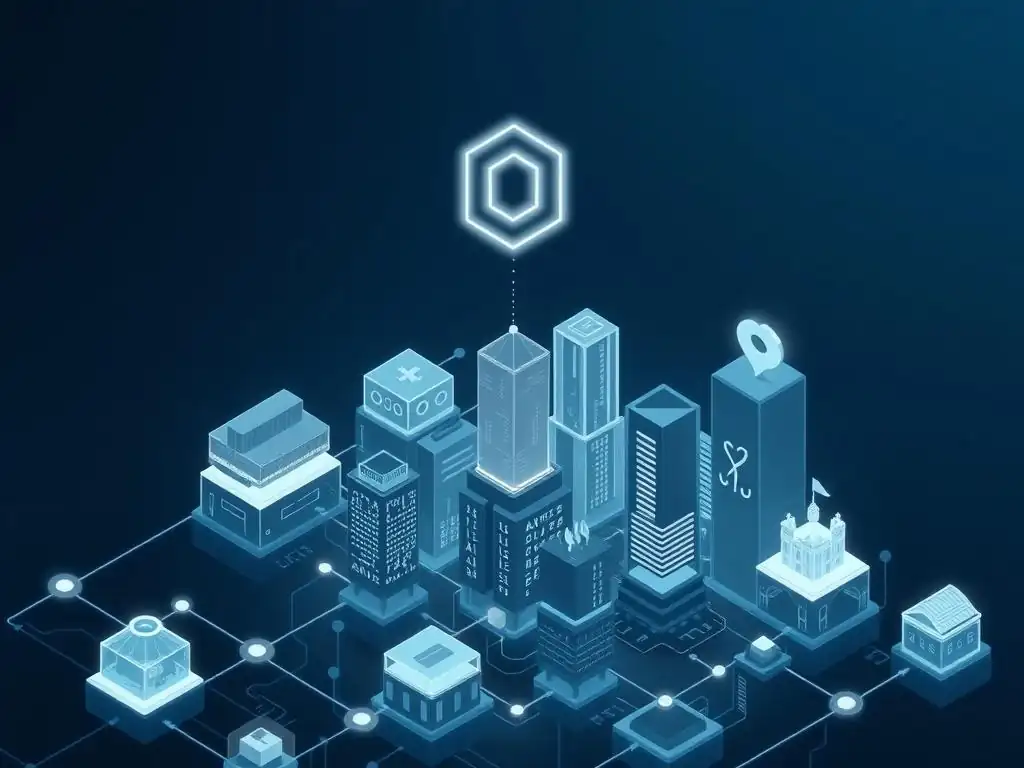
Smart Contracts in Supply Chain Management
Smart contracts are revolutionizing supply chain management by introducing automation, transparency, and efficiency. Traditionally, supply chains involve numerous intermediaries, paper-based processes, and a lack of real-time visibility, leading to delays, errors, and increased costs. Smart contracts can automate various aspects of the supply chain, such as order processing, payment execution, and shipment tracking. For example, a smart contract can be designed to automatically release payment to a supplier upon confirmation of goods delivery, as verified by IoT sensors and oracles providing real-time location data.
Real-world examples illustrate this potential. Walmart, in partnership with IBM, has implemented a blockchain-based food traceability system using smart contracts to track the journey of food products from farm to shelf. This system drastically reduces the time taken to trace contaminated food, from weeks to seconds, improving food safety and reducing waste. Similarly, Maersk and IBM's TradeLens platform utilizes blockchain and smart contracts to streamline global shipping logistics. The platform provides a shared, immutable record of shipping events, automating documentation processes and improving collaboration among stakeholders, reducing delays and costs in international trade.
dApps in Decentralized Finance (DeFi)
Decentralized Finance (DeFi) is perhaps the most prominent sector showcasing the power of dApps. DeFi dApps aim to recreate traditional financial services, such as lending, borrowing, trading, and asset management, in a decentralized and transparent manner, eliminating the need for intermediaries like banks and brokers. DeFi dApps leverage smart contracts to automate financial agreements, manage assets, and execute transactions programmatically. This results in increased efficiency, lower fees, and greater accessibility to financial services for a global audience.
Uniswap, a leading decentralized exchange (DEX), is a prime example of a successful DeFi dApp. Uniswap uses smart contracts to enable automated token swaps and liquidity provision without relying on order books or central intermediaries. Users can trade cryptocurrencies directly from their wallets and earn fees by providing liquidity to trading pools.
Aave, another prominent DeFi dApp, provides decentralized lending and borrowing services. Smart contracts manage loan agreements, interest rate calculations, and collateral management, enabling users to borrow and lend crypto assets in a transparent and permissionless manner. The total value locked (TVL) in DeFi protocols reached over \$100 billion in 2021, demonstrating the significant adoption and impact of dApps in the financial sector.
Smart Contracts and dApps in Voting Systems
Smart contracts and dApps offer the potential to transform voting systems, addressing concerns about transparency, security, and accessibility. Traditional voting systems are often criticized for being opaque, susceptible to manipulation, and requiring significant logistical efforts. Blockchain-based voting systems, powered by smart contracts and dApps, can enhance transparency by recording votes on an immutable ledger, making them auditable and verifiable. Smart contracts can automate the vote counting process and enforce voting rules, reducing the risk of fraud and human error.
Several pilot projects and initiatives are exploring the use of blockchain for voting. Voatz, a mobile voting platform, has utilized blockchain technology to facilitate voting in elections. While Voatz has faced security scrutiny, it highlights the potential of dApps to increase voter participation and accessibility, particularly for remote voters or those with disabilities.
Follow My Vote is another project developing open-source blockchain voting software. They aim to create a transparent and secure voting system using smart contracts to manage voter registration, ballot casting, and vote counting. While widespread adoption of blockchain voting is still in its early stages, these examples demonstrate the potential of smart contracts and dApps to create more secure and transparent electoral processes.
Smart Contract and dApp Security Considerations
Common Vulnerabilities in Smart Contracts
Smart contracts, while offering numerous benefits, are also susceptible to vulnerabilities that can lead to significant financial losses and security breaches. Reentrancy attacks are a well-known vulnerability where a malicious contract can recursively call a vulnerable contract's function before the initial call completes, potentially draining funds. The DAO hack in 2016, which resulted in the theft of millions of dollars in Ether, was a prime example of a reentrancy vulnerability exploit.
Integer overflow and underflow vulnerabilities occur when arithmetic operations exceed the maximum or minimum limits of integer data types, leading to unexpected behavior and potential exploits. Timestamp dependence is another vulnerability arising from relying on blockchain timestamps, which can be manipulated by miners to a certain extent. Denial-of-service (DoS) attacks can target smart contracts by overwhelming them with transactions, making them unresponsive and unavailable. These common vulnerabilities highlight the critical importance of rigorous security practices in smart contract development.
Security Best Practices for dApp Development
To mitigate security risks in dApp development, a range of best practices should be implemented across the entire development lifecycle. Secure coding practices are paramount, including writing clean, well-documented, and modular code. Thorough testing is essential, encompassing unit testing, integration testing, and fuzzing to identify potential vulnerabilities. Formal verification techniques can be employed to mathematically prove the correctness and security of smart contract code.
Regular security audits by independent experts are crucial before deploying smart contracts to production. Audits help identify vulnerabilities that may have been missed during development and testing. Implementing access control mechanisms, input validation, and proper error handling are also essential security measures. Keeping smart contract code simple and minimizing complexity reduces the attack surface and makes it easier to audit and maintain. Furthermore, developers should stay updated on the latest security threats and vulnerabilities in the blockchain ecosystem and continuously adapt their security practices accordingly.
Auditing Smart Contracts and dApps for Enhanced Security
Auditing smart contracts and dApps is a critical step in ensuring their security and reliability. A smart contract audit is a systematic review of the smart contract code by security experts to identify potential vulnerabilities, bugs, and security flaws. Audits typically involve manual code review, automated analysis tools, and testing to assess the contract's security posture. Audit reports provide detailed findings and recommendations for remediation.
DApp audits extend beyond smart contracts to encompass the entire dApp architecture, including frontend code, backend infrastructure, and integration points. DApp audits assess the overall security of the application, including aspects like user authentication, data privacy, and resistance to common web application vulnerabilities. Engaging reputable security firms specializing in blockchain and smart contract security for audits is crucial. Audits should be conducted regularly, especially before major updates or deployments, to proactively identify and address security risks, enhancing user trust and the overall security of the blockchain ecosystem.
The Future of Blockchain Smart Contracts and Decentralized Applications
Trends in Smart Contract Development
The landscape of smart contract development is constantly evolving, with several key trends shaping its future. Abstraction and higher-level languages are gaining traction to simplify smart contract development and reduce the learning curve. Languages like Solidity are becoming more feature-rich, and new languages like Vyper are emerging with a focus on security and simplicity. Formal verification tools and methodologies are becoming more sophisticated and accessible, enabling developers to rigorously verify the correctness of their smart contract code.
Interoperability is a growing focus, with efforts to develop smart contracts that can interact across different blockchain networks. This will unlock new possibilities for cross-chain applications and data sharing. Layer-2 scaling solutions, such as rollups and state channels, are being increasingly adopted to improve the scalability and efficiency of smart contract execution. These solutions enable faster and cheaper transactions, making blockchain technology more viable for mainstream applications. The development of more robust and user-friendly smart contract development tools and IDEs is also accelerating, further streamlining the development process.
The Evolution of dApp Architectures
dApp architectures are also evolving to address scalability, user experience, and interoperability challenges. Hybrid dApp architectures are emerging, combining decentralized and centralized components to optimize performance and user experience. For example, a dApp might use a centralized server for data indexing and caching to improve frontend performance while relying on smart contracts for core functionalities and data storage. Decentralized storage solutions like IPFS and Filecoin are becoming increasingly integrated into dApp architectures to enhance data decentralization and resilience.
Cross-chain dApps are gaining momentum, allowing users to interact with multiple blockchain networks from a single interface. This will break down silos between different blockchain ecosystems and create more interconnected and versatile dApps. The integration of Web3 technologies, such as decentralized identity solutions and oracles, is further enriching dApp functionalities and enabling more complex and real-world use cases. Focus on user experience (UX) and user interface (UI) design is becoming paramount for dApp adoption. Future dApps will prioritize user-friendliness and seamless onboarding to attract a wider user base beyond crypto-native users.
The Role of Smart Contracts and dApps in Web3
Smart contracts and dApps are foundational building blocks of Web3, the vision of a decentralized and user-centric internet. Web3 aims to shift power away from centralized platforms and return control to users through blockchain technology. Smart contracts enable the automation of agreements and the creation of decentralized applications, forming the core infrastructure for Web3 services and platforms. dApps are the user-facing interfaces that allow individuals to interact with Web3 services, such as decentralized social media, decentralized marketplaces, and decentralized autonomous organizations (DAOs).
Smart contracts and dApps are crucial for enabling data ownership and control in Web3. Users can control their data and digital assets through blockchain-based systems, rather than being reliant on centralized platforms. They are also essential for fostering transparency and trust in online interactions.
Blockchain's immutable ledger and smart contract's self-executing nature create a more transparent and auditable online environment. Furthermore, smart contracts and dApps are driving innovation in various sectors within Web3, including decentralized finance (DeFi), NFTs, and decentralized governance. As Web3 continues to evolve, smart contracts and dApps will play an increasingly vital role in shaping the future of the internet and digital interactions.
Understanding the distinction and relationship between smart contracts and dApps is crucial for navigating the evolving blockchain landscape. While often used interchangeably, smart contracts are the foundational backend logic, automating agreements and processes on the blockchain, while dApps are the comprehensive applications providing user interfaces and experiences to interact with blockchain functionalities, often powered by smart contracts. They exist in a symbiotic relationship, with smart contracts enabling the decentralized features of dApps, and dApps making smart contract functionalities accessible to users.
As blockchain technology matures, both smart contracts and dApps are poised for continued growth and innovation. Smart contract development is becoming more accessible and secure, while dApp architectures are evolving to address scalability and user experience challenges. Their combined potential to revolutionize various industries, from finance and supply chain to voting and identity management, is immense.
By understanding their individual roles and collaborative power, developers, businesses, and users can effectively leverage smart contracts and dApps to build a more decentralized, transparent, and user-centric future. Navigating this landscape requires a grasp of both the technical nuances and the broader implications of these transformative technologies.
Frequently Asked Questions
What is the fundamental difference between a blockchain smart contract and a dApp?
A smart contract is code that automatically executes when predetermined conditions are met, residing directly on the blockchain. A dApp, or decentralized application, is a full-fledged application built on a decentralized network, often using smart contracts as its backend logic.
How do smart contracts contribute to the functionality of dApps?
Smart contracts act as the backend logic and data storage for dApps. They handle the automatic execution of agreements and ensure transparent and secure interactions between users and the application.
Can a dApp exist without using smart contracts?
While technically possible, it's highly unlikely. The core decentralized and autonomous functionality of a dApp typically relies heavily on smart contracts to manage data and execute transactions.
What are some examples of use cases where smart contracts and dApps intersect?
Examples include Decentralized Finance (DeFi) platforms, which use smart contracts to automate lending and borrowing, and NFT marketplaces, where dApps leverage smart contracts to manage ownership and trading of digital assets.
What are the regulatory challenges associated with blockchain smart contracts and dApps?
The lack of clear regulatory frameworks surrounding decentralized technologies creates uncertainty. Issues include jurisdictional complexities and the difficulty of applying traditional laws to autonomous, borderless systems.
Final Reflection: Embracing the Decentralized Future
The exploration of blockchain smart contracts vs. dApps reveals more than just technical distinctions; it highlights the fundamental shift towards decentralized systems that are reshaping our digital landscape. Understanding these nuances is crucial not just for developers, but for anyone seeking to navigate the evolving world of Web3 and its potential to revolutionize industries from finance to supply chain management.
The ongoing influence of smart contracts and dApps is undeniable, permeating discussions about data ownership, transparency, and trust. Witnessing this evolution firsthand underscores the importance of informed participation in shaping the future of technology. The blockchain is more than just a technology; it's a social and political movement.
- Dan Tapscott. This quote encapsulates the profound impact these technologies have, not only on code and infrastructure, but on the very fabric of our societal structures.
As we stand at the cusp of a decentralized future, let us not merely observe, but actively engage. Consider how the principles of smart contracts and dApps – transparency, immutability, and decentralization – can be applied to your own endeavors, fostering greater trust and efficiency in your interactions. The power to shape this future lies within each of us; let us embrace it with knowledge and purpose.
Unveil the Future: Your Next Step in Blockchain
Thank you for exploring the world of Smart Contracts and decentralized applications. We hope this article clarified the differences and connections between these two blockchain technologies. Now, it's time to take action:
- Explore Further: Analyze a popular decentralized application and identify how it utilizes smart contracts to deliver its features. This practical exercise will deepen your understanding of their relationship.
- Discover: Browse leading decentralized applications on platforms like DappRadar and consider the challenges they address with smart contracts.
- Share and Discuss: Spread your insights! Share this article with your network and start a conversation about the evolution of dApps and smart contracts.
Have you been thinking of an innovative dApp idea that could harness the potential of smart contracts? Share your thoughts in the comments below!
Leave a Reply