
Understanding DApp Categories: From DeFi to Gaming and Beyond


Welcome to Blockchain Trends, your compass in the rapidly evolving world of decentralized technologies! Are you ready to unlock the true power of blockchain, far beyond the headlines of cryptocurrency? This week, we dive deep into the fascinating realm of decentralized application categories explained, uncovering the diverse landscape of DApps and their potential to revolutionize industries. Prepare to explore the innovative applications shaping our future, from DeFi to gaming and everything in between. Let's begin!
DApp Categories: DeFi, Gaming, Social Media, and Beyond
- DApp Categories Explained: A Comprehensive Overview
- DeFi DApps: Revolutionizing Finance on the Blockchain
- Gaming DApps: Blockchain-Based Entertainment and Play-to-Earn
- Social Media DApps: Decentralized Platforms for Community
- Supply Chain DApps: Transparency and Traceability
- Identity Management DApps: Secure Digital Identities
- Governance DApps: Decentralized Decision-Making
- Other DApp Categories
-
Frequently Asked Questions
- What are the main decentralized application categories currently gaining traction?
- How do DeFi DApps differ from traditional financial applications?
- Beyond finance and gaming, what other industries are exploring DApp applications?
- What are some of the regulatory challenges facing the growth and adoption of Decentralized application categories?
- What is the potential future impact of DApps on centralized systems and traditional industries?
- Final Reflection: Embracing the Decentralized Future
- Unlock Your DApp Potential!
DApp Categories Explained: A Comprehensive Overview
Decentralized applications, or DApps, are revolutionizing the digital landscape by leveraging blockchain technology to offer users greater control, transparency, and security compared to traditional applications. Unlike conventional apps that rely on centralized servers and authorities, DApps operate on decentralized networks, distributing data and logic across numerous nodes.
This fundamental shift introduces a new paradigm for internet applications, fostering innovation across diverse sectors. Understanding the various categories of DApps is crucial to grasping the breadth of their potential and the transformative impact they are poised to have on industries ranging from finance and entertainment to social media and supply chain management.
This article provides a comprehensive exploration of decentralized application categories explained, delving into key sectors where DApps are making significant strides. We will examine prominent categories such as Decentralized Finance (DeFi), Gaming, Social Media, Supply Chain Management, Identity Management, and Governance, highlighting real-world examples and exploring the unique value proposition each category offers. By understanding these diverse applications, readers can gain a deeper appreciation for the versatility and transformative power of DApps and their role in shaping the future of the internet and beyond.
DeFi DApps: Revolutionizing Finance on the Blockchain
Decentralized Finance (DeFi) DApps are at the forefront of blockchain innovation, aiming to recreate traditional financial services in a permissionless and transparent manner. By leveraging smart contracts on blockchains like Ethereum, DeFi DApps eliminate intermediaries such as banks and brokers, offering users direct access to financial tools and services. This disintermediation promises to democratize finance, making it more accessible, efficient, and inclusive for a global audience. The core principle of DeFi is to build an open and programmable financial ecosystem, fostering innovation and challenging the established financial order.
The impact of DeFi DApps is already being felt across the financial spectrum. From lending and borrowing platforms that offer competitive interest rates without traditional credit checks, to decentralized exchanges facilitating peer-to-peer trading of digital assets, DeFi is rapidly reshaping how financial transactions are conducted. For instance, platforms like Aave and Compound have collectively facilitated billions of dollars in loans, demonstrating the scalability and user demand for decentralized lending solutions. This emerging financial landscape is characterized by its composability and interoperability, allowing for the creation of complex and innovative financial instruments and strategies previously unimaginable in traditional finance.
Key DeFi DApp Categories: Lending, Borrowing, Trading, and Derivatives
DeFi DApps encompass a wide array of financial services, broadly categorized into lending and borrowing platforms, decentralized exchanges (DEXs), and derivative protocols. Lending and borrowing DApps, such as MakerDAO and Cream Finance, allow users to deposit crypto assets as collateral and borrow other assets, or lend their assets to earn interest. These platforms operate autonomously through smart contracts, setting interest rates algorithmically based on supply and demand. This eliminates the need for traditional intermediaries and offers potentially higher returns for lenders and more accessible borrowing options for borrowers.
Decentralized trading platforms, or DEXs, provide a crucial infrastructure for the DeFi ecosystem. They enable the peer-to-peer exchange of cryptocurrencies directly from user wallets, without relying on centralized exchanges. Examples like Uniswap and SushiSwap utilize Automated Market Makers (AMMs) to facilitate trading, creating liquidity pools where users can deposit assets and earn fees from trades.
Furthermore, DeFi is expanding into derivatives, offering synthetic assets and options trading. Platforms like Synthetix allow users to create and trade synthetic versions of traditional assets like stocks and commodities on the blockchain, opening up new avenues for investment and hedging within the decentralized space.
Decentralized Exchanges (DEXs) and Automated Market Makers (AMMs)
Decentralized Exchanges (DEXs) represent a paradigm shift in cryptocurrency trading. Unlike centralized exchanges that hold custody of user funds and operate order books, DEXs empower users to maintain control of their assets and trade directly with each other. This is achieved through smart contracts that execute trades automatically when predefined conditions are met.
The emergence of Automated Market Makers (AMMs) has been instrumental in the growth of DEXs. AMMs, such as Uniswap and Balancer, utilize liquidity pools instead of traditional order books. These pools are populated by users who deposit pairs of tokens and, in return, earn a portion of the trading fees generated by the platform.
The operational mechanics of AMMs are based on mathematical formulas that algorithmically determine the price of assets based on the ratio of tokens within the liquidity pool. For example, in Uniswap's widely used constant product formula, the price of an asset increases as its supply in the pool decreases relative to the other asset.
This system incentivizes users to provide liquidity, as they earn passive income from trading fees, and allows for continuous trading without the need for order books. DEXs and AMMs have become foundational components of the DeFi ecosystem, facilitating billions of dollars in daily trading volume and offering a more transparent and permissionless alternative to centralized cryptocurrency exchanges.
Yield Farming and Staking DApps
Yield farming and staking DApps are innovative mechanisms within DeFi that allow users to earn passive income on their cryptocurrency holdings. Yield farming involves lending or staking crypto assets across various DeFi protocols to maximize returns. This often involves moving assets between different platforms and strategies to capture the highest available yields. Complex yield farming strategies can involve providing liquidity to DEXs, lending assets on lending platforms, and participating in governance token staking. The returns in yield farming are often expressed as Annual Percentage Yield (APY), which can fluctuate significantly depending on market conditions and the specific protocols involved.
Staking, on the other hand, typically involves locking up cryptocurrency holdings in a proof-of-stake blockchain network to support network operations and security. In return for staking, users receive staking rewards, often in the form of the native cryptocurrency of the network. Many DeFi DApps facilitate staking, simplifying the process for users to participate in network validation and earn rewards.
Platforms like Lido Finance allow users to stake Ethereum and other assets and receive derivative tokens representing their staked position, which can then be used in other DeFi activities. Both yield farming and staking offer compelling opportunities for cryptocurrency holders to generate passive income and participate in the growth of decentralized networks and applications.
Risks and Opportunities in DeFi
While DeFi DApps present significant opportunities for financial innovation and accessibility, they also come with inherent risks. Smart contract vulnerabilities are a primary concern, as bugs in the code governing DeFi protocols can lead to substantial financial losses. High-profile exploits, such as the Poly Network hack in 2021 which resulted in the theft of over \$600 million, underscore the critical importance of rigorous smart contract audits and security measures.
Another significant risk is impermanent loss, which can occur when providing liquidity to AMMs. Impermanent loss happens when the price ratio of the tokens in a liquidity pool changes, potentially reducing the value of a liquidity provider's assets compared to simply holding the tokens.
Despite these risks, the opportunities within DeFi are vast. DeFi has the potential to create a more inclusive and efficient financial system, particularly for those underserved by traditional finance. The transparency and programmability of DeFi DApps can foster greater trust and accountability in financial transactions.
Furthermore, the rapid pace of innovation in DeFi is continuously unlocking new financial instruments and strategies. As the DeFi space matures, with improved security practices, regulatory clarity, and user-friendly interfaces, it is poised to play an increasingly significant role in the global financial landscape, offering both individuals and institutions novel ways to manage and grow their assets.
Gaming DApps: Blockchain-Based Entertainment and Play-to-Earn
Gaming DApps are transforming the entertainment industry by integrating blockchain technology to create new forms of gameplay, digital asset ownership, and player incentives. Blockchain enables the creation of truly decentralized games where players have verifiable ownership of in-game assets, often represented as Non-Fungible Tokens (NFTs). This ownership empowers players, allowing them to trade, sell, or use their assets across different games and platforms, moving away from the traditional model where in-game items are confined to a single game and controlled by the game developer.
The emergence of Play-to-Earn (P2E) mechanics in gaming DApps is revolutionizing the player experience. P2E models reward players with cryptocurrency or NFTs for their in-game contributions and achievements. This shifts the paradigm from games being solely a form of entertainment to potentially becoming a source of income for players.
Games like Axie Infinity have popularized the P2E model, demonstrating its potential to attract a large player base and create vibrant in-game economies. Blockchain gaming is not just about financial incentives; it also fosters community ownership and governance, allowing players to have a greater say in the development and direction of the games they play.
Types of Blockchain Games: Collectibles, Strategy, RPGs, and Metaverse Experiences
Blockchain games are diversifying into various genres, catering to different player preferences. Collectibles games, like CryptoKitties and NBA Top Shot, were among the first to gain mainstream attention. These games center around collecting and trading unique digital assets, leveraging NFTs to ensure scarcity and provenance.
Strategy games, such as Gods Unchained, incorporate elements of trading card games with strategic gameplay, where players own their cards as NFTs and can trade them on open marketplaces. Role-Playing Games (RPGs) are also emerging in the blockchain space, aiming to create immersive worlds where players can own characters, items, and land as NFTs, contributing to persistent and player-driven economies.
Furthermore, blockchain technology is playing a crucial role in the development of metaverse experiences. Metaverse DApps are creating persistent virtual worlds where users can interact, socialize, and participate in virtual economies. Games like Decentraland and The Sandbox allow users to own virtual land as NFTs and build experiences on top of it, fostering user-generated content and decentralized virtual economies. These metaverse platforms are blurring the lines between gaming, social interaction, and digital ownership, paving the way for new forms of digital entertainment and online communities.
NFTs and In-Game Asset Ownership
Non-Fungible Tokens (NFTs) are the cornerstone of in-game asset ownership in blockchain gaming. NFTs are unique digital assets that represent ownership of a specific item, whether it's a character, weapon, virtual land, or collectible. Unlike fungible tokens like cryptocurrencies, each NFT is distinct and cannot be directly exchanged for another. This uniqueness and verifiable ownership are crucial for creating scarcity and value for in-game assets. When a player acquires an NFT in a blockchain game, they truly own that asset, stored on the blockchain and controlled by their private key.
This ownership model contrasts sharply with traditional gaming, where in-game assets are typically owned by the game developers and players only have a license to use them within the game. With NFTs, players can freely trade their in-game assets on NFT marketplaces, sell them to other players, or even transfer them to other compatible games or platforms, depending on the game's interoperability design.
The use of NFTs not only empowers players but also creates new economic opportunities within gaming ecosystems, fostering player-driven economies and potentially generating revenue streams for both players and game developers through secondary market sales and royalties.
Play-to-Earn (P2E) Mechanics and the Evolution of Gaming
Play-to-Earn (P2E) mechanics are fundamentally changing the dynamics of the gaming industry. P2E games reward players with cryptocurrency tokens or NFTs for their time and effort spent playing the game. These rewards can be earned through various in-game activities, such as completing quests, winning battles, participating in tournaments, or contributing to the game's ecosystem. The earned tokens or NFTs can then be traded on cryptocurrency exchanges or NFT marketplaces, allowing players to monetize their gaming skills and time investment.
Axie Infinity, a popular P2E game, exemplifies this model. Players earn Smooth Love Potion (SLP) tokens by playing the game, which can then be exchanged for other cryptocurrencies or fiat currency. The success of Axie Infinity and other P2E games has demonstrated the potential for blockchain gaming to create new economic opportunities, particularly in developing countries where P2E earnings can represent a significant income source.
However, the P2E model is still evolving, and challenges exist in balancing gameplay fun with earning potential and ensuring the long-term sustainability of in-game economies. As blockchain gaming matures, we are likely to see more refined and sustainable P2E models that prioritize both player enjoyment and economic incentives.
Challenges and Opportunities in Blockchain Gaming
Blockchain gaming, while promising, faces several challenges. Scalability is a significant hurdle, as blockchain networks can struggle to handle the high transaction volumes and low latency required for many types of games, particularly those requiring real-time interactions. High gas fees on some blockchains, like Ethereum, can also be a barrier to entry for players, especially for in-game transactions and NFT trading. User experience is another key challenge, as interacting with blockchain technology and managing crypto wallets can be complex for mainstream gamers. Educating players about blockchain concepts and simplifying the onboarding process is crucial for wider adoption.
Despite these challenges, the opportunities in blockchain gaming are immense. Blockchain offers the potential to create more engaging and rewarding gaming experiences for players through true asset ownership and P2E mechanics. The development of layer-2 scaling solutions and more user-friendly blockchain infrastructure is addressing scalability and user experience concerns. The integration of blockchain into gaming is still in its early stages, and as the technology matures and adoption grows, we can expect to see even more innovative and immersive blockchain games emerge, further disrupting the traditional gaming industry and creating new forms of digital entertainment and player engagement.
Social Media DApps are exploring the potential of blockchain to create decentralized platforms that empower users with greater control over their data, content, and online interactions. Traditional social media platforms are centralized, meaning user data and content are stored and controlled by a single company. Decentralized social media DApps aim to shift this paradigm by distributing data and control across a network of users, leveraging blockchain technology to ensure transparency, censorship resistance, and data ownership. This approach promises to create more democratic and user-centric social media experiences.
The core value proposition of social media DApps revolves around addressing concerns related to data privacy, censorship, and platform governance prevalent in centralized social media. By utilizing blockchain, these DApps can offer users greater transparency in how their data is used, reduce the risk of censorship by distributing content across a decentralized network, and potentially involve users in platform governance decisions. Examples of social media DApps include platforms focused on decentralized content sharing, microblogging, and social networking, each exploring different approaches to decentralizing social interactions online.
Decentralized social networks and content sharing platforms are emerging as alternatives to centralized giants like Facebook, Twitter, and YouTube. These DApps leverage blockchain to create platforms where users have greater control over their content and social graphs. Platforms like Mastodon (while not strictly blockchain-based, it's a federated social network and shares decentralization principles) and Peepeth (a blockchain-based microblogging platform) are examples of decentralized approaches to social networking. These platforms often utilize decentralized identifiers (DIDs) to allow users to own their identities and move between different platforms while maintaining their social connections.
Decentralized content sharing platforms aim to address issues of censorship and content moderation. Platforms like LBRY and DTube utilize blockchain to create censorship-resistant platforms for publishing and sharing videos, articles, and other forms of content. By storing content on a decentralized network, these platforms aim to make it more difficult for any single entity to censor or remove content. These platforms often incorporate tokenized incentives to reward content creators and curators, fostering a more equitable and user-driven content ecosystem.
Data Ownership and Privacy
Data ownership and privacy are central tenets of social media DApps. In traditional social media, user data is a valuable asset collected and controlled by the platform providers. Decentralized social media DApps aim to return data ownership to users, allowing them to control what data is collected, how it is used, and who has access to it. Blockchain's inherent transparency and immutability can be used to provide users with greater visibility into how their data is handled by the platform.
Some social media DApps are exploring the use of privacy-preserving technologies, such as zero-knowledge proofs and homomorphic encryption, to further enhance user privacy. These technologies can enable data processing and analysis without revealing the underlying data itself. By giving users more control over their data and implementing privacy-enhancing technologies, social media DApps aim to create a more privacy-respecting and user-centric social media experience, contrasting sharply with the data-centric models of centralized platforms.
Decentralized governance is being explored in social media DApps to empower users to participate in the decision-making processes that shape the platform. In centralized social media, platform governance is typically controlled by the company that owns the platform, with users having limited input into policies and platform development. Decentralized governance models aim to distribute decision-making power among users, often through token-based voting mechanisms or other forms of community participation.
Some social media DApps are experimenting with Decentralized Autonomous Organizations (DAOs) to manage platform governance. DAOs are community-led entities governed by rules encoded in smart contracts, allowing token holders to vote on proposals related to platform development, content moderation policies, and resource allocation. By implementing decentralized governance, social media DApps aim to create more democratic and community-owned platforms, fostering a sense of ownership and participation among users and potentially leading to more equitable and user-aligned platform policies.
Adoption of social media DApps faces several challenges. User experience remains a significant hurdle, as interacting with blockchain technology and decentralized platforms can be technically complex for mainstream users. Onboarding new users and simplifying the user interface is crucial for wider adoption. Network effects are also a major challenge, as social media platforms thrive on large user bases and vibrant communities. Attracting users away from established centralized platforms and building critical mass on decentralized alternatives requires compelling value propositions and effective community-building strategies.
Despite these challenges, social media DApps present significant opportunities to reshape the social media landscape. The demand for greater data privacy, censorship resistance, and user empowerment is growing, and decentralized social media DApps offer potential solutions to these concerns. As blockchain technology matures and user-friendly interfaces are developed, social media DApps have the potential to gain traction and offer users more control, transparency, and agency in their online social interactions, potentially leading to a more equitable and user-centric social media ecosystem.
Supply Chain DApps: Transparency and Traceability
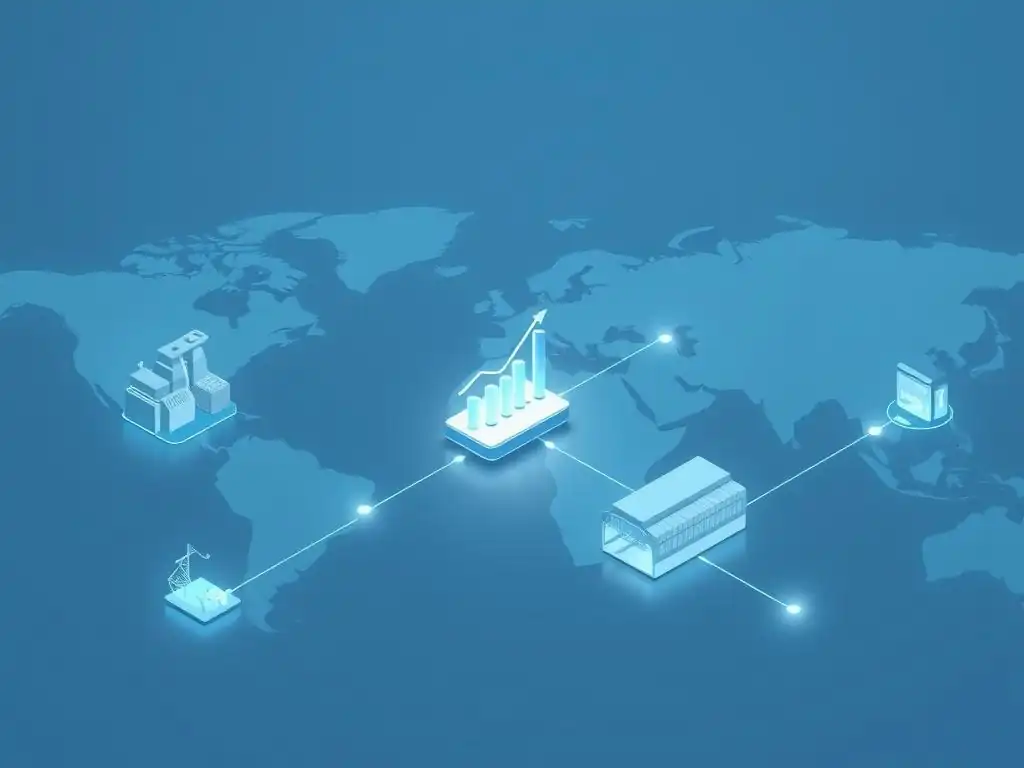
Supply Chain DApps are leveraging blockchain's inherent transparency and immutability to revolutionize supply chain management. Traditional supply chains are often opaque and complex, involving numerous intermediaries and lacking end-to-end visibility. Blockchain technology offers a solution by creating a shared, immutable ledger that records every step in a product's journey, from origin to consumer. This enhanced transparency and traceability can significantly improve efficiency, reduce fraud, and build trust across the supply chain.
The application of blockchain in supply chains is diverse, ranging from tracking the provenance of goods to verifying product authenticity and streamlining logistics. By recording data on the blockchain, companies can create an auditable and verifiable record of product information, including origin, manufacturing process, transportation details, and ownership changes. This information can be accessed by authorized participants throughout the supply chain, fostering greater collaboration and accountability. Real-world implementations are emerging across industries, from food and agriculture to pharmaceuticals and luxury goods, demonstrating the broad applicability of supply chain DApps.
Blockchain for Supply Chain Management: Tracking Products
Blockchain's core strength in supply chain management lies in its ability to track products throughout their journey. Each product can be assigned a unique digital identity on the blockchain, and every transaction or event related to that product, such as manufacturing, shipping, or ownership transfer, is recorded as an immutable entry on the blockchain. This creates a comprehensive and auditable history of the product's lifecycle, providing unprecedented visibility and traceability.
This tracking capability is particularly valuable in industries where provenance and authenticity are critical. For example, in the food industry, blockchain can be used to track the origin of food products, ensuring food safety and building consumer trust. In the pharmaceutical industry, blockchain can help track drugs from manufacturing to distribution, combating counterfeit medications and ensuring the integrity of the supply chain. By providing a transparent and verifiable record of product movement, blockchain-based tracking systems enhance accountability and reduce the risk of fraud and inefficiencies in supply chains.
Efficiency and Fraud Reduction
Supply Chain DApps contribute to significant efficiency gains and fraud reduction. By digitizing and automating supply chain processes on the blockchain, companies can streamline operations, reduce paperwork, and eliminate redundancies. Smart contracts can automate tasks such as payment processing, inventory management, and shipment tracking, reducing manual errors and speeding up transaction times. The transparency and immutability of blockchain also make it more difficult to tamper with or falsify supply chain data, reducing the risk of fraud and counterfeiting.
For example, in cross-border trade, blockchain can simplify customs clearance processes by providing таможенным authorities with real-time access to verified product information. In the retail sector, blockchain can help verify the authenticity of luxury goods, combating counterfeiting and protecting brand reputation. By improving efficiency and reducing fraud, supply chain DApps can lead to significant cost savings and enhanced operational performance for businesses across various industries.
Supply Chain DApp Implementations Across Industries
Supply Chain DApp implementations are gaining traction across diverse industries. In the food and agriculture sector, companies are using blockchain to track food products from farm to table, ensuring food safety and transparency for consumers. For instance, Walmart has implemented a blockchain-based system to track mangoes and pork in its supply chain, improving traceability and response times in case of food safety issues. In the pharmaceutical industry, companies are exploring blockchain to track drugs and vaccines, combating counterfeit medications and ensuring the integrity of the pharmaceutical supply chain.
In the luxury goods sector, blockchain is being used to verify the authenticity of high-value items, such as diamonds and designer handbags. De Beers, for example, uses blockchain to track diamonds from mine to retail, providing consumers with assurance of provenance and authenticity. In the logistics industry, companies like Maersk and IBM have collaborated on TradeLens, a blockchain-based platform to streamline global shipping processes, improving efficiency and transparency in maritime trade. These real-world examples demonstrate the versatility and broad applicability of supply chain DApps across various industries seeking to enhance transparency, efficiency, and trust in their supply chains.
Challenges and Opportunities for Supply Chain DApp Integration
Integrating supply chain DApps presents both challenges and opportunities. Interoperability is a key challenge, as different supply chain stakeholders may use different blockchain platforms and data standards. Ensuring seamless data exchange and communication between different blockchain systems is crucial for realizing the full potential of supply chain DApps. Data privacy is another consideration, as sensitive supply chain information needs to be protected while still enabling transparency and traceability. Balancing data visibility with data confidentiality is a critical aspect of supply chain DApp design and implementation.
Despite these challenges, the opportunities for supply chain DApp integration are significant. The increasing demand for supply chain transparency from consumers and regulators is driving adoption of blockchain-based solutions. The potential for cost savings, efficiency gains, and fraud reduction is compelling businesses to explore and implement supply chain DApps. As blockchain technology matures and interoperability solutions emerge, supply chain DApps are poised to become increasingly prevalent, transforming supply chain management and fostering greater trust and efficiency in global trade and commerce.
Identity Management DApps: Secure Digital Identities
Identity Management DApps are leveraging blockchain to create secure and user-centric digital identity solutions. Traditional identity management systems are often centralized, fragmented, and vulnerable to security breaches. Blockchain offers a decentralized and self-sovereign approach to identity management, empowering individuals with greater control over their digital identities and reducing reliance on centralized identity providers. This shift towards decentralized identity promises to enhance security, privacy, and user agency in the digital realm.
The core concept behind identity management DApps is Self-Sovereign Identity (SSI), which puts individuals at the center of their digital identity. SSI enables users to create and control their own digital identities, store their identity data securely on their own devices, and selectively share verified identity credentials with relying parties as needed. Blockchain technology provides the infrastructure for SSI, ensuring the immutability, security, and verifiability of identity data. This approach contrasts sharply with traditional identity models where identity data is often stored and controlled by centralized organizations.
Blockchain-Based Identity Verification
Blockchain-based identity verification enhances the security and efficiency of identity verification processes. Traditional identity verification often relies on centralized databases and manual processes, which can be slow, costly, and vulnerable to fraud. Blockchain can streamline identity verification by providing a decentralized and tamper-proof record of verified identity credentials. Once an identity is verified and recorded on the blockchain, it can be reused for multiple interactions, reducing the need for repeated verification processes.
This approach is particularly beneficial in scenarios requiring secure and efficient identity verification, such as online transactions, access control, and regulatory compliance. For example, in the financial services industry, blockchain-based identity verification can streamline KYC (Know Your Customer) processes, reducing compliance costs and improving customer onboarding. In healthcare, blockchain can be used to verify patient identities and securely manage medical records. By leveraging blockchain, identity verification processes can become more secure, efficient, and user-friendly.
Self-Sovereign Identity (SSI) and Decentralized Identifiers (DIDs)
Self-Sovereign Identity (SSI) is the foundational principle of decentralized identity management. SSI empowers individuals to own and control their digital identities, rather than relying on centralized identity providers. Decentralized Identifiers (DIDs) are a key technology enabling SSI. DIDs are globally unique identifiers that enable individuals to create and control their own digital identities independently of any central authority. DIDs are resolvable to DID Documents, which contain public keys, service endpoints, and other metadata associated with the identity.
SSI and DIDs allow individuals to create portable and interoperable digital identities that they can use across different platforms and services. Users can store their identity data securely in digital wallets on their own devices and selectively share verified identity credentials with relying parties as needed. This approach enhances user privacy and control over their identity data, reducing the risks associated with centralized identity systems and fostering a more user-centric and privacy-respecting digital identity ecosystem.
Identity Management DApp Use Cases
Identity Management DApps are finding use cases across various sectors. In the financial services industry, SSI-based identity solutions are being explored for KYC and AML (Anti-Money Laundering) compliance, streamlining customer onboarding and reducing regulatory burdens. In healthcare, SSI can be used to create patient-controlled medical records, empowering patients with greater control over their health data and improving data privacy. In supply chain management, SSI can be used to verify the identities of participants and ensure the authenticity of products throughout the supply chain.
In government services, SSI can be used to issue and verify digital credentials, such as driver's licenses and passports, improving efficiency and security in government identity processes. In online education, SSI can be used to issue and verify academic credentials, preventing credential fraud and providing learners with portable and verifiable records of their achievements. These diverse use cases demonstrate the broad applicability of identity management DApps in creating secure, user-centric, and efficient digital identity solutions across various industries and sectors.
Challenges and Opportunities for Identity Management DApp Adoption
Adoption of identity management DApps faces challenges and presents significant opportunities. User education is a key challenge, as concepts like SSI and DIDs may be unfamiliar to mainstream users. Simplifying the user experience and providing user-friendly interfaces for managing decentralized identities is crucial for wider adoption. Interoperability is also a challenge, as different SSI solutions and DID methods are emerging. Ensuring interoperability between different identity systems is essential for creating a seamless and universally accepted decentralized identity ecosystem.
Despite these challenges, the opportunities for identity management DApp adoption are substantial. The increasing concerns about data privacy and security are driving demand for decentralized identity solutions. SSI offers the potential to create a more secure, private, and user-centric digital identity ecosystem, empowering individuals with greater control over their personal data and reducing the risks associated with centralized identity systems. As blockchain technology matures and user-friendly SSI solutions become more readily available, identity management DApps are poised to play an increasingly important role in shaping the future of digital identity and online interactions.
Governance DApps: Decentralized Decision-Making
Governance DApps are leveraging blockchain to facilitate decentralized decision-making within organizations and online communities. Traditional governance models are often hierarchical and centralized, with decision-making power concentrated in the hands of a few. Blockchain technology enables the creation of transparent, auditable, and participatory governance systems, distributing decision-making power among stakeholders and fostering greater community involvement. This shift towards decentralized governance promises to enhance transparency, accountability, and inclusivity in various organizational and community settings.
Decentralized Autonomous Organizations (DAOs) are a prominent example of governance DApps. DAOs are community-led entities governed by rules encoded in smart contracts. These rules define how decisions are made, how resources are allocated, and how the organization operates. Token holders in a DAO typically have voting rights, allowing them to participate in governance proposals and shape the direction of the organization. Governance DApps are not limited to DAOs; they can also be applied to various organizational structures and community settings to facilitate decentralized decision-making processes.
Decentralized Autonomous Organizations (DAOs)
Decentralized Autonomous Organizations (DAOs) represent a novel organizational model enabled by blockchain technology. DAOs are essentially organizations that are governed by code and operate autonomously through smart contracts. The rules and decision-making processes of a DAO are encoded in smart contracts, which are transparent and auditable on the blockchain. This eliminates the need for traditional intermediaries and hierarchical management structures, creating a more decentralized and transparent organizational framework.
DAOs are often community-driven, with token holders having voting rights and participating in governance proposals. Decisions in a DAO are typically made through voting mechanisms defined in the smart contracts, ensuring that decisions are made collectively by the community. DAOs are being used for various purposes, including managing decentralized projects, allocating resources, and governing online communities. Examples of DAOs include MakerDAO, which governs the DAI stablecoin, and Aragon, a platform for creating and managing DAOs.
Voting Mechanisms and Token-Based Governance
Voting mechanisms and token-based governance are core components of governance DApps and DAOs. Token-based governance involves distributing governance tokens to stakeholders, giving them voting rights in the organization or community. The number of tokens held typically determines the voting power of each participant. Voting mechanisms in governance DApps are often implemented through smart contracts, ensuring transparency and immutability of voting records.
Various voting mechanisms are used in governance DApps, including token-weighted voting, quadratic voting, and conviction voting. Token-weighted voting is the simplest form, where each token represents one vote. Quadratic voting aims to reduce the influence of large token holders by making votes more expensive as more votes are cast. Conviction voting is a continuous voting mechanism where voters express their conviction for a proposal over time. These voting mechanisms enable decentralized decision-making processes and empower token holders to participate in the governance of DApps and DAOs.
Governance DApps in Blockchain Projects
Governance DApps are playing a crucial role in the governance of blockchain projects themselves. Many blockchain projects are adopting decentralized governance models, using governance tokens and DAOs to manage protocol upgrades, treasury allocation, and community proposals. This approach to governance aims to decentralize control over blockchain projects and ensure that decisions are made by the community rather than by a centralized entity.
For example, many DeFi protocols utilize governance DApps to allow token holders to vote on protocol parameters, such as interest rates, collateral ratios, and protocol upgrades. Ethereum, while not governed by a DAO in the traditional sense, has a decentralized governance process involving community proposals and Ethereum Improvement Proposals (EIPs). Governance DApps in blockchain projects are essential for fostering decentralization, community ownership, and long-term sustainability of these projects.
Challenges and Opportunities for Decentralized Governance
Decentralized governance, while promising, faces challenges. Participation rates in DAO governance can be low, leading to concerns about representativeness and decision-making efficiency. Governance attacks, such as vote buying and Sybil attacks, are potential risks in decentralized governance systems. Designing robust and secure voting mechanisms and incentivizing participation are crucial for addressing these challenges. Legal and regulatory frameworks for DAOs and decentralized governance are still evolving, creating uncertainty and potential legal risks.
Despite these challenges, the opportunities for decentralized governance are significant. Decentralized governance has the potential to create more transparent, accountable, and inclusive organizations and communities. It can empower stakeholders, foster community ownership, and improve decision-making processes. As blockchain technology matures and governance best practices emerge, decentralized governance is poised to become increasingly prevalent, transforming organizational structures and decision-making processes across various sectors.
Other DApp Categories
Beyond the major categories discussed, DApps are emerging in a wide range of other sectors, demonstrating the versatility of decentralized applications. These emerging DApp applications are exploring the potential of blockchain to address specific challenges and create new opportunities in various industries. From healthcare and real estate to the Internet of Things (IoT), DApps are pushing the boundaries of decentralized technology and expanding its reach into diverse domains.
These nascent DApp categories highlight the ongoing innovation and experimentation within the blockchain space. As the technology matures and adoption grows, we can expect to see even more diverse and specialized DApp applications emerge, further demonstrating the transformative potential of decentralized technology across a wide spectrum of industries and use cases.
Emerging DApp Applications: Healthcare, Real Estate, and IoT
Emerging DApp applications are making inroads into sectors like healthcare, real estate, and the Internet of Things (IoT). In healthcare, DApps are being explored for secure patient data management, supply chain tracking of pharmaceuticals, and clinical trial management. Blockchain's security and immutability can enhance data privacy and integrity in healthcare, improving patient outcomes and operational efficiency. In real estate, DApps are being used for tokenizing real estate assets, streamlining property transactions, and creating transparent and efficient property registries. Tokenization of real estate can fractionalize ownership, making real estate investment more accessible and liquid.
In the Internet of Things (IoT), DApps are being explored for secure device communication, data management, and decentralized IoT networks. Blockchain can enhance the security and trust of IoT data, enabling secure data sharing and automated device interactions. For example, DApps can be used to create decentralized marketplaces for IoT data, allowing users to monetize data generated by their IoT devices. These emerging DApp applications demonstrate the potential of blockchain to address specific challenges and create new opportunities in diverse sectors beyond the more established categories like DeFi and gaming.
The Future of Decentralized Applications: Trends
The future of decentralized applications points towards several key trends. Increased interoperability is a major trend, with efforts underway to connect different blockchain networks and enable cross-chain DApps. Interoperability will be crucial for creating a more interconnected and seamless decentralized web, allowing DApps to leverage the strengths of different blockchain platforms and access a wider range of assets and data. Layer-2 scaling solutions are also becoming increasingly important, addressing scalability limitations of layer-1 blockchains and enabling DApps to handle higher transaction volumes and lower fees.
User experience (UX) improvements are critical for wider DApp adoption. Making DApps more user-friendly and accessible to mainstream users is essential. This includes simplifying user interfaces, improving onboarding processes, and abstracting away the complexities of blockchain technology. The convergence of DeFi and NFTs is another emerging trend, with new DApps combining decentralized finance and non-fungible tokens to create innovative financial instruments and digital asset ownership models. These trends indicate a continued evolution and maturation of the DApp ecosystem, paving the way for wider adoption and more sophisticated decentralized applications.
Cross-Chain DApps and Interoperability
Cross-chain DApps and interoperability are crucial for the future growth and scalability of the decentralized application ecosystem. Currently, many DApps are built on specific blockchain platforms, creating silos and limiting their ability to interact with other blockchain networks. Cross-chain DApps aim to bridge these silos by enabling DApps to operate across multiple blockchains, accessing data, assets, and functionalities from different platforms. Interoperability solutions, such as blockchain bridges and cross-chain communication protocols, are being developed to facilitate seamless interaction between different blockchain networks.
Interoperability will unlock new possibilities for DApp development and user experience. Cross-chain DApps can leverage the unique strengths of different blockchains, such as the security of Bitcoin, the smart contract capabilities of Ethereum, and the scalability of newer layer-1 blockchains. Users will benefit from a more seamless and interconnected decentralized web, being able to access a wider range of DApps and assets across different blockchain platforms without being locked into a single ecosystem. The development of robust interoperability solutions is essential for realizing the full potential of decentralized applications and creating a truly interconnected and open decentralized web.
Choosing the Right Blockchain Platform for DApp Development
Choosing the right blockchain platform is a critical decision for DApp developers. Different blockchain platforms offer varying characteristics in terms of scalability, security, transaction fees, development tools, and community support. Ethereum has been the dominant platform for DApp development, offering a robust smart contract platform and a large developer community. However, Ethereum's scalability limitations and high gas fees have led to the emergence of alternative layer-1 blockchains and layer-2 scaling solutions.
Platforms like Solana, Avalanche, and Polygon offer higher scalability and lower transaction fees compared to Ethereum, making them attractive options for DApps requiring high throughput and cost-effectiveness. Choosing the right blockchain platform depends on the specific requirements of the DApp, including scalability needs, security considerations, transaction costs, development complexity, and target user base. Developers need to carefully evaluate the trade-offs between different blockchain platforms and select the platform that best aligns with their DApp's goals and requirements to ensure optimal performance and user experience.
Frequently Asked Questions
What are the main decentralized application categories currently gaining traction?
The prominent categories include DeFi (Decentralized Finance) for financial services, Gaming with blockchain integration, and Supply Chain Management for improved transparency.
How do DeFi DApps differ from traditional financial applications?
DeFi DApps operate on a blockchain, removing intermediaries and offering permissionless access to financial services, unlike traditional centralized systems.
Beyond finance and gaming, what other industries are exploring DApp applications?
Industries such as healthcare, supply chain, and voting systems are exploring DApps for improved data security, transparency, and efficiency.
What are some of the regulatory challenges facing the growth and adoption of Decentralized application categories?
Regulation is evolving, with concerns about compliance, security, and consumer protection needing to be addressed for widespread adoption.
What is the potential future impact of DApps on centralized systems and traditional industries?
DApps could lead to a more decentralized and transparent future, potentially disrupting centralized systems and transforming various industries through increased efficiency and security.
Final Reflection: Embracing the Decentralized Future
The exploration of decentralized application categories, from the financial revolution of DeFi to the immersive worlds of blockchain gaming, highlights a fundamental shift in how we interact with technology and each other. The power of decentralization lies not just in its technical architecture, but in its potential to democratize access and empower individuals. This understanding is crucial today as we navigate an increasingly centralized digital landscape, where control and ownership are often concentrated in the hands of a few.
The rise of DApps has profoundly impacted the cultural and social landscape, fostering a sense of community and ownership previously unseen in the digital realm. Witnessing this evolution firsthand, I'm struck by the potential for DApps to reshape industries and redefine our relationship with technology. The future is already here – it's just not evenly distributed.
- William Gibson. This quote resonates deeply as we consider the uneven adoption of decentralized technologies and the urgent need to bridge the knowledge gap.
As you reflect on the diverse categories of DApps we've explored, consider how you can contribute to this decentralized future. What problems can be solved, what opportunities can be created, and how can you leverage the power of blockchain to build a more equitable and transparent world? The potential is limitless, and the future of decentralization rests in the hands of those willing to embrace its transformative power.
Unlock Your DApp Potential!
Thank you for exploring the diverse world of decentralized applications with Blockchain Trends. We hope this overview has sparked your curiosity and provided a solid understanding of various DApp categories. Now, let's put that knowledge into action!
Here are some steps you can take to advance your DApp journey:
- Explore a specific DApp within sectors like DeFi, gaming, or other areas that interest you. Research its features, user base, and potential impact. Hands-on experience is invaluable!
- Share this article with friends or colleagues who are also interested in blockchain technology to help them better understand the DApp ecosystem.
- Contribute to the community by leaving a thoughtful comment below, sharing your favorite DApps or the categories you find most promising.
Which DApp category excites you the most, and what real-world problem do you believe it can help solve?
Leave a Reply