
Understanding the Different Layers of a DLT Architecture


Welcome to Blockchain Trends, your go-to source for unraveling the transformative potential of blockchain beyond cryptocurrencies. Ever wondered how Decentralized Ledger Technologies (DLTs) actually function under the hood? Dive in as we embark on a deep dive into the core of blockchain innovation. This month, we're breaking down the complexities, starting with our feature article: DLT architecture layers explained. Discover the vital components that power these revolutionary systems, and prepare to unlock a deeper understanding of the decentralized future. Let's explore!
Understanding the Different Layers of a DLT Architecture
- Introduction to DLT Architecture and Its Importance
- The Core Layers of a DLT System: A Layered Approach
- Deep Dive into Specific DLT Architecture Layers
- Comparing Different DLT Architectures
- The Future of DLT Architecture: Trends and Innovations
- Conclusion: Mastering DLT Architecture for Blockchain Innovation
-
Frequently Asked Questions
- What are the main layers typically found in a DLT architecture?
- Why is understanding the different layers of a DLT architecture important?
- How does the data layer contribute to the overall functionality of a DLT?
- What role does the network layer play in a distributed ledger technology (DLT)?
- How does the application layer interact with the underlying DLT architecture?
- Final Reflection: Unveiling the Future of Decentralization
- Unlock Your DLT Potential!
Introduction to DLT Architecture and Its Importance
Why Understanding DLT Architecture Matters in Blockchain Trends
In the rapidly evolving landscape of blockchain technology, understanding the underlying Distributed Ledger Technology (DLT) architecture is crucial for navigating trends and innovations. As Blockchain Trends focuses on the transformative potential beyond cryptocurrencies, delving into the layers of DLT architecture becomes paramount.
Comprehending these layers allows us to grasp how decentralized systems function, how data is secured and validated, and how applications are built upon this foundation. Without this understanding, it's challenging to assess the viability, scalability, and security of various blockchain solutions and their applications in DeFi, enterprise solutions, and beyond, which are core themes for Blockchain Trends readers.
Understanding DLT architecture is not merely an academic exercise; it is a practical necessity for anyone seeking to engage with and contribute to the blockchain space. Whether you are an entrepreneur considering implementing blockchain for supply chain management, a developer building a decentralized application, or an investor evaluating a blockchain-based project, a solid grasp of DLT architecture layers explained is essential.
This knowledge empowers informed decision-making, enabling a deeper appreciation of the trade-offs between different architectural choices and the potential impact of emerging DLT technologies. By dissecting the architecture, we can better analyze the strengths and weaknesses of various blockchain implementations and anticipate future developments in the field.
Defining Distributed Ledger Technology (DLT) Architecture
Distributed Ledger Technology (DLT) architecture refers to the underlying structural framework that governs how data is stored, validated, and shared across a decentralized network. Unlike traditional centralized databases, DLTs distribute data across multiple nodes, eliminating a single point of failure and enhancing transparency. The architecture is not monolithic but rather composed of distinct layers, each responsible for specific functionalities.
These layers work in concert to enable the core characteristics of DLTs, such as immutability, transparency, and security. Thinking about DLT architecture in terms of layers helps to compartmentalize complex functionalities and understand the interdependencies between different components of the system.
Essentially, a DLT architecture can be conceptualized as a stack, similar to the OSI model in networking. Each layer abstracts away complexity from the layers above it, providing a defined set of services. This layered approach facilitates modularity and allows for innovation and improvements within specific layers without necessarily disrupting the entire system.
For instance, advancements in consensus mechanisms (a layer function) can be implemented without requiring a fundamental overhaul of the data storage layer. By understanding each layer – from data storage and networking to consensus and applications – we gain a comprehensive view of how a DLT operates and the various design choices that shape its behavior and capabilities.
The Core Layers of a DLT System: A Layered Approach
Layer 1: The Data Layer - Ensuring Immutability and Data Integrity
The data layer in a DLT architecture is the foundational layer responsible for the physical storage of data and ensuring its immutability and integrity. This layer dictates how data is structured, organized, and secured at the most fundamental level. It is where transactions and records are permanently stored, forming the backbone of the distributed ledger.
The design of this layer is critical for the overall security and reliability of the DLT system, as any compromise at this level could undermine the entire network. Key elements of the data layer include data structures and the mechanisms used to maintain data integrity.
Data immutability, a defining characteristic of many DLTs, is primarily enforced at the data layer. This means that once data is recorded and validated, it cannot be altered or deleted, ensuring a permanent and auditable record of transactions. Integrity is maintained through cryptographic techniques and consensus mechanisms, ensuring that the data stored on the ledger is accurate and has not been tampered with. The efficiency and security of the data layer directly impact the performance and trustworthiness of the entire DLT system, making it a critical area of focus in DLT architecture layers explained.
Data Structures in DLT: Blocks, Hashes, and the Ledger
Data in DLTs, particularly in blockchain-based systems, is often organized into blocks. These blocks are containers that hold batches of transactions, timestamps, and a cryptographic hash of the previous block, creating a chain-like structure – hence the term "blockchain." Each block is cryptographically linked to the preceding block, making it computationally infeasible to alter any block in the chain without invalidating all subsequent blocks. This chaining mechanism is fundamental to the immutability of the ledger.
Hashes play a crucial role in ensuring data integrity. A hash is a unique digital fingerprint of a block's content. Any alteration to the data within a block, no matter how small, will result in a completely different hash.
By verifying the hash of a block and comparing it to the hash stored in the subsequent block, nodes in the network can confirm the integrity of the data. The ledger itself is the complete, chronological record of all blocks and transactions, distributed across the network. The structure of blocks, the use of hashes, and the distributed nature of the ledger are all integral components of the data layer that contribute to the security and immutability of DLTs.
Consensus Mechanisms: Proof-of-Work, Proof-of-Stake, and Delegated Proof-of-Stake
Consensus mechanisms are algorithms employed within the data layer to achieve agreement among distributed nodes on the validity of transactions and the order of blocks in the ledger. They are crucial for preventing double-spending and ensuring that only legitimate transactions are added to the blockchain. Different DLTs utilize various consensus mechanisms, each with its own trade-offs in terms of security, scalability, and energy consumption. Understanding these mechanisms is essential for grasping how the data layer maintains integrity and achieves distributed agreement.
Proof-of-Work (PoW), popularized by Bitcoin, requires participants (miners) to solve complex computational puzzles to validate transactions and create new blocks. This process is energy-intensive but provides a high level of security against attacks. Proof-of-Stake (PoS) offers a more energy-efficient alternative, where validators are chosen to create blocks based on the number of coins they "stake" or lock up in the network.
Delegated Proof-of-Stake (DPoS) is a variation where stakeholders vote for delegates to validate transactions on their behalf, often resulting in faster transaction processing times. The choice of consensus mechanism significantly impacts the overall characteristics of a DLT, influencing its security model, transaction throughput, and environmental footprint.
Layer 2: The Network Layer - Connectivity and Communication
The network layer in a DLT architecture is responsible for establishing and maintaining connectivity between nodes in the distributed network. It governs how nodes communicate with each other, share data, and propagate transactions across the network. This layer ensures that all participants in the DLT system can effectively interact and contribute to the ledger's maintenance. The efficiency and robustness of the network layer are critical for the overall performance and resilience of the DLT.
The network layer handles tasks such as node discovery, message routing, and data synchronization across the distributed network. It defines the protocols used for communication between nodes and ensures that information is reliably transmitted and received. A well-designed network layer is essential for achieving decentralization and preventing network fragmentation. Factors such as network latency, bandwidth, and the number of nodes can significantly impact the performance of the network layer and, consequently, the entire DLT system.
Peer-to-Peer (P2P) Network Architecture in DLTs
Most DLTs, especially permissionless blockchains like Bitcoin and Ethereum, utilize a peer-to-peer (P2P) network architecture. In a P2P network, each node acts as both a client and a server, directly communicating with other nodes without relying on a central intermediary. This decentralized structure enhances resilience and reduces the risk of single points of failure. P2P networks are fundamental to the distributed nature of DLTs, enabling censorship resistance and open participation.
P2P networks in DLTs typically employ overlay networks built on top of the internet protocol suite. Nodes discover each other through mechanisms like bootstrapping or gossip protocols and form connections to create a mesh-like network. This architecture allows for efficient dissemination of information and fault tolerance, as the network can continue to function even if some nodes fail or become disconnected. The P2P nature of the network layer is a key characteristic that distinguishes DLTs from traditional centralized systems.
Message Propagation and Network Protocols
Message propagation in a DLT network refers to the process by which transactions and other network information are disseminated from one node to the rest of the network. Efficient message propagation is crucial for ensuring that all nodes have an up-to-date view of the ledger and can participate in consensus. This process relies on specific network protocols that define the rules for communication and data exchange between nodes.
Protocols like gossip protocols are commonly used for message propagation in DLT networks. In a gossip protocol, when a node receives a new transaction or block, it randomly selects a subset of its peers and forwards the information. These peers, in turn, propagate the message to their peers, and so on, until the information reaches the majority of the network. This method is robust and scalable, as it does not rely on a centralized broadcasting mechanism. Network protocols also define message formats, error handling, and security measures to ensure reliable and secure communication within the DLT network.
Layer 3: The Consensus Layer - Agreement and Validation
The consensus layer sits above the network layer and is responsible for achieving agreement among the distributed nodes on the validity and ordering of transactions. It is the mechanism by which the network collectively decides which transactions are legitimate and should be added to the ledger. This layer is paramount for maintaining the integrity and consistency of the distributed ledger across all nodes. Without a robust consensus layer, a DLT would be vulnerable to attacks and inconsistencies.
The consensus layer implements the chosen consensus algorithm, such as Proof-of-Work or Proof-of-Stake, to ensure that all nodes reach a common understanding of the ledger's state. It handles the processes of transaction validation, block proposal, and block acceptance. The efficiency and security of the consensus layer directly impact the transaction throughput, latency, and overall security of the DLT system. Different consensus mechanisms offer varying levels of security, scalability, and energy efficiency, making the choice of consensus algorithm a critical design decision in DLT architecture.
Detailed Look at Different Consensus Algorithms
Various consensus algorithms exist, each with unique characteristics and suitability for different use cases. Beyond Proof-of-Work and Proof-of-Stake, other notable algorithms include Delegated Proof-of-Stake (DPoS), Practical Byzantine Fault Tolerance (pBFT), and variations like Tendermint and Raft. DPoS, as mentioned earlier, involves elected delegates validating transactions, often leading to faster transaction times but potentially raising concerns about centralization. pBFT is designed for permissioned DLTs and focuses on high fault tolerance and deterministic finality, making it suitable for enterprise applications.
Tendermint, used in Cosmos, and Raft are consensus algorithms often employed in consortium or private blockchains. They offer faster finality and higher transaction throughput compared to PoW and PoS but may sacrifice some level of decentralization. The choice of a consensus algorithm is a trade-off between factors like security, scalability, decentralization, energy efficiency, and finality. Understanding the nuances of each algorithm is crucial for selecting the appropriate consensus mechanism for a specific DLT application and for comprehending DLT architecture layers explained.
Byzantine Fault Tolerance and Its Role in DLT Security
Byzantine Fault Tolerance (BFT) is a critical concept in DLT security, particularly within the consensus layer. It refers to the ability of a distributed system to continue operating correctly even when some of its components (nodes) fail or act maliciously in a way that is consistent with the Byzantine Generals' Problem. In the context of DLTs, BFT ensures that the consensus mechanism can still reach agreement and maintain ledger integrity even if some nodes are compromised or attempting to disrupt the network.
BFT algorithms are designed to tolerate a certain number of faulty or malicious nodes without compromising the system's overall functionality. For example, pBFT is a BFT algorithm that can tolerate up to one-third of nodes being Byzantine. The resilience provided by BFT is crucial for the security and reliability of DLTs, especially in permissionless environments where participants are not always known or trusted. Byzantine fault tolerance is a key aspect of the consensus layer that contributes to the robustness and trustworthiness of DLT architectures.
Layer 4: The Application Layer - Building on the DLT Foundation
The application layer is the topmost layer in the DLT architecture stack and is where developers build and deploy decentralized applications (dApps) and smart contracts that interact with the underlying DLT infrastructure. This layer provides the interface for users to interact with the DLT and leverage its functionalities. It is the layer that directly impacts end-users and enables the real-world applications of DLT technology. The application layer builds upon the security, data integrity, and consensus provided by the lower layers.
The application layer abstracts away the complexities of the underlying DLT, allowing developers to focus on building user-facing applications. It utilizes smart contracts to define the logic and rules of applications and dApps to provide user interfaces and functionalities. The design and capabilities of the application layer determine the types of applications that can be built on a DLT and the user experience it provides. The success of DLT adoption heavily relies on the development of robust and user-friendly applications at this layer.
Smart Contracts: Enabling Programmable Logic on DLTs
Smart contracts are self-executing contracts with the terms of the agreement directly written into code. They are deployed and executed on the DLT, ensuring transparency and immutability of contract terms and execution. Smart contracts enable programmable logic on DLTs, allowing for the automation of complex processes and the creation of decentralized applications with predefined rules and conditions. They are a fundamental building block of the application layer in many DLT architectures, particularly platforms like Ethereum.
Smart contracts are written in programming languages like Solidity (for Ethereum) or Vyper and are compiled into bytecode that can be executed by the DLT's virtual machine. Once deployed, smart contracts are immutable, meaning their code cannot be altered, ensuring that the agreed-upon terms are enforced consistently. They can automate a wide range of processes, from financial transactions and supply chain management to voting systems and digital identity management. Smart contracts are a key innovation that unlocks the potential of DLTs for building decentralized and trustless applications.
Decentralized Applications (dApps) and Their Architecture
Decentralized applications (dApps) are applications built on top of a DLT, leveraging smart contracts and decentralized infrastructure. Unlike traditional applications that rely on centralized servers, dApps operate on a distributed network, enhancing transparency, censorship resistance, and user control. The architecture of a dApp typically involves a frontend user interface, smart contracts for backend logic, and interaction with the underlying DLT network.
dApps often have a modular architecture, separating the user interface from the backend smart contract logic. The frontend is usually built using web technologies like JavaScript and interacts with the smart contracts through APIs provided by the DLT platform. The smart contracts define the application's business logic, data storage, and access control. dApps benefit from the security and immutability of the underlying DLT, offering users greater transparency and control over their data and interactions compared to traditional centralized applications. The application layer, with dApps and smart contracts, is the interface through which users experience the benefits of DLT technology.
Deep Dive into Specific DLT Architecture Layers
Exploring Data Layer Security Mechanisms in DLTs
The data layer in DLT architectures employs a range of security mechanisms to protect data integrity and confidentiality. These mechanisms are crucial for ensuring that the ledger remains tamper-proof and that sensitive information is protected from unauthorized access. Understanding these security techniques is vital for appreciating the robustness of DLTs and how they maintain trust in a decentralized environment. Cryptography is at the heart of data layer security, along with mechanisms for ensuring data provenance and auditability.
Data layer security is not just about preventing external attacks but also about ensuring internal consistency and preventing malicious actors within the network from compromising the ledger. Techniques like hashing, digital signatures, and encryption are employed to achieve these goals. Furthermore, the distributed nature of the data storage itself enhances security by eliminating a single point of failure and making it significantly more difficult for attackers to compromise the entire system. Robust data layer security is a cornerstone of trustworthy DLT architectures.
Cryptographic Techniques for Data Protection
Cryptography is the bedrock of data protection in DLTs. Hash functions, as previously mentioned, are used to create digital fingerprints of data, ensuring data integrity. Digital signatures, based on public-key cryptography, are used to authenticate transactions and verify the identity of participants. Transactions are signed by the sender's private key, and this signature can be verified by anyone using the sender's public key, ensuring non-repudiation and authenticity.
Encryption can also be employed at the data layer to protect the confidentiality of sensitive information stored on the ledger. While many public DLTs store data in plaintext for transparency, permissioned DLTs or specific applications might utilize encryption techniques to protect confidential data. Techniques like homomorphic encryption, which allows computations to be performed on encrypted data, are being explored to enhance data privacy while still enabling data processing on DLTs. These cryptographic techniques collectively provide a strong foundation for data protection within the data layer.
Data Provenance and Auditability in DLT Systems
Data provenance and auditability are inherent advantages of DLTs, stemming from the immutable and transparent nature of the ledger. Provenance refers to the ability to trace the origin and history of data, while auditability ensures that all transactions and changes to the ledger are recorded and verifiable. These features are particularly valuable in applications requiring accountability and regulatory compliance, such as supply chain management and financial transactions.
In DLT systems, every transaction is recorded on the ledger along with a timestamp and the identities of the participants (or pseudonymous identifiers in some cases). This creates an auditable trail of all actions taken on the network. The immutability of the ledger ensures that this audit trail cannot be tampered with, providing a reliable and verifiable record of data provenance.
For instance, in a supply chain DLT, it is possible to track the entire journey of a product from origin to consumer, verifying its authenticity and provenance at each step. This level of transparency and auditability is a significant advantage offered by DLT architectures.
Analyzing Network Scalability Challenges in DLT Architectures
Network scalability is a major challenge facing many DLT architectures, particularly public blockchains. Scalability refers to the ability of a DLT system to handle an increasing number of transactions and users without experiencing a significant degradation in performance. As the number of users and transactions on a DLT network grows, the network layer can become congested, leading to slower transaction processing times and higher fees. Addressing scalability is crucial for the widespread adoption of DLTs.
Scalability challenges stem from the inherent characteristics of decentralized systems, such as the need for every node to validate every transaction and maintain a copy of the entire ledger. This redundancy, while enhancing security and decentralization, can limit transaction throughput. Various scalability solutions are being explored and implemented, including sharding, layer-2 solutions, and network optimization techniques. Overcoming network scalability limitations is a key focus in the development of DLT architecture layers explained, to enable DLTs to handle real-world transaction volumes.
Sharding and Layer-2 Solutions for Scalability
Sharding and layer-2 solutions are prominent approaches to address scalability challenges in DLT architectures. Sharding, inspired by database sharding, involves dividing the DLT network into smaller, manageable partitions called shards. Each shard processes only a subset of transactions, increasing parallel processing capacity and overall transaction throughput. Ethereum 2.0 is a notable example of a blockchain implementing sharding to enhance scalability.
Layer-2 solutions, on the other hand, are protocols built on top of a layer-1 DLT (like Bitcoin or Ethereum) to handle transactions off-chain, reducing the load on the main chain. Examples of layer-2 solutions include payment channels like the Lightning Network for Bitcoin and state channels and rollups for Ethereum. These solutions enable faster and cheaper transactions by moving a significant portion of transaction processing off the main chain while still benefiting from the security of the underlying layer-1 DLT for settlement and finality. Both sharding and layer-2 solutions represent significant advancements in addressing DLT scalability limitations.
Network Optimization Techniques for DLTs
Beyond sharding and layer-2 solutions, various network optimization techniques can be employed to improve the scalability and performance of DLT networks. These techniques focus on enhancing the efficiency of message propagation, transaction processing, and data storage within the network layer. Optimizations can range from improving network protocols to implementing more efficient data structures and consensus algorithms.
For instance, optimizing gossip protocols for faster message propagation can reduce network latency. Implementing techniques like transaction compression and efficient block propagation algorithms can reduce the bandwidth requirements of the network. Furthermore, exploring alternative consensus mechanisms that offer higher transaction throughput, such as variations of pBFT or DAG-based consensus, can also contribute to network optimization. Continuous research and development in network optimization are essential for pushing the scalability limits of DLT architectures and enabling them to handle increasingly demanding applications.
Understanding Consensus Layer Vulnerabilities and Mitigation Strategies
The consensus layer, while crucial for DLT security, is also a potential target for attacks. Understanding the vulnerabilities of different consensus mechanisms and the strategies to mitigate them is essential for building secure and resilient DLT architectures. Attacks on the consensus layer can potentially disrupt network operations, compromise ledger integrity, or enable malicious actors to gain control over the network. Therefore, robust security measures and ongoing monitoring are vital for maintaining the integrity of the consensus layer.
Common vulnerabilities in consensus mechanisms can arise from design flaws, implementation errors, or inherent limitations of the algorithm itself. For example, Proof-of-Work is susceptible to 51% attacks, where an attacker controlling more than half of the network's mining power could potentially rewrite transaction history. Proof-of-Stake mechanisms can be vulnerable to "nothing-at-stake" attacks or long-range attacks. Understanding these potential vulnerabilities is crucial for developing effective mitigation strategies and for choosing the most appropriate consensus mechanism for a given application.
Common Attacks on Consensus Mechanisms
Several types of attacks can target the consensus layer of DLTs. 51% attacks, prevalent in Proof-of-Work systems, involve an attacker gaining control of a majority of the network's hashing power to manipulate the blockchain. Sybil attacks, relevant to permissionless systems, involve an attacker creating a large number of fake identities to gain disproportionate influence in the network. Denial-of-Service (DoS) attacks can target the consensus layer by overwhelming nodes with malicious requests, disrupting network operations.
In Proof-of-Stake systems, "nothing-at-stake" attacks can occur when validators have no economic disincentive to validate conflicting blocks, potentially leading to blockchain forks. Long-range attacks are a threat to some Proof-of-Stake systems, where an attacker attempts to rewrite blockchain history from a distant point in the past. Understanding these attack vectors and their potential impact is crucial for designing robust consensus mechanisms and implementing appropriate security measures.
Upgrading and Evolving Consensus Protocols
To address vulnerabilities and improve performance, consensus protocols are not static but rather evolve and undergo upgrades over time. DLT communities and developers continuously research and develop new consensus algorithms and enhancements to existing ones. Upgrading consensus protocols is a complex process that requires careful planning and coordination to ensure network stability and avoid disruptions.
Hard forks and soft forks are mechanisms used to upgrade consensus protocols in blockchain systems. Hard forks introduce changes that are not backward-compatible, requiring all nodes to upgrade to the new protocol to remain part of the network. Soft forks, on the other hand, are backward-compatible and allow nodes running older versions of the protocol to still participate in the network, although they may not fully benefit from the new features. Upgrading consensus protocols is essential for adapting to evolving security threats, improving scalability, and incorporating new innovations in DLT technology.
Examining the Application Layer's Role in DLT Adoption
The application layer plays a pivotal role in driving the adoption of DLT technology across various industries. It is through well-designed and user-friendly applications built on the application layer that the benefits of DLTs become tangible and accessible to end-users. The success of DLT adoption hinges on the development of compelling use cases and practical applications that address real-world problems and offer significant advantages over traditional solutions. The application layer is the interface through which DLT technology interacts with the wider world.
The application layer is where innovation in DLT technology truly comes to life. Developers are building a diverse range of dApps across various sectors, from finance and supply chain to healthcare and digital identity. The ease of development, user experience, and the value proposition offered by these applications are critical factors in determining the pace and extent of DLT adoption. A thriving application layer ecosystem is essential for realizing the transformative potential of DLTs beyond cryptocurrencies and for fostering wider mainstream acceptance.
Use Cases for DLT Applications Across Industries
The versatility of DLT technology enables a wide array of use cases across diverse industries. In finance, Decentralized Finance (DeFi) applications are disrupting traditional financial services by offering decentralized lending, borrowing, trading, and asset management solutions. Supply chain management benefits from DLTs through enhanced transparency and traceability, enabling better tracking of goods and verifying product authenticity. Healthcare applications include secure patient data management, drug supply chain tracking, and clinical trial management.
Digital identity solutions built on DLTs offer users greater control over their personal data and enhance security and privacy. Voting systems, intellectual property management, and land registry are other areas where DLT applications are being explored and implemented. The range of potential use cases is vast and continues to expand as developers and businesses explore the capabilities of DLT technology. The application layer is the driving force behind realizing these diverse use cases and unlocking the value of DLTs across industries.
Developing Secure and Efficient dApps
Developing secure and efficient dApps requires careful consideration of security best practices and performance optimization techniques at the application layer. Security vulnerabilities in smart contracts and dApp code can lead to significant financial losses and compromise user data. Therefore, rigorous security audits, secure coding practices, and thorough testing are essential throughout the dApp development lifecycle.
Efficiency is also a key consideration, as dApps need to be responsive and user-friendly. Optimizing smart contract code for gas efficiency (in platforms like Ethereum) and implementing efficient data management strategies are crucial for ensuring dApp performance. Developers need to be mindful of the limitations of the underlying DLT platform and design dApps that are both secure and performant. Tools and frameworks are continuously evolving to support the development of secure and efficient dApps, contributing to the maturity and wider adoption of DLT applications.
Comparing Different DLT Architectures
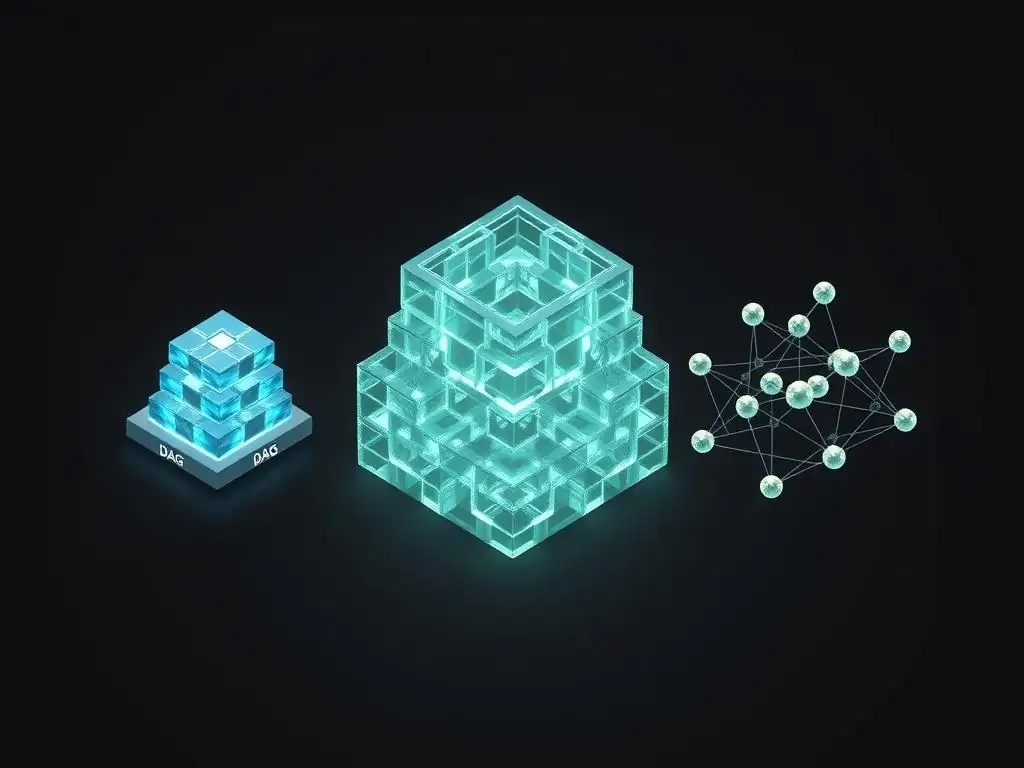
Permissioned vs. Permissionless DLT Architectures: A Detailed Comparison
DLT architectures can be broadly categorized into permissioned and permissionless systems, each with distinct characteristics, use cases, and trade-offs. Permissionless DLTs, like Bitcoin and Ethereum, are open to anyone to join and participate in the network, offering high levels of decentralization and censorship resistance. Permissioned DLTs, on the other hand, restrict network participation to authorized entities, providing greater control and often higher transaction throughput, making them suitable for enterprise applications. Understanding the differences between these two types of architectures is crucial for choosing the appropriate DLT for a specific use case.
Permissionless DLTs prioritize decentralization, transparency, and open access. They typically employ consensus mechanisms like Proof-of-Work or Proof-of-Stake to secure the network and achieve agreement among a large, anonymous group of participants. Permissioned DLTs, also known as consortium or private blockchains, prioritize performance, privacy, and regulatory compliance. They often utilize consensus mechanisms like pBFT or Raft, which are more efficient in smaller, known networks. The choice between permissioned and permissionless architectures depends on the specific requirements of the application, including security needs, scalability demands, and governance considerations.
Use Cases Suited for Each Type of DLT Architecture
Permissionless DLT architectures are well-suited for applications requiring high levels of decentralization, transparency, and censorship resistance. Cryptocurrencies, DeFi platforms, and public supply chain tracking systems often benefit from the open and trustless nature of permissionless DLTs. These systems are ideal for scenarios where trust in a central authority is undesirable or impractical, and where open participation and auditability are paramount.
Permissioned DLT architectures are better suited for enterprise applications, consortium networks, and scenarios where privacy, control, and regulatory compliance are critical. Supply chain management within a closed ecosystem, financial institutions collaborating on data sharing, and identity management systems for specific organizations are examples of use cases well-suited for permissioned DLTs. These systems offer greater control over network participants, data access, and governance, while still leveraging the benefits of DLT technology, such as immutability and distributed data management.
Security and Governance Considerations
Security and governance models differ significantly between permissioned and permissionless DLT architectures. Permissionless DLTs rely on cryptographic security and economic incentives to secure the network, often through computationally intensive consensus mechanisms like Proof-of-Work. Governance in permissionless systems is typically decentralized and community-driven, often involving on-chain voting and protocol upgrades proposed and voted on by network participants.
Permissioned DLTs often rely on permissioned access control and identity management to secure the network. Security is enhanced by controlling network participants and implementing robust access control policies. Governance in permissioned systems is typically more centralized and often determined by the consortium or organization managing the network. Governance models can range from hierarchical structures to more collaborative frameworks depending on the specific use case and organizational structure. Security and governance considerations are key factors in choosing between permissioned and permissionless DLT architectures.
Blockchain vs. Other DLT Technologies: Exploring the Differences
While blockchain is the most well-known type of DLT, other DLT technologies exist, each with unique architectural characteristics and trade-offs. Directed Acyclic Graph (DAG)-based DLTs and hybrid DLT architectures represent alternative approaches to distributed ledgers that diverge from the traditional chain-based structure of blockchains. Exploring these differences provides a broader understanding of the DLT landscape and the diverse architectural choices available.
Blockchain, with its linear chain of blocks, offers strong data integrity and immutability, but can face scalability limitations. DAG-based DLTs, like Hashgraph and IOTA, utilize a graph structure instead of a chain, potentially offering higher transaction throughput and scalability. Hybrid DLT architectures attempt to combine the strengths of different DLT technologies, such as blockchain and DAGs, to create systems that address specific needs and overcome limitations of individual architectures. Understanding these alternative DLT technologies expands the perspective beyond just blockchain and provides a more comprehensive view of DLT architecture layers explained.
DAG-based DLTs: An Alternative to Blockchain
DAG-based DLTs represent a departure from the linear chain structure of blockchains, organizing transactions in a directed acyclic graph. In DAGs, transactions are verified by directly referencing and validating previous transactions, rather than being grouped into blocks. This approach can potentially lead to faster transaction confirmation times and higher throughput compared to blockchains, as transactions can be processed concurrently and do not need to wait for block creation.
Examples of DAG-based DLTs include Hashgraph, IOTA, and Nano. Hashgraph utilizes a gossip protocol and virtual voting for consensus, aiming for fast and fair transaction ordering. IOTA is designed for the Internet of Things (IoT) and focuses on feeless microtransactions. Nano is a lightweight cryptocurrency that utilizes a block-lattice DAG structure. DAG-based DLTs offer an alternative approach to achieving distributed consensus and scalability, presenting different trade-offs compared to blockchain architectures.
Hybrid DLT Architectures: Combining the Best of Both Worlds
Hybrid DLT architectures seek to combine the advantages of different DLT technologies, such as blockchain and DAGs, or permissioned and permissionless systems, into a unified architecture. These architectures aim to address specific needs and overcome limitations of individual DLT types by leveraging the strengths of multiple approaches. Hybrid models can offer a balance between decentralization, scalability, privacy, and control.
For example, a hybrid architecture might combine a permissioned blockchain for core data management with a permissionless layer-2 solution for public interaction or specific functionalities. Another approach could involve integrating DAG-based transaction processing for high-throughput applications with a blockchain-based settlement layer for enhanced security and finality. Hybrid DLT architectures represent an evolving area of innovation in the DLT space, exploring new ways to optimize performance, security, and functionality by combining different architectural elements.
The Future of DLT Architecture: Trends and Innovations
Modular DLT Architectures: Enhancing Flexibility and Customization
Modular DLT architectures are emerging as a significant trend, focusing on enhancing flexibility and customization in DLT systems. Modularity involves designing DLTs as a collection of interchangeable and interoperable modules or components, allowing developers to tailor the architecture to specific application requirements. This approach promotes innovation, reduces complexity, and enables easier upgrades and adaptations to evolving needs.
In a modular DLT architecture, different layers and functionalities, such as consensus mechanisms, data storage, and execution environments, are designed as separate modules that can be swapped out or customized. This allows developers to choose the modules that best suit their application's needs, optimizing for performance, security, or specific features. Modular architectures also facilitate interoperability, as standardized modules can be designed to interact seamlessly with other DLT systems. This trend towards modularity promises to enhance the adaptability and versatility of DLT architectures.
Interoperability and Cross-Chain Communication
Interoperability and cross-chain communication are increasingly important trends in the DLT space. As the number of DLT platforms and ecosystems grows, the ability for different DLTs to communicate and interact with each other becomes crucial for realizing the full potential of decentralized systems. Interoperability enables the seamless transfer of assets and data between different DLTs, fostering a more connected and collaborative DLT ecosystem.
Cross-chain bridges and interoperability protocols are being developed to facilitate communication and asset transfers between different blockchains and DLTs. These solutions aim to break down silos between different DLT platforms and enable the creation of multi-chain applications and services. Interoperability is essential for unlocking network effects, promoting wider DLT adoption, and creating a more unified and interconnected decentralized web. The future of DLT architecture will likely be characterized by increasing interoperability and seamless cross-chain communication.
The Role of DLT in Decentralized Finance (DeFi)
DLT architecture plays a foundational role in the rapidly growing Decentralized Finance (DeFi) sector. DeFi applications leverage the transparency, security, and programmability of DLTs to create decentralized alternatives to traditional financial services. Understanding DLT architecture is crucial for comprehending the underlying mechanisms and potential of DeFi platforms and for assessing their risks and opportunities.
DeFi protocols rely on smart contracts deployed on DLTs, primarily Ethereum, to automate financial processes and enable decentralized lending, borrowing, trading, and yield farming. The security and immutability of the DLT infrastructure are essential for the trust and reliability of DeFi applications. As DeFi continues to evolve, innovations in DLT architecture, particularly in scalability and interoperability, will be crucial for supporting the growth and maturity of the DeFi ecosystem. DLT architecture is the backbone of DeFi, and its continued development will shape the future of decentralized finance.
Conclusion: Mastering DLT Architecture for Blockchain Innovation
Key Takeaways on DLT Architecture Layers Explained
Understanding the different layers of a DLT architecture is fundamental for anyone seeking to navigate and contribute to the blockchain space. We've explored the core layers – data, network, consensus, and application – each playing a distinct role in the functionality and characteristics of a DLT system. The data layer ensures immutability and integrity, the network layer handles connectivity and communication, the consensus layer achieves agreement and validation, and the application layer enables the development of dApps and smart contracts. Comprehending these layers is essential for grasping how DLTs work and for analyzing the trade-offs between different architectural choices.
We've also delved into specific aspects of each layer, including consensus mechanisms, scalability challenges, security vulnerabilities, and application layer use cases. Comparing permissioned and permissionless DLTs, exploring alternative DLT technologies like DAGs, and examining future trends like modularity and interoperability provide a comprehensive understanding of the DLT landscape. Mastering DLT architecture layers explained empowers informed decision-making, enables deeper analysis of blockchain solutions, and facilitates participation in the ongoing innovation within the DLT ecosystem.
The Importance of Understanding DLT Architecture for Future Blockchain Development
For future blockchain development and innovation, a deep understanding of DLT architecture is paramount. As the blockchain space matures and expands beyond cryptocurrencies, the ability to design, implement, and analyze DLT architectures becomes increasingly critical. Developers need to be able to choose the appropriate architectural components, optimize performance, address security vulnerabilities, and build scalable and user-friendly applications.
Furthermore, understanding DLT architecture is crucial for researchers, policymakers, and businesses seeking to leverage DLT technology for various applications. Informed decision-making regarding DLT adoption, regulation, and investment requires a solid grasp of the underlying architecture and its implications. As DLT technology continues to evolve, a strong foundation in DLT architecture will be essential for driving future innovation, fostering wider adoption, and realizing the transformative potential of decentralized systems across industries and society.
Frequently Asked Questions
What are the main layers typically found in a DLT architecture?
The main layers usually include the data layer (where transactions and data reside), the network layer (managing communication and consensus), and the application layer (providing interfaces for user interaction).
Why is understanding the different layers of a DLT architecture important?
Understanding these layers is crucial for developers and businesses to effectively design, implement, and maintain blockchain-based solutions. It allows for better optimization and scalability of the system.
How does the data layer contribute to the overall functionality of a DLT?
The data layer is the foundation of a DLT, responsible for storing and managing all transactional data. It ensures data immutability and provides a verifiable record of all activities on the blockchain.
What role does the network layer play in a distributed ledger technology (DLT)?
The network layer facilitates communication between nodes in the DLT network. It is responsible for propagating transactions and ensuring consensus among participants.
How does the application layer interact with the underlying DLT architecture?
The application layer provides the user interface and business logic that interacts with the DLT. It allows users to access and utilize the functionalities of the blockchain without needing to understand the complex underlying infrastructure.
Final Reflection: Unveiling the Future of Decentralization
The exploration of DLT architecture layers isn't merely an academic exercise; it's a crucial step in understanding the very foundation upon which the future of decentralized systems is being built. As we've dissected each layer, from the data layer to the application layer, it becomes clear that their intricate interplay dictates the security, scalability, and overall effectiveness of any DLT implementation in today's rapidly evolving digital landscape.
This deep dive into DLT architecture has profoundly influenced my understanding of the potential, and the challenges, inherent in decentralized technologies. Witnessing the evolution from theoretical concepts to tangible applications underscores the transformative power of DLTs. The future is already here – it's just not evenly distributed.
- William Gibson. This quote resonates deeply, reminding us that understanding these architectural layers is essential for ensuring equitable access to the benefits of decentralization.
Now, I invite you to reflect on how these layers impact your own understanding of the digital world. Consider how a deeper knowledge of DLT architecture can empower you to critically evaluate emerging technologies and contribute to a more decentralized, transparent, and secure future. Embrace the opportunity to learn, explore, and build upon these foundations, for the future of trust and innovation lies within our collective understanding of these intricate layers.
Unlock Your DLT Potential!
Thank you for exploring the layers of distributed ledger technology architecture with us! Now that you have a clearer understanding, it's time to apply that knowledge and contribute to the future of decentralized systems.
Here are a few steps you can take right now:
- Dive into the code: Explore open-source DLT projects on platforms like GitHub and contribute to their development. Even small contributions make a difference!
- Share your insights: Discuss your favorite layers of DLT architecture on social media and tag us @BlockchainTrends. Let’s start a conversation!
- Consider a niche area: Explore specialized DLT applications, such as supply chain provenance, and see how they can be implemented in real-world scenarios.
Which layer of DLT are you most excited to experiment with, and what innovative solutions do you hope to build on it? Share your thoughts in the comments below!
Leave a Reply