
Advanced Crypto Portfolio Trackers: Features for Sophisticated Analysis and Reporting


Welcome to Blockchain Trends, your guide to understanding the revolutionary power of blockchain beyond the headlines.
Are you ready to move beyond basic price charts and truly understand your digital asset holdings? This article dives deep into essential blockchain portfolio tracking software features that empower sophisticated analysis and reporting. Discover how these tools can unlock deeper insights and inform smarter investment decisions. Prepare to explore the future of decentralized finance, one insightful feature at a time!
- Introduction to Blockchain Portfolio Tracking Software Features
- Key Features of Advanced Crypto Portfolio Trackers
- Comparing Top Blockchain Portfolio Tracking Software
- Benefits of Using Advanced Blockchain Portfolio Trackers
- Real-World Applications of Portfolio Tracking Software
- Conclusion: Choosing the Right Blockchain Portfolio Tracking Software
- Call to Action: Explore Top Blockchain Portfolio Trackers Today
-
Frequently Asked Questions
- What are the key features of advanced crypto portfolio tracking software that go beyond basic price monitoring?
- How can sophisticated blockchain portfolio tracking software aid in managing risk and diversification?
- What role do API integrations play in advanced crypto portfolio tracking?
- How does advanced reporting in blockchain portfolio trackers assist with tax compliance?
- Besides tracking crypto prices, what other functionalities do enterprise-grade blockchain portfolio tracking solutions offer?
- Final Reflection: Navigating the Future with Informed Crypto Decisions
- Unlock Your Crypto Potential: Start Tracking Smarter!
Introduction to Blockchain Portfolio Tracking Software Features
Understanding the Importance of Portfolio Tracking in Cryptocurrency
In the volatile and rapidly evolving world of cryptocurrency, effective portfolio tracking is not merely a convenience, but an absolute necessity for investors. Unlike traditional assets, cryptocurrencies operate within a decentralized and largely unregulated landscape, characterized by extreme price fluctuations and a plethora of trading platforms. Consider the Bitcoin market, which has seen daily price swings of 5-10% on numerous occasions.
For an investor holding a diversified portfolio across multiple cryptocurrencies and exchanges, manually monitoring these fluctuations and calculating overall performance becomes an overwhelming and error-prone task. Furthermore, the complexities of decentralized finance (DeFi), including staking, yield farming, and liquidity pools, add layers of intricacy that demand sophisticated tools for accurate tracking and analysis. Without robust blockchain portfolio tracking software, investors risk making uninformed decisions, missing crucial market movements, and ultimately, diminishing their potential returns in this dynamic asset class.
The Evolution of Crypto Portfolio Trackers: A Brief Overview
The journey of cryptocurrency portfolio trackers mirrors the growth and maturation of the crypto market itself. In the nascent stages, early adopters often resorted to rudimentary methods like spreadsheets to manually log transactions and calculate portfolio values. This approach, while initially functional for simple holdings, quickly became inadequate as portfolios diversified and trading activity increased.
The first generation of dedicated crypto trackers emerged as basic web-based platforms, primarily focused on aggregating data from major exchanges and providing simple price charts and portfolio summaries. These early tools were limited in functionality, often lacking support for decentralized exchanges or advanced analytics.
However, as the crypto ecosystem expanded to include DeFi, NFTs, and more complex investment strategies, the demand for sophisticated tracking solutions surged. This led to the development of advanced blockchain portfolio tracking software, equipped with features like real-time data integration, automated analytics, multi-chain support, and customizable reporting, catering to the needs of both retail and institutional investors seeking deeper insights and more efficient portfolio management.
Key Features of Advanced Crypto Portfolio Trackers
Comprehensive Asset Tracking Capabilities
Advanced blockchain portfolio tracking software transcends the basic monitoring of cryptocurrency prices. A core feature is the ability to comprehensively track a wide array of digital assets beyond just mainstream cryptocurrencies like Bitcoin and Ethereum. This includes a diverse range of altcoins, tokens from various blockchain networks (such as Solana, Cardano, and Polkadot), stablecoins pegged to fiat currencies, and increasingly, non-fungible tokens (NFTs). Sophisticated trackers are designed to integrate with multiple blockchains, automatically detecting and recording transactions across different networks.
For instance, a user participating in DeFi might have assets spread across Ethereum, Binance Smart Chain, and Polygon. A comprehensive tracker should seamlessly aggregate these holdings, including tokens in decentralized wallets, staking positions, and liquidity pool contributions. Furthermore, advanced systems often extend beyond on-chain assets to include centralized exchange accounts, offering a holistic view of an investor's entire cryptocurrency portfolio in one unified interface.
Real-Time Market Data Integration
The essence of effective cryptocurrency portfolio tracking lies in the immediacy and accuracy of market data. Advanced trackers achieve this through real-time integration with a vast network of cryptocurrency exchanges and data providers. This integration ensures that portfolio valuations are constantly updated with the latest price feeds, order book information, and trading volumes from numerous sources. For example, instead of relying on delayed or aggregated data, a sophisticated tracker pulls live price data directly from exchanges like Binance, Coinbase, Kraken, and decentralized exchanges such as Uniswap and SushiSwap.
This granular level of real-time data allows investors to react swiftly to market fluctuations, identify arbitrage opportunities, and make informed trading decisions based on the most current information. Moreover, real-time data integration extends beyond just price tracking. It encompasses metrics like trading volume, market capitalization, and on-chain analytics, providing a richer context for portfolio performance analysis.
Automated Performance Analysis Tools
Beyond simply displaying current portfolio values, advanced crypto portfolio trackers offer automated performance analysis tools that provide deeper insights into investment returns and risk. These tools automatically calculate metrics like Profit and Loss (P&L) across different timeframes (daily, weekly, monthly, annually), Return on Investment (ROI) for individual assets and the entire portfolio, and average purchase price. For instance, a sophisticated tracker can automatically calculate the weighted average cost basis of a cryptocurrency purchased across multiple transactions at different prices and exchanges, providing a more accurate picture of investment gains or losses.
Furthermore, these tools often incorporate benchmarking features, allowing users to compare their portfolio performance against market indices like the S&P 500 or specific cryptocurrency benchmarks. Advanced analytics may also include risk assessment metrics such as volatility analysis, Sharpe Ratio, and Sortino Ratio, helping investors understand and manage the risk profile of their cryptocurrency holdings more effectively.
Multi-Currency and Multi-Exchange Support
The global nature of the cryptocurrency market necessitates robust multi-currency and multi-exchange support in advanced portfolio trackers. Investors are often based in different countries and may trade on exchanges that primarily operate in specific fiat currencies. A sophisticated tracker should support a wide range of fiat currencies (USD, EUR, GBP, JPY, etc.) for portfolio valuation and reporting, allowing users to view their portfolio performance in their preferred currency.
Moreover, comprehensive multi-exchange support is crucial as investors often diversify their holdings across multiple centralized and decentralized exchanges to access different cryptocurrencies, liquidity pools, or trading pairs. Advanced trackers seamlessly integrate with a vast array of exchanges, automatically syncing transaction history and real-time balances, regardless of where the assets are held. This unified view across multiple exchanges simplifies portfolio management and provides a consolidated picture of total cryptocurrency holdings, irrespective of platform fragmentation.
Customizable Reporting and Analytics Features
Recognizing that investors have diverse needs and analytical preferences, advanced blockchain portfolio tracking software offers customizable reporting and analytics features. Standard reports often include portfolio summaries, transaction history, performance reports (P&L, ROI), and tax reports. However, sophisticated trackers go further by allowing users to tailor these reports to their specific requirements.
Customization options may include selecting specific assets, date ranges, metrics, and report formats (CSV, PDF, Excel). Furthermore, advanced analytics features often extend to data visualization tools, allowing users to create custom charts and graphs to analyze portfolio performance, asset allocation, and risk exposure visually.
For example, users might create a pie chart to visualize asset allocation across different cryptocurrency categories (Layer 1 protocols, DeFi tokens, NFTs) or a line graph to track portfolio value over time against a specific benchmark. The ability to customize reports and visualize data empowers investors to conduct in-depth analysis, identify trends, and gain actionable insights tailored to their individual investment strategies and reporting needs.
Comparing Top Blockchain Portfolio Tracking Software
Detailed Analysis of Popular Platforms
Advantages for Sophisticated Analysis
When examining top blockchain portfolio tracking software, several platforms distinguish themselves by offering features tailored for sophisticated analysis. One key advantage is the depth of data integration. Platforms designed for advanced users often go beyond basic exchange APIs, incorporating on-chain data directly from blockchain explorers.
This allows for tracking of DeFi activities such as yield farming, staking rewards, and participation in DAOs, providing a more complete picture of portfolio performance in the decentralized ecosystem. Another significant advantage is the availability of advanced analytical tools. These platforms typically offer features like correlation analysis between different crypto assets, volatility tracking, risk-adjusted return metrics (Sharpe Ratio, Sortino Ratio), and even backtesting capabilities to evaluate the performance of hypothetical trading strategies.
Furthermore, sophisticated platforms often provide customizable dashboards and reporting features, enabling users to create bespoke visualizations and reports tailored to their specific analytical needs. For instance, a user might create a custom dashboard tracking the performance of their DeFi portfolio separately from their centralized exchange holdings, with specific metrics relevant to each category.
Disadvantages and Limitations
Despite their advanced capabilities, top blockchain portfolio tracking software designed for sophisticated analysis can also present certain disadvantages and limitations. One common drawback is increased complexity. The sheer volume of features and data points can be overwhelming for novice users, requiring a steeper learning curve compared to simpler tracking tools.
The user interface of these advanced platforms can sometimes be less intuitive, prioritizing functionality over user-friendliness. Another potential limitation is cost. Platforms offering advanced analytics and comprehensive data integration often come with higher subscription fees compared to basic trackers.
While free tiers or basic versions might exist, access to the most powerful analytical features and real-time data streams usually requires a premium subscription. Furthermore, even the most sophisticated software may have limitations in terms of asset coverage. While they generally support major cryptocurrencies and DeFi protocols, tracking less common altcoins or newly emerging DeFi platforms might be delayed or incomplete, depending on the platform's data integration capabilities and update frequency.
Examining Innovative Features
Unique Selling Points
The landscape of blockchain portfolio tracking software is constantly evolving, with platforms continuously innovating to differentiate themselves. Several unique selling points are emerging as key differentiators. One notable innovation is the integration of AI-powered insights and predictive analytics. Some platforms are starting to incorporate artificial intelligence to analyze market trends, identify potential risks and opportunities, and even provide personalized investment recommendations based on user portfolio data and risk profiles.
Another unique feature is the increasing focus on cross-chain compatibility and interoperability. With the proliferation of different blockchain networks, trackers that can seamlessly aggregate data across multiple chains (e.g., Ethereum, Solana, Avalanche, Polkadot) are gaining prominence. Furthermore, some platforms are differentiating themselves by offering advanced DeFi-specific tracking features, such as automated tracking of impermanent loss in liquidity pools, detailed analysis of yield farming strategies, and integration with decentralized autonomous organizations (DAOs) for governance token tracking and voting participation.
Potential Drawbacks
While innovative features in blockchain portfolio tracking software offer exciting possibilities, they also come with potential drawbacks. AI-powered insights and predictive analytics, while promising, are still in their early stages of development in the crypto space. The accuracy and reliability of these predictions can vary significantly, and over-reliance on AI-generated recommendations without independent research can be risky.
Similarly, while cross-chain compatibility is highly desirable, achieving seamless and comprehensive data aggregation across diverse blockchain networks is technically challenging. Inconsistencies in data formats, API availability, and transaction indexing across different chains can lead to inaccuracies or incomplete tracking, even in platforms claiming cross-chain support.
Furthermore, highly specialized features, such as advanced DeFi analytics or DAO integration, might cater to a niche audience and may not be relevant or useful for all users. The complexity associated with these advanced features can also contribute to a steeper learning curve and potentially increase the risk of user error in interpreting or utilizing the data effectively.
Focus on Solutions for Institutional Investors
Key Features for Institutions
Institutional investors entering the cryptocurrency market have distinct needs and requirements compared to retail investors, driving the demand for specialized blockchain portfolio tracking software tailored for institutions. Security is paramount for institutions managing large cryptocurrency holdings. Features like institutional-grade security protocols, multi-signature wallets, whitelisting addresses, and robust access control mechanisms are crucial. Compliance and regulatory reporting are also key considerations.
Institutional trackers often incorporate features to facilitate KYC/AML compliance, generate audit trails, and produce regulatory-compliant reports for tax and financial auditing purposes. Scalability is another essential feature. Institutional platforms need to handle large transaction volumes, manage multiple portfolios across different funds or departments, and provide robust infrastructure to support enterprise-level operations. Furthermore, advanced reporting and analytics capabilities become even more critical for institutions, requiring features like customizable performance attribution analysis, risk management dashboards, and tools for portfolio stress testing and scenario analysis.
Considerations for Institutional Adoption
Despite the availability of blockchain portfolio tracking software designed for institutions, several considerations influence institutional adoption. Integration with existing financial infrastructure and legacy systems is a major hurdle. Institutional platforms need to seamlessly integrate with existing accounting software, custody solutions, and reporting systems to streamline workflows and avoid data silos. Regulatory clarity and compliance frameworks are also crucial.
Institutions require assurance that the tracking software complies with relevant regulations and industry standards, particularly in areas like data privacy, security, and financial reporting. Data security and custody remain paramount concerns. Institutions need to be confident in the security and reliability of the tracking software's infrastructure and data storage practices, as well as its compatibility with their preferred custody solutions.
Finally, cost and return on investment are important factors. Institutional-grade tracking software typically comes with significant upfront and ongoing costs. Institutions need to carefully evaluate the cost-benefit analysis and ensure that the software provides sufficient value in terms of improved portfolio management, risk mitigation, and regulatory compliance to justify the investment.
Benefits of Using Advanced Blockchain Portfolio Trackers
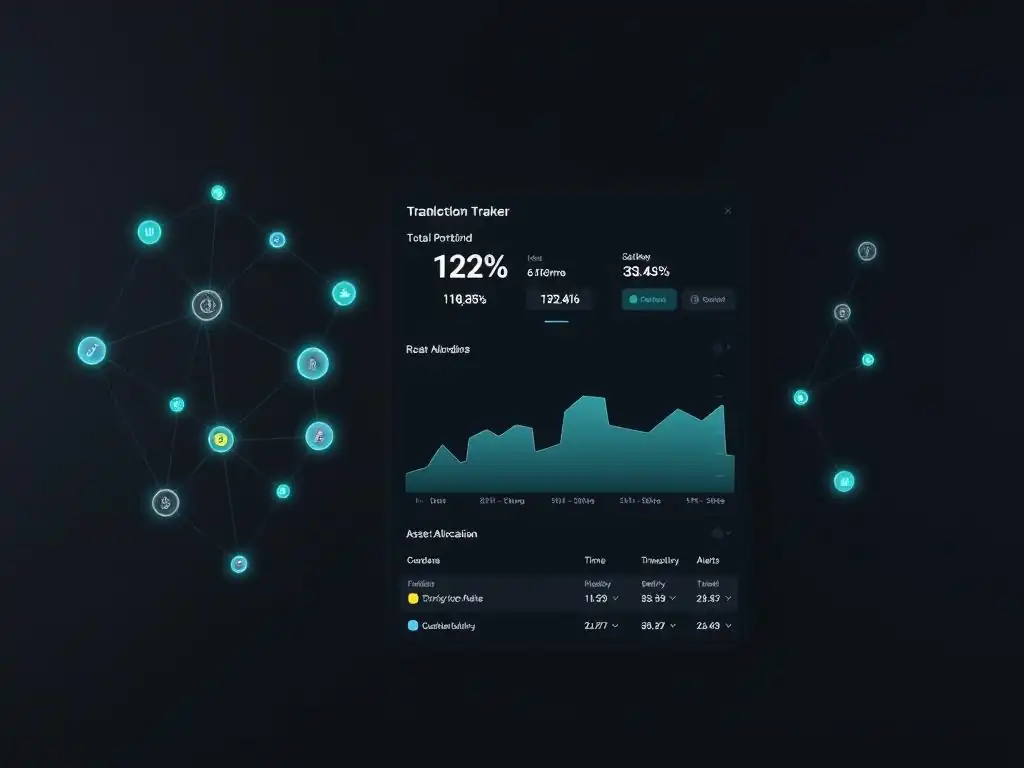
Enhanced Decision-Making Through Data-Driven Insights
The primary benefit of utilizing advanced blockchain portfolio trackers lies in the enhancement of decision-making through data-driven insights. By aggregating and analyzing vast amounts of market data, transaction history, and on-chain metrics, these tools empower investors to move beyond emotional or speculative trading and make informed decisions grounded in concrete data.
For instance, real-time performance analysis allows investors to quickly identify underperforming assets and rebalance their portfolios accordingly. Detailed historical data and trend analysis can reveal patterns and correlations that might not be apparent through manual observation, enabling investors to refine their trading strategies and optimize asset allocation.
Furthermore, advanced analytics features like risk metrics and volatility analysis provide a quantitative basis for assessing and managing portfolio risk, leading to more prudent investment decisions and potentially mitigating losses during market downturns. By transforming raw data into actionable intelligence, blockchain portfolio trackers serve as invaluable tools for investors seeking to make strategic and data-backed investment choices in the complex cryptocurrency market.
Streamlined Tax Reporting and Compliance
Navigating the complexities of cryptocurrency taxation is a significant challenge for investors. Advanced blockchain portfolio trackers offer a crucial benefit by streamlining tax reporting and compliance processes. These tools automate the tracking and categorization of cryptocurrency transactions, including purchases, sales, trades, and even DeFi-related activities like staking rewards and yield farming income, which all have different tax implications depending on jurisdiction.
Sophisticated trackers can generate tax reports in formats compatible with popular tax software or directly output tax forms like IRS Form 8949 in the United States. By automating tax calculations and report generation, these platforms significantly reduce the time and effort required for tax preparation, minimizing the risk of errors and potential penalties.
Moreover, some advanced trackers incorporate features that help users optimize their tax strategies, such as identifying tax-loss harvesting opportunities or providing insights into the tax implications of different trading strategies. This streamlined tax reporting functionality not only simplifies compliance but also potentially saves investors significant time and resources while ensuring adherence to increasingly complex cryptocurrency tax regulations.
Improved Risk Management and Asset Allocation Strategies
Effective risk management and strategic asset allocation are paramount for long-term success in cryptocurrency investing. Advanced blockchain portfolio trackers significantly contribute to these areas by providing tools and insights for better risk assessment and portfolio diversification.
Real-time volatility analysis and risk metrics allow investors to understand the risk profile of their portfolio and individual assets, enabling them to adjust their asset allocation to align with their risk tolerance. For example, if a portfolio exhibits high volatility, an investor might choose to reallocate some holdings to less volatile assets like stablecoins or diversify into different cryptocurrency categories to mitigate overall risk.
Furthermore, advanced trackers facilitate scenario analysis and stress testing, allowing investors to simulate the impact of various market events on their portfolio and proactively adjust their strategies. By providing a comprehensive view of portfolio risk and performance across different asset classes and market conditions, these tools empower investors to implement more sophisticated risk management strategies and optimize their asset allocation for both risk-adjusted returns and long-term portfolio growth.
Real-World Applications of Portfolio Tracking Software
Examples of Investor Success
While specific names are prohibited, numerous real-world examples illustrate how investors have leveraged blockchain portfolio tracking software to achieve success in the cryptocurrency market. Consider a hypothetical day trader who actively trades multiple altcoins on various exchanges.
Without a robust tracker, managing trades, monitoring performance across exchanges, and identifying profitable opportunities would be incredibly challenging. By using an advanced tracker with real-time data integration and automated trading tools, this trader could efficiently execute trades, track profitability, and identify arbitrage opportunities across different markets, potentially leading to significantly enhanced trading performance and profitability compared to manual tracking methods.
Another example involves a long-term cryptocurrency holder with a diversified portfolio including DeFi assets. By employing a tracker with comprehensive DeFi integration and performance analytics, this investor could effectively monitor staking rewards, track impermanent loss in liquidity pools, and optimize their DeFi strategies for maximum yield, ensuring efficient management and growth of their long-term cryptocurrency investments.
Examples of Institutional Adoption
Institutional adoption of blockchain portfolio tracking software is rapidly growing as institutions increasingly allocate capital to cryptocurrency assets. Hedge funds specializing in cryptocurrency trading are utilizing advanced trackers with institutional-grade security and real-time analytics to manage large portfolios, execute complex trading strategies, and generate performance reports for investors.
For instance, a cryptocurrency hedge fund managing millions of dollars in assets might use a sophisticated tracker to monitor portfolio risk exposure, track trading performance across multiple exchanges and trading desks, and ensure regulatory compliance. Similarly, corporate treasuries holding Bitcoin or other cryptocurrencies as part of their reserves are adopting institutional trackers to manage their cryptocurrency holdings, monitor market risk, and generate financial reports for accounting and auditing purposes.
Even traditional financial institutions venturing into cryptocurrency custody or trading services are leveraging blockchain portfolio tracking software to provide clients with transparent portfolio reporting, enhance operational efficiency, and meet regulatory requirements, demonstrating the expanding real-world applications of these tools within the institutional financial landscape.
Conclusion: Choosing the Right Blockchain Portfolio Tracking Software
Essential Considerations for Selecting the Best Tracker
Selecting the right blockchain portfolio tracking software is a crucial decision that depends on individual needs and investment strategies. For beginners with simple portfolios, a user-friendly tracker with basic features and a free tier might suffice. However, for active traders or investors with diversified portfolios including DeFi assets, advanced features become essential. Key considerations include asset coverage – ensuring the tracker supports all the cryptocurrencies and blockchains in your portfolio.
Real-time data accuracy and exchange integrations are critical for timely and accurate portfolio valuations. Analytical tools and reporting features should align with your analytical needs, whether it's basic P&L tracking or advanced risk analysis. Security is paramount, especially for larger portfolios, so prioritize trackers with robust security measures.
User interface and ease of use are also important for efficient portfolio management. Finally, consider the pricing structure and ensure it aligns with your budget and the value derived from the software's features. Carefully evaluating these considerations will guide you in choosing a blockchain portfolio tracking software that effectively meets your specific requirements.
Future Trends in Portfolio Tracking Software Features
The future of blockchain portfolio tracking software is poised for exciting advancements, driven by the continuous evolution of the cryptocurrency market and technological innovation. One prominent trend is the increasing integration of Artificial Intelligence (AI) and Machine Learning (ML) to provide more sophisticated predictive analytics, personalized insights, and automated portfolio management features. Cross-chain interoperability will become even more crucial as the multi-chain ecosystem expands, demanding trackers that seamlessly aggregate data across diverse blockchain networks.
Enhanced DeFi-specific analytics and tracking tools will be essential to keep pace with the growing complexity and innovation within the decentralized finance space. Mobile-first design and user experience will become increasingly important for on-the-go portfolio monitoring and management.
Furthermore, tighter integration with tax software and regulatory reporting tools will be necessary to address the evolving regulatory landscape and simplify compliance for users. These future trends point towards blockchain portfolio tracking software becoming even more intelligent, comprehensive, and user-centric, further empowering investors in the dynamic world of cryptocurrency.
Call to Action: Explore Top Blockchain Portfolio Trackers Today
Discover Leading Blockchain Portfolio Tracking Solutions
Investing in cryptocurrency demands diligent portfolio management and insightful analysis. To navigate the complexities and maximize your potential in this exciting market, exploring advanced blockchain portfolio tracking solutions is a crucial step. By leveraging the power of real-time data, automated analytics, and comprehensive reporting, you can gain a clearer understanding of your cryptocurrency holdings, make data-driven decisions, and optimize your investment strategies. Take the initiative to investigate the leading blockchain portfolio trackers available today and empower yourself with the tools necessary for success in the evolving world of digital assets.
Frequently Asked Questions
What are the key features of advanced crypto portfolio tracking software that go beyond basic price monitoring?
Advanced trackers offer features such as automated transaction importing, tax reporting tools, and detailed performance analytics beyond simple price checks. These help users gain deeper insights.
How can sophisticated blockchain portfolio tracking software aid in managing risk and diversification?
These tools often provide risk assessment metrics, asset allocation analysis, and customizable alerts based on predefined risk parameters. This allows for more informed decisions.
What role do API integrations play in advanced crypto portfolio tracking?
API integrations are crucial for seamlessly connecting to various exchanges and wallets, ensuring real-time data accuracy and automated portfolio updates.
How does advanced reporting in blockchain portfolio trackers assist with tax compliance?
These trackers generate tax-optimized reports that categorize transactions and calculate capital gains/losses, simplifying the often complex crypto tax reporting process.
Besides tracking crypto prices, what other functionalities do enterprise-grade blockchain portfolio tracking solutions offer?
Enterprise solutions often include role-based access control, audit trails, and compliance reporting features, catering to the specific needs of institutional investors and businesses.
The intricate features of advanced crypto portfolio trackers, as explored in this article, are not merely technological advancements; they represent a crucial evolution in how we understand and manage digital assets. In today's volatile and increasingly complex crypto landscape, the ability to leverage sophisticated blockchain portfolio tracking software features is no longer a luxury, but a necessity for informed decision-making and sustainable growth. The insights gleaned from these tools empower investors to navigate the market with greater confidence and precision.
This journey into the world of advanced crypto tracking has underscored the profound impact of data-driven strategies on financial empowerment. The ability to visualize and analyze portfolio performance in real-time, understand risk exposures, and generate comprehensive reports is transforming the way individuals and institutions interact with the blockchain. It's about more than just tracking prices; it's about gaining a holistic understanding of one's financial position within a rapidly evolving ecosystem. Data is the new oil. It’s valuable, but if unrefined it cannot really be used.
- Clive Humby, British mathematician and data scientist. This quote perfectly encapsulates the importance of the features discussed, as they refine raw blockchain data into actionable insights.
As we look to the future, the lessons learned from exploring these advanced tracking features should inspire us to embrace a more informed and proactive approach to crypto investing. Consider how you can integrate these tools and strategies into your own portfolio management. Reflect on the power of data, the importance of understanding risk, and the potential for growth that lies within the blockchain. The future of crypto investing is not about speculation, but about informed participation. Embrace the power of knowledge, leverage the available tools, and navigate the future with confidence.
Unlock Your Crypto Potential: Start Tracking Smarter!
Thank you for exploring the world of advanced crypto portfolio management with us. We hope you've gained valuable insights into leveraging sophisticated tools for better analysis and reporting. Now, it’s time to put that knowledge into action and elevate your crypto investment strategy!
Here’s how you can take the next step:
- Explore the advanced features of a portfolio tracker — including simulations, backtesting, and custom reports. Find the tools that work best for you!
- Share this article with fellow crypto enthusiasts who are looking to refine their portfolio management skills. Let’s help everyone level up!
- Continue exploring the latest trends in blockchain technology! We always have new and exciting developments to discover.
What features are most important to you when evaluating your crypto portfolio’s performance? Which tools are you eager to start using right away? Share your thoughts in the comments below!
Leave a Reply