
Avalanche Blockchain Explorers: Exploring Subnets & HighThroughput Data


Welcome to Blockchain Trends, your guide to the evolving landscape of decentralized technology. Are you ready to delve deeper than just cryptocurrencies? We're uncovering the transformative power of blockchain across industries, and today we're starting with an in-depth look at Avalanche Subnets HighThroughput Data. Discover how this innovative solution is reshaping the possibilities for scalable and efficient blockchain applications. What secrets does Avalanche hold for the future of decentralized systems? Let's explore!
- Introduction to Avalanche Blockchain Explorers: Understanding Subnets and High-Throughput Data
- Exploring the Best Avalanche Blockchain Explorers for Subnet Analysis
- How Avalanche Subnets Enhance Data Throughput
- Best Practices for Using Avalanche Blockchain Explorers
- Case Studies: Successful Implementation of Avalanche Subnets and Explorers
- Conclusion: The Future of Avalanche Subnets and High-Throughput Data
-
Frequently Asked Questions
- What are Avalanche Subnets and why are they important?
- How does Avalanche achieve high throughput data processing?
- How do Avalanche Blockchain Explorers aid in understanding Subnets?
- What are some potential use cases for Avalanche Subnets beyond DeFi?
- How does regulation impact the development and adoption of Avalanche Subnets?
- Final Reflection: Navigating the Avalanche of Innovation
- Unlock Avalanche's Potential: Your Journey Starts Now!
Introduction to Avalanche Blockchain Explorers: Understanding Subnets and High-Throughput Data
What are Avalanche Subnets?
Avalanche subnets, or subnetworks, are a cornerstone of the Avalanche blockchain's innovative architecture. They represent a dynamic and scalable solution to the challenges of blockchain congestion and specialization. In essence, subnets are custom, independent blockchains within the larger Avalanche network. Each subnet can define its own rules regarding membership, virtual machines (VMs), and tokenomics. This modular design allows developers to create blockchains tailored to specific application needs, ranging from decentralized finance (DeFi) platforms to enterprise solutions and even gaming applications. This level of customization is a significant departure from monolithic blockchain structures, offering unparalleled flexibility and control.
Subnets achieve their independence by operating as their own distinct networks while still benefiting from the security and interoperability of the primary Avalanche network. They can validate the primary Avalanche blockchain (Primary Network) and other subnets, participating in the broader ecosystem while maintaining autonomy over their internal operations.
This unique architecture is crucial for achieving high throughput and scalability, as each subnet can process transactions and data independently, reducing congestion on the main network and allowing for specialized optimization. The concept of Avalanche subnets is pivotal for understanding how the platform addresses the demands of diverse blockchain applications requiring varying levels of throughput and customization.
The Importance of High-Throughput Data in Blockchain Technology
High-throughput data is a critical factor in the evolution and mainstream adoption of blockchain technology. It refers to the ability of a blockchain network to process a large volume of transactions and data within a short period. In traditional blockchains, limitations in throughput have often led to network congestion, slow transaction speeds, and high gas fees, hindering user experience and scalability. For blockchain technology to truly compete with and surpass traditional systems in areas like finance, supply chain management, and social media, it must be capable of handling data volumes comparable to, or exceeding, those of centralized platforms.
The demand for high-throughput data in blockchain stems from the increasing complexity and scale of decentralized applications (dApps). Consider decentralized exchanges (DEXs) requiring near-instantaneous trade execution, or large-scale enterprise applications needing to process thousands of transactions per second. Without high throughput, these applications would be impractical due to slow performance and escalating costs.
Furthermore, the growth of data-intensive applications such as blockchain-based gaming and metaverse platforms necessitates robust data handling capabilities. High throughput ensures that blockchain networks can support these demanding applications, fostering innovation and wider adoption across various industries. The capacity to manage high-throughput data is thus not just a technical advantage but a fundamental requirement for blockchain to realize its transformative potential.
Overview of Avalanche Blockchain and Its Unique Features
Avalanche is a revolutionary open-source platform designed to launch highly decentralized applications, new financial primitives, and new interoperable blockchains. Launched in 2020 by Ava Labs, Avalanche distinguishes itself through its unique consensus mechanism and subnet architecture, which are designed to overcome the scalability limitations of earlier blockchain platforms. Unlike traditional blockchains that rely on a single consensus mechanism, Avalanche employs a novel consensus protocol family.
The primary consensus protocols, Snowman and Avalanche, enable the network to achieve rapid finality, often confirming transactions in under a second. This speed is significantly faster than many other prominent blockchains and contributes directly to its ability to handle high-throughput data.
Beyond speed, Avalanche's architecture is built for scalability and customization. The use of subnets is central to this, allowing for horizontal scaling by enabling the creation of numerous specialized blockchains. Each subnet can be tailored to specific needs, ensuring that the overall Avalanche network remains performant even as the number of applications and transactions grows.
Furthermore, Avalanche is designed for interoperability, facilitating seamless communication and asset transfers between different subnets and even other blockchain ecosystems. This focus on speed, scalability through subnets, and interoperability positions Avalanche as a leading platform for building the next generation of blockchain applications requiring high throughput and flexible customization.
Exploring the Best Avalanche Blockchain Explorers for Subnet Analysis
Top Features of Effective Blockchain Explorers
Effective blockchain explorers are indispensable tools for navigating and understanding the complexities of blockchain networks. They act as search engines and data aggregators for blockchain data, presenting information in a user-friendly and accessible format. Key features of top-tier blockchain explorers include robust search functionality, allowing users to easily look up transactions, addresses, blocks, and tokens. Detailed transaction views are essential, providing comprehensive information about transaction status, involved parties, gas fees, and event logs. Furthermore, explorers should offer comprehensive block data, showing block height, timestamp, validator details, and included transactions.
Beyond basic data retrieval, advanced blockchain explorers often incorporate features for network analytics and monitoring. This can include real-time network statistics like transaction throughput, average block time, and gas prices. For networks with smart contracts, explorers should provide tools to verify and interact with smart contracts, showing their code and allowing users to read contract state.
Visualization of network activity and data, such as transaction charts and address balance histories, can greatly enhance user understanding. Ultimately, the most effective blockchain explorers are those that combine comprehensive data access with intuitive interfaces and powerful analytical capabilities, empowering users to explore and interpret blockchain data effectively.
Why Choose Avalanche-Specific Explorers?
While general blockchain explorers can provide basic insights into blockchain transactions, Avalanche-specific explorers offer crucial advantages when dealing with the unique architecture of Avalanche, particularly its subnets. Avalanche's subnet structure introduces a layer of complexity not present in single-chain blockchains. Generic explorers may not adequately support the exploration of subnet-specific data, such as subnet transactions, subnet validators, and the configurations unique to each subnet. Avalanche-specific explorers are designed to understand and present this subnet-centric data effectively.
These specialized explorers are built to recognize and parse Avalanche's specific data structures and protocols, ensuring accurate and comprehensive data retrieval. They often provide dedicated sections or filters for navigating and examining subnet activity, allowing users to differentiate between transactions on the primary network and various subnets.
Furthermore, Avalanche-specific explorers are more likely to integrate features tailored to the Avalanche ecosystem, such as support for Avalanche's native tokens and functionalities related to its consensus mechanisms. For users deeply involved in the Avalanche ecosystem, especially those working with or monitoring subnets, choosing an Avalanche-specific explorer is essential for a complete and accurate view of on-chain activity.
Comparison of Leading Avalanche Blockchain Explorers
Explorer: Snowtrace
Snowtrace, formerly known as BscScan for the Binance Smart Chain, is a widely recognized and highly reputable blockchain explorer that has expanded its support to include the Avalanche network. Leveraging its proven platform and expertise, Snowtrace provides a comprehensive and user-friendly interface for exploring the Avalanche blockchain, including its subnets.
- Key Features: Snowtrace offers a robust suite of features tailored for Avalanche users. Its core functionalities include detailed transaction and block exploration, address lookups with token balances and transaction history, and comprehensive smart contract verification and interaction tools. For subnet exploration, Snowtrace provides dedicated sections to view subnet details, transactions, and validators, allowing users to differentiate and analyze subnet-specific activity. Real-time network statistics, such as transaction throughput and gas prices on both the primary network and subnets, are readily available. Furthermore, Snowtrace integrates APIs for developers seeking programmatic access to Avalanche blockchain data.
- Advantages for Monitoring Subnets: Snowtrace excels in subnet monitoring due to its clear segregation of subnet data and its intuitive interface for navigating between different subnets. Users can easily filter transactions and blocks by subnet, gaining focused insights into the activity within specific subnetworks. The explorer's ability to display subnet-specific validators and configurations provides a deeper understanding of each subnet's operational parameters. For projects launching or operating on Avalanche subnets, Snowtrace offers invaluable tools for tracking subnet performance, transaction flow, and overall health.
- User Experience and Interface: Snowtrace is known for its clean, well-organized, and user-friendly interface. The explorer's design prioritizes ease of navigation and data accessibility, making it suitable for both novice and experienced blockchain users. Information is presented clearly and concisely, with logical categorization and intuitive search functionality. The platform’s responsiveness and reliability contribute to a smooth and efficient user experience, ensuring that users can quickly find and analyze the Avalanche data they need.
Explorer: Avascan
Avascan is another prominent blockchain explorer specifically designed for the Avalanche ecosystem. It is built with a focus on providing in-depth insights into the Avalanche network, including its primary network and the diverse range of subnets. Avascan aims to be a comprehensive data platform for Avalanche, offering advanced features for both technical users and general observers of the network.
- Key Features: Avascan distinguishes itself with a strong emphasis on real-time data and analytics. Beyond standard transaction and block exploration, Avascan provides extensive network visualizations, showing transaction flows, validator activity, and subnet performance metrics. It offers detailed analytics on token activity, including token transfers and liquidity pools within the Avalanche DeFi ecosystem. Avascan is particularly adept at handling high-throughput data, presenting real-time transaction streams and network load indicators. For subnet analysis, Avascan offers dedicated subnet dashboards that display key metrics and allow for focused exploration of subnet activity.
- Advantages for High-Throughput Data: Avascan's architecture is optimized for handling and displaying high-throughput data streams. Its real-time dashboards and network visualizations are designed to present large volumes of transaction data in an understandable and actionable format. For users interested in monitoring the real-time transaction throughput of the Avalanche network or specific subnets, Avascan provides robust tools to visualize and analyze this data. The explorer’s ability to aggregate and present high-frequency transaction information makes it particularly useful for understanding network congestion, transaction speed, and overall network performance under load.
- User Experience and Interface: Avascan presents a more data-dense and analytically focused interface compared to Snowtrace. While still user-friendly, Avascan’s interface prioritizes the display of real-time metrics and visualizations. The platform's dashboards are customizable, allowing users to focus on specific data points and network aspects of interest. While potentially more feature-rich and analytically powerful for advanced users, the interface might appear slightly more complex to newcomers compared to the simpler layout of Snowtrace. However, for users seeking deep analytical insights into Avalanche's high-throughput capabilities and real-time network dynamics, Avascan offers a compelling and powerful exploration experience.
How Avalanche Subnets Enhance Data Throughput
Understanding the Architecture of Avalanche Subnets
The architecture of Avalanche subnets is fundamentally designed to enhance data throughput by distributing transaction processing across multiple independent blockchains. Instead of a single, monolithic chain handling all network activity, Avalanche allows for the creation of numerous subnets, each capable of processing transactions concurrently. This parallel processing capability is the key to Avalanche's high throughput. Each subnet operates as its own blockchain with customizable virtual machines and consensus rules, effectively creating multiple lanes for transaction traffic rather than a single bottleneck.
The Primary Network on Avalanche, composed of the Platform Chain (P-Chain), Contract Chain (C-Chain), and Exchange Chain (X-Chain), coordinates and secures the entire ecosystem. Subnets can choose to validate the Primary Network, contributing to its security while also benefiting from its established infrastructure. This design allows subnets to focus on optimizing their performance for specific applications without being constrained by the activity of other subnets.
For instance, a subnet designed for a high-frequency trading application can be optimized for low latency and high transaction rates, while a subnet for a less time-sensitive application might prioritize different characteristics. This modular and distributed architecture allows Avalanche to achieve significantly higher overall throughput compared to blockchains with single-chain architectures.
Benefits of High-Throughput Data for Developers and Users
High-throughput data, enabled by Avalanche subnets, offers a multitude of benefits for both developers building on the platform and end-users interacting with applications. For developers, high throughput translates to the ability to build more complex and demanding decentralized applications. Applications requiring rapid transaction confirmation, such as decentralized exchanges, real-time gaming platforms, and high-frequency financial tools, become viable and performant on a high-throughput blockchain like Avalanche. Developers can also handle larger volumes of data within their applications, opening up possibilities for data-intensive use cases like decentralized social media or blockchain-based data analytics platforms.
For end-users, high throughput directly improves user experience. Faster transaction speeds reduce waiting times and enhance the responsiveness of dApps. Lower transaction fees are often a consequence of increased throughput, as the network is less congested, reducing the competition for block space. High throughput enables a smoother and more seamless interaction with blockchain applications, making them more user-friendly and accessible to a wider audience. Ultimately, the benefits of high-throughput data contribute to the overall scalability and usability of the Avalanche ecosystem, fostering greater adoption and innovation.
Real-World Applications of High-Throughput Data in Avalanche Ecosystem
The high-throughput capabilities of Avalanche, driven by its subnet architecture, are enabling a diverse range of real-world applications across various sectors. In Decentralized Finance (DeFi), applications like decentralized exchanges and lending platforms benefit significantly from high throughput. For example, automated market makers (AMMs) on Avalanche subnets can process a large volume of trades with minimal slippage and fast execution, enhancing the trading experience and efficiency. DeFi Kingdoms, a popular play-to-earn game on Avalanche, leverages a custom subnet to handle its high volume of in-game transactions and NFT interactions, ensuring smooth gameplay and scalability as the user base grows.
Beyond DeFi, high-throughput data is crucial for blockchain gaming. Games with complex on-chain interactions, such as Shrapnel, a AAA first-person shooter, require rapid transaction processing for in-game asset ownership, player actions, and reward distribution. Avalanche subnets provide the necessary throughput to support these demanding gaming environments, offering a seamless and engaging player experience.
Furthermore, enterprise applications in supply chain management, logistics, and data management can leverage Avalanche's high throughput to track large volumes of data points in real-time, improving efficiency and transparency. The ability to handle high-throughput data is thus a key enabler for Avalanche to support a wide spectrum of real-world applications, from finance and gaming to enterprise solutions.
Best Practices for Using Avalanche Blockchain Explorers
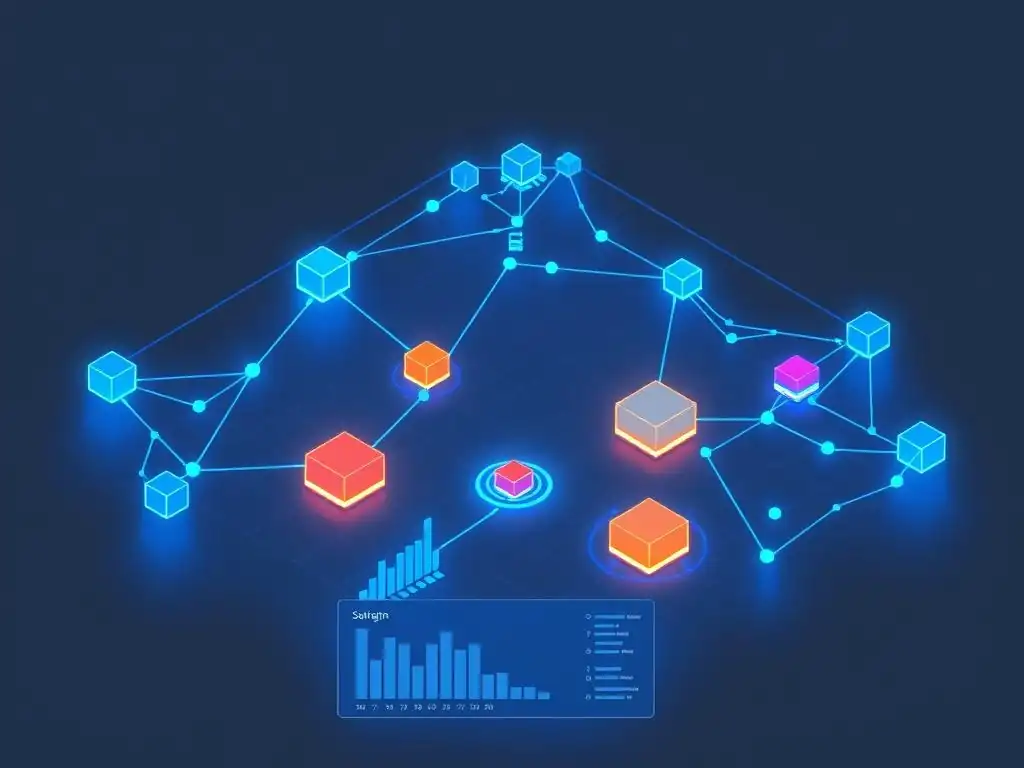
Navigating through subnets effectively in Avalanche blockchain explorers requires understanding how these explorers present subnet-specific data. When using explorers like Snowtrace or Avascan, begin by identifying the subnet you are interested in. Most Avalanche explorers provide a dropdown menu or a similar interface element that allows you to select a specific subnet or view data for the primary network. Once you've selected a subnet, the explorer should filter data to show transactions, blocks, and validators relevant to that particular subnet.
Pay attention to the explorer's interface for distinguishing between subnet transactions and primary network transactions. Some explorers use distinct tabs or sections to separate subnet data. When searching for transactions or addresses, ensure you are searching within the context of the correct subnet.
For example, if you are investigating activity on the DeFi Kingdoms subnet, make sure you have selected that subnet within the explorer before conducting your search. Utilize subnet-specific filters and dashboards, if available, to gain a focused view of the subnet's activity and performance. Effectively navigating subnets within blockchain explorers is crucial for understanding the nuances of the Avalanche ecosystem and analyzing the performance of individual subnetworks.
Analyzing High-Throughput Data for Decision Making
Analyzing high-throughput data from Avalanche blockchain explorers requires focusing on metrics that indicate network performance and transaction volume. Key metrics to monitor include transactions per second (TPS), block times, and transaction confirmation times. Explorers like Avascan often provide real-time charts and visualizations of these metrics, allowing you to observe network activity patterns and identify periods of high or low throughput. Pay attention to trends in TPS and transaction confirmation times, as these can indicate network congestion or efficiency.
When analyzing high-throughput data for decision-making, consider the context of your analysis. For developers, monitoring TPS and transaction confirmation times on their subnet can help optimize application performance and identify potential bottlenecks. For users, understanding network throughput can inform decisions about transaction timing and gas fees. For investors and network observers, high-throughput data provides insights into the overall health and scalability of the Avalanche network and its subnets. Utilize the analytical tools within blockchain explorers to identify patterns, trends, and anomalies in high-throughput data, and use these insights to inform your decisions and strategies within the Avalanche ecosystem.
Tips for Maximizing Insights from Blockchain Explorers
To maximize insights from Avalanche blockchain explorers, adopt a systematic approach to data exploration and analysis. Start by clearly defining your objectives. Are you tracking a specific transaction, monitoring subnet activity, or analyzing overall network performance? Having a clear goal will focus your exploration and help you identify relevant data points. Utilize the advanced search and filtering capabilities of the explorer to narrow down your data set and focus on specific transactions, addresses, or timeframes.
Explore the different sections and features of the explorer beyond basic transaction lookups. Examine block data, address details, and smart contract information to gain a comprehensive understanding of on-chain activity. Take advantage of any analytical tools or visualizations provided by the explorer, such as charts of transaction volume or network statistics.
If you are monitoring subnet performance, regularly check subnet-specific dashboards and metrics. For developers, use explorer APIs to programmatically access blockchain data and integrate it into monitoring tools or applications. By using blockchain explorers strategically and exploring their full range of features, you can unlock valuable insights into the Avalanche network and its high-throughput capabilities.
Case Studies: Successful Implementation of Avalanche Subnets and Explorers
Case Study: DeFi Kingdoms
- Overview of the Project: DeFi Kingdoms (DFK) is a popular play-to-earn blockchain game that combines elements of decentralized finance with nostalgic pixel art and gameplay. Initially launched on the Harmony blockchain, DFK migrated to Avalanche and subsequently launched its own subnet, the DFK Chain, to address scalability challenges and enhance user experience. DFK features a complex ecosystem of in-game assets, tokenized heroes, and DeFi functionalities like token swapping and liquidity pools, all of which generate a high volume of on-chain transactions.
- How Subnets Improved High-Throughput Data Management: By launching its own subnet on Avalanche, DeFi Kingdoms gained significant control over its network infrastructure and transaction throughput. The DFK Chain subnet is specifically optimized for the game's requirements, allowing for faster transaction processing and lower gas fees compared to operating on a shared blockchain. This dedicated subnet ensures that the high volume of in-game transactions, such as hero summons, item crafting, and marketplace trades, are processed smoothly without causing congestion on the main Avalanche network or impacting other applications. The move to a subnet enabled DeFi Kingdoms to scale its operations effectively, accommodate a growing player base, and maintain a seamless gaming experience even during peak activity periods, showcasing the real-world benefits of Avalanche subnets for high-throughput applications.
Case Study: Shrapnel
- Overview of the Project: Shrapnel is an upcoming AAA first-person shooter game built on Avalanche, focusing on competitive gameplay and player-owned digital assets. As a high-fidelity, graphically intensive game, Shrapnel requires a robust and scalable blockchain infrastructure to manage in-game assets, player interactions, and a high volume of transactions related to weapon skins, characters, and in-game economies. Shrapnel is designed to leverage the high-throughput capabilities of Avalanche to support its complex on-chain functionalities and deliver a seamless gaming experience to a large player base.
- The Role of Blockchain Explorers in Data Analysis: For Shrapnel, blockchain explorers like Snowtrace and Avascan are crucial tools for monitoring and analyzing the performance of its Avalanche-based infrastructure. Developers at Shrapnel can use explorers to track transaction throughput on their subnet, monitor gas costs, and analyze user activity related to in-game assets. Explorers provide transparency into the on-chain operations of the game, allowing the Shrapnel team to identify potential issues, optimize performance, and ensure the smooth functioning of the game's blockchain components. Furthermore, players can use explorers to verify ownership of their digital assets, track transaction history, and understand the on-chain aspects of the Shrapnel ecosystem, enhancing transparency and trust within the game's community.
Conclusion: The Future of Avalanche Subnets and High-Throughput Data
The Evolving Landscape of Blockchain Explorers
The landscape of blockchain explorers is continuously evolving in tandem with the advancements in blockchain technology itself. As blockchains become more complex, with features like subnets, sidechains, and layer-2 solutions, explorers are adapting to provide increasingly sophisticated tools for data analysis and network monitoring. Modern blockchain explorers are moving beyond simple transaction and block viewers to become comprehensive analytics platforms, offering real-time network statistics, advanced filtering and search capabilities, and data visualization tools.
The future of blockchain explorers will likely involve even greater integration of AI and machine learning to provide predictive analytics, anomaly detection, and deeper insights into blockchain data. Explorers may also become more personalized, allowing users to customize dashboards and track specific metrics relevant to their interests. As interoperability becomes more critical, explorers may evolve to support cross-chain data aggregation, providing a unified view of activity across multiple blockchain networks. The ongoing development of blockchain explorers is crucial for making blockchain data more accessible, understandable, and actionable, driving wider adoption and innovation within the blockchain space.
Final Thoughts on Avalanche's Transformative Potential
Avalanche's innovative architecture, particularly its subnet technology and focus on high-throughput data, positions it as a transformative force in the blockchain landscape. The ability to create custom, high-performance subnets tailored to specific application needs addresses a critical challenge in blockchain scalability and customization. This flexibility opens up a vast range of possibilities for developers and businesses looking to build decentralized applications that can handle real-world demands. The high throughput enabled by subnets makes Avalanche a compelling platform for applications requiring rapid transaction speeds and large data volumes, including DeFi, gaming, enterprise solutions, and beyond.
As the blockchain industry continues to mature, the need for scalable and customizable platforms will only intensify. Avalanche's subnet architecture, combined with its rapid transaction finality and interoperability focus, provides a robust foundation for the future of decentralized systems. The continued development of the Avalanche ecosystem, along with the evolution of sophisticated blockchain explorers to navigate its complexities, will be instrumental in realizing the full transformative potential of Avalanche and its contribution to the broader blockchain revolution.
Frequently Asked Questions
What are Avalanche Subnets and why are they important?
Avalanche Subnets are customizable, independent blockchains within the Avalanche network. They're important because they allow for high throughput and tailored solutions for specific applications, going beyond the limitations of a single blockchain.
How does Avalanche achieve high throughput data processing?
Avalanche achieves high throughput through its unique consensus mechanisms and the ability to create multiple Subnets. Each Subnet can process transactions independently, significantly increasing overall network capacity.
How do Avalanche Blockchain Explorers aid in understanding Subnets?
Blockchain Explorers provide a user-friendly interface to view transactions, blocks, and other data within Avalanche Subnets. This transparency is crucial for monitoring network activity and understanding how Subnets are performing.
What are some potential use cases for Avalanche Subnets beyond DeFi?
Beyond DeFi, Avalanche Subnets can be used for enterprise applications, supply chain management, and even regulated industries. The ability to customize Subnets allows for tailored solutions to meet specific business needs.
How does regulation impact the development and adoption of Avalanche Subnets?
Regulation plays a crucial role by providing clarity and guidelines for the use of blockchain technology. Clear regulations can foster trust and encourage wider adoption of Avalanche Subnets, particularly in highly regulated industries.
The exploration of Avalanche blockchain explorers and their capacity to handle high-throughput data within subnets reveals more than just technical capabilities; it highlights the relentless pursuit of scalability and efficiency in the decentralized world. The ability to navigate and understand the intricate data flows within Avalanche's subnets is not just a feature, but a crucial step towards realizing the true potential of blockchain technology for widespread adoption.
The impact of this technology resonates deeply within the evolving digital landscape. The promise of faster, more efficient, and customizable blockchain solutions is not just a theoretical advantage; it's a tangible force shaping the future of decentralized applications and digital economies. The future of blockchain is not just about building better blockchains, but about building blockchains that can work together seamlessly and efficiently.
This quote encapsulates the spirit of innovation driving the development of Avalanche and its subnet architecture, paving the way for a more interconnected and robust decentralized ecosystem.
As we conclude this exploration, consider the implications of high-throughput data and customizable subnets for your own endeavors. How can you leverage these advancements to build more efficient, scalable, and user-friendly applications? The future of blockchain is being written now, and your understanding and application of these principles will be instrumental in shaping its trajectory. Embrace the challenge, explore the possibilities, and contribute to the avalanche of innovation that is transforming our world.
Unlock Avalanche's Potential: Your Journey Starts Now!
Thank you for exploring the exciting world of Avalanche subnets and high-throughput data with us. We hope you've gained valuable insights into the power and versatility of this blockchain. Now, let's put that knowledge into action!
Here are a few ways to deepen your understanding and contribute to the Avalanche ecosystem:
- Start building your own subnet! Dive into the Avalanche documentation and experiment with deploying your own decentralized application. This is the best way to truly understand the power of customizability.
- Join the Blockchain Trends community on social media and share your insights about Avalanche explorers with the hashtag #AvalancheExploration. Let's learn from each other!
- Explore other innovative blockchain projects featured on the website. Who knows what other groundbreaking technologies you'll discover?
What specific use case are you most excited to explore within Avalanche subnets, and what challenges do you foresee in bringing it to life? Share your thoughts in the comments below!
Leave a Reply