
Decoding Gas Fees: Blockchain Explorers for Optimizing Transaction Costs


Welcome to Blockchain Trends, your guide to navigating the ever-evolving world of blockchain technology. Beyond the headlines of cryptocurrencies, we delve into its transformative power across industries. Are you tired of exorbitant transaction costs? Our latest exploration, "Decoding Gas Fees: Blockchain Explorers for Optimizing Transaction Costs," provides invaluable blockchain gas fee optimization tips. Uncover the secrets to smarter transactions and unlock the full potential of decentralized systems. Ready to save on gas and maximize your blockchain experience? Let's dive in!
- Introduction to Blockchain Gas Fees and Their Importance
- What Are Blockchain Explorers?
- How Blockchain Gas Fee Optimization Works
- Top Blockchain Explorers for Gas Fee Optimization
- Blockchain Gas Fee Optimization Tips
- Real-World Examples of Gas Fee Optimization
- Common Myths About Blockchain Gas Fees
- Conclusion: The Future of Blockchain Gas Fee Optimization
-
Frequently Asked Questions
- What are blockchain gas fees, and why are they important?
- How can using a blockchain explorer help optimize gas fees?
- What specific information should I look for on a blockchain explorer to optimize gas fees?
- Are there any risks associated with setting gas fees too low?
- Besides using blockchain explorers, what other strategies can help minimize gas fees?
- Final Reflection: Navigating the Evolving Landscape of Blockchain Efficiency
- Unlock Smarter Transactions: Master Gas Fee Optimization Now!
Introduction to Blockchain Gas Fees and Their Importance
Understanding Gas Fees in Blockchain Transactions
Gas fees are essential to the operation of most blockchain networks, acting as the cost users pay to conduct a transaction. These fees are not arbitrary charges but rather the economic mechanism that incentivizes miners or validators to process and confirm transactions, ensuring the network's security and efficiency. In essence, when you initiate a transaction on a blockchain like Ethereum or Binance Smart Chain, you are competing with other users to have your transaction included in the next block.
Gas fees determine the priority of your transaction; higher fees typically mean faster processing times as miners are more likely to prioritize transactions that offer greater rewards. This system is crucial for preventing spam and denial-of-service attacks on the network, as malicious actors would need to expend significant economic resources in gas fees to flood the network with useless transactions.
Gas fees are denominated in the network's native cryptocurrency – for example, ETH on Ethereum and BNB on Binance Smart Chain. The fee is calculated based on two primary factors: gas price and gas limit. The gas price is the amount you are willing to pay per unit of gas, typically measured in gwei (a fraction of the native cryptocurrency).
The gas limit represents the maximum amount of gas you are willing to consume for your transaction; complex transactions requiring more computational resources will naturally consume more gas. The actual fee paid is the product of the gas price and the gas consumed by the transaction, not necessarily the gas limit you set. Understanding these components is the first step in mastering blockchain gas fee optimization.
The Role of Gas Fees in Decentralized Finance (DeFi)
Gas fees play a particularly significant role in the realm of Decentralized Finance (DeFi). DeFi platforms, built on blockchain networks like Ethereum, enable a wide range of financial services without intermediaries, including lending, borrowing, trading, and yield farming. Virtually every interaction within DeFi, from swapping tokens on a decentralized exchange (DEX) to depositing assets in a lending protocol, requires a blockchain transaction and thus incurs gas fees. These fees can significantly impact the profitability and usability of DeFi platforms, especially for smaller transactions.
During periods of high network congestion, such as during a popular token launch or a market surge, gas fees can spike dramatically. This volatility can make DeFi activities prohibitively expensive, particularly for users with limited capital. For instance, a simple token swap that might have cost a few dollars in gas fees during off-peak hours could suddenly cost tens or even hundreds of dollars during peak congestion.
Therefore, understanding and optimizing gas fees is not just about saving money; it's about ensuring that DeFi remains accessible and economically viable for a broader range of users. Effectively managing gas costs is a crucial skill for anyone participating in the DeFi ecosystem, and blockchain explorers are indispensable tools in this endeavor.
What Are Blockchain Explorers?
Definition and Purpose of Blockchain Explorers
Blockchain explorers are essentially search engines for blockchains. They are web-based tools that allow users to browse and inspect all the data residing on a specific blockchain network in a user-friendly format. Think of them as public record viewers for the blockchain, providing transparency and accessibility to transaction history, addresses, blocks, smart contracts, and, importantly, gas fees. Their primary purpose is to provide a clear and understandable interface to interact with the often complex and technical data of a blockchain.
Blockchain explorers serve a multitude of purposes for various users. For individuals, they are used to track transaction statuses, verify fund transfers, and examine the details of smart contract interactions. For developers, explorers are invaluable for debugging smart contracts, monitoring network activity, and analyzing on-chain data.
Traders and investors use explorers to monitor market trends, track large transactions, and gain insights into network congestion and gas prices. In the context of gas fee optimization, blockchain explorers are indispensable tools for monitoring real-time gas prices, analyzing historical trends, and identifying optimal times to conduct transactions. They empower users with the information needed to make informed decisions about their transaction strategies and minimize costs.
Key Features of Effective Blockchain Explorers
Effective blockchain explorers offer a range of features designed to provide comprehensive insights into blockchain data. One of the most crucial features is real-time transaction tracking. This allows users to monitor the status of their transactions, from pending to confirmed, and see their position in the transaction queue. Another essential feature is address lookup, enabling users to view the transaction history, balance, and associated tokens for any given blockchain address. Explorers also provide detailed block information, including block number, timestamp, miner/validator, transactions included, and gas usage within the block.
Beyond basic transaction and address information, advanced blockchain explorers often include features specifically tailored for gas fee optimization. Real-time gas price charts and historical gas price data are critical for understanding network congestion and predicting optimal transaction times. Some explorers offer gas price estimators that suggest appropriate gas prices for different transaction speeds (e.g., fast, standard, slow).
Furthermore, features like transaction fee calculators and gas usage analysis help users understand the cost implications of different transaction types and optimize their gas limits. A user-friendly interface, clear data visualization, and reliable data accuracy are also paramount for an effective blockchain explorer, making complex blockchain information accessible to users of all technical levels.
How Blockchain Gas Fee Optimization Works
The Mechanics of Gas Fees: How They Are Calculated
Understanding how gas fees are calculated is fundamental to blockchain gas fee optimization. As previously mentioned, gas fees are primarily determined by two components: gas price and gas limit. The gas limit is the maximum amount of computational effort a user is willing to pay for a transaction. Each operation performed on the blockchain, such as sending tokens, interacting with a smart contract, or executing complex computations, consumes a certain amount of gas.
More complex transactions require a higher gas limit. Users set a gas limit when initiating a transaction to prevent runaway costs in case of unforeseen computational loops or errors in smart contracts. Any unused gas within the set limit is returned to the user.
The gas price is the amount of cryptocurrency a user is willing to pay for each unit of gas, typically denominated in gwei (gigawei). This gas price is essentially a bid in a dynamic auction system. Miners or validators prioritize transactions with higher gas prices because they receive these fees as rewards for including transactions in blocks.
When network demand is high, users must increase their gas prices to compete for faster transaction inclusion. Conversely, during periods of low network activity, lower gas prices are sufficient for timely transaction processing.
The actual gas fee paid is the product of the gas consumed by the transaction (which depends on the complexity of the operation) and the gas price set by the user. Blockchain explorers provide real-time visibility into current gas prices and historical trends, enabling users to make informed decisions about setting appropriate gas prices for their transactions and achieving blockchain gas fee optimization.
Importance of Gas Fee Optimization in Transaction Costs
The importance of blockchain gas fee optimization cannot be overstated, especially in networks like Ethereum where gas fees can fluctuate significantly and reach substantial levels. For frequent users of blockchain networks, particularly those active in DeFi or engaged in high-volume trading, gas fees can quickly accumulate and represent a significant portion of their overall transaction costs. Inefficient gas fee management can erode profits, make certain activities economically unviable, and hinder the overall user experience.
Effective gas fee optimization directly translates to lower transaction costs, increased profitability, and greater accessibility to blockchain services. By strategically managing gas prices and understanding network congestion, users can significantly reduce their expenditure on gas fees without compromising transaction speed. For instance, by timing transactions during off-peak hours when network activity is lower, users can often secure lower gas prices and reduce their fees substantially.
Utilizing blockchain explorers to monitor gas prices, estimate optimal fees, and understand gas consumption patterns empowers users to make data-driven decisions and implement effective blockchain gas fee optimization strategies. This not only saves individual users money but also contributes to the overall efficiency and scalability of blockchain networks by encouraging responsible resource utilization.
Top Blockchain Explorers for Gas Fee Optimization
1. Etherscan: The Leading Ethereum Explorer
Overview of Features and Tools
Etherscan stands as the most widely used and comprehensive blockchain explorer for the Ethereum network. It provides a vast array of features and tools designed to explore and analyze Ethereum blockchain data. Beyond basic transaction and address lookup, Etherscan offers in-depth insights into blocks, smart contracts, tokens (ERC-20, ERC-721, etc. ), and network statistics. Its user interface is clean and intuitive, making it accessible to both novice and advanced users. Etherscan's robust API also allows developers to integrate Ethereum data into their own applications and services.
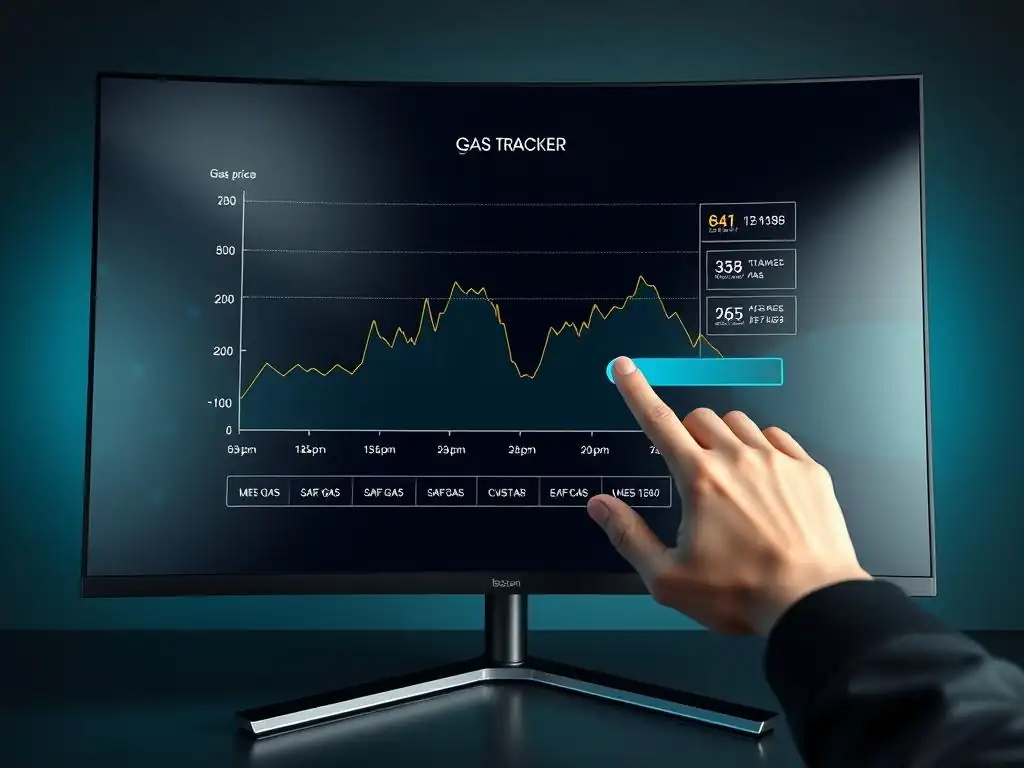
Key features of Etherscan include real-time transaction tracking, detailed address analytics, comprehensive block information, and smart contract verification. It also offers advanced tools like the "Gas Tracker," which provides real-time and historical gas price information, gas price suggestions for different transaction speeds, and gas usage charts. Etherscan further enhances user experience with features like watchlists for tracking addresses and tokens, and push notifications for transaction updates. Its extensive documentation and community support solidify its position as the go-to explorer for the Ethereum ecosystem.
How Etherscan Helps in Gas Fee Optimization
Etherscan is an invaluable tool for blockchain gas fee optimization due to its dedicated "Gas Tracker" feature. This tool provides users with a clear overview of current gas prices on the Ethereum network, typically displayed in gwei. It presents gas price recommendations for different transaction speeds, such as "SafeLow," "Standard," and "Fast," allowing users to choose a gas price that balances transaction speed and cost. The "Gas Tracker" also displays historical gas price charts, enabling users to identify trends and predict periods of lower network congestion and potentially lower gas fees.
Furthermore, Etherscan allows users to analyze the gas usage of specific transaction types and smart contract interactions. By examining past transactions, users can gain insights into the typical gas consumption for their intended actions and adjust their gas limits accordingly.
Etherscan's transaction details page also provides a breakdown of gas used and gas price paid for each transaction, offering transparency and allowing users to learn from their past experiences. By leveraging Etherscan's "Gas Tracker" and transaction analysis capabilities, users can make informed decisions about gas prices, optimize their transaction costs, and achieve effective blockchain gas fee optimization on the Ethereum network.
2. Blockchair: Multi-Blockchain Explorer
Unique Features and User Experience
Blockchair distinguishes itself as a powerful multi-blockchain explorer, supporting a wide range of blockchains beyond just Ethereum, including Bitcoin, Bitcoin Cash, Litecoin, and more. This makes it a versatile tool for users who interact with multiple cryptocurrencies. Blockchair is renowned for its privacy-focused approach, offering options to minimize tracking and enhance user anonymity. Its user interface is clean, modern, and highly customizable, allowing users to tailor the display to their preferences.
Blockchair's unique features include full-text search across blockchain data, enabling users to search for transactions, addresses, and even specific keywords within transaction data. It also offers advanced filtering and sorting options for transaction and block data, facilitating in-depth analysis. Blockchair provides comprehensive API access for developers and supports multiple languages. While Etherscan is primarily focused on Ethereum, Blockchair's multi-chain support and advanced search capabilities make it a compelling alternative for users seeking a broader blockchain exploration experience.
Utilizing Blockchair for Cost-Effective Transactions
While Blockchair may not have a dedicated "Gas Tracker" feature like Etherscan specifically labeled as such, it still provides valuable data for blockchain gas fee optimization across multiple networks. For Ethereum and other gas-based blockchains, Blockchair displays real-time gas prices within transaction details and block information. Users can monitor current gas prices by examining recent transactions and blocks to gauge network congestion and inform their gas price settings.
Blockchair's historical data and advanced search capabilities can also be leveraged for cost-effective transactions. Users can analyze historical gas price trends for Ethereum and other supported blockchains to identify patterns and potential periods of lower fees.
By searching for recent transactions and blocks during different times of the day or week, users can observe fluctuations in gas prices and strategize transaction timing for blockchain gas fee optimization. Although it requires a bit more manual analysis compared to dedicated gas trackers, Blockchair's comprehensive blockchain data and multi-chain support make it a useful tool for users seeking to optimize transaction costs across various cryptocurrencies.
3. EthGasStation: Real-Time Gas Price Tracking
Key Features and Benefits
EthGasStation is specifically designed and focused on providing real-time gas price information and optimization strategies for the Ethereum network. Unlike broader blockchain explorers, EthGasStation's sole purpose is to help users understand and manage Ethereum gas fees effectively. Its interface is simple, clean, and highly focused on gas price data, making it easy for users to quickly grasp the current network conditions and optimal gas price settings.
Key features of EthGasStation include real-time gas price estimates for different transaction speeds (e.g., fastest, fast, standard, safe low), historical gas price charts, and gas price limit recommendations. It also provides insights into gas usage for various types of transactions and smart contract interactions. EthGasStation stands out for its real-time data accuracy and its direct focus on gas fee optimization, making it a valuable resource for Ethereum users seeking to minimize transaction costs. Its simplicity and dedicated focus are its primary benefits, offering a no-frills approach to gas fee management.
Strategies for Using EthGasStation to Minimize Fees
EthGasStation is designed to be a user-friendly tool for minimizing Ethereum gas fees. The primary strategy is to utilize its real-time gas price estimates. EthGasStation provides gas price recommendations for various transaction speeds, allowing users to choose a balance between speed and cost. For less urgent transactions, users can opt for the "Safe Low" or "Standard" gas price, which are typically lower and result in reduced fees, albeit with potentially longer confirmation times. For time-sensitive transactions, the "Fast" or "Fastest" options ensure quicker processing but at a higher cost.
Another strategy is to monitor the historical gas price charts on EthGasStation. By observing trends and patterns, users can identify periods of lower network congestion, such as weekends or off-peak hours in specific time zones, and schedule their transactions accordingly. EthGasStation also provides insights into gas usage for different transaction types, allowing users to understand the typical gas consumption of their intended actions and optimize their gas limits. By consistently consulting EthGasStation before initiating Ethereum transactions and utilizing its real-time and historical data, users can proactively minimize their gas fees and achieve significant cost savings over time.
4. BscScan: Optimizing Fees on Binance Smart Chain
Overview of Features
BscScan is the official blockchain explorer for the Binance Smart Chain (BSC), mirroring many of the functionalities of Etherscan for the Ethereum network, but specifically tailored for BSC. As BSC is designed to be more cost-effective than Ethereum, gas fees are generally lower on BSC, but optimization is still relevant, especially during periods of network activity. BscScan provides a comprehensive view of BSC blockchain data, including transactions, blocks, addresses, smart contracts, and tokens (BEP-20, BEP-721).
Key features of BscScan include real-time transaction tracking, address lookup, block exploration, smart contract verification, and token information. Similar to Etherscan, BscScan offers a "Gas Tracker" or gas price chart, displaying current and historical gas prices on BSC. It also provides information on network statistics, validator performance, and other relevant BSC network data. BscScan's interface is familiar to Etherscan users, making it easy to navigate and utilize its features for BSC blockchain exploration and gas fee management.
Tips for Using BscScan to Reduce Gas Costs
BscScan's "Gas Tracker" and other features are directly applicable for reducing gas costs on the Binance Smart Chain. The "Gas Tracker" on BscScan provides real-time gas price recommendations, typically presented in gwei of BNB. Users can use these recommendations to set appropriate gas prices for their BSC transactions, balancing speed and cost. Similar to Ethereum, BSC gas prices can fluctuate based on network congestion, although generally within a lower range.
To reduce gas costs on BSC using BscScan, users should monitor the "Gas Tracker" before initiating transactions. Opting for slightly lower gas prices, particularly during off-peak hours or periods of lower network activity, can significantly reduce fees without drastically impacting transaction confirmation times on BSC, which is generally faster than Ethereum. BscScan's historical gas price charts can also be used to identify trends and optimal times for transactions. By regularly consulting BscScan's gas price information and strategically timing transactions, users can effectively minimize gas costs on the Binance Smart Chain and optimize their overall transaction expenses.
5. GasNow: Real-Time Gas Price Estimator
Features and User Interface
GasNow, now integrated into Blocknative, is a real-time Ethereum gas price estimator known for its speed and accuracy. It focuses solely on providing up-to-the-minute gas price data, aiming to offer the most precise and responsive gas price predictions available. GasNow's user interface is minimalist and data-centric, prioritizing clear and concise gas price information. While it was originally a standalone service, its integration with Blocknative brings its real-time gas price estimation capabilities into a broader platform of blockchain infrastructure tools.
Key features of GasNow (within Blocknative) include highly accurate real-time gas price estimates categorized by transaction speed (e.g., Rapid, Fast, Standard, Slow), historical gas price data visualization, and API access for developers to integrate GasNow's gas price estimations into their applications. Its primary focus is on speed and precision in gas price prediction, making it a favored tool for users who prioritize timely transaction execution and require the most up-to-date gas fee information.
How to Leverage GasNow for Effective Fee Management
GasNow, through Blocknative, is a powerful tool for effective blockchain gas fee management, particularly on Ethereum. Its core strength lies in its highly accurate real-time gas price estimations. Users can leverage GasNow by consulting its gas price recommendations before initiating Ethereum transactions. By choosing the appropriate gas price category (Rapid, Fast, Standard, Slow) based on their desired transaction speed and cost sensitivity, users can optimize their gas fees in real-time.
For users prioritizing speed, the "Rapid" or "Fast" gas price recommendations from GasNow ensure prompt transaction confirmation, albeit at a higher cost. For less urgent transactions, selecting "Standard" or "Slow" gas prices can significantly reduce fees while still achieving reasonable confirmation times, especially during periods of lower network congestion.
GasNow's real-time responsiveness and accuracy make it particularly useful during periods of high gas price volatility, allowing users to react quickly to changing network conditions and effectively manage their transaction costs. By consistently using GasNow for gas price estimation, users can make informed decisions and achieve optimal blockchain gas fee optimization in dynamic network environments.
Blockchain Gas Fee Optimization Tips
Best Practices for Reducing Gas Fees in Transactions
Several best practices can be implemented to achieve effective blockchain gas fee optimization. Firstly, monitor gas prices regularly using blockchain explorers like Etherscan, EthGasStation, BscScan, or GasNow (via Blocknative) before initiating transactions. Understanding current network congestion and gas price trends is crucial for making informed decisions. Secondly, adjust gas prices based on transaction urgency. For non-urgent transactions, opting for lower gas prices (e.g., "Standard" or "Safe Low" recommendations from explorers) can significantly reduce fees without critical delays.
Thirdly, optimize gas limits. While it's important to set a sufficient gas limit to ensure transaction success, setting an excessively high limit is unnecessary. Blockchain explorers often provide insights into typical gas consumption for different transaction types. Fourthly, batch transactions when possible. For users performing multiple transactions, grouping them into a single transaction (where applicable, such as in certain DeFi platforms) can amortize gas costs across multiple actions, reducing overall fees.
Finally, stay informed about network upgrades and scaling solutions. Layer-2 scaling solutions on Ethereum, for example, aim to reduce gas fees significantly. Adopting these solutions when available can lead to substantial long-term cost savings. Implementing these best practices consistently contributes to effective blockchain gas fee optimization.
Timing Your Transactions: When to Send for Lower Fees
Timing transactions strategically is a crucial aspect of blockchain gas fee optimization. Network congestion, and consequently gas fees, fluctuate throughout the day and week. Generally, transaction activity is lower during off-peak hours, such as late nights or early mornings in major time zones, and on weekends. During these periods, gas prices tend to be lower due to reduced demand for block space.
Monitoring gas price trends using blockchain explorers like Etherscan or EthGasStation can help identify optimal times to send transactions. Historical gas price charts often reveal recurring patterns of lower gas fees during specific times or days. For example, weekdays during business hours in major financial centers often see higher network activity and thus higher gas fees.
Conversely, weekends or overnight hours often experience lower activity and reduced fees. By observing these patterns and scheduling non-urgent transactions during periods of lower network congestion, users can significantly reduce their gas costs and achieve effective blockchain gas fee optimization. This proactive approach to transaction timing can lead to substantial savings over time, particularly for frequent blockchain users.
Setting Gas Price Limits: Avoiding Overpayment
Setting appropriate gas price limits is essential for avoiding overpayment in blockchain transactions while ensuring timely confirmation. While it might seem intuitive to set a very high gas price to guarantee fast transaction processing, this can lead to unnecessary expense if the network is not congested. Conversely, setting too low a gas price can result in prolonged transaction pending times or even transaction failures if the gas price is insufficient to be included in a block within a reasonable timeframe.
Blockchain explorers and gas price estimators provide valuable guidance on setting appropriate gas price limits. Tools like Etherscan's "Gas Tracker," EthGasStation, BscScan's gas price chart, and GasNow (via Blocknative) offer real-time gas price recommendations for different transaction speeds. Users should consult these tools before initiating transactions and choose a gas price that aligns with their desired speed and cost sensitivity.
For non-urgent transactions, opting for slightly lower gas prices than the "Fast" or "Rapid" recommendations can still result in transaction confirmation within a reasonable timeframe while significantly reducing fees. Regularly monitoring gas prices and using explorer recommendations for gas price limits is a key strategy for blockchain gas fee optimization and avoiding unnecessary overpayment.
Understanding Transaction Types: Standard vs. Priority Transactions
Understanding the different transaction types and their implications for gas fees is crucial for blockchain gas fee optimization. Many wallets and blockchain platforms offer options for setting transaction priority, often categorized as "Standard" and "Priority" (or similar terms like "Fast," "Rapid," etc. ). Standard transactions are typically set with a moderate gas price, aiming for a balance between cost and confirmation time. These are suitable for transactions that are not time-sensitive and can tolerate slightly longer processing times.
Priority transactions, on the other hand, are set with a higher gas price to incentivize faster inclusion in the next block. These are appropriate for time-critical transactions, such as arbitrage opportunities in DeFi or urgent token transfers. Choosing a priority transaction will result in higher gas fees but ensure quicker confirmation, especially during periods of network congestion. Users should assess the urgency of each transaction and select the appropriate transaction type accordingly.
For non-urgent transactions, opting for a standard transaction with a moderate gas price is often sufficient and more cost-effective. For time-sensitive actions, prioritizing transaction speed with a higher gas price might be necessary despite the increased cost. Understanding this trade-off and choosing the right transaction type is a key element of effective blockchain gas fee optimization.
Real-World Examples of Gas Fee Optimization
Case Study: Successful Gas Fee Management on Ethereum
Consider a DeFi user who frequently engages in yield farming on Ethereum. Initially, they simply accepted the default gas prices suggested by their wallet, resulting in high transaction costs that significantly impacted their overall profitability. Upon learning about blockchain gas fee optimization, they began utilizing Etherscan's "Gas Tracker" to monitor real-time gas prices and historical trends. They observed that gas fees were consistently lower during late evening hours in their time zone and on weekends.
Strategically, they started scheduling their yield farming activities, such as claiming rewards and re-investing, during these off-peak hours. They also began adjusting gas prices based on Etherscan's "Safe Low" and "Standard" recommendations for non-urgent transactions, reserving "Fast" gas prices only for time-sensitive actions like participating in flash loans. Furthermore, they started batching multiple DeFi actions into single transactions where possible, using platforms that supported batch transactions or transaction aggregators.
Within a month, this user reported a significant reduction in their average gas fees, estimating savings of over 30% on their DeFi activities. This case study demonstrates the tangible benefits of consistent blockchain gas fee optimization practices, leading to substantial cost savings and improved profitability.
Lessons Learned from High-Volume Traders
High-volume cryptocurrency traders, particularly those active in decentralized exchanges (DEXs) on Ethereum, have developed sophisticated strategies for blockchain gas fee optimization due to the sheer volume of transactions they execute. One key lesson learned is the importance of automated gas price adjustment tools. Many professional trading bots and advanced DeFi platforms now integrate automated gas price management features that dynamically adjust gas prices based on real-time network conditions and desired transaction speed. These tools often utilize APIs from gas price estimators like GasNow (via Blocknative) to make informed decisions.
Another crucial lesson is the strategic use of different transaction types and gas price tiers. High-volume traders categorize their transactions based on urgency and profitability. For arbitrage opportunities or time-sensitive trades, they are willing to pay higher "Priority" gas fees to ensure rapid execution. For less urgent order placements or routine portfolio adjustments, they utilize "Standard" or even "Safe Low" gas prices to minimize costs.
They also actively monitor mempools (transaction pools before confirmation) to identify optimal gas prices and adjust their bids accordingly. Furthermore, high-volume traders often leverage advanced transaction strategies like private transactions or layer-2 scaling solutions to further optimize gas fees and transaction speed. These lessons highlight the importance of automation, strategic transaction prioritization, and continuous monitoring for effective blockchain gas fee optimization at scale.
Common Myths About Blockchain Gas Fees
Debunking Myths: "Gas Fees Are Always High"
One common myth in the blockchain space is that "gas fees are always high," particularly on networks like Ethereum. While it's true that gas fees can spike during periods of high network congestion, they are not consistently high at all times. Gas fees are dynamic and fluctuate based on network demand. During off-peak hours or periods of lower transaction volume, gas fees can be significantly lower and even quite affordable for many users. Attributing consistently high gas fees to blockchain networks overlooks the inherent variability and the influence of network activity on fee levels.
Another related myth is that "all blockchain transactions are expensive." While networks like Ethereum can experience high gas fees, other blockchains, such as Binance Smart Chain, Polygon, or newer layer-1 and layer-2 solutions, are designed with lower transaction costs in mind. These networks often have significantly lower gas fees compared to Ethereum, making them more suitable for users seeking cost-effective transactions. Therefore, generalizing that all blockchain transactions are expensive is inaccurate and fails to acknowledge the diverse range of blockchain networks and their varying fee structures.
The Reality: Factors Affecting Gas Fees
The reality is that blockchain gas fees are not arbitrary; they are determined by a complex interplay of factors, primarily driven by network demand and congestion. When network activity is high, meaning more users are trying to conduct transactions simultaneously, demand for block space increases, driving up gas prices as users compete to have their transactions included in the next block. Conversely, when network activity is low, gas prices tend to decrease due to reduced competition.
Transaction complexity also plays a role. More complex smart contract interactions or transactions involving multiple operations consume more computational resources and thus require more gas, leading to higher fees even if the gas price remains constant. Block size and block time of the specific blockchain network also influence gas fees.
Networks with smaller block sizes or slower block times can experience higher congestion and potentially higher fees during peak demand. External factors, such as major market events or popular token launches, can also temporarily surge network activity and drive up gas fees. Understanding these underlying factors provides a more nuanced and accurate perspective on blockchain gas fees, moving beyond the simplistic myth of "always high" fees.
Conclusion: The Future of Blockchain Gas Fee Optimization
The Evolving Landscape of Blockchain Explorers
The landscape of blockchain explorers is continuously evolving, driven by the increasing complexity of blockchain technology and the growing demand for user-friendly tools for data analysis and optimization. Modern blockchain explorers are moving beyond basic transaction and address lookup to incorporate more advanced features tailored for specific needs, such as blockchain gas fee optimization. We are seeing increased integration of real-time gas price estimators, historical gas price analytics, and even predictive gas price tools within blockchain explorers.
Furthermore, explorers are becoming more multi-chain compatible, supporting a wider range of blockchain networks within a single interface, like Blockchair. User interface and user experience are also becoming increasingly important, with explorers focusing on cleaner designs, data visualization, and mobile accessibility. The integration of APIs and developer tools is expanding, enabling developers to leverage explorer data for their applications and services. The future of blockchain explorers points towards more sophisticated, user-centric, and feature-rich platforms that empower users with deeper insights and greater control over their blockchain interactions, particularly in the realm of blockchain gas fee optimization.
Final Thoughts on Maximizing Transaction Cost Efficiency
Maximizing transaction cost efficiency through blockchain gas fee optimization is becoming an increasingly crucial skill for all blockchain users, especially as adoption grows and network activity fluctuates. Utilizing blockchain explorers as indispensable tools for monitoring gas prices, analyzing network congestion, and making informed decisions about transaction timing and gas price settings is paramount. By implementing best practices such as strategically timing transactions, setting appropriate gas price limits, and understanding transaction types, users can significantly reduce their gas fees and enhance their overall blockchain experience.
Blockchain gas fee optimization is not just about saving money; it's about contributing to a more efficient, accessible, and sustainable blockchain ecosystem for everyone.
Frequently Asked Questions
What are blockchain gas fees, and why are they important?
Gas fees are transaction fees required to execute operations on a blockchain network, primarily Ethereum. They're crucial because they incentivize miners/validators to process transactions and secure the network.
How can using a blockchain explorer help optimize gas fees?
Blockchain explorers provide real-time data on network congestion and historical gas prices. This information helps users choose optimal gas prices for their transactions to be processed quickly without overpaying.
What specific information should I look for on a blockchain explorer to optimize gas fees?
Look for data on current gas prices, recent transaction confirmation times, and network congestion levels. Some explorers also offer gas fee estimators based on network conditions.
Are there any risks associated with setting gas fees too low?
Yes, setting gas fees too low may cause your transaction to be stuck or delayed indefinitely. It might eventually be dropped from the mempool if it's not profitable for miners/validators to process.
Besides using blockchain explorers, what other strategies can help minimize gas fees?
Consider transacting during off-peak hours when network activity is lower. Also, explore using layer-2 scaling solutions or alternative blockchains with lower gas fees.
The exploration of blockchain explorers and their role in optimizing gas fees reveals a crucial truth: efficiency is paramount in the decentralized world. As blockchain technology continues to permeate various industries, understanding and mitigating transaction costs is no longer a niche concern, but a fundamental requirement for widespread adoption and sustainable growth. The tools and strategies discussed are not merely technical solutions; they represent a pathway toward a more accessible and equitable blockchain ecosystem.
This journey into gas fee optimization has profoundly underscored the importance of informed participation in the blockchain space. The ability to navigate transaction costs effectively empowers individuals and organizations alike, fostering greater autonomy and control over their digital assets. It reminds us that technology, at its best, should serve to democratize access and opportunity. The future of finance is decentralized, but it must also be affordable and accessible.
This quote encapsulates the ongoing need for innovation and education in the realm of blockchain technology.
Now, as you venture further into the world of blockchain, remember the power you hold to influence its trajectory. Armed with the knowledge of blockchain explorers and gas fee optimization techniques, consider how you can contribute to a more efficient and sustainable future. Reflect on how you can leverage these tools to make informed decisions, advocate for responsible blockchain practices, and ultimately, shape a decentralized landscape that benefits all.
Unlock Smarter Transactions: Master Gas Fee Optimization Now!
Thank you for exploring the world of gas fees with Blockchain Trends! We hope this article has helped you understand how to manage transaction costs effectively. Now, it's time to put that knowledge into practice.
Here’s how you can immediately improve your blockchain experience:
- Test and Learn: Use a testnet blockchain explorer to experiment with gas fees and see how different settings impact transaction costs.
- Explore More: Read additional Blockchain Trends articles. Gain insights from industry experts and community members to deepen your understanding.
- Share Insights: Spread the word about optimizing gas fees by sharing this article with fellow crypto enthusiasts on social media.
What strategies will you try first to lower your transaction costs and navigate the blockchain confidently? Share your thoughts in the comments below!
Leave a Reply