
Developer's Toolkit: MustHave Blockchain Explorers for Smart Contract Debugging


Welcome to Blockchain Trends, your compass in the rapidly evolving world of decentralized technology!
Ever wondered how developers truly see inside the intricate workings of a blockchain? Delve into our exploration of essential blockchain explorer debugging tools, and uncover the secrets to effectively navigating and troubleshooting smart contracts. Discover the instruments that empower developers to build a more robust and transparent future. Let's begin the journey!
- Understanding Blockchain Explorer Debugging Tools
- Key Features for Effective Smart Contract Debugging
- Top Blockchain Explorers for Smart Contract Development & Debugging
-
Frequently Asked Questions
- What are Blockchain Explorer Debugging Tools and why are they important for smart contract development?
- How do Blockchain Explorer Debugging Tools help in identifying errors in smart contracts?
- Can I use Blockchain Explorer Debugging Tools to monitor the performance of my smart contract?
- What are some key features to look for in a good Blockchain Explorer Debugging Tool?
- Are Blockchain Explorer Debugging Tools only useful for developers working with DeFi?
- Final Reflection: Navigating the Blockchain Frontier
- Unleash Your Smart Contract Debugging Superpowers!
Understanding Blockchain Explorer Debugging Tools
What are Blockchain Explorers for Smart Contracts?
Blockchain explorers, in the context of smart contracts, are specialized search engines and analytical tools designed to provide transparent access to data and activity on a blockchain network, specifically focusing on smart contract interactions. Unlike general-purpose explorers that might primarily focus on cryptocurrency transactions, these tools offer in-depth features tailored for developers working with decentralized applications (dApps) and smart contracts. They allow developers to inspect transactions, smart contract code, internal contract calls, events, and storage, offering a granular view into the execution and state of smart contracts.
Think of them as debuggers for the blockchain, providing a window into the intricate workings of decentralized applications. For instance, if a developer deploys a new decentralized exchange contract on Ethereum, a blockchain explorer like Etherscan will allow them to see the contract deployment transaction, the contract's bytecode, and subsequently, all interactions with this contract, such as token swaps or liquidity additions.
These explorers are critical because blockchains are, by design, transparent and immutable ledgers. Every transaction and smart contract execution is recorded on the blockchain, but accessing and interpreting this raw data directly can be complex. Blockchain explorers for smart contracts abstract away this complexity, presenting the information in a user-friendly and searchable format.
They decode transaction data, display smart contract code (if verified), and offer visualizations of complex data structures. Furthermore, many advanced explorers integrate developer-centric features, like ABI (Application Binary Interface) interaction, which allows developers to directly interact with deployed smart contracts through the explorer interface, sending transactions and querying contract state, directly from their web browser, which is invaluable for debugging and testing.
Why Smart Contract Debugging is Crucial for Developers
Smart contract debugging is paramount for developers due to the unique characteristics of blockchain technology and the inherent risks associated with smart contracts. Once a smart contract is deployed to a blockchain, it is generally immutable. This immutability means that bugs or vulnerabilities in the code cannot be easily patched or fixed post-deployment in the same way as traditional software.
A flaw in a smart contract can lead to significant financial losses for users and damage the reputation of the project and developers involved. Consider the infamous DAO hack in 2016 on Ethereum, where a vulnerability in the DAO's smart contract code led to the theft of approximately $50 million worth of Ether. This event underscores the critical need for thorough debugging and testing before deploying smart contracts to a live blockchain environment.
Furthermore, smart contracts often handle valuable digital assets and govern critical processes in decentralized applications, ranging from DeFi (Decentralized Finance) platforms to supply chain management systems. The complexity of smart contract logic, combined with the constraints of the blockchain environment (such as gas limits and execution costs), necessitates meticulous debugging. Developers must ensure that their contracts function as intended under various conditions, handle edge cases correctly, and are resistant to exploits.
Debugging in this context is not just about fixing errors; it's about securing substantial value and ensuring the reliability and trustworthiness of decentralized systems. The cost of neglecting proper smart contract debugging can be extraordinarily high, not only in monetary terms but also in terms of user trust and the overall integrity of the blockchain ecosystem.
The Role of Block Explorers in Finding Smart Contract Errors
Block explorers play a vital role in the smart contract debugging process by providing developers with the necessary visibility into on-chain activities and contract states to diagnose issues effectively. When a smart contract behaves unexpectedly, or a transaction fails, block explorers become the primary tool for investigating the root cause. They allow developers to trace the execution path of transactions, examine the state of the smart contract at different points in time, and analyze the data exchanged between contracts and users.
For example, if a user reports that a function in a decentralized application is not working as expected, a developer can use a block explorer to look up the relevant transaction hash. By examining the transaction details, including the input data, logs, and internal transactions, they can pinpoint where the execution deviated from the intended path.
Moreover, block explorers are instrumental in identifying common smart contract errors such as out-of-gas exceptions, revert reasons, and unexpected state changes. They present this information in a structured and readable format, often decoding complex data into human-readable values. For instance, if a transaction fails due to an out-of-gas error, the explorer will clearly indicate this, prompting the developer to investigate gas optimization opportunities in their contract code. Similarly, if a transaction reverts with a custom error message defined in the smart contract, the explorer will often display this revert reason, providing immediate clues about the source of the problem. By offering this level of detailed insight, block explorers empower developers to efficiently diagnose and rectify issues in their smart contracts, significantly reducing debugging time and enhancing the overall development workflow.
Key Features for Effective Smart Contract Debugging
Transaction Analysis and Call Traces
Transaction analysis and call traces are fundamental features of blockchain explorers that are indispensable for effective smart contract debugging. Transaction analysis allows developers to examine all the details of a specific transaction, including the sender, receiver, gas used, gas price, input data, and transaction status (success or failure).
This initial level of analysis is crucial for understanding the context of a smart contract interaction and identifying basic issues, such as insufficient gas or incorrect function arguments. For example, if a transaction to a smart contract fails, examining the transaction details might reveal that the user didn't provide enough gas, or that the input data was not correctly formatted according to the contract's Application Binary Interface (ABI).
Call traces, often referred to as debug traces or internal transaction lists, take transaction analysis to a deeper level. They provide a step-by-step breakdown of the execution flow within a transaction, showing all internal calls made by the smart contract to other contracts or itself.
This is particularly important for complex smart contracts that interact with multiple other contracts or perform intricate logic involving internal function calls. A call trace typically shows the function being called, the input parameters, the output values, and any events emitted during each step of the execution.
By meticulously reviewing the call trace, developers can pinpoint the exact point of failure or unexpected behavior within a complex transaction, understand the flow of value and data between different parts of the system, and identify subtle bugs that would be difficult to detect otherwise. For instance, in a DeFi protocol involving multiple smart contracts for lending, borrowing, and yield farming, a call trace can reveal the precise sequence of contract interactions and help developers understand if funds are being routed correctly or if there are any logical errors in the interaction flow.
Viewing Smart Contract Code and Decompiled Bytecode
The ability to view smart contract code, and decompiled bytecode when source code is unavailable, is a cornerstone feature for debugging. When a smart contract's source code is verified on a blockchain explorer, developers can directly inspect the human-readable Solidity or Vyper code that defines the contract's logic. This is invaluable for understanding the intended behavior of the contract, reviewing its functions, and identifying potential vulnerabilities or logical errors.
Verified source code provides the clearest and most direct way to analyze a smart contract and is essential for building trust and transparency within the blockchain ecosystem. For example, before interacting with a decentralized exchange, a user or developer can use a block explorer to verify the source code of the exchange's smart contract and confirm that it operates as described and doesn't contain malicious or unexpected logic.
However, not all smart contracts have their source code verified on blockchain explorers. In such cases, explorers often provide the functionality to view the decompiled bytecode of the contract. Bytecode is the low-level code that the Ethereum Virtual Machine (EVM) executes.
While bytecode is much harder to read and understand than source code, decompilers attempt to translate it back into a more human-readable, albeit assembly-like, representation. Analyzing decompiled bytecode can be crucial when the source code is not available, allowing developers to still gain insights into the contract's functionality and logic, albeit with more effort and expertise. While not as straightforward as reading verified source code, decompiled bytecode provides a valuable fallback for understanding the behavior of closed-source or unverified smart contracts and can be instrumental in identifying security vulnerabilities or unexpected behavior even without access to the original high-level code.
Monitoring Events and Logs
Monitoring events and logs is a critical aspect of smart contract debugging, providing developers with a structured way to track and understand the execution and state changes within their contracts. Smart contracts emit events to signal significant occurrences during their operation, such as token transfers, contract state updates, or error conditions. These events are recorded as logs on the blockchain and are indexed, making them easily searchable and filterable through blockchain explorers.
Events are designed to be efficiently accessed by off-chain applications and developer tools, serving as a crucial communication mechanism between smart contracts and the outside world. For instance, in a token contract, an event is typically emitted whenever tokens are transferred from one address to another, allowing explorers and dApp frontends to track token movements.
By examining the events emitted by a smart contract during transaction execution, developers can gain valuable insights into the contract's behavior and debug issues. Explorers display events in a structured format, showing the event name, indexed parameters (which are searchable), and non-indexed parameters (which provide additional contextual information). Developers can filter events by contract address, event type, or indexed parameters to pinpoint specific activities of interest. For example, if a decentralized application is experiencing issues with token balances, developers can use a blockchain explorer to filter for Transfer events emitted by the token contract and examine the event logs to trace token movements and identify discrepancies. Logs also often include custom events defined by the contract developers, which can signal specific application-level events or error conditions, providing a rich source of debugging information tailored to the contract's specific logic and functionality.
State Inspection and Storage Analysis
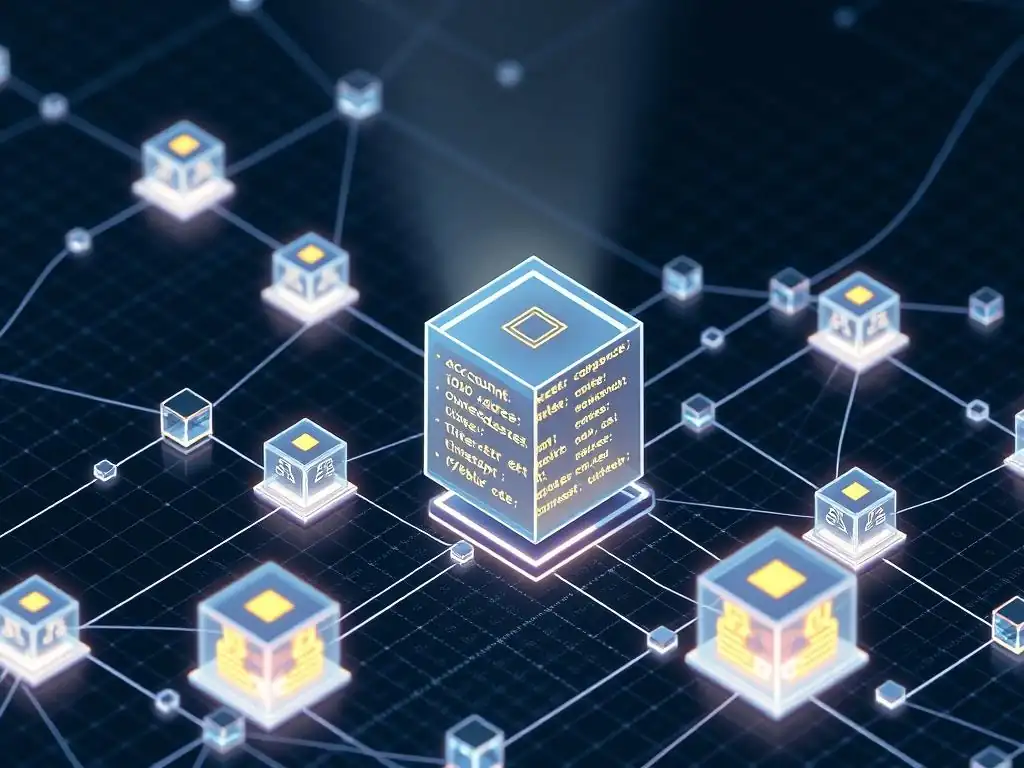
State inspection and storage analysis are advanced debugging features that allow developers to delve into the internal data and variables of a smart contract at a specific point in time. Smart contracts maintain persistent state, stored as key-value pairs, where keys are storage slots and values are the data stored in those slots. Understanding the contract's state is crucial for debugging complex logic, especially when dealing with data manipulation, access control, or intricate state transitions.
Blockchain explorers with state inspection capabilities allow developers to query the storage of a smart contract at any block height, effectively providing a snapshot of the contract's internal data at that moment. This is particularly valuable for diagnosing issues that arise from incorrect state updates or unexpected state transitions over time.
Storage analysis often involves interpreting the raw storage data, which is typically presented in hexadecimal format. Explorers may offer tools to decode this raw data based on the smart contract's storage layout, making it easier to understand the values of contract variables.
For instance, a developer might want to inspect the balance of a specific user in a token contract or check the status of a particular item in a non-fungible token (NFT) contract. By using state inspection, they can directly query the contract's storage and retrieve the current values of these variables.
Furthermore, some advanced explorers provide historical state inspection, allowing developers to compare the contract's state at different block heights, which is incredibly useful for understanding how the contract's data has changed over time and for pinpointing when and why a particular state-related issue might have occurred. This level of granular state visibility is essential for debugging complex stateful smart contracts and ensuring data integrity and consistency.
Verifying Smart Contract Source Code
Verifying smart contract source code on a blockchain explorer is a crucial step for both developers and users, enhancing transparency, trust, and significantly simplifying the debugging process. When developers verify their smart contract's source code, they are essentially publicly attesting that the bytecode deployed on the blockchain corresponds to the provided source code. This verification process typically involves using a compiler to generate the bytecode from the source code and then submitting both the source code and the generated bytecode to the explorer.
The explorer then automatically compares the submitted bytecode with the bytecode already deployed on the blockchain. If they match, the explorer marks the source code as verified, making it publicly viewable directly on the explorer interface.
For developers, source code verification streamlines debugging because it allows them and other developers to easily understand the contract's logic and behavior. When debugging, having access to the verified source code eliminates the need to work with decompiled bytecode, which is often less readable and harder to interpret. Verified source code makes it significantly easier to identify logical errors, understand function parameters, and trace the execution flow. Furthermore, source code verification builds trust with users and the wider community.
Users can independently review the verified source code to ensure that the contract behaves as expected and does not contain any hidden malicious logic or vulnerabilities. This transparency is paramount for the adoption and security of decentralized applications. Explorers like Etherscan prominently display verification status, making it easy for anyone to quickly assess the transparency and trustworthiness of a smart contract before interacting with it.
Simulating Transactions for Pre-Deployment Testing
Simulating transactions for pre-deployment testing is an invaluable feature offered by some advanced blockchain explorers, allowing developers to test their smart contracts in a controlled environment before deploying them to the live blockchain. Transaction simulation enables developers to execute transactions against a smart contract in a sandboxed environment, often mirroring the actual blockchain environment, without actually spending real gas or affecting the live contract state.
This feature is crucial for identifying potential issues, such as out-of-gas errors, revert conditions, or unexpected behavior, before incurring the costs and risks associated with deployment. For example, before deploying a complex smart contract update, a developer can use a simulation tool to send various test transactions with different input parameters and gas limits to see how the contract behaves under different scenarios.
Transaction simulation typically works by allowing developers to input transaction parameters, such as the function to be called, function arguments, and gas limits, and then executing the transaction against a simulated blockchain state. The explorer then provides detailed feedback on the simulation results, including whether the transaction succeeded or failed, the gas consumed, any events emitted, and any state changes that would have occurred if the transaction were executed on the live chain.
This feedback loop allows developers to iterate on their smart contract code, adjust gas limits, and refine their transaction parameters until they are confident that the contract will function correctly upon deployment. By catching errors and issues early in the development cycle through simulation, developers can significantly reduce the risk of costly mistakes and ensure a smoother and more secure smart contract deployment process.
Top Blockchain Explorers for Smart Contract Development & Debugging
Etherscan: The Go-To Ethereum Debugging Tool
Etherscan stands out as the most widely recognized and extensively used blockchain explorer for the Ethereum network. It has become the de facto standard tool for developers working with Ethereum smart contracts, offering a comprehensive suite of features specifically tailored for smart contract analysis and debugging. Its user-friendly interface, coupled with powerful analytical capabilities, makes it an indispensable resource for anyone developing or interacting with Ethereum-based decentralized applications.
Etherscan's dominance is not just due to its early entry into the market but also its continuous evolution and adaptation to the growing needs of the Ethereum developer community. From basic transaction viewing to advanced smart contract interaction and analysis, Etherscan provides a robust toolkit for navigating the complexities of the Ethereum blockchain.
Etherscan's Core Features for Smart Contract Analysis
Etherscan boasts a rich set of core features designed to facilitate in-depth smart contract analysis. These features are easily accessible through a well-organized and intuitive user interface. Key among these is the detailed transaction view, which provides comprehensive information about each transaction, including status, block number, timestamp, gas usage, and input data. For smart contracts, Etherscan offers a dedicated "Contract" tab when viewing a contract address.
This tab is a central hub for smart contract analysis, providing access to verified source code (if available), contract ABI, contract read and write functions, and contract internal transactions. The ABI is crucial for interacting with the contract, while the read and write functions allow developers to directly interact with the deployed contract from the explorer interface. Furthermore, Etherscan's "Code" tab displays the verified source code, offering syntax highlighting and easy navigation through the contract's functions and variables.
Another essential feature is the "Logs" tab, which displays all events emitted by the smart contract. Developers can filter events by topic and address, making it easy to track specific contract activities. Etherscan also provides a "Contract Internal Transactions" tab, which shows all internal calls made by the contract, offering a call trace view of complex contract executions.
For developers needing programmatic access, Etherscan offers a comprehensive API, allowing them to retrieve blockchain data, transaction details, contract information, and event logs programmatically. This API access is crucial for building automated monitoring tools, integrating blockchain data into applications, and performing large-scale data analysis. Etherscan's core features collectively provide a robust and versatile toolkit for smart contract developers working on Ethereum.
Analyzing Transactions and Internal Calls on Etherscan
Analyzing transactions and internal calls on Etherscan is a fundamental debugging workflow for Ethereum smart contract developers. When investigating a specific smart contract interaction or a reported issue, the first step is often to locate the relevant transaction hash on Etherscan. Once the transaction details page is open, developers can examine the "Input Data" field to understand the function being called and the arguments passed to it.
This input data is typically encoded according to the contract's ABI, and Etherscan often decodes it into a more human-readable format, especially for verified contracts. The transaction status (Success or Fail) immediately indicates whether the transaction executed successfully or encountered an error. If the transaction failed, Etherscan often provides the revert reason, which can give clues about the cause of the failure.
For deeper analysis, developers can navigate to the "Internal Txns" tab. This tab displays a detailed call trace of the transaction, showing all internal calls made by the contract. Each internal call entry typically includes the function called, input parameters, output values, gas consumed, and any events emitted during that specific call.
By stepping through the internal transaction list, developers can trace the execution flow of the transaction, understand how value and data are being transferred between different parts of the smart contract system, and pinpoint the exact point where an error might have occurred. This level of granularity is invaluable for debugging complex smart contracts, especially those involving multiple internal function calls or interactions with other contracts. Etherscan's presentation of transaction and internal call data makes it a powerful tool for understanding the runtime behavior of Ethereum smart contracts.
Exploring Events and Logs with Etherscan
Exploring events and logs with Etherscan is essential for monitoring smart contract activity and debugging issues related to contract state changes and application events. As smart contracts execute, they often emit events to signal significant occurrences, such as token transfers, state updates, or error conditions. These events are recorded as logs on the Ethereum blockchain and are readily accessible through Etherscan.
To view the events emitted by a specific smart contract, developers can navigate to the contract's address on Etherscan and click on the "Logs" tab. This tab displays a list of all events emitted by that contract, ordered by block number and log index.
Etherscan allows filtering events by "Topics," which correspond to the indexed parameters of the event. Developers can use these filters to narrow down the event list to events of specific types or events involving particular addresses or values. For verified contracts, Etherscan often decodes the event data into a human-readable format, displaying the event name and parameter values. By analyzing the event logs, developers can track the history of contract interactions, monitor user activity, and debug issues related to state transitions. For example, if a user reports that they haven't received tokens after interacting with a decentralized exchange, a developer can use Etherscan to examine the event logs of the exchange's token contract and look for Transfer events involving the user's address to trace the token transfer and identify any potential problems. Etherscan's event exploration capabilities provide a vital window into the operational history of Ethereum smart contracts.
Using Etherscan's Read/Write Contract Functions
Etherscan provides a user-friendly interface for directly interacting with deployed smart contracts through its "Read Contract" and "Write Contract" functions, available under the "Contract" tab for verified contracts. The "Read Contract" section allows developers to call read-only functions of the smart contract directly from the Etherscan website. These functions do not require any gas and are used to query the current state of the contract.
For each read function, Etherscan displays the function name, input parameters (if any), and a field to input the parameter values. By executing these read functions, developers can quickly check the current values of contract variables, retrieve contract metadata, or query any other information exposed by the contract's read-only functions. This is incredibly useful for quickly verifying contract state during debugging or for simply interacting with a deployed contract without needing to write code or use a separate wallet interface.
The "Write Contract" section enables developers to call state-changing functions of the smart contract directly from Etherscan. These functions require sending a transaction and thus incur gas costs. For each write function, Etherscan displays the function name, input parameters, and fields to input the parameter values.
To execute a write function, users typically need to connect a Web3 wallet, such as MetaMask, to Etherscan. This feature is powerful for testing contract functionality, interacting with deployed contracts, and even performing administrative actions on a contract if the user's address has the necessary permissions. For debugging purposes, the "Write Contract" functionality allows developers to quickly test different scenarios, trigger state changes, and observe the contract's behavior in real-time, directly through the explorer interface, significantly speeding up the debugging and testing process.
Etherscan Pricing and API Access for Developers
Etherscan offers both free and paid services, catering to a wide range of users, from casual blockchain explorers to professional developers and enterprises. The core explorer functionality, including viewing transactions, blocks, addresses, and basic smart contract interaction, is freely available to all users without any account requirements or usage limits. This free access makes Etherscan an invaluable resource for anyone exploring the Ethereum blockchain and debugging basic smart contract issues.
For developers and businesses requiring programmatic access to blockchain data or advanced features, Etherscan offers a paid API service. The Etherscan API provides a comprehensive suite of endpoints for retrieving blockchain data, including transaction details, block information, contract data, event logs, and more. The API is offered in various pricing tiers, typically based on usage volume and features.
Free API keys are available but are rate-limited and have restrictions on usage. Paid API plans offer higher rate limits, dedicated support, and access to more advanced features, such as real-time event streaming and historical data access. For developers building applications that rely heavily on blockchain data or require automated monitoring and analysis, the paid Etherscan API provides a reliable and scalable solution.
The pricing structure is designed to accommodate different usage levels, making it accessible to both individual developers and large enterprises. Developers should review the Etherscan API documentation and pricing tiers to choose the plan that best suits their needs.
Pros and Cons of Using Etherscan for Debugging
Using Etherscan for smart contract debugging offers numerous advantages, making it a preferred tool for many Ethereum developers. Pros: Etherscan's comprehensive feature set is a major strength, providing a wide range of tools for transaction analysis, contract inspection, event monitoring, and direct contract interaction. Its user-friendly interface makes it easy to navigate and find information, even for complex smart contracts. Etherscan's reliability and data accuracy are highly regarded within the Ethereum community.
The explorer is generally up-to-date and provides accurate representations of blockchain data. The verified source code display is invaluable for understanding contract logic and building trust. The API access provides programmatic access for automation and integration with developer tools. Finally, the large community and extensive documentation ensure that developers can find support and resources when needed.
However, Etherscan also has some Cons: While Etherscan is excellent for Ethereum and EVM-compatible chains, its primary focus is Ethereum. For developers working on non-EVM chains, Etherscan is not applicable. Although the free tier is generous, heavy API usage can become costly with paid plans. While Etherscan's interface is user-friendly, advanced debugging features might require some learning to fully utilize effectively. Despite these cons, Etherscan remains an exceptionally powerful and versatile tool for Ethereum smart contract debugging, and its benefits generally outweigh its drawbacks for most developers in the Ethereum ecosystem.
Polygonscan, BscScan, and EVM-Compatible Explorers
Polygonscan, BscScan, and similar explorers like Avalanche C-Chain Explorer are blockchain explorers specifically designed for EVM (Ethereum Virtual Machine) compatible networks such as Polygon, Binance Smart Chain (BSC), and Avalanche C-Chain, respectively. These explorers are essentially forks or adaptations of Etherscan, built to provide similar functionality and user experience for their respective networks.
This familiarity is a significant advantage for developers already accustomed to Etherscan, as the interface and core features are largely consistent across these EVM-compatible explorers. The rationale behind creating these network-specific explorers is to offer optimized tools tailored to the specific characteristics and needs of each blockchain ecosystem while leveraging the proven model of Etherscan.
Similar Debugging Capabilities Across Networks (Polygon, BSC, Avalanche C-Chain)
Due to their shared codebase and design principles with Etherscan, Polygonscan, BscScan, and Avalanche C-Chain Explorer offer remarkably similar debugging capabilities. Developers will find familiar features such as transaction analysis, contract code viewing, event logs, internal transaction tracing, and read/write contract function interaction across these explorers. This consistency significantly reduces the learning curve for developers working across multiple EVM-compatible chains.
For instance, the process of analyzing a transaction, inspecting a smart contract's verified source code, or exploring event logs on Polygonscan is virtually identical to doing so on Etherscan. This similarity extends to the layout of the explorer interface, the organization of information, and the overall workflow for debugging smart contracts.
The core debugging functionalities, like examining transaction details, call traces, and contract state, are implemented in a very analogous manner across these explorers. Developers can leverage their existing knowledge of Etherscan to effectively debug smart contracts on Polygon, BSC, Avalanche, and other EVM-compatible networks using their respective explorers. This uniformity in debugging tools streamlines the development process for multi-chain dApps and allows developers to efficiently troubleshoot issues across different EVM environments without having to learn entirely new explorer interfaces or debugging techniques for each chain.
Key Differences and Network-Specific Tools
While EVM-compatible explorers like Polygonscan and BscScan share a common foundation with Etherscan, there are also key differences and network-specific tools that developers should be aware of. These differences often stem from the unique characteristics and functionalities of each blockchain network. For example, Polygonscan is tailored to the Polygon network, which is a Layer-2 scaling solution for Ethereum.
As such, Polygonscan may provide specific features related to Polygon's architecture, such as bridges to Ethereum or Plasma chain interactions, which are not relevant to Etherscan or BscScan. Similarly, BscScan is designed for Binance Smart Chain, which has its own unique set of features and token standards. BscScan may offer tools or information specific to BSC's consensus mechanism, validators, or BEP-20 token standard, which differ from Ethereum and Polygon.
Network-specific tools might include visualizations of validator sets, staking dashboards, or specialized analytics related to the unique economic models or governance structures of each chain. Furthermore, the API endpoints and data availability might vary slightly between these explorers.
While the core API functionalities are often similar to Etherscan's API, developers should consult the specific API documentation for Polygonscan, BscScan, or Avalanche C-Chain Explorer to understand any network-specific endpoints, rate limits, or data formats. These network-specific nuances, while not fundamentally changing the core debugging workflow, are important for developers to consider when working on different EVM-compatible chains and leveraging the full capabilities of each explorer for their target network.
Leveraging Standard Explorer Features for Multi-Chain Debugging
The consistency in core features across Etherscan, Polygonscan, BscScan, and other EVM-compatible explorers significantly simplifies multi-chain smart contract debugging. Developers can leverage their familiarity with Etherscan's standard debugging features to efficiently troubleshoot issues on different EVM networks. The workflow for analyzing transactions, inspecting contract code, exploring event logs, and interacting with smart contracts remains largely the same across these explorers. This allows developers to apply their existing debugging skills and techniques across multiple chains without needing to learn entirely new tools or methodologies for each network.
For example, if a developer is building a dApp that is deployed on both Ethereum and Polygon, they can use Etherscan for debugging the Ethereum deployment and Polygonscan for debugging the Polygon deployment, using essentially the same set of debugging techniques and explorer features in both environments. This cross-chain debugging consistency is a major advantage for developers working in the increasingly multi-chain blockchain landscape.
It streamlines the development process, reduces debugging time, and allows developers to focus on the unique challenges of multi-chain dApp development rather than grappling with different debugging toolsets for each chain. The shared foundation of these EVM-compatible explorers promotes efficiency and interoperability in the blockchain development ecosystem.
Blockscout: Open-Source & Versatile Blockchain Explorer
Blockscout distinguishes itself as an open-source and versatile blockchain explorer, offering a compelling alternative to proprietary solutions like Etherscan. Its open-source nature allows for greater transparency, customization, and community contribution, making it an attractive option for developers and organizations seeking more control and flexibility in their blockchain exploration tools.
Blockscout's versatility extends to its multi-chain support, capable of indexing and exploring blockchains beyond just Ethereum, including various EVM-compatible chains and even some non-EVM chains. This multi-chain capability, combined with its open-source foundation, positions Blockscout as a powerful and adaptable tool for a wide range of blockchain development and debugging needs.
Blockscout's Strengths for Debugging Various Chains
Blockscout's primary strength lies in its ability to support debugging across a diverse range of blockchain networks. While Etherscan and its derivatives primarily focus on Ethereum and EVM-compatible chains, Blockscout's architecture is designed to be more chain-agnostic. It can be deployed and configured to index and explore various blockchain protocols, including EVM chains like Ethereum, Polygon, and BSC, as well as non-EVM chains like POA Network and xDai Chain. This multi-chain support is particularly beneficial for developers working on projects that span multiple blockchain ecosystems or for organizations operating private or consortium blockchains based on different technologies.
For debugging purposes, Blockscout provides a consistent set of core features across all supported chains, including transaction viewing, block exploration, address information, smart contract analysis, and event logs. While the specific features and interface might have slight variations depending on the underlying chain, the fundamental debugging workflow remains largely consistent. This uniformity simplifies the debugging process for developers working with multiple blockchains, allowing them to leverage their Blockscout knowledge across different network environments. Blockscout's ability to handle diverse blockchain architectures makes it a valuable tool for projects requiring broad chain compatibility.
Custom Deployments and Private Network Debugging
Blockscout's open-source nature enables custom deployments, making it exceptionally well-suited for debugging private and consortium blockchain networks where public explorers like Etherscan are not applicable. Organizations can deploy their own instances of Blockscout to explore and analyze data on their private blockchains, providing a crucial debugging and monitoring tool within closed or permissioned environments. This custom deployment capability is a significant advantage for enterprises and consortia using blockchain technology for internal applications or restricted-access networks.
When deployed on a private network, Blockscout offers the same core debugging functionalities as it does on public chains, allowing developers to inspect transactions, analyze smart contracts, and monitor events within their private blockchain environment. The open-source nature also allows for customization and extension of Blockscout's features to meet the specific needs of a private network.
Organizations can modify the explorer's interface, add custom data visualizations, or integrate it with their internal monitoring and logging systems. This level of control and adaptability makes Blockscout a powerful tool for debugging and managing private blockchain deployments, where data privacy and customization are paramount.
Blockscout Features for Smart Contract Interaction
Blockscout offers features for smart contract interaction, although they may differ slightly in implementation compared to Etherscan. Similar to Etherscan, Blockscout typically provides a "Contract" tab for smart contract addresses, allowing users to view verified source code (if available), contract ABI, and interact with contract functions. Blockscout often supports reading contract state through read-only functions, allowing users to query contract variables and data directly from the explorer interface.
The process for interacting with state-changing functions (write functions) may vary depending on the Blockscout deployment and the specific blockchain network. Some Blockscout instances may offer direct write function interaction similar to Etherscan, while others might require using external wallets or developer tools to send transactions to the contract.
The availability and specific implementation of smart contract interaction features in Blockscout can depend on the configuration of the explorer instance and the capabilities of the underlying blockchain. However, the core functionality of inspecting contract code, viewing ABI, and interacting with contract functions is generally a key component of Blockscout's smart contract analysis capabilities. Developers should consult the documentation or interface of their specific Blockscout instance to understand the available smart contract interaction features and how to utilize them for debugging and testing purposes.
Pros and Cons of Using Blockscout
Using Blockscout for smart contract debugging presents a different set of advantages and disadvantages compared to Etherscan. Pros: Blockscout's open-source nature is a major advantage, offering transparency, customization, and community-driven development. Its multi-chain support is a significant strength for projects spanning multiple blockchains or utilizing private networks. Custom deployment capabilities make it ideal for private and consortium blockchains. Blockscout is often free to use and self-host, potentially reducing costs compared to paid API services of proprietary explorers. The versatile architecture allows for adaptation to various blockchain protocols.
However, Blockscout also has Cons: Compared to Etherscan, Blockscout's user interface and feature set might be less polished or comprehensive in some deployments, depending on the specific instance and chain. Community support and documentation might be less extensive than for Etherscan, although this is improving as Blockscout gains wider adoption. Self-hosting and maintaining a Blockscout instance requires technical expertise and resources, which might be a barrier for some users.
The availability of advanced features and network-specific tools can vary depending on the Blockscout deployment and the underlying blockchain. Despite these cons, Blockscout's open-source nature, multi-chain support, and custom deployment capabilities make it a compelling and powerful alternative for blockchain exploration and smart contract debugging, especially for projects with specific requirements for transparency, control, or private network support.
Frequently Asked Questions
What are Blockchain Explorer Debugging Tools and why are they important for smart contract development?
Blockchain explorer debugging tools are online interfaces that allow developers to inspect blockchain data and transactions. They're crucial for understanding smart contract behavior, identifying errors, and ensuring code integrity.
How do Blockchain Explorer Debugging Tools help in identifying errors in smart contracts?
They provide a detailed view of transaction data, including gas usage, input parameters, and state changes. This allows developers to trace the execution flow of a smart contract and pinpoint the source of errors.
Can I use Blockchain Explorer Debugging Tools to monitor the performance of my smart contract?
Yes, many Blockchain Explorer Debugging Tools offer features for monitoring gas consumption and execution time. This information helps developers optimize their smart contracts for efficiency and cost-effectiveness.
What are some key features to look for in a good Blockchain Explorer Debugging Tool?
Look for features like transaction tracing, state variable inspection, event log analysis, and support for multiple blockchain networks. A user-friendly interface and comprehensive documentation are also important.
Are Blockchain Explorer Debugging Tools only useful for developers working with DeFi?
No, Blockchain Explorer Debugging Tools are valuable for any developer working with smart contracts, regardless of the application. They are essential for auditing, testing, and understanding any blockchain-based application.
The intricacies of smart contract development demand precision and transparency, and blockchain explorers are now indispensable tools for achieving both. What began as a simple means of tracking transactions has evolved into a sophisticated ecosystem of debugging and analysis, empowering developers to build more robust and secure decentralized applications. The ability to dissect transactions, analyze contract interactions, and identify potential vulnerabilities in real-time is no longer a luxury, but a necessity in the rapidly evolving blockchain landscape.
This exploration of blockchain explorers has not only highlighted their technical capabilities but also underscored their profound influence on the democratization of blockchain development. By providing accessible and intuitive interfaces to complex data, these tools empower developers of all skill levels to contribute to the ecosystem. The beauty of the blockchain lies in its transparency; blockchain explorers are the windows through which we can all observe and understand its inner workings.
This transparency fosters trust, encourages collaboration, and ultimately accelerates the adoption of blockchain technology across various industries.
As you continue your journey in the world of smart contract development, remember that the tools we've discussed are more than just debugging aids; they are gateways to deeper understanding and innovation. Embrace the power of these blockchain explorers, use them to dissect, analyze, and learn from every transaction and contract interaction. Let their insights guide you in building a future where decentralized applications are not only powerful but also secure, transparent, and accessible to all.
Unleash Your Smart Contract Debugging Superpowers!
Thank you for exploring the world of blockchain explorers! We hope this guide has provided you with valuable insights and tools to confidently debug your smart contracts and develop robust decentralized applications. Now, it’s time to put that knowledge into practice.
Here are a few next steps you can take:
- Explore a blockchain explorer you haven't used before! Compare its features with your current preferred tool and see what new capabilities you discover.
- Share this toolkit with your fellow developers and start a conversation about their favorite debugging strategies. Let’s learn from each other!
- Try out the advanced filtering options and API features of one of these explorers. You might uncover hidden insights within your smart contracts’ transactions.
Which feature of a blockchain explorer are you most excited to try first? Share your thoughts in the comments below!
Leave a Reply