
Essential Blockchain Explorers for DeFi Traders: Track Transactions & Analyze Trends

Welcome to Blockchain Trends, your guide to navigating the decentralized future!
Dive into the transformative power of blockchain, beyond the hype, and discover its impact on industries worldwide. Intrigued by the inner workings of decentralized finance? Our latest deep dive, " Essential Blockchain Explorers for DeFi Traders: Track Transactions & Analyze Trends", provides crucial insights into DeFi blockchain transaction analysis, empowering you to understand market dynamics and make informed decisions. Ready to unlock the secrets hidden within each transaction? Let's explore!
- Essential Blockchain Explorers for DeFi Traders: Track Transactions & Analyze Trends
- Top Blockchain Explorers for DeFi Transaction Analysis
- How to Effectively Use Blockchain Explorers for DeFi Analysis
- Conclusion: Choosing the Right Blockchain Explorer for Your DeFi Needs
-
Frequently Asked Questions
- How can blockchain explorers help with DeFi trading?
- What kind of information can I find using a blockchain explorer for DeFi?
- Why is DeFi blockchain transaction analysis important for traders?
- Are all blockchain explorers suitable for DeFi blockchain transaction analysis?
- What are the limitations of using blockchain explorers for DeFi blockchain transaction analysis?
- Final Reflection: Navigating the Decentralized Future
- Unlock DeFi Mastery: Become a Blockchain Explorer Pro!
Essential Blockchain Explorers for DeFi Traders: Track Transactions & Analyze Trends
Introduction to DeFi Blockchain Transaction Analysis
- What is DeFi and its significance in the blockchain ecosystem?
- The role of transaction analysis in decentralized finance.
Decentralized Finance, or DeFi, represents a paradigm shift in the traditional financial landscape. It leverages blockchain technology to offer financial services without intermediaries like banks or brokers. DeFi's significance within the blockchain ecosystem is monumental, as it unlocks the potential for greater financial inclusion, transparency, and efficiency. By using smart contracts on blockchains such as Ethereum, Binance Smart Chain, and Solana, DeFi applications provide services ranging from lending and borrowing to decentralized exchanges (DEXs) and yield farming. This burgeoning sector has attracted billions in value, showcasing its transformative impact on how financial operations are conducted and accessed globally.
Transaction analysis is the backbone of understanding and navigating the DeFi space. In traditional finance, transaction records are often opaque and controlled by centralized institutions. However, in DeFi, every transaction is recorded on a public, immutable ledger – the blockchain.
This transparency is both a strength and a necessity. DeFi blockchain transaction analysis allows users to verify the legitimacy of smart contracts, track the flow of funds, monitor market trends, and assess the risks associated with various DeFi protocols. For DeFi traders, this analysis is not just about tracking personal transactions; it's crucial for making informed decisions, identifying lucrative opportunities, and mitigating potential threats in this rapidly evolving market.
Importance of Blockchain Explorers in DeFi
- How blockchain explorers enhance DeFi trading strategies.
- Key features to look for in a blockchain explorer for transaction analysis.
Blockchain explorers are indispensable tools for anyone involved in DeFi, especially traders. They act as search engines and analytical platforms for blockchains, providing a user-friendly interface to access and interpret the vast amount of data stored on these distributed ledgers. For DeFi trading strategies, blockchain explorers offer a crucial advantage: they provide real-time visibility into on-chain activities.
This allows traders to monitor market movements, track whale movements (large transactions that can influence market prices), identify emerging trends in token swaps and liquidity pools, and even front-run arbitrage opportunities. By leveraging the data provided by blockchain explorers, DeFi traders can move beyond speculation and base their strategies on concrete, verifiable information, significantly improving their trading accuracy and profitability.
When selecting a blockchain explorer for DeFi transaction analysis, several key features are paramount. Firstly, real-time data updates are crucial for capturing fleeting market opportunities and reacting promptly to changes. Secondly, comprehensive transaction details, including sender and receiver addresses, transaction value, gas fees, and smart contract interactions, are essential for in-depth analysis. Filtering and search functionalities that allow users to quickly locate specific transactions or addresses are also vital.
Furthermore, advanced analytical tools, such as charting features, token trackers, and DeFi protocol dashboards, can significantly enhance the explorer's utility. Finally, user-friendliness and interface intuitiveness are important, especially for traders who need to access and interpret data quickly and efficiently. A robust explorer should offer a balance of powerful features and ease of use to effectively support DeFi transaction analysis.
Top Blockchain Explorers for DeFi Transaction Analysis
1. Etherscan: The Leading Ethereum Blockchain Explorer
-
Overview of Etherscan
Features and functionalities tailored for DeFi traders.
-
Analyzing DeFi Transactions
How to use Etherscan for tracking decentralized applications (dApps) and token swaps.
-
Pros and Cons of Etherscan
Advantages of using Etherscan for DeFi analysis versus limitations.
Etherscan stands as the premier blockchain explorer for the Ethereum network, which is the foundational blockchain for a significant portion of the DeFi ecosystem. Launched in 2015, Etherscan provides a wealth of features specifically tailored for DeFi traders. These include detailed transaction history, address analysis, smart contract verification, and real-time gas price tracking.
For DeFi users, Etherscan offers dedicated dashboards for popular decentralized exchanges like Uniswap and SushiSwap, allowing for easy monitoring of token pairs, liquidity pool sizes, and trading volumes. It also provides tools to track ERC-20 token transfers and view pending transactions in the mempool, offering a comprehensive overview of Ethereum's DeFi activity. Its user-friendly interface and robust API have made it an indispensable tool for anyone interacting with the Ethereum blockchain.
Analyzing DeFi transactions on Etherscan is a straightforward yet powerful process. For tracking dApps, users can input the smart contract address of a DeFi protocol into the search bar to view all associated transactions, including function calls, token transfers, and contract events. This level of detail allows traders to understand how a dApp is being used and identify potential risks or opportunities.
For token swaps on DEXs, Etherscan provides transaction details that show the tokens exchanged, the amounts, and the slippage. By examining the transaction history of specific wallets, traders can also gain insights into the strategies of successful DeFi participants and track the flow of funds within the DeFi ecosystem. Etherscan’s “Token Transfers” tab is particularly useful for monitoring ERC-20 token activity and identifying trends in token movements across various DeFi platforms.
Etherscan's advantages for DeFi analysis are numerous. Its comprehensive data coverage, real-time updates, and user-friendly interface make it exceptionally accessible and efficient for tracking Ethereum-based DeFi activities. The platform's reliability and established reputation as a trusted source of blockchain data are also significant benefits.
However, Etherscan's primary limitation is its focus solely on the Ethereum blockchain. DeFi traders operating across multiple chains will need to utilize other explorers to get a holistic view of their portfolio and the broader market. While Etherscan excels within the Ethereum ecosystem, its lack of multi-chain support means it must be complemented with other tools for a comprehensive DeFi blockchain transaction analysis strategy.
-
Introduction to BscScan
Understanding its significance for DeFi on Binance Smart Chain.
-
Transaction Tracking Capabilities
Best practices for monitoring transactions in DeFi projects.
-
Unique Features of BscScan
Comparison with Etherscan and its benefits for specific DeFi tokens.
BscScan is the dedicated blockchain explorer for Binance Smart Chain (BSC), a blockchain that emerged as a significant player in the DeFi space due to its lower transaction fees and faster confirmation times compared to Ethereum. BscScan is essential for anyone involved in DeFi on BSC, mirroring many of Etherscan’s functionalities but specifically tailored to the BSC ecosystem.
As BSC hosts a vast array of DeFi projects, from PancakeSwap to Venus Protocol, BscScan becomes the primary tool for traders to monitor activities, analyze smart contracts, and track transactions within this vibrant ecosystem. Its existence is crucial for the BSC DeFi community, providing the necessary transparency and analytical capabilities to navigate this blockchain effectively.
For effective transaction tracking in BSC DeFi projects using BscScan, several best practices can be adopted. Firstly, utilize the “Token Transfers (BEP-20)” tab to monitor movements of BSC-based tokens, understanding the flow of assets in and out of DeFi protocols. Secondly, leverage the “Analytics” section, which provides valuable data on daily transactions, unique addresses, and average gas prices on BSC, offering a macro-level view of network activity.
Thirdly, for specific DeFi projects, use BscScan to verify smart contract addresses and analyze contract interactions. This ensures you are interacting with legitimate contracts and understand their operations. Regularly monitoring the “Pending Transactions” pool can also offer insights into potential market movements before they are finalized on the blockchain.
BscScan shares many similarities with Etherscan in terms of core functionality, but it also presents unique features beneficial for DeFi traders focusing on BSC. One key advantage is its integration with Binance, the world's largest cryptocurrency exchange, providing seamless access and data consistency for users already within the Binance ecosystem.
BscScan also often provides more detailed information on tokenomics for BEP-20 tokens compared to Etherscan for ERC-20 tokens, including token holder distributions and supply metrics. While Etherscan is the gold standard for Ethereum, BscScan is equally indispensable for DeFi traders operating on Binance Smart Chain, offering tailored features and data specific to the BSC ecosystem and its unique set of DeFi tokens and projects.
3. Blockchair: Multi-Blockchain Explorer
-
What Makes Blockchair Stand Out
Features for cross-chain DeFi transaction analysis.
-
Advanced Search Tools
How to leverage Blockchair’s tools for deeper insights into DeFi trends.
-
Pros and Cons of Using Blockchair
Strengths and weaknesses in the context of DeFi analysis.
Blockchair distinguishes itself from explorers like Etherscan and BscScan by offering multi-blockchain support. It indexes data from a wide range of blockchains, including Bitcoin, Ethereum, Binance Smart Chain, and many others, making it a powerful tool for cross-chain DeFi transaction analysis. This multi-chain capability is particularly valuable in the increasingly interconnected DeFi landscape, where assets and protocols often operate across different blockchains.
Blockchair allows DeFi traders to monitor their activities and analyze trends across multiple networks from a single interface, simplifying the process of tracking cross-chain swaps, bridges, and multi-chain DeFi strategies. Its comprehensive approach to indexing various blockchains makes it a standout explorer for those engaging in broader DeFi market analysis.
Blockchair's advanced search tools are particularly beneficial for gaining deeper insights into DeFi trends. Its robust filtering and search capabilities allow users to perform complex queries, such as searching for transactions involving specific tokens across multiple blockchains or analyzing address activity over custom timeframes. Blockchair also offers full-text search within blockchain data, which can be used to find specific events or mentions of DeFi projects within transaction inputs and outputs.
Furthermore, its data export functionality enables users to download raw blockchain data for offline analysis and custom reporting. These advanced tools allow for a more granular and sophisticated level of DeFi blockchain transaction analysis, going beyond basic transaction tracking to uncover nuanced trends and patterns.
The strengths of Blockchair in the context of DeFi analysis are primarily its multi-chain support and advanced search capabilities. It provides a unified view across different blockchains, which is crucial for understanding the interconnected nature of the DeFi market and tracking cross-chain activities. Its powerful search and filtering tools empower users to conduct in-depth analysis and extract valuable insights from blockchain data.
However, Blockchair's interface can be less intuitive compared to dedicated single-chain explorers like Etherscan, and its DeFi-specific features may not be as deeply integrated as in explorers focused on a single ecosystem. While Blockchair excels in cross-chain analysis and data depth, users seeking highly specialized DeFi tools and a streamlined user experience might still prefer chain-specific explorers for their primary DeFi transaction analysis needs.
4. Tokenview: A Comprehensive Blockchain Explorer
-
Overview of Tokenview’s Features
Special tools for DeFi transaction tracking.
-
Real-Time Data and Analytics
Utilizing Tokenview for live transaction monitoring and trend analysis.
-
Comparison with Other Explorers
Why DeFi traders might prefer Tokenview.
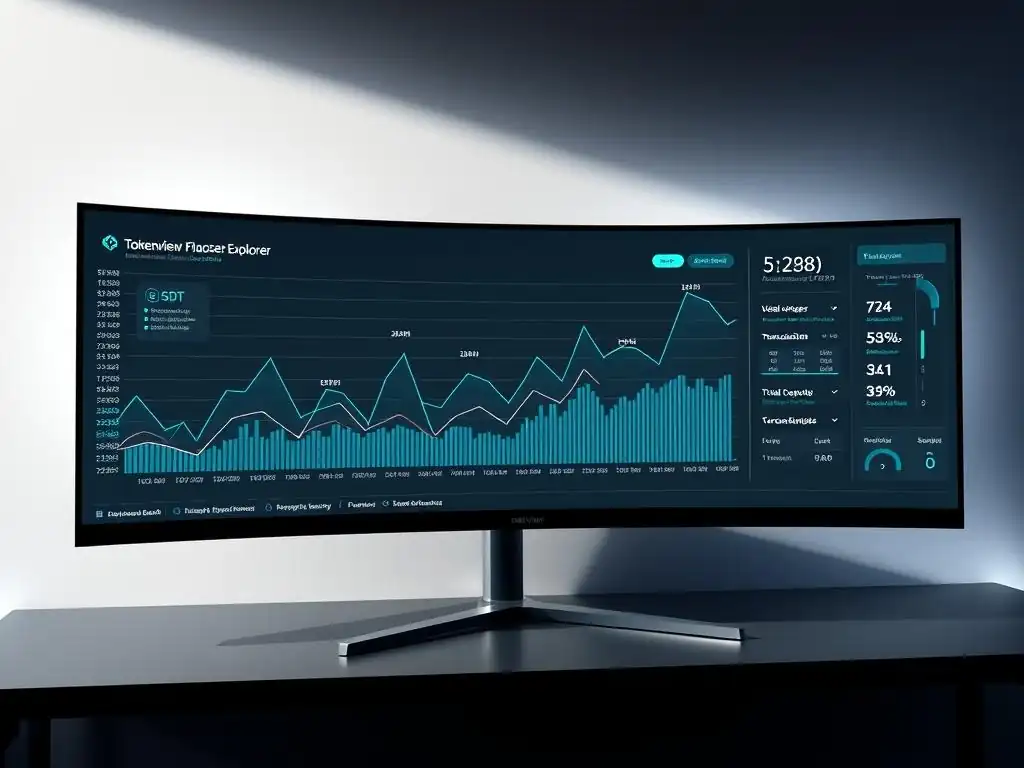
Tokenview positions itself as a comprehensive blockchain explorer offering support for a vast number of blockchains, exceeding even Blockchair in chain coverage. Beyond standard transaction and address exploration, Tokenview provides special tools particularly useful for DeFi transaction tracking. These include dedicated DeFi dashboards that aggregate data from various DeFi protocols across multiple chains, offering a consolidated view of market trends and protocol performance.
Tokenview also features a “Smart Contract Explorer” which aids in analyzing and understanding smart contract code and interactions, crucial for assessing the security and functionality of DeFi protocols. Its extensive blockchain support and DeFi-focused tools make it a strong contender for traders seeking a broad and specialized exploration experience.
Tokenview excels in providing real-time data and analytics, which are essential for live transaction monitoring and trend analysis in the fast-paced DeFi market. The platform offers live transaction feeds, allowing users to monitor transactions as they are confirmed on various blockchains. Its analytics dashboards provide up-to-date metrics on DeFi protocols, including Total Value Locked (TVL), trading volumes, and token prices, enabling traders to quickly gauge market sentiment and identify emerging trends.
Tokenview also incorporates charting tools that visualize transaction data and market trends, facilitating a more intuitive understanding of complex DeFi data. By leveraging Tokenview's real-time data and analytics, DeFi traders can react swiftly to market changes and make informed decisions based on the latest on-chain information.
Compared to other explorers like Etherscan, BscScan, and Blockchair, Tokenview offers a unique blend of extensive blockchain coverage and DeFi-specific features. While Etherscan and BscScan are highly specialized for their respective chains and Blockchair excels in cross-chain data depth, Tokenview aims for breadth and DeFi functionality across a wide spectrum of blockchains. DeFi traders might prefer Tokenview for its ability to provide a bird's-eye view of the entire DeFi landscape, track assets across numerous chains, and access integrated DeFi analytics tools within a single platform.
However, for users primarily focused on deep analysis within specific blockchains like Ethereum or BSC, or requiring the advanced search capabilities of Blockchair, chain-specific explorers or Blockchair might still be preferred for their specialized strengths. Tokenview’s strength lies in its comprehensive scope and DeFi-centric approach across many blockchains.
5. Solscan: Exploring the Solana Blockchain
-
Introduction to Solscan
The rise of Solana in the DeFi space and its exploration needs.
-
Tracking DeFi Activities on Solana
How to analyze trends and transactions specific to Solana’s DeFi projects.
-
Advantages and Challenges of Solscan
Unique features and potential drawbacks.
Solscan is the dedicated blockchain explorer for the Solana blockchain, a network that has rapidly gained prominence in the DeFi space due to its high transaction throughput and low fees. Solana's architecture allows for significantly faster transaction speeds compared to Ethereum and Binance Smart Chain, making it attractive for high-frequency DeFi applications.
As the Solana DeFi ecosystem expands, Solscan becomes essential for traders and users to navigate and understand activities on this blockchain. It provides the necessary transparency and analytical tools to monitor transactions, analyze accounts, and explore the growing number of DeFi protocols built on Solana, such as Raydium and Serum.
Tracking DeFi activities on Solana through Solscan involves leveraging its features tailored to Solana’s unique blockchain structure. For analyzing trends, users can monitor transaction volumes and value, observe the growth of popular Solana DeFi protocols, and track the movement of SOL and SPL tokens (Solana Program Library tokens, similar to ERC-20 on Ethereum). Solscan provides detailed transaction information, including program logs and instructions, which are crucial for understanding the execution of smart contracts on Solana.
For specific DeFi projects, users can input program IDs (Solana’s equivalent of contract addresses) to analyze their transaction history and activity. By monitoring these metrics, DeFi traders can identify emerging trends, assess protocol health, and make informed decisions within the Solana DeFi ecosystem.
Solscan presents several advantages for exploring the Solana blockchain, primarily its speed and efficiency in displaying Solana's high-throughput data. Its interface is designed to handle the volume of transactions on Solana smoothly, providing real-time updates and quick search results. Solscan also incorporates features specific to Solana, such as support for SPL tokens and program accounts, which are not standard in explorers for other blockchains.
However, compared to more established explorers like Etherscan, Solscan is a relatively newer platform, and its feature set may still be evolving. While it excels in exploring Solana-specific data, users accustomed to the broader features and longer history of explorers like Etherscan might find Solscan's ecosystem focus both an advantage and a limitation, depending on their needs for DeFi blockchain transaction analysis.
How to Effectively Use Blockchain Explorers for DeFi Analysis
Step-by-Step Guide to Transaction Analysis
-
Setting Up Your Account
Tips for creating accounts and personalizing settings on explorers.
-
Tracking Transactions
Methodologies for tracking and categorizing DeFi transactions.
-
Analyzing Trends
Techniques for interpreting data and making informed trading decisions.
While most blockchain explorers offer free access to basic data, setting up an account can unlock additional features and personalization options that enhance DeFi transaction analysis. On platforms like Etherscan or BscScan, creating an account often allows users to set up watchlists for specific addresses or tokens, receive email alerts for significant transactions, and customize dashboards to display relevant data. For instance, you can create watchlists for addresses of prominent DeFi protocols or whale wallets to track their activities.
Personalizing settings can also include adjusting display preferences, such as currency conversions or data formats, making the explorer interface more user-friendly and efficient for individual analysis workflows. While not always mandatory, account setup significantly improves the user experience for regular DeFi transaction analysis.
Effectively tracking DeFi transactions involves establishing clear methodologies for monitoring and categorizing on-chain activities. Start by identifying the specific addresses relevant to your DeFi analysis, such as your own wallet addresses, smart contract addresses of DeFi protocols you are interested in, or addresses of known market participants. Use the explorer’s search function to input these addresses and save them to your watchlist if the explorer offers this feature. For each transaction, examine the details: sender, receiver, value, gas fees, and any associated data or function calls.
Categorize transactions based on their type, such as token swaps, liquidity pool interactions, lending/borrowing activities, or staking actions. Tools like Etherscan’s “Token Transfers” or BscScan’s “BEP-20 Token Transfers” tabs can streamline the process of tracking token-related transactions. Consistent and organized tracking will provide a clear overview of your DeFi activities and the broader market movements.
Analyzing trends from DeFi transaction data requires techniques for interpreting the information and translating it into informed trading decisions. Begin by looking for patterns in transaction volumes and values over time. A sudden spike in transactions for a particular DeFi token or protocol might indicate increased interest or volatility. Monitor gas prices as they can be a proxy for network congestion and overall DeFi activity levels.
Analyze the transaction history of whale wallets to identify potential market-moving trades or accumulation/distribution phases. Explore trends in DEX trading volumes and liquidity pool sizes to gauge market sentiment and identify popular trading pairs. Tools within explorers, such as charting features or aggregated analytics dashboards, can help visualize these trends. By combining these analytical techniques, DeFi traders can derive actionable insights from blockchain data and make more strategic trading decisions.
Best Practices for DeFi Traders
-
Utilizing Analytics Tools
Recommended analytics tools that integrate with blockchain explorers.
-
Staying Updated on Market Trends
Importance of real-time data and alerts for successful DeFi trading.
To enhance DeFi transaction analysis beyond the capabilities of blockchain explorers alone, utilizing complementary analytics tools is a best practice. Several platforms integrate directly with blockchain explorers or leverage blockchain data to provide deeper insights. For example, DeFi Pulse offers aggregated metrics on Total Value Locked (TVL) across various DeFi protocols, providing a macro-level view of the DeFi market’s health.
Nansen and Glassnode are subscription-based platforms that offer advanced on-chain analytics, including smart money tracking, whale alerts, and detailed network metrics, enriching the data obtained from explorers. Dune Analytics allows users to create custom dashboards and queries to visualize specific DeFi data sets, offering a highly customizable analytical approach. Combining these specialized analytics tools with blockchain explorers creates a powerful toolkit for comprehensive DeFi transaction analysis.
Staying continuously updated on market trends is paramount for successful DeFi trading, given the sector's rapid pace of innovation and volatility. Blockchain explorers themselves provide real-time transaction data, but supplementing this with other sources is crucial. Utilize news aggregators specifically focused on cryptocurrency and DeFi news, such as CoinDesk or The Block, to stay informed about protocol updates, regulatory changes, and emerging trends.
Set up alerts, either through explorer features or dedicated alert services, to be notified of significant on-chain events, such as large token transfers or changes in protocol metrics. Engage with DeFi communities on platforms like Twitter and Discord to gauge market sentiment and identify emerging narratives. Regularly reviewing real-time data from explorers in conjunction with external market information ensures DeFi traders are well-informed and can react swiftly to market dynamics, maximizing their trading effectiveness.
Conclusion: Choosing the Right Blockchain Explorer for Your DeFi Needs
- Summary of key features and benefits across different explorers.
- Final recommendations for DeFi traders based on specific needs and trading strategies.
Each blockchain explorer discussed offers unique features and benefits tailored to DeFi transaction analysis. Etherscan and BscScan excel as chain-specific explorers for Ethereum and Binance Smart Chain respectively, providing deep ecosystem-focused data and user-friendly interfaces. Blockchair stands out with its multi-chain support and advanced search capabilities, ideal for cross-chain analysis. Tokenview offers broad blockchain coverage and integrated DeFi analytics, providing a comprehensive market overview. Solscan is purpose-built for the high-throughput Solana blockchain, offering efficient exploration of its rapidly growing DeFi ecosystem. Key features across these explorers include real-time data, detailed transaction information, address and smart contract analysis tools, and varying levels of DeFi-specific dashboards and analytics.
For DeFi traders, the "right" blockchain explorer depends on their specific needs and trading strategies. Traders primarily focused on Ethereum-based DeFi will find Etherscan indispensable for its depth and Ethereum specialization. Those heavily involved in Binance Smart Chain DeFi should prioritize BscScan for its BSC-centric features.
Traders engaging in cross-chain DeFi activities or requiring advanced data analysis might prefer Blockchair or Tokenview for their broader blockchain coverage and analytical tools. For those exploring the Solana ecosystem, Solscan is the essential tool. Ultimately, some DeFi traders may find it beneficial to utilize a combination of explorers, leveraging the strengths of each to gain a holistic and nuanced understanding of the DeFi market and to effectively execute their transaction analysis strategies.
Additional Resources for DeFi Traders
- A list of tools and platforms that complement blockchain explorers for enhanced DeFi transaction analysis.
For enhanced DeFi transaction analysis, consider these complementary tools and platforms:
- DeFi Pulse: For aggregated DeFi market data and Total Value Locked (TVL) metrics across protocols.
- Nansen: For advanced on-chain analytics, smart money tracking, and whale alerts (subscription-based).
- Glassnode: For comprehensive blockchain data and network metrics (subscription-based).
- Dune Analytics: For creating custom DeFi dashboards and querying blockchain data.
- CoinGecko & CoinMarketCap: For cryptocurrency price tracking, market capitalization data, and exchange information.
- TradingView: For charting tools and technical analysis of cryptocurrency prices.
- Crypto News Aggregators (e.g., CoinDesk, The Block): To stay updated on the latest DeFi news and market developments.
- Telegram & Discord Bots (e.g., transaction bots, price alert bots): For real-time notifications and updates on specific DeFi activities.
Frequently Asked Questions
How can blockchain explorers help with DeFi trading?
Blockchain explorers allow you to track transactions and analyze market trends within the DeFi space. This provides valuable insights into liquidity pools, token movements, and smart contract interactions.
What kind of information can I find using a blockchain explorer for DeFi?
You can find details like transaction hashes, sender and receiver addresses, amounts transferred, and the smart contract involved. This data is crucial for understanding DeFi activity.
Why is DeFi blockchain transaction analysis important for traders?
Analyzing transactions allows traders to identify potential opportunities, assess risks, and understand the behavior of whales and other large players in the DeFi market.
Are all blockchain explorers suitable for DeFi blockchain transaction analysis?
No, some explorers are more tailored for DeFi. They offer specialized tools and interfaces to visualize and analyze complex DeFi transactions and smart contract data.
What are the limitations of using blockchain explorers for DeFi blockchain transaction analysis?
Blockchain explorers only show on-chain data. They don't provide insights into off-chain information, like news sentiment or social media trends, which can also influence DeFi markets.
The ability to effectively analyze blockchain transactions is no longer a niche skill, but a fundamental requirement for anyone participating in the burgeoning world of DeFi. As decentralized finance continues to disrupt traditional financial systems, understanding the flow of assets and identifying emerging trends becomes paramount for informed decision-making and mitigating risk.
This exploration of blockchain explorers underscores the importance of transparency and accessibility in the DeFi space. The power to independently verify transactions and analyze on-chain data empowers individuals and fosters a more democratic financial ecosystem. The future of finance is decentralized, and blockchain explorers are the maps that guide us through this new landscape.
This quote encapsulates the transformative potential of these tools, allowing us to navigate the complexities of DeFi with confidence and clarity.
As you venture further into the world of decentralized finance, remember that knowledge is your most valuable asset. Embrace the power of blockchain explorers, hone your analytical skills, and contribute to a more transparent and equitable financial future. The tools are at your fingertips – now it's up to you to use them wisely and shape the future of DeFi.
Unlock DeFi Mastery: Become a Blockchain Explorer Pro!
Thanks for exploring the world of blockchain explorers and learning how they can enhance your DeFi trading. Now that you’re familiar with tracking transactions and analyzing trends, it’s time to apply that knowledge.
Ready to elevate your DeFi trading skills? Here are some steps to get started:
- Explore Further: Spend a few minutes examining several blockchain explorers mentioned in this article, focusing on recent transactions related to your favorite DeFi projects. See what insights you can discover!
- Share the Knowledge: Share this article with a friend or fellow trader who could benefit from these insights.
- Try Something Unconventional: Use a blockchain explorer to trace the movement of tokens from a risky or failed project. What patterns emerge, and could these tools have helped you anticipate potential issues?
Which explorer will you choose first, and what exciting DeFi activity will you monitor? Share your discoveries in the comments below!
Leave a Reply