
Mastering Blockchain Explorer Filters: Pinpointing Specific Transactions & Blocks

Welcome to Blockchain Trends, your guide to navigating the ever-evolving world of distributed ledger technology!
Dive deep into the transformative applications of blockchain, far beyond just cryptocurrencies. From DeFi innovations to enterprise solutions, regulatory landscapes to the decentralized future, we're here to illuminate the path. Ever struggled to find that one specific transaction amidst the vast blockchain data? Then you're in the right place. Our latest article unlocks the secrets to blockchain explorer transaction filtering tips, providing the insights you need to pinpoint exactly what you're looking for. Discover how to efficiently navigate the blockchain and unlock its full potential – the journey starts here.
- Introduction to Blockchain Explorer Filters
- Key Features of Blockchain Explorer Filters
- Top Blockchain Explorers with Advanced Filtering Options
- Tips for Mastering Blockchain Explorer Transaction Filtering
- Real-World Applications of Transaction Filtering
- Conclusion: Enhancing Your Blockchain Experience with Filters
-
Frequently Asked Questions
- How can I use a blockchain explorer to find transactions related to a specific smart contract?
- What are some common filters available on blockchain explorers besides transaction ID and block number?
- How can I track transactions sent to or received from a particular crypto exchange using a blockchain explorer?
- Are there any limitations to using blockchain explorer filters for transaction analysis?
- What are some "Blockchain explorer transaction filtering tips" for quickly finding specific types of transactions?
- Final Reflection: Navigating the Blockchain's Depths
- Unleash Your Inner Blockchain Detective!
Introduction to Blockchain Explorer Filters
Understanding Blockchain Explorers and Their Importance
Blockchain explorers are indispensable tools in the cryptocurrency and blockchain ecosystem, acting as search engines and analytical platforms for blockchain data. They provide a user-friendly interface to navigate the otherwise complex world of distributed ledgers, allowing anyone to view transaction histories, block details, address balances, and much more. Think of them as the Google for blockchains; without them, accessing and understanding on-chain data would be significantly more challenging, requiring direct interaction with nodes and complex command-line interfaces.
For instance, consider the Bitcoin blockchain, which, as of late 2023, has surpassed 800GB in size. Without explorers, sifting through this vast amount of data to find a specific transaction would be akin to finding a needle in a haystack. Explorers democratize access to blockchain information, making it available to developers, researchers, businesses, and everyday users alike, fostering transparency and trust within the system.
The importance of blockchain explorers extends beyond mere data access. They are critical for verifying transactions, monitoring network activity, and understanding the flow of digital assets. For businesses integrating blockchain solutions, explorers are essential for tracking payments, auditing supply chains, and ensuring the integrity of their operations.
For example, a company using a blockchain-based supply chain management system can use an explorer to verify the provenance of goods at each stage of the supply chain, enhancing transparency for consumers and partners. Moreover, developers rely on explorers to debug smart contracts, analyze network congestion, and understand the impact of protocol upgrades. In essence, blockchain explorers are the eyes and ears of the blockchain world, providing essential visibility and insights into the workings of these transformative technologies.
Overview of Transaction Filtering in Blockchain Explorers
Given the immense volume of data on public blockchains like Ethereum and Bitcoin, simply accessing a blockchain explorer might feel overwhelming. Millions of transactions are processed daily, and without effective navigation tools, finding specific information becomes a daunting task. This is where transaction filtering becomes crucial.
Transaction filtering in blockchain explorers is the process of refining searches to pinpoint specific transactions or sets of transactions based on various criteria. It's akin to using advanced search operators in a conventional search engine but tailored for blockchain data. Instead of sifting through pages of irrelevant data, filters allow users to quickly isolate the information they need, whether it's a specific transaction involving a particular address, transactions within a certain timeframe, or transactions of a certain type.
Filtering capabilities range from basic keyword searches to more advanced parameters, depending on the explorer. Basic filters might include searching by transaction hash, address, or block number. However, advanced filtering options enable users to combine multiple criteria to perform highly specific queries.
For example, one might want to find all transactions from a specific address to another specific address within the last 24 hours that involve a particular smart contract. Without these refined filtering tools, analyzing blockchain activity for specific purposes – be it for research, compliance, or personal tracking – would be incredibly inefficient and time-consuming. Mastering transaction filtering is therefore a key skill for anyone who needs to work with blockchain data effectively.
The Role of Filters in Analyzing Blockchain Data
Filters are not just about finding individual transactions; they are fundamental for conducting meaningful analysis of blockchain data. By enabling users to segment and isolate specific data sets, filters transform raw, overwhelming blockchain data into actionable insights. Imagine trying to analyze the trading activity of a particular token on a decentralized exchange (DEX) without filters.
You would be presented with a continuous stream of all transactions on the blockchain, making it virtually impossible to isolate trades related to that specific token. Filters, however, allow you to narrow down the data to only transactions involving the DEX's smart contract and the token's contract address, providing a clear picture of trading volume, price fluctuations, and user activity.
Furthermore, filters play a vital role in security and risk management. For instance, financial institutions and compliance officers utilize filters to monitor transactions for suspicious activity, such as large transfers to known illicit addresses or transactions originating from sanctioned regions. By setting up filters based on addresses, transaction values, and other parameters, they can proactively identify and investigate potentially fraudulent or non-compliant activities.
In the realm of research, filters are invaluable for studying blockchain usage patterns, analyzing the effectiveness of smart contracts, and tracking the flow of funds in decentralized autonomous organizations (DAOs). In essence, filters are the analytical lens through which we can derive meaningful insights from the vast and complex landscape of blockchain data, enabling informed decision-making and a deeper understanding of blockchain technology's impact.
Key Features of Blockchain Explorer Filters
Types of Filters Available in Blockchain Explorers
Blockchain explorers offer a variety of filters to cater to diverse analytical needs. These filters are designed to help users navigate the massive datasets inherent in blockchains and extract specific information efficiently. Understanding the different types of filters and how to utilize them is crucial for effective blockchain exploration. The most common and powerful filters revolve around addresses, block heights, and date ranges, each providing a unique lens through which to examine blockchain activity.
Address Filtering: Tracking Specific Wallet Transactions
Address filtering is arguably the most fundamental and frequently used type of filter in blockchain explorers. It allows users to track all transactions associated with a specific blockchain address, whether it's a sender address, a recipient address, or both. This is particularly useful for individuals wanting to monitor their own transactions, businesses tracking payments, or researchers investigating the activity of specific entities.
For example, if you want to see all transactions involving a known cryptocurrency exchange's deposit address, you would use address filtering to isolate all incoming and outgoing transactions for that address. This filter type is essential for verifying transactions, monitoring fund movements, and understanding the interaction patterns of different addresses on the blockchain. Most blockchain explorers prominently feature address search bars, making address filtering readily accessible and user-friendly.
Block Height Filtering: Navigating Through Blockchains
Block height filtering allows users to explore blockchain data based on the sequential order of blocks. Each block in a blockchain is assigned a unique block height, representing its position in the chain. Filtering by block height is crucial for analyzing blockchain progression over time and examining the contents of specific blocks.
For instance, if you are interested in understanding the state of the blockchain at a particular point in time, or if you know a transaction was included in a specific block, block height filtering becomes invaluable. By entering a block height, you can access all transactions included in that block, the block's timestamp, the miner who mined the block, and other relevant block details.
This type of filtering is often used by developers to debug smart contracts deployed at a certain block or by researchers studying blockchain network performance metrics at different block intervals. Exploring blocks chronologically via block height filtering provides a structured way to understand the evolution of the blockchain.
Date Range Filtering: Analyzing Transactions Over Time
Date range filtering enables users to analyze blockchain transactions within a specified timeframe. This is particularly useful for identifying trends, tracking activity during specific periods, or auditing transactions over a certain duration. For example, a business might want to review all cryptocurrency payments received within a specific month for accounting purposes.
By using date range filtering, they can easily extract all transactions that occurred between the start and end dates of that month. Similarly, researchers might use date range filtering to study the impact of a news event on cryptocurrency trading activity by analyzing transaction volumes before, during, and after the event.
Many explorers allow users to specify custom date ranges, often with options to select predefined ranges like "last 24 hours," "last week," or "last month," making it convenient to analyze blockchain activity over different time scales. Date range filtering provides a temporal dimension to blockchain analysis, allowing users to understand how blockchain activity evolves over time.
Benefits of Using Filters for Transaction Analysis
Utilizing filters in blockchain explorers offers significant advantages for anyone working with blockchain data. Filters streamline the process of information retrieval, enhance data accuracy, and ultimately improve the user experience, making blockchain analysis more efficient and insightful. Without filters, navigating the vast ocean of blockchain data would be an overwhelming and inefficient endeavor.
Improved Data Accuracy and Relevance
One of the primary benefits of using filters is the significant improvement in data accuracy and relevance. By narrowing down searches using specific criteria, filters eliminate irrelevant data, allowing users to focus solely on the information they need. Imagine searching for transactions related to a specific decentralized application (dApp) without filters; the results would be cluttered with countless unrelated transactions, making it difficult to extract meaningful insights.
Filters, however, allow you to isolate transactions interacting with the dApp's smart contract address, providing a highly focused and relevant dataset. This precision not only saves time but also reduces the risk of misinterpreting data or drawing incorrect conclusions based on noisy or incomplete information. By ensuring that the analyzed data is highly targeted and pertinent, filters contribute directly to more accurate and reliable blockchain analysis.
Enhanced User Experience with Tailored Searches
Filters dramatically enhance the user experience when interacting with blockchain explorers. Instead of being overwhelmed by an endless stream of raw blockchain data, users can tailor their searches to their specific needs and interests. This targeted approach makes the exploration process more efficient, intuitive, and less frustrating. For example, a user simply wanting to check if a specific transaction has been confirmed can quickly use a transaction hash filter to locate it instantly, rather than manually scrolling through pages of recent transactions.
Furthermore, advanced explorers often allow users to combine multiple filters, creating highly customized searches that precisely target the desired information. This level of control and customization empowers users to efficiently navigate blockchain data, making the entire process more user-friendly and accessible, even for those with limited technical expertise. Ultimately, filters transform blockchain explorers from potentially daunting data dumps into powerful and user-centric analytical tools.
Top Blockchain Explorers with Advanced Filtering Options
Several blockchain explorers stand out due to their comprehensive and user-friendly filtering options. These explorers provide advanced tools that go beyond basic address or transaction hash searches, enabling in-depth blockchain data analysis. Among these, Blockchair, Etherscan, and Blockchain.com Explorer are notable for their robust filtering capabilities and user-friendly interfaces, catering to both advanced users and beginners.
Blockchair: Comprehensive Filters for In-Depth Analysis
Blockchair is widely recognized for its powerful and extensive filtering capabilities, making it a favorite among researchers, analysts, and power users who need to perform detailed blockchain investigations. Blockchair supports a vast range of blockchains, including Bitcoin, Ethereum, and many others, offering a unified platform for exploring diverse blockchain ecosystems. Its filtering features are particularly comprehensive, going beyond standard filters to include advanced search operators and data aggregation tools.
Features and Advantages of Blockchair Filters
Blockchair distinguishes itself with features like full-text search across blockchain data, allowing users to search for keywords within transaction memos or OP_RETURN data. This is particularly useful for investigations involving on-chain messaging or data embedding. Furthermore, Blockchair offers advanced filtering based on transaction value, input/output scripts, and even specific data patterns within transactions. For instance, users can filter transactions based on the size of the transaction in bytes or search for transactions containing specific script opcodes.
Blockchair also provides aggregated data views, allowing users to analyze trends and patterns across filtered datasets. Another significant advantage is Blockchair's privacy focus; it does not track user activity, appealing to users concerned about data privacy. These advanced features make Blockchair a powerful tool for in-depth blockchain analysis and forensic investigations.
Use Cases for Effective Transaction Tracking
Blockchair's advanced filters are highly effective in various use cases. For example, researchers can use Blockchair to track the flow of funds from illicit addresses by combining address filters with value filters and analyzing transaction patterns. Journalists can utilize Blockchair's full-text search to investigate on-chain communications related to specific events or entities. Compliance officers can set up alerts based on complex filter combinations to monitor transactions for regulatory compliance.
Consider a scenario where an analyst needs to identify transactions related to a specific token sale that occurred on Bitcoin using OP_RETURN data to embed token metadata. Blockchair's full-text search and script filtering capabilities would allow the analyst to pinpoint these transactions efficiently, a task that would be extremely challenging or impossible with basic explorers. Blockchair's granular filtering and data aggregation tools empower users to conduct sophisticated blockchain investigations and derive actionable insights from complex on-chain data.
Etherscan: Mastering Ethereum Transaction Filtering
Etherscan is the preeminent blockchain explorer for the Ethereum network, offering a wealth of information and advanced filtering tools specifically tailored for the Ethereum ecosystem. It's the go-to explorer for anyone working with Ethereum, from DeFi users to smart contract developers, providing detailed insights into transactions, smart contracts, tokens, and network activity. Etherscan's filtering capabilities are particularly robust for navigating the complexities of Ethereum transactions and smart contract interactions.
Exploring the Advanced Filtering Tools on Etherscan
Etherscan offers a range of advanced filters beyond basic address and transaction hash searches. Users can filter transactions by token transfers, internal transactions (transactions initiated by smart contracts), and specific event logs emitted by smart contracts. Token transfer filtering is crucial for tracking ERC-20 and other token movements, allowing users to easily monitor token balances and transaction histories. Internal transaction filtering provides insights into the inner workings of smart contracts, revealing transaction calls between contracts.
Event log filtering is particularly powerful for analyzing smart contract activity, as it allows users to search for specific events emitted by contracts, such as token approvals, transfers, or contract state changes. Etherscan also integrates with wallet providers, allowing users to directly access and filter their transaction history within the explorer interface. These specialized filters make Etherscan an indispensable tool for anyone deeply involved in the Ethereum ecosystem.
Real-World Applications of Etherscan Filters
Etherscan's advanced filters have numerous real-world applications. DeFi users rely on token transfer filters to track their portfolio holdings and transaction history across various DeFi protocols. Smart contract developers use internal transaction filters to debug and analyze the execution flow of their contracts, understanding how different contract functions interact. Security auditors leverage event log filters to identify potential vulnerabilities and analyze contract behavior for security audits.
For example, imagine a user participating in a complex DeFi yield farming strategy involving multiple smart contracts and token swaps. By using Etherscan's token transfer and internal transaction filters, they can comprehensively track all aspects of their DeFi activity, verify transaction confirmations, and analyze their overall yield farming performance. Etherscan's specialized Ethereum-centric filters provide the granular visibility needed to navigate and understand the intricate world of Ethereum and its applications.
Blockchain.com Explorer: User-Friendly Filtering for Beginners
Blockchain.com Explorer offers a more streamlined and user-friendly experience, making it a good choice for beginners or users who need basic transaction tracking without the complexity of advanced filtering options. While it may not have the depth of filtering features found in Blockchair or Etherscan, Blockchain.com Explorer provides essential filters in an easily accessible interface, primarily focusing on Bitcoin and Ethereum blockchain data.
Key Filtering Features and User Interface
Blockchain.com Explorer's filtering primarily focuses on address and transaction hash searches, presented in a clean and intuitive interface. It allows users to easily search for transactions by address, view transaction details, and track transaction confirmations. The user interface is designed for simplicity, with clear labels and straightforward navigation, making it easy for new users to quickly grasp the basics of blockchain exploration.
While it lacks advanced filters like token transfer filtering or event log filtering, it provides essential functionalities for everyday users who need to check transaction statuses or verify basic blockchain information. Blockchain.com Explorer prioritizes ease of use and accessibility over advanced features, making it a suitable entry point for those new to blockchain explorers.
Best Practices for New Users
For new users starting with Blockchain.com Explorer, the best practice is to begin with basic address searches to understand how transaction histories are displayed. Users can start by searching their own cryptocurrency addresses to track their past transactions and get familiar with the explorer's interface. When searching for transactions, focusing on using accurate addresses and transaction hashes is crucial to ensure correct results.
For beginners, understanding the difference between confirmed and unconfirmed transactions is also important, and Blockchain.com Explorer clearly displays transaction confirmation statuses. While exploring, users can gradually explore other features like block exploration and network statistics to gain a broader understanding of blockchain data. Blockchain.com Explorer's simplicity and clear presentation make it an excellent platform for building foundational knowledge of blockchain explorers and transaction tracking.
Tips for Mastering Blockchain Explorer Transaction Filtering
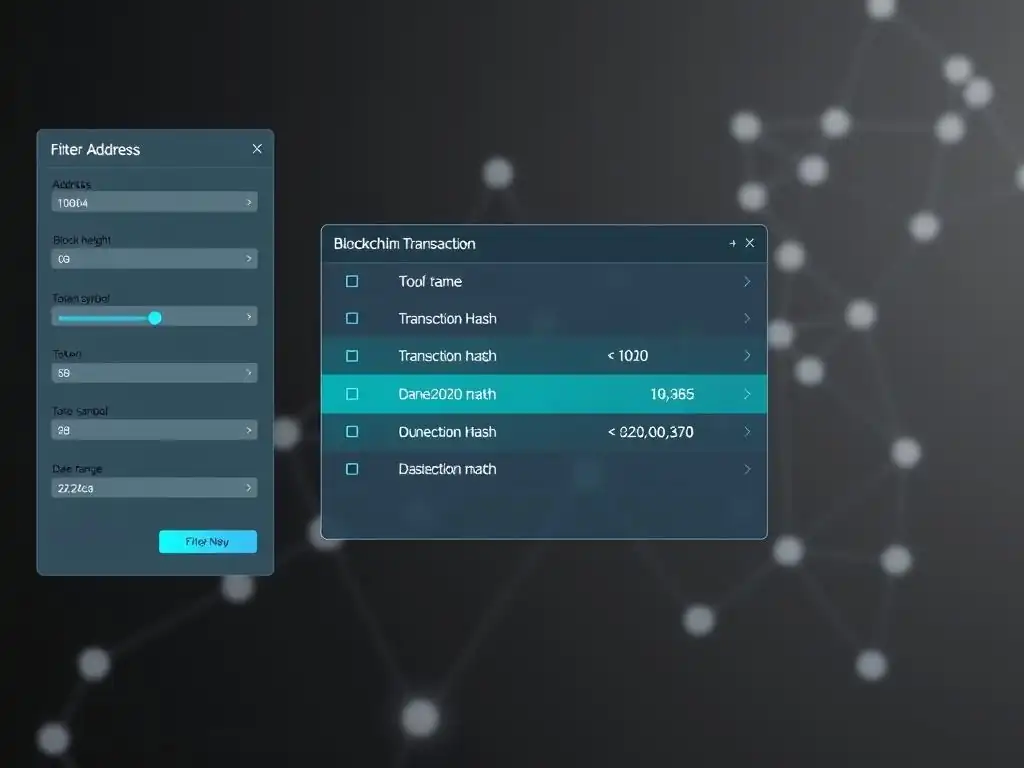
Mastering blockchain explorer transaction filtering is a skill that enhances efficiency and accuracy in blockchain data analysis. By adopting effective strategies and avoiding common pitfalls, users can significantly improve their ability to pinpoint specific information and gain valuable insights from blockchain explorers. These tips focus on practical techniques for effective filtering and analysis.
How to Effectively Use Filters to Find Specific Transactions
Effective transaction filtering requires a clear understanding of what information you are seeking and how to best utilize the available filters to achieve your goal. It's a process of refining your search strategy based on the explorer's capabilities and the nature of the transaction you are trying to locate. Starting with broad searches and progressively narrowing down using multiple filters is often the most effective approach.
Step-by-Step Guide to Filtering Transactions on Etherscan
Let's consider a step-by-step guide for filtering transactions on Etherscan, a popular Ethereum explorer. Suppose you want to find all transactions related to a specific ERC-20 token transfer to a particular address within a certain date range.
- Start with Address Filtering: Begin by entering the target recipient address in Etherscan's search bar to view all transactions associated with that address.
- Apply Token Transfer Filter: Navigate to the "Token Transfers" tab on the address page. This will filter the transactions to show only token transfers involving this address.
- Specify Token (If Necessary): If you are looking for transfers of a specific ERC-20 token, further refine the filter by entering the token's contract address in the token filter field within the "Token Transfers" tab.
- Use Date Range Filter (If Available): If you need to narrow down the results to a specific date range, look for date range filter options, which might be available in the explorer's advanced filter settings or through third-party tools that integrate with Etherscan. While Etherscan's direct interface might not have a date range filter for token transfers directly on the address page, you might need to use API access or external tools for very specific date-based filtering combined with token transfers. For simpler date range filtering of all transactions (not just token transfers) for an address, you might need to analyze the block timestamps associated with the transactions.
- Review and Refine: Examine the filtered transaction list and verify if it matches your criteria. If the results are still too broad, consider if there are other filters you can apply, or if you need to refine your search terms or address specificity.
Example: Finding Transactions from a Specific Address
Let’s say you want to find all transactions sent from a specific address on Etherscan. The process is slightly different than finding transactions to an address, as the default view on an address page often shows both incoming and outgoing transactions combined.
- Enter the Source Address: Input the source address into Etherscan’s search bar.
- Identify Outgoing Transactions: On the address’s transaction page, you will see a list of transactions. Etherscan typically indicates outgoing transactions by visually distinguishing them, often by showing the address as the "From" address in the transaction list.
- Filter (if needed): While Etherscan doesn't have a direct "outgoing transactions only" filter button on the address page itself in the standard UI, you can visually scan the list and identify transactions where your searched address is listed under the "From" column. For more programmatic filtering, you might use Etherscan’s API, which allows for more specific queries, including filtering by transaction direction.
- Analyze Results: Review the list of identified outgoing transactions, examining transaction details, recipients, and timestamps to analyze the transaction activity originating from that specific address.
Best Practices for Analyzing Blocks Using Filters
Analyzing blocks using filters involves understanding block data and leveraging explorer features to extract meaningful information. While filters are often associated with transactions, they are also essential for efficiently exploring and analyzing block-level data.
Understanding Block Data and Using It to Your Advantage
Blocks contain a wealth of information beyond just transactions. Each block includes a block header with metadata like block height, timestamp, miner address, difficulty, and block hash, as well as the list of transactions included in the block. Understanding these data points is key to effective block analysis. For instance, the timestamp provides temporal context, the miner address identifies who produced the block, and the block height indicates its position in the blockchain.
To analyze blocks effectively using filters (or search functions in explorers):
- Start with Block Height or Hash: If you are interested in a specific block, use its block height or hash to directly access it in the explorer.
- Examine Block Header: Review the block header data for insights into block creation time, mining entity, and network conditions at the time of block creation.
- Analyze Transactions within the Block: Explore the list of transactions included in the block. Look for patterns, types of transactions, and any notable transactions within that specific block. Some explorers might allow you to filter transactions within a block by type or address, though this is less common as blocks are typically analyzed as units.
- Use Block Data in Context: Correlate block data with other information, such as network charts, news events, or specific transaction trends, to gain a broader understanding of blockchain activity and context. For example, analyzing blocks around times of high network congestion can reveal patterns in transaction fees and confirmation times.
Common Mistakes to Avoid When Using Filters
Even with powerful filtering tools, users can make mistakes that lead to inaccurate search results or missed information. Being aware of these common pitfalls is crucial for ensuring accurate and efficient blockchain exploration.
Tips to Ensure Accurate Search Results
To avoid common mistakes and ensure accurate search results when using blockchain explorer filters:
- Double-Check Addresses and Hashes: Typos in addresses or transaction hashes are a frequent source of errors. Always double-check the accuracy of the input before initiating a search. Using copy-paste instead of manual typing can significantly reduce errors.
- Understand Filter Logic: Be clear about how filters work. For example, address filters usually show transactions where the address is either sender or receiver. If you need to specifically filter for only incoming or outgoing transactions, understand if the explorer provides that specific directional filtering, or if you need to infer it from the transaction details.
- Avoid Overly Restrictive Filters Initially: Start with broader filters and progressively narrow down if needed. Overly restrictive filters at the outset might lead to missing relevant information.
- Verify Data Across Multiple Explorers (If Critical): For critical analysis, especially in high-value scenarios, consider verifying transaction data across multiple blockchain explorers. While explorers generally pull data from the same blockchain, interface interpretations or indexing might have minor discrepancies.
- Be Aware of Explorer Limitations: Understand the limitations of the explorer you are using. Not all explorers offer the same filtering capabilities. For very advanced or specific filtering needs, you might need to use explorer APIs or specialized blockchain analysis tools.
- Consider Time Zones for Date Filters: When using date range filters, be mindful of the time zone used by the explorer. Blockchain timestamps are typically in UTC, but explorer displays might convert to local time zones, which could cause confusion if not considered.
Real-World Applications of Transaction Filtering
Transaction filtering in blockchain explorers is not just a technical capability; it has significant real-world applications across various sectors, from finance to regulation and beyond. The ability to efficiently analyze blockchain data through filters unlocks valuable insights and enables practical solutions in diverse fields.
Use Cases in Decentralized Finance (DeFi)
Decentralized Finance (DeFi) is a prime example of a sector heavily reliant on blockchain explorer transaction filtering. The transparent and auditable nature of blockchain is central to DeFi, and explorers with robust filtering are essential tools for DeFi participants.
Tracking Asset Transfers in DeFi Projects
In DeFi, users frequently interact with numerous smart contracts, tokens, and decentralized exchanges. Transaction filtering is crucial for tracking asset movements across these complex interactions. For instance, a DeFi user participating in yield farming on a platform like Uniswap might need to track their token deposits, withdrawals, and staking rewards.
By using address filters for their wallet address and token transfer filters for specific DeFi tokens (like UNI or COMP), they can monitor their DeFi portfolio activity directly on explorers like Etherscan. Furthermore, users can use transaction filtering to verify the execution of smart contract interactions, ensuring that their transactions were processed as intended.
For example, after performing a token swap on a DEX, users can use the transaction hash to verify the details of the swap on the explorer, confirming the received tokens and the gas fees paid. Transaction filtering provides DeFi users with the transparency and control needed to navigate the decentralized financial landscape effectively.
Regulatory Compliance: How Filtering Aids in Monitoring Transactions
Regulatory compliance in the cryptocurrency space is increasingly important, and transaction filtering in blockchain explorers plays a crucial role in helping businesses and regulators meet compliance requirements. The ability to monitor and analyze transactions efficiently is vital for anti-money laundering (AML) and Know Your Customer (KYC) efforts.
Using Filters to Meet Regulatory Requirements
Financial institutions and cryptocurrency exchanges are required to implement AML and KYC procedures to prevent illicit activities. Blockchain explorer filters are used to monitor transactions for suspicious patterns and flag potentially high-risk transactions. For example, compliance officers can set up address filters to monitor transactions involving addresses associated with known illicit activities, as identified by blockchain analytics firms. They can also use value filters to detect large transactions that might trigger reporting requirements under financial regulations.
Furthermore, date range filters can be used to audit transaction activity over specific periods for compliance reporting. By leveraging transaction filtering, businesses can proactively identify and investigate suspicious transactions, ensuring compliance with regulatory standards and mitigating risks associated with illicit cryptocurrency flows. Explorers with advanced filtering features are becoming indispensable tools for regulatory compliance in the blockchain ecosystem.
Future Applications of Filtering in Blockchain Technology
The applications of transaction filtering are expected to expand as blockchain technology evolves and becomes integrated into more industries. As enterprise blockchain solutions and more complex decentralized systems emerge, advanced filtering capabilities will become even more critical.
The Evolving Role of Filters in Enterprise Blockchain Solutions
In enterprise blockchain applications, transaction filtering will play a vital role in data analytics, auditability, and supply chain transparency. Enterprises using private or consortium blockchains will need robust tools to analyze on-chain data for operational insights and compliance purposes. For instance, in supply chain management, filtering can be used to track the movement of goods across different stages, identify bottlenecks, and verify the authenticity of products.
By filtering transactions based on product IDs, timestamps, or location data, businesses can gain granular visibility into their supply chains. Moreover, in enterprise financial systems using blockchain, filtering can be used for auditing financial transactions, detecting anomalies, and ensuring regulatory compliance within the enterprise network. As enterprise blockchain adoption grows, the demand for sophisticated filtering and analytical tools will continue to increase, driving innovation in blockchain explorer technology and data analysis techniques.
Conclusion: Enhancing Your Blockchain Experience with Filters
Recap of Blockchain Explorer Transaction Filtering Tips
Mastering blockchain explorer filters is essential for anyone seeking to effectively navigate and analyze blockchain data. By understanding the different types of filters—address, block height, date range, and advanced filters like token transfer and event log filters—users can significantly enhance their ability to pinpoint specific transactions and blocks. Key tips for effective filtering include starting with clear search objectives, double-checking input data for accuracy, understanding filter logic, and progressively refining searches for optimal results.
Avoiding common mistakes, such as typos in addresses or overly restrictive initial filters, is crucial for accurate data retrieval. Utilizing advanced explorers like Blockchair and Etherscan for their comprehensive filtering options, while appreciating the user-friendliness of explorers like Blockchain.com for beginners, caters to diverse user needs and expertise levels.
The Future of Blockchain Exploration and Data Analysis
The future of blockchain exploration and data analysis is poised for continued innovation and sophistication. As blockchain technology matures and its applications expand, the demand for more advanced filtering, analytical, and visualization tools will grow. We can expect to see blockchain explorers evolve with more intuitive interfaces, enhanced filtering capabilities incorporating AI and machine learning, and deeper integrations with other data analysis platforms.
Features like predictive analytics based on historical transaction data, customizable dashboards for monitoring specific blockchain metrics, and more granular event-based filtering in smart contract interactions are likely to become standard. Furthermore, the ability to seamlessly integrate blockchain data with off-chain data sources through explorers will become increasingly important for holistic analysis. As blockchain data volume continues to grow exponentially, mastering transaction filtering and leveraging advanced blockchain exploration tools will be indispensable skills for individuals and organizations seeking to unlock the full potential of this transformative technology.
Frequently Asked Questions
You can typically filter by contract address in most blockchain explorers. This allows you to view all transactions interacting with that specific contract. Many explorers also offer decoded transaction data for smart contracts.
What are some common filters available on blockchain explorers besides transaction ID and block number?
Besides the basics, you can often filter by address (sender/receiver), timestamp (date range), and value (amount transferred). Some advanced explorers also allow filtering by data fields within transactions.
How can I track transactions sent to or received from a particular crypto exchange using a blockchain explorer?
You'll need the exchange's known addresses. Use the explorer to filter transactions involving those addresses. Some services identify popular exchange addresses, making the process easier.
Are there any limitations to using blockchain explorer filters for transaction analysis?
Yes, blockchain explorers can struggle with complex transactions or obscured data. Also, privacy-focused blockchains may limit the visibility of transaction details. Exploring multiple explorers can sometimes help.
What are some "Blockchain explorer transaction filtering tips" for quickly finding specific types of transactions?
Utilize advanced filters if available, such as filtering by specific opcode or data type. Also, understand the blockchain's architecture to know what filters are most relevant. Finally, combine multiple filters for more refined results.
The ability to effectively filter transactions and blocks within a blockchain explorer isn't just a technical skill; it's becoming an essential tool for understanding the very fabric of decentralized finance and the evolving digital economy. As blockchain technology permeates more aspects of our lives, from supply chain management to digital identity, the need to decipher its complex data streams becomes increasingly critical.
The impact of mastering these filtering techniques extends far beyond simple data retrieval. It empowers individuals and organizations to conduct thorough due diligence, identify potential security threats, and gain invaluable insights into market trends. My own journey into blockchain analysis has underscored the profound importance of these skills, revealing the intricate dance of data that underpins this revolutionary technology. Data is the new oil, and blockchain explorers are the refineries.
This quote perfectly encapsulates the potential unlocked by mastering the art of blockchain exploration.
Now, armed with the knowledge of blockchain explorer transaction filtering tips, I invite you to delve deeper into the blockchain's depths. Explore, analyze, and question the data you uncover. By mastering these tools, you not only gain a better understanding of the technology itself but also empower yourself to participate more meaningfully in the future of decentralized systems. The blockchain's story is being written every day, and with the right filters, you can become a vital part of its narrative.
Unleash Your Inner Blockchain Detective!
Thanks for exploring the world of blockchain explorer filters with us! We hope you've gained valuable insights into how to identify specific transactions and blocks, giving you greater confidence in navigating the blockchain. Are you ready to put your knowledge into practice?
Here are a few steps you can take right now:
- Experiment with advanced filters on your preferred blockchain explorer. Recreate the examples we've discussed or try searching based on your own interests. Hands-on practice is essential!
- Share this article with a friend or colleague interested in blockchain technology. Helping others learn reinforces your understanding.
- Review the documentation for your chosen blockchain explorer. You might discover additional filter options and advanced search features.
What’s the most obscure or surprising transaction you've found using blockchain explorer filters? Share your discoveries in the comments below!
Leave a Reply