
The Ultimate Blockchain Explorer Comparison: Find Your Perfect Chain Navigator


Welcome to Blockchain Trends, your go-to source for unraveling the complexities and boundless opportunities of blockchain technology. Beyond the hype of cryptocurrencies, discover its real-world applications in DeFi, enterprise solutions, and the evolving regulatory landscape.
But how do you really see inside the blockchain? Dive into our in-depth article, " The Ultimate Blockchain Explorer Comparison: Find Your Perfect Chain Navigator," where we explore the best blockchain explorer comparison tools available. Which one will unlock the secrets of your next transaction? Let's find out...
- The Ultimate Blockchain Explorer Comparison: Find Your Perfect Chain Navigator
- Key Features to Consider in Blockchain Explorer Comparison Tools
- Comparing the Best Blockchain Explorers for 2024
- Pros and Cons of Popular Blockchain Explorer Tools
- Recommendations Based on User Needs
- Conclusion: Choosing the Right Blockchain Explorer Comparison Tool
-
Frequently Asked Questions
- How can blockchain explorer comparison tools help me?
- What are some key features to look for in a blockchain explorer?
- What are the advantages of using a blockchain explorer comparison tool instead of just trying out different explorers myself?
- Beyond cryptocurrencies, how do blockchain explorers assist in understanding DeFi applications?
- How do blockchain explorer comparison tools address the needs of both beginners and experienced blockchain users?
- Final Reflection: Navigating the Decentralized Future
- Uncover Your Blockchain Advantage!
Introduction to Blockchain Explorer Comparison Tools
- Understanding Blockchain Explorers
- Importance of Choosing the Right Blockchain Explorer
Blockchain explorers are essential search engines and analytical tools for the decentralized world of blockchain. Think of them as the Google or Yahoo of blockchains, but instead of indexing the web, they index blockchain data. They allow users to delve into the intricacies of transactions, blocks, addresses, and smart contracts across various blockchain networks.
Whether you are tracking a cryptocurrency transaction, verifying smart contract deployment, or simply curious about the flow of digital assets, blockchain explorers provide transparent and accessible insights into on-chain activities. These tools are critical for anyone interacting with blockchain technology, from casual users to seasoned developers and investors.
Choosing the right blockchain explorer is crucial because the quality and features vary significantly across different platforms. A well-suited explorer can streamline your blockchain interactions, providing clear, concise, and actionable data. Conversely, a poorly designed or limited explorer can lead to frustration, inaccurate data interpretation, and missed opportunities.
For instance, a trader relying on real-time transaction updates needs an explorer with fast refresh rates and comprehensive transaction details. Similarly, a developer debugging a smart contract requires an explorer with robust contract verification and debugging tools. Therefore, understanding the nuances of different blockchain explorer comparison tools is essential for optimizing your blockchain experience and ensuring you have the information you need at your fingertips.
Key Features to Consider in Blockchain Explorer Comparison Tools
User Interface and Experience
- Importance of Intuitive Design
- User-Friendly Blockchain Explorers
The user interface (UI) and user experience (UX) are paramount when selecting blockchain explorer comparison tools. An intuitive design can significantly reduce the learning curve and make navigating complex blockchain data more accessible. Imagine trying to decipher intricate transaction details on an explorer with a cluttered layout and confusing navigation. This not only wastes time but can also lead to misinterpretations of critical information. A clean, well-organized interface with clearly labeled sections, logical data presentation, and efficient search functionalities is vital for a positive user experience.
User-friendly blockchain explorers prioritize simplicity and ease of use without sacrificing functionality. Features such as clear visual representations of data, customizable dashboards, and mobile-responsive designs contribute to a better user experience. For example, explorers that offer graphical representations of transaction trends or network activity can make it easier to grasp complex data at a glance. Furthermore, features like address book functionality, watchlists for tracking specific addresses or transactions, and customizable alerts can significantly enhance user convenience and efficiency. Ultimately, a user-friendly explorer empowers users of all technical levels to effectively analyze blockchain data.
Supported Blockchains
- Overview of Major Blockchains
- Why Multi-Chain Support Matters in Blockchain Explorer Tools
The blockchain landscape is diverse, with numerous blockchains serving different purposes and communities. Major blockchains like Ethereum, Bitcoin, Binance Smart Chain (now BNB Chain), Polygon, and Solana each have unique architectures and ecosystems. Ethereum, for instance, is renowned for its smart contract capabilities and vast decentralized application (dApp) ecosystem.
Bitcoin, the original cryptocurrency, focuses on secure and decentralized peer-to-peer transactions. BNB Chain is known for its lower transaction fees and faster confirmation times, while Polygon and Solana offer scalability solutions and faster speeds compared to Ethereum's mainnet. Understanding the characteristics of these different blockchains is crucial when choosing an explorer.
Multi-chain support is a significant advantage in blockchain explorer comparison tools, especially for users who interact with multiple blockchain networks. In today's interconnected crypto world, users often manage assets and engage in activities across various chains. For example, someone might hold ETH on Ethereum, BNB on BNB Chain, and MATIC on Polygon.
Using separate explorers for each chain can be cumbersome and inefficient. A multi-chain explorer consolidates data from different blockchains into a single platform, providing a unified view of a user's blockchain activities. This not only simplifies tracking and analysis but also saves time and effort, making multi-chain explorers highly valuable tools for navigating the broader blockchain ecosystem.
Transaction Tracking Capabilities
- Real-Time Tracking vs. Historical Data
- Explorers with Advanced Tracking Features
Transaction tracking is a core function of any blockchain explorer. The ability to monitor transactions, from initiation to confirmation, is vital for various use cases, including verifying payments, tracking asset movements, and monitoring smart contract interactions. Real-time tracking provides up-to-the-minute updates on transaction status, often displaying transactions in the mempool (unconfirmed transactions) and showing confirmations as blocks are added to the chain. This immediacy is particularly crucial for time-sensitive operations, such as arbitrage trading or monitoring large value transfers.
Beyond real-time data, access to historical transaction data is equally important. Historical data allows users to analyze past trends, audit transaction history, and gain insights into long-term blockchain activity.
Explorers that offer robust historical data capabilities often include features like transaction filtering by date, address, or transaction type, as well as tools for visualizing historical trends in network activity or token movements. Some advanced blockchain explorer comparison tools offer sophisticated tracking features such as address tagging, which allows users to label and categorize addresses for easier monitoring, and transaction graph visualization, which visually maps the flow of funds between addresses, providing a deeper understanding of transaction patterns and relationships.
Comparing the Best Blockchain Explorers for 2024
1. Etherscan
Features and Benefits
- Detailed Analytics and Insights
- User Reviews and Ratings
Etherscan stands as the preeminent blockchain explorer for the Ethereum network, widely recognized for its comprehensive data presentation and user-friendly interface. It offers an unparalleled level of detail on Ethereum transactions, blocks, addresses, smart contracts, and tokens. Users can easily search for transactions by hash, addresses, block numbers, or token details.
Beyond basic transaction viewing, Etherscan provides in-depth analytics, such as gas price charts, network traffic statistics, and detailed breakdowns of block contents. For smart contracts, Etherscan allows users to verify contract source code, interact with contract functions directly through the browser, and monitor contract events and internal transactions. This level of transparency and functionality makes Etherscan an indispensable tool for anyone interacting with the Ethereum blockchain.
User reviews and ratings consistently place Etherscan at the top of blockchain explorer comparisons. Its reliability, accuracy, and extensive feature set are frequently praised within the crypto community. Users appreciate the clear and intuitive interface, which makes navigating complex blockchain data straightforward even for newcomers. Developers value Etherscan's tools for smart contract verification and debugging, while investors rely on its detailed analytics for market insights and portfolio tracking. While Etherscan primarily focuses on the Ethereum ecosystem, its dominance within this space is undeniable, and it serves as a benchmark against which other blockchain explorers are often measured.
2. Blockchair
Features and Benefits
- Multi-Currency Support
- Privacy Features and User Anonymity
Blockchair distinguishes itself as a versatile and privacy-focused blockchain explorer, offering support for a wide array of blockchains, including Bitcoin, Ethereum, Bitcoin Cash, Litecoin, and many others. This multi-currency support is a significant advantage for users who operate across different blockchain networks, providing a unified platform to track their diverse crypto holdings and activities.
Blockchair's interface is designed for efficient navigation and data retrieval, allowing users to quickly access information on transactions, blocks, and addresses across supported chains. Beyond standard explorer functionalities, Blockchair provides advanced search capabilities, enabling users to search for transactions based on various criteria, including keywords and data content within the blockchain itself, a feature not commonly found in other explorers.
Privacy is a core tenet of Blockchair's design. The explorer emphasizes user anonymity and avoids tracking user data, which is a notable contrast to some other platforms. Blockchair offers features that enhance user privacy, such as Tor browser compatibility and a commitment to not logging IP addresses. This focus on privacy resonates strongly with users who prioritize data security and anonymity in their blockchain interactions. Furthermore, Blockchair provides robust API access, allowing developers to integrate its data into their applications and services, further extending its utility and reach within the blockchain ecosystem.
3. Blockchain.com Explorer
Features and Benefits
- Wallet Integration and Additional Services
- Unique Selling Points for Users
Blockchain.com Explorer is tightly integrated with the popular Blockchain.com wallet service, offering a seamless experience for users who utilize their wallet. This integration allows for direct tracking of transactions initiated from or received by a Blockchain.com wallet within the explorer interface. While it supports major blockchains like Bitcoin and Ethereum, its primary focus is on providing a user-friendly experience, particularly for individuals new to cryptocurrency. The explorer interface is clean and straightforward, making it easy to navigate basic blockchain data like transaction details, block information, and address balances.
A unique selling point of Blockchain.com Explorer is its focus on providing additional services beyond just blockchain exploration. As part of the broader Blockchain.com platform, users can access cryptocurrency exchange services, institutional services, and crypto financial services directly linked from the explorer interface.
This integration creates a comprehensive ecosystem for managing and interacting with cryptocurrencies, appealing to users who prefer a centralized platform for their crypto needs. While it may not offer the depth of advanced analytics found in explorers like Etherscan or Blockchair, Blockchain.com Explorer excels in its user-friendliness and integration with a wider suite of crypto services, making it a convenient choice for many users.
4. BscScan
Features and Benefits
- Specialization in Binance Smart Chain
- Advanced Search Options for Developers
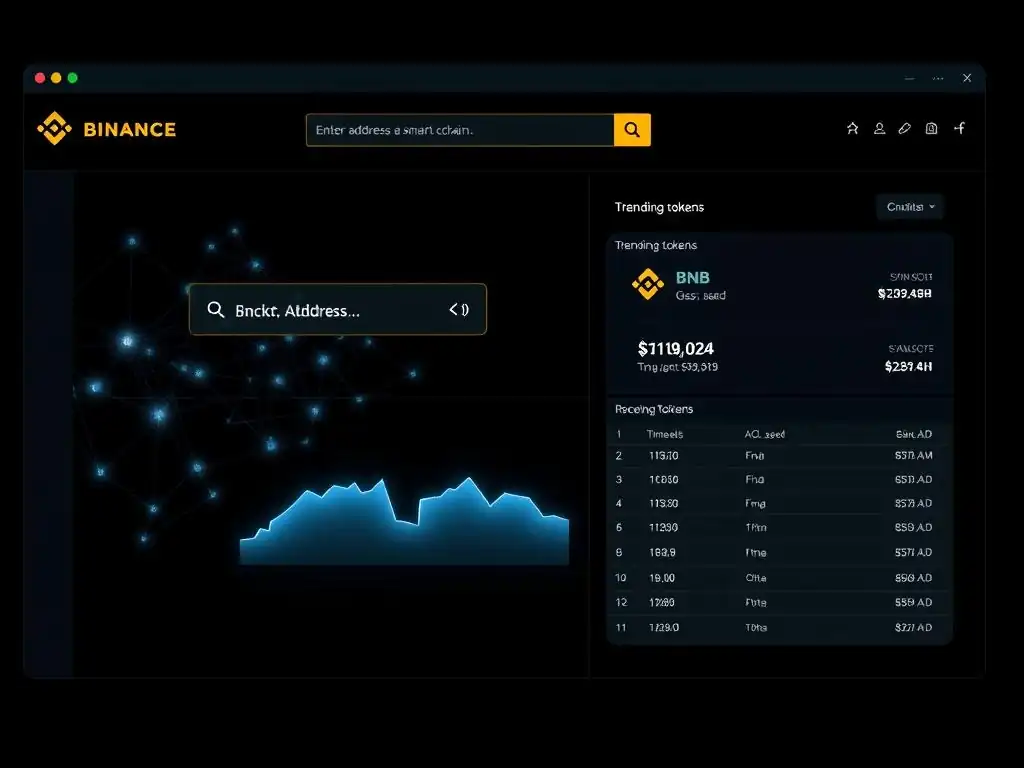
BscScan is the premier blockchain explorer specifically designed for the BNB Chain (formerly Binance Smart Chain) ecosystem. Similar to Etherscan's role for Ethereum, BscScan provides comprehensive and detailed insights into all aspects of the BNB Chain. It offers a highly detailed view of transactions, blocks, validators, smart contracts, and BEP-20 tokens on the BNB Chain. Users can easily track transaction statuses, analyze gas usage, and explore the activity of decentralized applications (dApps) built on the BNB Chain. BscScan's interface is closely modeled after Etherscan, providing a familiar and intuitive experience for users already accustomed to Ethereum explorers.
BscScan stands out for its advanced search options tailored for developers and technical users working within the BNB Chain ecosystem. It includes features like contract verification, allowing users to verify the source code of smart contracts deployed on the BNB Chain, and tools for interacting with smart contracts directly through the explorer. For developers, BscScan offers detailed API documentation and access to a wealth of on-chain data, facilitating the development and debugging of BNB Chain-based applications. Its specialization in BNB Chain makes it an indispensable resource for anyone actively involved in this specific blockchain ecosystem.
5. Ethplorer
Features and Benefits
- Focus on Token Tracking
- Tools for Developers and Investors
Ethplorer distinguishes itself with a strong focus on token tracking within the Ethereum ecosystem. While it provides standard explorer functionalities like transaction and address viewing, Ethplorer excels in its detailed token information and analytics. It offers comprehensive data on ERC-20, ERC-721, and other Ethereum-based tokens, including token balances, transfer histories, and market capitalization data. Users can easily search for tokens by name, symbol, or contract address and access detailed token profiles with relevant information. This token-centric approach makes Ethplorer particularly valuable for investors and traders focused on Ethereum-based tokens.
Ethplorer provides a range of tools specifically designed for developers and investors interested in token analysis. For developers, it offers API access to token data, enabling integration into portfolio tracking applications, trading bots, and other crypto tools. For investors, Ethplorer provides insights into token distribution, holder analytics, and transaction patterns, aiding in informed investment decisions.
Features like watchlist functionality for tokens and alerts for significant token movements further enhance its utility for token-focused users. While it may not offer the breadth of network-level analytics found in Etherscan, Ethplorer's specialization in token tracking makes it a powerful tool for navigating the vast landscape of Ethereum-based tokens.
Pros and Cons of Popular Blockchain Explorer Tools
Etherscan: The Industry Standard
Pros
- Comprehensive Data Access
- Strong Community Support
Cons
- Limited to Ethereum Network
Pros: Etherscan's primary strength lies in its comprehensive data access. It provides unparalleled depth and breadth of information on the Ethereum blockchain. Users gain access to detailed transaction data, block information, smart contract code, token details, gas price history, and network statistics, all presented in a clear and organized manner. This wealth of data makes Etherscan an indispensable tool for developers, analysts, and anyone needing in-depth Ethereum insights.
Furthermore, Etherscan benefits from strong community support. Being the industry standard for Ethereum exploration, it boasts a large and active user base. This active community contributes to its continuous improvement, provides feedback, and shares knowledge, making it a robust and reliable resource. The extensive documentation and readily available community support further enhance its usability.
Cons: Despite its strengths, Etherscan's primary limitation is that it is limited to the Ethereum network. While Ethereum is a significant blockchain, the crypto space is increasingly multi-chain. Users who interact with other blockchains, such as BNB Chain, Bitcoin, or Solana, must rely on separate explorers. This lack of multi-chain support can be inconvenient for users managing assets or activities across different blockchain ecosystems, requiring them to switch between multiple explorer platforms to get a complete picture of their blockchain interactions.
Blockchair: Versatile and Robust
Pros
- Extensive Blockchain Coverage
- Advanced Search Features
Cons
- Can Be Overwhelming for Beginners
Pros: Blockchair's key advantage is its extensive blockchain coverage. Unlike explorers focused on single chains, Blockchair supports a wide range of blockchains, including major networks like Bitcoin, Ethereum, Bitcoin Cash, Litecoin, and many others. This broad coverage makes it a versatile tool for users who interact with multiple cryptocurrencies and blockchain platforms. Having a single explorer for various chains simplifies tracking and analysis, streamlining the user experience.
Additionally, Blockchair offers advanced search features. Beyond basic transaction and address searches, Blockchair allows for more sophisticated queries, including full-text search within blockchain data. This advanced search capability enables users to find specific information buried within transactions or blocks, a feature that is particularly useful for forensic analysis or in-depth blockchain research.
Cons: While Blockchair's robust feature set is a strength, it can also be a drawback for new users. Blockchair can be overwhelming for beginners. The sheer volume of data and the advanced search options might be initially daunting for individuals unfamiliar with blockchain explorers. The interface, while functional, is less visually oriented than some other explorers and prioritizes data density over visual simplicity. New users might find the learning curve steeper compared to more streamlined and beginner-friendly explorers.
Recommendations Based on User Needs
For Beginners: Best User-Friendly Explorers
- Suggested Tools: Etherscan, Blockchain.com
For beginners venturing into the world of blockchain exploration, Etherscan and Blockchain.com Explorer stand out as excellent choices due to their user-friendly interfaces and ease of navigation. Etherscan, despite its depth, maintains a clean and intuitive design, making it relatively easy for newcomers to grasp basic transaction and address information on the Ethereum network. Its clear layout and well-organized data presentation prevent information overload, allowing beginners to gradually familiarize themselves with blockchain data.
Blockchain.com Explorer, with its even simpler interface and direct wallet integration (for Blockchain.com wallet users), offers an even gentler introduction to blockchain exploration. Its focus on essential information and streamlined design makes it exceptionally accessible for those new to the concept of blockchain explorers.
- Recommended Explorers: Blockchair, BscScan
Developers requiring advanced tools for chain navigation will find Blockchair and BscScan particularly valuable. Blockchair's advanced search capabilities and comprehensive API access make it a powerful resource for developers needing to extract and analyze blockchain data programmatically. Its ability to perform full-text searches and its support for a wide range of blockchains provide developers with a versatile toolkit for various blockchain-related tasks.
BscScan, specializing in BNB Chain, offers tailored tools for developers building and debugging applications on this specific network. Its contract verification features, developer-focused API, and detailed insights into BNB Chain's ecosystem make it indispensable for developers working within the BNB Chain environment.
For Investors: Best Analytics-Focused Explorers
- Top Choices: Ethplorer, CoinGecko
Investors seeking analytics-focused explorers to inform their crypto investment decisions should consider Ethplorer and CoinGecko. Ethplorer's specialization in token tracking provides investors with detailed insights into Ethereum-based tokens, including token balances, transfer histories, and distribution data. Its token-centric approach and tools for token analysis make it ideal for investors focused on the token market.
CoinGecko, while primarily known as a cryptocurrency data aggregator, also offers blockchain explorer functionality integrated into its platform. CoinGecko's explorer provides transaction and address viewing along with market data and analytics, offering investors a holistic view of crypto assets within a single platform. Its integration of market data with explorer features provides a unique advantage for investors seeking to connect on-chain activity with market performance.
Conclusion: Choosing the Right Blockchain Explorer Comparison Tool
Final Thoughts on Blockchain Explorer Comparison Tools
- Summary of Key Takeaways
- Encouragement to Explore and Choose Based on Individual Needs
Choosing the right blockchain explorer comparison tool ultimately depends on individual needs and priorities. For Ethereum users seeking comprehensive data and a robust community, Etherscan remains the industry standard. Blockchair offers versatility with its multi-chain support and advanced search capabilities, appealing to power users and those prioritizing privacy. Blockchain.com Explorer provides user-friendliness and wallet integration, suitable for beginners and Blockchain.com wallet users. BscScan excels for those focused on the BNB Chain ecosystem, offering specialized tools and detailed insights. Ethplorer stands out for its token-centric approach, catering to investors and traders focused on Ethereum-based tokens.
The landscape of blockchain explorer comparison tools is diverse, and the "best" tool is subjective. It is highly encouraged to explore several of these recommended explorers, experiment with their features, and determine which platform best aligns with your specific requirements and technical expertise.
Whether you are a beginner, a developer, or an investor, understanding the strengths and weaknesses of different blockchain explorers will empower you to navigate the blockchain world more effectively and efficiently. By carefully considering your needs and exploring the options available, you can find your perfect chain navigator and unlock the full potential of blockchain data exploration.
Frequently Asked Questions
How can blockchain explorer comparison tools help me?
Blockchain explorer comparison tools allow you to evaluate different explorers and find the one that best fits your needs. They typically compare features, supported blockchains, and user interfaces to help you make an informed decision.
What are some key features to look for in a blockchain explorer?
Important features include transaction history viewing, address balance checks, and the ability to decode smart contract data. Also look for features such as API access and real-time updates.
What are the advantages of using a blockchain explorer comparison tool instead of just trying out different explorers myself?
Comparison tools save you time and effort by providing a structured overview of different explorers. They highlight key differences and allow you to quickly identify the best option for your specific use case.
Beyond cryptocurrencies, how do blockchain explorers assist in understanding DeFi applications?
Blockchain explorers allow you to track transactions and interactions with DeFi smart contracts. This helps in understanding the flow of funds and the state of decentralized applications.
How do blockchain explorer comparison tools address the needs of both beginners and experienced blockchain users?
They often provide user-friendly interfaces for beginners, while also offering advanced features and data analysis tools for experienced users and developers. This caters to a wide range of technical expertise.
The detailed comparison of blockchain explorers presented here underscores a crucial truth: access to transparent and verifiable information is paramount in the decentralized world. The ability to effectively navigate and interpret blockchain data is no longer a niche skill, but a fundamental requirement for anyone engaging with cryptocurrencies, DeFi, or NFTs. Without the right tools, the promise of blockchain's transparency remains largely unrealized.
This exploration of blockchain explorers reveals how deeply these tools have shaped, and continue to shape, our understanding of the digital landscape. The ease with which we can now trace transactions, verify smart contracts, and analyze network activity is a testament to their power and importance. Data is the new oil, and blockchain explorers are the refineries that allow us to extract its value.
This quote encapsulates the transformative potential of these tools, empowering individuals and institutions alike to make informed decisions and participate more confidently in the blockchain revolution.
Now, consider how you can leverage this knowledge. Which explorer best suits your needs? How can you use the insights gained to better understand the projects you support, the transactions you make, and the future of decentralized technology? Embrace the power of blockchain explorers, and become a more informed and empowered participant in the evolving digital world.
Uncover Your Blockchain Advantage!
Thanks for exploring the world of blockchain explorers with us! We hope this comparison helped you find the ideal tool to navigate the decentralized web with confidence and ease. Now, it's time to put that knowledge into action!
Here are a few steps you can take right now:
- Start by exploring a blockchain that interests you. Investigate transactions, blocks, and addresses to get a better understanding of how it all works.
- Share this guide with a friend or colleague who's also interested in blockchain technology — let's expand the community!
- Look into the API documentation for your preferred explorer. You might find ways to automate data analysis and streamline your research.
Which blockchain will you explore first, and what do you hope to learn? Share your plans in the comments below!
Leave a Reply