
Blockchain and the Future of Public Records: Immutable and Accessible?

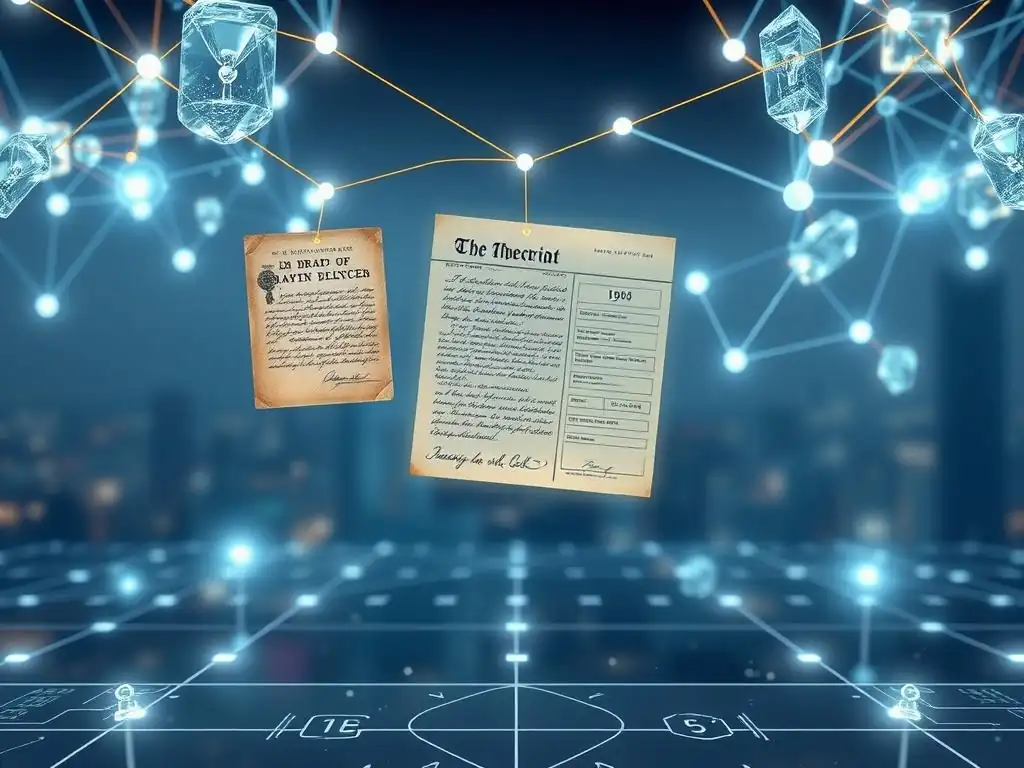
Welcome to Blockchain Trends, your guide to understanding the real-world impact of blockchain technology. Beyond the hype, blockchain is revolutionizing industries in profound ways. This week, we delve into a fascinating case study exploring the potential of blockchain public records immutability. Imagine a world where public records are unalterable and universally accessible. Intrigued? Read on to discover how blockchain is poised to reshape transparency and trust in government and beyond...
- Introduction to Blockchain Public Records Immutability and Accessibility
- The Concept of Immutability in Blockchain and Its Impact on Public Records
- Case Studies Demonstrating Blockchain’s Role in Public Records Management
- Enhancing Accessibility of Public Records through Blockchain Technology
- Challenges and Limitations of Blockchain in Public Records Immutability
- The Future of Public Records: Blockchain’s Transformative Potential
- Conclusion: Blockchain Public Records Immutability as a Foundation for Transparent and Trustworthy Governance.
-
Frequently Asked Questions
- How does blockchain technology enhance the immutability of public records?
- What are the key benefits of using blockchain for public records management?
- How can blockchain improve the accessibility of public records for citizens?
- What role does regulation play in the adoption of blockchain for public records?
- Beyond immutability, what other future trends are likely to shape the use of blockchain in public records?
- Final Reflection: Embracing Immutable Truth
- Embrace Transparency: Shape the Future of Public Records!
Introduction to Blockchain Public Records Immutability and Accessibility
Understanding Blockchain Technology Beyond Cryptocurrencies
Blockchain technology is often primarily associated with cryptocurrencies like Bitcoin and Ethereum, serving as the underlying infrastructure for decentralized digital currencies. However, its true potential extends far beyond finance. At its core, a blockchain is a distributed, immutable ledger that records transactions across many computers.
This decentralized nature means there is no single point of failure, making the data highly resilient and resistant to tampering. While crypto utilizes this ledger for financial transactions, other applications leverage the same principles – transparency, security, and immutability – for managing data in various sectors, including supply chains, healthcare, voting systems, and significantly, public records.
Moving beyond the realm of volatile digital assets, the core innovation of blockchain lies in its ability to create a trustworthy and verifiable history of data exchanges or entries. Each 'block' in the chain contains a batch of transactions, a timestamp, and a cryptographic hash of the previous block, linking them together.
Any attempt to alter data in a past block would change its hash, breaking the chain and making the tampering immediately obvious to the network. This fundamental design makes blockchain a powerful tool for establishing trust and transparency in systems where data integrity is paramount, paving the way for its application in areas traditionally reliant on centralized databases and paper records.
The Importance of Immutable Public Records in Modern Governance
Immutable public records are foundational to effective and trustworthy governance. Records such as land titles, birth certificates, court documents, business registrations, and legislative histories form the backbone of civil society, legal systems, and economic activity. The integrity of these records is critical; any doubt about their authenticity or accuracy can lead to disputes, fraud, corruption, and a breakdown in public trust. Traditional paper-based or centralized digital systems for managing these records often face challenges related to security, vulnerability to alteration or loss, inefficiency in access, and susceptibility to human error or malicious intent.
Ensuring that public records remain unchanged and verifiable over time is not merely a technical requirement but a civic necessity. For instance, property ownership records must be unimpeachable to facilitate real estate transactions and secure loans. Similarly, accurate and immutable voting records are essential for democratic processes.
The lack of true immutability in conventional systems presents risks, from forged documents to administrative errors that are difficult to correct. This highlights the urgent need for more robust, secure, and tamper-proof methods for maintaining critical public data, a need that the properties of blockchain public records immutability are uniquely positioned to address.
The Concept of Immutability in Blockchain and Its Impact on Public Records
Defining Blockchain Public Records Immutability
Blockchain public records immutability refers to the property that once data is recorded on a blockchain, it cannot be altered or deleted. This characteristic stems from the cryptographic linking of blocks and the distributed nature of the ledger. Each new block added to the chain contains a unique digital fingerprint (hash) of the previous block.
If someone were to tamper with the data in an older block, the hash of that block would change. This would cause a mismatch with the hash stored in the subsequent block, breaking the chain and immediately alerting the network that the data has been compromised.
This inherent resistance to change is a paradigm shift for managing public records. In traditional systems, updates or corrections can sometimes obscure the history of changes, or worse, malicious alterations can occur undetected. With blockchain public records immutability, every version or change is recorded as a new transaction, linked to the previous state. The entire history of the record becomes transparent and verifiable by anyone on the network. This provides an unprecedented level of trust and auditability, ensuring that critical public information remains accurate and free from unauthorized modification over its entire lifecycle.
How Distributed Ledger Technology Ensures Data Integrity
Distributed Ledger Technology (DLT), of which blockchain is a type, ensures data integrity through several key mechanisms working in concert. Firstly, the ledger is not stored in one central location but is replicated and synchronized across multiple nodes (computers) in a network. This distribution means that even if one node is compromised, the vast majority of others hold the correct version of the ledger, making it virtually impossible for a single entity to unilaterally alter data.
Secondly, cryptographic hashing ensures that each block's content is uniquely identified and linked to the next. This creates a tamper-evident chain; changing even a single character in a record within a block invalidates that block's hash and, consequently, invalidates every subsequent block's link. Thirdly, consensus mechanisms (like Proof-of-Work or Proof-of-Stake) require multiple participants in the network to agree on the validity of new transactions before they are added to a block and appended to the chain.
This collective validation process makes it computationally or economically infeasible for a malicious actor to gain enough control to falsify data and have it accepted by the network. These combined features guarantee a high degree of data integrity, making DLT ideal for maintaining blockchain public records immutability.
Comparing Traditional Public Records Systems with Blockchain-Based Solutions
Traditional public records systems, whether physical or digital, face significant challenges that blockchain can address. Paper records are susceptible to damage, loss, and forgery. Centralized digital databases, while offering easier access, are vulnerable to cyberattacks, data breaches, single points of failure, and potential manipulation by administrators. Updating records can be complex, and maintaining a clear, auditable history of changes is often difficult. For example, land registries in many countries still rely on paper deeds or outdated digital systems, leading to property disputes and fraud, estimated to cost billions globally each year.
In contrast, blockchain-based solutions offer enhanced security, transparency, and resilience. By distributing the ledger, they eliminate the single point of failure inherent in centralized systems. The immutability ensures that once a record is added (e.g., a property transfer), it cannot be retrospectively altered, providing a definitive and verifiable history.
Transparency means authorized parties can view the history of a record, increasing public trust. While implementing blockchain requires significant initial investment and technical expertise, the long-term benefits in terms of reduced fraud, increased efficiency, and enhanced public trust in blockchain public records immutability are substantial compared to the limitations of legacy systems.
Case Studies Demonstrating Blockchain’s Role in Public Records Management
Successful Implementations of Blockchain for Immutable Public Records
Several jurisdictions and organizations have begun exploring or implementing blockchain technology for managing public records, demonstrating its potential for blockchain public records immutability. The Republic of Georgia, in partnership with Bitfury, piloted a project in 2016 to register land titles on the Bitcoin blockchain. This initiative aimed to combat corruption and bureaucratic inefficiencies in property registration.
By recording property deeds on an immutable ledger, the project sought to provide citizens with a secure, verifiable record of ownership that was resistant to tampering, significantly improving the integrity of land records. While initially a pilot, it showcased the feasibility of using a public blockchain for this purpose.
Another notable example is the state of Delaware in the United States, which launched the Delaware Blockchain Initiative in 2016. This initiative explored using blockchain for corporate records, specifically for registering and tracking shares of privately held companies. The goal was to streamline the issuance, transfer, and management of stock, making the process more efficient and secure.
By leveraging the immutability of the blockchain, the state aimed to create a definitive and verifiable record of corporate ownership, reducing the potential for fraud and simplifying audits. Though full-scale adoption is ongoing, these early examples highlight the practical application of blockchain public records immutability in enhancing the trustworthiness of critical governmental data.
Government and Enterprise Applications Enhancing Transparency and Security
Beyond land registries and corporate records, governments and enterprises are exploring blockchain for a variety of public data management tasks, leveraging its inherent security and transparency. Estonia, a pioneer in digital governance, has been integrating blockchain (specifically its KSI blockchain technology) into its e-government infrastructure for years. This technology is used to secure various digital services, including health records, legal documents, and national identity cards.
The primary goal is to ensure the integrity and immutability of these sensitive records, providing citizens with confidence that their data has not been tampered with. Estonia's approach demonstrates how blockchain can act as a foundational layer of trust for a wide range of public services, reinforcing the concept of blockchain public records immutability across a national digital ecosystem.
In the enterprise space, consortia are forming to apply blockchain to complex, multi-party record-keeping challenges. For example, supply chain consortiums use blockchain to create an immutable history of goods as they move from origin to destination. While not strictly 'public records' in the governmental sense, these ledgers share characteristics with public records in that they require trust, transparency, and immutability among participants. By providing a shared, tamper-proof record of every transaction and transfer, blockchain enhances accountability and reduces fraud, demonstrating principles directly applicable to public sector record-keeping and reinforcing the value proposition of blockchain public records immutability.
Lessons Learned from Early Blockchain Public Records Projects
Early blockchain public records projects, while promising, have also provided valuable lessons regarding implementation challenges and necessary considerations. The Georgia land registry pilot, for instance, highlighted the complexities of integrating new technology with existing legal frameworks and bureaucratic processes. It also raised questions about the scalability and cost-effectiveness of using public blockchains for high-volume transactions. Transitioning from a pilot to a nationwide system requires significant investment in infrastructure, training, and legal reform.
Another key lesson is the importance of user adoption and interoperability. Even with an immutable ledger, the system is only effective if citizens and relevant agencies can easily access and use it. Projects have underscored the need for user-friendly interfaces and standards for data exchange between blockchain systems and legacy databases. Furthermore, defining what data goes onto the immutable ledger versus what stays off (perhaps linked via a hash) is crucial for privacy and efficiency. These early initiatives, despite facing hurdles, have been instrumental in refining the approach to leveraging blockchain public records immutability for real-world governance applications.
Enhancing Accessibility of Public Records through Blockchain Technology

Decentralized Access and Its Benefits for Citizens and Institutions
One of the significant advantages of blockchain technology for public records is its potential to enhance accessibility through decentralization. Unlike traditional systems where records are often stored in a single government database, a blockchain can distribute copies of the ledger across multiple nodes. This means that authorized users, whether citizens, businesses, or government agencies, can potentially access public records from various points in the network, rather than relying on a single, potentially overloaded or inaccessible server. This decentralized access can significantly reduce bottlenecks and increase the availability of information.
For citizens, this could mean faster, easier, and more reliable access to documents like birth certificates, property records, or tax filings, potentially accessible through secure online portals or applications. For institutions, including other government departments, researchers, or businesses requiring access to public data (with appropriate permissions), decentralized access facilitates smoother data sharing and verification processes. This improved accessibility, combined with the inherent blockchain public records immutability, builds greater trust in the information being accessed and the system providing it.
Overcoming Barriers in Current Public Records Systems with Blockchain
Current public records systems often suffer from barriers that hinder efficient access. These include cumbersome bureaucratic procedures, physical location limitations, slow processing times, and siloed databases that make it difficult to share information between different government departments. For example, obtaining a copy of a deed might involve visiting a specific government office, submitting paper forms, and waiting days or weeks for processing. Digital systems can still be fragmented, requiring separate logins and procedures for different types of records.
Blockchain technology offers solutions to these barriers. By creating a single, distributed source of truth, it can streamline access and reduce the need for intermediaries. Smart contracts can automate the process of verifying identity and granting access to specific records based on predefined rules, speeding up requests.
The transparent nature of the ledger (while respecting privacy) means that the status of a request or the history of a record can be easily tracked. This move towards a more integrated and accessible system leverages the efficiency inherent in blockchain to overcome the limitations of existing public records infrastructure, complementing the benefits of blockchain public records immutability with enhanced usability.
The Role of Smart Contracts in Automating Public Records Access and Updates
Smart contracts, self-executing contracts with the terms of the agreement directly written into code, play a crucial role in enhancing public records systems on the blockchain. They can automate many of the processes currently handled manually, from verifying identities before granting access to triggering updates based on specific conditions. For instance, a smart contract could be programmed to automatically update a property deed record on the blockchain once a sale is legally finalized and verified by authorized parties, ensuring the change is recorded instantly and immutably.
Furthermore, smart contracts can manage complex permissions and access controls. Different levels of access can be defined – for example, a citizen might only be able to view their own records, while a government official might have broader access for administrative purposes. The logic for these permissions is embedded in the code, ensuring consistent and secure enforcement. This automation not only increases efficiency but also reduces the potential for human error or bias in managing access to sensitive public information. By automating processes on an immutable ledger, smart contracts amplify the benefits of blockchain public records immutability and accessibility.
Challenges and Limitations of Blockchain in Public Records Immutability
Technical and Regulatory Obstacles to Blockchain Adoption in Governance
Despite its promise, the adoption of blockchain for public records faces significant technical and regulatory hurdles. Technically, existing blockchain platforms may struggle with the sheer volume of data involved in national or even regional public records systems. Storing petabytes of data immutably on a distributed ledger can be computationally intensive and require substantial storage capacity across numerous nodes.
While scalability solutions like sharding or layer-2 protocols are being developed, they are still maturing. Furthermore, integrating complex legacy IT systems with blockchain infrastructure is a major undertaking, requiring significant technical expertise and investment, estimated to cost millions for large-scale governmental deployments.
From a regulatory perspective, the legal frameworks governing public records were designed for traditional systems. Adapting laws to accommodate a decentralized, immutable ledger is complex. Questions arise regarding data ownership, jurisdiction over distributed data, and the legal status of records stored on a blockchain. For example, how are errors corrected on an immutable ledger? Legal definitions often require the ability to amend or expunge records under certain circumstances, which directly conflicts with the concept of blockchain public records immutability. Crafting regulations that balance the benefits of blockchain with existing legal requirements is a slow and challenging process.
Privacy Concerns and Balancing Transparency with Data Protection
While blockchain offers transparency, applying it to public records raises significant privacy concerns. Public records often contain sensitive personal information, such as addresses, dates of birth, financial details, or health information. Putting this data directly onto a transparent, immutable ledger accessible to many nodes poses a serious privacy risk, potentially violating data protection laws like GDPR. The principle of blockchain public records immutability means that once sensitive data is recorded, it cannot be easily removed, even if requested by the data subject.
Balancing the need for transparency and verifiability with the right to privacy and data protection is critical. Solutions are being explored, such as storing only hashes or encrypted versions of sensitive data on the blockchain, with the actual data stored off-chain in secure, permissioned databases. Access to the off-chain data would be controlled via smart contracts and cryptographic keys recorded on the blockchain.
This approach leverages the immutability of the blockchain to verify the integrity of the link to the off-chain data, without exposing the sensitive information itself. Implementing such privacy-preserving architectures is essential for the successful and ethical deployment of blockchain public records immutability in governance.
Scalability Issues and Solutions for Large-Scale Public Records Systems
Scalability remains a major challenge for implementing blockchain on a national or even municipal scale for public records. Public record systems handle millions, sometimes billions, of transactions (e.g., property transfers, civil registrations, court filings) over time. Current public blockchains like Bitcoin or Ethereum process a limited number of transactions per second (around 7-30), which is insufficient for high-throughput government applications. Even private or permissioned blockchains, while faster, can face performance bottlenecks as the network and data volume grow.
Addressing scalability requires implementing various technical solutions. These include:
- Layer-2 Scaling: Technologies built on top of the main blockchain (e.g., Lightning Network, optimistic rollups) that handle transactions off-chain and only record the final state on the main chain.
- Sharding: Dividing the blockchain into smaller, more manageable segments (shards) that can process transactions in parallel.
- Permissioned Ledgers: Using DLTs designed for enterprise use cases, which can offer higher transaction speeds and controlled participation, potentially processing thousands of transactions per second in controlled environments.
Implementing these solutions while maintaining security, decentralization (where required), and blockchain public records immutability is an ongoing area of research and development. The success of blockchain in large-scale public records management hinges on overcoming these performance limitations.
The Future of Public Records: Blockchain’s Transformative Potential
Emerging Trends in Blockchain-Powered Public Records Management
The future of public records management is increasingly being shaped by the transformative potential of blockchain technology. One emerging trend is the development of specialized government or consortium blockchains designed specifically for public sector use cases. These permissioned ledgers can offer higher transaction speeds and tailored features while still providing the core benefits of immutability and transparency to authorized participants. We are also seeing increased focus on interoperability standards, allowing different government agencies or even different jurisdictions to share verified data securely across disparate blockchain networks.
Another significant trend is the integration of Self-Sovereign Identity (SSI) solutions with blockchain public records. SSI allows individuals to control their digital identities and share verified credentials (like birth certificates or educational degrees recorded on a blockchain) selectively and securely. This empowers citizens while ensuring the authenticity of the underlying records, leveraging blockchain public records immutability to underpin verifiable credentials. Furthermore, research continues into more efficient consensus mechanisms and data storage solutions that can handle the vast scale of public records without compromising performance or decentralization principles.
Integrating Blockchain with Other Technologies for Enhanced Governance
Blockchain's full potential in public records management is realized when integrated with other cutting-edge technologies. The combination of blockchain and Artificial Intelligence (AI), for example, could enable sophisticated analysis of immutable public datasets for policy-making or fraud detection, while the blockchain ensures the integrity of the data being analyzed. Internet of Things (IoT) devices could record data directly onto a blockchain, creating immutable logs for things like environmental monitoring or infrastructure maintenance records, providing verifiable data for public oversight.
Furthermore, integrating blockchain with secure digital identity systems (beyond SSI) is crucial for controlling access to public records and ensuring that only authorized individuals or entities can interact with sensitive data. Cloud computing infrastructure provides the necessary computational power and storage to support large-scale blockchain deployments for public records. This synergistic approach, where blockchain acts as a trust layer ensuring blockchain public records immutability, while other technologies handle data collection, analysis, and presentation, promises a future of more efficient, transparent, and trustworthy governance.
Predictions for the Evolution of Immutable and Accessible Public Records
Looking ahead, it is likely that blockchain technology will gradually become a standard component of public records infrastructure, moving beyond pilot projects to widespread adoption, particularly for critical records requiring high integrity. We can predict that initial adoption will focus on specific areas like land registration, corporate filings, and vital records where the need for immutability and transparency is most acute. As the technology matures and regulatory frameworks adapt, its use will expand to other domains.
Permissioned or hybrid blockchain models are likely to dominate governmental use cases initially, offering a balance between control, performance, and the benefits of a distributed ledger. However, public blockchains may still play a role, perhaps for anchoring hashes of sensitive data or for less sensitive public information.
The evolution will also involve significant investment in digital literacy for citizens and government employees. Ultimately, the goal is a future where public records are not only immutable and secure thanks to blockchain public records immutability but also easily and transparently accessible to those who need them, fostering greater public trust and governmental efficiency.
Conclusion: Blockchain Public Records Immutability as a Foundation for Transparent and Trustworthy Governance.
Frequently Asked Questions
How does blockchain technology enhance the immutability of public records?
Blockchain ensures immutability by creating a distributed ledger where each record is linked to the previous one via a cryptographic hash. This makes it incredibly difficult, if not impossible, to alter or tamper with recorded information.
What are the key benefits of using blockchain for public records management?
Using blockchain for public records offers increased transparency, enhanced security, and improved accessibility. This leads to greater trust and efficiency in government processes.
How can blockchain improve the accessibility of public records for citizens?
Blockchain allows for decentralized access to public records, reducing reliance on centralized authorities. This can empower citizens with greater control over their data and facilitate easier verification.
What role does regulation play in the adoption of blockchain for public records?
Clear regulation is crucial for establishing standards and guidelines for blockchain use in government. It provides a legal framework for ensuring data privacy and accountability.
Beyond immutability, what other future trends are likely to shape the use of blockchain in public records?
Expect to see increasing adoption of smart contracts for automated record management, improved data security protocols, and integration with other decentralized technologies to enhance efficiency.
Final Reflection: Embracing Immutable Truth
The exploration of blockchain's potential to revolutionize public records, as detailed in this article, underscores a crucial point: the pursuit of verifiable truth in a digital age is paramount. While challenges remain in fully realizing the promise of blockchain public records immutability, the underlying principle of secure, transparent, and accessible information is more relevant now than ever, as we grapple with misinformation and the erosion of trust in traditional institutions.
The concept of immutable records, secured by blockchain technology, has profoundly influenced my perspective on the future of governance and societal transparency. Witnessing the potential for this technology to empower citizens and hold institutions accountable is truly inspiring. The blockchain is not only a technology but a revolution in trust.
This quote encapsulates the transformative power of blockchain, suggesting that its impact extends far beyond mere technological advancement, fundamentally altering how we perceive and interact with information.
As we conclude this examination of blockchain's role in shaping the future of public records, I invite you to consider the implications of this technology in your own life. How can you advocate for greater transparency and accountability in your community? How can you leverage the power of blockchain to ensure that information is accessible, verifiable, and ultimately, serves the public good? Let us embrace the potential of blockchain to build a more trustworthy and equitable future for all.
Embrace Transparency: Shape the Future of Public Records!
Thank you for exploring the potential of blockchain for public records! You've seen how this technology can enhance accessibility and security. Now, it's time to take action.
You can help create a more transparent and secure future by:
- Starting a conversation with your local government officials about implementing blockchain solutions for managing public records. Your voice can make a real difference.
- Learning more about how blockchain works by exploring open-source projects related to decentralized record-keeping. Gaining this knowledge enables you to advocate effectively for innovative solutions.
- Sharing this article with friends and colleagues to raise awareness about blockchain's role in building a more transparent and accessible society.
Is there a particular public record in your community that could benefit most from blockchain technology? Why do you think so? Share your thoughts in the comments below!
Leave a Reply