
Blockchain for Healthcare in Developing Nations: Case Studies of Scalable Solutions


Welcome to Blockchain Trends, where we delve into the transformative potential of blockchain technology beyond the realm of cryptocurrencies. In our featured article, "Blockchain for Healthcare in Developing Nations: Case Studies of Scalable Solutions," we explore how this groundbreaking technology is revolutionizing healthcare delivery in underserved regions. Are you curious about the innovative solutions that are reshaping healthcare access and efficiency? Join us as we uncover compelling case studies that showcase the impactful role of blockchain in improving lives and healthcare systems. Your journey into the future of decentralized solutions starts here!
- Case Study 1: Estonia - Blockchain for Secure Medical Records
-
Frequently Asked Questions
- How can blockchain technology improve access to healthcare records in developing nations?
- What are some specific examples of blockchain applications being used to address healthcare challenges in developing nations?
- How can blockchain help reduce fraud and corruption in healthcare systems within developing nations?
- What are the main challenges to implementing blockchain-based healthcare solutions in developing nations?
- How can blockchain contribute to empowering patients in developing nations to take control of their health data?
- Final Reflection: Empowering Healthcare Through Decentralization
- Empower Healthcare: Implement Blockchain Solutions Now!
Case Study 1: Estonia - Blockchain for Secure Medical Records
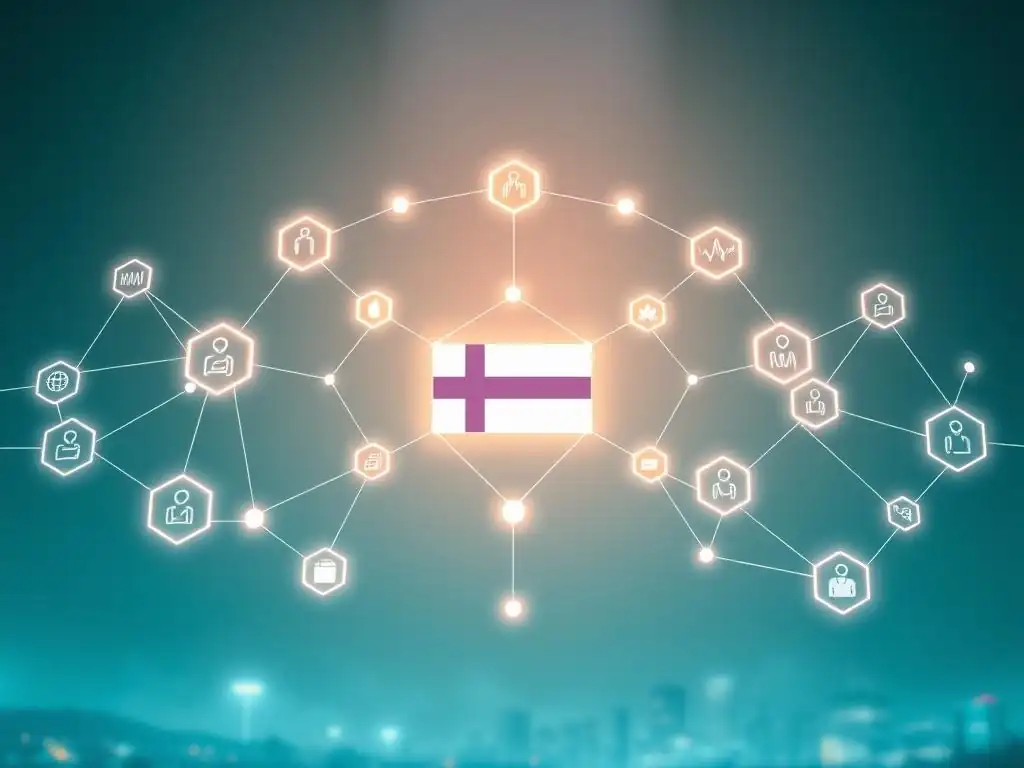
The Problem: Inefficient and Insecure Patient Data Management
Before integrating advanced data integrity solutions, Estonia, despite being a leader in e-governance, faced the inherent challenges of managing vast amounts of sensitive patient data within its established electronic health record (EHR) system. The core issue wasn't a lack of digitization, but rather ensuring the absolute integrity and irrefutability of audit trails for data access. While digital records improved accessibility, concerns lingered regarding potential data tampering by administrators or unauthorized access without a completely transparent and immutable log.
Traditional centralized databases, even with robust security measures, present a single point of failure and can make it difficult to definitively prove whether data has been altered post-entry or whether access logs have been modified. This created a need for an additional layer of security and trust, particularly crucial for healthcare data which is highly sensitive and subject to strict privacy regulations.
The challenge was to build upon an already sophisticated digital health infrastructure to achieve a level of data security and auditability that instilled maximum confidence among patients, healthcare providers, and authorities. Ensuring that every interaction with a patient's health record – every view, every modification – was logged in a way that was impossible to falsify became paramount.
This level of integrity is fundamental for building trust in digital health systems and is a critical requirement for implementing effective blockchain healthcare developing nations solutions where existing infrastructure might be less mature and trust frameworks are still developing. The need for an unimpeachable record of data access and modification was the primary driver for seeking a novel technological solution beyond standard database security protocols.
The Solution: Implementing a Blockchain-Based Electronic Health Record (EHR) System
In response to the need for enhanced data integrity and verifiable audit trails, Estonia integrated blockchain technology into its national e-Health system. The solution leverages Guardtime's Keyless Signature Infrastructure (KSI) blockchain, which is specifically designed for large-scale data integrity verification. Instead of storing the actual patient data on the blockchain – which would be impractical and violate privacy – the system stores cryptographic hashes of the health records and their access logs on the distributed ledger.
This creates a chain of custody and a tamper-evident record without exposing sensitive personal information. Every time a healthcare professional accesses or updates a patient's record, a new hash is generated and linked to the blockchain, effectively 'sealing' the data's state at that moment in time and creating an immutable audit trail of the transaction.
This implementation provides a crucial layer of security by making any unauthorized modification immediately detectable. If even a single bit of data or an entry in an access log is altered, the cryptographic hash will change, breaking the chain on the blockchain and instantly signaling tampering.
The KSI blockchain acts as a notary, providing mathematical proof of when data existed and that it has not been changed since that time. This approach is highly efficient as it doesn't require massive computational power or energy consumption often associated with cryptocurrencies; it focuses purely on data integrity and verification.
By anchoring hashes to a global, public ledger, Estonia created a system where the integrity of health data and audit logs can be verified independently by anyone, without relying solely on the system administrator or a central authority. This model of using blockchain for data integrity and auditability in healthcare is a powerful example of scalable blockchain healthcare solutions.
Results and Scalability Analysis: Impact on Patient Care and Data Security
The integration of blockchain technology into Estonia's e-Health system has significantly enhanced the security and trustworthiness of patient data management. With approximately 99% of physician visits now generating digital records that are secured by the KSI blockchain, the system covers virtually the entire population of 1.3 million people. This provides an unprecedented level of assurance that health records and, critically, the logs of who accessed them, remain unaltered and accurate over time.
The improved auditability means that patients have greater transparency regarding who has viewed their data, and healthcare providers and regulators can rely on the integrity of the historical record for diagnostics, treatment planning, and compliance. This foundation of trust is essential for the effective functioning of a digital healthcare system and demonstrates a successful implementation of blockchain for health data integrity.
From a scalability perspective, the Estonian model using KSI blockchain has proven highly effective. The system is designed to handle a massive volume of data entries and access logs generated by a national healthcare system.
Because the blockchain stores only cryptographic hashes, not the full data, the storage requirements for the ledger itself are minimal compared to the vast amount of health data it secures. The verification process is also computationally light, allowing for rapid checks of data integrity.
This architecture allows the system to scale horizontally as the volume of health data grows or as the population increases, making it a strong reference point for developing scalable blockchain healthcare developing nations solutions. While implementing such a system requires a certain level of existing digital infrastructure, Estonia's experience shows that integrating blockchain for data integrity and auditability is achievable on a national scale and offers significant benefits in security, trust, and efficiency, providing valuable lessons for other countries considering blockchain adoption in healthcare.
Frequently Asked Questions
How can blockchain technology improve access to healthcare records in developing nations?
Blockchain provides a secure and immutable way to store and share patient data. This can overcome challenges related to fragmented or non-existent record-keeping systems, leading to better coordinated care and reduced medical errors.
What are some specific examples of blockchain applications being used to address healthcare challenges in developing nations?
Examples include using blockchain for supply chain management of pharmaceuticals to combat counterfeit drugs, implementing digital identity solutions for patients to ensure accurate identification and access to services, and creating secure payment systems for healthcare providers.
How can blockchain help reduce fraud and corruption in healthcare systems within developing nations?
Blockchain's transparent and auditable nature makes it difficult to tamper with records. This reduces opportunities for fraudulent claims, ghost billing, and other forms of corruption, leading to increased efficiency and resource allocation.
What are the main challenges to implementing blockchain-based healthcare solutions in developing nations?
Key challenges include lack of infrastructure, such as reliable internet access and electricity, limited technical expertise to develop and maintain blockchain systems, and regulatory uncertainties surrounding the use of blockchain technology in healthcare.
How can blockchain contribute to empowering patients in developing nations to take control of their health data?
Blockchain enables patients to have ownership and control over their medical records. They can grant permission to healthcare providers to access their data, ensuring data privacy and promoting patient-centered care through data sovereignty.
Final Reflection: Empowering Healthcare Through Decentralization
The case studies presented throughout this article underscore the profound potential of blockchain technology to revolutionize healthcare in developing nations. The promise of secure, transparent, and accessible medical records, coupled with streamlined supply chains and reduced fraud, is no longer a theoretical concept but a tangible reality. These scalable solutions, though still in their nascent stages, offer a beacon of hope for communities grappling with systemic challenges in healthcare delivery.
The impact of blockchain on healthcare extends far beyond mere technological advancement; it represents a fundamental shift in power dynamics, empowering patients and fostering trust within fragmented systems. Witnessing the ingenuity and resilience of these initiatives firsthand has reinforced my belief in the transformative power of technology when applied with empathy and a deep understanding of local contexts. The best way to predict the future is to create it.
- Peter Drucker. This quote resonates deeply as we consider the proactive role blockchain developers and healthcare professionals are taking in shaping a more equitable and efficient healthcare landscape.
Now, as you reflect on the potential of blockchain healthcare solutions in developing nations, consider how you can contribute to this vital movement. Whether through supporting research, advocating for policy changes, or simply spreading awareness, your actions can help bridge the gap between technological innovation and tangible improvements in the lives of those who need it most. Let us embrace the opportunity to build a future where healthcare is truly accessible to all, regardless of their geographical location or socioeconomic status.
Empower Healthcare: Implement Blockchain Solutions Now!
Thank you for exploring how blockchain is transforming healthcare in developing nations. We hope you've gained valuable insights into the potential for scalable solutions. Now, it's time to take action and contribute to this transformative movement.
Here's how you can make a difference:
- Identify a specific healthcare challenge in a developing country and research how blockchain could help address it. This is the first step toward creating meaningful impact.
- Share your findings: Discuss the use of blockchain in healthcare with colleagues, healthcare professionals, and community leaders to inspire collaborative and innovative solutions.
- Think outside the box: Seek funding opportunities for blockchain healthcare projects and consider supporting or launching a pilot initiative in your community.
What innovative blockchain solutions can you envision to improve healthcare access in your area? Share your ideas and let's work together to build a better future!
Leave a Reply