
Blockchain Solutions for Healthcare Data Breaches: Case Study Preventative Measures


Welcome to Blockchain Trends, your guide to understanding the revolutionary impact of blockchain technology. Are you concerned about the rising tide of healthcare blockchain data breaches? Discover how innovative blockchain solutions are being implemented to safeguard sensitive medical information. Read on to explore our in-depth case study and learn about preventative measures that are shaping the future of secure healthcare data management.
Blockchain Solutions for Healthcare Data Breaches: Case Study Preventative Measures
- Introduction: The Growing Threat of Data Breaches in Healthcare
- Blockchain Technology: A Potential Solution for Healthcare Data Security
-
Case Study: Implementing Blockchain for Healthcare Data Security - Guardtime and Estonia’s e-Health System
- Background: Estonia’s National Digital Health System and its Security Challenges
- Problem Statement: Risks of Centralized Data Breaches and Unauthorized Access
- Proposed Solution: Blockchain-Based Data Integrity and Audit Trails with Guardtime’s KSI Blockchain
- Implementation Details: Permissioned Blockchain Leveraging Keyless Signature Infrastructure (KSI)
- Key Features of the Blockchain Solution: Secure Patient Identity Management, Immutable Audit Logs, Real-Time Data Integrity Verification
- Preventative Measures Enabled by Blockchain in Healthcare
-
Results and Impact of Blockchain Implementation
- Reduction in Data Breach Incidents: Estonia Reports No Major Health Data Breaches Post-Implementation
- Improved Data Security and Compliance with GDPR and National Regulations
- Increased Trust and Transparency with Patients through Real-Time Auditability
- Cost Savings Associated with Reduced Breach Remediation and Regulatory Fines
- Challenges and Considerations for Healthcare Blockchain Adoption
- Future Trends and Opportunities for Blockchain in Healthcare Data Security
- Conclusion: Blockchain's Role in Securing Healthcare Data
-
Frequently Asked Questions
- What are the main benefits of using blockchain in healthcare?
- How can blockchain help prevent data breaches in healthcare?
- Are there any real-world implementations of blockchain in healthcare?
- What regulatory challenges does blockchain face in the healthcare sector?
- How does the future look for blockchain technology in healthcare?
- Final Reflection: Securing the Future of Healthcare Data
- Safeguard Healthcare Data: Take Action Now!
Introduction: The Growing Threat of Data Breaches in Healthcare
The Vulnerability of Healthcare Data: A Prime Target for Cyberattacks
Healthcare organizations hold vast amounts of sensitive patient information, including medical histories, personal identification details, and financial data. This makes them exceptionally attractive targets for cybercriminals seeking valuable data for identity theft, fraud, or sale on the dark web. The sheer volume and sensitive nature of this data mean that successful attacks can have devastating consequences for both patients and institutions. In recent years, the frequency and sophistication of attacks, such as ransomware and phishing schemes, targeting the healthcare sector have surged dramatically, far outpacing many other industries.
Reports consistently highlight the healthcare sector as one of the most breached industries globally. For instance, a 2023 report indicated that healthcare experienced the highest number of data breaches among all sectors for the 13th consecutive year. This persistent vulnerability underscores the critical need for robust security measures to combat healthcare blockchain data breaches and protect patient privacy. The interconnectedness of modern healthcare systems, while beneficial for care coordination, also expands the attack surface, creating more entry points for malicious actors.
Understanding the Costs of Healthcare Data Breaches: Financial and Reputational Impact
The financial repercussions of a healthcare data breach are substantial and multifaceted. Costs include expenses related to detection and escalation, notification of affected individuals, post-breach response (such as credit monitoring services), regulatory fines, legal fees, and the significant loss of business due to damaged reputation. According to industry reports, the average cost of a healthcare data breach reached an estimated $10.93 million in 2023, marking the highest average cost across all industries for the 13th year in a row. This figure is more than double the average cost of a breach in other sectors.
Beyond the direct financial costs, healthcare blockchain data breaches inflict severe damage on an organization's reputation and erode patient trust. Patients entrust healthcare providers with their most sensitive personal information, and a breach signifies a failure in safeguarding that trust. Recovering from reputational damage can take years, leading to decreased patient enrollment, difficulty attracting and retaining staff, and increased scrutiny from regulators and the public. The long-term impact on an organization's viability can be more detrimental than the immediate financial penalties.
The Need for Enhanced Security Measures in Healthcare Data Management
The traditional, often centralized, data management systems used in healthcare were not designed to withstand the sophisticated cyber threats prevalent today. While perimeter defenses and encryption are essential, they are often insufficient on their own. The increasing volume of data, coupled with the need for data sharing among providers, researchers, and payers, necessitates a fundamentally more secure and resilient approach to data management. Existing systems often lack the inherent immutability and transparent audit trails required to detect tampering quickly and definitively.
The escalating threat of healthcare blockchain data breaches demands innovation in security infrastructure. Current systems often present single points of failure, making them susceptible to large-scale compromises. There is a clear and urgent need for technologies that can provide enhanced data integrity, ensure data authenticity, and create tamper-proof records of all data access and modification activities. This is where technologies like blockchain are being explored as potential solutions to bolster the security posture of healthcare data systems.
Blockchain Technology: A Potential Solution for Healthcare Data Security
How Blockchain Works: Immutability, Transparency, and Security
At its core, blockchain is a decentralized, distributed ledger technology that records transactions across many computers. Each transaction is grouped into a block, and these blocks are linked together cryptographically in chronological order, forming a chain. Once a block is added to the chain, it is extremely difficult, if not impossible, to alter or delete the data within it without invalidating subsequent blocks and requiring the consensus of the network participants. This inherent immutability is a key feature that makes blockchain attractive for securing sensitive data.
The distributed nature of the ledger means that there is no single point of failure that a cyberattack can target to compromise the entire dataset. Furthermore, the ledger is transparent (though data within can be encrypted), allowing authorized participants to view the history of transactions. The combination of cryptographic hashing, distributed consensus mechanisms, and the chaining of blocks provides a robust security framework that is significantly more resilient to tampering and unauthorized modification than traditional centralized databases, offering a new layer of defense against healthcare blockchain data breaches.
Key Blockchain Features Relevant to Healthcare Data Protection: Distributed Ledger, Cryptographic Hashing, Smart Contracts
Several specific features of blockchain technology are particularly relevant to enhancing healthcare data security. The distributed ledger ensures that copies of the data are stored across multiple nodes in the network, making it highly resistant to single-point attacks aimed at data destruction or alteration. Cryptographic hashing is used to create a unique digital fingerprint for each block and link it securely to the previous one. Any attempt to tamper with data in a block would change its hash, immediately alerting the network to the attempted modification.
Smart contracts, self-executing contracts with the terms of the agreement directly written into code, can automate and enforce rules regarding data access and usage. For instance, a smart contract could be programmed to only grant access to a patient's record to a specific doctor under certain conditions, and this access event would be immutably recorded on the ledger. These features collectively provide a powerful toolkit for building secure, transparent, and tamper-evident systems, significantly reducing the risk of healthcare blockchain data breaches by ensuring data integrity and controlling access.
Addressing Data Integrity and Authenticity with Blockchain
One of the most critical aspects of healthcare data security is ensuring the integrity and authenticity of patient records. Tampered data can lead to misdiagnosis, incorrect treatments, and severe harm to patients. Traditional systems can be vulnerable to insider threats or external attacks that modify records undetected. Blockchain's immutable ledger fundamentally addresses this by creating a permanent, verifiable history of every data interaction.
Every update, access request, or modification attempt on a blockchain-based healthcare system can be recorded as a transaction on the ledger. Because these transactions are cryptographically linked and distributed, any unauthorized attempt to alter a record after it has been added to the chain would be immediately evident to the network. This provides an unprecedented level of data integrity and authenticity, making it significantly harder for malicious actors to compromise records without detection and offering a strong preventative measure against healthcare blockchain data breaches.
Case Study: Implementing Blockchain for Healthcare Data Security - Guardtime and Estonia’s e-Health System
Background: Estonia’s National Digital Health System and its Security Challenges
Estonia is renowned for its advanced digital society, including a comprehensive national e-Health system that centralizes patient records and prescriptions. This system aimed to improve efficiency and patient care by making health information readily available to authorized medical professionals across the country. However, centralizing such sensitive data, while offering convenience, inherently created a significant security risk – a single, high-value target for cyberattacks. The potential for a large-scale healthcare blockchain data breaches affecting the entire nation's population was a considerable concern for the Estonian government.
The system relied on traditional database technologies, which, despite standard security measures, were still vulnerable to sophisticated attacks designed to gain unauthorized access or tamper with records. Ensuring the integrity and auditability of patient data on a national scale presented a complex challenge. The government recognized that maintaining public trust in their digital health infrastructure required not just preventing breaches but also ensuring that any potential data tampering would be instantly detectable and verifiable, a capability lacking in their existing architecture.
The primary problem facing Estonia's e-Health system was the inherent risk associated with housing a complete copy of every citizen's health records in centralized databases. While access controls were in place, a successful breach of the central infrastructure could expose millions of sensitive records. Furthermore, demonstrating definitively whether a record had been tampered with, or who had accessed it and when, was challenging with traditional logging systems, which themselves could potentially be compromised.
The threat wasn't limited to external hackers; insider threats posed another significant risk. A privileged user could potentially access or alter records without leaving an undeniable, tamper-proof trace. The Estonian government needed a solution that could provide an unassailable layer of data integrity protection and a transparent, immutable audit trail for every interaction with patient data, effectively mitigating the risk of undetected healthcare blockchain data breaches and unauthorized data manipulation.
Proposed Solution: Blockchain-Based Data Integrity and Audit Trails with Guardtime’s KSI Blockchain
To address these critical security vulnerabilities, Estonia integrated Guardtime's Keyless Signature Infrastructure (KSI) blockchain technology into its e-Health system. The core idea was not to store patient data on the blockchain itself (due to privacy and storage considerations) but to use the blockchain to verify the integrity of the data stored off-chain in the existing databases and create an irrefutable audit trail of all data access and modification events.
Guardtime's KSI blockchain provides a highly scalable data integrity service. It works by hashing data files or database entries and then 'の時間', or cryptographically linking, these hashes into a blockchain structure. This process creates a unique digital 'fingerprint' for the data at a specific point in time. Any subsequent alteration to the data would result in a different hash, which would not match the hash immutably recorded on the KSI blockchain, instantly revealing the tampering attempt. This approach provided a robust mechanism to prevent undetected healthcare blockchain data breaches involving data alteration.
Implementation Details: Permissioned Blockchain Leveraging Keyless Signature Infrastructure (KSI)
The implementation involved integrating Guardtime's KSI technology with the existing e-Health database infrastructure. It utilizes a permissioned blockchain model, meaning that participation in the network (specifically, the ability to add hashes to the chain) is restricted to authorized entities. This is crucial for a national-level critical infrastructure system where strict control over participants is necessary.
The system works by generating a unique hash for each patient's health record or relevant data segment at regular intervals. These hashes are then timestamped and linked together using the KSI blockchain's cryptographic chaining process. This creates a continuous, verifiable chain of custody and integrity for the data. The KSI blockchain is designed for massive scale, capable of processing millions of hashing operations per second, making it suitable for a national healthcare system's volume of data interactions and providing a scalable defense against healthcare blockchain data breaches.
Key Features of the Blockchain Solution: Secure Patient Identity Management, Immutable Audit Logs, Real-Time Data Integrity Verification
The Guardtime KSI implementation provides several key features that significantly enhance the security of Estonia's e-Health system. While not a full identity management system in itself, it can be integrated with existing national digital identity solutions, using the immutable ledger to record and verify access linked to specific digital identities. This creates a secure layer for tracking who accessed what data and when.
The most impactful features are the immutable audit logs and real-time data integrity verification. Every query, access, or modification attempt on the e-Health data triggers a hashing process, and the resulting hash is timestamped and included in the KSI chain. This creates an audit trail that is virtually impossible to alter retroactively without detection.
Furthermore, the system allows for near real-time verification of data integrity; by re-hashing a current record and comparing it to the hash recorded on the KSI chain, it can be instantly determined if the data has been tampered with since it was last '时间d'. This provides a powerful deterrent and detection mechanism against healthcare blockchain data breaches aimed at modifying patient records.
Preventative Measures Enabled by Blockchain in Healthcare
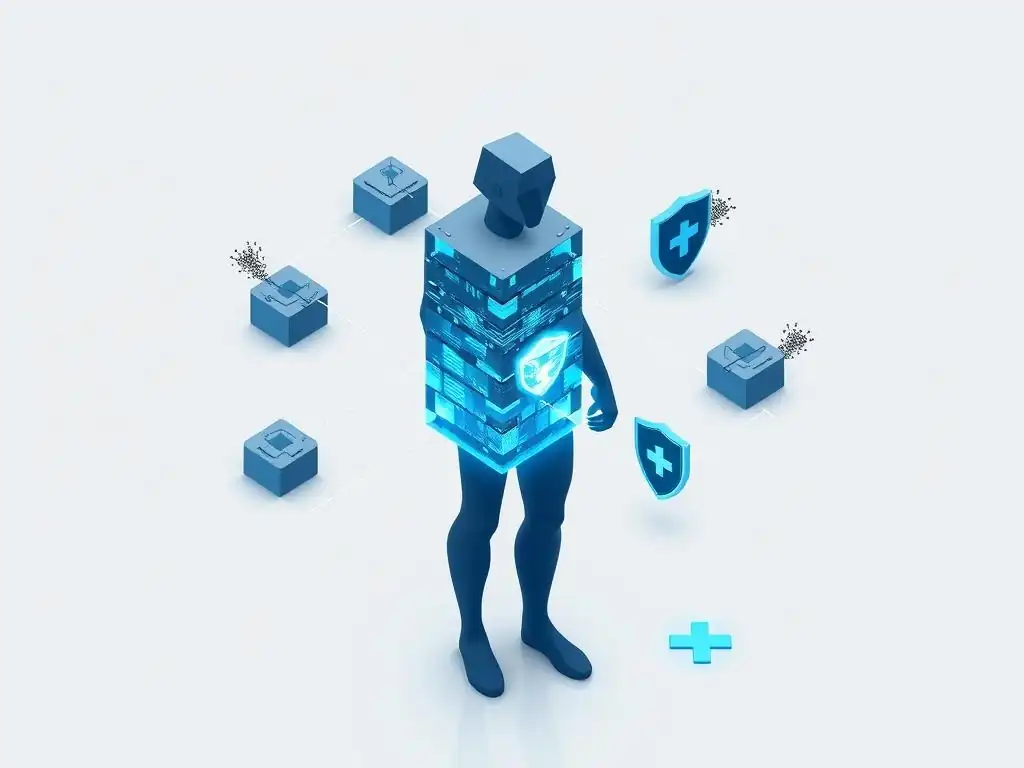
Enhanced Data Encryption and Access Control
While blockchain itself doesn't replace encryption, it significantly enhances the security framework around encrypted data. Blockchain can be used to manage and secure the keys used for encryption and decryption, recording every instance of key usage or access on the immutable ledger. This adds a layer of transparency and auditability to the encryption process.
Furthermore, smart contracts on a blockchain can enforce granular access controls. Instead of relying solely on centralized access lists, rules governing who can access specific types of patient data, under what conditions, and for what duration can be coded into a smart contract. Execution of these rules and the resulting data access are then recorded on the immutable ledger, providing a verifiable history of access events. This makes it much harder for unauthorized parties to gain access, thereby reducing the likelihood of healthcare blockchain data breaches stemming from compromised access credentials.
Secure Patient Identity Management and Verification
Blockchain technology holds significant promise for creating more secure and verifiable patient identity management systems. Traditional systems often rely on centralized databases of identity information, which are vulnerable to breaches and identity theft. Blockchain can facilitate decentralized identity solutions where patients control their own digital identities and decide who can access their verified credentials.
Using blockchain, verifiable credentials related to a patient's identity can be issued and stored securely. Any attempt to use or verify these credentials is recorded on the ledger. This creates a tamper-evident log of identity usage, making it more difficult for fraudulent identities to be used to access sensitive health information. Secure identity verification is a critical first step in preventing healthcare blockchain data breaches by ensuring that only legitimate individuals and authorized healthcare providers can interact with patient data.
Improved Data Integrity and Audit Trails
As demonstrated in the Estonia case study, one of the most immediate and powerful preventative measures blockchain offers is the creation of immutable data integrity checks and audit trails. By hashing data and timestamping these hashes on a distributed ledger, any subsequent alteration to the data can be instantly detected.
This provides an unparalleled level of assurance regarding the trustworthiness of the data. Healthcare providers, patients, and regulators can rely on the blockchain record as an indisputable log of data interactions. This makes it virtually impossible for malicious actors to tamper with records or cover their tracks, acting as a significant deterrent against healthcare blockchain data breaches focused on data modification or deletion. The transparent and verifiable audit trail also simplifies compliance reporting and forensic investigations in the event of a suspected incident.
Streamlined Data Sharing and Interoperability
Securely sharing patient data between different healthcare providers, specialists, and institutions is crucial for effective patient care but is often hindered by security concerns and incompatible systems. Blockchain can facilitate secure, patient-controlled data sharing by providing a decentralized platform where patients grant granular permissions for accessing their health records.
Using blockchain, a patient could authorize a specific doctor to access certain parts of their medical history for a limited time. This authorization is recorded on the immutable ledger. The actual data remains stored securely off-chain, perhaps encrypted, but the blockchain manages the access permissions and records every instance of data access.
This approach enhances security by reducing the need for multiple copies of sensitive data stored in disparate systems and provides a transparent log of all sharing activities, mitigating risks associated with healthcare blockchain data breaches during data exchange. Furthermore, blockchain's potential for standardized transaction recording can improve interoperability challenges.
Results and Impact of Blockchain Implementation
Reduction in Data Breach Incidents: Estonia Reports No Major Health Data Breaches Post-Implementation
A key indicator of the success of Estonia's integration of Guardtime's KSI blockchain is the reported impact on data security incidents. Since implementing the blockchain-based data integrity layer, Estonia has publicly stated that its national e-Health system has not experienced any major healthcare blockchain data breaches related to data tampering or mass unauthorized access that compromised data integrity.
While specific statistics on prevented incidents are difficult to quantify publicly, the absence of widely reported, successful large-scale breaches targeting the integrity of their health records stands in stark contrast to the frequent and costly breaches seen in healthcare systems globally that lack such immutable integrity checks. This outcome strongly suggests that the blockchain layer has acted as a significant deterrent and detection mechanism, protecting the core data from malicious alteration.
Improved Data Security and Compliance with GDPR and National Regulations
The implementation significantly bolstered Estonia's compliance posture, particularly concerning stringent data protection regulations like the European Union's General Data Protection Regulation (GDPR). GDPR mandates data integrity and accountability. The immutable audit trail provided by the KSI blockchain offers verifiable proof of data handling, access, and modification attempts, directly supporting compliance requirements for accountability and security.
The ability to cryptographically prove that data has not been tampered with since its last recorded state provides a level of security assurance that goes beyond traditional logging systems. This enhanced security framework helps organizations meet regulatory obligations and provides a strong defense in case of audits or investigations, demonstrating due diligence in protecting against healthcare blockchain data breaches and ensuring data accuracy.
Increased Trust and Transparency with Patients through Real-Time Auditability
The inherent transparency and auditability offered by blockchain technology can significantly increase patient trust. While patient data itself is not typically public on the blockchain, the record of interactions with that data can be made accessible to the patient or authorized auditors in a secure and verifiable manner.
Patients can potentially be provided with a mechanism to view the immutable log of who has accessed their health records and when. This level of transparency empowers patients and builds trust in the healthcare system's handling of their sensitive information. Knowing that any unauthorized access or data tampering attempt would be immutably recorded and detectable serves as a powerful reassurance and a strong argument for adopting blockchain to prevent healthcare blockchain data breaches.
Cost Savings Associated with Reduced Breach Remediation and Regulatory Fines
While implementing new technology involves upfront costs, the long-term savings associated with preventing healthcare blockchain data breaches and mitigating their impact can be substantial. The average cost of a healthcare data breach is estimated to be over $10 million. Preventing even one major breach can offset significant technology investment.
Furthermore, regulatory fines for non-compliance with data protection laws like HIPAA or GDPR can be severe, potentially running into millions of dollars or a percentage of global revenue. By providing verifiable data integrity and robust audit trails, blockchain technology helps healthcare organizations avoid these costly penalties. Reduced costs associated with breach investigation, remediation, legal fees, and reputational damage contribute to a strong return on investment for blockchain security solutions.
Challenges and Considerations for Healthcare Blockchain Adoption
Scalability and Performance Issues in High-Volume Health Data Environments
Implementing blockchain on a national or large hospital scale presents significant challenges related to scalability and performance. Traditional public blockchains, like Bitcoin or Ethereum (before recent updates), were not designed to handle the immense volume of transactions generated by a large healthcare system, where millions of data interactions occur daily. Storing large amounts of data on the blockchain is also prohibitively expensive and slow.
While permissioned blockchains and specialized solutions like Guardtime's KSI are designed for higher throughput, ensuring they can handle the peak demands of a comprehensive healthcare system remains a key technical hurdle. The need for rapid data access by medical professionals means that the latency introduced by blockchain consensus mechanisms or data verification processes must be minimal. Addressing these technical limitations is crucial for widespread adoption to prevent healthcare blockchain data breaches without sacrificing system performance.
Regulatory Compliance and Data Privacy Concerns (HIPAA, GDPR)
Integrating blockchain with existing healthcare regulations like HIPAA in the United States and GDPR in Europe is complex. These regulations impose strict requirements on data privacy, patient consent, and the "right to be forgotten" or the ability to modify/delete personal data. The immutable nature of blockchain, where data is difficult or impossible to alter or delete, appears to conflict directly with the right to erasure under GDPR, for example.
Healthcare blockchain implementations must carefully design their architecture to store sensitive patient data off-chain in compliance with privacy regulations while using the blockchain only for storing hashes, metadata, or access logs. Smart contracts and access controls must be meticulously designed to meet consent requirements. Navigating the legal and regulatory landscape is a significant challenge that requires close collaboration between technologists, legal experts, and healthcare compliance officers to ensure that blockchain solutions effectively prevent healthcare blockchain data breaches while adhering to privacy laws.
Interoperability with Existing Electronic Health Record (EHR) Systems
Healthcare organizations have invested heavily in existing Electronic Health Record (EHR) systems over many years. These systems store the vast majority of patient data and are central to clinical workflows. Integrating new blockchain-based security layers or data management systems with these legacy EHR platforms is a major technical and logistical challenge.
EHR systems often use proprietary data formats and APIs, making seamless integration difficult. A successful blockchain implementation needs to be able to interact with existing EHRs to pull data for hashing, record access events, or push authorized data into the system. Developing robust, secure, and standardized interfaces between blockchain platforms and diverse EHR systems is essential for achieving widespread adoption and leveraging blockchain's potential to reduce healthcare blockchain data breaches across the ecosystem.
Overcoming Resistance to Technological Change Among Healthcare Providers
Implementing blockchain technology requires significant changes to existing IT infrastructure, workflows, and potentially even personnel training. The healthcare industry is often slow to adopt new technologies due to regulatory burdens, risk aversion, and the sheer complexity of existing systems. Healthcare providers, administrators, and staff may be resistant to adopting a technology they perceive as complex or unproven, especially when dealing with sensitive patient data.
Educating stakeholders about the benefits of blockchain for security, demonstrating successful pilot programs or case studies (like Estonia's), and providing adequate training and support are critical steps in overcoming this resistance. The perceived complexity of blockchain must be managed, and the benefits in terms of enhanced security and reduced risk of healthcare blockchain data breaches must be clearly articulated to gain buy-in from clinical and administrative staff.
Future Trends and Opportunities for Blockchain in Healthcare Data Security
Exploring Decentralized Identity Solutions with Self-Sovereign Identity Models
A major future opportunity lies in leveraging blockchain for decentralized identity (DID) and self-sovereign identity (SSI) models in healthcare. SSI allows individuals to control their own digital identities and manage who has access to their verified credentials (like medical licenses for providers or personal health identifiers for patients).
Using blockchain as the underlying infrastructure for SSI, patients could securely store and share verified health credentials and records without relying on a central authority. This empowers patients, enhances privacy, and significantly reduces the risk of identity-related healthcare blockchain data breaches. Future systems could allow patients to grant temporary, verifiable access to their records using cryptographic keys managed via blockchain, providing a granular and secure method for data sharing.
Leveraging Blockchain for Secure Data Sharing and Collaborative Medical Research
Blockchain can revolutionize how medical data is shared for research purposes, enabling secure, transparent, and auditable collaboration while maintaining patient privacy. Researchers often need access to large, diverse datasets, but sharing sensitive patient information across institutions is fraught with security and privacy challenges.
Blockchain can create a secure platform for managing consent and tracking data usage in research collaborations. Patient consent for data usage can be recorded on the blockchain, and smart contracts can enforce the terms of that consent. Researchers could query encrypted data off-chain, with the query and access being immutably logged on the blockchain. This enables secure, verifiable data sharing that accelerates medical discoveries while minimizing the risk of healthcare blockchain data breaches during research activities.
Integration with Emerging Technologies like Artificial Intelligence and Internet of Medical Things (IoMT)
The convergence of blockchain with AI and IoMT presents exciting possibilities for enhanced healthcare data security. IoMT devices (wearables, remote monitoring sensors) generate vast amounts of patient data. Blockchain can secure the data flow from these devices, ensuring the integrity and authenticity of the data collected before it enters the main health record system.
AI algorithms require large datasets for training. Blockchain can provide a secure and auditable platform for accessing and using this data, ensuring that AI is trained on verified, untampered information. Furthermore, blockchain could potentially secure the AI models themselves or audit their decision-making processes when dealing with sensitive data. This integration can create more secure, intelligent, and interconnected healthcare ecosystems, further reducing vulnerabilities to healthcare blockchain data breaches.
Conclusion: Blockchain's Role in Securing Healthcare Data
Summarizing the Benefits of Blockchain for Healthcare Data Breach Prevention
Blockchain technology offers compelling benefits for addressing the critical issue of healthcare blockchain data breaches. Its core features – immutability, transparency (for authorized parties), and decentralization – provide powerful tools to enhance data integrity, ensure data authenticity, and create tamper-proof audit trails. As demonstrated by the Estonia case study, integrating blockchain can lead to a significant reduction in the risk of successful data breaches that compromise the integrity of patient records.
Beyond preventing tampering, blockchain can improve access control mechanisms, facilitate secure patient identity management, and enable safer, more efficient data sharing for better care coordination and research. While challenges related to scalability, regulation, and interoperability remain, ongoing developments in blockchain technology are continuously addressing these issues, making widespread adoption increasingly feasible.
Call to Action: Encouraging Further Exploration and Adoption of Blockchain Solutions in Healthcare
The healthcare sector must proactively adopt advanced security measures to protect sensitive patient data from the ever-increasing threat of cyberattacks. Organizations should move beyond traditional defenses and explore innovative solutions. Examining case studies like Estonia's provides valuable insights into the practical application and benefits of blockchain in a real-world healthcare setting.
Healthcare providers, IT professionals, and policymakers are encouraged to further investigate the potential of blockchain technology. Pilot programs, collaborative initiatives, and investment in research and development are needed to tailor blockchain solutions to the specific needs and regulatory environment of healthcare, ultimately strengthening defenses against healthcare blockchain data breaches.
The Future of Healthcare Data Security with Blockchain: A Secure and Trustworthy Ecosystem
The future of healthcare data security is likely to involve a blend of technologies, with blockchain playing a foundational role in ensuring data integrity and trust. As blockchain technology matures and integrates with AI, IoMT, and decentralized identity solutions, it has the potential to create a highly secure, interoperable, and patient-centric healthcare data ecosystem.
This secure infrastructure will not only protect against healthcare blockchain data breaches but also unlock new opportunities for improved patient care, streamlined administration, and accelerated medical innovation. By embracing blockchain, the healthcare industry can build a more resilient and trustworthy environment for managing the sensitive information entrusted to its care.
Frequently Asked Questions
What are the main benefits of using blockchain in healthcare?
Blockchain technology offers enhanced security, data integrity, and improved patient privacy. By decentralizing data storage, it reduces the risk of data breaches and ensures that healthcare records are tamper-proof.
How can blockchain help prevent data breaches in healthcare?
By utilizing cryptographic techniques and a decentralized ledger, blockchain can significantly reduce the risk of unauthorized access, making it harder for hackers to target healthcare data.
Are there any real-world implementations of blockchain in healthcare?
Yes, several healthcare organizations are adopting blockchain solutions to manage medical records, track supply chains, and ensure compliance with regulations. These implementations demonstrate the transformative potential of blockchain technology.
What regulatory challenges does blockchain face in the healthcare sector?
The integration of blockchain into healthcare is complicated by regulatory uncertainties and the need for compliance with HIPAA and other privacy laws. Addressing these challenges is crucial for widespread adoption.
How does the future look for blockchain technology in healthcare?
The future is promising as advancements in decentralized systems and increasing interest from stakeholders may lead to broader adoption. The focus will be on improving interoperability and establishing standards for safe and effective use.
Final Reflection: Securing the Future of Healthcare Data
The exploration of blockchain solutions for healthcare data breaches underscores a critical reality: the vulnerability of sensitive patient information demands innovative and robust security measures. In a world increasingly reliant on digital infrastructure, the stakes are higher than ever, and the potential consequences of data breaches are devastating, impacting not only individuals but also the integrity of the entire healthcare system.
The promise of blockchain lies not just in its technological capabilities, but in its potential to fundamentally reshape how we approach data security in healthcare. Witnessing the evolution of blockchain from a nascent technology to a viable solution for safeguarding patient data is truly inspiring, and it highlights the importance of continuous innovation in the face of ever-evolving cyber threats. The best way to predict the future is to create it.
- Peter Drucker. This quote resonates deeply with the application of blockchain in healthcare, urging us to proactively build a more secure and trustworthy future for patient data.
As we conclude this exploration, I invite you to consider your role in shaping the future of healthcare data security. How can you advocate for the adoption of blockchain solutions within your own sphere of influence? How can you contribute to the ongoing dialogue surrounding data privacy and security? Let us embrace the potential of blockchain to build a healthcare system that prioritizes the safety and well-being of every patient, ensuring that their sensitive information remains protected and secure for generations to come.
Safeguard Healthcare Data: Take Action Now!
Thank you for exploring the potential of blockchain technology in healthcare and understanding how it can help prevent costly data breaches. We hope you gained valuable insights and are inspired to take the next step. Don’t let this knowledge go unused—start applying it today!
Here’s how you can begin:
- Conduct a preliminary assessment of your current data security measures to identify vulnerabilities that blockchain solutions could help mitigate. This is the essential first step toward enhancing security.
- Investigate the range of blockchain-based healthcare platforms available; research at least three different providers and evaluate how their solutions align with your organization’s specific requirements.
- Share this article with colleagues in healthcare and technology sectors to encourage discussions about innovative data security strategies. Promoting knowledge sharing is crucial for broader adoption!
Which area of your healthcare data security are you planning to improve with blockchain technology first, and what are your main concerns about implementing it? Share your thoughts in the comments below!
Leave a Reply